Love Island fans have hit out at Belle Hassan for being a ‘hypocrite’ after last night’s Heart Rate challenge heated up when Belle took a chance and made a move on Scott
The Heart Rate challenge returned to last night’s episode of Love Island and things quickly heated up.
Advertisement
Last night, viewers watched Belle confess to Whitney and Helena that she fancied Scott van der Sluis, with Whitney saying she was “doing a Lucinda”. It comes after Belle hit out at Lucinda for not being a “girl’s girl” when she stole Sean from her while she was in the US villa.
Millie got a text which read: “Islanders, tonight it’s boys vs girls in a challenge designed to turn up the heat and send pulses racing!” The Islanders all put on a great show but all eyes were on Belle and Scott and their steamy kiss.
The boys went first and Scott brought out a bottle of champagne and had two whispered confessions. One for Belle and one for Leane. When it was the girls’ turn Belle took her chance and snogged Scott van der Sluis in the challenge. Blushing, he said: ”I’m in the hurricane!”
But Love Island fans have hit out at Belle Hassan for being a ‘hypocrite’. Some fans thought Belle was in the wrong for making a move on Scott. One took to social media to say: “Belle made a big deal about Lucinda going for Sean, but she’s doing exactly the same with Leanne.”
Another said: “Belle out here preaching feminine energy while moving like a professional side quest. Girl he ain’t yours!” While some backed their chemistry saying: “Might be an unpopular opinion but I actually really like Belle and Scott together.”
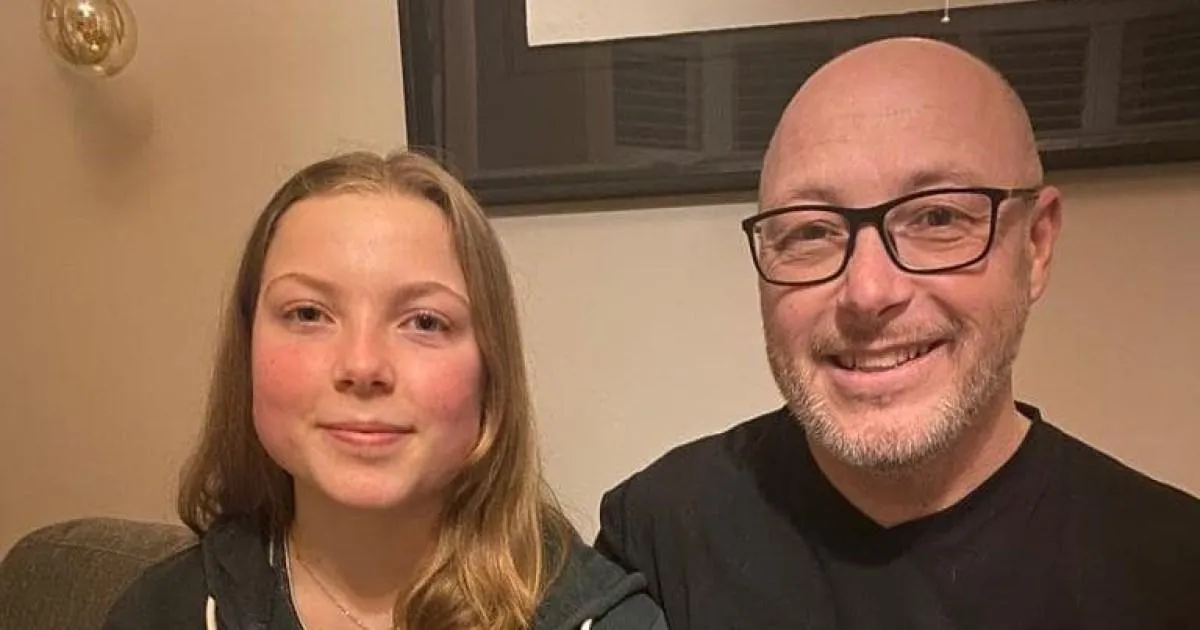
Before having a daughter, I admit I was completely oblivious to this problem (Picture: Neil G)
My daughter was on the bus home when a boy at her school began making rude gestures towards her.
Elodie told me he was egged on by his friends, who were all laughing about it. I was horrified when I heard about this – and that was just the start.
She was just 12 when she first experienced public sexual harassment.
Now aged 16, Elodie has told me something like this happens regularly, around once a month, and she worries about being harassed and humiliated almost every time she goes out.
But my main concern is still raising awareness. Without this, harassment will still happen and the impact on the victim will still be felt.
I hope new laws like this can put these issues forefront in the minds of the public.
Advertisement
Before having a daughter, I admit I was completely oblivious to this problem.
Yes, I’d always felt some of the things I heard men say to girls and women were unacceptable. But what I see now really scares me – the nastiness and abusive comments are not ‘banter’, they’re controlling and hurtful. There is a real intention to cause harm behind these words.
This Is Not Right
On November 25, 2024 Metro launched This Is Not Right, a campaign to address the relentless epidemic of violence against women.
With the help of our partners at Women’s Aid, This Is Not Right aims to shine a light on the sheer scale of this national emergency.
Advertisement
You can find more articles here, and if you want to share your story with us, you can send us an email at vaw@metro.co.uk.
Read more:
Advertisement
So many men I speak to when discussing Elodie’s experiences, like friends and family members, are shocked when I tell them what is ‘acceptable’ within the law, like making sexually explicit comments or sexually propositioning someone in public.
They think about their wives and daughters, and cannot believe so much harmful behaviour is legal, particularly when these same behaviours are specifically banned in the workplace through the Equality Act.
And what is more devastating is that Elodie is not alone. Research from Plan International UK found 75% of girls, some as young as 12, in the UK have experienced some form of public sexual harassment.
For some girls, this is a daily occurrence that affects their walk to school, where they exercise and where they spend time with their friends. Some have even avoided school altogether.
Advertisement
Despite my fears, I try my best to reassure my daughter (Picture: Neil G)
I worry about Elodie experiencing public sexual harassment all the time: my fear is she’s at risk of assault, or even abduction, when walking alone. She shares my concern that a comment could quickly escalate.
When Elodie is planning to go out, I have a real mental battle with myself. Should I raise the subject of staying safe and put this issue on the table, or leave it and hope nothing happens?
Elodie is a very level-headed young woman and I trust she is aware of the risks, so I don’t want to limit her life experiences by raising my own fears. But, of course, that doesn’t mean that I don’t sit and watch both the clock and the phone when she is away from home.
My anxiety increases later in the day – evenings are particularly bad because I fear she could be assaulted after dark, and winter is worse again as everyone is bundled up and less aware of what’s going on around them.
I also really worry when she’s on public transport. Anyone could sit next to her and touch her inappropriately or prevent her getting off at her stop, and my wife and I wouldn’t know until it’s too late. That fills me with dread and it’s so easy to see it happening.
Advertisement
We often pick Elodie up when she’s been out and always check she doesn’t walk home on her own. We’ve also all agreed to use an app on her phone so we can check where she is.
But it’s a tough balancing act – she’s a young woman and we want to give her freedom. We don’t want her to feel she’s being watched all the time by her parents, and we also don’t want to worry ourselves silly as that isn’t healthy for us or Elodie.
Despite my fears, I try my best to reassure my daughter. Until today, there was no single piece of legislation to protect girls and women from public sexual harassment.
New strong and effective legislation would send a clear signal that public sexual harassment is not OK (Picture: Neil G)
It was a law that my Elodie had a part in, and I’m so proud of my daughter and the fact she has been involved in something that will make such an important difference to girls across the country. She feels empowered by how her hard work and commitment to this issue is starting to pay off.
. We need to do everything we can to help create a society where this kind of behaviour is seen by everyone for what it is: harmful and unacceptable.
Advertisement
As parents, we have a crucial role to play in educating both boys and girls that this kind of behaviour, far from being harmless or even a way of complimenting a girl, is always wrong.
Men also need to model good behaviour for their sons and grandsons, as well as calling out friends or colleagues if they see them sexually harassing someone.
This has really changed how I behave when I’m out too: I’ll often try to walk in front of a woman so she can see me, instead of hearing me behind her and potentially worrying about who is there.
No-one should feel uncomfortable going about their daily life and the long-term psychological impact on girls is severe, let alone any physical threats they may also face. All I want is for Elodie – and all girls in the UK – to feel safe. I don’t think that’s too much to ask.
Advertisement
A version of this piece was published in April 2023
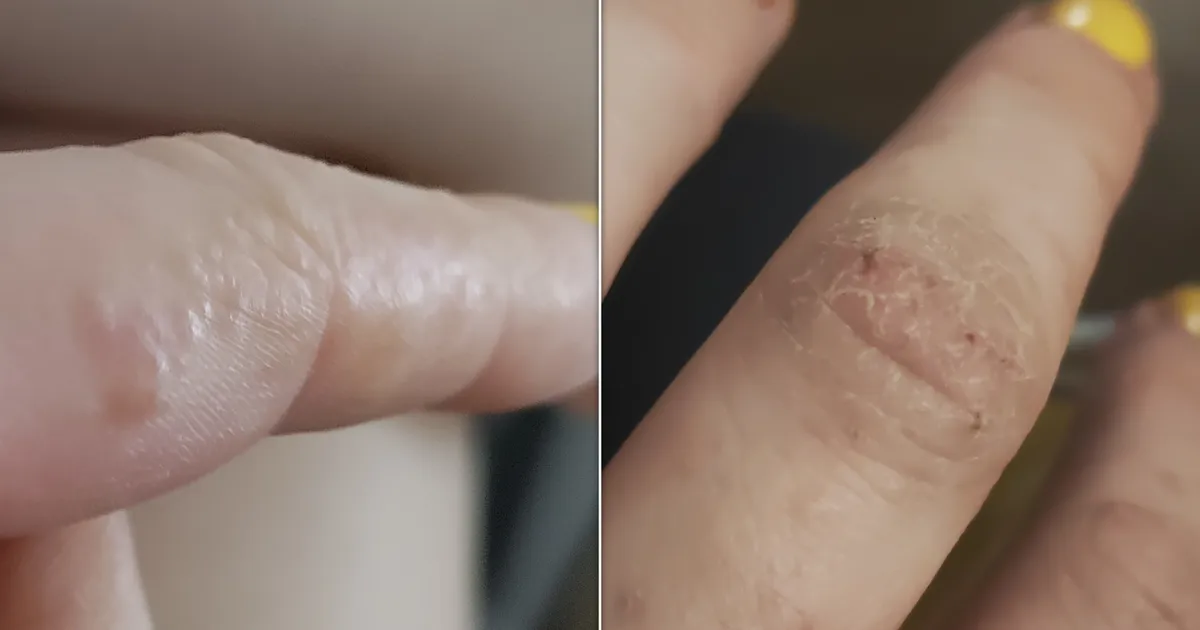
Many years ago, it began. I noticed tiny, flesh-coloured bumps on my fingers ― they itched so badly I was tempted to bite my hand (no, really), an urge which only subsided when the little blisters finally burst and flaked.
Then, a month later, the process started again. It’s happened about once every six weeks since.
If that sounds familiar, you might be struggling with a condition called dishydrotic eczema, or pompholyx.
The writer’s finger with bumps on it, left: with cracked skin at a later stage, right
They’re very small, extremely itchy, and might leak fluid for the first couple of weeks (oh, good).
After the blisters burst, people with the condition are usually left with dry, scaly, potentially broken skin. This is when the risk of infection is at its highest, as the skin barrier has been broken down.
The whole process usually takes about two to three weeks, the NHS says.
Advertisement
According to the National Eczema Society, “This condition can occur at any age but is usually seen in adults under 40, and is more common in women.”
We don’t know exactly what causes it, but some people think it could flare up during times of stress, due to excess heat and sweating, and/or sensitivity to metals like nickel, cobalt or chromate.
Half of people with the condition either have atopic eczema or a family history of it too.
You should see your doctor if you think you have pompholyx, partly because symptoms like it can be caused by conditions like hand, foot, and mouth disease.
Advertisement
That’s one of the reasons why the NHS says you shouldn’t try to diagnose yourself with the condition.
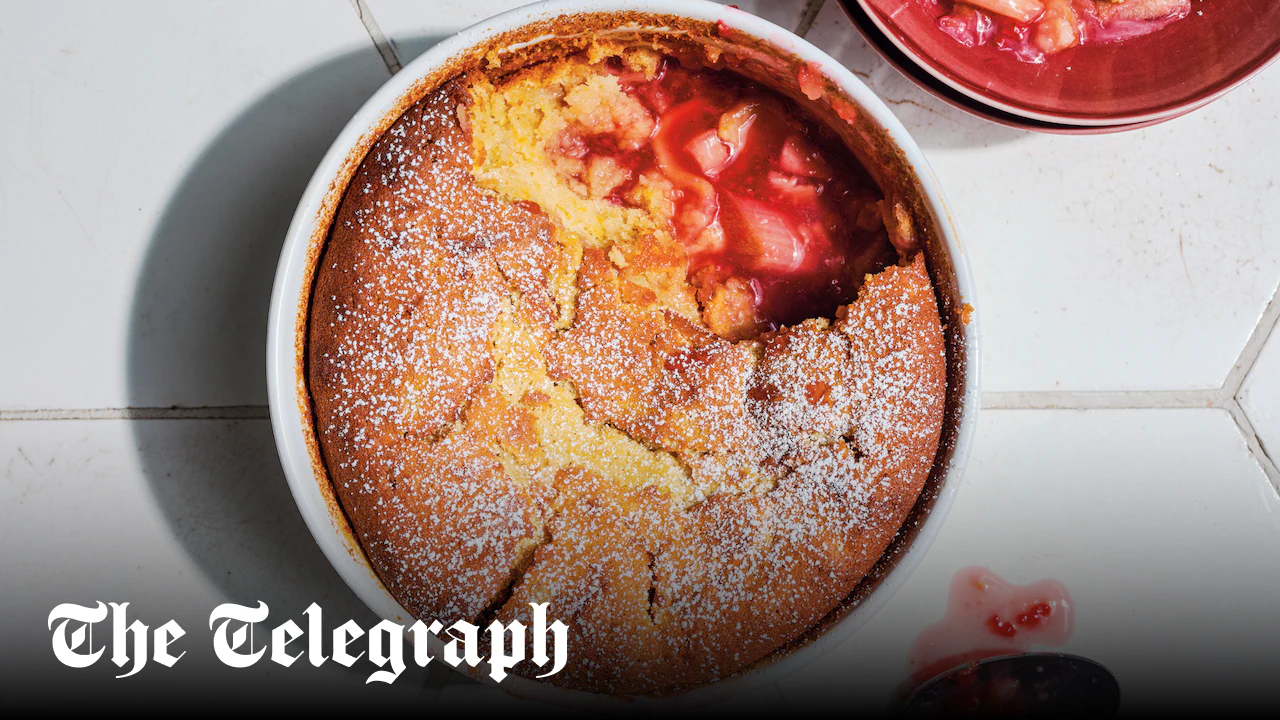
It might seem odd to mix three fruits for this, but it’s an incredible combination. The apples give the fruit a bit more structure and the raspberries create wonderful juice, which mixes with the rhubarb and apple juice.
As it’s only a small amount, I used fresh raspberries for it. Some of them have an astonishing flavour of violets. Mix a couple of tablespoons of marmalade into whipped cream to serve on the side, if you want to echo the marmalade in the sponge.
The ‘harrowing’ true crime documentary features exclusive CCTV and bodycam footage of real murder cases
Aaliyah Rugg Senior reporter
12:20, 01 Apr 2026
A harrowing true crime documentary with a twist is currently available to stream online at no cost, with a fresh series due for release shortly.
Killers: Caught on Camera first premiered in 2023 on the True Crime channel, running for three seasons. Following its debut, the documentary was hailed as essential viewing for true crime enthusiasts.
Advertisement
This distinctive series presents exclusive footage alongside comprehensive psychological evaluation of video and audio evidence by expert Dr Julia Shaw, which ultimately secured killers’ convictions.
Each episode examines a different case, with Killers Caught on Camera investigating disturbing murders throughout the UK and US, incorporating devastating first-hand testimonies as well as previously unseen CCTV and home surveillance combined with police bodycam recordings.
Scrutinising the suspects and their motivations, this true crime programme is ideal for genre devotees to binge-watch, though a cautionary note has been issued to potential viewers. Before watching, it’s important to be aware that the programme contains “strong language, real crime footage and graphic discussions of crimes”, reports the Mirror.
All episodes are also available to stream online via ITVX. An ITV synopsis for the first harrowing episode states: “In the UK, the dismembered body of a woman leaves a couple, obsessed by serial killers, in the frame. In the US, a hidden camera provides vital evidence to help bring justice to a family.”
The disturbing documentary has garnered a devoted following amongst true crime enthusiasts, with one viewer commenting on IMDB: “Although the scenes being shown in each episode are disturbing and graphic I am always left feeling so sad that the victims lives ended so horrifically.”
Another remarked: “A perfect true crime production for the nerdy true crime documentary viewer, so I give it a 10 of gratitude to the people that’s lost their loved ones, and in the memory to those almost 30 victims connected to this series.”
Advertisement
A third viewer noted: “Love the show, for obvious reasons its true crime stories are new well put together.” On X, one fan wrote: “@drjuliashaw excellent job on #KillersCaughtOncamera I’m learning so much from you!”
Another commented: “The Grace Millane case is insane! How do you meet someone, and they kill you on that very same day. The world we live in.”
A fourth series is scheduled to launch on the True Crime channel later this month, debuting at 10pm on 21 April. New episodes will air weekly on Tuesdays through to 23 June.
Advertisement
The series has been described as follows: “Killers: Caught on Camera is an access-driven series revealing exclusive footage and psychological analysis behind killers’ convictions in the US and UK. Combining unseen CCTV, police bodycam and mobile phone footage with expert insights, it explores how everyday interactions escalate into lethal violence.
“The series highlights high-profile cases and never-before-seen footage, uncovering stories of intimate partner violence, stalking, and familicide.
“Friends and family share memories, investigators explain how digital forensics connect cameras, data, and social media to build critical evidence. Featuring Dr. Julia Shaw, it reveals the science behind solving murder… We are all witnesses in a monitored world.”
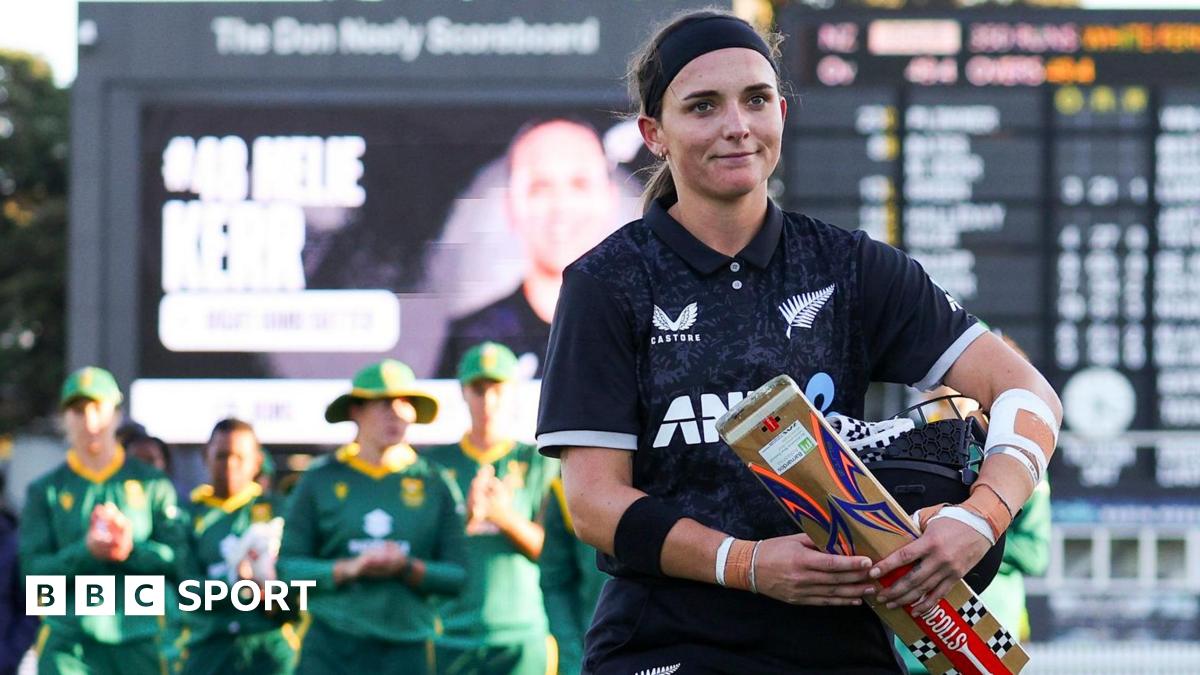
New Zealand all-rounder Amelia Kerr hit a stunning 179 not out off 139 balls to inspire her side to chase down 346 against South Africa in the highest successful run chase in women’s one-day international history.
Laura Wolvaardt’s 69 from 74 balls, a 91 from 90 balls by Anneke Bosch and Chloe Tryon’s 25-ball 52 helped South Africa post 346-6 in the second ODI of their series against the Kiwis.
Kerr came in at 21-1 in New Zealand’s reply and struck 23 fours and one six at a strike rate of 128.78 during her match-winning knock.
She was helped by Izzy Gaze, who made 68 from 48 balls, as the Kiwis made 350-8 in reaching their target with two balls to spare and levelling the series.
Advertisement
The previous highest successful chase in women’s ODI cricket was when India made 341-5 in reaching a 338 target set by Australia in their World Cup semi-final last October.
Kerr is no stranger to producing heroics, especially against South Africa, as she inspired New Zealand to victory against them in a T20 World Cup final in 2024.
She was also the ICC’s women’s cricketer of the year in 2024.
Kerr also holds the record for the highest individual innings in a women’s ODI, having hit an unbeaten 232 against Ireland when aged 17 in 2018.
North Yorkshire Police is working to trace the animal’s owner after the incident on the bridle path from Strensall to Haxby at about 9.45am on Sunday, March 22.
The force said the cyclist was left with injuries to his leg when he was bitten while cycling past the dog.
A police spokesperson said the dog, described as a black and white collie-type breed, was one of two being walked by a woman in her 40s.
Advertisement
They said the animal bit the man on the leg as he cycled past, adding: “This bite has broke the skin and resulted in the victim having to attend hospital.”
Police are urging anyone with information about who the dog’s owner is to email peter.henderson@northyorkshire.police.uk or phone 101 and ask for PC1668 Henderson.
Information can be passed anonymously to Crimestoppers on 0800 555 111.
Quote reference 12260053502 when passing information to police or to Crimestoppers.
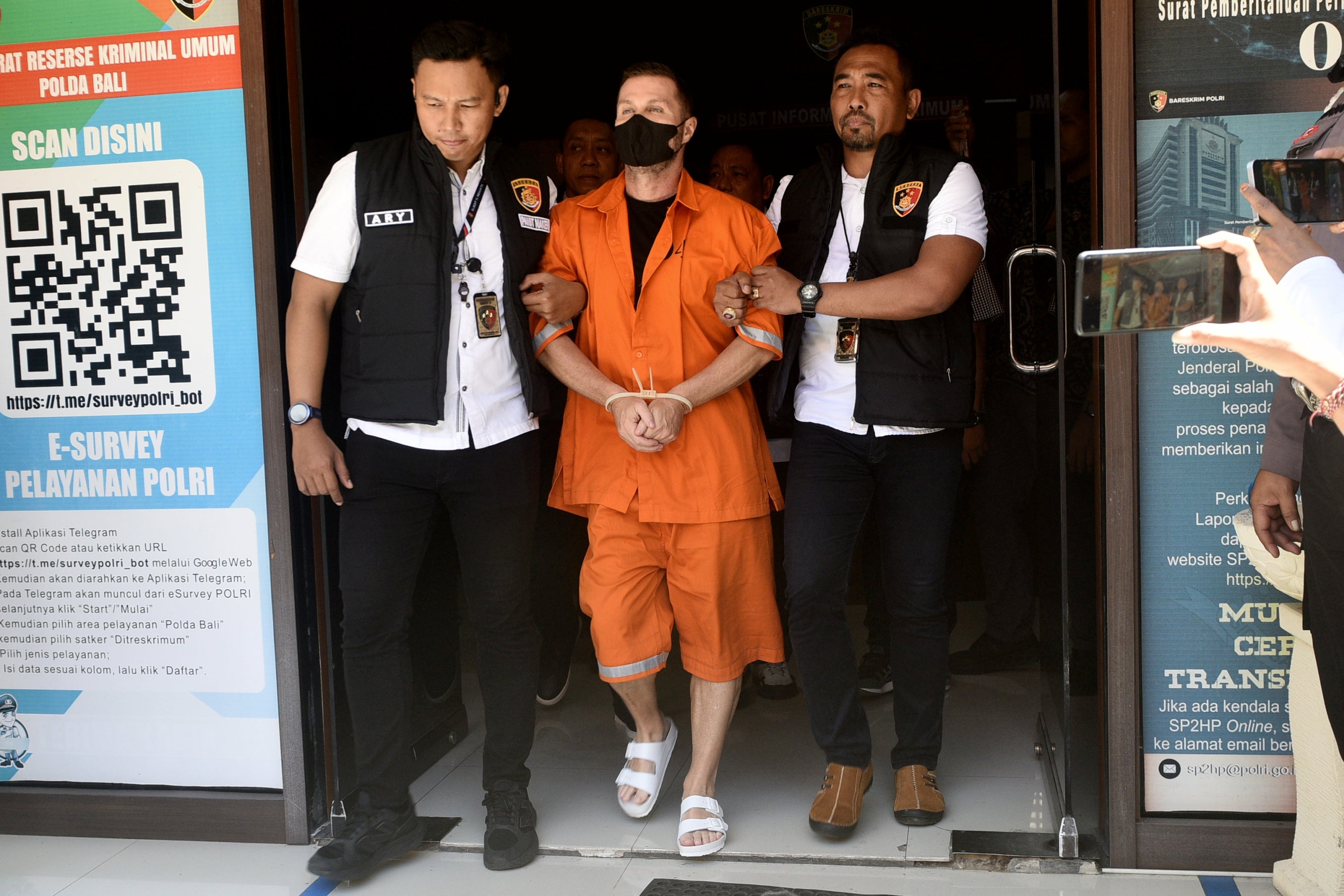
Authorities identified Steven Lyons, 45, as a senior figure in an international crime syndicate who had spent months on the run.
He is also alleged to be the leader of the Scotland-based Lyons crime family.
Lyons was detained on Saturday upon his arrival at Bali’s Ngurah Rai international airport from Singapore, Indonesian immigration and police authorities confirmed.
Advertisement
His arrest was triggered by an InterpolRed Notice, issued at Spain’s request, which alerts police worldwide to arrest a suspect for extradition.
Wanted in both Spain and the United Kingdom, Lyons will be flown to Spain via Doha on Wednesday evening.
Lyons is alleged to have led a transnational criminal network operating out of Cumbernauld, Scotland (AP)
Bugie Kurniawan of Bali’s immigration office said that he was handed over to Spain’s Civil Guard officers at the airport, where prosecutors in Madrid are seeking to try him on charges related to organised crime, drug trafficking, and money laundering.
Lyons has been on Spain’s wanted list for about two years, following a murder there in 2024. Bali Police Chief Daniel Adityajaya said the arrest was part of a joint investigation involving Spanish and Scottish police.
According to Untung Widiyatmoko, who heads Indonesia’s branch of Interpol, Lyons is alleged to have led a transnational criminal network operating out of Cumbernauld, Scotland, and controlled narcotics trafficking routes from Spain to the UK.
Advertisement
His organised crime ring is suspected of using shell companies for money laundering in Europe and the Middle East, including in Spain, Scotland, England, Dubai, Qatar, Bahrain and Turkey.
Widiyatmoko said a day before Lyons’ arrest in Bali, police in Scotland and Spain carried out raids in connection with the case, with the help of Europol, a European Union law enforcement cooperation hub. Several people were arrested, while others were detained in Turkey, the Netherlands and the United Arab Emirates.
Scottish media have reported that Lyons survived a 2006 shooting in Glasgow that killed his cousin and later moved to Spain before settling in Dubai, in the UAE.
Last May, his brother and an associate were shot and killed in a suspected gangland shooting at a beachfront bar in Fuengirola, southern Spain.
But despite all the failings, he says he still believes in London, “we want to continue investing in London, but there’s a lot of pain coming. It’s frustrating seeing the man on the man or woman on the street right, working their ass off, wanting to be proud of their home and their garden and where they live in the street, and every time they say anything positive about it, they get kicked
A rubber boat carrying migrants has capsized off the Turkish holiday resort of Bodrum after a high-speed chase, killing 18 people, officials have said.
The vessel, detected by authorities in the early hours of Wednesday, had ignored repeated warnings to stop, according to the Turkish coastguard.
Officials said in a statement that the boat, which had attempted to flee at speed, capsized and sank in rough seas.
A coastguard helicopter from Izmir was sent to the area along with three boats, and 21 migrants were rescued from the Aegean Sea, according to officials.
Advertisement
Image: A survivor is taken to hospital in Bodrum, Turkey. Pic: Reuters
The statement did not say where the boat had departed from, or its destination, and the nationalities of those who were on board are not yet known. Search and rescue operations are continuing.
The Greek island of Kos, an entry point into the European Union for people fleeing conflict and poverty in the Middle East, Africa and Asia, lies 13 miles from Bodrum. Other nearby islands include Kalymnos, Leros and Symi.
While the journey across the Aegean Sea is relatively short, it can also be treacherous. Many of the boats are unseaworthy, or set out in bad weather, and fatal accidents have been common.
Turkey hosts millions of refugees from Syria, Iraq and Afghanistan.
From April 1 customers across the UK will be paying more to legally watch their televisions as the TV licence fee has increased. The annual fee change increases in line with inflation to fund the BBC and is a requirement for households that watch or record live TV.
Advertisement
Despite its name you do not need to have a television to pay the fee as it also applies on other devices including smartphones, tablets, laptops, and games consoles.
A TV licence is required for watching and recording live television on any channel, streaming service, or app and to download or watch BBC iPlayer.
There are however exceptions with some channels legal to watch if you do not have a TV licence including:
Catch up programmes on services other than BBC iPlayer such as ITVX, All4, and My5
On-demand films or TV shows that you watch, rent, or buy online from providers like Netflix, Amazon Prime, Sky, EE TV, Apple TV, Disney+, or Now
S4C programmes on demand
DVDs or blu-rays
YouTube streamers’ videos or clips live or recorded
From now the fee for a colour licence will increase to £180, up from £174.50, while a black and white licence now costs £60.50. For money-saving tips sign up to our Money newsletter here.
This means the cost of an annual colour TV licence will rise by £5.50 – the equivalent of an extra 46p a month.
Advertisement
As well as the BBC S4C receives all its public funding from the licence fee and will see its revenue rise receiving approximately £100m in 2026-27 to encourage the growth of the Welsh creative industries.
Watching live TV without a valid TV licence is a criminal offence with TV Licensing employing enforcement officers to conduct regular checks. Those caught watching live TV or BBC iPlayer without a licence could face prosecution and a fine of up to £1,000.
A spokesman for the Department for Culture, Media, and Sport said: “TV licence fee to rise in line with inflation to provide the BBC with stable financial footing to deliver for audiences and support the wider creative industries.
“The increase in the cost of the TV licence will help keep the BBC on a stable financial footing, enabling it to continue to deliver on its mission and public purposes.
Advertisement
“The BBC is the UK’s number one media brand, with 94% of UK adults using the BBC each month last year, and it remains the UK’s most widely used and trusted news outlet.”
Many people may also be eligible for free and reduced fees. Free licences are available for over-75s on pension credit while care home residents and blind individuals could be eligible for a reduced rate.











































You must be logged in to post a comment Login