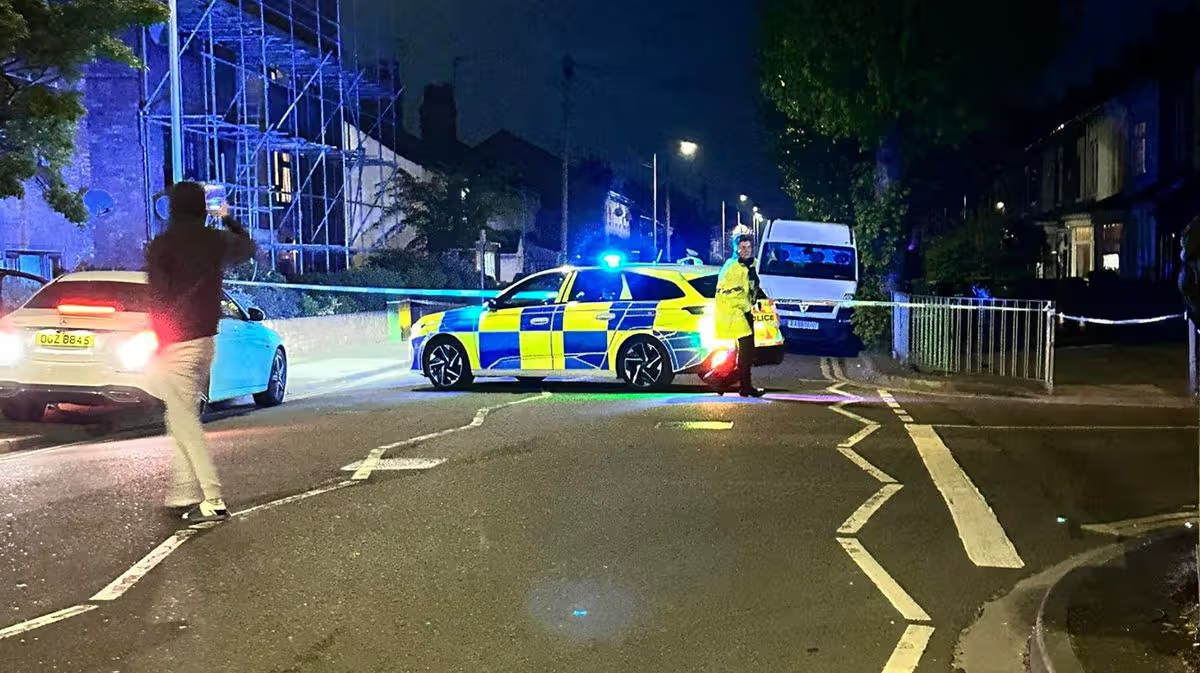
Aman involved in a crash involving a quad bike is in a critical condition. Emergency services were called to a crash between a Yamaha quad bike and white BMW along Dogsthorpe Road in Peterborough just before 8pm on Monday (April 27).
Advertisement
The quad bike passenger, a 22-year-old man, suffered serious injuries. He remains in a critical condition at Addenbrooke’s Hospital in Cambridge.
The other rider, also a 22-year-old man, initially failed to stop at the scene. He was later treated at Peterborough City Hospital for his injuries.
The driver of the BMW was uninjured. Sergeant David McIlwhan, from Cambridgeshire Police’s road policing unit said: “We are keen to hear from anyone who was in the area around the time of the collision.
“If you believe you may have dashcam footage of either vehicle in the lead up to the collision, please also get in touch with us as this may help us paint a better picture of what happened.”
Advertisement
The East of England Ambulance Service also attended the scene. An ambulance spokesperson said: “One ambulance, a rapid response vehicle, a paramedic car and the MAGPAS Air Ambulance were sent to Dogsthorpe Road Peterborough yesterday evening following reports of quad-bike rider injured in road traffic collision.
“One patient with serious injuries was transported by road ambulance to Addenbrooke’s Hospital.”
Anyone with information should report it online or call police on 101 and quote Op Penhale or incident 505 of April 27.
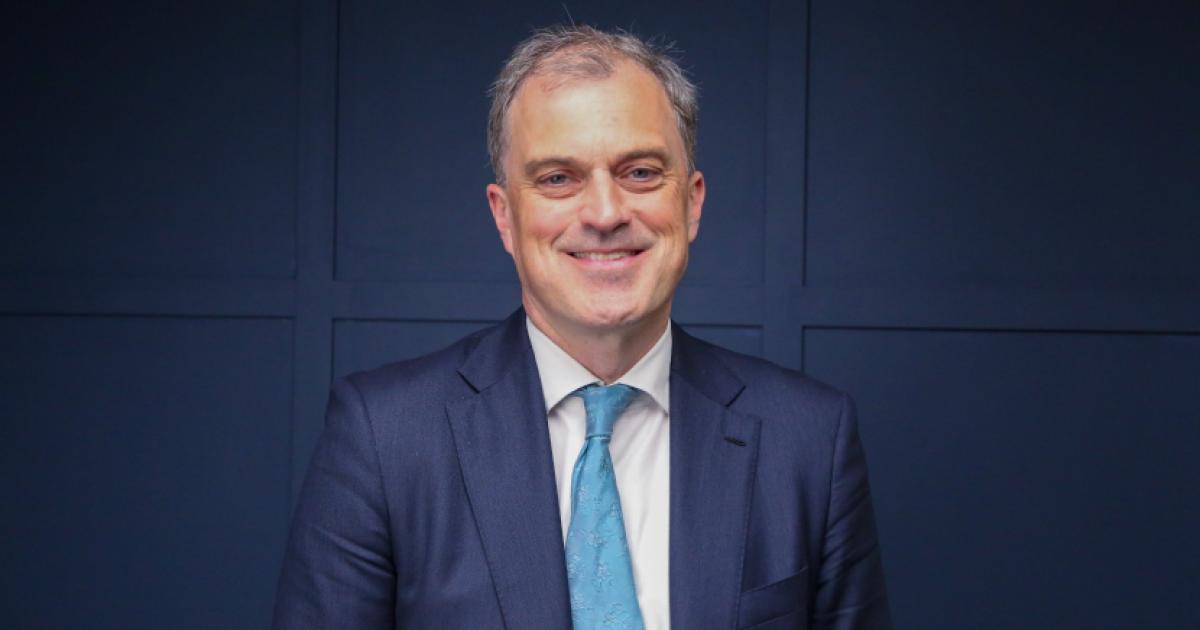
Sir Julian Smith, MP for Skipton and Ripon, praised the Government’s decision to introduce either an age limit or functionality restrictions for users under 16, following long-running public and political debate.
A public consultation was also held, with views from parents, schools, young people, and child safety campaigners.
Sir Julian said: “I want to thank everyone who contacted me and supported efforts to push the government on protecting children from harmful social media.
Advertisement
“Ministers have now agreed to introduce restrictions for under-16s, which is a significant step forward.
“It is welcome news for children and parents alike, and the next challenge will be ensuring the measures are robust and effective.”
This approach will focus on limiting harmful features or raising the minimum age to protect children from online risks.
Sir Julian has continued to support stronger online protections for children, including backing a legal ban on phones in schools and supporting the proposal to raise the social media age to 16.
Advertisement
Concerns have repeatedly been raised about social media’s effects on mental health, wellbeing, attention, and exposure to harmful content, particularly among younger users.
The restrictions are expected to be implemented through new regulations once the consultation has concluded.
You could say this first leg was unique, given how it set a record for a Champions League semi-final, but there’s somehow more to come. There was even the promise of more to come, as befitting the attacking attitudes that drove this entire spectacle.
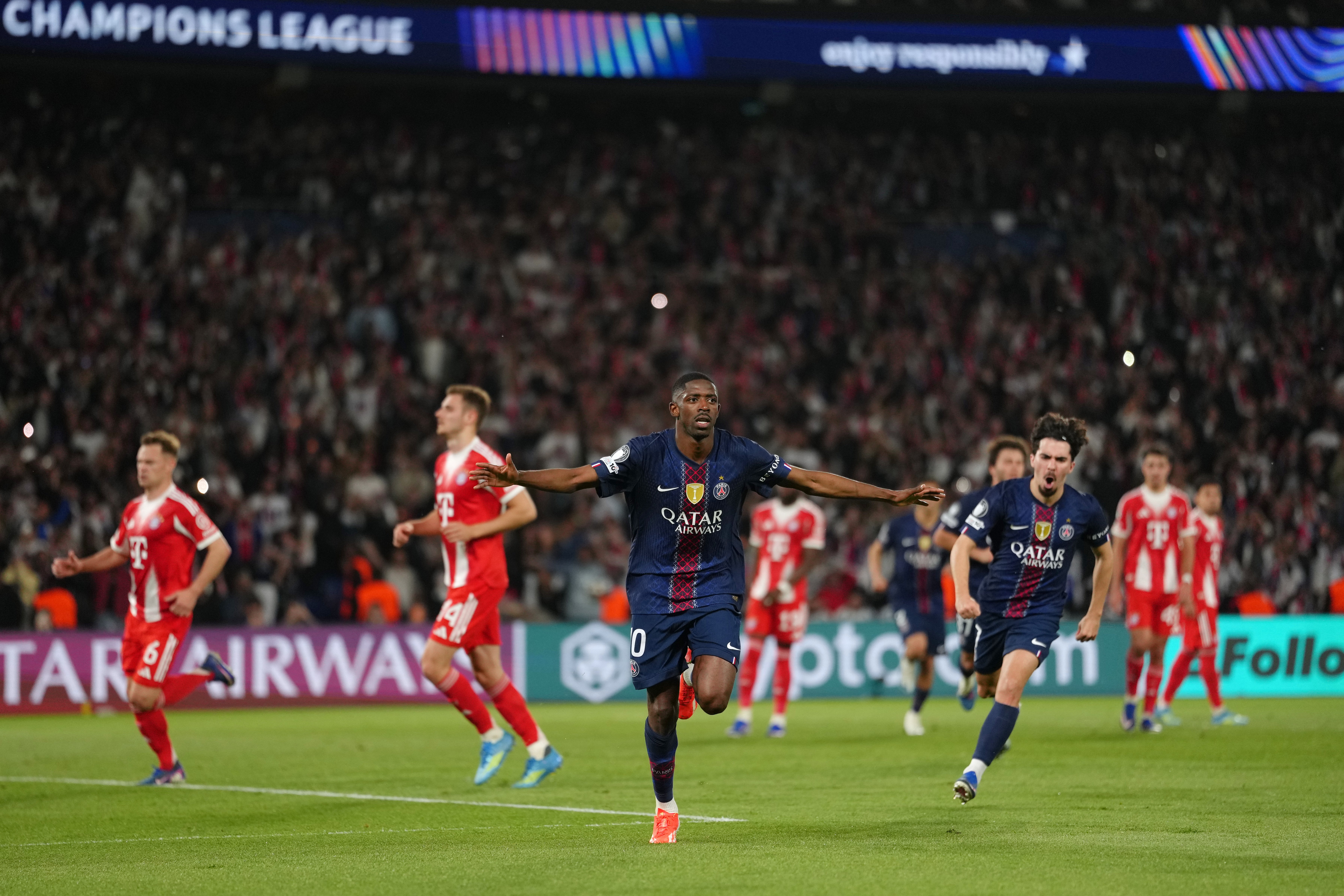
“Now we’ll go to Munich to try to win and qualify,” Ousmane Dembele said. “We’re going to attack and Bayern are going to attack.”
Advertisement
Vincent Kompany agreed. “We could have scored more, and that has to give us belief.”
So many others were left with a renewed belief in the sport as it is played.
“Every football fan loves a game like that,” Marquinhos said. That feeling might be all the deeper given the debate about set-pieces and structure that has defined so much of the season, especially in England.
There are some lessons there for the Premier League – but only some.
Advertisement
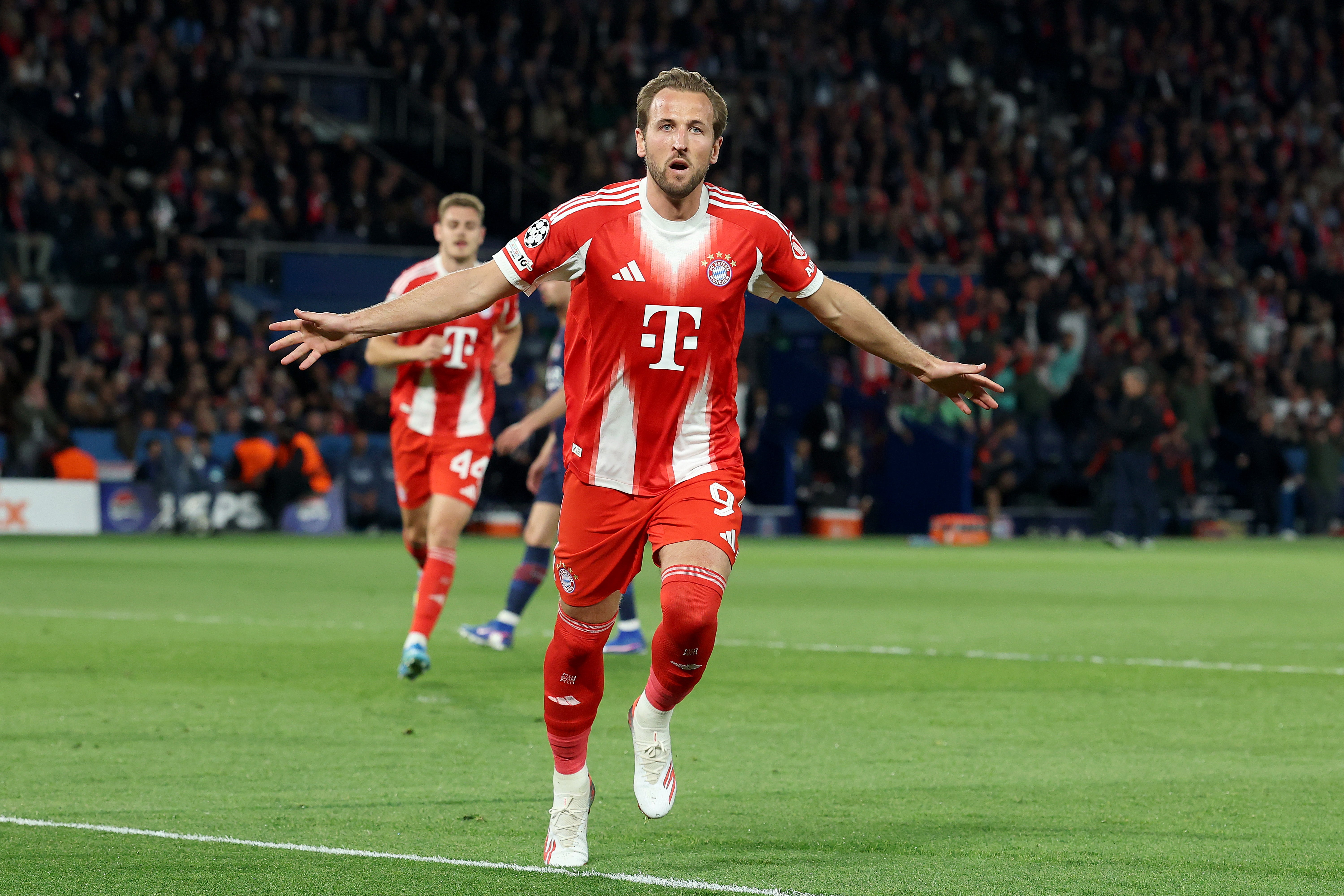
Harry Kane of FC Bayern Munich celebrates scoring (Getty)
This was indeed like watching a different sport, as was previewed in these very pages on the morning of the game; There were moments when it certainly didn’t feel like watching 11-a-side football at all, such was that scoreline and also just the general chaos of play.
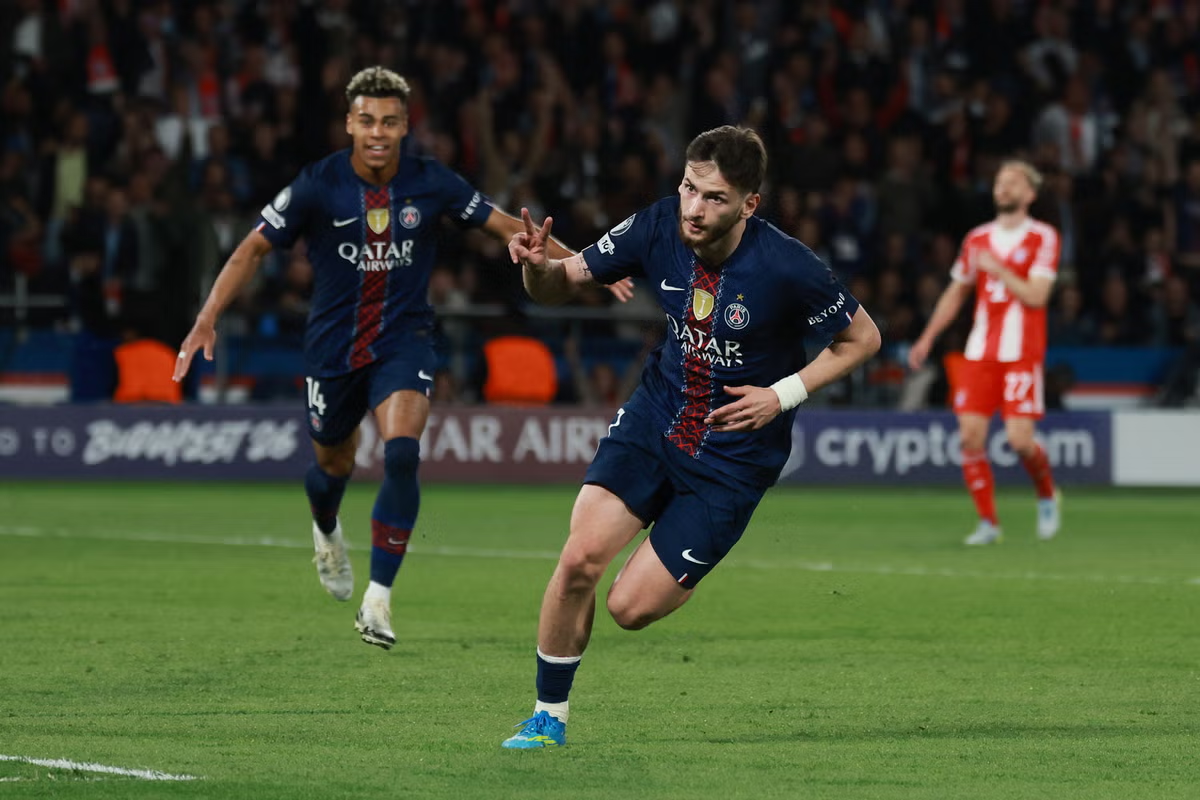
One of the most captivating elements of the game was how often one of the electric attackers just seemed to be aggressively running straight at goal. It was the source of at least three of the goals, most notably Khvicha Kvaratskhelia’s brilliant initial equaliser, as well as Luis Diaz’s run to win the Harry Kane penalty to set it off.
Luis Diaz’s own eventual goal, a luscious strike to make it 5-4, was supremely supplied by Kane’s delightful ball, also had touches of Dennis Bergkamp against Argentina. That’s the level we are talking about in terms of attacking.
One of many other talking points is meanwhile how Liverpool let this Luis Diaz go.
Aleksandar Pavlovic of FC Bayern Munich is challenged by Khvicha Kvaratskhelia of Paris Saint-Germain (Getty)
Would he have been able to do this in the more restrained Premier League?
And yet, partly because there were so many goals, there were also so many more debates.
Advertisement
One was shaped by Clarence Seedorf and Wayne Rooney, who lamented the defending. Some of it was pitiful. Manuel Neuer didn’t even make a save, and one of his attempted kick-outs did lead to a PSG goal.
If it seems churlish to discuss that amid so much fun, so much entertainment, one obvious inference from their commentary was to ask how “serious” this game actually was.
There was almost a sense of the very scale of the scoreline removing some of the credibility, as if this wasn’t “real football”.
There is a gloriously simple answer to that. It’s as “serious” as the end result of the Champions League final. The point of all this is to become European champions, after all. It doesn’t get more real than that in club football.
Advertisement
PSG’s Ousmane Dembele celebrates scoring against Bayern Munich (AP)
The ends would justify the means, a sentence that feels odd to even say here given that it is more often used about the more pragmatic football anticipated in the other semi-final.
It currently looks like either Bayern or PSG would just blow Arsenal and Atletico Madrid away, but it rarely works out like that in reality. Maybe the real difference, however, is as Kompany said. Both sides believe. They trust in their approach, even with all of the risks.
This is just their way, as so many figures on both sides enthused.
And yet, for all that this will provoke predictions about the future of football, there are fair questions over whether this way is possible in any other setting.
If this 5-4 reminded you of what the game could be, you can’t escape the reality that it partly came out of what the game shouldn’t be.
Advertisement
It was also said here before the game that both Bayern and PSG greatly benefit from their immense financial superiority over their domestic leagues, with one of them a Qatari sportswashing project. There’s always another side to this in the modern game.
That allows them this physical and psychological freshness, as well as the space to commit to this.
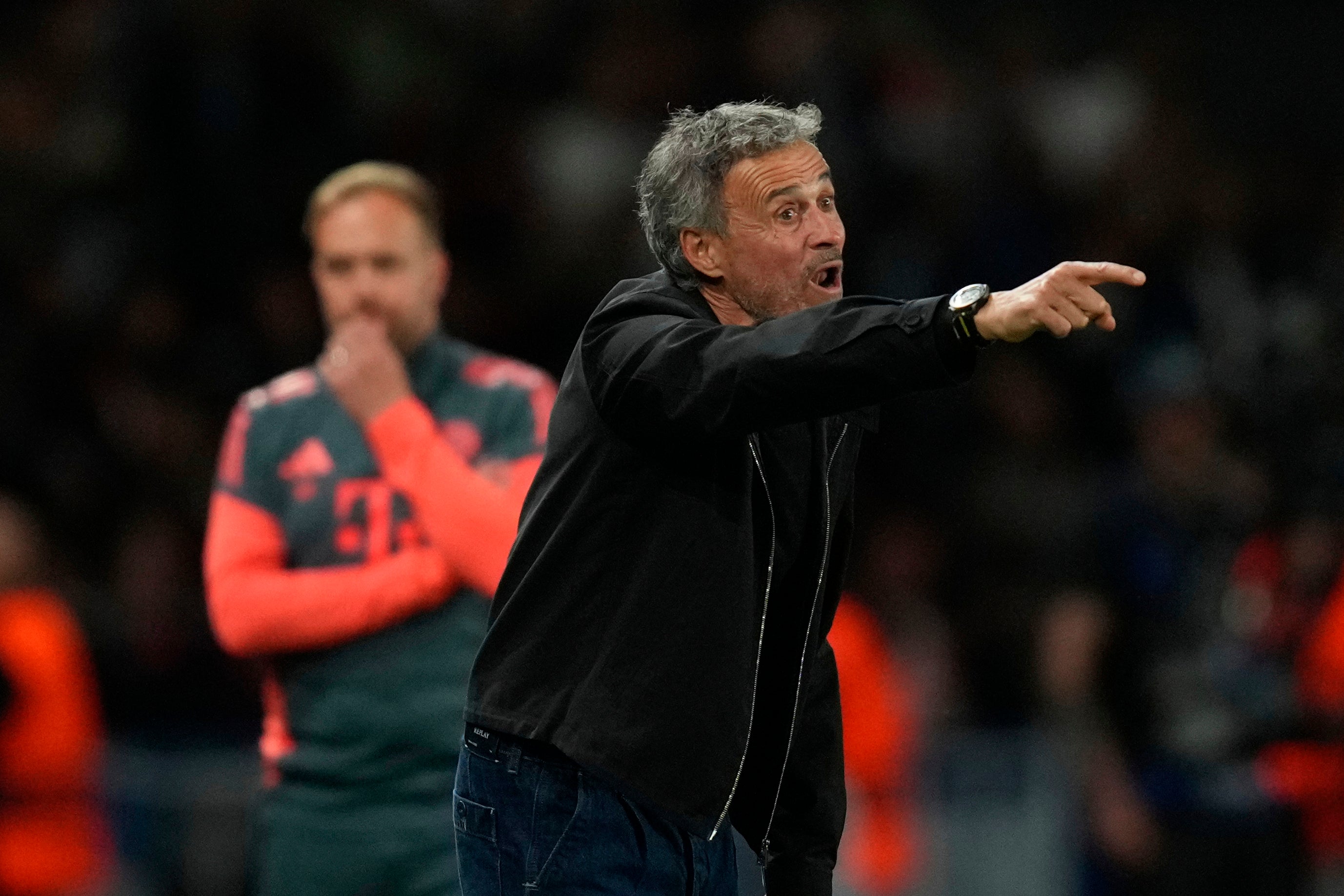
Some of it is of course ideological, yes. Luis Enrique has been open about that. Kompany was similarly trying this at Burnley.
Luis Enrique’s ideology has been helped by PSG’s superiority in Ligue 1 (AP)
Some of it is also circumstance. The Independent understands Premier League coach privately said after the game, it’s a lot more difficult to commit to this when your exhausted players are again playing an expensively assembled defence at the weekend.
And that may have led to another side in this game.
Advertisement
As sensational as the attacking was, it was partly allowed from that dismal defending. It was like these team structures just weren’t prepared for this level of attacking quality. Who would be prepared, you might ask, but it did seem more pronounced.
It was like both sides had forgotten how to defend because they don’t usually have to do it.
That’s why it only offers some lessons for the Premier League.
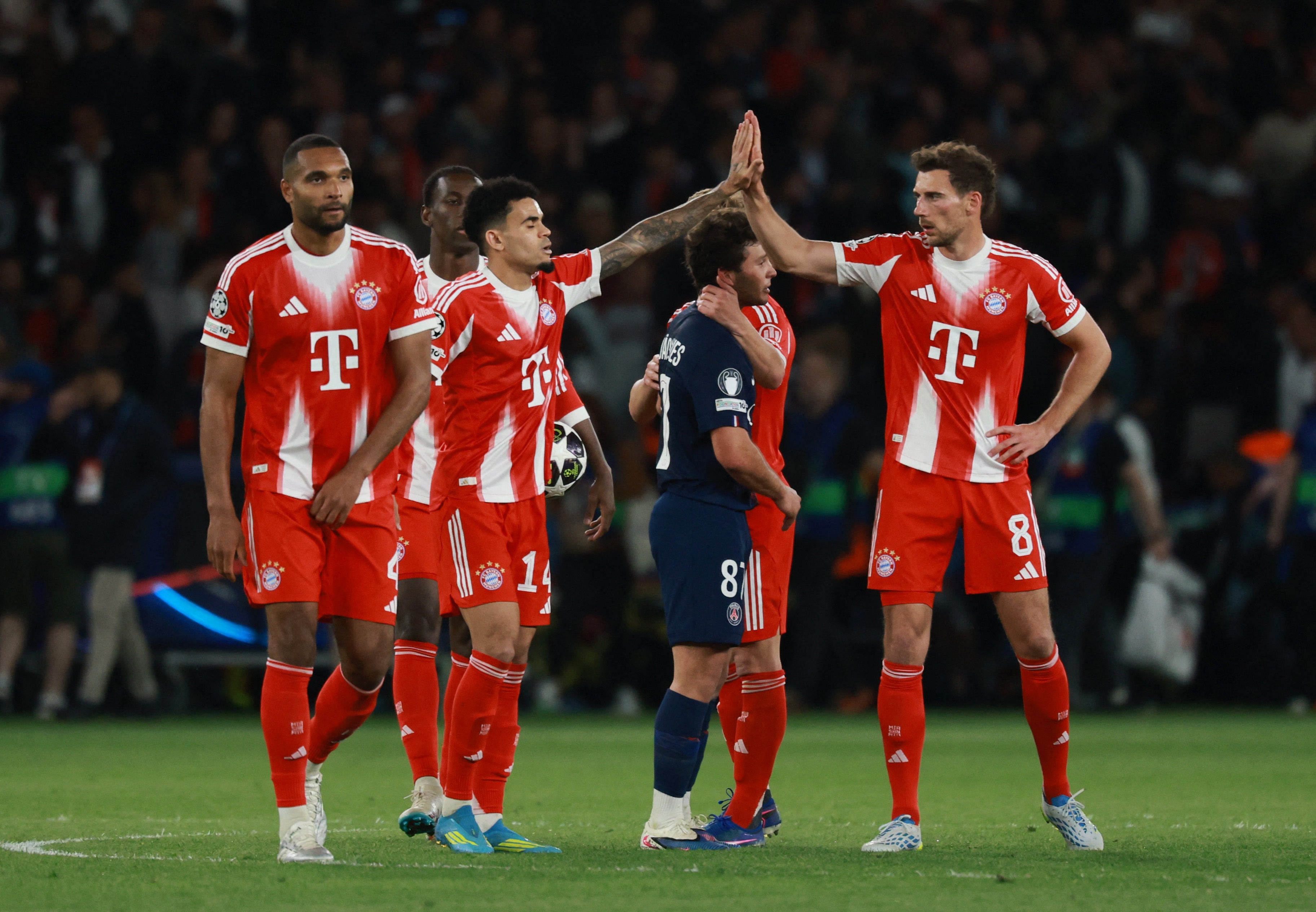
Dayot Upamencano and Luis Diaz scored late for Bayern to keep this Champions League tie in the balance for the second leg (Reuters)
Still, it would be encouraging for clubs to take the mindset on board. You can see why Sir Jim Ratcliffe would love Luis Enrique at United. Who else might come calling now? Chelsea?
And yet such questions, such technical caveats, feel a little out of step with a game that was mostly about abandon; about going for it.
Advertisement
And they’ve promised to do it all again.
As to who wins at the end of it, PSG feel like they should have killed the tie at 5-2. Luis Diaz’s goal feels like it could be very significant.
A little like one of Kvaratskhelia’s runs, though, it’s almost impossible to know which way this is going to turn.
BACK in the early years of this century, I used to enjoy popping into the St William’s College restaurant now and again to sample its celebrated wild mushroom and asparagus risotto.
But in December 2014 this Grade-I-listed building closed its doors as a wedding and conference venue with a view to major refurbishment, repairs and to the development of a sustainability strategy for the site.
St William’s College has an interesting history.
On May 11, 1461 it was founded as a residence for 23 chantry priests and a provost.
Advertisement
Chantry priests were employed at the pre-Reformation Minster exclusively to pray for the souls of the dead at the 60 or so chantries inside the cathedral.
In The History of York Minster, GE Aylmer and Reginald Cant state that this was “the most important college of cathedral chantry priests ever to be founded in England”.
It was dedicated to the memory of York’s native saint, William Fitzherbert, who eventually became archbishop in 1154, and was credited with miracles at his shrine in the Minster.
St William’s College
Another historical source of information about the college is the 1994 booklet The History of St William’s College by PR Newman, historian to the Dean and Chapter of York.
Advertisement
He claims that there is evidence to suggest that the chantry priests were themselves sub-letting rooms to laymen before 1547.
Anyone who has joined one of York’s famous ghost trails will have heard about the two brothers who lived there and murdered one of the chantry priest residents. The elder brother is said to have betrayed his younger sibling to the authorities and supposedly spends eternity pacing up and down the upper floor of the college.
In 1547, the chantries and chantry foundations were abolished by an Act of Parliament. The college building was either granted or sold to one of the Crown commissioners responsible for its suppression, Sir Michael Stanhope.
Throughout much of the 17th century, the building was held by the staunchly royalist Jenkyns family of Grimston Bar. In 1642, King Charles I came to York and it’s known that the King’s printer set up his presses in the college which was then known as the Parsonage.
Advertisement
View of the historic gateway from Goodramgate
A century later, the building was divided up into eight dwellings. A notable feature of the history of St William’s College is that the residents seem to have been tenants rather than owners of the building, and short-term tenancies at that.
In 1719, John Ouram, a cook, and John Barber, an upholsterer, sold their lease to Charles Howard, 6th Earl of Carlisle, the celebrated builder of Castle Howard. The college continued to be divided up into smaller units with no fewer than 13 families living there.
One of the college’s more irascible tenants was a certain William Jameson. Between 1809 and 1816, he brought private prosecutions in the church court against eight neighbours.
Jameson had been declared bankrupt and had been ejected from the college, moving to smaller quarters in the neighbouring Vicars Choral property in Bedern.
Advertisement
Entrance to St William’s College showing the coats of arms of William Fitzherbert and York Minster
Once installed there, he’s said to have waged a pitiful and sustained campaign against the college and the tenants who had replaced him. He was even said to have broken into the eastern wing of the college and removed the doors and panelling from the rooms.
Recommended reading:
In 1826, Jameson was writing letters publicly haranguing the Dean and Chapter. He harped on about the avoidable problems in the vicinity of the college. College Street was at that time a narrow thoroughfare with houses either side and traffic passing through. Fortunately, by 1827, no more was heard of Jameson.
In 1854, College Street was home to some 34 families in cramped living conditions.
Advertisement
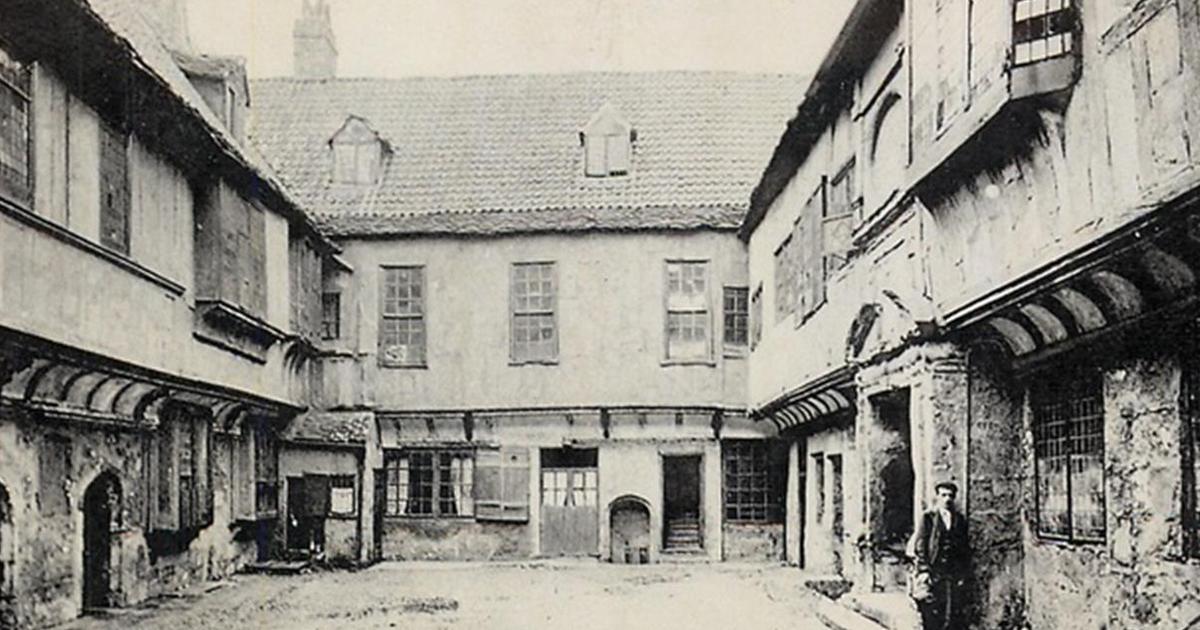
College Street, formerly open to horse-drawn traffic
It was Frank Green, the wealthy industrialist and philanthropist who rescued St William’s College, as he’d done with the Treasurer’s House. Green was also anxious to save the historic gateway at the end of College Street.
By 1901, The York Corporation had resolved to demolish the street and its houses to make way for the new road, Deangate. Green bought St William’s College and offered it for sale to the York Diocesan Trust as a venue for meetings of the Convocation of the Northern Province.
(Image: NQ)
He agreed to sell the college for the price he’d paid for it provided that the Trust undertook appropriate restoration, and accepted his nomination of the celebrated architect Temple Moore, for the work.
Green also made it a condition that he would be given first option to buy the college, if the Dean and Chapter decided to sell it. After a public campaign between conservationists, led by Frank Green, and progressives, the conservationists won; York Corporation backed down and decided to re-route Deangate. The restoration work on the college took place in 1902.
Advertisement
St Williams College, York, in 2014 when it was undergoing restoration work. Picture David Harrison
The Dean and Chapter of York Minster became trustees of St William’s College in 1972, and further restoration work took place in the 1980s. In the next two decades, the building thrived as a conference and exhibition centre.
Rosalind Kelly, marketing and communications manager to the Chapter of York, told me that Listed Building consent and all planning permissions have now been obtained to restore the building as part of the Neighbourhood Plan. An update on the project is expected later in May.
Push a metal corer into a peatland and you pull up something remarkable: a dark, dense, sponge-like material made of partly decomposed plants. This peat is rich in carbon. In some places, that peat has been building up for thousands of years. Peatlands are the ecosystems where this happens.
Peat is often associated with the bogs of Scotland or Ireland, but peatlands occur on every continent, from the Arctic to the tropics. They can sit beneath open moorland, under swamp forest or in remote floodplains. What links them is water: in wet, oxygen-poor ground, dead plant material does not fully rot away, so carbon accumulates over centuries and millennia.
That makes peatlands globally important. Although they cover only about 3–4% of Earth’s land surface, they store nearly a third of the world’s soil carbon. When they remain intact, they can keep locking away carbon over very long timescales. But when they are drained or converted for agriculture, forestry or development, that stored carbon is exposed to air and released back into the atmosphere as greenhouse gases, including carbon dioxide. Thus, peatlands can become major sources of greenhouse gas emissions when degraded. Globally, peatland degradation is estimated to account for around 5–10% of annual human-caused carbon dioxide emissions.
For ecosystems so important to the global carbon cycle, we still know surprisingly little about some basic things.
One of the biggest questions is simply: where are all the world’s peatlands? That may sound like a question scientists should already have answered. But many peatlands are hard to detect from the surface, difficult to access, or lie beneath dense forest. Large areas of the tropics remain poorly mapped.
What may be the world’s largest tropical peatland complex, in the Congo Basin, was only formally confirmed to science in 2017. That discovery was astonishing not just because of its size, but because it showed that globally important carbon stores can still remain effectively hidden in plain sight.
This uncertainty matters. If countries do not know where their peatlands are, they cannot fully account for them in climate plans, biodiversity strategies or national greenhouse gas inventories. And if we are still refining estimates of peatland extent, we are also still refining estimates of how much carbon they store.
Advertisement
That gap was one reason behind a new study I co-authored. Rather than trying to answer a single peatland question, we asked a broader one: what does the peatland community think science most urgently needs to resolve?
Working with a global network of more than 100 co-authors, my team ran an open survey in 21 languages and received responses from over 450 people across 54 countries. Participants included researchers, policymakers and practitioners. An independent panel then prioritised the responses, producing 50 questions for peatland science over the next decade. What emerged was not just a set of narrow technical questions. It showed a discipline that is changing fast.
The peat swamp forest in Sebangau national park in Indonesia. RidhamSupriyanto/Shutterstock
Some priorities were surprisingly fundamental. Participants highlighted the need to map peatlands better, especially in poorly surveyed tropical regions (the Congo peatland is an excellent illustration of this point), and to improve estimates of global carbon storage and greenhouse gas emissions. Others focused on how peatlands will respond to climate change: whether drought, fire and warming could push some peatlands past tipping points where they release more carbon than they store.
Advertisement
Restoration was another major concern. There is already broad agreement that conserving intact peatlands and rewetting drained ones are essential for climate and biodiversity goals: at least 30 million hectares of degraded peatland need to be rewetted by 2030 as a first step towards meeting climate change targets. But restoration is not one simple recipe. A damaged upland bog in Britain is different to a drained tropical peat swamp forest in Indonesia or a permafrost peatland in the Arctic. What works in one place may not translate neatly to another.
Peat, power and people
Just as striking was how often people raised questions about communities, livelihoods, power and fairness. Peatlands are not empty landscapes waiting to be fixed.
In many places they are lived in, worked and culturally significant. Participants asked how local and Indigenous knowledge can shape restoration, how wet agriculture “paludiculture” (farming crops on rewetted peatlands or wetlands) and other peatland livelihoods might work in practice, and whether the benefits of carbon finance and conservation will actually reach local communities.
So peatland science is no longer just about describing these ecosystems. It is increasingly about decisions: which peatlands are protected, which are restored, how land is used, who bears the costs and who benefits.
Our study has limits. Most respondents were researchers, and some peatland-rich regions and perspectives were less well represented than others. So this is not a final blueprint for what peatland science should look like everywhere. But it does offer a community-informed snapshot of where the biggest gaps now lie.
For a long time, peatlands were treated as marginal, soggy places at the edge of more useful land. Peatlands are now becoming central to climate regulation, water security, biodiversity and the livelihoods of many people who live on and around them.
Pulling peat from the ground means touching material that has been building up for millennia. It is a reminder that these landscapes work on timescales much longer than our own. But the decisions that will shape their future are being made now, and they will help decide not only whether peatlands remain a climate buffer or become another source of instability, but also who gets to benefit from their protection and restoration in the future.
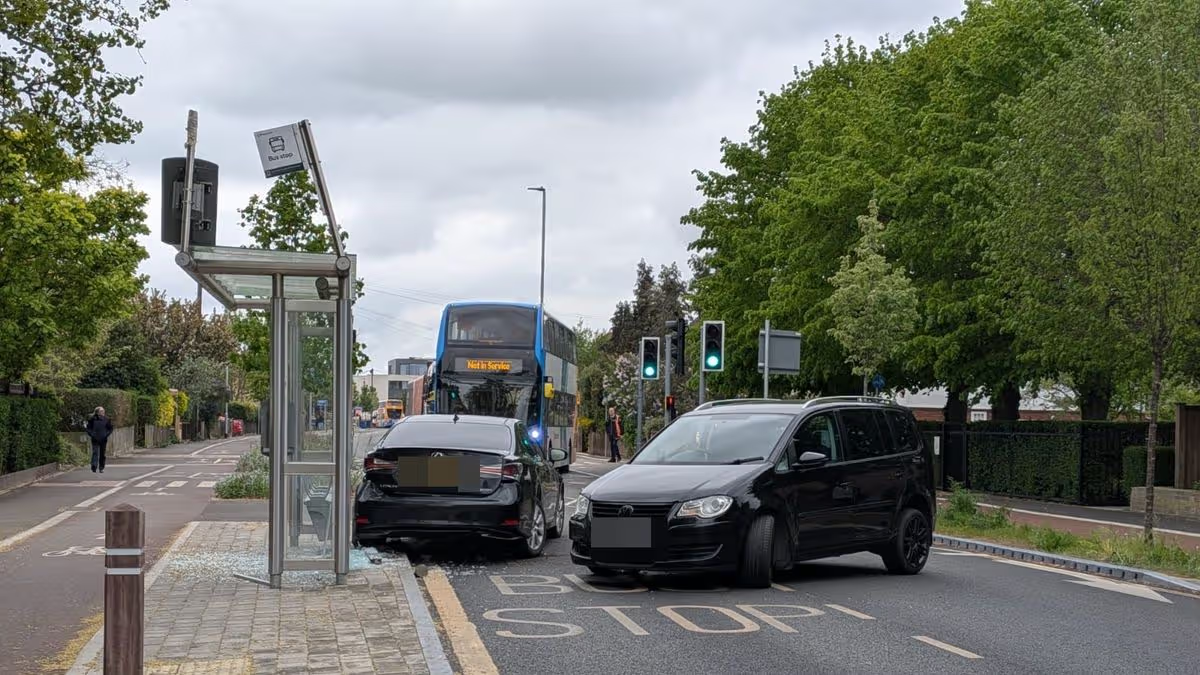
A busy Cambridge road is blocked after a crash on Tuesday (April 28). Cambridgeshire Police were called at 8.47am after reports of a crash involving two cars on Milton Road.
Officers and paramedics are currently at the scene. The junctions of Milton Road, Elizabeth Way, and Highworth Avenue have been closed.
The Ascham Road bus stop was damaged during the crash, pictures from the scene show. One of the glass panels smashed leaving shards over the pavement.
Advertisement
Stagecoach East has confirmed there will be delays to its services that use Milton Road. A Stagecoach East spokesperson said: “#Cambridge PR5 Due to an incident on Milton Road delays are imminent, please allow more time for your journey.”
A spokesperson for Cambridgeshire Police said: “We were called at 8.47am today (28 April) to reports of a two-vehicle collision on Milton Road. Officers and paramedics are at the scene, and the junctions of Milton Road, Elizabeth Way and Highworth Avenue are currently closed.”
To get more news and top stories delivered directly to your phone, join our new WhatsApp community.Click this linkto receive your daily dose of CambridgeshireLive content.
Advertisement
We also treat our community members to special offers, promotions, and adverts from us and our partners. If you don’t like our community, you can check out any time you like. If you’re curious, you can read ourPrivacy Notice.
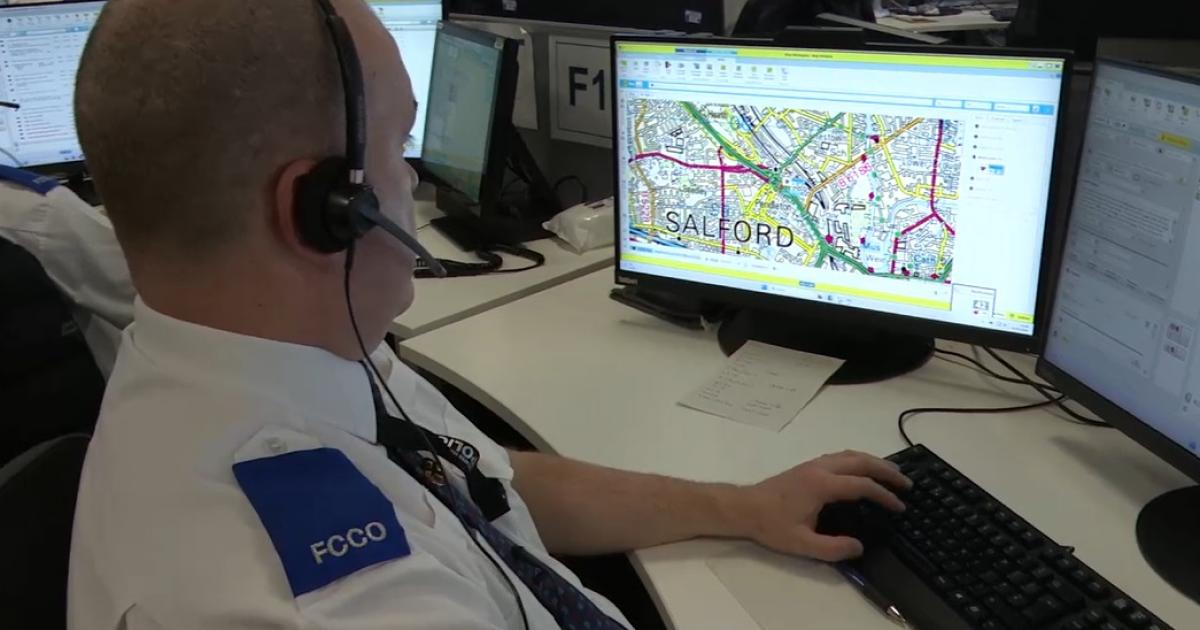
And the force’s dispatch operators are said to play a critical role by co-ordinating the response to the most serious incidents in Bolton, and across the city region.
They are responsible for managing resources and ensuring incidents are responded to quickly and safely, for response officers on patrol.
In the past year the police were called to 141,000 grade one incidents – where an emergency risk to life has been identified – with an average attendance time of seven minutes and 49 seconds.
Dispatch officer (Image: GMP)
Every call is first assessed by highly trained call handlers, who gather vital information, assess risk and prioritise incidents in the Force Contact, Crime and Operations Branch (FCCO).
Advertisement
Once assessed, incidents are passed to dispatch operators, the unseen co-ordinators who ensure officers are deployed and respond where they are needed most across the force area.
In a 24 hour period, dispatch operators can deal with up to 500 grade one emergency incidents and around 350 grade two priority incidents, highlighting the pace and responsibility carried by the role.
From routine deployments to major, fast moving incidents, dispatch operators maintain oversight of what is happening on the ground across the region.
They monitor live incidents, update officers with new information as it becomes available, and continually assess risk as situations develop.
Advertisement
Working under pressure, dispatch operators make time critical decisions and provide vital support to frontline officers, helping to ensure the public receives the right response at the right time.
Dispatch officer (Image: GMP)
Where an incident response time is likely not to be met, the dispatch operators have key responsibility for re-assessing the incident, performing service calls to members of the public to ensure they are safe, and to establish if there are any further notable updates that may exacerbate the risk – all with the public in mind to ensure they are safe.
They also play a critical role in looking after the welfare of officers on the frontline, ensuring we know where our officers are, that they have enough officers at scene on an incident to safely deal, and securing them emergency back-up from other officers nearby.
The dispatch team also have a key responsibility for liaising with partner agencies such as control room operators at North West Ambulance Service, Greater Manchester Fire and Rescue Service, local authorities, social services and partner forces to ensure that incidents are effectively responded to if it requires a multi-agency approach.
Advertisement
For those who do the job, the role is demanding but deeply rewarding.
Andy Martin, a dispatch operator with more than 21 years’ experience in FCCO, said: “I’ve seen the role evolve massively over the years, but the heart of it has always stayed the same – supporting officers and keeping the public safe.
“What I love most is seeing new people come in, find their confidence and grow into the role.
“Knowing you’ve played a part in helping someone develop, while also making a real difference to incidents happening in real time, is something you never lose sight of. It still feels like a privilege to do this job.”
Advertisement
Behind every response, every deployment and every officer sent to an incident, FCCO dispatch operators are working tirelessly to keep Greater Manchester moving safely, proving that while they may not always be seen, their impact is felt across the force every single day.
Another operator, Tom McNish, who is three years into his policing career, highlighted the pace and sense of purpose that comes with the role:
He said: “Every shift is different. You’re right in the middle of the action, assisting officers, solving problems and making sure the right decisions are taken quickly.
“It’s intense, but that’s what I love, you feel part of the response. Working in FCCO has given me a real understanding of policing, and my ambition to one day become a police officer has grown so much within this role.”
Monarch jokes Trump would be ‘speaking French if it wasn’t for us’ at state dinner
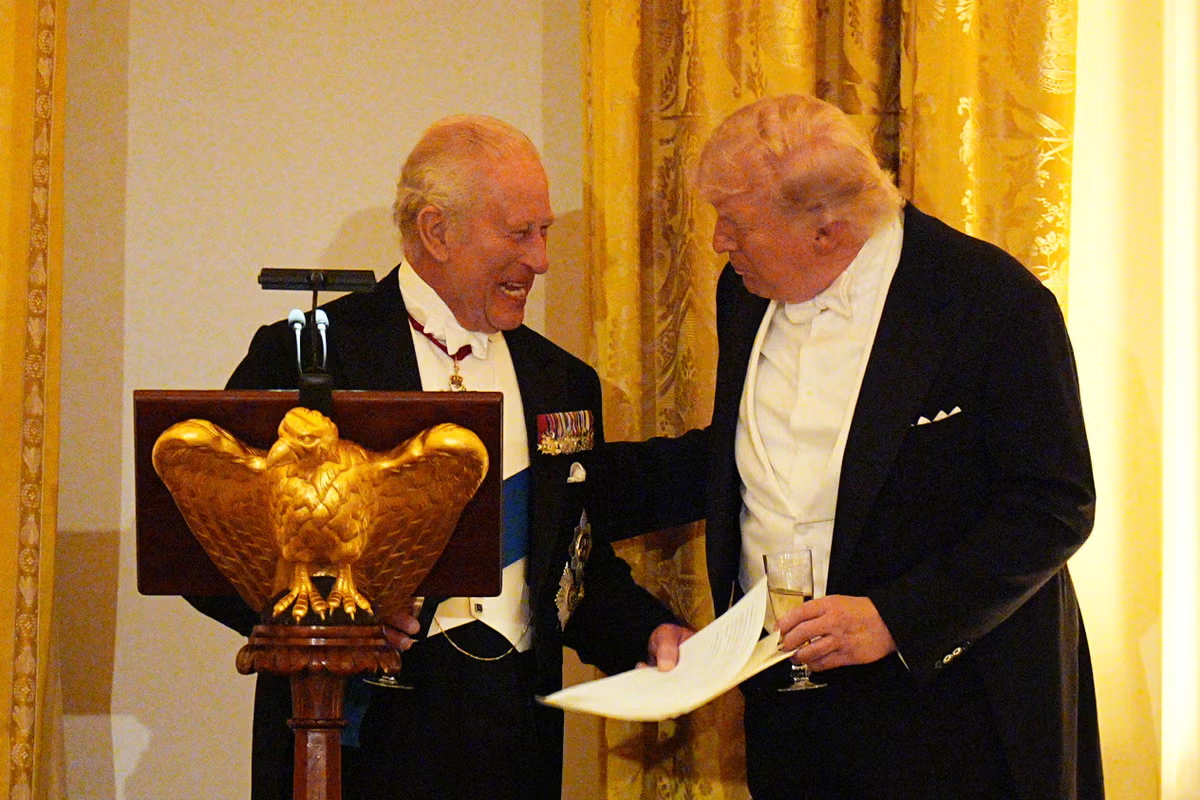
King Charles and Donald Trump shared warm and often light-hearted toasts during an otherwise formal state dinner at the White House on Tuesday evening, as the King and Queen Camilla concluded day two of their royal visit to the US.
Both remarked on their deep historical and cultural ties, with King Charles teasing Trump that he might have been “speaking French” if it were not for Britain’s historical role.
“Indeed, you recently commented, Mr President, that if it were not for the United States, European countries would be speaking German,” the King said.
“Dare I say that, if it wasn’t for us, you’d be speaking French…!”
Advertisement
Charles gifted the president a bell from his namesake the HMS Trump, a submarine that was launched from a UK shipyard in 1944 during World War II, and joked that the president could always “give us a ring”.
Speaking at the US Congress, Charles emphasised the importance of alliances including Nato and urged continued global engagement.
Advertisement
King Charles meets US tech leaders to discuss startup challenges
King Charles met with US tech leaders on Tuesday as part of his four-day state visit, discussing challenges for early-stage startups as the UK touts itself as a top destination for technology firms.
Among the leaders Charles met with were Amazon founder Jeff Bezos, Apple CEO Tim Cook, Nvidia CEO Jensen Huang, Advanced Micro Devices CEO Lisa Su, Salesforce CEO Marc Benioff and Alphabet President Ruth Porat.
Charles noted issues facing companies formed from work at universities and the difficulty of those startups getting funding. “These are the people I always think have the greatest difficulty getting off the ground,” he told the CEOs.
Britain’s King Charles III speaks with Nvidia CEO Jensen Huang, Amazon founder Jeff Bezos and AMD President Lisa Su during a meeting with chief executives from the technology industry at Blair House on day two of the State Visit of King Charles III and Queen Camilla (Getty)
“They get into this terrible valley of death.”Huang noted big areas of opportunity, such as AI and quantum robotics: “We just need a vibrant VC ecosystem and a startup culture,” he told the King, referring to venture capital.
Charles responded, “You’re all deadly competitors,” to laughter.
Advertisement
Huang joked back: “No one has to die.” King Charles responded, “Really?” to more laughter.
Bezos recounted starting Amazon in 1995 and that he struggled to raise $1m from investors, $50,000 at a time, and noted 40 said no.
The King responded, “And all those 40 are kicking themselves,” to wide laughter.
Charles compared people who passed up investing in Amazon to the Harry Potter books and how many publishers turned down the book.
Advertisement
Shweta Sharma29 April 2026 07:12
King Charles’ full schedule for third day of US state visit
King Charles III and Camilla are set to embark on the third day of their historic state visit to the United States, which many hope will repair a weakening “special relationship”.
On Wednesday, Charles and Camilla are due to travel to New York, where they will visit the 9/11 memorial ahead of the 25th anniversary of the September 11 attacks.
Advertisement
During their visit, they will also meet with first responders and families of those who were killed that day.
As part of a visit to the New York Public Library’s permanent treasures collection, the Queen will give a specially made toy of Winnie-the-Pooh character Roo to the library to complete a set of the beloved characters in one of the institution’s collections.
The library is home to the teddy bears which belonged to Christopher Robin, son of Winnie-the-Pooh creator A A Milne, believed to have inspired the stories first published in 1926.
While Winnie, Tigger, Piglet, Kanga and Eeyore are all on display, the original baby kangaroo toy, Roo, was lost in an apple orchard in the 1930s.
Advertisement
The Roo toy was made specifically for the visit by traditional British teddy bear makers Merrythought, who produced the original toys.
Shweta Sharma29 April 2026 07:00
Shweta Sharma29 April 2026 06:41
Advertisement
‘If it wasn’t for us, you’d be speaking French,’ King jokes
King Charles brought a touch of wit to the White House state dinner, joking that Donald Trump might well have been “speaking French” if it were not for Britain’s role in history.
“Indeed, you recently commented, Mr. President, that if it were not for the United States, European countries would be speaking German,” the King said.
“Dare I say that, if it wasn’t for us, you’d be speaking French…!”
Advertisement
He quickly adds that “of course, we both love our French cousins greatly”.
The remark, delivered with a smile, drew laughter from the room and offered a brief moment of humour to the otherwise serious visit amid strained ties between the US and UK.
Shweta Sharma29 April 2026 06:12
Advertisement
Charles gives president a bell from ‘HMS Trump’ submarine
King Charles struck a lighter note with his choice of gift for the president, presenting Donald Trump with the bell from a former British Navy submarine that turns out to have been his namesake.
As the King revealed the gift – a bell from HMS Trump, a WW II-era submarine launched in 1944 – the King said: “May it stand as a testament to our nation’s shared history and shining future.”
“And should you ever need to get hold of us,” he added, “just give us a ring.”
Shweta Sharma29 April 2026 05:45
Advertisement
King Charles touts US-Europe alliance amidst Trump’s repeated threats to leave Nato
King Charles touts US-Europe alliance amidst Trump’s repeated threats to leave Nato
Shweta Sharma29 April 2026 05:32
Watch as President Donald Trump greeted King Charles and Queen Camilla at White House for state dinner
Trump said he was ‘very jealous’ of Charles’ earlier speech to Congress
Katie Hawkinson29 April 2026 05:00
Advertisement
White House state dinner ends with ceremonial band send-off
The state dinner hosted by president Donald Trump and first lady Melania Trump for King Charles III and Queen Camilla is drawing to a close at the White House.
A military band has taken centre stage, filling the room with a final flourish of music.
The band played The Music of the Night from The Phantom of the Opera for guests still seated at the tables.
Advertisement
Shweta Sharma29 April 2026 04:53
Trump says King agrees with him on Iran as British monarch stays silent
At a glittering state dinner at the White House, Donald Trump brought an unexpected edge to the evening, by saying the British monarch agrees with him on Iran’s nuclear ambitions.
Speaking to guests, Trump struck a confident tone about developments in the Middle East.
Advertisement
“We’re doing a little Middle East work right now and we’re doing very well,” he said.
He went on to claim military success against the adversary, adding that the US would “never” allow that opponent to obtain a nuclear weapon – and pointedly suggested that King Charles shared that view.
“Charles agrees with me even more than I do,” Trump quipped, before reiterating that Iran would not be allowed to develop nuclear arms.
In his own comments after Trump spoke, Charles did not speak about Iran or the Iran war.
Advertisement
As a constitutional monarch, he does not speak on behalf of the British government, and his comments remained focused on broader themes rather than geopolitics.
Instead, he offered a more measured reflection on global security, acknowledging tensions within Nato, stressing the importance of continued US support for Ukraine in its war with Russia, and warning against the risks of isolationism.
Despite the diplomatic tightrope on display, there is a longstanding alignment between the UK and the US on one key point: both countries maintain that Iran must not acquire nuclear weapons.
Shweta Sharma29 April 2026 04:27
Advertisement
ICYMI: Trump cracks awkward marriage joke to Melania with King Charles watching after Jimmy Kimmel ‘widow’ uproar
The applicant hopes that the machine would mean reduced waiting times, prevent unnecessary journeys and be convenient for patients to collect medicines when they want
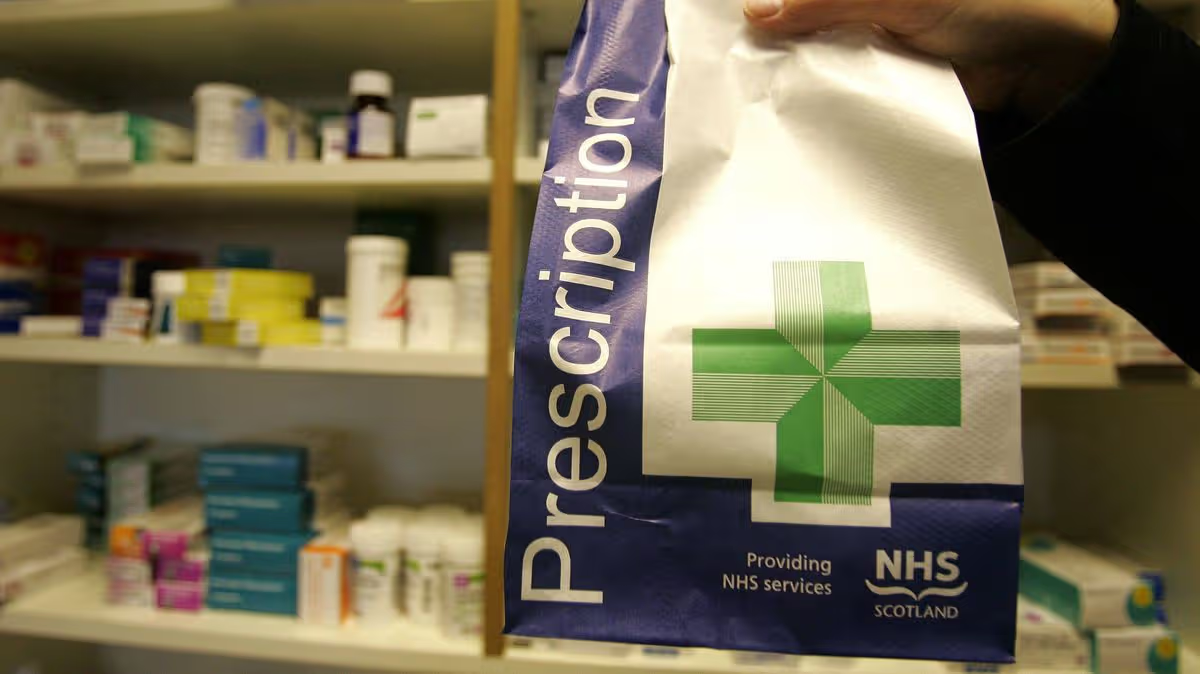
Plans for an automated prescription collection machine outside a health centre have been submitted to Fenland District Council. Permission has been sought to install a Pharmaself24 machine outside The Riverside Practice and the pharmacy on Marylebone Road in March.
Advertisement
If approved, it would allow patients to collect prescriptions from the dispensing unit at their convenience to reduce waiting times and improve pharmacy workflow. The application states that the collection point would allow the pharmacy to reduce the need for home deliveries, reducing its carbon emissions.
The application says: “The benefits to the customers are reduced waiting times, avoiding unnecessary journeys and allowing the convenience to collect medicines when they want (for example on their way to or from work, shift workers, carers and on Sundays etc). This is particularly useful for repeat prescriptions and working patients who are unable to collect prescriptions during opening hours.”
Pharmacy staff dispense the medicines as normal and then load the dispensed bags securely into the machine using barcode technology. To collect their prescriptions, patients would be notified that their prescription is ready and provided with a one-time-use-only PIN number, rather than any patient details, to collect the medicine.
According to the plans, it only takes a few seconds. The collection PIN numbers would be provided to the customers by SMS message.
Advertisement
The plans describe the Pharmaself24 as a self-contained, secure, vandal-resistant, machine. It would be fitted into the wall of the pharmacy and feature the business logo, a touch screen, credit card reader, and collection flap.
The collection flap is automatically locked when patients are not collecting the prescriptions and the machines have a capacity of up to 180 dispensing bags. The machine would not be loaded with controlled drugs including all Schedule 2 or Schedule 3 medicines that fall under the normal safe custody requirements.
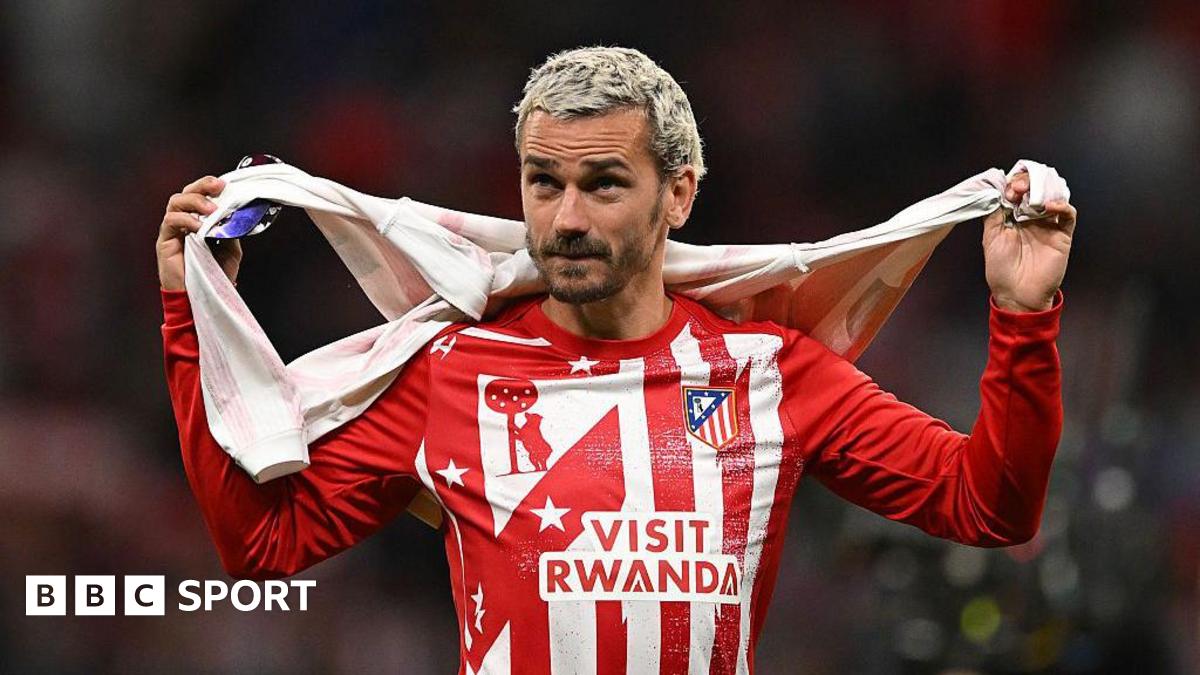
Antoine Griezmann’s significance at Atletico Madrid goes far beyond his numbers. He is regarded as their greatest player, not just a goalscorer, but more importantly as the most complete expression of what the club stands for.
Simeone spoke about him with genuine emotion, even saying he loves him. Thierry Henry thanked him publicly a couple of weeks ago for everything he has given to football. He is not just a likable character with a very positive leadership style, but someone that makes everyone around them better.
For a whole generation of fans, Griezmann is Atletico. Apart from his two-year spell at Barcelona, he has been the constant reference point, the face of the team. His return, after a difficult and unpopular departure, could have been complicated, but the way he came back, apologised, and reconnected with the fans only strengthened that bond.
Griezmann embodies the perfect Simeone player – total commitment, relentless work-rate, and the willingness to put his talent at the service of the team. He sacrifices, he leads by example, as well as fully embracing the manager’s authority – you don’t always see that from a World Cup-winner in a team that rarely secures the biggest trophies.
Advertisement
Interestingly, his time hasn’t been defined by a long list of silverware – he has won the Spanish Super Cup, the Europa League and the Uefa Super Cup with Atletico.
Instead, his legacy is built on something else that will remain for a long time. He represents the ideal Atletico footballer, someone who combines quality with effort.
But also someone who could have gone to other pastures as well as Barcelona, alhough when he did, he felt he had left home.














































You must be logged in to post a comment Login