Carrick has also made a compelling case for getting the manager’s job on a full-time basis, especially as a couple of the more experienced, successful and Premier League-ready alternatives Thomas Tuchel and Carlo Ancelotti have committed themselves to their international jobs at England and Brazil beyond the summer.
Roberto de Zerbi has been sacked by Marseille, while Oliver Glasner might well suffer the same fate at Crystal Palace before he leaves when his contract expires in the summer. Their credentials wouldn’t look quite so attractive against Carrick’s if he did get United back into Europe’s elite club competition.
They would also be a more attractive proposition commercially.
At a time when questions are starting to be asked about the club’s ability to do deals and the lack of a training ground or kit sponsor, that is quite important.
Advertisement
In addition, although it is some way in the future, if United’s new stadium plans eventually proceed, funding will be based around a significant percentage of expensive ‘premium’ seats.
While club officials have stressed no decisions around ticket prices have been taken, a document sent to season ticket holders in October placed indicative prices at £4,830 for season tickets on the lower tier of the stand opposite the dugouts, with hospitality prices rising to £424,800 for a 16-seat large private box in the middle tier of the main stand, level with the halfway line.
Clearly, supporters are more likely to be willing to pay such figures if they were watching a team competing for major trophies, something that has not happened since Sir Alex Ferguson retired in 2013.
The club’s huge debt, way in excess of £1bn including outstanding transfer fee payments, might at least not need to be increased too.
Advertisement
Over the past six weeks, Carrick has repeatedly stressed he is not getting carried away by his side’s impressive form. After the Everton win, a question was put to him about the triumph providing belief around Champions League qualification on a weekend when Villa and Chelsea both drew at home and Liverpool needed an injury-time winner at Nottingham Forest.
Carrick’s answer bore no relation to the core point he was being asked. There is logic behind this. Results can change narratives very quickly in football.
When he took over at Middlesbrough in 2022, Carrick won 15 of his first 20 league games, then only three of the next 12. A potential automatic promotion place turned into a play-off meeting with Coventry, which Middlesbrough lost. They never got as close to promotion again under the former England midfielder.
He knows his team are well-placed to seal their Champions League return. Completing the job is the task now.
President Trump has announced a two-week ceasefire with Iran if the Strait of Hormuz is reopened, just hours before his deadline threatening to send the country “back to the stone age”
President Donald Trump has announced there will be a ceasefire between the US and Iran as the Strait of Hormuz is reopened.
Advertisement
Trump made the declaration ahead of his stark deadline in which he warned he would send Iran “back to the stone age”.
In a post on his social media platform on Tuesday evening, Trump stated that should Iran agree “to the COMPLETE, IMMEDIATE, and SAFE OPENING of the Strait of Hormuz” then he would “suspend the bombing and attack of Iran for a period of two weeks.”
Since the conflict began in February, Trump has issued a string of deadlines threatening to intensify hostilities, only to pull back just before they lapse.
In his most recent warning on Tuesday he declared that a “whole civilization will die tonight” if Iran fails to meet his latest ultimatum, reports the Express.
Advertisement
The president revealed that the decision has been taken following talks with the leadership of Pakistan.
He said: “This will be a double sided CEASEFIRE!”
He added: “We received a 10 point proposal from Iran, and believe it is a workable basis on which to negotiate.
“Almost all of the various points of past contention have been agreed to between the United States and Iran, but a two week period will allow the Agreement to be finalized and consummated.
Advertisement
“On behalf of the United States of America, as President, and also representing the Countries of the Middle East, it is an Honor to have this Longterm problem close to resolution.
Donald Trump has been mocked after he said he would suspend his threatened attack against Iran less than two hours before the deadline the president set for Tehran
The stoppage will see the reopening of the Strait of Hormuz, and so US crude oil has slid 18 percent to less than $93 (£70) a barrel, after trading upwards of $117 (£87) that very same day. The dips mark the largest one-day lowering of oil prices since during the Gulf War in 1991.
And prices for natural gas and heating oil also dropped a fair amount following the ceasefire development. Brent crude oil futures fell about six percent to $103.40. Both prices remain well above where they were at the start of the war.
Shipping in the Strait of Hormuz, a chokepoint in the Persian Gulf through which 20 percent of the world’s oil normally flows, had been all but halted. But NBC News now reports Dow futures went up 1,000 points, Nasdaq 100 futures nearly three percent and S&P 500 futures rose over 2.5 percent since Mr Trump’s announcement.
Concern had grown for the cost of living, including oil and petrol prices, after the war started last month. Data from the RAC shows the average price of a litre of diesel at UK forecourts was 185.2p, up 30 percent since the conflict began. This has impacted motorists who use roads for both work and pleasure, including 39-year-old James Airey, the owner of landscaping business Lawn and Order in Watford, Hertfordshire.
He said: “If I don’t fill the vans up, or fill the tools up, then I can’t earn a living. Everything smooths out after a while, but I’m really noticing a big difference. I’m laying out about £300 a week before I make anything back. If I work the weekend, which we sometimes will, that’s more money as well. If I think ‘no, I can’t pay the extra’ then I lose that whole day’s work, lose my customers, lose my business – so it’s just something you have to overcome.”
Advertisement
And so the drop in oil prices will be of welcome relief to Brits, especially those who use roads regularly. In the bond market, Treasury yields eased on word of a potential cease-fire. The yield on the 10-year Treasury fell to 4.24 percent from 4.30 percent earlier Tuesday.
That’s still well above its 3.97 percent level from before the war, and the rise has pushed up rates for mortgages and other loans going to US households and businesses, which slows the economy.
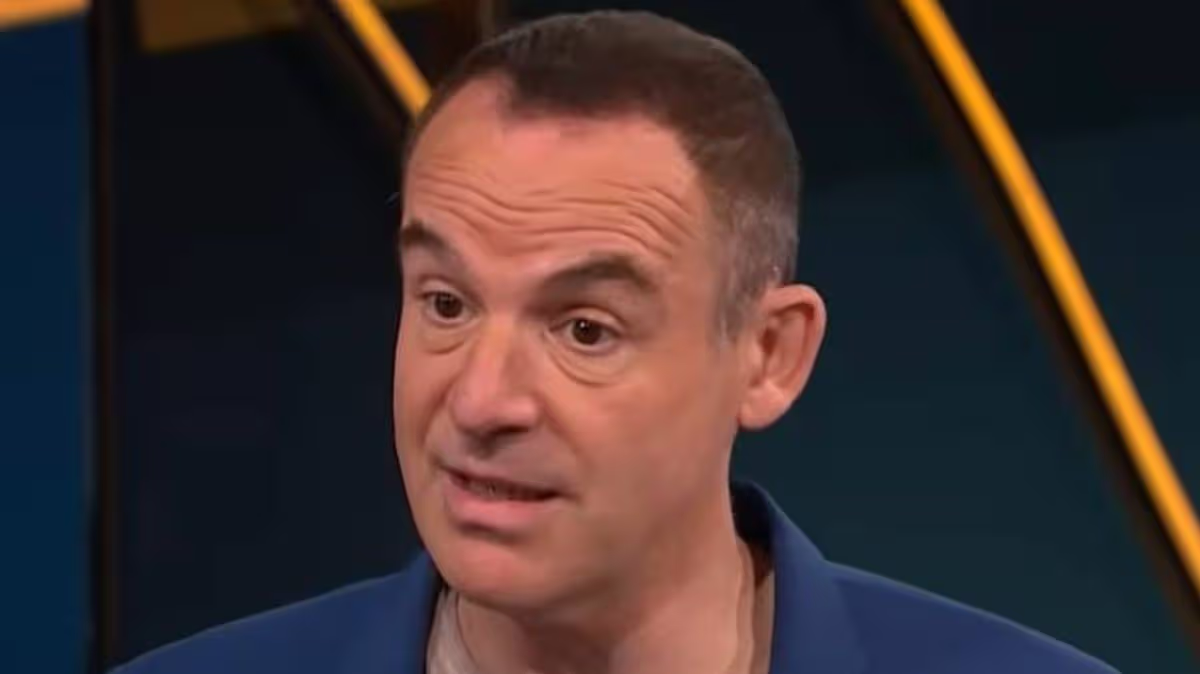
Martin Lewis has helpful tax guidance for pensioners
Robert Rowlands Deputy editor, money and lifestyle hub and Nicholas Dawson
20:00, 07 Apr 2026
Martin Lewis has shared valuable tax guidance that pensioners would do well to take note of. During an episode of his BBC podcast, the consumer champion addressed a broad range of tax-related questions.
The programme explored subjects including income tax changes impacting state pensioners, alongside how inheritance tax and capital gains tax operate. Mr Lewis was accompanied by two tax specialists to help clarify the regulations, including chartered accountant Rebecca Benneyworth.
Advertisement
A listener called Cathy, 80, contacted the show to explain she was finding it difficult to complete her HMRC self-assessment forms – something many people must do annually. The next deadline for submitting your self-assessment tax return for the previous tax year is January 31, 2027 – but Martin advises against waiting until the deadline approaches.
Not submitting your tax return punctually can lead to penalties. The pensioner said she only owed £150 in tax and had attempted to secure assistance from a tax adviser, but many were imposing substantial charges.
Mr Lewis reminded listeners that completing your self-assessment between October and December, well in advance of the annual January deadline, is highly recommended. Ms Benneyworth also detailed some of the support available for elderly taxpayers, reports the Mirror.
She said: “If you are on a low income, there are two tax charities. One I’m thinking of is Tax Help for Older People. They have an army of volunteers – I’ve worked as a volunteer in the past – for elderly people on low incomes.
Advertisement
“They will come round to your house and they will sit with you, and they will sort out your tax.” The tax specialist then pointed the caller towards another charitable organisation that could offer further assistance.
Ms Benneyworth continued: “The other one is Tax Aid. They are more London-based but you can deal with them on the phone or by email. Again, they help people who’ve got low incomes who have got themselves into a mess with their tax affairs for free.
“Lots of tax professionals make donations to those charities at the end of the year because we all think they do an absolutely fabulous job.” The accountant also put forward another route for gaining a better understanding of HMRC regulations.
She went on to say: “I wouldn’t suggest it to everybody but you might get a bit of help on webchat [on the Government website]. HMRC is devoting quite a lot of money and resource to webchat.
Advertisement
“Some of it is the computer says yes or no, but if you are asking questions that they think you need a real life advisor, you may well be able to get put on to an advisor, who might help you.”
Offering his own perspective, Mr Lewis noted that improving services is ultimately in the Government’s interest. He remarked: “This isn’t about a cost [for HMRC]. Ultimately, do it right and you collect more tax revenue, because people are paying the right tax. When you don’t know what to do, it’s not good for society.”
Mr Lewis’ Money Saving Expert website offers guidance regarding the 2027 deadline, stating: “If you’re self-employed or had extra income last year, you may need to file a self-assessment tax return. For the 2025/26 tax year (which ended on 5 April 2026) you have until 31 January 2027 to submit online.”
Ensuring your tax return is filed punctually by January 31 is essential, as missing the cut-off could result in escalating financial penalties. The taxcalc website warns: “If you miss the deadline you’ll be subject to the late filing penalty rules.”
Advertisement
The MSE website further cautions: “Missing the deadline for filing your return means an automatic penalty of £100 – and these penalties increase the longer you leave it.”
The forgotten Canadian crime drama starring David Sutcliffe is gripping UK viewers
Aaliyah Rugg Senior reporter
21:52, 07 Apr 2026
An overlooked crime drama featuring a Gilmore Girls star has arrived on UK streaming, captivating fans from beginning to end. First released back in 2013 on CBC, Cracked follows a former SWAT officer in America, Detective Aidan Black, who was reassigned after a very public incident that left him struggling.
He was transferred to a newly formed psych crimes and crisis unit as the series follows his new move. Being released over a decade ago, Cracked quickly became a massive hit with viewers, with season one being a firm favourite with fans. Starring Gilmore Girls icon David Sutcliffe (known for his role as Christopher Hayden) as Detective Black, the show ran for two seasons before it was removed from television screens.
Advertisement
Now, season one of the hit crime drama series is available to stream on Prime Video and is currently trending on the streaming platform. However, the second season has not yet been made available, reports the Mirror.
Prime Video teases: “Former SWAT officer Detective Aidan Black is taken aback when he learns that his new partner isn’t a cop. He’s been assigned to work with forensic psychiatrist Dr. Daniella Ridley in a newly established unit tasked with solving the city’s most horrific crimes. Their contrasting perspectives and methods are meant to help crack even the toughest cases.”
Advertisement
With 13 episodes in season one, Cracked has been hailed as a must-watch by viewers.
One IMDb reviewer penned: “The First season of CRACKED had the promise of being something TRULY GREAT and the first of its kind on Canadian TV.” They later added: “Its rare that ANY television show has made me care so much for ALL of its characters. Even the weekly antagonist.”
Another expressed: “I love the crime show genre, and this one is different enough to stand out from the crowd and entice me to watch every episode. Too many crime shows are built from the same mould.
“This show contains plenty of storyline and plot development, but still has a certain amount of thrill to it…so its not just mindless guts and gore, its not just another Drama, not just another who-dun-it show. I think it dips its toes just enough into each.”
A third declared it was “excellent… excellent… excellent”, adding: ” The show has the suspense and also the drama. I was literally holding on to my pillow as I watched this show, trying not to miss even the tinniest details.”
Watch The Summer I Turned Pretty on Amazon Prime
This article contains affiliate links, we will receive a commission on any sales we generate from it. Learn more
The last season of The Summer I Turned Pretty dropped on Amazon Prime in the autumn of 2025, with the promise of a movie on the horizon. Shoppers can watch the show with a Prime Video account, which costs £8.99/month.
The first episode plunges viewers straight into chaos as it has been teased: “When Detective Aidan Black publicly loses it, he is reassigned to the Psych Crimes Unit, pairing police with mental health experts.
“On his first case, he teams up with Doctor Daniella Ridley to investigate a teen hockey star’s bizarre murder involving a lightbulb in the chest. As they uncover a pattern, they race to decode a delusion linking lightbulbs to power-before the killer strikes again.”
Viewers may also recognise Stefanie von Pfetten as Dr. Daniella Ridley , Dayo Ade as Leo Beckett and Luisa D’Oliveira as Detective Poppy Wisnefski. Other familiar faces include Karen LeBlanc, Paul Popowich and Brooke Nevin.
Advertisement
Cracked season one can be streamed on Prime Video.
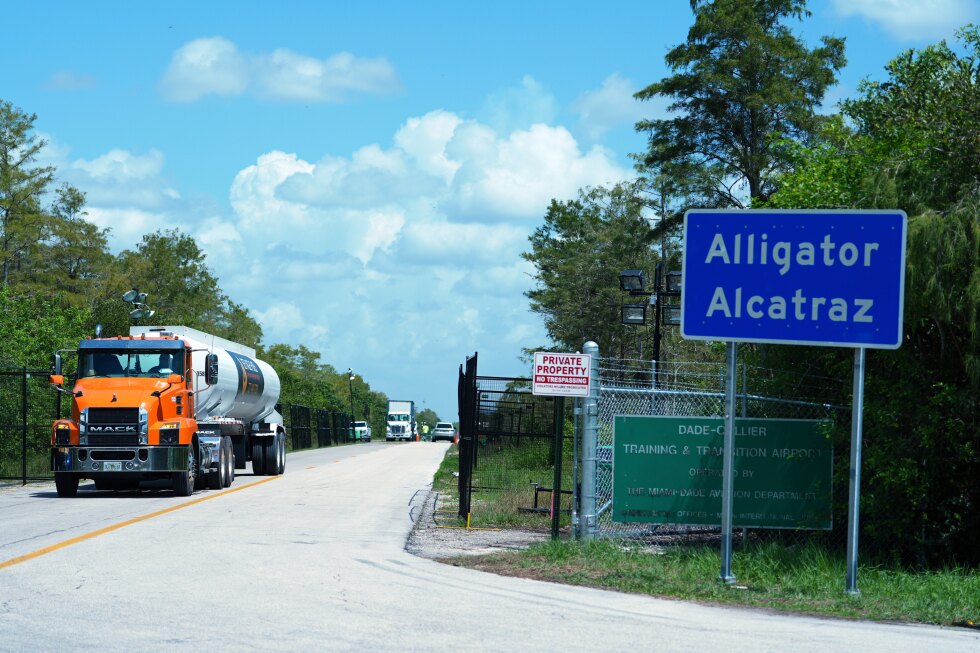
ORLANDO, Fla. (AP) — Environmental groups on Tuesday asked a federal appellate court panel to drop its temporary halt of a lower court’s order instructing state officials to close an immigration detention center in the heart of the Florida Everglades known as “Alligator Alcatraz.”
The Everglades facility remains open, still holding detainees, because the appellate court in early September relied on arguments by Florida and the Trump administration that the state had not yet applied for federal reimbursement, and therefore wasn’t required to follow federal environmental law. State officials opened the detention center last summer to support President Donald Trump’s immigration crackdown.
Questions by the three appellate judges during oral arguments in a Miami courtroom focused on how much control the federal government had over the state-built facility and under what circumstances an environmental review was required to be in compliance with federal law. The judges did not indicate when they would rule.
Jesse Panuccio, an attorney for the Florida Department of Emergency Management, told the judges federal funding and federal control of the facility were the two criteria for determining if the federal environmental law would apply and the federal agencies had no control over the state-run detention center.
Advertisement
Florida was notified in late September that FEMA had approved $608 million in federal funding to support the center’s construction and operation.
“You need both,” Panuccio said. “Even with funding, I don’t think that would follow because they don’t have federal control.”
An attorney for the environmental groups said the law requiring a review applied to the facility because the U.S. Department of Homeland Security had authorized the funding and immigration was a responsibility of the federal government, not the state. There only needed to be “substantial federal control” and not complete control, said Paul Schwiep, an attorney representing the Friends of the Everglades and the Center for Biological Diversity.
Chief Judge William Pryor, who was appointed to the appellate court by President George W. Bush, responded, “It’s not federally controlled when the state retains authority to make decisions.”
Advertisement
Judge Nancy Abudu, who was named to the appellate court by President Joe Biden, asked an attorney for the federal government if states can be in charge of immigration matters. Adam Gustafson responded that the federal government can delegate certain responsibilities to states.
“Is it also, once the federal government gives the states its authority, it’s the ‘Wild, Wild West?’ Abudu asked.
Advertisement
Sign up for Morning Wire:
Our flagship newsletter breaks down the biggest headlines of the day.
Advertisement
The federal district judge in Miami in mid-August ordered the facility to wind down operations over two months because officials had failed to do a review of the detention center’s environmental impact according to federal law. That judge concluded that a reimbursement decision already had been made. The appellate court halted the order on an appeal.
The environmental lawsuit was one of three federal court challenges to the Everglades facility since it opened. In the others, a detainee said Florida agencies and private contractors hired by the state had no authority to operate the center under federal law. The challenge ended after the immigrant detainee who filed the lawsuit agreed to be removed from the United States.
In the third lawsuit, a federal judge in Fort Myers, Florida, ruled the Everglades facility must provide detainees there with better access to their attorneys, as well as confidential, unmonitored and unrecorded outgoing legal calls.
The historic 110-lap ‘Grand Prix of the Royal Automobile Club’ took place on a fast, specially designed 2.61-mile course around the famous oval circuit at Brooklands, in Weybridge, Surrey. Sections of the renowned, steeply banked track were incorporated, alongside the Finishing Straight, where challenging temporary sandbank chicanes were installed on either side of the refuelling pits.
Like Prima Facie, Inter Alia deals with the fact that the system remains rigged against women, particularly the legal system, where convictions for rape and sexual assault are rare and victim-blaming common. And as with the earlier play, the price of Miller’s insider information is the occasional impenetrable thicket of legalese. She and Martin are adroit, though, at sudden shifts of mood, from comedy into something stark.
The Islamic Republic urged young people to form human chains around potential targets
Iranians have been forming human chains at bridges and power plants ahead of Trump’s threat to obliterate the sites. The protest came after the president warned “a whole civilization will die tonight” if Iran does not re-open the Strait of Hormuz before his 8pm ET deadline (1am Wednesday UK time).
The Islamic Republic urged young people to form human chains around power plants and other potential targets. Before the deadline, airstrikes had hit two bridges and a train station, and the US hit military infrastructure on Kharg Island.
Advertisement
Iranian official Alireza Rahimi issued a video message calling on ‘all young people, athletes, artists, students and university students and their professors’ to form human chains around power plants. Iranians gathered to form the human chains in the past around nuclear sites at times of heightened tensions with the West.
Get MEN Premium now for just £1 HERE – or get involved in our WhatsApp group by clicking HERE. And don’t miss out on our brilliant selection of newsletters HERE.
Some images of people surrounding power plants were posted on Tuesday (April 7) by local Iranian media, though how widespread the practice was is unknown.
Before the deadline, airstrikes hit two bridges and a train station, and the US hit military infrastructure on Kharg Island. It was the second time American forces struck the island, a key hub for Iranian oil production. Meanwhile, an Iranian envoy says Tehran will ‘take immediate and proportionate’ action if the US president follows through on his threats.
Advertisement
Tehran’s United Nations representative, Amir-Saeid Iravani, said Mr Trump’s threats ‘constitute incitement to war crimes and potentially genocide’.
Iran has since launched a series of cyber attacks against the US hours after Donald Trump made the threat to wipe out the country’s civilisation. According to the US Cybersecurity and Infrastructure Security Agency “Iran-affiliated” hackers are “conducting exploitation activity targeting internet-facing operational technology (OT) devices, including programmable logic controllers (PLCs) manufactured by Rockwell Automation/Allen-Bradley”.
Since the war began, Mr Trump has repeatedly imposed deadlines linked to threats, only to extend them. But the president insisted this one is final and will expire at 8pm in Washington without a major diplomatic breakthrough.
Mr Trump has made reopening the strait — through which a fifth of the world’s oil transits in peacetime — part of avoiding wider attacks and suggested that the waterway is not as vital to US oil interests as it to other countries. He has also said he would be willing to deploy ground troops to seize Iranian oil, while maintaining that major combat operations in that country could soon conclude.
Meanwhile, Iran’s president said 14 million people, including himself, have volunteered to fight. This is despite Mr Trump threatening that US forces could wipe out all bridges in Iran in a matter of hours and reduce all power plants to smoking rubble in roughly the same time frame.
He also suggested the entire country could be wiped off the map. It was not clear if the latest airstrikes were linked to Mr Trump’s threats to widen the civilian target list.
At least two of the targets were connected to Iran’s rail network, and Israeli Prime Minister Benjamin Netanyahu said Israeli warplanes struck bridges and railways in Iran. Tehran fired on Israel and Saudi Arabia, prompting the temporary closure of a major bridge.
Advertisement
Officials involved in diplomatic efforts said talks were ongoing, but Iran has rejected the latest American proposal.
“A whole civilization will die tonight, never to be brought back again,” if a deal is not reached, Mr Trump said in an online post on Tuesday morning.
President Masoud Pezeshkian posted on X that 14 million Iranians had answered campaigns urging people to volunteer to fight — and said he would join them — while a Revolutionary Guard general urged parents to send their children to man checkpoints.
The Guard warned that Iran would ‘deprive the US and its allies of the region’s oil and gas for years’ and expand its attacks across the Gulf region if Mr Trump carried out his threat.
Advertisement
French foreign minister Jean-Noel Barrot joined a growing chorus of international voices saying that attacks targeting civilian and energy infrastructure could constitute a war crime. Mr Trump said he is “not at all” concerned about committing war crimes.
Volker Turk, the UN high commissioner for human rights, said he deplored the rhetoric being used over the last two weeks “by all parties, including the latest threats to annihilate a whole civilization and to target civilian infrastructure”.


















































You must be logged in to post a comment Login