





Connect with us
DAPA Banner

Business

Jet fuel supply concerns grow with Iran war as airlines cut flights

Published

on

Jet fuel supply concerns grow with Iran war as airlines cut flights

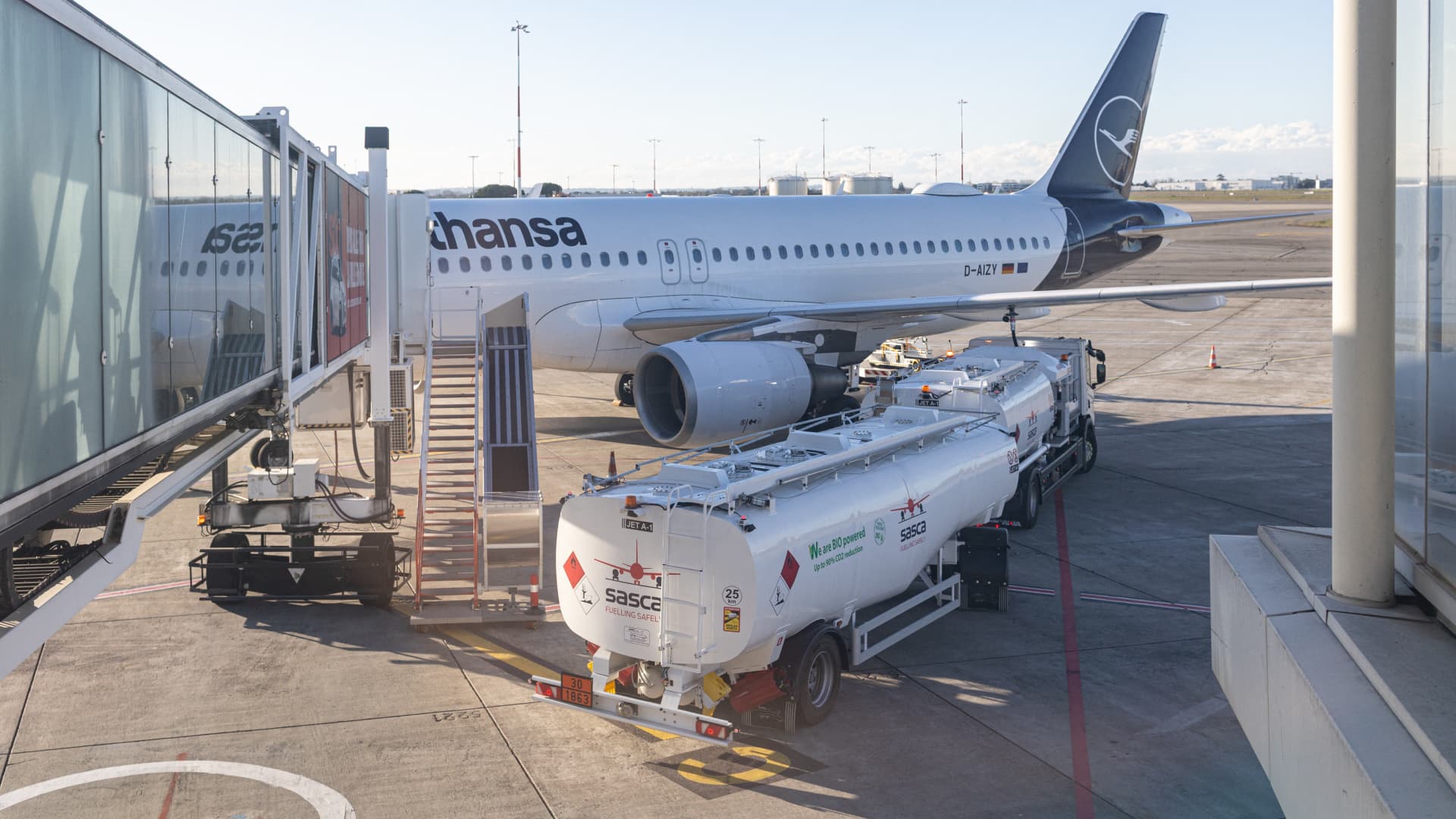
A Lufthansa passenger aircraft is parked at a gate while a SASCA fuel truck services it on the apron at Toulouse Blagnac Airport in Blagnac in Occitanie in France on March 15, 2026.

Isabelle Souriment | AFP | Getty Images

The surging price of jet fuel isn’t the airline industry’s only problem. Now, it’s whether it will have enough.

Advertisement

Since the U.S. and Israel attacked Iran on Feb. 28, the price of jet fuel in the U.S. has nearly doubled, going from $2.50 a gallon on Feb. 27 to $4.88 a gallon on April 2, with the increases even sharper in other regions. The effective closure of the Strait of Hormuz is choking off supplies of both crude and refined products like jet fuel, further driving up the price.

That’s forcing airlines to consider cutting flights, especially overseas.

Carsten Spohr, CEO of Germany’s Deutsche Lufthansa, told employees in a webcast last week that the carrier is assigning teams to come up with contingency plans because of the war in the Middle East, including for drops in demand or a lack of jet fuel, a spokesman said. Those plans could include grounding some of its aircraft.

The U.S. produces a lot of jet fuel and isn’t as exposed as other regions like Europe and parts of Asia are in comparison. But aircraft fill up locally, so some U.S. airlines could face shortages on international trips.

Advertisement

United Airlines CEO Scott Kirby told reporters late last month that the carrier, which has the most service to Asia among U.S. airlines, would have to cut back its flights there. He also said it’s “not impossible” that airlines collectively would have to reduce service in that region.

He noted that as the price of jet fuel goes up, it could be more acute in parts of the U.S. that aren’t as connected by pipelines.

“There’s not enough refining capacity, and so fuel price prior to this and going forward is more susceptible to supply weakness on the West Coast than anywhere else in the country,” he said.

Kirby told employees earlier in March that the airline is preparing for oil to stay above $100 a barrel through 2027 and is pruning some of its flights in the near term.

Advertisement

“To be clear, nothing changes about our longer-term plans for aircraft deliveries or total capacity for 2027 and beyond, but there’s no point in burning cash in the near term on flying that just can’t absorb these fuel costs,” he said in a March 20 message to employees.

Travel demand wild card

Airlines overall are pruning some flights for the coming months, though they often adjust schedules throughout the year to match demand, aircraft availability or other complications.

Domestic capacity in the second quarter for U.S. carriers is up 2.1%, down from previous plans of 2.3% growth, while total capacity is set to rise 1.1%, down from 2.4% on the week ended March 20, according to a Monday report from UBS.

“We expect more capacity cuts in the coming weeks,” UBS said.

Advertisement

So far, airline executives have said that travel demand is strong, but the fuel strains and price spikes are a headache for carriers and passengers alike as the peak summer travel season approaches.

Fuel is generally airlines’ biggest expense after labor, and carriers are already raising airfare and fees like for checked luggage to make up for the added cost.

A truck parks after refuelling a Citilink Airbus at Soekarno-Hatta International Airport following the government approval of a jet fuel surcharge, amid the U.S.-Israeli conflict with Iran, in Tangerang, on the outskirts of Jakarta, Indonesia, April 6, 2026.

Ajeng Dinar Ulfiana | Reuters

Advertisement

Investors will be listening for more insights into how the jet fuel spike could affect the industry as airline earnings kick off Wednesday with Delta Air Lines. That carrier owns a refinery, so it could benefit from jet fuel sales.

Delta on Tuesday raised checked bag fees, joining JetBlue Airways and United, which did the same last week.

The strong demand, particularly compared with this time last year could further insulate airlines, at least in the U.S. Last year, bookings fell as President Donald Trump‘s trade war kicked off with steep tariffs, markets sank and layoffs within the government, led by Elon Musk‘s so-called Department of Government Efficiency, took effect.

“The positive commentary on demand is still holding, but fuel at $4/4.50 [a gallon] for longer isn’t something airlines can pass through,” said Savanthi Syth, an airline analyst at Raymond James. “If fuel stays high, you’ll just see capacity being cut.”

Advertisement

Airlines could see a bigger problem if higher gasoline prices and other pressures on consumers cause a pullback in spending.

“We’re watching the airlines very closely right now. This doesn’t have to go on too terribly long at these [fuel price] levels before you start to see potential for ratings pressures,” said Joseph Rohlena, senior director at Fitch Ratings who covers U.S. airlines.

Read more CNBC airline news

Choose CNBC as your preferred source on Google and never miss a moment from the most trusted name in business news.
Continue Reading
Click to comment

You must be logged in to post a comment Login

Leave a Reply

Business

VNQI: Good Low Cost Diversifier For Other US-Based Real Estate Investments (NASDAQ:VNQI)

Published

on

VNQI: Good Low Cost Diversifier For Other US-Based Real Estate Investments (NASDAQ:VNQI)

This article was written by

George Spritzer, CFA is a registered investment advisor who specializes in managing closed-end funds for individuals. George also shares his understanding of how to profit from investing with special situations as a catalyst. George is a contributor to the investing group Yield Hunting: Alt Inc Opps, a premium service dedicated to income investors who are searching for yield without the high risk of the equity market. The group manages four portfolios with a range of yield targets, a monthly newsletter, weekly commentary, rankings of CEFs based on yield, trade alerts, and access to chat for questions. Learn more.

Analyst’s Disclosure: I/we have a beneficial long position in the shares of VNQI either through stock ownership, options, or other derivatives. I wrote this article myself, and it expresses my own opinions. I am not receiving compensation for it (other than from Seeking Alpha). I have no business relationship with any company whose stock is mentioned in this article.

Seeking Alpha’s Disclosure: Past performance is no guarantee of future results. No recommendation or advice is being given as to whether any investment is suitable for a particular investor. Any views or opinions expressed above may not reflect those of Seeking Alpha as a whole. Seeking Alpha is not a licensed securities dealer, broker or US investment adviser or investment bank. Our analysts are third party authors that include both professional investors and individual investors who may not be licensed or certified by any institute or regulatory body.

Advertisement
Continue Reading

Business

The frustration in Wales is not politicians disagreeing but that we face the same problems of two decades ago

Published

on

Business Live

If no party has a majority, the next Welsh Government will be judged not by the elegance of its agreements but by its ability to make the Welsh state work better.

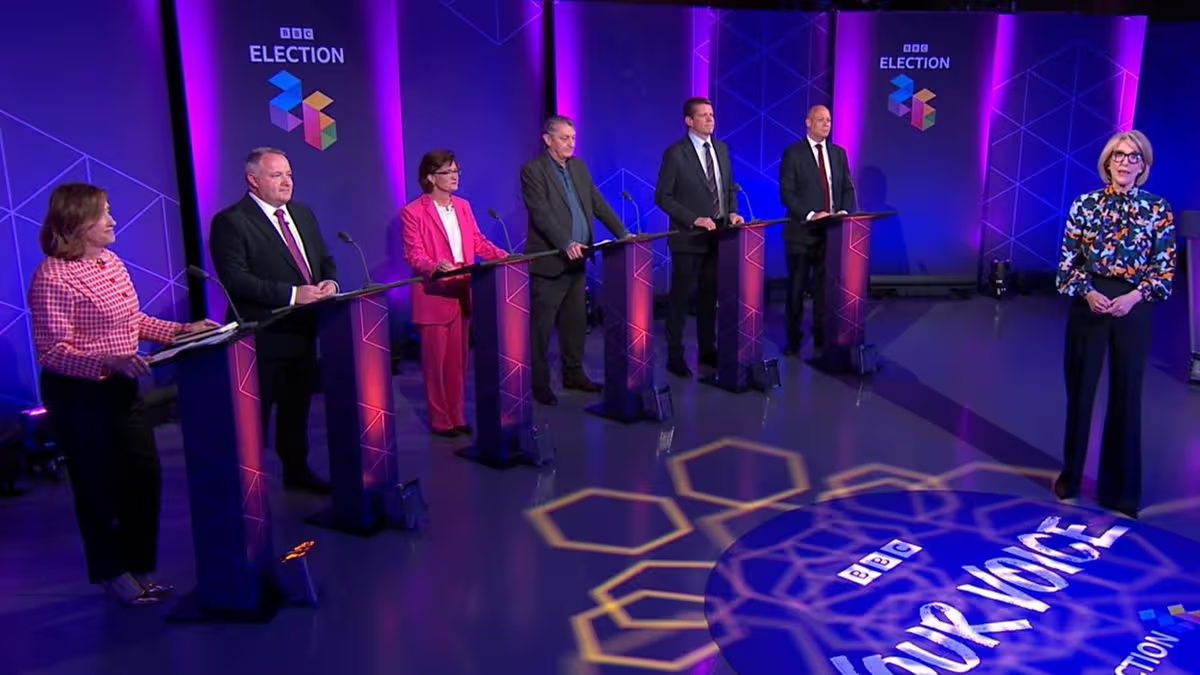
The leaders of the main parties in Wales take part in a BBC debate ahead of the Senedd election(Image: BBC Wales)

Since devolution began twenty seven years ago, Welsh politics has been shaped by Labour’s dominance, even when that dominance has depended on agreements with others.

Whilst some would argue that the result has been a stable political system, waiting lists have grown, the economy has underperformed, housing pressure has intensified, and the same arguments about productivity, poverty, and public services have been rehearsed year after year.

Advertisement

With the polls currently suggesting that no party will secure an overall majority in the Senedd, the country’s future may depend on whether parties can agree on enough specific measures to pass budgets, shape legislation and keep a government in office. Indeed, when you read all six manifestos, there is a suggestion that the parties are much closer than their campaign language suggests.

The biggest issue is health, and every party, from Labour to Reform, begins with the same judgment: that the NHS in Wales is under severe strain and that public confidence has been badly damaged. That matters because, in a Senedd without a majority, health is the obvious ground for agreement.

Labour wants to focus on new hospitals and shorter waiting times, while Plaid Cymru is promising surgical hubs and a stronger link between health and care. The Liberal Democrats want to expand care capacity to relieve pressure on hospitals, and the Conservatives say they would declare a health emergency. Despite agreeing on almost nothing else, Reform and the Greens both argue that urgent intervention is needed.

There are profound differences over how the NHS should be funded, managed and reformed, but there could be enough overlap for an administration to secure backing for a pragmatic programme to cut waiting lists, expand planned care and tackle the indignity of corridor care. In a hung Senedd, that is likely to be the first test of whether politicians can accept that compromise is not weakness if it gets patients treated sooner.

Advertisement

READ MORE: Wales doesn’t need grants but a new approach to IP and innovation that sustains business successREAD MORE: The knowhow built up in Wales’ contact centre sector is an asset worth redirecting

Childcare is one of the few policy areas where there is some agreement, even if they differ on whether expansion should be universal or targeted. Plaid Cymru and the Lib Dems want a universal childcare offer from nine months, whilst the Greens back universal childcare from nine months, and the Conservatives support extending free childcare for children from nine months to four years. Labour has again made childcare expansion one of its main promises.

This is not a minor point, as childcare is increasingly treated as economic infrastructure that helps parents return to work and supports family incomes. If Wales ends up with no party in command, childcare expansion looks like one of the easiest areas for a cross-party deal.

The economy offers a similar, if more limited, opportunity, and no party argues that Wales is performing as it should. Labour wants a new industrial strategy; Plaid and the Conservatives are proposing a National Development Agency; and the Liberal Democrats are talking about changing business rates. Even Reform, for all its populist language, frames its offer around backing business, rewarding work and cutting waste.

Advertisement

That does not amount to a shared economic philosophy, but it does suggest room for agreement on measures such as reforming business rates, improving support for apprenticeships and simplifying business support. Those are not glamorous policies, but they are the sort of interventions a minority government could get through in the next four years.

Housing is more politically divided, but even here, there are points of common agreement. Labour, Plaid Cymru, the Liberal Democrats and the Greens all argue that Wales needs more affordable and social housing, stronger action on homelessness and a bigger state role in fixing a market that is failing too many people. The Welsh Conservatives are more focused on planning reform, whereas Reform places less emphasis on expanding social housing.

So housing is not an issue on which all six parties can meet in the middle, but if the arithmetic points to a centre-left understanding, it is an area where that agreement could become substantial.

Then there is the environment, where Net Zero remains a dividing line, especially with Reform. However, on issues such as river pollution and water quality, there is a much broader consensus than many might expect. Labour, the Liberal Democrats, the Greens, the Conservatives and Reform all promise, in one form or another, tougher action on polluted rivers and sewage discharges, and that ought to be enough to support tougher enforcement.

Advertisement

Tax is the one example where consensus will be hardest to reach. Labour says it will not raise Welsh income tax, whilst the Conservatives and Reform want tax cuts. In contrast, the Liberal Democrats leave the door open to a temporary rise to fund social care, Plaid wants broader tax powers and a more progressive framework, and the Greens want much wider tax reform. That is not a basis for easy agreement, nor are the constitutional questions, with Plaid remaining fundamentally different from those of the Conservatives, Reform and the Liberal Democrats.

What should we conclude from all this? A Senedd without a majority need not mean paralysis, and it is unlikely there will be a grand coalition around a shared view of the country’s future, as the ideological divides are too deep. But it may produce a more negotiated politics in which parties are forced to agree on specific measures in areas where the public is demanding action.

After nearly three decades in which Welsh politics has been shaped by one party’s dominance, such a shift would be significant. The frustration in Wales is not simply that politicians disagree, but that we still face the same problems as we did two decades ago.

If no party has a majority, the next government will be judged not by the elegance of its agreements but by its ability to make the Welsh state work better. Therefore, the real test may not be who comes first on election night, but whether the next Senedd can make difficult compromises that lead to shorter waits, better services and a stronger economy.


Advertisement
Continue Reading

Business

KB Seafood to operate Lobster Shack owners' processing facility

Published

on

KB Seafood to operate Lobster Shack owners' processing facility

National seafood group KB Seafood will be taking over operational control of Indian Ocean Rock Lobster’s Cervantes processing facility, in a move that doubles its capacity in WA.

Continue Reading

Business

Explosive ‘They Stole a Charity’ Claim Ignites Courtroom in Viral X Thread

Published

on

Elon Musk vs Sam Altman Lawsuit Update: Elon Musk Testifies

OAKLAND, Calif. — A viral X thread capturing live courtroom notes from Elon Musk’s high-stakes lawsuit against OpenAI has thrust the landmark trial into the spotlight, with the plaintiff’s lawyer dramatically declaring that the company “stole a charity” created for the benefit of humanity rather than private profit. The April 28 post by attorney Ariel Givner, who received real-time updates from inside the federal courthouse, quickly spread as opening statements laid bare the bitter feud between Musk and OpenAI CEO Sam Altman.

Givner’s thread, posted during the first full day of testimony in the Ronald V. Dellums Federal Building, detailed Musk’s side of the story: how he co-founded OpenAI in 2015 as a nonprofit dedicated to safe, open artificial intelligence development for all mankind. Musk contributed tens of millions of dollars, recruited top talent including Ilya Sutskever, and emphasized existential risks from advanced AI. The lawyer argued that OpenAI’s later shift to a for-profit structure, fueled by billions from Microsoft, betrayed that mission and left the nonprofit shell with “almost no assets.”

The dramatic line — “THEY STOLE A CHARITY” — capped the plaintiff’s opening and echoed through social media. Givner’s notes highlighted an emotional close: “NOBODY SHOULD BE ALLOWED TO STEAL A CHARITY.” The thread also shared a 2017 email exchange in which Musk told Altman, “Either go do something on your own or continue with OpenAI as a nonprofit,” and Altman replied enthusiastically, “I remain enthusiastic about the non-profit structure!” A contemporaneous diary entry from OpenAI President Greg Brockman reportedly called the nonprofit commitment a “lie” if the company pursued a B-corp structure.

The lawsuit, filed in 2024, accuses Altman, Brockman and OpenAI of breaching fiduciary duties by converting the organization into a profit-driven entity valued at hundreds of billions and preparing for an IPO. Musk seeks more than $150 billion in damages and an order to unwind the changes, returning control and intellectual property to the nonprofit. He claims the original mission required no financial return and focused on humanity’s benefit, not enriching insiders or partners like Microsoft.

Advertisement

OpenAI’s lawyers fired back in their opening, arguing Musk knew about plans for a for-profit arm from the start and left the board voluntarily in 2018. They portray the suit as a competitive move by Musk, whose own xAI startup now rivals OpenAI. Defense attorney William Savitt told jurors the case boils down to Musk not getting his way, not a betrayal of any binding promise.

The trial, which began with jury selection on April 27 and opened in earnest April 28, has already featured heated testimony. Musk took the stand as the first witness, recounting his upbringing, early companies and long-standing fears about artificial general intelligence. He described OpenAI as a response to Google’s dominance and insisted he could have launched it as a for-profit but chose the nonprofit path for ethical reasons. Cross-examination grew tense, with Musk accusing OpenAI’s lawyer of trying to “trick” him and snapping, “You’re misleading.”
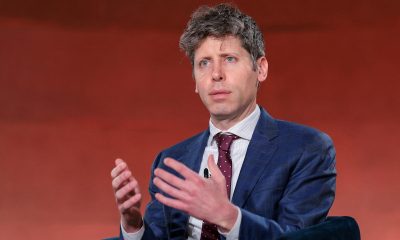
As of May 1, the proceedings have entered their fourth day. Musk has spent multiple days on the witness stand, with cross-examination continuing and expected to wrap soon. Altman, Brockman and Microsoft CEO Satya Nadella are among those slated to testify later. The monthlong trial before U.S. District Judge Yvonne Gonzalez Rogers could reshape AI development, corporate governance and the balance between nonprofit ideals and commercial realities in Silicon Valley.

Legal observers say the case hinges on whether OpenAI’s founders made enforceable promises to keep the organization nonprofit forever. Musk’s team presented the 2017 emails and Brockman’s diary as evidence of bad faith. OpenAI counters that the nonprofit structure was always intended to evolve with a for-profit subsidiary to fund research, similar to a museum gift shop supporting the museum. The company argues it has delivered on its mission by developing safe AI while attracting necessary capital from Microsoft.

Advertisement

The courtroom drama has drawn intense media attention and public fascination. Demonstrators gathered outside the Oakland courthouse during jury selection, reflecting broader debates about AI ethics, corporate power and Musk’s influence. Givner’s real-time X updates, which included apologies for typos and promises of more notes during breaks, turned the usually opaque legal process into a live-streamed spectacle followed by tech enthusiasts and Musk supporters.

Musk founded xAI in 2023 partly to counter what he sees as OpenAI’s closed, profit-driven direction. He has repeatedly warned that unchecked AI development poses existential risks, a theme he reiterated in testimony. OpenAI maintains it remains committed to safety and has implemented safeguards in models like ChatGPT, while pursuing the resources needed to compete globally.

The stakes extend far beyond personal animosity between former friends Musk and Altman. A ruling in Musk’s favor could force OpenAI to restructure, potentially slowing its momentum or returning valuable IP to the nonprofit. A defense victory would affirm the company’s right to adapt its structure and validate its multibillion-dollar valuation. Either outcome could influence how future AI labs are organized and funded.

Givner, an IP and corporate attorney with experience in fintech and crypto, positioned her thread as neutral live coverage. Her bio notes roles with MonkeDAO and DiversiFi, lending credibility to her detailed legal observations. The thread’s rapid spread underscored X’s role as a primary source for breaking courtroom news in the social media era.

Advertisement

As the trial continues into its second week, both sides prepare for testimony from key figures who shaped OpenAI’s early days. Musk has described himself as a “fool” for continuing to fund the organization after tensions arose, while OpenAI insists he was fully aware of and supported early commercial moves. The jury will ultimately decide whether the shift from nonprofit to for-profit constituted a betrayal or a necessary evolution.

For now, the viral thread from April 28 serves as a time capsule of the trial’s explosive opening, capturing the raw emotions and high principles at stake. Whether Musk’s vision of AI as a public good prevails or OpenAI’s commercial model is upheld, the case has already highlighted the tensions between idealism and pragmatism in the race to build the future’s most powerful technology.

Advertisement
Continue Reading

Business

Cinemark tops first quarter estimates on revenue growth

Published

on


Cinemark tops first quarter estimates on revenue growth

Continue Reading

Business

No evidence of widespread fuel price-gouging, watchdog says

Published

on

No evidence of widespread fuel price-gouging, watchdog says

Profit margins were “broadly unchanged” between February and March, the UK’s competition watchdog says.

Continue Reading

Business

Insperity, Inc. (NSP) Q1 2026 Earnings Call Transcript

Published

on

OneWater Marine Inc. (ONEW) Q1 2026 Earnings Call Transcript

Q1: 2026-04-30 Earnings Summary

EPS of $1.31 beats by $0.08

 | Revenue of $1.90B (1.72% Y/Y) beats by $1.69M

Insperity, Inc. (NSP) Q1 2026 Earnings Call April 30, 2026 5:00 PM EDT

Company Participants

James Allison – Executive VP of Finance, CFO & Treasurer
Paul Sarvadi – Co-Founder, Chairman & CEO

Advertisement

Conference Call Participants

Daniel Maxwell – William Blair & Company L.L.C., Research Division
Jeff Martin – ROTH Capital Partners, LLC, Research Division
Mark Marcon – Robert W. Baird & Co. Incorporated, Research Division
Tobey Sommer – Truist Securities, Inc., Research Division
Brendan Biles – JPMorgan Chase & Co, Research Division

Advertisement

Presentation

Operator

Good day. My name is Ali, and I will be your conference operator today. I would like to welcome everyone to the Insperity First Quarter 2026 Earnings Conference Call. [Operator Instructions] And please note, this conference call is being recorded.

At this time, I would like to introduce today’s speakers. Joining us are Paul Sarvadi, Chairman of the Board and Chief Executive Officer; and Jim Allison, Executive Vice President of Finance, Chief Financial Officer and Treasurer.

Advertisement

At this time, I’d like to turn the call over to Jim Allison. Mr. Allison, please go ahead.

James Allison
Executive VP of Finance, CFO & Treasurer

Thank you. We appreciate you joining us today. Let me begin by outlining our plan for this afternoon’s call. First, I’m going to discuss the details behind our first quarter 2026 financial results. Paul will then comment on 3 strategic initiatives in 2026: Our margin recovery plan, our efforts to rebuild growth momentum, including the HRScale rollout and our AI initiatives. I will return to provide financial guidance for the second quarter and full year 2026. We will then end the call with a question-and-answer session.

Advertisement

Before we begin, I would like to remind you that Paul or I may make forward-looking statements during today’s call, which are subject to risks, uncertainties and assumptions. In addition, some of our discussion may

Advertisement
Continue Reading

Business

AutoNation beats profit estimates but revenue falls short

Published

on


AutoNation beats profit estimates but revenue falls short

Continue Reading

Business

Betterware stock gains 62% after InvestingPro Fair Value call

Published

on


Betterware stock gains 62% after InvestingPro Fair Value call

Continue Reading

Business

Apollo Sports Capital, Tom Dundon make $225M pickleball investment

Published

on

Apollo Sports Capital, Tom Dundon make $225M pickleball investment

Ben Johns comes over to the right side to hit a dink shot against Anna Bright and Hayden Patriquine in the 2026 PPA Carvana Mesa Cup finals match of the Pro Mixed Doubles Division at Arizona Athletic Grounds on February 22, 2026 in Mesa, Arizona.

Bruce Yeung | Getty Images

Pickleball Inc., the new parent company of Major League Pickleball and the PPA Tour, said Friday it has raised a record $225 million in new investment, as the paddle sport continues its rapid growth trajectory.

Advertisement

The latest investment comes from Apollo Global Management’s newly created sports fund, Apollo Sports Capital, and Dundon Capital Partners, owned by billionaire Tom Dundon. Dundon is an owner of the Portland Trail Blazers NBA team and the Carolina Hurricanes NHL team and was an early investor in pickleball.

The fresh funds bring the total investment in Pickleball Inc. to $315 million, as investors continue to look at emerging sports as a place to park their money. The raise values Pickleball Inc. at $750 million, according to a person familiar with the matter, who asked to remain unnamed because they were not authorized to speak publicly about the company’s valuation.

The deal also includes rolling up several pickleball assets under the Pickleball Inc. umbrella, creating what the company called the largest pickleball ecosystem to date.

Pickleball Inc. will take on a portfolio of pickleball assets previously owned by Dundon, including Pickleball Central, a leading site for pickleball equipment founded in 2006. The portfolio also includes PickleballTournaments.com, software that powers thousands of tournaments across all levels of play, as well as Just Courts, a pickleball court installer.

Advertisement

Pickleball Inc.’s newly merged business verticals combined generated over $140 million in 2025 revenue, the company said.

In a release, MLP and PPA Tour CEO Connor Pardoe called the new investment a “seismic day” for pickleball’s rapidly growing business at all levels.

“This investment allows us to fully integrate the sport into one cohesive ecosystem – uniting professional pickleball, consumer goods, technology, and media under a single, unified platform,” Pardoe said.

Dundon and the Pardoe family will remain majority shareholders in the business after the investment.

Advertisement

Pickleball has exploded in popularity in recent years, with more than 24 million U.S. players participating in 2025, making it the fastest growing sport in the country over the last three years, according to the Sports & Fitness Industry Association’s Annual Report.

At the professional level, the MLP and PPA Tour have seen major growth with a combined $30 million in sponsorship revenue in 2025 and $60 million in combined top line revenue for 2025, according to the United Pickleball Association, which operates both leagues. The MLP and PPA Tour are projecting $74 million in combined revenue in 2026.

The new capital for Pickleball Inc. will be used to further integrate the pickleball business at all levels of play and create a streamlined pickleball ecosystem, the company said.

“This capital raise will allow us to expand our focus into new and scalable opportunities like content, media, and the development of infrastructure to support our fast growing events,” MLP Commissioner Samin Odhwani said in a statement. “The continued and dynamic year-over-year growth data has proven without doubt that pickleball is no longer an emerging sport, and is instead quickly becoming the next tier one sport in America.”

Advertisement

Get the CNBC Sport newsletter directly to your inbox

The CNBC Sport newsletter with Alex Sherman brings you the biggest news and exclusive interviews from the worlds of sports business and media, delivered weekly to your inbox.

Subscribe here to get access today.

Choose CNBC as your preferred source on Google and never miss a moment from the most trusted name in business news.
Continue Reading

Trending

Copyright © 2025