NewsBeat
Meet the OAPs (old age protesters) getting arrested for activism

Retirement used to be a time when you’d kick back and relax. Not so for the boomers spending their golden years getting nicked in the name of ‘intergenerational justice’
“I thought, ‘this is going to be huge. There’s not a person on the planet who doesn’t know Stonehenge’,” says Rajan Naidu, recounting the time when he and fellow Just Stop Oil protestor Niamh Lynch sprayed the iconic prehistoric structure with orange powder (a non-toxic blend of cornflour and food colouring). It was a stunt that went viral.
Naidu was 73, Lynch 21 – at opposite ends of their lives but united in their commitment to a cause they cared about. Afterwards, they sat silently, crosslegged by the stones in the warm June air. Time seemed to slow right down. And then they were arrested. The action didn’t stop there. It continued in every piece of press coverage, every social media post, every conversation, in their eventual acquittal.
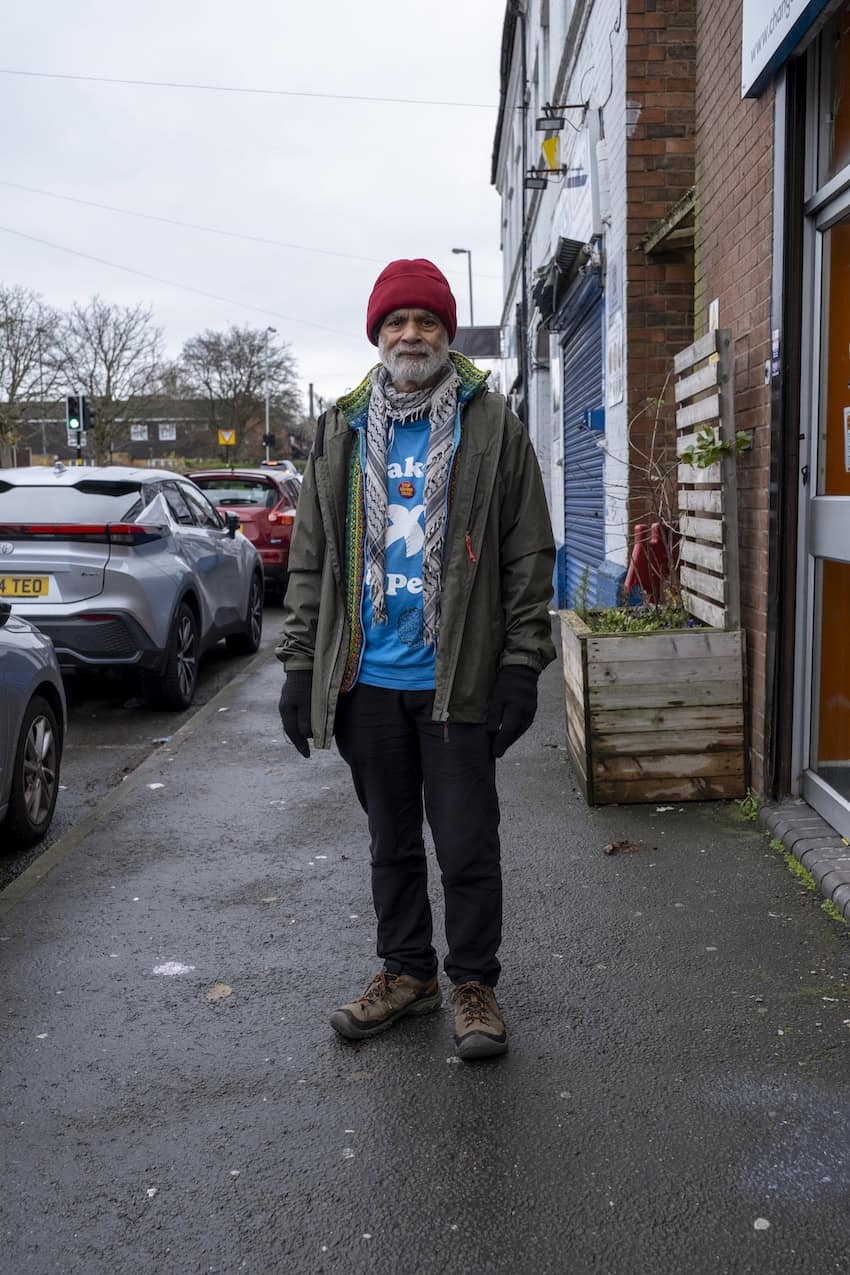
I’m sitting with Naidu (main picture) in the community cafe of The Old Print Works in Birmingham as he recounts all this. It’s mid-November, a fortnight since he, Lynch and Luke Watson, another activist who filmed the Stonehenge protest, were cleared of causing a public nuisance. Rain taps on the large old windows, while reggae wafts through the space. We tuck into steaming piles of chickpea curry. With his warm smile, white beard and colourful cardie, he’s not how the media might have you picture a protestor: young, shouty, looking for trouble. But he’s part of a recent wave of older protesters shifting those stereotypes.
“Everybody is a potential activist,” Naidu tells me, cradling his coffee. “Everybody has concerns about the world, things they’d like to put right.” Fairness, he says, is an instinct we have from childhood. Growing up in London, where his family moved from India when he was a toddler, Naidu recalls his parents’ generosity, his father’s respect for others, no matter who they were, and his mother’s kindness. He spent his life working and volunteering in education, reforestation, mental health support, with stints at the Post Office and in factories. Only in his late 60s did he get involved in the kind of non-violent civil resistance that would see him led away in handcuffs “many times”.
It used to be a given that when you hit retirement age, you’d earned the right to put your feet up. Do some gentle gardening, join a choir, go on a cruise. But spending the night in a police cell, surely not? There had been grannies at Greenham Common, those silver-haired civil rights leaders, but they were generally the exception. Largely, protest was seen as the preserve of students, not pensioners.
And yet in campaigns for disability rights, against library closures and historic building demolitions, or opposing the rise of the far right, older people are taking a stand. I’ve been to meetings for these causes where I, at 42, am one of the youngest in the room. The advanced age of placard holders was particularly notable at 2025’s Lift the Ban demonstrations that called on the government to reverse its ban on the protest group Palestine Action. Of 523 people arrested in August, more than 50% were over 60.
One of them was 75-year-old Jonathon Porritt CBE. “I think this is genuinely unique in terms of the history of social movements and campaigning of this kind. I don’t think there’s been that sort of demographic story before,” the lifelong environmentalist and former leader of the Green Party explains.
At 73, Porritt retired from his job focused on corporate sustainability, frustrated with the slow pace of change, and returned to the front line of politics. At the time of writing, he’s been arrested twice at Lift the Ban events and counting. We chat over Zoom from Chichester, where he is on a book tour for Love, Anger and Betrayal, a collection of interviews with young Just Stop Oil campaigners.
Perhaps it’s inevitable that a generation who came of age at a time of optimism that they would make the world a better place are looking around and seeing work to be done. Porritt, a former teacher, is driven by “intergenerational justice”, the idea that meeting our needs must not come at the expense of our descendants’ ability to meet theirs.
Everybody is a potential activist. Everyone has concerns about the world
Too many older people, he says, “don’t seem to care at all about what is going to happen to young people in the future. That really does anger me, I’ll be honest, because we’ve made an appalling mess of everything,” he adds. “I don’t expect everybody to go and glue themselves to motorways to demonstrate how much they care about the climate, but I do expect them to be more respectful of and supportive of people who are taking those kinds of direct actions to focus politicians on the true nature of the crisis.”
Trudi Warner feels similarly compelled by a sharp sense of responsibility. Warner made headlines and became the inspiration for Defend Our Juries, the group behind the Lift the Ban campaign, after she was prosecuted for contempt of court sitting outside a climate activists’ trial holding a sign that read: “Jurors: you have an absolute right to acquit a defendant according to your conscience.” The charges were eventually dropped. It was with “some trepidation” that Warner, a retired children’s social worker, stepped up as an activist. “I was schooled in obedience,” she says, closing her eyes in concentration before opening them wide. “But it was something I had to do.”
The strategy of sitting with a sign is less physically demanding than other forms of protest such as marching, Warner notes. And though it can take up to eight hours of sitting before an arrest is made – a feat of endurance – older people tend to have spare time. Porritt points out that while the threats of legal sanctions are “still scary, undoubtedly”, they don’t weigh on him as they might other, younger people with fledgling careers or dependent children to consider. But there are real sacrifices, risks and consequences. Tim Hewes, a 73-year-old retired dentist and priest, spent six weeks imprisoned on remand accused of conspiring to shut down the M25 motorway during 2022 Just Stop Oil protests, as chronicled in his book, Finding Beauty Behind Bars.
Though the prospect of doing press interviews filled her with dread, Warner came to realise that the visibility of older people like herself – former priests, rabbis, war veterans – was powerful.
“It’s harder for the media to trash us,” she says. Their presence lends the climate and peace movements a credibility, a gravity, a sense that what they’re demanding is mainstream. The calm that older people have brought to the climate and peace movements is distinctive, too. “It’s counter cultural,”adds Warner, “because in our culture, everybody’s rushing about all the time, being noisy, being attention seeking.”
When Union, the northern school for creativity and activism, launched a call out for their first ever residency aimed at ‘elders’, due to take place in January 2026, it was booked out. Union, which had offered similar programmes for early and mid-career people, devised this partly in response to demand, partly to the rise they’d noticed in older activists. The organisation explores the role that ‘elders’ can play, how they might “hold the space” for others, as director Adrian Sinclair puts it, and what they want from this stage.
It’s not a young people’s movement. It’s not an old people’s movement. It’s a people’s movement
“What’s my legacy? What do I pass on? Those questions are important to older people.” There is also a wellbeing element to it. Studies show that a longer, healthier life isn’t just about staying active or eating well, it’s about having purpose and finding social connection, too.
Back in Birmingham, three young men in hoodies recognise Naidu from his Stonehenge coverage and ask if they can join us to chat. They are fans, full of admiration and full of questions, which Naidu answers graciously.
“When you see me, you see this old man,” he says. “I don’t define myself in this.” But he is reluctant to talk about himself, instead talking about the “beloved community” that Martin Luther King Jr described, a community that forms through shared values, and about friends of all ages and backgrounds who have greeted him as he emerged from police stations, in the cold and dark, with a hug and a snack.
“It’s not a young people’s movement. It’s not an old people’s movement. It’s a people’s movement.”
Main image by Jaskirt Dhaliwal-Boora
Be part of the solution
At Positive News, we’re not chasing clicks or profits for media moguls – we’re here to serve you and have a positive social impact. We can’t do this unless enough people like you choose to support our journalism.
Give once from just £1, or join 1,800+ others who contribute an average of £3 or more per month. Together, we can build a healthier form of media – one that focuses on solutions, progress and possibilities, and empowers people to create positive change.