NewsBeat
Millions in Cuba hit by blackout as Trump embargo bites | World News

Millions of people were left without electricity in Cuba after a shutdown at one of the country’s largest thermoelectric power plants.
The capital Havana and the rest of western Cuba – from the western town of Pinar del Rio to the central town of Camaguey – were left in darkness after the power cut on Wednesday.
Government radio station Radio Rebelde quoted an energy official saying the problem was due to a boiler leak at the Antonio Guiteras plant, about 62 miles (100km) east of Havana.
Vicente de la O Levy, Cuba’s energy minister, wrote on X that the government was powering critical infrastructure – including hospitals and medical clinics – in the affected region.
Meanwhile, the US Embassy warned American citizens in Cuba to “prepare for significant disruptions” and to conserve fuel, water, food and mobile phone batteries.
By Wednesday afternoon, Cuba’s government said crews had restored power to 2.5% of Havana – around 21,100 – noting that efforts were gradual and tied to what the system’s conditions would allow.
And by Thursday morning Cuba’s Energy Ministry said the national electrical grid had been reconnected from Guantanamo in eastern Cuba to Pinar del Rio in the far west and power generation was being brought back online.
In Havana, according to local utility EELH, 22 substations and 102 distribution circuits accounting for roughly 36% of the city had been restored – a process the firm said would proceed gradually, as conditions in the national grid allowed.
It’s the second widespread blackout to hit Cuba in three months, and comes after the country was placed under a strict oil and fuel embargo by the Trump administration last month, which caused an oil shortage and, according to international charities, a humanitarian crisis.

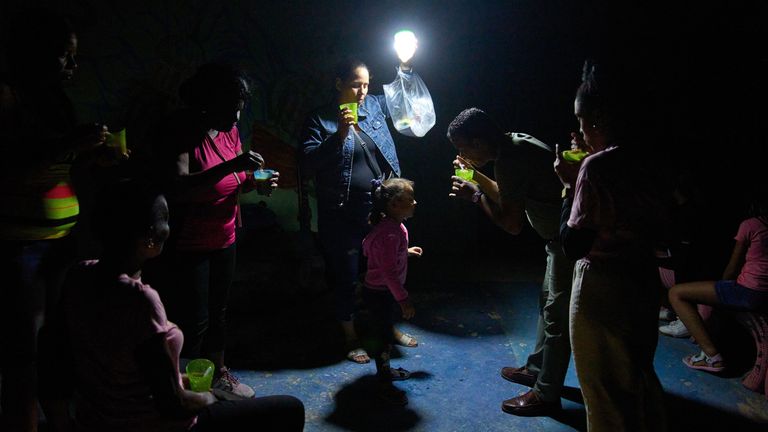
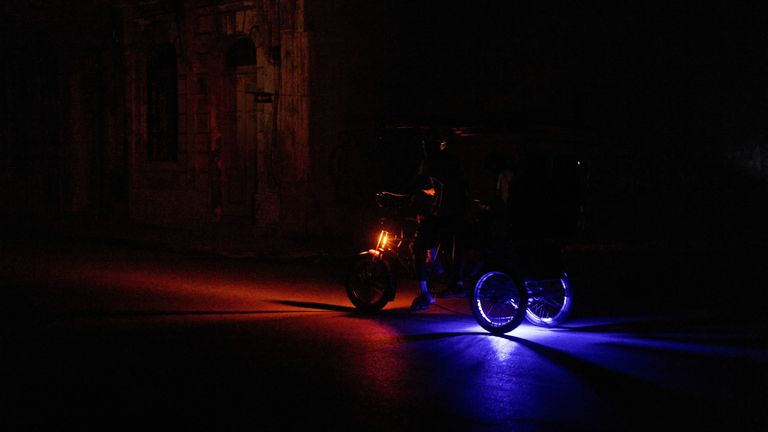
Pics: AP
An outage in early December lasted nearly 12 hours, after officials said a fault in a transmission line linking two power plants caused an overload and led to the collapse of the energy system’s western sector.
The country has seen dwindling oil reserves after the US military captured Venezuelan President Nicolas Maduro and his wife in early January, which led to critical petroleum shipments from South America being halted.
The US has also maintained a strict trade embargo on Cuba since 1962, the year after a failed, CIA-sponsored invasion of the island at the Bay of Pigs.
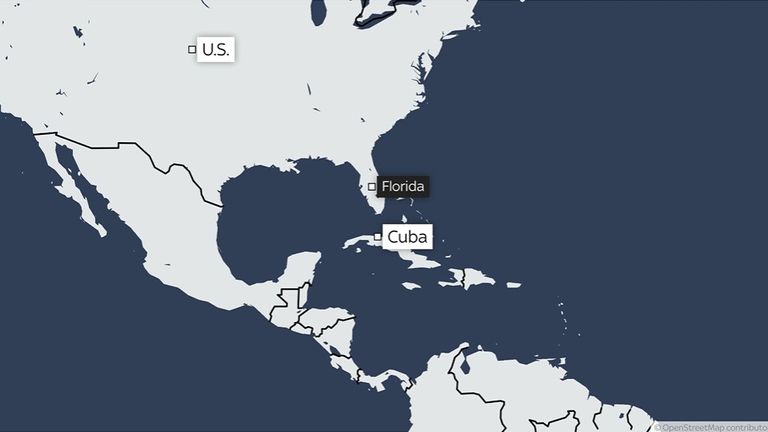
Map showing Cuba and Florida
Donald Trump extended that blockade by signing an executive order imposing trade tariffs on countries exporting oil to Havana last month.
The UN Office of the High Commissioner for Human Rights said experts condemned the move, and accused the US of a “serious violation of international law and a grave threat to a democratic and equitable international order”.
Mexico and Canada have sent aid to Cuba in the wake of the embargo. But the Caribbean country had been already struggling with a crumbling electric grid, generation deficits and interruptions in fuel supplies.
Read more from Sky News:
Shoplifter who killed Asda security guard jailed
£22m fine for South East Water over supply failures
Congress votes to summon Bondi over Epstein files
Earlier this week Lindsey Graham, Republican senator for South Carolina and an ally of the US President, hinted that the Communist regime in Havana could be targeted next by the US military.
Last Friday, Mr Trump also told reporters outside the White House that there was a possibility of a “friendly takeover of Cuba”, without offering details on what he meant.