

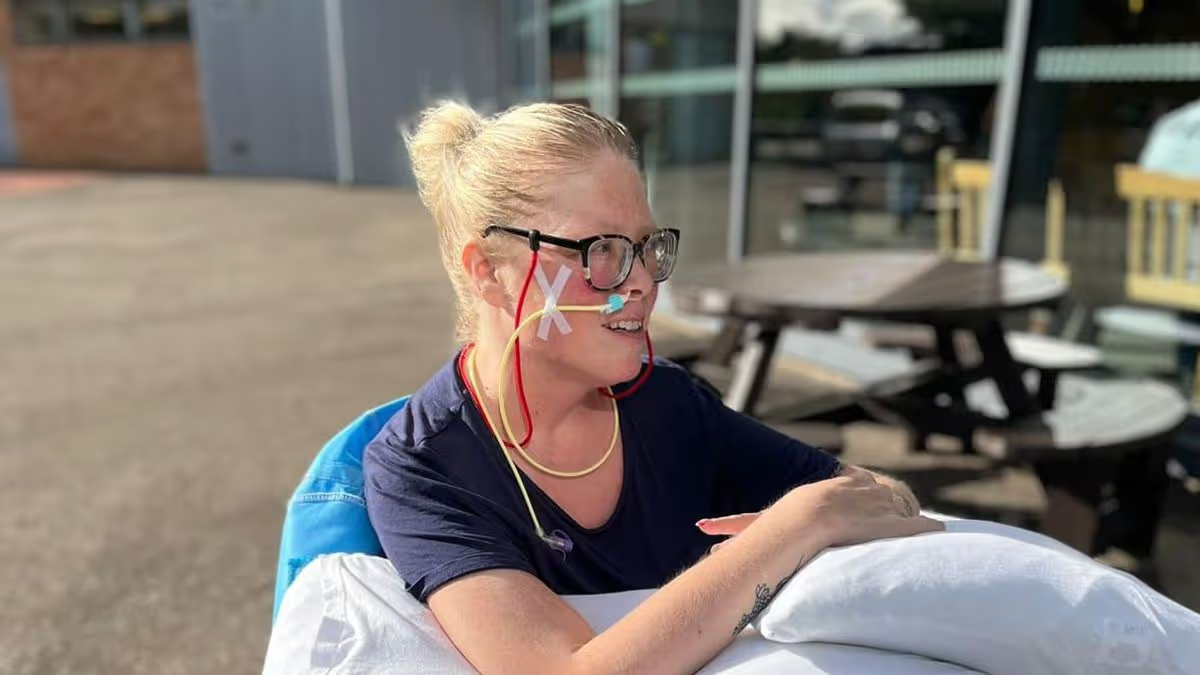
Mum-of-two Ali Martin, 45, was left unable to walk, brush her teeth, or use a knife and fork before being diagnosed with sensory ganglionopathy.
A mum left paralysed and malnourished after taking weight loss tablets has issued a stark warning from her hospital bed.
Teacher Ali Martin, 45, first started taking GLP-1 (glucagon-like peptide-1) medication to manage her Type 2 Diabetes in 2022.
She lost six stone after she was prescribed the drug by her GP, but in June last year she became weak and began to lose the use of her limbs before she suffered two falls and was admitted to hospital.
Medics treated Ali, from Dunfermline, for malnourishment and began to feed her through a tube before she was given a diagnosis of Sensory Ganglionopathy – a chronic illness causing numbness and pain.
She’s been left unable to walk, brush her teeth or use a knife and fork and is confined to a wheelchair.
Ali told the Record: “I want to warn people that losing weight like this is not worth the risk to your health.
“Before I started GLP-1, I was a busy, active mum contributing to society and now I’m completely dependent on other adults to do everything.
“I can’t shower or walk unaided. I can only manage simple personal care at toddler level and I’ve also lost my peripheral vision due to being bed bound for so long.
“The doctors haven’t made a direct link to the fat loss tablets, but I think they have exacerbated this condition because I had nausea and vomiting and other digestive issues.
“My symptoms make sense because the tablets suppress your appetite so I wasn’t eating and I was becoming increasingly more vitamin deficient, which I think has caused the malnutrition.
“I think the lack of nutrients must have affected my nervous system and my mobility.
Ali remains trapped in Cameron Hospital in Fife nine months after she was admitted as specialist teams work to provide intensive rehabilitation to help her rebuild her strength.
The mum-of-two said her was ordeal has been a “nightmare” for husband Graeme, 39, and kids Darcie, nine, and Luca, six as her worry for her family hugely impacts her mental health.
She added: “I’ve missed my kids‘ birthdays, parents nights, and sports games, and I have suffered several panic attacks because I feel so trapped and vulnerable in my own body.
“I have been so down that I even asked my mum to wheel me off a bridge.”
Ali fears she will never return to normal and doctors don’t know what a full recovery will look like because the condition is so rare.
She said: “I hope to be able to regain my mobility and be back to my old self but I don’t know if that will ever be the case.
“I don’t know if I’ll ever be able to walk or work again. Doctors can’t tell me what the future looks like.
“I believe this is all because of the effects of the GLP-1 medication and it will now have a potentially life-long negative impact on me.
“All I’m left with now is a fear of the unknown.”
Ali has now warning others to take great care when using the medication.
“My message to people taking this type of medication is to be very wary.
“I was prescribed it by a GP and still believe I have experienced horrendous results, so make sure you are going through proper channels and never buy medications from online pharmacies.
“I’d rather have my life back than be 30kg lighter.”
Ali’s family is now fundraising to have their house adapted for her needs when she gets home. To donate, click here.
GLP-1 for diabetes and weight loss can be used to lower blood sugar in people with type 2 diabetes. They’re also used as a treatment for obesity as part of long-term weight management.
NHS Scotland advises individuals to speak to a healthcare professional if you’re thinking about taking weight loss medication.
Using these medications without proper medical supervision can worsen existing health problems and lead to serious side effects.
GLP-1s help people feel fuller by mimicking a natural hormone released after eating.
Some newer medicines, also act on a second hormone involved in appetite and blood sugar control.
In the UK, there are several licensed GLP-1 medicines including semaglutide, tirzepatide and liraglutide, which are all sold under various brand names
“Licensed” means they have been assessed carefully by the UK medicines regulator, the Medicines and Healthcare products Regulatory Agency (MHRA), and approved as safe and effective for certain uses.
GLP-1s should only be used if you are overweight or diabetic, and not if you want to lose weight for aesthetic or cosmetic purposes.
NHS Scotland advises individuals to speak to a healthcare professional if they are thinking about taking weight loss medication.
A spokesperson for the drug’s manufacturer, which we are not naming for legal reasons, said: “Patient safety is of utmost importance, and we take all reports about adverse events from use of our medicines very seriously.
“The information included in the labels of products are agreed with the health authorities and does not include safety concerns about sensory ganglionopathy based on assessment of the totality of evidence from clinical trials and post-marketing report.
“We continue to work with health authorities and regulatory bodies worldwide to monitor the safety of our products.”
A spokesperson for NHS Fife said: “We cannot comment on the care of individuals for reasons of patient confidentiality.
“In Scotland, GP practices are independent contractors and are responsible for their own prescribing decisions, in line with national guidance.
“Where there are concerns about any potential adverse reactions to medicines, this should be reported through the UK’s Yellow Card scheme, which supports ongoing monitoring of medication safety.”
Get more Daily Record exclusives by signing up for free to Google’s preferred sources. Click HERE.











































You must be logged in to post a comment Login