NewsBeat
Myles Smith Interview: Stargazing Singer Talks New Album And TikTok

Over the last two years, British singer-songwriter Myles Smith has had the kind of ascent that any performer who’s just starting out would dream of.
After cultivating a loyal following on TikTok, Myles was made an offer to sign a recording contract with the major label RCA, joining a roster that already included hit-makers like Doja Cat, SZA and Mark Ronson.
Then came his breakthrough single Stargazing, which charted on both sides of the Atlantic, went three-times platinum and earned him a Best British Single nomination at the Brit Awards, the same year he picked up the prestigious Rising Star title, previously awarded to the likes of Sam Smith, Florence + The Machine, Sam Fender and Adele.
Now a four-time Brit Award nominee (in addition to his Rising Star win), Myles has racked up a string of UK top 40s, headlined shows all over the world (not to mention serving as the opening act on the stadium tour of his musical hero, Ed Sheeran) and even been praised by former US leader Barack Obama – all before he’d even released his debut album.
So, one of the main things you might be wondering after such a whirlwind rise is if he’s been able to take a moment to appreciate it all?
“Fuck no!” he tells HuffPost UK with a laugh. “I’ve been on tour for, like, 90% of my career. Genuinely, I don’t know what day or time or city I’m in half the time.
“For the last three tours, I’ve said, ‘hopefully, after this tour, I can relax’. And then I book another one. One day it’ll come…”
We’re speaking weeks before the long-awaited release of Myles’ debut album, My Mess, My Heart, My Life., a project he’s poured his heart into, and previously claimed represents “what I wanted it to say, rather than what everyone else wanted me to do”.
“I feel like a world exists where I made 10 Stargazings and put it onto an album,” he explains. “The way that the world is built, that probably would have done amazingly well commercially. But would it build a career? No. It would have just been a really cool, flash-in-the-pan moment.”
For Myles, it was important that his first album showcase “a full 360 on the person that I am”.
“A lot of the songs that I have out at the moment are songs that I love – that I really, really love – I think they show a part of me, but not all of me,” he claims, quipping that “just sticking with four-on-the-floor down your throat for, like, another album” would be “doing myself an injustice”.
Indeed, anyone who knows Myles for radio-friendly hits like Stargazing, Nice To Meet You or the Niall Horan collab Drive Safe might be surprised at some of the dark places that his full-length debut takes the listener to.
The album begins with the aptly-titled My Mess, which opens with the line “sisters crying, slamming doors, plates are flying”, as Myles reflects on his childhood, growing up in a “fractured family, where a word could start a war”.
“I hate the way that I’m still like this,” he laments on the chorus. “I’m still learning to walk on my own.”
From there, we continue on to deeply-personal cuts like Hold Me In The Dark and Grandma’s Place, before Mary’s Song, in which he reflects on the domestic and sexual abuse faced by two women in his life, and the self-explanatory Sertraline (named after the antidepressant medication of the same name), where he laments: “No matter how hard I fight, I’m still not alright.”


Myles has described his album as a “journey of self-discovery”, born out of reflecting on his own therapy notes from years gone by, and says it was important for him that his listeners hear that he is still a work in progress.
“It’s so movie-like to be like, ‘OK, it was shit, and it got better’,” he says. “The reality is that life is like, ‘it was shit, it got better, but then it also got shit again’.”
He claims: “I’m now in the middle of both. And I feel like that’s how I exist right now. I still have really bad days and I still have absolutely amazing days. I wanted it to mirror real life more than just being a ‘happily ever after’ narrative.”
This kind of candour is a refreshing contrast to the gloss and supposed perfection so often showcased in pop music, with Myles taking inspiration from “so many people, past and present, who have been fantastic at being storytellers of their own lives”.
“When you write authentically you can’t help but connect with it, because it’s true and it’s life experience,” he enthuses. “I don’t feel like I’m a finished product or a finished article – and I don’t feel like I’ve figured shit out any more than the person next to me. If anything, I’ve probably figured less out than the person next to me. I just wanted to get that across.”
For Myles, it was also important to get consent from key people in his life before he committed their shared experiences to record. “My relationships are so important to me, whether it be my friends or family,” he says. “I would hate to put something out there that I hadn’t consulted anyone else with. So, I’ve had conversations with my mum. I’ve had conversations with my brother.
“And with Mary’s Song, for instance, the people that’s written about, I was so, so careful to have that conversation with them. However much it’s my story, and my truth, it still concerns other people, and I think that’s an important part of the journey.”


Understandably, Myles is feeling a mix of emotions at the prospect of fans discovering more about his personal backstory, too.
“It’s really cool, but it’s also really daunting,” he admits. “It’s opening up my world to a bunch of people that I don’t know.
“But also, from all my experiences, when I’ve released something ‘deeper’, the people who’ve enjoyed my music have made me feel less alone, in that they’ve experienced so many similar things.”
“So, I’m excited to see – in a really sadistic way – how many people are fucked up like me!” he jokes.
He also confesses there are a handful of even more personal songs “sitting on a hard drive” that are “just for me and my family and friends”.
“They will never be released,” he insists. “There’s a thin line between speaking your truth, being authentic and writing music, and commodifying trauma for the wrong reasons.
“I never want to slip into the lane of, like… remember how X Factor used to start? I would hate to reach that. So, I am very cautious about how much I share. I will share, but if there are things that feel too far, I will be like, ‘what’s the purpose of this?’. And if I can’t justify the purpose for it, then it probably won’t go into a song.”
However, it was “always” Myles’ intention for his debut album to reveal more about himself.
“It’s been really awesome to have people know the songs, but it’s also so important that people know the person that it’s coming from,” he says. “All of my favourite artists, I feel like I know them, you know? They put so much of themselves into the music, which is the reason why I fell in love with it in the first place.
“And I think, for me, I’ve always aspired for people to listen to my music not just because the songs are really cool to drive to, but because they help people find more out about themselves.”

Being a role model for his listeners is an idea Myles returns to numerous times over the course of our conversation. Growing up, he was personally inspired by all kinds of “different musicians for different reasons”, but says it was discovering Labrinth’s music that opened his eyes to the possibilities of a career in music for himself.
“Labrinth being a Black guy making pop music in England was huge, you know?” Myles recalls.
“I grew up in Luton, and most of my listening pre-Labrinth was, like, drill, trap, rap and hip-hop. And don’t get me wrong – there’s absolutely amazing stuff in all those genres. If I’m going home, I’m putting on K-Trap and M Huncho. That’s the way it is.
“But Labrinth inspired me because I was like, ‘oh you can still do music and do it in a different way’, you know?”
From there, he discovered Ed Sheeran’s music (years before the four-time Grammy winner became a friend and mentor to him), and became even more inspired. “I looked at Ed and he was, like, a normal guy, but he was making music that really mattered,” Myles remembers.
“He wasn’t this ‘superstar’ that we’d seen before, in all the glitz and the glam, doing dance breaks. It was like, ‘oh, you can be a little bit chubby and still do alright in music’. And it was like, ‘I’m a little bit chubby, I could probably do alright in music’.
“All of these people made me feel like it was possible,” he continues. “And hopefully I’m just another example of that.”


In particular, Myles has young men in mind when he considers his position as a public figure. Examining the current “masculinity crisis”, Myles says he hopes to present a healthy opposite to the distressingly influential voices in the so-called “manosphere” pedalling misogyny and male supremacy.
“I was watching Louis Theroux’s ‘manosphere’ documentary the other day, and I was like, ‘what on earth has happened to people?’. If anything, being the complete opposite of what a man presents to be in that is probably my goal and ambition in life,” he shares. “It’s mental.”
Myles continues: “I was raised in a single-parent household, with just my mum. And so, my experience from the very off-set is very dissimilar to a lot of my peers. But, I think what I learned from that was the beauty in being able to be emotional and being able to be open.
“That definitely comes with its challenges, but I feel more free than a lot of my peers do, in terms of having to fulfill traditional gender roles or having to fulfill, you know, the traditional stance of being a man.”
“Being – I hope, still – a young man, and also being a young Black man, I think it’s really important that the message that I spread and the things that I say are reflective of my truth,” Myles adds, reiterating the need for authenticity in the current political and social climate.
And while Myles hopes to “take people on a bit of an emotional journey” on his new journey, it’s one that goes out on a high, even if – as is so often the case in life – you have to weather some storms to get there.
Towards the end of the album, the double-punch of Myles’ signature tunes Stargazing and Nice To Meet You is followed by the earworm Stay (If You Wanna Dance), almost ABBA-esque in its immediate catchiness (it’s no great surprise to see two Swedish musicians, Oscar Görres and Rami Yacoub, among its co-writers) and the refreshingly optimistic Gold.
“The album was crafted around how my live shows are,” Myles points out. “It’s always about making people really reflective and introspective in the moment, and then just bringing them to pure euphoria and joy.
“All the concerts I used to go to, where I’d take in a really slow and intimate song, and then absolutely sweat buckets with Heineken down my shirt, it was like the best experience. I feel like, because I am a live artist first, I wanted the album to feel like a live experience, where you’re being taken through the motions, and there’s no better way than to end with joy.”
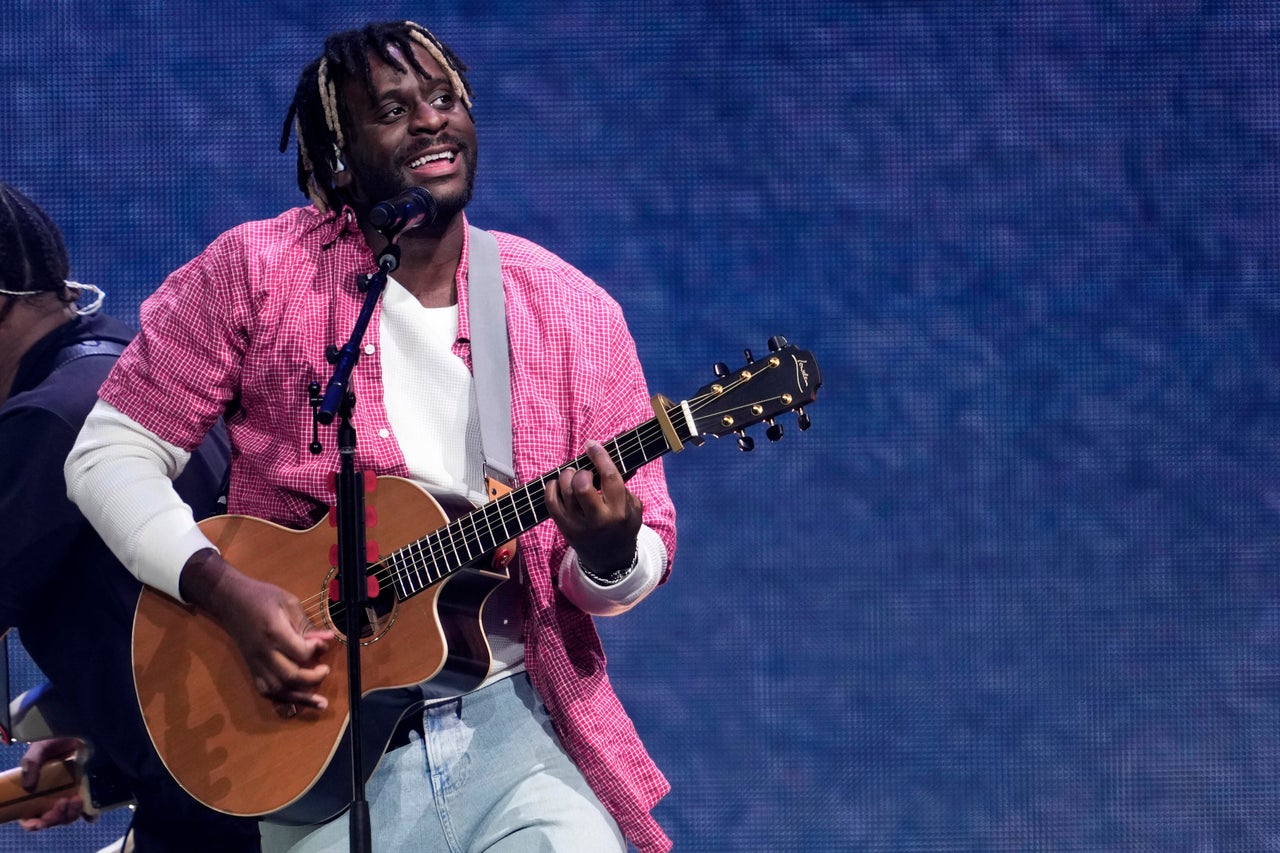
Myles is one of numerous modern artists who can attribute his success, at least in part, to having first made a name for himself on TikTok. The app has undoubtedly revolutionised the music industry in the last decade, and is something with which Myles is happy to admit he now has a “love-hate” relationship.
His attitude to TikTok has “changed significantly” as an established artist.
“I don’t know how to explain it. At the start, it’s a bit like getting a PlayStation for the first time, and just being like, ‘oh my god, this is so new, I just want to do everything and try and everything’,” he says.
“Then, you start to have success, and then, there are 100 people saying, ‘you must now use this app to promote’.”
As a result, he says, what starts out as a “really fun tool, that you use to find community and find people that are alike and build a world, essentially becomes a marketing app”.
“Right now, I’m trying to find the middle ground again,” he shares. “Because I don’t want it to be that.”
One subject Myles has been vocal about throughout his short time in the spotlight is accessibility to the music industry for artists of different backgrounds, and this is one area he says TikTok may have played a role in somewhat levelling the playing field.
“It’s definitely opened up the market to who can be a musician and who can’t be a musician,” he suggests. “Before, it was dictated by people’s predisposition as to what they thought someone who should be a musician should look like and sound like.
“Now, it’s up to the world. So, that’s really awesome.”
He states: “Like, for me, I grew up playing indie music in little indie rock bands, jumping off the stage of a 50-capacity venue, and that was the way I came up. I never in my dreams thought I’d be at a major record label – I was so anti-record label, like, ‘no they’re evil’.
“But now, with TikTok, I was able to build my own community and build enough leverage where I entered a deal where it’s like I can maintain all of the things that are important to me, and control all of the aspects of my creativity.”

Myles does concede, though, that his own experience of being signed to a major label is an atypical one, having signed to RCA raring to go with what would become his biggest hit to date already written.
“I came in, I had Stargazing written, I released Stargazing, it did what it did, and they kind of gave me the keys to my own sort of musical mansion and said, ‘do whatever the hell you want’,” he says. “So, I’ve not had that pressure yet. I don’t know if I ever will – hopefully not.”
“Honestly, I don’t get pressure from anyone else apart from myself,” he continues. “I’ve always been like that. At school, I was like that, at university I was like that, my first job I was like that.
“And now, I feel like I always want to write a better song than I did yesterday, or film a better music video than I did before, or play a bigger room than I did last year. That’s a very me thing. Everyone else is content, but I’m like, ‘what else could I be doing?’.”
And while his own experience as a major-label artist has so far been a positive one, he admits that being a Black musician in the UK does mean he’s occasionally misunderstood or put into boxes that have nothing to do with his own artistry.
“I remember coming in and people didn’t know what to call it,” Myles says. “I won’t say which radio station, but I was their ‘R&B track of the week’. And I was like, ‘for a folk song?’.
“But then, I’ve also experienced the opposite side, where people are like, ‘oh my god, you’re a Black guy who plays guitar, you’re so different’ – and it’s like, that’s also not the right vibe,” he says.
“I mean, when you strip it back, it’s just exceptionalism. You know, the belief that one person is not now reflective of the community, because they’re so different and that can’t possibly exist anywhere else, where that’s just not the truth.
“There are millions of people who look like me and sound like me and enjoy the music that I do. And so, I hate being seen as both the wrong genre – and being seen as one-of-a-kind for doing what I’m doing, when that is just not the case. So yeah, that’s been a really weird experience.”
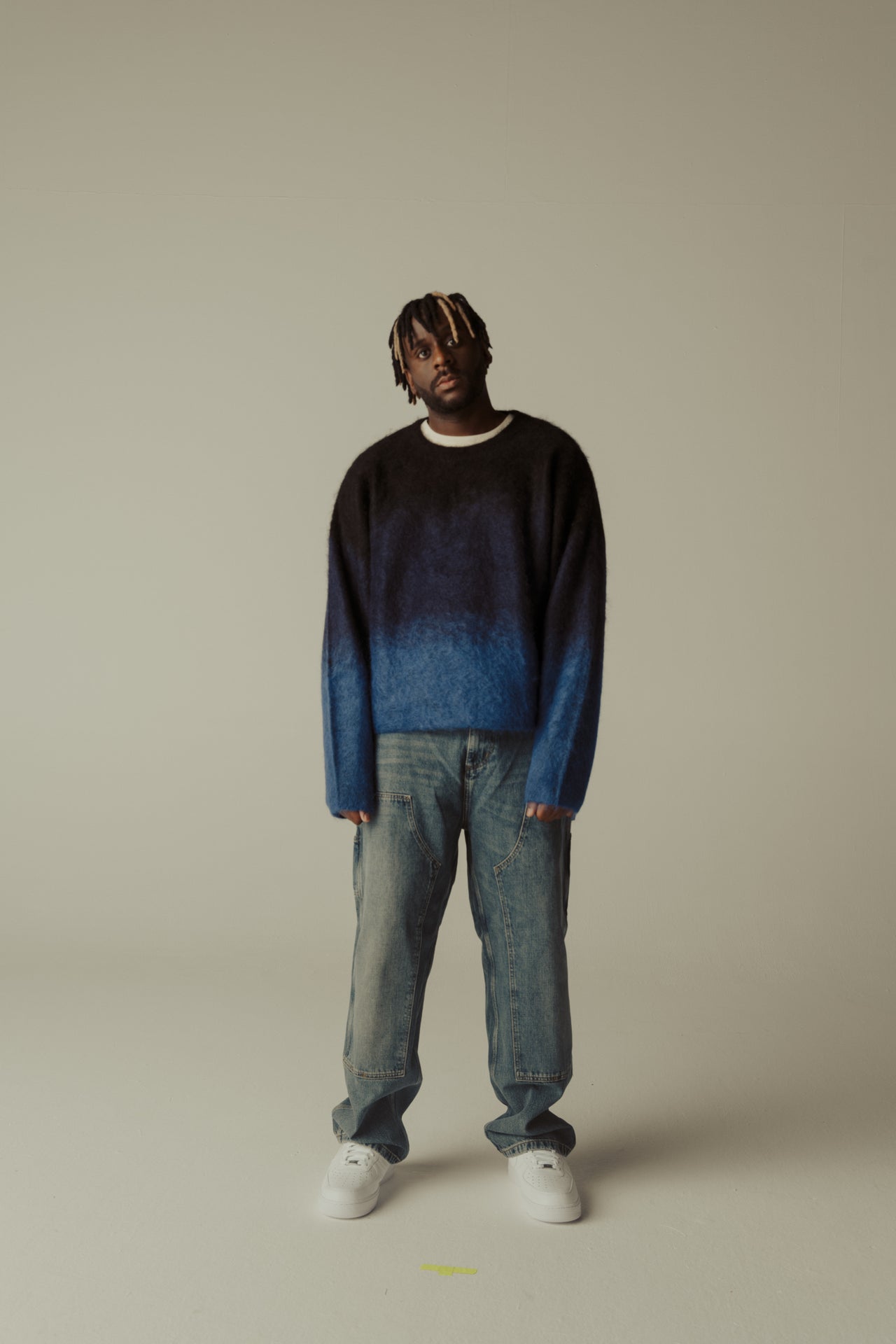
As for what Myles wants people to take away from his debut album now that it’s finally out in the world, he deadpans: “I want them to be miserable.”
“No, I’m joking,” he adds, grinning. “I want people to just listen to it with an open heart, and maybe try and learn something about themselves from it.
“If anyone who listens to it learns or questions one thing in their life after it, I feel like it will have done what I wanted it to do.”
Considering all he’s achieved in a relatively short space of time, Myles claims that “people forget” that My Mess, My Heart, My Life. is only his first album.
“I want to go on a journey of being a real career musician – I don’t expect the world to shift after I drop album one, maybe not even album two, it could be album three or four,” he says.
He points to recent examples like Olivia Dean, Sabrina Carpenter and Noah Kahan, who’ve had major breakthroughs and commercial success with their third or fourth releases, reiterating a point he made in his first Brit Awards acceptance speech about labels not immediately abandoning artists who can’t follow up on their early chart hits.
“Noah Kahan is the number-one listened-to artist in America, above Drake and Justin Bieber, and no one knew who he was [until recently],” he enthuses. “It’s amazing, because he’s been touring for six years. And I love that!”
“So, for me, it’s not about sprinting to the finish line, it’s about making a career the way that I want to make it,” he says. “It’s about, ‘what are the important milestones in my journey that, when I look back, I can be super proud of?’.”
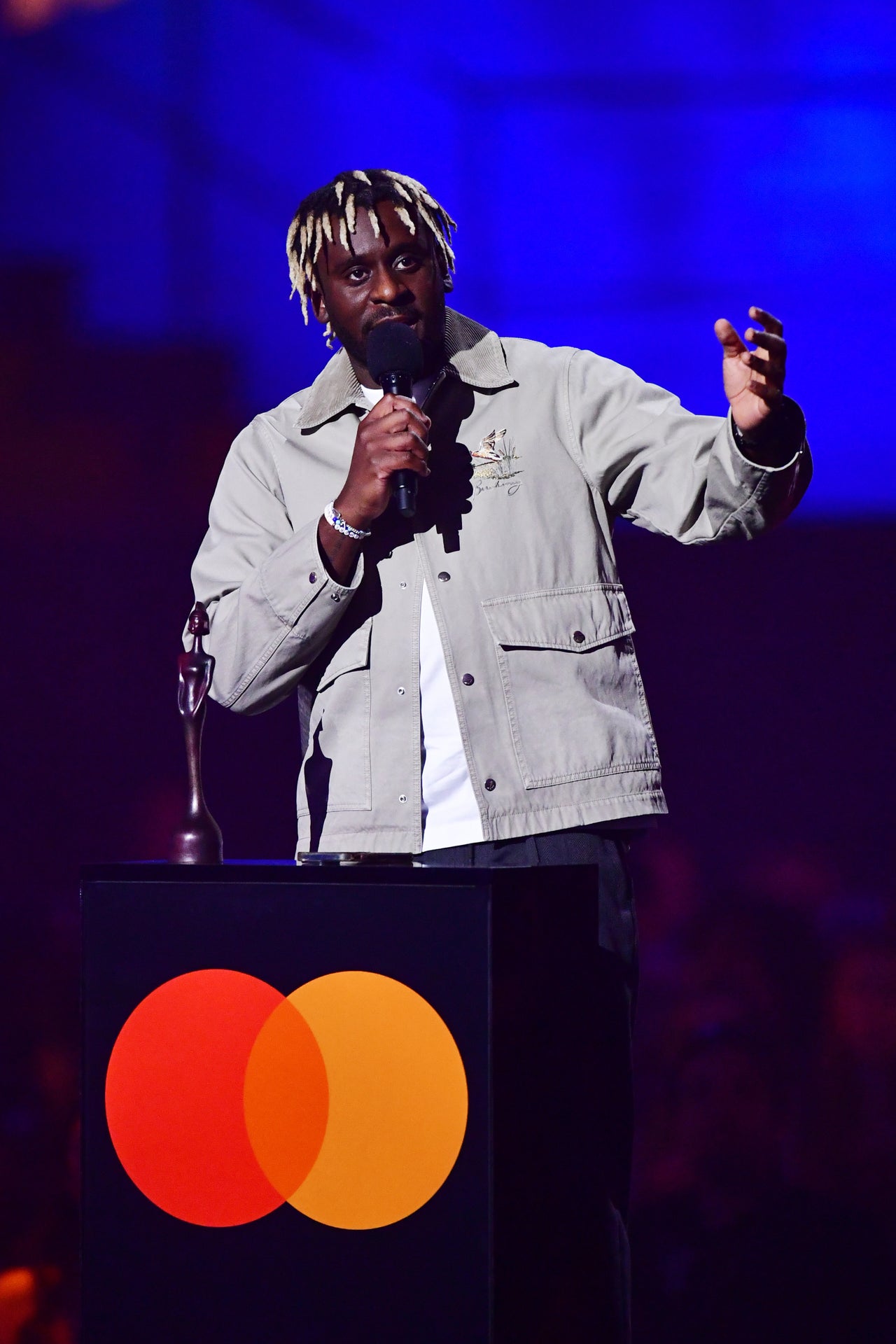
James Veysey/Shutterstock
Right now, he says his “fulfilment comes from playing live”. He highlights sharing the stage with Ed Sheeran in Milan and headlining at London’s Hammersmith Apollo with his mum “sat right in the middle of the balcony” as two particular highlights.
“All the other shit… honestly… money or whatever, that stuff really doesn’t matter to me,” he continues. “I know how that sounds, and I’m very aware it’s a privilege because I grew up broke as fuck.
“I don’t just say that to sound like a normal artist in these interviews going ‘oh my god, money doesn’t matter’. It does matter! I know what it’s like not to [be able to] pay your bills – and fortunately, I’m in a position where I don’t have to think about my bills now.
“But genuinely, the fulfilment I get from music, live, being in a room, seeing the visceral reactions from people really enjoying shows, all the other stuff is just… it’s cool. But this is sick.”
Regardless of how it performs, Myles says that, for him, the album is “already successful in my head”.
“I wrote something that meant something to me, and I feel like I wouldn’t change,” he beams. “And it took three years to get there. So, everything else is like a benefit.”
He notes: “It’s like when people always ask me, at awards shows, ‘what would it feel like to win?’. Just being there in the first place is good enough.”
“Like, I started off making fucking music in Luton, in my bedroom,” he adds. “I am winning!”
Myles Smith’s debut album My Mess, My Life, My Heart. is out now. Watch the music video for the opening track, My Mess, below:

You must be logged in to post a comment Login