
Connect with us
DAPA Banner
DAPA Coin
DAPA
COIN PAYMENT ASSET
PRIVACY · BLOCKDAG · HOMOMORPHIC ENCRYPTION · RUST
ElGamal Encrypted MINE DAPA
🚫 GENESIS SOLD OUT
DAPAPAY COMING

NewsBeat

Netherlands vs Sweden: World Cup 2026 prediction, kick-off time, team news, TV, live stream, h2h results, odds

Published

on

Netherlands vs Sweden: World Cup 2026 prediction, kick-off time, team news, TV, live stream, h2h results, odds

Japan twice pegged back the Netherlands last week in a 2-2 draw, including an 89th-minute equaliser from Daichi Kamada, which prompted criticism in some quarters of head coach Ronald Koeman’s for perceived negative substitutions.

Source link

Continue Reading
Click to comment

You must be logged in to post a comment Login

Leave a Reply

NewsBeat

why citizen scientists want to test for pollution themselves

Published

on

why citizen scientists want to test for pollution themselves

Thousands of volunteers across England now regularly take out their own testing kits to study the levels of pollution in rivers and the sea.

With sewage spills rarely out of the news, citizen water testing has become one of the most visible responses to England’s pollution scandals.

A crisis of trust in the water companies appears to be driving the public to take water quality testing into their own hands. Thousands of people take part in the twice yearly water testing events, organised by charity Earthwatch. Spring 2025 saw the highest number of participants at more than 7,000. Other organisations also report rising numbers of people getting involved in water testing.

These people, often referred to as citizen scientists, are doing tasks as varied as surveying aquatic insects to sampling water for chemicals.

Advertisement

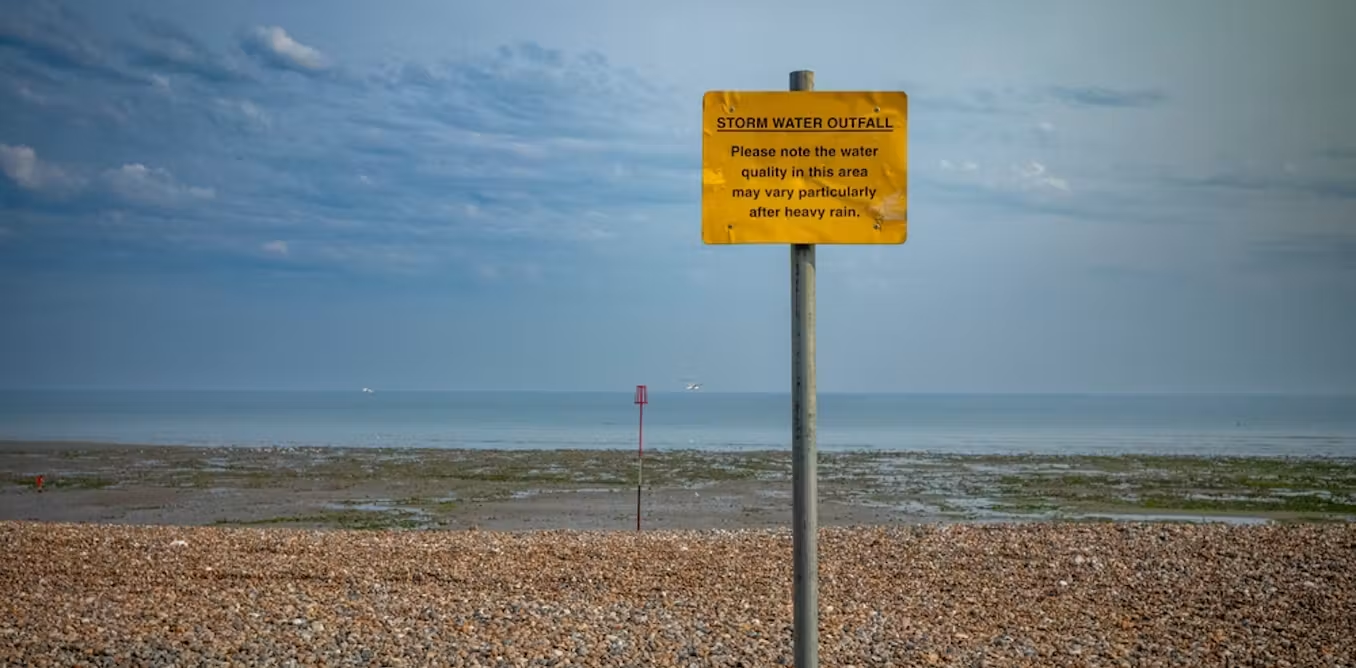
Much public attention has centred on sewage pollution in UK rivers in the past few years. Waste is regularly and legally discharged into lakes, rivers and along beaches by water companies during periods of heavy rainfall. But incidents of sewage discharges on days with no to low rainfall have also been identified, and in some cases legal action has followed. In some cases water companies have been fined millions of pounds.

The Environment Agency (EA), the main environmental regulator for the water industry, reported nearly 300,000 sewage spills across England in 2025 alone.

The consequences have affected both wildlife and people. Campaign group Surfers Against Sewage documented more than 7,000 cases of illness linked to swimming at official bathing sites over just five years. In 2025, 12 of England’s 14 inland bathing sites were rated “poor”, meaning swimmers were recommended to avoid the water because of potentially harmful bacteria. In April, the UK’s largest pollution claim began to be heard in the High Court, over allegations of chicken waste pouring into rivers along the Welsh-English border.

Public campaigning is believed to have helped trigger recent government action, with reforms expected in a planned Water Reform Bill.

Advertisement

Citizen sceptics

Some water companies now fund freshwater citizen science initiatives. These run across locations including the Thames Valley, south-east England and Wales. The programmes claim to enhance community awareness, empowerment and improve transparency of water companies’ management efforts.

During my PhD, I researched how one group of volunteers in Oxfordshire collected and interpreted river data. Some told me that they felt that water companies encouraged participation in citizen science, while ignoring the data.


À lire aussi :
Five warning signs that rivers are polluted – even when they look clean


As one citizen scientist explained in my own ongoing preliminary research, “people keep beavering away, and eager beavers are just what the water industry wants”. In his view, citizen science risks becoming a tool for keeping volunteers busy and distracted, rather than driving accountability.

Advertisement

However, recent research shows water companies have historically underreported the number of sewage spills. The Consumer Council for Water, which represents customers, has reported widespread dissatisfaction with water companies. An independent water commission has also highlighted a deterioration of public confidence in the environmental regulators.

A recent Channel 4 docudrama, Dirty Business, echoes these frustrations. It follows two citizens trying to hold water companies and regulators to account.

In line with some recent academic research, the programme explores suggestions that the water industry attempts to deflect blame and distract attention from sewage pollution. In a statement addressing the allegations, the EA said: “Prosecutions are just one tool against water pollution, and we have also levied a record £8.5 million in enforcement undertakings against water companies in the last year alone.”

Advertisement
ITV coverage of sewage spills.

Public confidence

The Environment Agency also faces questions about public confidence. Research suggests that volunteers believe current regulations allow water companies to act without sufficient oversight. In this study, people felt that the EA was not fulfilling its responsibility to hold the water industry to account.

In 2024, the head of the EA, Philip Duffy, said that the organisation had buried freedom of information requests, with staff worried about revealing the embarrassing truth of water pollution. In a statement reported in the Guardian at the time, the EA said: “Philip is completely committed to the highest standards of transparency.” It added that he wanted to make more EA data readily available.

In January 2026, the Office for Environmental Protection, a public watchdog on environmental protection, also found possible failures by the EA to comply with water quality laws.

My participants felt that the agency shouldn’t ignore their data in monitoring water quality.

Advertisement

Concerns about data bias and reliability are often cited as reasons to limit the use of volunteer data to support regulatory responses to pollution incidents.

These concerns are not unreasonable. Citizen science data can indeed vary in quality, depending on training and sampling practices. Ensuring consistency across the sheer number of volunteer groups is also a challenge.

Using citizen science

Nevertheless, research now suggests volunteers can produce reliable data suitable for official monitoring. The debate is gradually shifting to how regulators can include it in decision-making. For example, a national programme has already developed a shared framework on how to use data collected by citizens.

In the meantime, groups such as environmental charity Earthwatch and Surfers Against Sewage design and publish their own online maps and dashboards. These make thousands of historic data points publicly available.

Advertisement

As summer arrives and 13 new bathing sites open, pressure is again mounting on water companies and regulators to clean up England’s rivers and beaches. The citizen water sample collectors will be on standby.

Source link

Advertisement
Continue Reading

NewsBeat

Wales breaking news plus weather and traffic updates (Saturday, June 20)

Published

on

Wales Online

A “deeply caring” young man has died following a crash. Callum Hanson, 22, died in hospital on Wednesday, June 17 following the collision on the A4075 near Cross Hands, Pembrokeshire.

Callum’s family have paid tribute to him through a statement released through Dyfed-Powys Police. They described Callum, from Haverfordwest, as a kind and loving person.

The statement reads: “Callum’s family wish to remember him as the kind, loving person he was, who lived his life to the fullest, despite his own personal challenges.

“He was a deeply caring person and spent the last month looking after his grandad, who sadly, also recently passed away. Callum has a passion for gaming and motorbikes and was training to be a mechanic in college.

Advertisement

“Callum will be remembered by his mum Joanne, dad Carl, sister Kacey, nan Heather, girlfriend Emily, and his wider family and friends. The family now ask for privacy during this difficult time.”

Officers from Dyfed-Powys Police continue to appeal for anyone who was travelling on the A4075 between Canaston Bridge and Yerbeston around 6.15pm on Wednesday, June 17 to get in touch.

Callum Hanson(Image: Dyfed-Powys Police)

Source link

Advertisement
Continue Reading

NewsBeat

How to pronounce Boulmer, ‘tiny’ Northumberland fishing village

Published

on

How to pronounce Boulmer, 'tiny' Northumberland fishing village

It also has a name that catches almost every visitor out on their first visit.

How to pronounce it

The correct pronunciation is Boomer.

Not Bowl-mer. Not Bool-mer.

Advertisement

Boomer, like the word some young people would use to describe someone born after the Second World War.

Why does it sound like that?

The answer lies in the village’s age.

The name Boulmer is recorded in earlier documents as Bulemer, and derives from the Old English bulan-mere, meaning “bull’s mere” – a mere, or pool, frequented by bulls.

Over centuries of use in the Northumberland dialect, the spelling calcified while the spoken form kept moving, until the gap between the two became impossible to guess from the page alone.

Advertisement

There is a second theory.

The RNLI’s own archive, recording the lifeboating families of Boulmer, notes that the origin of the name “is given as Bull’s Mere or Bow Mere, the second being more probably right, from the shape of the water in the haven, enclosed by reefs of rock in the shape of a bow.”

The haven itself was known locally as the Mer-Mouth, pronounced “Marmoothe.”

A third possibility comes from even earlier.

Advertisement

The North Cottage Boulmer website notes that the village’s name may have its first roots in ancient Gaelic, in the words Búir na mara, meaning “roar of the sea.”

Whether the Gaelic, the Old English or the bow-shaped haven is the true origin is a question scholars have not fully settled, but the pronunciation has been fixed for as long as anyone can remember: it is Boomer.

The village itself

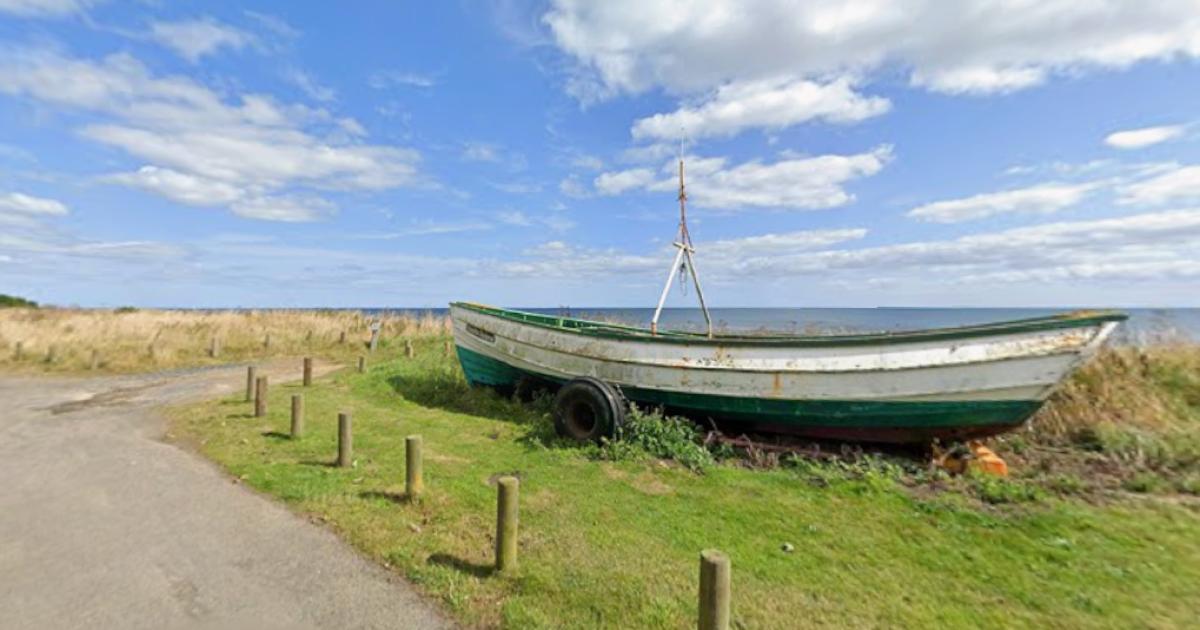
Boulmer sits on the Northumberland Coast National Landscape three miles north of Alnmouth, accessed along a narrow road through the dunes.

It is one of the last genuinely working fishing villages on the Northumberland coast, and the pub, The Fishing Boat Inn, sits steps from the shore. RAF Boulmer — also officially pronounced “RAF Boomer” — occupies the land behind the village and is home to the Air Command and Control Force.

Advertisement

One English-learning visitor who walked the coastal path from Alnmouth wrote drily online in response to place names with strange pronounciations, saying: “Boulmer, pronounced Boomer for some reason.

“How people ever learn English I’ll never know. It’s hard enough coping with the various accents without pronouncing things differently to how they look.”

They are not wrong. But now you know.

Advertisement

Source link

Continue Reading

NewsBeat

T20 World Cup results: England beat Scotland to close in on semi-final place

Published

on

BBC Sport microphone and phone

T20 World Cup, Group 2, Headingley

England 200-5 (20 overs): Dunkley 57 (37), Capsey 40 (25); Gordon 2-30

Scotland 162-7 (20 overs): S Bryce 34 (24)

England won by 38 runs

Advertisement

Scorecard. Tables

England’s batting sparkled again as the hosts closed on a place in the T20 World Cup semi-finals with an 38-run victory over Scotland at Headingley.

Sophia Dunkley ensured injured captain Nat Sciver-Brunt was not missed by capitalising on three dropped catches in making 57 on her return to the side.

Alice Capsey stroked 40 and Heather Knight 25 but most impressive was a barnstorming unbroken partnership of 61 from just 21 balls from Freya Kemp and Dani Gibson.

Advertisement

Together they took England from 141-5 after 17 overs to 200-5 after 20 – with Kemp hitting an unbeaten 39 from 16 balls and Gibson an 11-ball 30 not out.

After an edgy chase over Ireland in their second match, this was more reminiscent of England’s performance on the opening night of the tournament when they piled up 219-1 against Sri Lanka.

The Kemp-Gibson pyrotechnics pushed the target beyond Scotland and, despite an admirable effort, they finished on 162-7 – their highest score batting second in T20 internationals.

A win in either of England’s last two matches, against West Indies on Wednesday or New Zealand next Saturday, will likely be enough to secure a top-two finish.

Advertisement

Scotland, who have a win and two defeats, play New Zealand on Tuesday.

Source link

Continue Reading

NewsBeat

Mark Hughes’ son dies aged 38 as ex-Wales star ‘totally heartbroken’ by sudden loss

Published

on

Wales Online

The family said they are ‘totally heartbroken’ by the sudden and unexpected loss

Mark Hughes has been left ‘totally heartbroken’ following the death of his son, Alex, at the age of 38.

A statement issued by the League Managers Association on behalf of the former Blackburn, Manchester City and Stoke boss Hughes reads: “Jill and I are totally heartbroken by the sudden and unexpected loss of our beloved son Alex.

“Alex was a wonderful son, brother to Curtis and Xenna, devoted husband and father to Jessica and their two beautiful children Sebastian and Leonardo.

Advertisement

“Alex was Player Recruitment Lead at Grimsby Town FC, and had many good friends and colleagues. He will be so deeply missed by us all. We ask for privacy during this sad time as we come to terms with our family’s loss.”

Alex Hughes had been employed most recently within Grimsby Town’s player recruitment team at the time of his passing, reports the Mirror.

He was born in 1987 while his father Mark was contracted to Barcelona. He enjoyed a short-lived football career in Wales before transitioning into football administration.

He began as a match analyst at Blackburn before progressing to Manchester City as a scout.

Advertisement

He subsequently held positions with Fulham, 1860 Munich and Reading. Hughes later assumed the role of director of football at AFC Fylde before moving to Morecambe and Grimsby.

Ensure our latest news and sport headlines always appear at the top of your Google Search by making us a Preferred Source. Click here to activate or add us as Preferred Source.

Source link

Advertisement
Continue Reading

NewsBeat

UK Gardeners Warned To Check for These Weeds Before They Spread

Published

on

UK Gardeners Warned To Check for These Weeds Before They Spread

Though plants like dandelions can be dismissed as “weeds,” the Royal Horticultural Society (RHS) said they’re a great way to attract wildlife and pollinators as part of a wildflower-rich garden.

Nettles, meanwhile, are brilliant for moths and butterflies, and can even be used for tasty recipes.

And according to the University of Connecticut’s College of Agriculture, Health and Natural Resources (UC), they can help you to work out which kind of soil you have, too.

That’s important in general, as your soil type determines the best plants to grow in your backyard. And it’s useful for finding drought-prone sections of your garden ahead of heatwaves and possible hosepipe bans, too.

Advertisement

Which weeds might mean I have drought-prone soil?

Some weeds, called “indicator weeds”, can reveal “clues” relating to soil health, existing nutrients, growing site conditions, and the potential health of the turf, UC said.

  1. White clover
  2. Black medick
  3. Plantain (especially broadleaf and ribwort plantain)
  4. Prostrate knotweed
  5. Red sorrel (sheep’s sorrel)
  6. Yellow woodsorrel
  7. Crabgrass
  8. Silver cinquefoil.

UC also listed American goosegrass, or Eleusine indica (which is different to UK cleavers, also sometimes called goosegrass here) and spotted spurge in the list – however they’re less common in the UK.

What should I do if I have drought-prone soil?

Drought-prone soils tend to be sandy. They usually feel gritty to the touch.

Advertisement

Help them to retain water by mulching them, adding potassium as needed, and avoiding heavy traffic on these soils (like walking or driving on them, especially during periods of drought).

Organic matter is especially helpful for improving the quality of sandy soils. Manure and composted bark, wood chips, leaves, and straw can be very useful.

Try not to add too much clay to sandy soil, though, as that can lead to a “concrete”-like material.

How to remove clover

Advertisement

Once clover has sprouted and the flowers are blooming, you’ll easily spot this perennial.

The best way to remove clover and not rely on any chemicals is to pull it out by hand.

Cory Tanner, Horticulture Program Team Director for Clemson University Cooperative Extension, says: “Hand digging and hand pulling of clover is the main way to remove it without herbicides”.

If you have a large area full of clover, you can dig it out and put down new turf. “Larger patches can be dug out and the area resodded or reseeded,” he says. If clover is something you don’t want in any part of your lawn or landscape, it’s best to consider managing the plant rather than focusing on eliminating it entirely.

Advertisement

Which plants should I grow in sandy soils?

  • Tulips
  • Lavender
  • Buddleja
  • Hardy fuchsia
  • Carrot
  • Courgette
  • Alliums
  • Radishes.

Source link

Advertisement
Continue Reading

NewsBeat

York Minster bells ring for 6 hours amid contest – video

Published

on

York Minster bells ring for 6 hours amid contest - video

Bellringers from across the country have gathered at the Minster for the National 12-Bell Striking Contest Final on Saturday (June 20).

It is the first time the competition has been held in York since 1999, when the home band won its own bells.

As The Press reported, the Minster’s bells will ring for six hours straight, finishing at 5.30pm when the winner of the Taylor Trophy is announced.

Advertisement

Finalists this year include bands from London, Birmingham, Bristol, Cambridge, Guildford, Leeds and York.


Read next:


The National 12-Bell Striking Contest has been held annually since 1975 and is regarded as the premier competition in the art of change ringing.

A Minster spokesperson said people are encouraged to visit the cathedral during the competition.

Advertisement

“Whether you are a dedicated contest follower, an occasional listener, or simply curious to experience the sound of world-class ringing in a great cathedral, you will be warmly welcomed,” they said.

Further details, timetable and results are available at 12bell.org.uk/york2026

Source link

Advertisement
Continue Reading

NewsBeat

Iran closes Strait of Hormuz over Israeli attacks in Lebanon

Published

on

Iran closes Strait of Hormuz over Israeli attacks in Lebanon

TYRE, Lebanon (AP) — Iran on Saturday said it closed the Strait of Hormuz because of Israel’s attacks in Lebanon and warned that while negotiators were going to Switzerland for talks with the United States on their interim agreement, not much likely will happen if the fighting doesn’t stop.

U.S. President Donald Trump, in response, threatened to impose American tolls in the crucial waterway if a final deal with Iran isn’t reached in 60 days, saying the money would be for “services rendered as the Guardian Angel to the countries of the Middle East.” His social media post underscored that the agreement calls for toll-free travel for 60 days.

The announcements indicated a rough start to technical-level U.S.-Iran talks that key mediator Pakistan said will begin Sunday, with Qatari mediators also participating.

U.S. Vice President JD Vance left for Switzerland on Saturday evening, just as Iranian state TV posted video showing Iran’s negotiators arriving there. They include parliamentary Speaker Mohammad Bagher Qalibaf, Foreign Minister Abbas Araghchi and central bank and oil officials, among others. The deal calls for billions of dollars of Iran’s assets to be unfrozen.

Advertisement

Talks were meant to start Friday, but the Iranians initially canceled their plans to attend because of escalating fighting in Lebanon. Negotiators for the U.S. and Qatar, with help from Iran, worked out an agreement between Israel and Hezbollah to tamp down hostilities, according to U.S. and regional officials who were not authorized to comment publicly and spoke on the condition of anonymity.

Vance told reporters he would be in Switzerland “for a day or two” but was optimistic on making progress in the nuclear talks and on a ceasefire in southern Lebanon.

Negotiations toward a final agreement will begin once key commitments are upheld, Iranian Foreign Ministry spokesperson Esmail Baghaei said. If they are not, “the memorandum of understanding as a whole will be jeopardized.”

The strait once again becomes a challenge

But the strait has emerged again as a focus. Iran’s joint military command said it was closed because of the U.S. “clear breach of its commitments” by failing to end the war. The interim deal is meant to stop fighting on all fronts.

Advertisement

The U.S. disputed Iran’s announcement.

“Iran does not control the Strait of Hormuz. Traffic continues to flow, and U.S. forces are monitoring the situation to ensure this remains the case,” said Capt. Tim Hawkins, a spokesperson for U.S. Central Command. The military said that 55 merchant ships transited Saturday with more than 17 million barrels of oil.

The global economy braced for more uncertainty.

Ships began transiting after the interim U.S.-Iran agreement was signed earlier in the week, a milestone that left plenty of questions unanswered. The U.S. lifted its blockade of Iran’s ports and now allows Tehran to sell its oil freely — terms that have left some in U.S. Congress asking whether the war was worth it.

Vance earlier confirmed that top negotiators Jared Kushner and Steve Witkoff were already in Switzerland and working through technical details of anticipated negotiations on Iran’s nuclear program. The interim deal gives negotiators 60 days to reach a nuclear agreement, but the issue is intricate and the time can be extended.

Israeli attacks in Lebanon kill at least 16

A Hezbollah official told The Associated Press that Iran informed the militant group that Tehran won’t reopen the strait until Israel announces publicly that it will comply with a “comprehensive ceasefire” in Lebanon and an end to military operations there. The official spoke on condition of anonymity because he wasn’t authorized to speak publicly.

Advertisement

The official said that Hezbollah would commit to a ceasefire if Israel does.

An Israeli military official, speaking on condition of anonymity in line with regulations, later said that the military had received “updated directives from the political echelon to cease fire.” The official said that the military is operating in a defensive manner in Lebanon, which includes the right to respond to Hezbollah attacks.

The official also said that five Israeli soldiers had been killed in the past 48 hours in southern Lebanon.

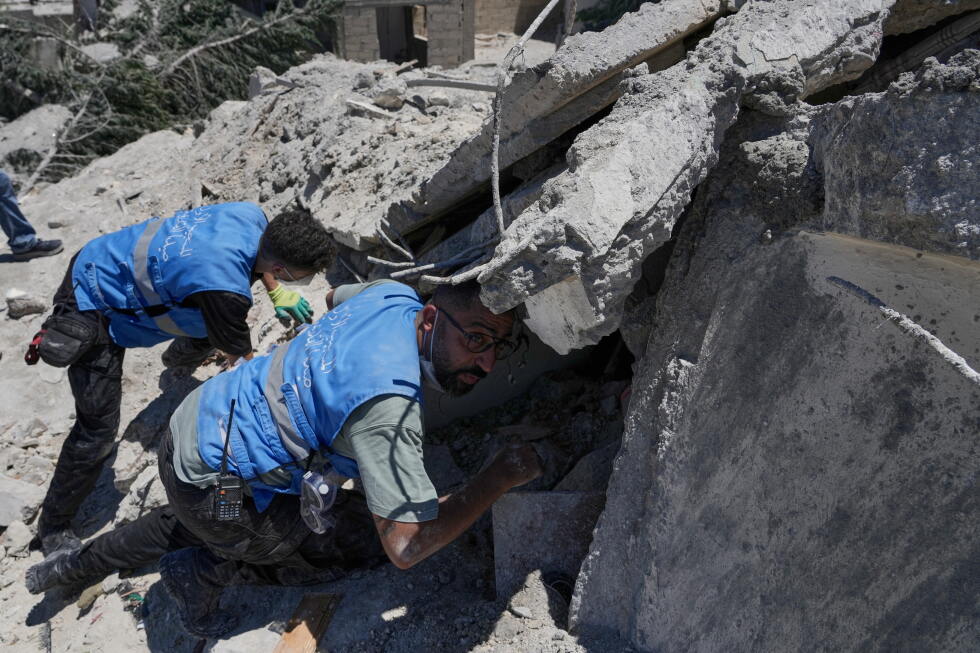
Earlier Saturday, Israeli strikes on southern Lebanon killed at least 16 people, including two children, hours after reports emerged of a ceasefire agreement there. Seven people were trapped under rubble after strikes hit the southern city of Nabatiyeh and nearby villages, Lebanon’s National News Agency said.

Advertisement

The death toll in the latest Israel-Hezbollah war has surpassed 4,000, Lebanon’s health ministry later announced.

An Israeli military official said that Hezbollah fired more than 50 projectiles at Israeli forces in southern Lebanon overnight. Israel’s army said that it struck dozens of Hezbollah targets and militants.

On Friday, the Israeli ambassador to Washington, Yechiel Leiter, said that Israel “remains firmly committed to an immediate ceasefire,” if Hezbollah honors the agreement and ceases hostilities.

The conflict could sink the US-Iran deal

Neither Israel nor Hezbollah are signatories to the deal between the U.S. and Iran.

Advertisement

Hezbollah and Israel went to war two days after the U.S. and Israel launched strikes on Iran on Feb. 28, with Hezbollah firing rockets and drones at northern Israel and Israel seizing large swaths of southern Lebanon.

A new round of U.S.-backed talks between the Lebanese government, and Israel is expected in Washington next week.

Israeli Prime Minister Benjamin Netanyahu has vowed to keep Israeli forces in southern Lebanon until any threat to Israel is eliminated. Hezbollah has refused to halt its attacks unless Israel commits to withdrawing from Lebanon.

Fighting continues near the Israel-Lebanon border

A strike on Lebanon’s Barish village killed four members of a family: parents and two children. In Arab Salim village, a body was pulled from a destroyed house, and in Doueir and Kfar Rumman villages, drone strikes killed a person on a motorcycle and a Lebanese soldier. Nine people were killed in strikes in Qannarit, Sohmor and Shehour villages.

Advertisement

Israeli jets flew low over the coastal city of Tyre.

“Our entire lives would change if there’s a ceasefire,” said one resident, Hussein Khoshman.

Some residents of northern Israel doubted the fighting would stop.

“I don’t believe in a ceasefire because it doesn’t exist,” said Miriam Hod in Metula.

Advertisement

___

Bassem Mroue reported from Beirut, and Munir Ahmed from Islamabad. Abby Sewell in Beirut, Samy Magdy in Cairo, Seung Min Kim and Konstantin Toropin in Washington, Josef Federman in Jerusalem, and Jamey Keaten in Zurich, Switzerland, contributed to this report.

___

A previous version of this story corrected the spelling of the Iranian Foreign Ministry spokesperson’s last name to Baghaei, not Bagahei.

Advertisement

Source link

Advertisement
Continue Reading

NewsBeat

A top banker made a case for rare earth mining to Pope Leo XIV

Published

on

A top banker made a case for rare earth mining to Pope Leo XIV

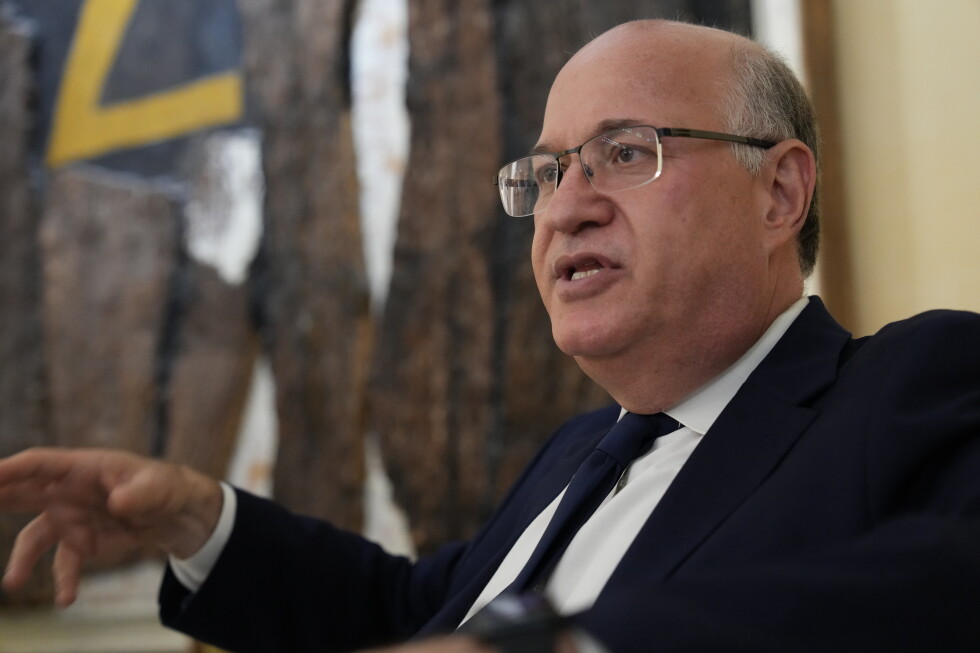
ROME (AP) — The head of Latin America’s top development bank made a pitch to Pope Leo XIV this week in the face of the Vatican’s call to divest from the mining industry: that the mistakes of the past can be avoided in extracting rare earth minerals to supply a global tech boom.

Ilan Goldfajn, head of the Inter-American Development Bank, met privately with the pope on Friday and asserted the potential of rare earth mining, saying it could be a boon to Latin America provided there are safeguards and value is added locally.

It’s probably not an easy sell. The Vatican for years has taken a firm stand against multinational mining corporations, especially in Latin America and in favor of the Indigenous peoples, whose lands and livelihoods are often ravaged when mining projects come to town.

Goldfajn’s visit, which followed one earlier this year by mining executives, suggests that he recognizes the weight of the pope’s words in the majority-Catholic region, and a desire to sensitize him to the possibility of a better way of doing business. Whether Leo can be swayed is another matter, given his own experience in the region and criticism of the often corrupt deals mining companies ink with governments in the developing world.

Advertisement

Countries have identified dozens of minerals, including copper, cobalt, lithium and nickel, as critical because they are essential for new technologies. The 17 rare earth elements are a subset of them. They’re used in a wide range of products, including smartphones, semiconductors, electric vehicles and jet engines.

“It’s a unique opportunity for the region, but you need to do it in the right way with the standards, the labor conditions, with the environmental conditions, the governance,” Goldfajn said in an interview in Rome on June 18, one day before his meeting.

“We have exactly the tools to do that,” he added, noting the IADB has a roughly $4 billion pipeline of critical mineral projects in the region, mostly in Chile, Argentina and Brazil, and three-quarters of that amount with private companies. He had just delivered a presentation on rare earth minerals at a finance conference, with an eye on potential European investors.

A pope who knows Peru

Mining has a checkered, centuries-long history in Latin America, from forced labor and displacement of Indigenous peoples to deforestation, poisoning of waterways and deadly dam collapses. Foreign companies withdrew much of the wealth from the earth without enriching local populations. In colonial times, silver and gold made its way across the ocean to adorn Catholic churches.

Advertisement

Leo, who spent two decades working as a missionary in Peru, would be intimately familiar with the plight of Indigenous peoples in mining areas and the environmental impact of extraction industries on the land. He ministered in Chulucanas, in the archdiocese of Piura, which has huge copper mining projects, and in Trujillo, known for its gold deposits. His final Peruvian posting, Chiclayo, is a big logistical hub for northern Peru’s extraction industries.

“He must have seen both sides: the promise, the future, but also the challenges,” Goldfajn said of Leo’s time in Peru. He noted that Leo held a private audience with a group of top mining executives in January, which he heard from them had been “very constructive.”

Advertisement

But two months later, the Vatican launched a campaign to encourage divestment from mining companies. At a Vatican news conference, top officials held up an ecumenical Christian network, known as the Church and Mining Network, that is active in particular in Latin America. The campaign seeks to encourage local churches to review their investment strategies and divest where needed, and to share information especially with Indigenous groups about the types of extraction occurring on their lands.

Advertisement

Leo is expected to visit Peru in November, including places where he ministered. In each of the three sub-Saharan countries he visited during his April trip to Africa — Cameroon, Angola and Equatorial Guinea — he blasted the “colonization” of Africa’s minerals by mining companies.

It makes sense for people like Goldfajn to try to engage Leo, even if the pope alone won’t move investment decisions, Bryan Harris, managing partner at Sabio, a Latin America-focused strategic advisory firm, wrote in an email.

“The decades he spent in Peru give him personal credibility and his messaging on mining sets the tone for how dioceses and parishes across the continent will engage with mining companies and projects,” said Harris, who consults for international mining companies in the region. “These groups are often the basis of local opposition movements to mining, so the Pope has considerable sway on whether relations are confrontational or conciliatory.”

Harris noted that processing of rare earths can be extremely dirty, involving heavy chemical use that can contaminate water resources without close monitoring of companies’ sustainability commitments and enforcement by federal regulators.

Mining as colonization in modern day

Leo’s predecessor, Pope Francis, a native of Argentina, singled out the toll of mining in his 2015 environmental encyclical “Praised Be,” noting the pollution of underground water systems as a result of runoff, the mercury pollution in gold mining or sulfur dioxide pollution in copper mining.

Advertisement

Francis said it was “essential” for Indigenous communities to be the principal dialogue partners when large projects affecting their land are being considered.

The Vatican didn’t provide any readout of Leo’s private audience with Goldfajn. In a separate audience Friday, Leo met with participants in a conference at the Vatican’s environmental educational center named for Francis’ 2015 encyclical. He denounced the profit-at-all cost mentality of those who seek to plunder the earth “at the expense of the most vulnerable and enhances the risk of dehumanization.”

There are 75 million tons (82.7 million U.S. tons) of rare earth oxides around the world, more than half in China, and with Brazil home to the second-largest reserves, according to the U.S. Geological Survey’s most recent estimate.

Advertisement

Source link

Continue Reading

NewsBeat

Plans for hub to ‘keep youth off the streets’ as part of city redevelopment

Published

on

Cambridgeshire Live

The plans are still at an early stage

A Peterborough City Council cabinet member has suggested the Embankment could become home to a state-of-the-art youth activity hub as part of plans to redevelop the city centre.

Councillor Mohammed Jamil revealed the ambitious initiative on the council’s monthly ‘Ask the Cabinet’ podcast while discussing the new Cygnet Bridge with Council Leader Shabina Qayyum.

Advertisement

“We’re looking at a Youth Zone to go on the Embankment to go with the Lido and the new swimming pool,” Cllr Jamil said.

Cllr Jamil said the new purpose-built hub would be a “very innovative” space that would be “very successful in attracting youths and trying to keep them off the streets”. The councillor added: “They’ve set these things up in places like Wigan, Bolton and East London.”

The existing Youth Zones mentioned by Cllr Jamil are expansive, state-of-the-art facilities developed by OnSide, a national youth charity.

According to its website, the charity’s aim is to “build a network of state-of-the-art, multimillion-pound youth centres in the UK’s most disadvantaged areas [that] are incredible spaces filled with energy, inspiration and highly skilled youth workers who truly believe in young people”.

Advertisement

OnSide’s Youth Zone in Wigan town centre boasts 15 dedicated areas, including four 40-metre floodlit football pitches, an art room, music room, and climbing wall. It is open to all young people across the town aged from 8 to 19 (up to 25 with additional needs). Cllr Jamil explained that “different youth zones are different in different places”.

The Youth Zone in East London typically offers 20 activities, including fitness, dance, arts, music, media, self-improvement, and sport. A four-court sports hall offers facilities for badminton, football, netball, and basketball, as well as a separate climbing wall.

Elsewhere there is a fitness suite with the latest gym equipment, an outdoor kick pitch, and a kitchen and café area selling healthy food and drink. Dedicated areas for dance, music, film, and multi-media, arts and crafts, gaming and DJ-ing, martial arts, and boxing facilities also feature.

Speculating on how a Youth Zone specific to Peterborough would look, Cllr Jamil said: “It could be computers, it could be employment skills, it could be a whole host of things that youth are interested in.

Advertisement

“We’re just looking to see what the concepts are around the country. Once we’ve sat down and said ‘this is the model we want’ then we’ll let [people] know.”

The Councillor, who is also Cabinet Member for Finance and Corporate Governance and Deputy Leader of the Labour Group, acknowledged that the plans are still in the early stages.

“We’re still at the infancy stage of doing it and it’s a concept for us,” he said, “but we’re very serious as an administration about getting this done.”

Adding newly constructed buildings to the city centre would require funding. “We’re looking to secure funding to be able to put that on the Embankment,” he said. “We [the council] would have to fund some of it but we are actively looking to make sure that it happens.”

Advertisement

Source link

Continue Reading

Trending

Copyright © 2025