Connect with us
DAPA Banner
DAPA Coin
DAPA
COIN PAYMENT ASSET
PRIVACY · BLOCKDAG · HOMOMORPHIC ENCRYPTION · RUST
ElGamal Encrypted MINE DAPA
🚫 GENESIS SOLD OUT
DAPAPAY COMING

NewsBeat

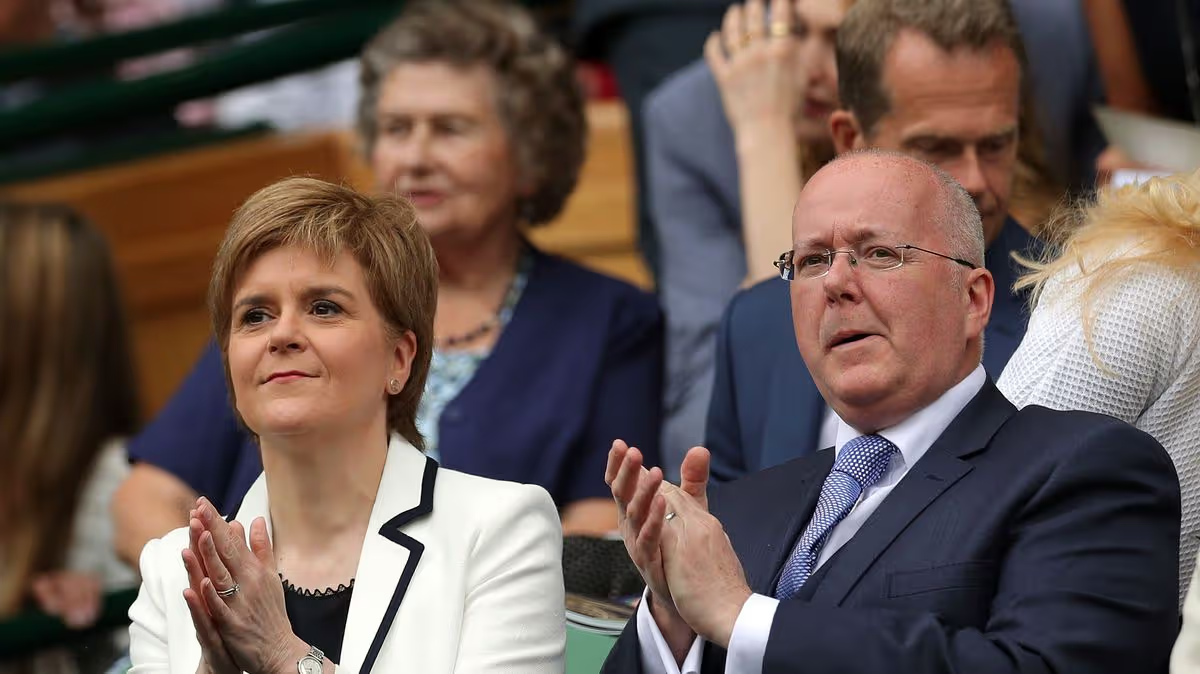
Nicola Sturgeon blasts ‘coward’ MP over claims she knew about Peter Murrell’s crimes

Published

on

Daily Record

The former First Minister’s statement was issued by her lawyer Aamer Anwar.

Nicola Sturgeon has claimed a Tory MP who accused her of knowing about husband Peter Murrell’s crimes is a “coward”.

The former First Minister said David Davis is a member of an “Old Boys’ Club” who has told “lies” about her.

Sturgeon’s statement came after Davis, an ally of the late Alex Salmond, used parliamentary privilege to make shocking incendiary claims.

Advertisement

Her estranged husband, Peter Murrell, was jailed last month after embezzling more than £400,000 of SNP funds when he was chief executive of the party.

She has denied any knowledge of his crimes, but Davis said:

“My view on her denials is clear. She is lying. She knew full well what her husband was doing and how those luxury purchases were funded.”

He also accused her of the “evil act” of “stitching up” Alex Salmond to “hide the truth”.

Advertisement

Salmond faces allegations of sexual assault in 2019, but he was cleared after a trial.

Davis said: “It now appears clear that these actions to destroy a man’s reputation and life were motivated by a desire to hide their own crimes.”

A statement by solicitor Aamer Anwar, on behalf of his client Sturgeon, said of Davis: “This member of the ‘Old Boys Club’ has been spreading conspiracy theories on behalf of the late Alex Salmond since 2021 – and now he is telling more lies about me.

“The fact that he hides like a coward behind the legal privilege of Westminster says everything we need to know about him.”

Advertisement

Using parliamentary privilege allows an MP to speak in the House of Commons without being sued.

Davis also said: “There’s a clear pattern of secrecy, obstruction, and power used to protect power, a pattern started by Sturgeon.

“Scotland needs a fresh start.

“That starts with a judicial inquiry into this entire sordid scandal because it’s a scandal that cost Alex Salmond his life.”

Advertisement

Source link

Continue Reading
Click to comment

You must be logged in to post a comment Login

Leave a Reply

NewsBeat

The once-glamorous British hotels that have lost their sparkle – with filthy rooms, faded grandeur and damning reviews

Published

on

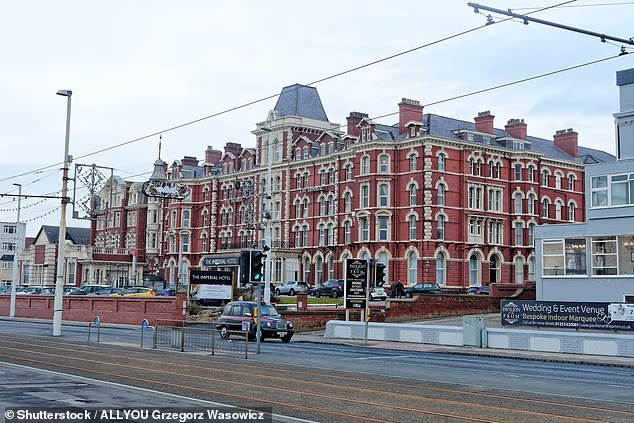
The Imperial Hotel in Blackpool has lost its previously timeless allure

From dilapidated entrance signs to faded facades, filthy carpets, dated curtains and a general air of neglect, some of Britain’s most elaborate buildings have long lost their allure as ‘grande dames’ of the hotel world.

While many towns and cities across the country previously played host to a variety of upmarket establishments, some have failed to maintain their often expensive exteriors and interiors.

A stay at some of these hotels is more likely to feel like a bargain break than a luxury escape – where you’ll find yourself inspecting each and every glass for fingerprints instead of truly relaxing.

Formerly iconic hotels and seaside resorts, from Blackpool to Bognor Regis, are among the worst in the country, exhibiting a real fall from grace.

Advertisement

Here are some of the worst offenders…

The Imperial Hotel, Blackpool

The Imperial Hotel in Blackpool has lost its previously timeless allure

While the exterior of Blackpool’s Imperial Hotel may once have hinted at its upper-crust status, unfortunately nowadays it’s more ‘tacky’ than ‘timeless’.

Advertisement

‘The decline of the rooms and the standard of service was shocking. We booked a premier room. It was far from premier,’ one disgruntled visitor wrote of the hotel this summer.

‘Shoddy room with decor and furnishings badly requiring an upgrade. Watered down toiletries. Bathrobes missing, eventually supplied without a belt. Carpet was filthy. We could go on…’

It fits within the town’s overall decline, too. The Blackpool Tower, pier and coastline have provided the backdrop for many a British family holiday over the last few decades – but in recent years, the town has gone from dynamic destination to hopelessly gauche.

Indeed, when a town markets itself as ‘affordable’, all too often that goes along with another description – ‘tacky’.

Advertisement

The Adelphi Hotel, Liverpool

The Adelphi Hotel in Liverpool was once a celebrity enclave before its decline

The Adelphi Hotel in Liverpool was once a celebrity enclave before its decline

The Britannia Adelphi Hotel is one of Liverpool’s most famous establishments, with visitors over the years including Sir Winston Churchill and the hotel featuring in the 1997 fly-on-the-wall BBC documentary series Hotel, narrated by Andrew Sachs. 

The first Adelphi Hotel on the present site was opened in 1826 by owner James Radley. 

But it’s faced a string of disastrous events in recent years. 

Advertisement

Its owner, Britannia Hotels, appeared in court to face 20 charges of breaching health and safety regulations after the death of Chloe Haynes in September 2022. 

The court heard the hotel was an ‘unsafe place’, after the 21-year-old died from a falling wardrobe and a three-year-old girl suffered head injuries from a cabinet.

The Grand Hotel, Scarborough

Today the Grand Hotel is not quite as grand, with a grubby exterior sign

Today the Grand Hotel is not quite as grand, with a grubby exterior sign

The Grand Hotel opened in Scarborough in 1867, and at that time was the largest hotel in Europe.

Advertisement

It was a favourite among the aristocracy, with its glamorous entrance hall, gorgeous main staircase and well-adorned interiors.

However, a combination of factors such as its acquisition by Britannia Hotels in 2004, underinvestment, maintenance issues and customer complaints have culminated in it being dubbed the ‘shame of Scarborough’.

‘The lobby is given over to dark, faux leather armchairs, plastic ferns, slot machines and Find A Key games (‘winner every time!’). The air is perfumed by fry-ups,’ Mark Palmer wrote in the Daily Mail.

‘Social media is awash with posts about how The Grand, part of the Britannia chain – and a Butlins at one time – is the worst hotel in the country.’

Advertisement

Riviera Hotel, Weymouth 

The abandoned Riviera Hotel in Bowleaze Cove is not what it once was

The abandoned Riviera Hotel in Bowleaze Cove is not what it once was

When you think of Art Deco hotels, you might picture high ceilings, impressive windows and glamorous designs.

Riviera Hotel in Weymouth might once have been this type of establishment – but less so right now.

One Facebook user wrote: ‘The “owner” does not care for it, everything that was done as part of the “refurbishment” back then was done on the cheap, as well as being ripped off by several building companies, hence its state now. 

Advertisement

‘Such a shame, it would need millions now to put it right and with listed building status.’

Fortunately, the hotel is set to undergo a refurb, so only time will tell whether it will redeem itself. It is closed for the time being.

The Metropole Hotel, Blackpool

The Metropole Hotel in Blackpool is now owned by Britannia Hotels

The Metropole Hotel in Blackpool is now owned by Britannia Hotels

Built in 1776, The Metropole Hotel in Blackpool is the only hotel on the shoreline side of the promenade.

Advertisement

‘Wipe your feet on the way out!’ one visitor wrote. ‘I stayed there before it was acquired by the Home Office for use. The place was an absolute dump of a place. Avoid at all costs.’

Blackpool was at its best from the 1870s to the 1950s, when new railway links made it easily accessible, a win for those living in landlocked towns across the UK.

In the 1980s, it had a reputation for a vibrant nightlife – but unfortunately competition from increasingly easy-to-book Mediterranean holidays became far more appealing than, well, a weekend by the Irish Sea.

The Metropole Hotel is very much part of that decline.

Advertisement

Coylumbridge Resort Hotel, Aviemore

Coylumbridge Resort Hotel in Aviemore is next up on the list

Coylumbridge Resort Hotel in Aviemore is next up on the list

If you look up Coylumbridge Resort Hotel in Aviemore, you’ll be met with images of the establishment during its heyday. 

On paper, it has a 65-acre woodland estate, dining options, a relaxing spa, an indoor pool, an adventure park and a soft play area. 

However, in reality, it’s far less glamorous than that, with dated carpets and poor service – and none of the facilities are quite as nice as they sound.

Advertisement

One undercover Daily Mail hotel inspector said: ‘The service at reception was the worst I could remember from any hotel.’ 

Royal Grosvenor Hotel, Weston-super-Mare

The imposing Royal Grosvenor Hotel stands (somewhat) proudly in Weston-super-Mare

The imposing Royal Grosvenor Hotel stands (somewhat) proudly in Weston-super-Mare

Weston-super-Mare is among the UK’s formerly perfect seaside towns that fell into disrepair when Brits started heading abroad instead.

And few parts of the town demonstrate this quite like the Royal Grosvenor Hotel.

Advertisement

Described as ‘shockingly poor’ and with ‘terrible service’, many guests have discouraged others from booking a stay here.

Now, though, the hotel has been listed for a guide price of £1.5million – meaning it could be bought and refurbished in the future.

Source link

Advertisement
Continue Reading

NewsBeat

Distressing video shows elderly woman trapped inside hot Tesla that was supposed to be in ‘pet safe mode’

Published

on

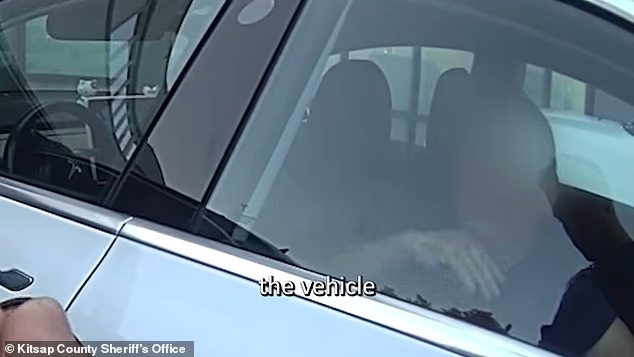
A grandmother in Washington State was rescued from a hot Tesla after she was trapped inside for more than an hour. She is pictured waving her hand in front of her face to show she was hot

Advertisement

Distressing police body camera footage has captured the moment sheriff’s deputies rescued a grandmother who was trapped inside a hot Tesla for more than an hour. 

The close call took place a little after 5.15pm in Washington State‘s Kitsap County, which is just west of Seattle.

Bystanders called 911 after seeing an elderly woman trapped inside the electric vehicle because she seemed to be in distress. Deputies with the Kitsap County Sheriff’s Office arrived and attempted to open the doors, but they were locked. 

It was later determined that the Tesla had been operating in ‘pet safe mode,’ a feature meant to keep the air conditioning on while the doors are locked from the inside to prevent pets from escaping. The air conditioning had not been functioning, however.

Advertisement

When the deputies arrived, they attempted to communicate with the woman inside the vehicle, but she only spoke Spanish. At one point in the bodycam video, she can be seen waving her hand in front of her face, seemingly to show that she was hot.

The video also shows a deputy asking, ‘Are you okay?’ before the grandmother gestured in a way that showed she did not understand. He then asked her if she had a phone while pointing to his device, and she waved her finger no.

The deputy used an online translation tool to communicate with the woman, typing phrases and then placing his phone against the window so she could read them. 

The officers soon determined that the woman had been in the car for at least an hour while her granddaughter had gone into a building nearby to conduct business. 

Advertisement

A grandmother in Washington State was rescued from a hot Tesla after she was trapped inside for more than an hour. She is pictured waving her hand in front of her face to show she was hot

The elderly woman only spoke Spanish, so a responding deputy used an online translation tool to communicate with her

The elderly woman only spoke Spanish, so a responding deputy used an online translation tool to communicate with her 

The deputy is pictured placing his translated phrase against the window so the woman could read it

The deputy is pictured placing his translated phrase against the window so the woman could read it

Advertisement
A deputy is pictured trying to open the locked Tesla's doors. The vehicle was in 'pet safe mode,' which is meant to keep the air conditioning on while the doors are locked from inside

A deputy is pictured trying to open the locked Tesla’s doors. The vehicle was in ‘pet safe mode,’ which is meant to keep the air conditioning on while the doors are locked from inside

‘One hour,’ one of the deputies said in the video after he could be seen leaning towards the window communicating with the elderly woman. ‘That’s a long-a** time – one hour,’ he then said while turning back to look at the other deputy. 

The granddaughter appears to have left the car in ‘pet safe mode’ so her grandma would be comfortable, but the feature appeared to have malfunctioned, turning the vehicle into a rapidly heating prison.

The deputies searched nearby businesses to find the woman’s granddaughter and located her about 15 minutes after arriving at the scene, according to the timestamp on the body camera footage.

Advertisement

‘Do you have a white Tesla?’ a deputy can be heard asking a woman who was sitting on a bench inside a courtyard of one of the buildings. 

‘Yes? Is it parked right over here?’ the deputy continued. ‘Okay, is that your grandmother in there? I need you to come with me right now.’ 

The deputy escorted the granddaughter to the Tesla, and she was able to unlock its doors. The elderly woman was then finally able to climb out and cool off. 

The responding officers estimated that the temperature inside the vehicle was about 100F by the time the grandmother was able to exit. 

Advertisement

Temperatures in the area reached a high of 86F on Tuesday, according to the Weather Channel. 

The deputies soon located the elderly woman's granddaughter, who had left her in the car to conduct business in a nearby building

The deputies soon located the elderly woman’s granddaughter, who had left her in the car to conduct business in a nearby building

A deputy escorted the granddaughter to the Tesla, and she was able to unlock it, allowing the grandmother to climb out and cool off

A deputy escorted the granddaughter to the Tesla, and she was able to unlock it, allowing the grandmother to climb out and cool off

According to the National Weather Service, ‘The temperature inside a vehicle can rise 20 degrees in as little as 10 minutes, and 50 degrees in an hour- even when outside air temperatures are in the 70s.’

Advertisement

The Kitsap County Sheriff’s Office deputies documented the worrying incident and forwarded the information to Adult Protective Services for review. 

Daily Mail approached Tesla for comment. 

Advertisement

Source link

Advertisement
Continue Reading

NewsBeat

Could Iran’s ‘sadistic’ regime still collapse from within? NATALIE LISBONA shares haunting stories from those trapped inside the country as fury at the Ayatollahs nears ‘boiling point’

Published

on

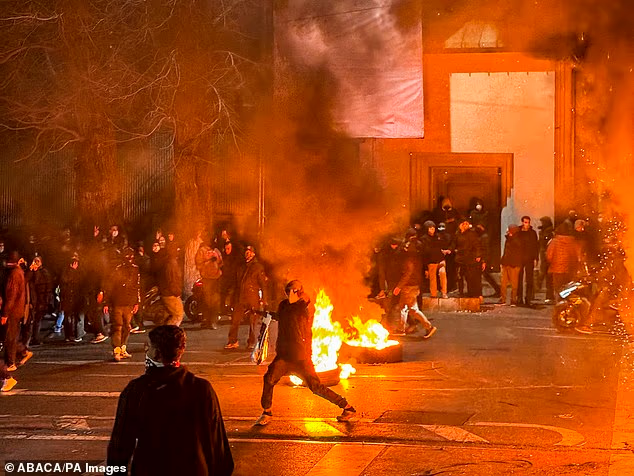
The regime's repression has only worsened since mass protests swept the country in late December and January

Advertisement

On a special episode of the Daily Mail’s Deep Dive podcast, Middle East Correspondent Natalie Lisbona and Chief Foreign Correspondent Andy Jehring exchange stories from inside a teetering Islamic Republic.

Lisbona and Jehring collaborated on a recent investigation for the Daily Mail, which shared correspondences each had with regular people living in Iran.

These brave men and women, who were anonymised in the piece for their safety, painted a picture of a society governed by ‘complete repression’, Lisbona said, where public executions, sexual violence and state surveillance are a daily occurrence.

The regime’s repression has only worsened since mass protests swept the country in late December and January. During the bloodiest 48 hours of the crackdown, on January 8 and 9, more than 30,000 protest-related deaths were reportedly registered in civilian hospitals.

Advertisement

The regime’s repression has only worsened since mass protests swept the country in late December and January

‘They’re talking about a country in which you’re constantly watched,’ Lisbona said, describing what her sources told her about life six months on from the massacre.

‘You’re not allowed to convert to Christianity. There are executions in public. One Iranian dissident told me that when they watched The Handmaid’s Tale, they felt it was based on Iran.

Advertisement

‘I have heard so many stories of sexual violence perpetrated by the Basij [the regime’s militia].

‘The government controls everything. The authorities can simply shut down the internet whenever they want. Many don’t know where their families are.’

Reporting on these horrors is made even harder, Jehring said, by another prong of the regime’s repression: disinformation.

The Islamic Republic has weaponised artificial intelligence, he explained, deploying it to confuse the world’s media and terrify its own people.

Advertisement

He said: ‘There have been some very stressful moments in trying to ensure we weren’t repeating regime propaganda… it’s so interesting and disturbing how it works.

‘They actually put out AI generated images of people who are not actually on death row, as a kind of fear tactic.’

Elsewhere in the podcast, Lisbona said some of the Iranians she spoke to felt ‘very disappointed’ that Washington chose to strike a deal with the Islamic Republic rather than see its stated aim of regime change through.

President Donald Trump had promised protesters back in January that ‘help is on its way’. When Operation Epic Fury was launched in February, Lisbona said her sources were ‘jumping for joy’.

Advertisement
Lisbona said some of the Iranians she spoke to felt 'very disappointed' that Washington chose to strike a deal with the Islamic Republic

Lisbona said some of the Iranians she spoke to felt ‘very disappointed’ that Washington chose to strike a deal with the Islamic Republic

But with a chokehold over the Strait of Hormuz, a vital waterway through which a fifth of the world’s oil passes, serving as a bargaining chip, it seems likely the Islamic Republic will survive the conflict.

‘[The Iranians] felt really left alone,’ Lisbona said.

‘But they’re very determined. They do say: ‘That’s not going to stop us.’

Advertisement

‘Across the board from everyone I’ve spoken to… they say something is definitely going to happen. It’s just a matter of time because people are so angry.’

Listen to the full episode by searching for Deep Dive now, wherever you get your podcasts. New episodes are released every Thursday.

Advertisement

Source link

Advertisement
Continue Reading

NewsBeat

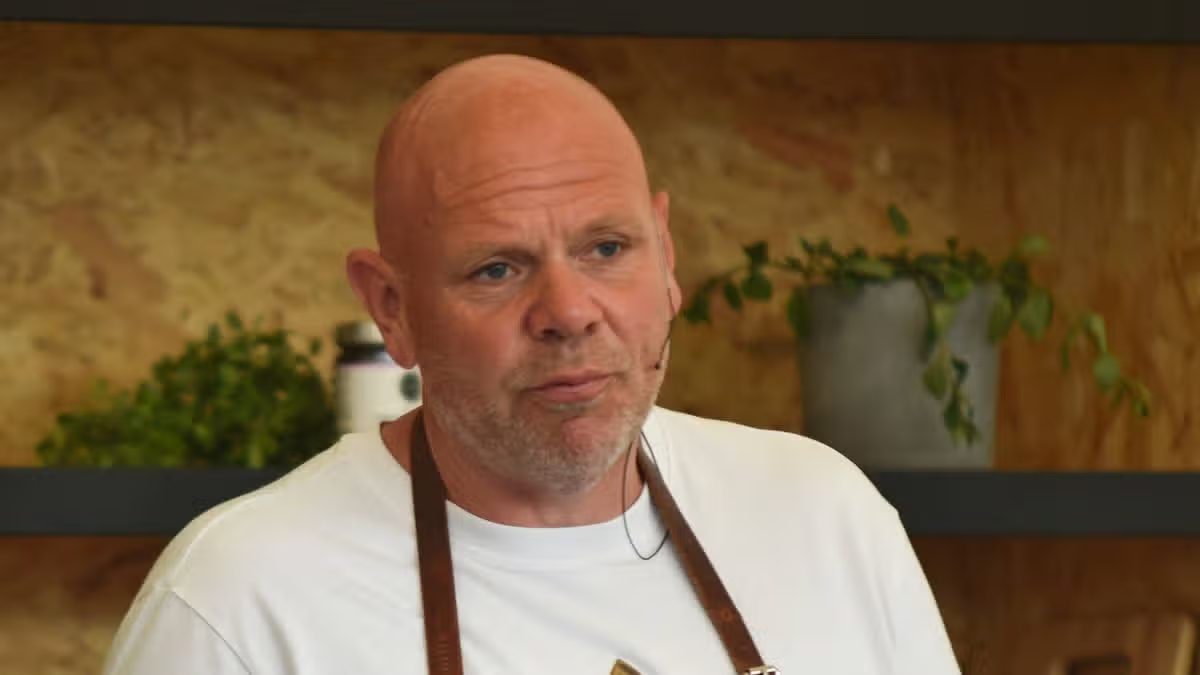
Tom Kerridge names the worst thing he’s ‘ever eaten’ and says ‘it was rotten’

Published

on

Wales Online

Celebrity chef Tom Kerridge has been in the food and hospitality industry for over 30 years, but he has now named the worst thing he’s eaten

Celebrity chef Tom Kerridge has discussed what he considers the worst meal he’s consumed. Tom, 52, has more than 30 years’ experience working in the food and hospitality sector.

Advertisement

Despite his dedication to work, he has from time to time taken a break, and it was during one overseas trip that he came across a dish he would later describe as the worst he’s ever had.

Speaking on the Good Food Tasted podcast hosted by comedian Patrick Spicer, he was asked by the presenter what the worst food he’d ever tasted was.

At that moment, Tom responded without hesitation. He knew precisely the dish in question and where he had consumed it, reports Gloucestershire Live.

He said: “It was a burger in a, it was 100 percent the worst thing I have ever eaten, in a waterpark somewhere in Portugal and it was beyond. It was the most rotten thing I’ve ever put in my mouth.”

“It was just the worst because it was just like. It was so bad, without doubt. Now, I’ve eaten lots of daft, bad things, like century egg or…like fermented fish and I mean shark fin and all of that sort of stuff.

“This is something that you buy going ‘Yeah, great, I’m going to have burger and fries at a water park somewhere in Portugal’ and it was the worst the thing. It was so bad.”

Meanwhile, when it comes to the very survival of hospitality, Tom has been vocal in his support of the industry despite the numerous economic challenges that have impacted it in recent years.

Advertisement

He has consistently campaigned for greater assistance to be provided, but lately he has been outspoken as he advocates for a VAT cut for hospitality firms; a measure that could save some businesses millions.

If it were reduced, Tom and others have suggested this could offer a valuable slice of relief as businesses continue to battle to stay open.

While England’s involvement during the World Cup has provided a boost, with trading hours stretching into the early hours on some occasions, the tournament concludes this weekend.

Advertisement

With this in mind, figures within the hospitality sector have called for more enduring measures. Speaking to City AM about his latest proposal, Tom contended that businesses were not simply entities which paid taxes and that small enterprises should also receive support.

He said: “No successful business has ever been built on the accountant. Businesses are not built on tax experts. Communities don’t operate on tax experts. And that’s not even a pleasant title, that shows you what that sort of person is.

“Without allowing small businesses to grow, you’re never going to get to that point. So yes, their profit margins will be bigger, but it isn’t about them […] it’s about the survival of your local pub.”

Source link

Advertisement
Continue Reading

NewsBeat

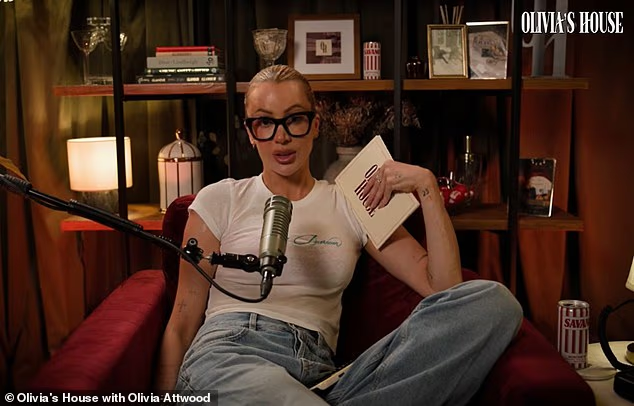
Olivia Attwood says Katie Price needs to put Lee Andrews ‘in the bin’ and has warned her off him after they poked fun at him in video

Published

on

Olivia Attwood has said Katie Price needs to put Lee Andrews 'in the bin' and has warned her off him after they poked fun at him in silly Instagram video back in May

Olivia Attwood has said she has warned Katie Price off her husband Lee Andrews after he was ‘arrested again’ last week. 

Back in May, the TV personality, 35, joined Katie, 48, for a fun Instagram as they joked about the whereabouts of their husbands following Olivia’s split from Bradley Dack and Lee’s mysterious disappearance. 

Meanwhile, last week Lee, 43, hit out at Vogue Williams and Joanne McNally in an Instagram rant after they discussed his antics on their podcast.  

And now Olivia has commented on the situation on her latest episode of Olivia’s House.

Advertisement

She told fans: ‘Lee Andrews is coming for Vogue Williams and my sweet angel, Joanne McNally. What the hell?’

The star continued: ‘Lee Andrews needs to just absolutely get in the bin.

Olivia Attwood has said Katie Price needs to put Lee Andrews ‘in the bin’ and has warned her off him after they poked fun at him in silly Instagram video back in May 

Advertisement
Olivia told fans: 'Like Katie's a friend of mine. N o one can make me hate Kate, but this guy, I told her to her face when I seen her the other month, it's bad vibes'

Olivia told fans: ‘Like Katie’s a friend of mine. N o one can make me hate Kate, but this guy, I told her to her face when I seen her the other month, it’s bad vibes’

‘Like Katie’s a friend of mine. No one can make me hate Kate, but this guy, I told her to her face when I seen her the other month, it’s bad vibes.’

In May Katie filmed an Instagram video with Olivia during the time of Lee’s first arrest as the two said they are ‘two gals with not a husband in sight’ (sic).

Chatting to the camera, Katie said: ‘We’re missing something’, as Olivia replied: ‘Yeah, well I have looked for him but…’

Advertisement

‘Well mine is missing so at the moment it doesn’t look good does it’, Katie said.

‘No we’ll keep looking I guess’, Olivia replied.

‘We’re missing our husbands’, added Katie as the pair started to laugh.

In a second photo, Katie and Olivia held their hands over their faces looking shocked as they penned: ‘2 gals. Not a husband in sight @katieprice’ (sic).

Advertisement

Meanwhile last week Vogue responded to Lee‘s Instagram rant about her, in a hilarious exchange on her podcast which saw him send a bizarre message back in return.

The unlikely celeb feud has been going on for weeks with Vogue calling out Katie’s husband and his outlandish antics, prompting Lee to respond on Instagram insisting he had never heard of the TV star.

During the latest episode of her My Therapist Ghosted Me podcast with Joanne McNally, Vogue decided to message Lee directly to ask about his online rants directed at her. 

On previous episodes of her podcast Vogue initially said she was reluctant to talk about Lee because she has a problem with the fact he is trying to ‘make people seem stupid’ by feeding them fabricated stories.

Advertisement

‘He’s taking the p**s out of everybody. This is why I have such a problem with it, I’ve likened it to being really stupid. He’s trying to make people seem stupid and think that we actually believe his b******t and I can’t bear it.

In May Katie filmed an Instagram video with Olivia during the time of Lee's first arrest as the two said they are 'two gals with not a husband in sight' (sic)

In May Katie filmed an Instagram video with Olivia during the time of Lee’s first arrest as the two said they are ‘two gals with not a husband in sight’ (sic) 

Meanwhile last week Vogue responded to Lee's Instagram rant about her, in a hilarious exchange on her podcast which saw him send a bizarre message back in return

Meanwhile last week Vogue responded to Lee’s Instagram rant about her, in a hilarious exchange on her podcast which saw him send a bizarre message back in return

She added: ‘I feel like he doesn’t even have two brain cells to rub together, that’s how I feel about him and I hate being dragged down to his level.’

Advertisement

Vogue has also said she feels sorry for Katie, and called him a ‘con artist’. 

Lee then posted on Instagram, promising to ‘name and shame the 58, the 60 people from the celeb world that actually basically slating me’.

Lee continued to the camera: ‘[Everyone] everything bad about me, saying all these things that are not true. I’m gonna call them out individually because why not, they’ve dubbed me their Britain’s Bad Boy, might as well play into that now.’

He went on to accuse the I’m A Celeb star of being a ‘clout chaser’ and claimed he had ‘never even heard of Vogue Williams’ and ‘had to google who she actually was’.

Advertisement

On the latest episode of her podcast with Joanne, Vogue laughed off the comments, telling listeners: ‘Lee tagged me and said that I was clout chasing after his name and his 150 million followers!’

Joanne jumped in and said ‘the absolute hypocrisy of a man who lives to chase clout. He literally set up a cameo two weeks after marrying Katie Price. I’ve never seen clout chasing like it.’

‘He tagged me again I’m getting it in the neck again tonight at 10:00 p.m. UK time,’ Vogue then said.

Source link

Advertisement
Continue Reading

NewsBeat

The best kids’ theatre shows in London to book now

Published

on

The best kids’ theatre shows in London to book now


Pocket Money

A child-friendly ride into the world of finance. This premiere from experimental theatre-makers Nigel Barrett and Louise Mari uses an interactive voting system, a mischievous clown and a DJ set to get young heads spinning with thoughts about how money works. Developed in consultation with financial experts and supported by the Bank of England, it’s a must for budding financial whizz-kids.

Unicorn Theatre, London, Sept 26-Nov 1

Age recommendation: 7-11

Advertisement

Running time: 1 hour 15 minutes

Tickets: unicorntheatre.com


The Jungle Book

Can NT boss Indhu Rubasingham crack Rudyard Kipling’s beloved family tale? It’s her first big festive show on the Olivier stage. Set in the Indian mangrove forest of the Sundarbans, Hiran Abeysekera (Olivier-winning for Life of Pi) leads as man-cub Mowgli, who must discover where he belongs. Anupama Chandrasekhar adapts, with puppetry from Nick Barnes and Finn Caldwell; will the original score from Spanish composer Fernando Velázquez rival that familiar Disney magic?

Olivier Theatre, National Theatre, London, Nov 13-Feb 6 2027

Advertisement

Age recommendation: 7+

Running time: TBC

Tickets: nationaltheatre.org.uk


Harry Potter and the Cursed Child

Source link

Advertisement
Continue Reading

NewsBeat

Hardware to install breathalysers in cars ruled out by Government – but it will mandate speed limiters and cabin drowsiness cameras

Published

on

Alcohol Interlock Installation Facilitation (AIIF) technology will not be made mandatory for cars at this time, the government has ruled following a vehicle safety consultation

New cars sold in Britain will not be required to be fitted with equipment that easily allows the installation of in-built breathalysers, the government confirmed today.

Following a consultation that closed in May, officials said on Thursday that Alcohol Interlock Installation Facilitation (AIIF) – one of 18 active safety features being considered for mandatory fitment on new models to mitigate crashes – will not be a legal requirement.

AIIF is a standardised interface, wiring system and connection that allows any aftermarket alcohol breathalyser – also known as an ‘alcolock’ – to be installed in vehicles owned by drivers with previous drink-drive convictions.

Systems that are now set to become mandatory in new models include blind-spot warnings, tyre-pressure monitoring, drowsiness and attention monitoring cameras, and emergency braking technology designed to protect pedestrians and cyclists.

Advertisement

Also mandated will be controversial Intelligent Speed Assistance (ISA), which is speed-limiter technology that warns motorists when they are over the limit and can – in some cases – actively slow a speeding vehicle.

The government said it will keep AIIF under review as broader policies regarding alcohol interlocks develop.

However, vehicles already on sale in Britain – and many of those sold in the future – are likely to have AIIF fitted by manufacturers that do not want to incur the additional cost of producing UK-specific models that differ from those sold in the EU.

The government’s decision has been labelled ‘disappointing’ by road safety organisations after studies showed support for technology that can be used to prevent repeat drink-drive offenders from reoffending.

Advertisement

Alcohol Interlock Installation Facilitation (AIIF) technology will not be made mandatory for cars at this time, the government has ruled following a vehicle safety consultation 

The ruling comes as part of the outcome of a safety consultation published by the Department for Transport (DfT).

The consultation was launched because road traffic collisions remain a major cause of death and serious injury on British roads, while progress in reducing the number of people killed or seriously injured has slowed.

Advertisement

Collision data shows that human factors, including distraction and excessive speed, remain major contributors to road casualties.

Evidence also suggests that advanced vehicle safety technologies – from blind-spot monitoring to drowsiness warnings – can help prevent collisions, reduce their severity and better protect vulnerable road users.

Views were sought on alcohol interlock interface facilitation technology as well as the mandatory introduction of 18 vehicle safety technologies.

AIIF facilitate for in-car breathalysers to be installed in vehicles driven by people with previous drink-driving convictions.

Advertisement

The devices effectively block the car’s engine from starting until the driver provides a legal specimen of breath. 

Yet more respondents, across both individuals and organisations, agreed than disagreed with the proposal not to mandate alcohol interlock interface facilitation at this stage.

The number of road deaths involving at least one drink-driver fell between 2022 and 2023, but fatalities remain higher than they were a decade ago

The number of road deaths involving at least one drink-driver fell between 2022 and 2023, but fatalities remain higher than they were a decade ago 

Respondents were asked: ‘Do you agree or disagree with our proposal not to mandate this technology at this time?’

Advertisement

Of the 220 responses received, 55.5 per cent agreed with the proposal not to mandate AIIF at this stage.

Those who agreed with not mandating AIIF referred to proportionality and timing, regarding it as a lower priority than the wider package of vehicle safety technologies, and did not want to see AIIF delay the implementation of those measures.

Others pointed to the safety benefits of AIIF being dependent on a future alcohol interlock programme, meaning requiring the interface at this stage was unnecessary.

Respondents also raised concerns about costs and implementation burdens, particularly as some felt AIIF would be unnecessary for most vehicles.

Advertisement

Technology readiness, the current evidence base and the need for further policy, and legislative development were also cited as reasons not to make AIIF mandatory at present.

However, those in favour of mandatory AIIF, including the RAC, argued that the technology is a crucial component that could support the future use of alcohol interlocks, particularly in rehabilitation or offender programmes.

Responding to the DfT’s conclusion, RAC senior policy officer Rod Dennis said: ‘Given the Government has also consulted on introducing an alcohol interlocks programme for drink-drivers as part of its consultation on the Road Safety Strategy, it’s disappointing that it has decided alcolock interfaces should not have to be fitted to vehicles as standard.

Advertisement

‘It feels like a missed opportunity because it would have made it easier to fit alcolocks to the vehicles of repeat offenders in the future.

‘This is not about alcolocks being fitted to all vehicles; it’s about making it easier to install these devices in the vehicles of repeat drink-drive offenders so they cannot get behind the wheel drunk again. 

‘RAC research shows there is strong support among drivers for alcolocks being used in this way.’

A Department for Transport spokesperson said: ‘Driving under the influence of alcohol puts everyone at risk, and every drink‑drive collision represents a preventable tragedy.

Advertisement

‘Through our Road Safety Strategy we have sought views on a range of measures to tackle drink driving. While we’re not mandating the use of alcohol interlocks, we have consulted on their potential use as part of a rehabilitation process for offenders. We are now analysing responses and will set out next steps in due course.’

Does the public want alcolocks to be introduced?

Motoring organisations such as the RAC have called for their introduction after statistics showed that tens of thousands of convicted drink-drivers go on to reoffend. 

A Freedom of Information request submitted to the DVLA by the Press Association found that 27,000 individuals were convicted of multiple drink-driving offences in the 11 years leading up to July 2024.

Last year, 53 per cent of drivers polled by the RAC said they wanted the Government to allow courts to order anyone convicted of drink-driving to have alcolock breathalysers installed in their vehicles.

Advertisement

Support for alcolock devices is not unanimous, however. Some 23 per cent of motorists told the RAC they did not believe alcolocks would reduce drink-driving, while a further 23 per cent said they were unsure about the idea.

Source link

Continue Reading

NewsBeat

The FA’s gamble on Thomas Tuchel has failed. He was outcoached and turned to neanderthal football. Now I fear what comes next, writes OLIVER HOLT

Published

on

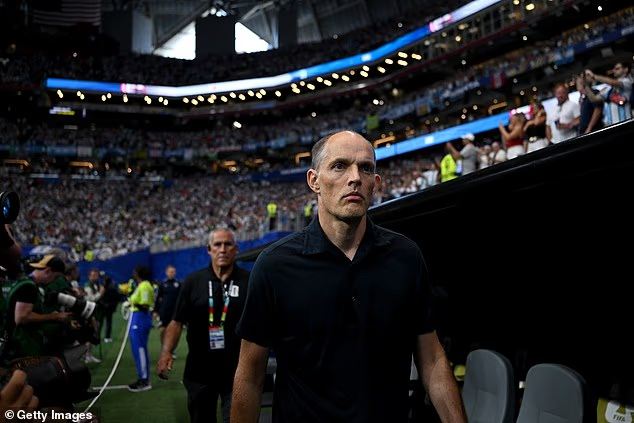
Thomas Tuchel was supposed to be the man who would turn water into wine. But he couldn't live up to that reputation

Thomas Tuchel was supposed to be the man who would turn water into wine. That was what the Football Association told us. That was the rationale for turning its back on the work that Gareth Southgate had done with the England team and paying big money for a quick-fix super-coach who would win the World Cup.

When Southgate left after the 2024 European Championship, the FA chose not to build on what he achieved. They did not have the courage to do what the Spanish Football Federation did when they promoted Luis de la Fuente, a successful coach of its youth teams, to the senior job when Luis Enrique left after the 2022 World Cup.

Lee Carsley had won the European Under-21 Championship with England – and won it again last year – but was deemed not good enough by the FA, who abandoned their principles of a coaching pathway for English talent by appointing a foreign manager.

The rationale for deviating from a path that had brought significant steps forward in the evolution of the England team – England reached the final of the European Championship in 2021 and 2024 and the semi-finals of the World Cup in 2018 – was that England needed a coach of Tuchel’s proven talent at club level to take them over the final step.

Advertisement

It was a high-stakes gamble and on Wednesday night, that gamble failed. When England lost to Argentina in the Atlanta Stadium, blowing a 1-0 lead, the tactical sophistication that Tuchel had promised was replaced with neanderthal football.

England invited wave after wave of Argentina attacks. They gave Lionel Messi, the greatest player the world has ever seen, time and space. They seemed surprised when Messi laid on two goals in seven minutes in the dying stages of the game. 

Thomas Tuchel was supposed to be the man who would turn water into wine. But he couldn’t live up to that reputation

Advertisement
Not only did England lose to Argentina, but they lost playing neanderthal football

Not only did England lose to Argentina, but they lost playing neanderthal football

‘I found it absolutely unfathomable,’ former England striker Gary Lineker said after the match, ‘that, if your tactic is to sit everyone deep, you do that against the greatest player ever to play football.’

From Anthony Gordon’s goal in the 55th minute until the Lautaro Martinez winner in the 92nd minute, England had just 12 per cent possession. Twelve per cent. Let that sink in. It felt as if England were playing with 10 men. Or nine men. And for all his attempts at excuses about sloppy technique and different football cultures, that was on Tuchel. That was squarely on Tuchel.

What really hurts is this: the single most obvious truth from Wednesday night is that Tuchel was outcoached by Lionel Scaloni. Comprehensively outcoached. Scaloni’s substitutions were positive and proactive for a start. Tuchel’s were overwhelmingly negative and cautious. They handed the momentum to an Argentina team that was there for the taking.

Advertisement

Scaloni, another coach, like De la Fuente, promoted from his country’s youth system, spoke after the game about the period following England’s goal, when England should have pressed home their advantage but instead, led by Tuchel’s negative substitutions, played as if they were scared of victory.

He and his players sensed Tuchel’s hesitation. They sensed his uncertainty. They sensed his lack of faith in his players’ technical ability. ‘There was blood in the water,’ Scaloni said, ‘and we went for it.’ Blood in the water? England had just gone 1-0 up and there was blood in the water. What an indictment of Tuchel’s coaching that is.

And if there is seething anger among England fans at falling one hurdle short of a first World Cup final for 60 years, it is because they have seen this movie before. We have all seen this movie before. England always find a way to lose the big games at major tournaments. We were told it would be different this time because of Tuchel. But it wasn’t different. It was almost exactly the same. If anything, it was worse.

Tuchel's uncertainty and lack of faith in his players invited Argentina to go for the jugular

Tuchel’s uncertainty and lack of faith in his players invited Argentina to go for the jugular

Advertisement
Once again, England took the lead in a big game, and once again they blew it. That's on Tuchel

Once again, England took the lead in a big game, and once again they blew it. That’s on Tuchel

That is one of the reasons why there is so much disillusion with the manner of England’s capitulation. It fits a pattern: England have often led in the match in which they are eventually knocked out. It was the case in 1996 against Germany, 1998 against Argentina, 2002 against Brazil, 2004 against Portugal, 2016 against Iceland, 2018 against Croatia and 2021 against Italy. It is a cruel way to lose. Now, it has happened again.

Tuchel did his best to avoid the blame in Atlanta. He blamed almost everything else instead. Without naming individuals, he had criticised his players for ‘sloppy’ technical mistakes after the fortunate win over Norway in the quarter-finals and he hinted at similar issues after the semi-final defeat.

But England’s World Cup failure was on him. Not the players. If anything, the players bailed him out at this tournament. Jude Bellingham and Harry Kane bailed him out. It doesn’t wash for Tuchel to start criticising his players’ technical abilities. He knew their abilities when he signed on to win the World Cup.

Advertisement

And, by the way, the England player with the best technique, a player who can change games with his awareness and his ability, is Cole Palmer. And Tuchel didn’t even include Palmer in his squad.

Tuchel did not turn water into wine. He turned it into vinegar. He led England to the semi-finals of the World Cup but his part in the capitulation to Argentina has soured everything. England were in sight of their first World Cup final for 60 years but instead of helping them to the line, Tuchel brought them to their knees.

The FA will not sack Tuchel because they have just given him a two-year extension to his contract but the manner of England’s exit from the World Cup and the disillusion it has spread means that they are stuck with a lame-duck manager to lead them into a home Euros in 2028.

Tuchel's substitution of Anthony Gordon for Ezri Konsa will go down in infamy

Tuchel’s substitution of Anthony Gordon for Ezri Konsa will go down in infamy

Advertisement

Tuchel’s history suggests that when things start to go south for him in a job, they go south very quickly. The worry for the FA, and for England fans, is that Wednesday’s semi-final defeat will be the prelude to a period when the coach’s relationship with them and his players goes downhill fast.

Whatever happens, he will be remembered as the coach who took off Anthony Gordon and replaced him with Ezri Konsa in the 72nd minute. 

As substitutions go, it will stand there in infamy alongside Sir Alf Ramsey’s decision to take off Bobby Charlton when England led West Germany in the quarter-finals of the 1970 World Cup.

Whether he makes it through to the Euros or whether he departs then, there will be no escaping his legacy. When England had their best chance of reaching the World Cup final for 60 years, Tuchel blew it.

Advertisement

Source link

Continue Reading

NewsBeat

London Mayor Sadiq Khan handed a peerage by Keir Starmer alongside 15 other Labour figures… just days before the PM leaves No10

Published

on

Sadiq Khan is entering the House of Lords in the latest batch of honours nominated by Keir Starmer

Sadiq Khan has been handed a peerage alongside 15 other Labour figures, in one of Keir Starmer‘s final acts as PM.

The London Mayor is entering the House of Lords in the latest batch of honours nominated by Sir Keir.

Broadcaster June Sarpong and former Unison general secretary Christina McAnea are also on the list. 

In a potentially controversial move, Sir Sadiq will not give up his role as mayor – although it is understood he would not accept a ministerial role under incoming PM Andy Burnham

Advertisement

Sir Sadiq and the 25 other new peers will be entitled to £390 tax free for every day they attend a sitting in the Lords. Aides did not immediately say whether the mayor – who already has a £170,000 salary – would take the payment or donate it to charity.   

It is also unclear what Mr Burnham, who is set to take over in No10 on Monday, thinks of the appointments.

He has long argued for reform of the Upper chamber, insisting last month that ‘half of our national legislature being unelected’ was ‘quite scandalous’ and that he would not ‘rule out quite an early change’.

Advertisement

Sadiq Khan is entering the House of Lords in the latest batch of honours nominated by Keir Starmer

The list is separate to any resignation honours that Sir Keir might present

The list is separate to any resignation honours that Sir Keir might present

Starmer’s peerage nominations 

Alison Garnham – Chief Executive, Child Poverty Action Group.

Alison Lowe OBE – Deputy Mayor for Policing and Crime in West Yorkshire.

Advertisement

Barbara Mills KC – Chair of the Bar Council of England and Wales (2025), family law barrister and Joint Head of Chambers at 4PB.

Cathy Ashley OBE – Chief Executive of Family Rights Group and former Chair of the Holocaust Memorial Day Trust.

Christina McAnea – Former General Secretary of UNISON.

June Sarpong OBE – Broadcaster, charity campaigner and social equity advocate.

Advertisement

The Rt Hon Ken Macintosh DL – Former Presiding Officer of the Scottish Parliament.

Kitty Ussher – British economist, former Member of Parliament for Burnley and former Economic Secretary to the Treasury.

Marcus Davey CBE – Former CEO and Artistic Director of the Roundhouse.

Martin McTague OBE – National Chair of the Federation of Small Businesses.

Advertisement

Nick Stace OBE – Chief Global Impact Officer at Howden Group.

Parvais Jabbar MBE – Human rights expert, co-founder and Co-Executive Director of The Death Penalty Project.

Roberto Neri – CEO of The Ivors Academy and a Director of UK Music.

The Rt Hon Sir Sadiq Khan – Mayor of London and former Member of Parliament for Tooting.

Advertisement

Saul Lehrfreund MBE – Human rights expert, co-founder and Co-Executive Director of The Death Penalty Project.

Tim J Smith CBE – Former Chief Executive of the Food Standards Agency.

<!- – ad: https://mads.dailymail.co.uk/v8/de/news/none/article/other/mpu_factbox.html?id=mpu_factbox_1 – ->

Advertisement

The Tories have nominated three new peers, including former army chief General Patrick Sanders and Carphone Warehouse founder David Ross.

The Lib Dems have been granted five, but there were no spots for Reform.

Former Appeal Court judge Sir Brian Leveson, author of the Leveson Report into media standards, becomes a crossbench peer. 

Advertisement

The list is separate to any resignation honours that Sir Keir might present. 

He has pointedly refused to rule out a set of farewell nominations, despite promising while in Opposition that he would never do one. 

A spokesman for Sir Sadiq said: ‘London gave Sadiq the opportunities to go from a council estate to being Mayor of London, and his focus will continue to be ensuring that all Londoners get the same shot at reaching their full potential that London gave him and his family.

‘Serving as mayor of the greatest city in the world continues to be the privilege of Sadiq’s life.

Advertisement

‘He is excited about what more can be delivered in the years ahead and he will devote his time and energy to standing up for our city and building a fairer, safer and greener London for everyone.’

Allies insisted Sir Sadiq will ‘continue to devote the same time and energy as Mayor building a fairer, safer and greener city for every Londoner’.

He has yet to decide whether to stand for a fourth term in the job.

A Government source said: ‘Sadiq has been a brilliant Mayor who has transformed London for the better, so this is thoroughly deserved.

Advertisement

‘He has cut violent crime to record lows, cleaned up the capital’s air, delivered the Elizabeth Line, and got London building council homes again.’

Mr Burnham, a former Greater Manchester Mayor, has previously backed turning the chamber into an elected senate of regions and nations, and is reportedly considering plans to appoint metro mayors to the red benches as a first step towards a more representative body.

The Lib Dems have nominated agricultural economist Julia Aglionby, former Barnsley councillor and physiotherapist Hannah Kitching, economist Tim Leunig, Lib Dem campaigns director Dave McCobb and offshore wind entrepreneur Mark Petterson for the Lords.

Party leader Ed Davey said: ‘I am absolutely delighted that Julia, Hannah, Tim, Dave and Mark will be joining our brilliant Liberal Democrat team in the House of Lords.

Advertisement

‘Each of them has the right skills, experience and values to help us hold the Government to account, deliver the change people need, and fix our broken politics, including reforming the House of Lords.’

Sir Keir has been under pressure to stand by his promise not to hand out honours to mark his resignation.

Broadcaster June Sarpong has been installed in the Lords. She is a long-time Labour supporter and campaigned for Sir Keir (pictured in 2024)

Broadcaster June Sarpong has been installed in the Lords. She is a long-time Labour supporter and campaigned for Sir Keir (pictured in 2024)

Prime Ministers typically compile a list of gongs when they quit, often rewarding close aides and political allies.

Advertisement

In the past even relatively junior staffers have received OBEs, while others have been granted a peerage in recognition of their dedication. 

However, Sir Keir has been scathing about the convention in the past, and flatly ruled out issuing one.

In 2023, when Boris Johnson‘s list emerged,  he was asked on BBC Radio 4’s Today programme whether he would hand out resignation honours.

‘No. There are other opportunities,’ he replied. ‘Tony Blair didn’t have a resignation list. It’s very hard to justify… 

Advertisement

‘There are other avenues for that and I think it’s easier to be clean about this and simply say, no, I wouldn’t do it.’

No10 has yet to clarify whether Sir Keir will issue a list, which often emerge many months after a premier’s departure.

Source link

Advertisement
Continue Reading

NewsBeat

Andy Burnham promised to change Greater Manchester. Almost ten years on, how did he do?

Published

on

Andy Burnham promised to change Greater Manchester. Almost ten years on, how did he do?

Almost ten years ago – just weeks before he was elected as Greater Manchester’s first metro-mayor – I sat down with Andy Burnham and interviewed him for The Conversation.

Back then he was making the transition from Westminster cabinet minister to regional politician, swapping the shadow front bench for a role that most people at the time considered a consolation prize.

It didn’t look that way for very long.


À lire aussi :
Manchester, devolution and Brexit – Andy Burnham Q&A

Advertisement

Looking back over our conversation, a few things stand out. Firstly, he saw Brexit coming – but not quite in the way people remember.

Before he had been elected mayor, Burnham was already framing the Brexit result as a symptom of England’s hyper-centralisation around London and the M25. Policies made in Westminster, he argued, simply did not speak to communities in Bolton, Leigh or Oldham.


The northern English city of Manchester has played a critical role in the development of Andy Burnham’s political and social outlook. This series considers what some have dubbed Manchesterism and what it might mean for the future of the UK.

Advertisement

That analysis has aged well. Look at the geography of the 2024 Reform surge. The communities that swung hardest away from Labour – post-industrial towns like Wigan, where Reform took 24 of the 25 available seats, and Tameside, where they took 18 of 19 – map more or less neatly onto the pattern Burnham described in 2017. He was identifying the problem that would define the next decade of English politics, while others were focused on trade deals.

Andy Burnham Q&A in 2017

His answer at the time was devolution: as a practical mechanism to make policy that worked for specific places. That framing also sat at the core of his pitch for the Labour leadership.

Advertisement

On transport, he delivered

Burnham’s promise to bring Manchester’s buses back under public control was met with scepticism, legal challenge, and considerable institutional resistance.

Bus operators Stagecoach and Rotala fought the franchising plans through the courts. He won in the High Court in 2022. By September 2023, Greater Manchester became the first place in England to reverse bus deregulation after nearly four decades.

The Bee Network was launched. It boasted integrated fares, capped £2 adult single fares, and free travel for 16-18-year-olds. Burnham flagged this in our original interview as a tool for social inclusion.

National satisfaction survey data shows that Greater Manchester saw the largest increase in passenger satisfaction of any area in England in the first full year of the Bee Network, with value for money perceptions rising sharply. It is probably his clearest policy success.

Advertisement

On rough sleeping, the picture is complicated

Burnham pledged to end rough sleeping in Greater Manchester by 2020. He missed that target and said so publicly in late 2019.

The record since has been mixed. Numbers fell from a peak of 268 in 2017 to a low of 89 in 2021, which should be celebrated.

Politician stands with supporters in front of banner
Andy Burnham with his supporters at the party headquarters in Wigan in June 2026.
EPA/ADAM VAUGHAN

This was driven partly by the national pandemic-era Everyone In policy and partly by Burnham’s own A Bed Every Night scheme, which provides emergency shelter across all ten boroughs.

The Housing First programme, which gives rough sleepers a permanent home immediately with wraparound support – rather than making housing conditional on sobriety or compliance – has supported 426 people since its 2019 launch. Around 78% of those housed were still in their homes 18 months later; a huge outcome for people who tend to have highly complex needs and experiences.

But that trajectory has since reversed. Rough sleeping has risen for four consecutive years, reaching 197 on the official autumn 2025 count. That’s more than double the 2021 low, and edging back toward the 268 recorded when Burnham took office.

Advertisement

This can, though, be partly attributed to national factors like frozen Local Housing Allowance rates, increased evictions from asylum accommodation and unmet health and social care needs.

Those structural explanations play a huge role, but four years of rising figures may lead some to see Burnham’s record of success in more binary terms.

On housing, his powers ran out

Burnham spoke in 2017 about the need for truly affordable homes to rent and criticised the decades-long national obsession with owner-occupation. He wanted to use Greater Manchester’s housing fund to regenerate post-industrial towns in the north of the city region through high-quality residential development. He wanted to target towns like Leigh, his own previous constituency.

But progress was limited for most of his mayoralty. The 2023 Trailblazer devolution deal brought meaningful new powers, £150 million in brownfield funding, local control of the affordable homes programme, and new rights to act against poor-performing private landlords.

Advertisement

But these powers came six years into his tenure. By 2023/24, there were 13,422 social lettings across Greater Manchester, half the number available a decade earlier. There were also over 5,400 households (including nearly 8,000 children) who were living in temporary accommodation.

His pledge to build 10,000 new council homes only came after his third election victory in 2024. The housing crisis deepened on his watch, even if the causes were largely national.

COVID was the making of him nationally

The interview predates the pandemic, but any assessment of Burnham’s mayoralty has to reckon with the Tier 3 stand-off in October 2020. When the government attempted to impose the tightest restrictions on Greater Manchester without adequate financial support, Burnham refused.

Advertisement

He held press conferences outside Manchester Town Hall. He made the argument publicly, repeatedly and in plain English that what was being offered was insufficient and that the city region was being treated as an afterthought.

He was publicly told via social media, mid-press conference, that restrictions would be imposed regardless. It was a textbook illustration of precisely the centralisation problem he had identified in our 2017 interview. That moment did more to build his national political profile than anything else in his nine years as mayor.

Did he make Greater Manchester great?

The Conversation interview we had was never about grand promises. What he spoke about was inclusive growth, economic progress felt across all ten boroughs, not concentrated in the city centre, and a politics of place that could speak to communities London had forgotten.

Greater Manchester’s economy grew faster than the national average throughout Burnham’s mayoralty, though that trajectory was already established before he took office in 2017.

Advertisement

His contribution was to sustain it and to articulate a more explicit theory of inclusive growth, culminating in the £1 billion Good Growth Fund launched in late 2025, which directs investment to priority projects across all ten boroughs. It is too early to assess its impact.

The honest assessment is that Burnham leaves Greater Manchester in a stronger position than he found it on economic and transport measures, and with a clearer policy framework than existed before.

Whether growth has genuinely reached the towns he spoke about in 2017 – places like Bolton, Oldham and Leigh – is a harder question. Although the Good Growth Fund is implicitly an admission that it has not.

None of this provides a perfect or complete record for Burnham. The housing crisis remains, inequality within the city region persists, the northern towns he spoke about in 2017 still face structural challenges that no metro-mayor can solve alone.
Advertisement

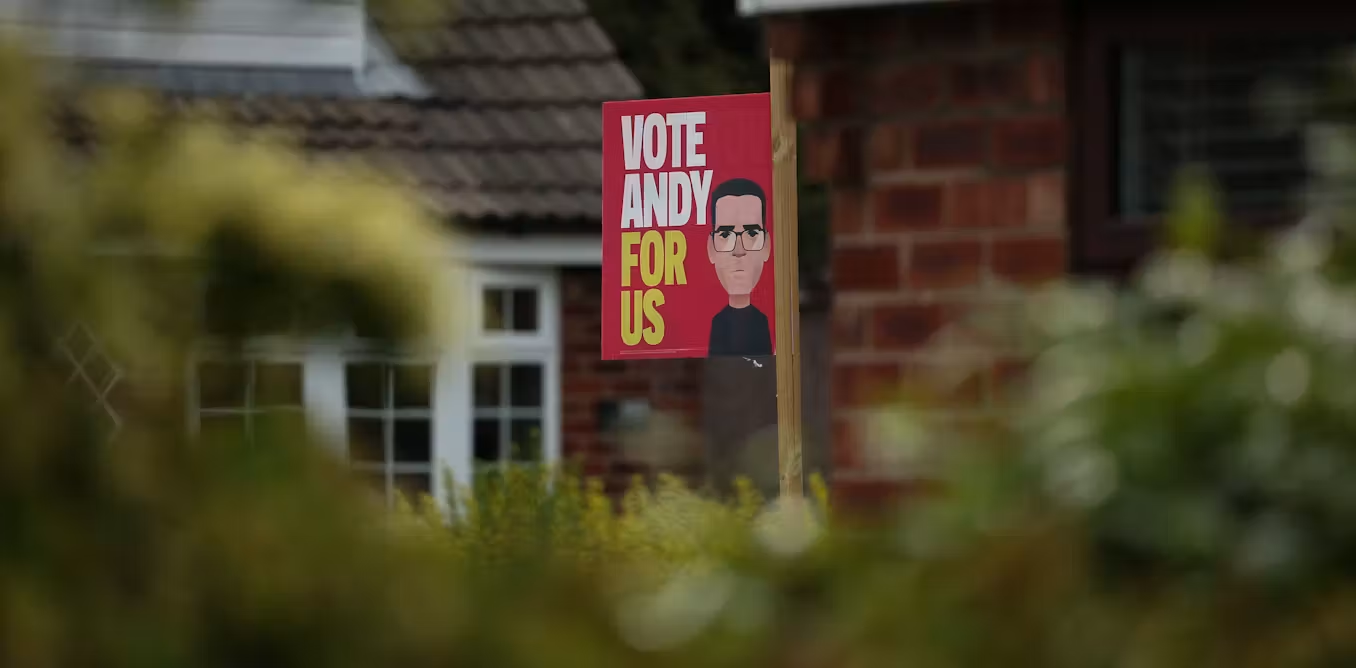
But the question he implicitly posed in that interview was whether devolution could be a vehicle for a genuinely different kind of politics, one that starts from the needs of places rather than the priorities of Whitehall.
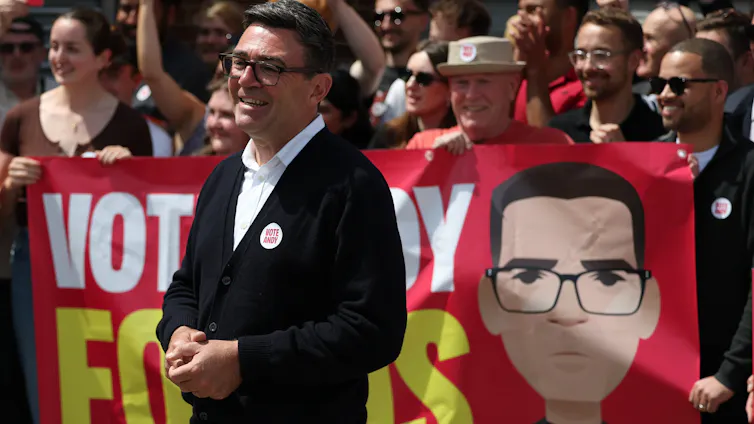
On that, his answer was yes. The question now is whether Manchesterism can survive the journey to Westminster and whether he can unpick the structural challenges holding the regions back.

Source link

Advertisement
Continue Reading

Trending

Copyright © 2025