NewsBeat
Nine prisoners held on indefinite jail terms referred to Court of Appeal by miscarriage of justice watchdog

Want to bookmark your favourite articles and stories to read or reference later? Start your Independent Membership today.
Already a member?
Log in
Nine more prisoners trapped on indefinite jail terms have had their sentences referred to the Court of Appeal by the miscarriages of justice watchdog.
The Criminal Cases Review Commission (CCRC) is currently reviewing more than 250 cases involving people serving Imprisonment for Public Protection (IPP) and the youth equivalent, Detention for Public Protection (DPP) jail terms.
So far, the watchdog has referred 25 cases to the appeal courts this year after a string of sentences were overturned by top judges.
The latest cases include Carl Lamb, who cut off his own ear with a razor blade in front of a prison officer in protest at his sentence.
He was jailed with a tariff of one year, seven months and 25 days in 2006 for grievous bodily harm with intent following a road rage incident when he was 26. Now 46, he has never been released.

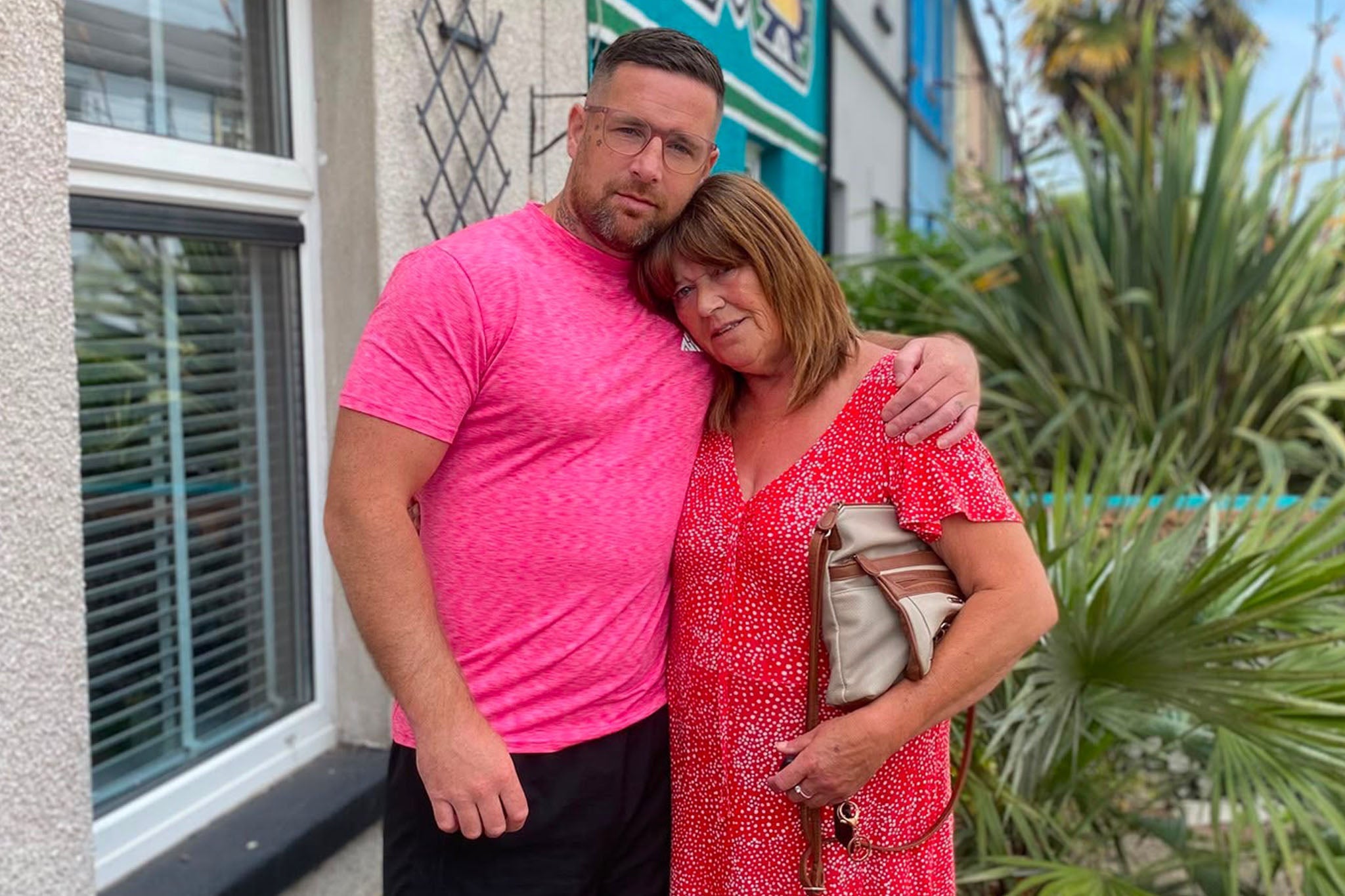
Shaun Lloyd, 38, has been hauled back to prison five times and served almost 14 years under his indefinite jail term for the street robbery of a mobile phone he committed 20 years ago.
Chair of the CCRC, Dame Vera Baird KC, has said the referrals represent a “fraction” of those who remain “caught up in this abolished sentencing regime”.
The open-ended punishments were scrapped in 2012, but not retrospectively, leaving thousands languishing in prison without a release date.
The Independent has repeatedly called for all remaining IPP and DPP prisoners to have their sentences reviewed, highlighting shocking cases including Mr Lloyd’s and Mr Lamb’s.
Andy Burnham last month pledged to bring legislation to end the “long-running” injustice of IPP sentences before the end of this parliament, bringing hope to thousands of such prisoners for the first time. Details of how the scandal will be addressed are to be decided by a cross-party oversight group.


Dame Vera, a former victims commissioner, said public protection must remain paramount but “so too must fairness”, as she offered to support the government in their efforts to bring the sentence to an end.
“These nine referrals bring to 25 the number of IPP and DPP cases that the CCRC has referred to the Court of Appeal so far this year,” she said.
“But while 25 referrals are a significant number, this represents only a fraction of the people who remain caught up in this abolished sentencing regime.
“The latest figures show that 856 people who were given IPP sentences have never been released from prison. Around eight in 10 of those who have passed their minimum tariff have already spent at least 10 years beyond the point at which the court originally said they should become eligible to seek release. A further 1,415 people are in custody following recall.
“These are extraordinary figures for sentences which were abolished more than a decade ago.”
Recent Court of Appeal judgments have seen indefinite sentences overturned because the original judge had not fully considered the defendant’s age or maturity when handing out the punishment.


Dame Vera said the CCRC will continue reviewing applications, adding: “The Commission will continue to examine these cases carefully and independently. Where we identify a real possibility that a sentence would now not be upheld, we will refer the case to the appropriate court. It will then be for the court to decide what should happen.
“There is no simple solution to the legacy of IPP and DPP sentences. Public protection must remain paramount, but so too must fairness and the principle that people should not remain imprisoned indefinitely because of a sentencing regime that has already caused so much damage and which parliament abolished more than a decade ago.”
The nine latest referrals include:
- Abdiwali Hassan, convicted at Isleworth Crown Court in 2011 and sentenced aged 19 to an IPP with a tariff of three years
- Carl Lamb, convicted at Cardiff Crown Court in 2006 and sentenced aged 26 to an IPP with a tariff of 21 months
- Ben Nye, convicted at Leeds Crown Court in 2007 and sentenced aged 21 to an IPP with a tariff of three years
- Scott Prince, convicted at Derby Crown Court in 2008 and sentenced aged 19 to an IPP with a tariff of three years and six months
- Liam Osborne, convicted at Wolverhampton Crown Court in 2006 and sentenced aged 21 to an IPP with a tariff of two years and three months
- Jerome Barrett, convicted at York Crown Court in 2005 and sentenced aged 19 to a DPP with a tariff of two years
- Victoria Hathaway, convicted at Ipswich Crown Court in 2009 and sentenced aged 19 to a DYPP with a tariff of six years (varied on appeal to four years)
- Shaun Lloyd, convicted at Cardiff Crown Court in 2005 and sentenced aged 18 to a DYPP with a tariff of two years and nine months
- Jason Ritchie, convicted at Teeside Crown Court in 2008 and sentenced aged 38 to an IPP with a tariff of three years
Other than Mr Ritchie, who is on licence, all the prisoners are in custody.
The referrals follow a landmark ruling last year in the case of Leighton Williams, who served nearly 16 years over a drunken fight aged 19. The appeal court ruled that a previous offence committed when he was 17 had been wrongly counted against him and his IPP sentence was quashed in 2024. Following his release, he told The Independent the unjust jail term had robbed him of 16 formative years.
Since then, a flurry of cases have been referred to the Court of Appeal and overturned, including that of Haroon Ahmed, who spent 18 years being punished for a knifepoint robbery of a service station committed when he was 19.
A further six indefinite sentences were quashed in a sweeping ruling earlier this year.
Until Mr Burnham’s announcement last month, successive governments had refused to act on calls to address the injustice facing IPP prisoners, some of whom have served up to 22 times their original tariff. Others have faced a vicious cycle of recall, often for breaches of strict licence conditions.
The punishment has been described as “psychological torture” by the United Nations, with 96 prisoners taking their own lives in custody after losing hope of getting out.
Mr Lloyd is among five men serving IPP sentences whose detention has been found to be arbitrary by the human rights watchdog, prompting a major legal challenge due to be heard next month.
More follows…
You must be logged in to post a comment Login