One person has died and hundreds more have fallen ill as a result of a food poisoning outbreak, health officials have confirmed. The UK Health Security Agency (UKHSA) has stated that the salmonella outbreak “may be linked to eggs imported from outside of the UK”.
The UKHSA has confirmed one fatality associated with the outbreak. Salmonella typically causes a self-limiting gastroenteritis, with symptoms including stomach cramps, diarrhoea, vomiting or fever.
More than a third of those affected (38%) required hospital admission, with two individuals developing potentially life-threatening bloodstream infections.
Advertisement
The UKHSA has confirmed that between August 11 last year and August 1 this year, 207 cases have been recorded – 199 in England, six in Scotland, one in Wales and one in Northern Ireland, reports North Wales Live.
The areas of England with the greatest number of cases are London, where 47 cases were confirmed, and Yorkshire and Humber (38).
Those affected range from babies to individuals as old as 90, according to the UKHSA.
Hannah Charles, lead epidemiologist for gastrointestinal infections at UKHSA, said: “We’re working with Food Standards Agency and other public health agencies to investigate a salmonella outbreak that may be linked to eggs imported from outside of the UK.
Advertisement
“Salmonellosis is often caused by eating or handling contaminated food and can be spread rarely from person-to-person.
“Salmonella generally causes a mild illness, although vulnerable groups with weakened immune systems may experience more severe illness.
“Symptoms of a salmonella infection include diarrhoea, stomach cramps and sometimes vomiting and fever. Anyone who is concerned about symptoms should contact their GP or out of hours service in the first instance.
“There are simple steps to prevent the spread of salmonella: wash your hands thoroughly after using the bathroom and before preparing and handling food, cook food thoroughly, and if you have any symptoms, avoid handling food for others where possible.”
Advertisement
Sign up for the Cambridgeshire Live newsletter sent twice daily to your inbox.
Christopher Nolan’s The Odyssey has brought Homer’s epic tale back to the big screen. The film is the latest retelling of a story that is almost 3,000 years old. But why do these ancient Greek stories continue to captivate new generations?
Nolan aside, Stephen Fry’s accessible retelling of Greek myths in 2017 and Disney’s Hercules (1997) film, for example, are part of a much longer tradition of repackaging the ancient world for contemporary audiences.
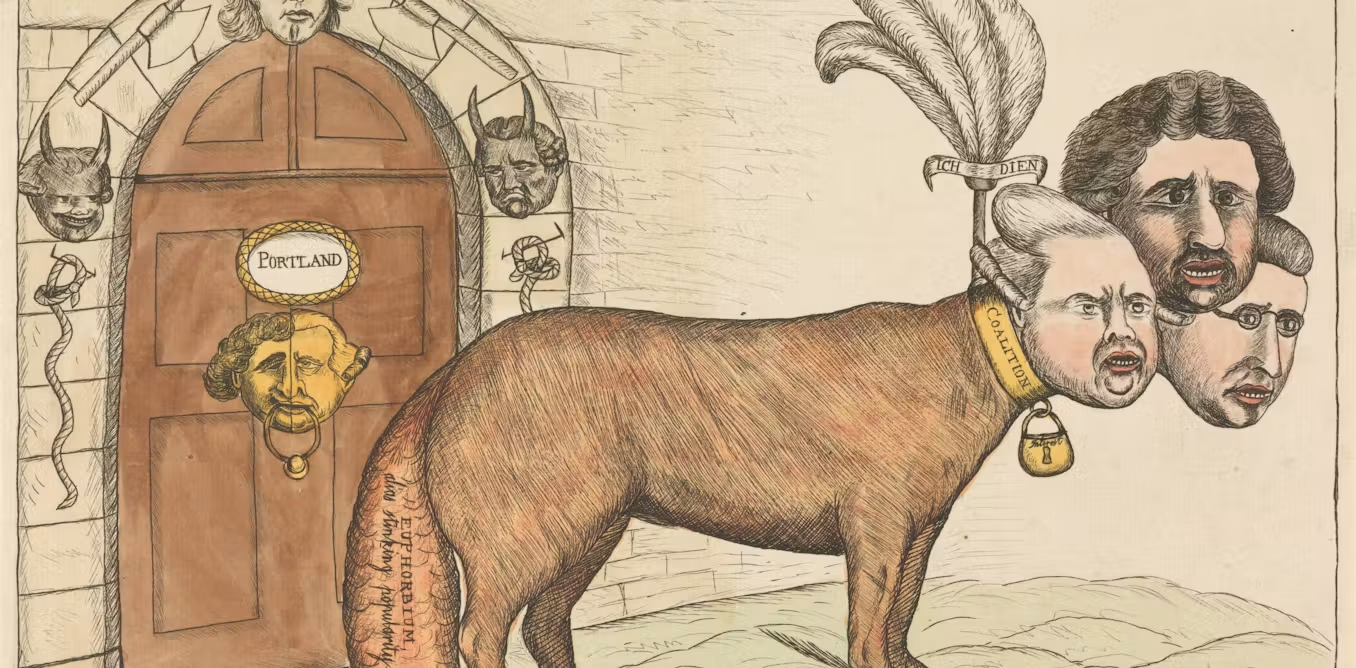
In the 18th century, political caricaturists were doing much the same thing, turning Greek mythology into popular entertainment, and using it to mock the politicians of the day.
Unlike many stories, Greek myths have never had one definitive version. They’ve always existed in multiple tellings, allowing each generation to reshape them for its own concerns.
Advertisement
In the 18th century, satirists used them to attack politicians. Neoclassicism was a cultural movement that revived the art and ideas of ancient Greece and Rome, and it was influential among the educated elite. Knowledge of Greek mythology was part of a classical education, but caricaturists helped turn that knowledge into something a much wider audience could understand and enjoy.
Christopher Nolan’s Odyssey is the latest in a long line of Greek myth adaptations.
James Gillray and Thomas Rowlandson were among the most accomplished of these artists, while others, such as William Dent, produced cruder and more straightforward political jokes. Their caricatures were commercial products as well as political weapons: single-sheet prints, often hand-coloured, designed to be sold, displayed and discussed.
Greek mythology was particularly useful because its characters came with ready-made meanings. Hercules suggested strength, whereas King Midas suggested greed. The monstrous Hydra suggested a problem that seemed impossible to defeat. Caricaturists could borrow those associations and attach them to politicians.
Advertisement
Politicians as Greek heroes and villains
The politicians Charles James Fox, William Pitt and Richard Brinsley Sheridan were recurring characters in this visual soap opera. Their personalities became familiar through years of caricature. Fox was portrayed as the socialite, gambler and womaniser. Pitt as serious, reclusive and stiff. And Sheridan as a failing, bankrupt politician with a fondness for drink.
The artists could then place these recognisable figures inside equally familiar myths. In The Infant Hercules drawing, Thomas Rowlandson depicts the young Pitt as Hercules, fighting off two serpents representing politicians Fox and Lord North.
At first glance, Pitt is the hero. But the joke is more complicated. By portraying him as an infant, Rowlandson also mocks his youth and inexperience. Pitt became prime minister in 1783 at the age of just 24. His shield hints at the protection afforded by his father’s political legacy – William Pitt the Elder had also been prime minister.
The Infant Hercules by Thomas Rowlandson (1784). Credit Line: The Elisha Whittelsey Collection, The Elisha Whittelsey Fund, 1959 Object Number: 59.533.38. Metropolitan Museum.
The myth therefore gives the caricature two layers. Even someone with little knowledge of Greek mythology could see the joke, while a more knowledgeable viewer could appreciate the references to Hercules, Pitt’s youth and his political inheritance.
Advertisement
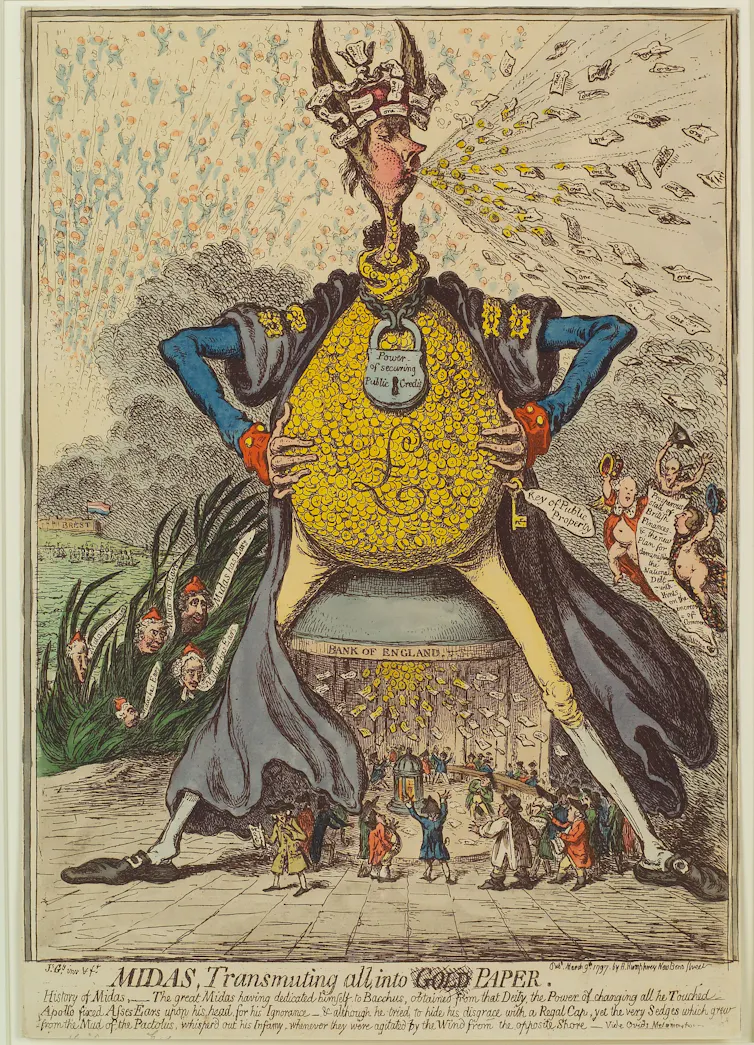
James Gillray used a different Greek myth to attack Pitt’s policies. In Greek mythology, King Midas was granted the ability to turn everything he touched into gold. The gift quickly became a curse.
In Gillray’s Midas (1797), Pitt becomes Midas, turning everything he touches into banknotes. The image attacks Pitt’s taxation policies and portrays him as greedy and self-serving. Gillray also gives Pitt the donkey’s ears associated with Midas, a visual shorthand for shame and foolishness.
The myth makes the political criticism instantly legible. Pitt doesn’t need to be explained at length because the audience already knows what Midas represents. Greek mythology could also be used to attack politicians on a much more personal level.
In Homer’s Odyssey, the nymph Calypso keeps Odysseus trapped on her island. Charles Williams reworked this story in The Modern Calypso, depicting Richard Brinsley Sheridan as Mentor, the friend of Odysseus, in Calypso’s company. Sheridan is shown surrounded by wine, a joke about Sheridan’s alcoholism. The mythology provided the framework, but the target was firmly contemporary.
A joke everyone could understand
This was one of the great strengths of caricature. A political print could operate on more than one level. For someone with little knowledge of classical mythology, the visual joke could be immediate: Pitt as a baby, or a politician with the ears of a donkey. The image could be enjoyed as cheap entertainment, discussed in the street or in coffee houses and displayed in the windows of print shops.
Advertisement
For those with greater knowledge, the same image carried another layer of meaning. Understanding the original myth made the joke richer and gave the political attack greater force.
This helps explain why Greek mythology proved so useful to 18th-century caricaturists. They didn’t need to explain every detail. The stories already provided a shared cultural language.
And that language was not entirely confined to the educated elite. Greek mythology itself had always been a product of retelling. Before the stories were written down, they were passed on orally by performers who could adapt them for different audiences.
The caricaturists of the 18th century were doing something remarkably similar. They changed the medium and the details, but kept the underlying stories recognisable.
Christopher Nolan is doing the same thing today. His Odyssey may have been shown on gigantic Imax screens rather than as a hand-coloured print in a London shop window, but the principle is familiar.
Every generation rewrites Greek myth because every generation sees itself in these stories. The myths survive not because they remain unchanged, but because they can change with us.
Tom Holland looks set to take home a staggering amount of money from his summer blockbuster Spider-Man: Brand New Day.
The British actor, 30, ‘will make at least’ $100 million thanks to the box office success of the Marvel movie, according to The Wrap.
Holland was paid $20 million to reprise his role as Peter Parker and insiders told the outlet that salary would be eclipsed by the backend bonus he will get with the movie grossing $2 billion since its July 31 release.
Holland has made progressively larger salaries for his work in the franchise over the past decade, starting with his first appearance as Spider-Man in the 2016 movie Captain America: Civil War.
The Daily Mail has reached out to representatives for Holland and Sony for further comment on the story but has yet to hear back.
Tom Holland, 30, could make more than $100 million for his starring role in the summer blockbuster Spider-Man: Brand New Day, according to reports Tuesday. Above, July 27 in LA
Advertisement
The British actor was paid $20 million for the latest Marvel movie but will take home tens of millions more as part of a backend bonus thanks to the film’s global success, insiders told The Wrap
Holland took in $250,000 in a crossover appearance in the 2016 movie Captain America: Civil War, which marked his first of what has been seven outings in the role of Spider-Man/Peter Parker.
Next up came the 2017 movie Spider-Man: Homecoming, for which Holland took in a $500,000 payday.
Holland’s salaries continued to progress upward, as he took in $4 million for the 2019 movie Spider-Man: Far From Home and $10 million for the 2021 film Spider-Man: No Way Home, after which his initial six-film deal with Sony for the role concluded, according to the outlet.
Advertisement
The deal also included appearances in crossover movies such as 2018’s Avengers: Infinity War and 2019’s Avengers: Endgame.
Holland’s next contract had been put together by his attorney Robert Offer and agents at William Morris Endeavor, Liam Buckley, Andrew Dunlap and James Farrell, the report stated.
The Destin Daniel Cretton-directed motion picture has had unprecedented commercial success, garnering an opening weekend of $360,091,572, according to Box Office Mojo, marking the largest domestic opening ever.
Holland’s sound business maneuvers led one executive to describe the actor to The Wrap as ‘the new Robert Downey Jr.’ – as Holland’s financial ascension has mirrored Downey’s in the Iron Man franchise.
Advertisement
Downey took in $500,000 for the initial 2008 movie, which ultimately escalated to around $50 million for 2013’s Iron Man 3 based off an initial $10 million salary with backend proceeds.
Holland has made progressively larger salaries for his work in the franchise over the past decade, starting with his first appearance as Spider-Man in the 2016 movie Captain America: Civil War
Holland’s wife and Spider-Man co-star Zendaya recently explained that the actor ‘really loves and cares so much about the character and what the character means to other people.’ Pictured July 29 in London
Join the discussion
Advertisement
Should any actor make $100 million for a single film, or are Hollywood salaries out of control?
Downey continued earning massive salaries for his Marvel appearances, including $10 million for a brief appearance in Spider-Man: Homecoming and more than $100 million for his efforts in Avengers: Infinity War and Avengers: Endgame.
Holland’s wife and Spider-Man costar Zendaya chatted last month with Rotten Tomatoes, explaining why she felt Holland resonated well in the role, following in the footsteps of cinematic predecessors such as Tobey Maguire and Andrew Garfield.
‘My favorite thing about Tom’s Spider-Man is how Tom handles Spider-Man outside of Spider-Man,’ she said. ‘So many people connect to this character, to Peter Parker’s Spider-Man.
Advertisement
‘And especially young people, especially children, and I think that he’s just handled that weight with such grace.’
She noted that Holland ‘really loves and cares so much about the character and what the character means to other people’ adding that ‘when you are in front of these kids, you are Spider-Man.’
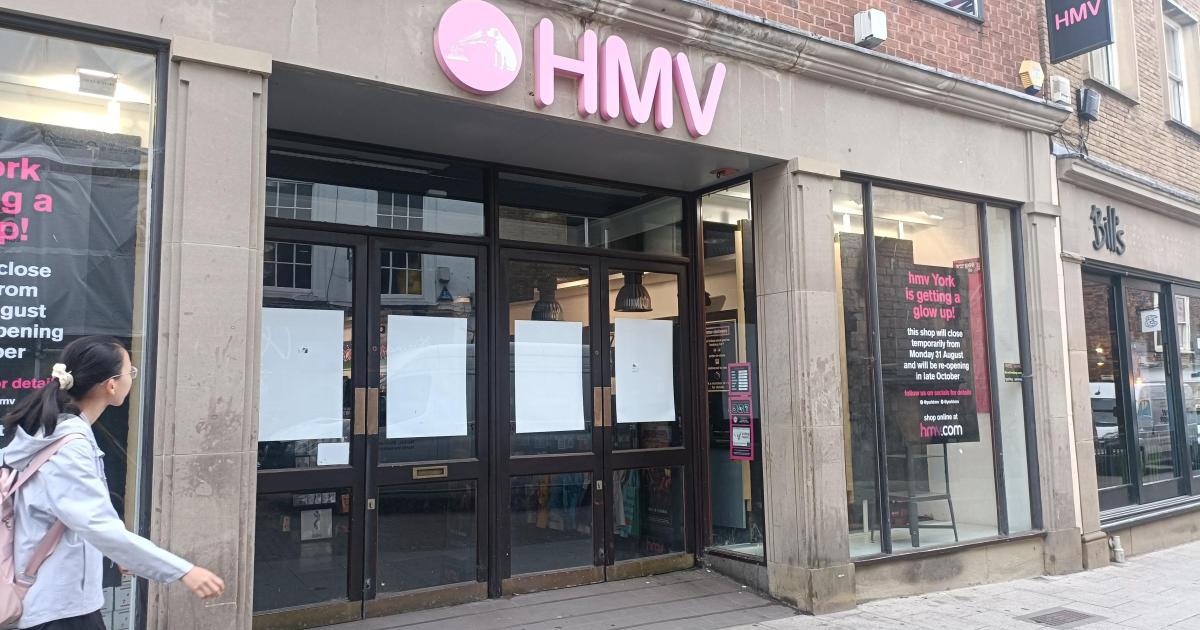
Signs at the branch in Coney Street say the shop will be closed from Monday, August 31 until late October.
A HMV spokesperson told The Press: “HMV is excited to elevate the shopping experience at its York shop, temporarily closing to build a reimagined space designed to enhance the way customers discover more of what they love.
“While we are currently unable to share any further details, we will share more information nearer the time of reopening.”
RECOMMENDED READING:
Advertisement
The retailer, which has traded in Coney Street since before 1990, has suffered several threats of closure over the years, reflecting the turbulent times retail has faced.
The exterior of the hmv store in Coney Street (Image: Ben Hardy)
The first threat was in 2013 when the retailer first went into administration. This followed the closure of the Monks Cross store in 2011, which opened along with the shopping centre in 1998.
Restructuring firm Hilco later bought the company out of insolvency but it too called in the administrators in December 2018, citing a weak trading period, plus cost pressures like rents. The business was rescued in February 2019 when it was bought by Doug Putman, owner of Sunrise Records.
The Press reported on several threats to close the Coney Street store in 2019 and 2020, with high rents cited as a factor. ‘Closing Down’ signs had appeared in the store in March 2019.
Advertisement
Fortunately, new rents were agreed with the landlord, saving the business, which continues to be a city favourite, with it receiving 4.3 stars out of five on Google, based on 763 Google reviews.
One of the signs advertising the temporary closure. (Image: Ben Hardy)
HMV, which has 114 stores in the UK, now seems to be enjoying better times, with it reporting visitor numbers to its shops were up 12 per cent in the first half of this year compared to the same period in 2025.
This means it is expecting around 50 million visits to its stores over 2026.
Efforts post-Covid to revamp the spaces with areas dedicated to popular culture, selling products like soft squishy toys, trading cards and K-pop merchandise, have helped drive this growth.
Advertisement
HMV’s managing director Phil Halliday said: “For years, it was quiet on a Saturday, and that’s when the kids used to come in.
“The store colleagues will tell you, it’s heaving on a Saturday now… and you can see it in the numbers.
“Kids are coming back in because they want to be around each other and spaces where they can gather to share experiences… not everyone wants to sit at home on the computer.”
The Coney Street revamp comes in advance of the wider Coney Street Riverside project. Work has already started to revamp retail space, create accommodation on the upper floors of buildings and create new hospitality venues.
Advertisement
Artists impression of the Coney Street Riverside project (Image: Pic supplied)
In June, The Press reported scaffolding being erected around buildings at the St Helen’s Square end of Coney Street in preparation for work to renovate shopfronts in the street.
Max Reeves, development director at the Helmsley Group, the York-based developers behind the plans, told The Press at the time the initial work to renovate the shopfronts aim to be completed by September.
It will include the former JD Sports shop being renovated before the Space NK beauty store moves into the unit, he said.
Mr Reeves said later work will see the upper floors of JD Sports and its neighbouring units converted into flats.
Aerial imagery over Wales has exposed an important part of our past
While the lack of rain and dry ground has seen Wales desperate for rain there has been a interesting revelation in Carmarthenshire thanks to the prolonged dry weather.
Advertisement
At theDinefwr Estate, near Llandeilo, the unusually dry conditions have uncovered a hidden chapter of the area’s wartime past. Marks revealed in the landscape have exposed the outlines of former Nissen huts that once stood within the historic park.
The temporary structures played an important role during and after the Second World War serving first as a hospital and later as a prisoner of war camp.
The recently-captured aerial image highlights features that are normally invisible at ground level. Variations in grass growth caused by the drought have revealed the footprint of the huts, providing a striking glimpse into a largely forgotten element of Dinefwr’s history.
In the years following the war the Nissen huts took on a new purpose.
At a time when housing was in short supply across Britain the former military buildings were converted into homes for local families.
The settlement became known locally as Tin Town, helping to ease post-war housing pressures and supporting the community during a period of significant change.
David Thomas, archaeologist for National Trust Cymru, said: “Many people are familiar with Dinefwr’s nationally-important parkland and medieval history but these marks highlight a much more recent chapter in the site’s story.
“The huts served a range of important functions from a wartime hospital and prisoner of war camp to much-needed housing for local families in the years after the war.
“Discoveries like this help us better understand how people adapted to the challenges of wartime and post-war life in rural Wales.” From superstar gigs to cosy pubs find out What’s On in Wales by signing up to our newsletter here.
Advertisement
The Dinefwr Estate, run by the National Trust, is found in national nature reserve and is home to historic mansion, Newton House, a family home for more than 300 years to the descendants of The Lord Rhys, the powerful Prince of the Welsh Kingdom of the Deheubarth.
The grounds of this Jacobean stately home include a castle ruins, a fairy village and a medieval deer park, roamed by fallow deer.
The 850-acre Dinefwr estate lies on the outskirts of the farming town of Llandeilo and is steeped in Welsh history.
Advertisement
The surrounding Carmarthenshire countryside and parkland is perfect for walks and exploring and there’s also a fountain garden.
Step into the estate woodland and you’ll find some of the oldest trees in Britain. There are more than 300 oak trees at Dinefwr with some more than 400 years old.
The plan sets a target of net zero by 2040 and ‘substantive nature recovery’ by 2050
The Welsh Government has set a target of hitting net zero of 2040, which is 10 years before the rest of the UK.
Advertisement
Cabinet minister Llyr Grufydd announced the ambition and said the new Plaid administration had started work on Wales’ first Climate and Nature Action Plan to address climate change and nature loss.
Wales’ target for hitting net zero, which means adding no more greenhouse gases to the atmosphere than are removed, has changed several times.
The previous Labour government published a strategic plan for the public sector to hit net zero by 2030. It also spoke of having a 10-year action pathway for the entire nation from 2025-2035 under the 2021 co-operation agreement with Plaid Cymru.
Ahead of the 2024 general election Plaid Cymru said it wanted to achieve net zero greenhouse gas emissions in Wales by 2035. Then during the Senedd election campaign this year, party leader Rhun ap Iorwerth said that was unrealistic and pushed it back five years. Make sure you never miss Wales’ biggest updates by getting our daily newsletter
Advertisement
The new administration in Wales now says it will set up a climate and nature board, chaired by cabinet minister Llyr Gruffydd, to help shape the plan which spells out how it will address climate change and nature loss.
The UK Labour government has a UK net zero target of 2050. Last year Tory leader Kemi Badenoch said her party would not pursue that 2050 target saying the target is an “impossible” political fiction that drives up energy bills and harms the economy.
Wales’ plan is described as a “cross-government programme of action to support sustainable development, strengthen climate and nature resilience, improve environmental sustainability, support a just transition, and chart a practical pathway towards net zero by 2040 and substantive nature recovery by 2050.”
The plan will look at things already happening, including flooding affecting homes and businesses and recent wildfires damaging landscapes and habitats,.
Advertisement
It will also look at pressure on food and farming, polluted rivers, declining wildlife, hotter summers, coastal change, and growing risks to health, communities and local economies.
Rural affairs minister Mr Gruffydd said: “This is not about treating climate and nature as separate problems – they are connected problems and we need to respond to them in a connected way.
“In developing the plan we will bring people, communities, partners and organisations into the process of shaping solutions, drawing on their experiences as well as the evidence.
Advertisement
“Together, we will look for opportunities to take action across government and society that tackles the causes of these challenges, not just their symptoms.
“This means protecting and restoring the natural systems Wales depends on, while also helping us deliver our wider commitments to healthier communities, more resilient places, a stronger and fairer economy, rural resilience, cleaner air and water, warmer homes, green skills and jobs, sustainable food and farming, and better places to live.”
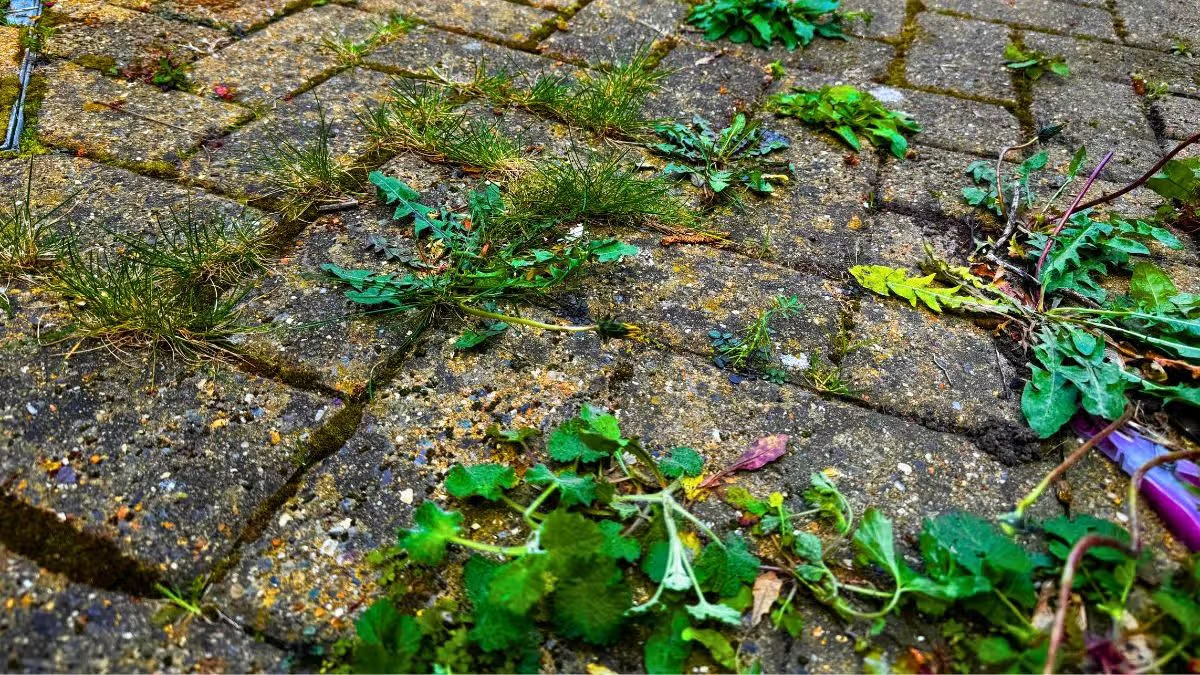
Weeds can overtake a patio in late summer, but there is a really simple way to kill them and stop them growing back using an everyday household object you likely have sitting in your kitchen.
Summer is gradually coming to a close, with many plants beginning to lose their vitality, yet weeds are doing precisely the opposite — thriving at this time of year. By late August, numerous green, leafy weeds will start appearing, and despite their diminutive size, they can prove difficult to eliminate due to their robust root systems.
Advertisement
Many prevalent varieties of weeds, such as dandelions, can establish their roots long before their foliage becomes visible, meaning that even if you spend an entire afternoon pulling at the leaves, they’re likely to reappear within just a few weeks. Patio weeds can be especially persistent, as the gaps between slabs are typically warm and moist enough for them to develop exceptionally long roots, rendering most natural remedies too feeble to make any impact.
Nobody wants to drench their garden in harsh chemicals that could damage wildlife, but fortunately, Sophie Webb, creator of What Sophie Does, has shared a straightforward method to eliminate patio weeds using just one item that everyone has in their kitchen.
Sophie said: “Boiling water is one of the simplest, cheapest and most effective ways to get rid of weeds growing through the cracks in your pavement or paths.
Advertisement
“Just pour it directly onto the weeds and the heat destroys the plant right down to the root with no harsh chemicals, no expensive products, and no harm to the environment. Perfect for driveways, patio edges and garden paths.”
It may sound almost too straightforward, but weeds will break down at temperatures around 100°C, meaning that filling a kettle and pouring boiling water directly over them is typically sufficient to do the job.
Boiling water effectively destroys the enzymes within the weed, rendering them unable to function.
Advertisement
Using a kettle to tackle weeds requires just 10 minutes of effort and, best of all, won’t cost you a single penny — making it well worth giving it a go to see whether it does the trick.
There are, however, a few drawbacks to this method: it can take a day or two to completely eliminate a weed, so a little patience may be required.
For particularly deep-rooted weeds embedded in your patio, a considerably greater volume of boiling water will be needed, and you may have to repeat the treatment several times before fully eradicating it.
Advertisement
That said, boiling water remains one of the most reliable methods for dealing with patio weeds, meaning there’s no need to resort to chemical products or less effective remedies such as vinegar, baking soda, or salt.
How to kill off patio weeds using just a kettle
Simply fill the kettle, allow it to boil, then carefully carry it outside to the patio.
Exercise particular caution when handling the boiling water, as this is the most hazardous stage of the process. Ensure your path is free from obstacles and keep children and pets well clear before lifting the kettle.
Upon reaching the weeds, position yourself steadily and pour the boiling water carefully and directly over them. Pour gradually to reduce splashing, and take care not to spill the water on yourself or surrounding plants, as boiling water can damage or destroy virtually any plant it touches.
Advertisement
The weeds should start to droop within a matter of minutes. After several hours, they ought to look wilted and brown; though especially resilient or deeply-rooted weeds may require longer to perish entirely.
Once the weeds have died off, simply brush away what remains with a broom and bin them. Your patio will appear considerably neater with minimal fuss and without requiring a chemical weed killer.
Former Ukrainian defence minister Mykhailo Fedorov has called for wartime elections, in what many see as the biggest challenge to Volodymyr Zelensky’s presidency since war broke out with Russia in February 2022.
“Democracy cannot be held hostage by Russia,” said Fedorov, 35, in a video posted to YouTube on Tuesday, adding that Ukraine is fighting “precisely because we want to remain a free European state”.
Since Russia’s invasion Ukraine has been under martial law, which means elections are suspended.
Fedorov, who did not mention Zelensky by name in the video, was unexpectedly fired from his role as defence minister in late July, just six months after his appointment.
During his tenure as defence minister, Fedorov was credited with energising the ministry, heading a drive against corruption and using data to analyse and try to improve performance on the front line.
His dismissal is widely accepted to have been related to tensions between him and army commander-in-chief, Oleksandr Syrskyi. Syrskyi was also replaced several weeks later, after weeks of protests piled pressure onto the Ukrainian president.
Fedorov gave no indication as to his own political plans in the YouTube video, instead focusing on the need for a “legal, safe, and realistic mechanism that will allow Ukraine to restore a full democratic process even amidst a prolonged war”.
Advertisement
He added that the country was facing a “systemic crisis of governance” and is “scared of change”, and pointed to corruption in Ukraine as one of the things hurting the country’s war effort.
Zelensky has since appointed Yevgeniy Khmara, a career intelligence official with a low political profile, as acting defence minister.
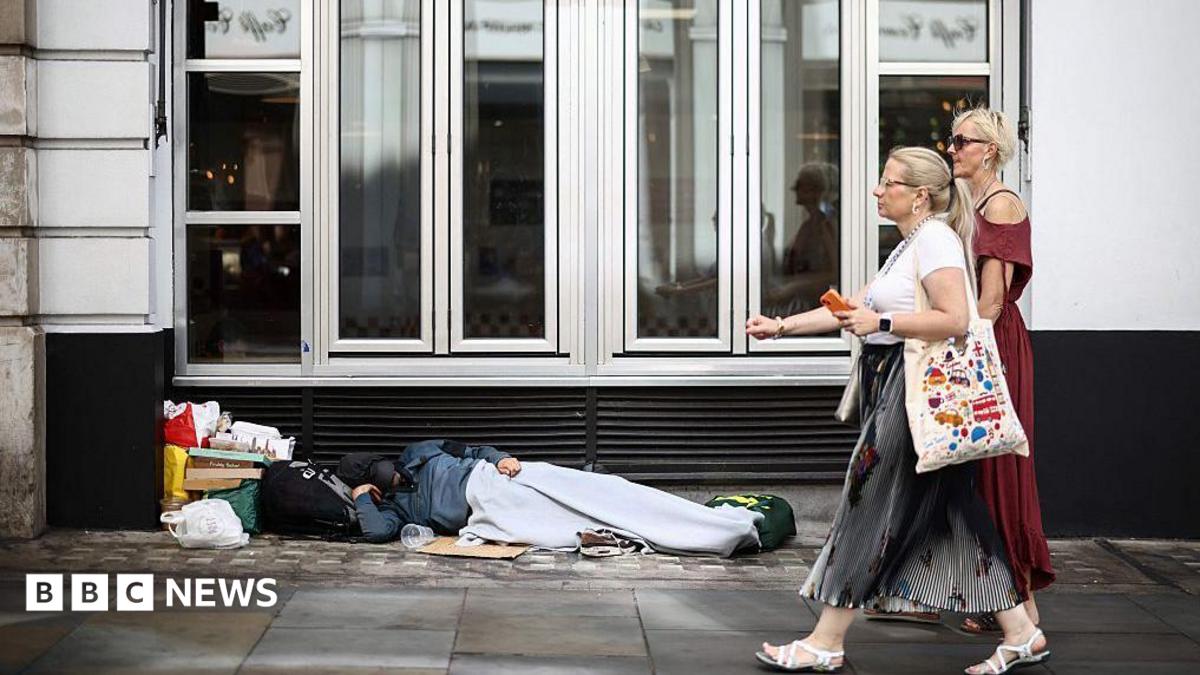
In an opinion piece in the Guardian, external, Burnham wrote: “For decades, Westminster has treated rough sleeping like a problem to step around rather than solve. It’s a philosophy that took hold in the 1980s and came back full force in the era of austerity: this idea that rough sleeping is just a fact of life rather than something government has a responsibility to end…
“No matter who they are or what they’ve been through, every person sleeping rough deserves a chance to get back on their feet – and, together, that’s exactly what we’ll give them.”
The prime minister said he wanted to build on the success of Everyone In, a Covid pandemic-era scheme that saw thousands of rough sleepers housed in hotels and temporary accommodation.
The announcement comes with an additional £102m in new funding, taking Burnham’s total commitment to tackling rough sleeping to £442m since becoming prime minister. The money is said to be “fully funded” within the Ministry of Housing’s budget.
As well as providing immediate support get people off the streets, the funding is also designed to deliver over 1,000 homes over the next three years to provide rough sleepers with permanent accommodation. The funding will also provide “intensive wraparound support,” typically psychiatric and drug and alcohol services to help people rebuild their lives.
Burnham says he will organise a special conference in the autumn, inviting business, charities and faith groups to outline how they can help tackle the problem. Councils and mayors will play a leading role in devising local solutions with the areas with the biggest problem receiving the most support.
Jasmine Basran, head of policy at Crisis, said the charity welcomed the announcement and believed an end to rough sleeping was possible.
Advertisement
“What we also want to see in the longer term is interventions to prevent people from being forced to sleep rough in the first place.”
She urged departments across government to work together to address the issue – saying too many people being discharged from hospital or leaving care were ending up on the streets.
Sarah Elliott, Shelter’s chief executive, called Burnham’s pledge a “game-changing move”.
She said “tackling the most visible form of homelessness is a strong start” but urged the prime minister to act on his promise to build more council houses to help people living in temporary accommodation.
Advertisement
The shadow housing secretary said Burnham had promised to end rough sleeping while Manchester mayor “and failed because he didn’t do the hard work necessary”.
James Cleverly added that families would fear there would be tax rises unless Labour could “come clean on what other programmes they are cutting to pay for this project”.
Liberal Democrat housing spokesperson Gideon Amos said: “Sticking plasters won’t fix the homelessness crisis. Without a proper long-term plan, people could simply find themselves back on the streets once the festive headlines fade.”
He urged Burnham to commit to a Lib Dem target to build 150,000 social homes every year.
Advertisement
Deputy Reform UK leader Richard Tice also criticised Burnham’s efforts to tackle homelessness while Manchester mayor, and described the government’s new plans as “yet another vague announcement with no substances which uses our most vulnerable for political point-scoring”.
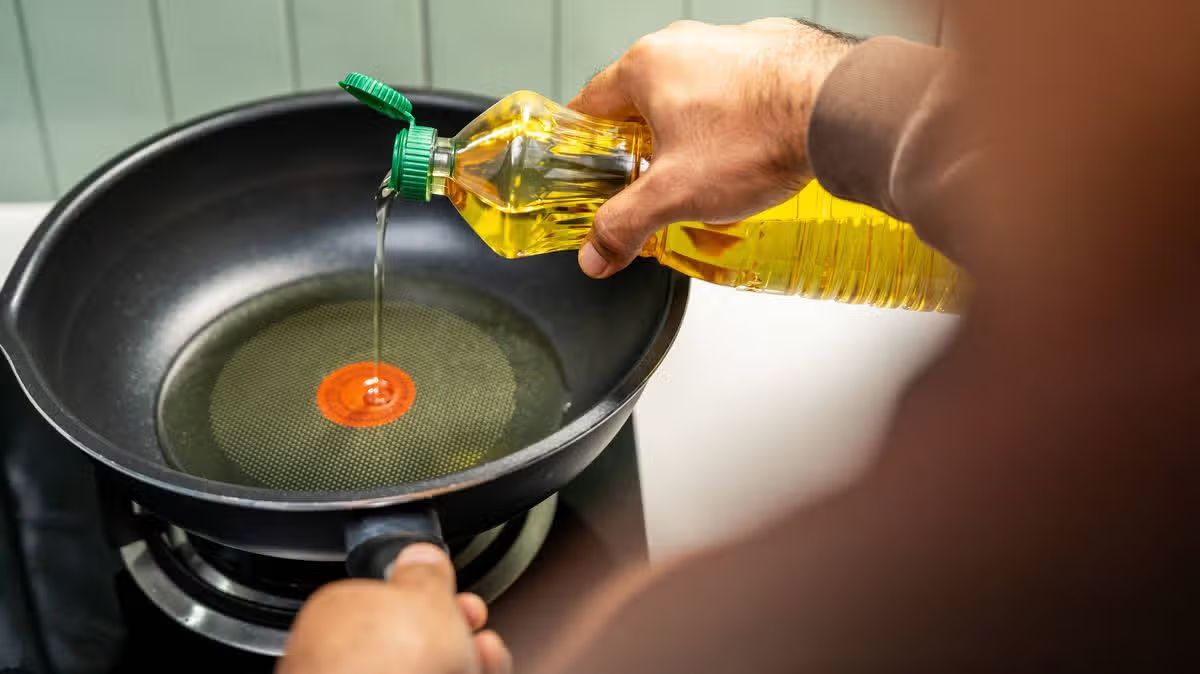
It’s important to know how many times you can reuse oil when cooking with it
Frying is a widely loved cooking technique embraced by cultures around the world for countless generations. It involves preparing food in hot oil to achieve a unique texture and taste.
Advertisement
Commonly fried items include chips, chicken and even vegetables.
One recurring question is whether cooking oil can and should be reused following frying. Fortunately, the answer is straightforward.
According to specialists at King Arthur Baking, frying oil has a considerably longer shelf life than many people expect.
They explained it can be used multiple times before requiring disposal. Reusing oil is among the most effective ways to minimise both the waste and expense associated with frying.
Advertisement
The general agreement on reusing oil is that it can be used two to three times for fried, breaded items such as chicken.
For plain vegetables or potatoes, it may remain viable for approximately four to six uses.
However, it does require thorough cleaning and straining before it can be reused safely.
Ian Fujimoto, known as @iankyo on TikTok, boasts over 1.6 million followers and regularly shares his mouth-watering recipes and culinary advice.
Advertisement
In one clip, which has amassed more than 700,000 likes and over 1,000 comments, the chef revealed his approach to handling used cooking oil.
He said: “I get asked a lot what I do with my used fry oil. Typically, after you fry something, there’ll be lots of little bits stuck in the oil, but that doesn’t mean your oil is bad.
“It just means that you can clean it, cool it and store it again to use later.”
Advertisement
To clean the oil, Ian explained that he passes it through a fine-mesh sieve to eliminate the larger particles, while leaving much of the finer residue behind.
He added: “The other method that I find is way more effective is using a cornstarch slurry. That’s one part water to one part cornstarch.”
The chef then introduces this slurry into hot oil and watches as all the debris binds to the cornstarch.
Ian said: “It kind of works like gum where it becomes really sticky and it just grabs ahold of everything. Then all we need to do is go ahead and remove it.”
Advertisement
The technique works regardless of the type of oil being used, whether that’s sunflower, vegetable or olive. Ian reuses his oil on multiple occasions before it requires replacing.
Should the oil develop a sour or paint-like smell, or if it has turned particularly dark and thick, it ought to be discarded straight away.
A street in Wales has been deemed so “magical” it feels like you’re “wandering through a postcard” when you visit. Many have admitted the location is totally beautiful
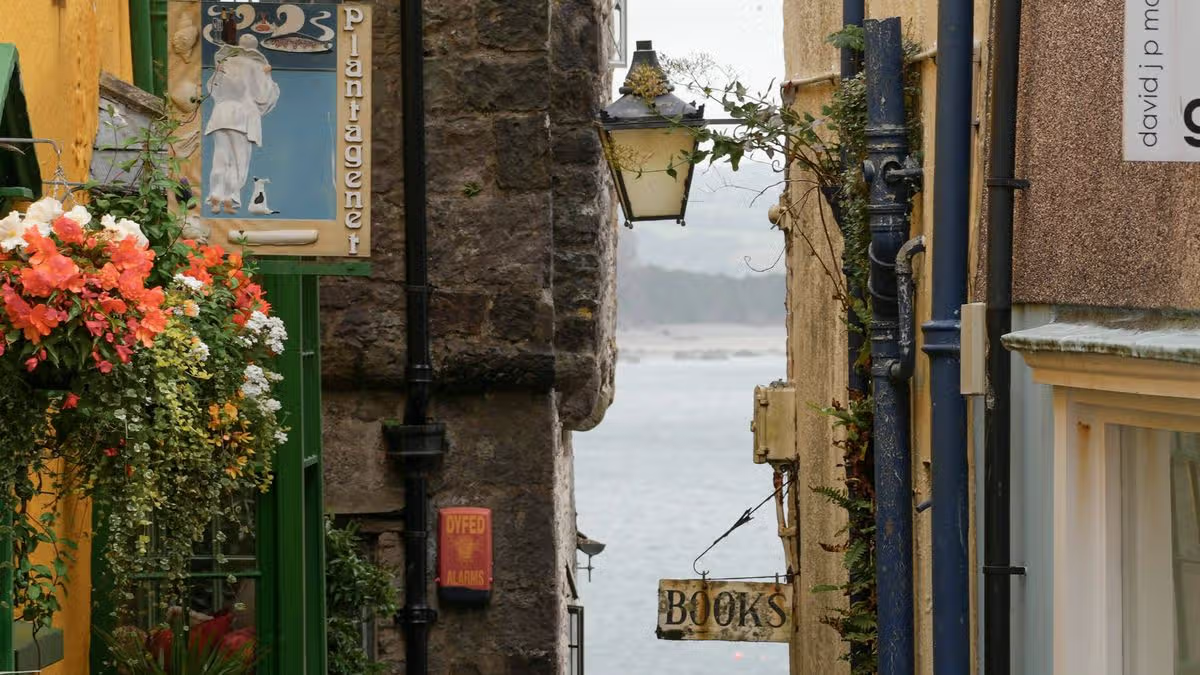
Wales boasts countless stunning locations, yet a particular area has been captivating visitors. The lane has been branded “magical” thanks to its cobblestone surface, vibrant doorways and sparkling lights.
Advertisement
Indeed, many reckon the spot is so enchanting it resembles stepping straight into a postcard, marking it as another Welsh treasure that continues to mesmerise people. The location previously gained traction on TikTok after UK Hidden Gems posted footage of the Pembrokeshire gem, showcasing its remarkable appeal.
Accompanying the footage, UK Hidden Gems noted: “Hidden just steps from the harbour, this narrow cobbled lane is lined with colourful doors, flower boxes and twinkling lights that feel absolutely magical as the afternoon light softens.
“Even though it’s one of Tenby’s best-kept secrets, walking here makes you feel like you’re wandering through a postcard.”
Advertisement
Unsurprisingly, Tenby itself is a magnificent place for strolling, with the coastal town proving immensely popular amongst visitors. There’s an abundance of spots to discover while soaking up the town’s innate splendour.
Content cannot be displayed without consent
Since the footage emerged online, dozens have weighed in with their views and suggestions. The clip has racked up thousands of views as well.
One viewer remarked: “Love Tenby. It’s a beautiful place. Last visited 15 years ago. So happy it’s not been ruined. Will now consider going again.”
Someone else noted: “Oh wow, it’s like a little Italy.” A third shared: “OMG! I was there only last week.
Advertisement
“I came out purely by mistake to the back entrance of a gift shop and stumbled on this purely by chance. I was amazed. Great find.”
A fourth person observed: “This is a beautiful place to visit and even more stunning in person.” Another enthusiast added: “We go tomorrow. It’s one of the most beautiful places I’ve been to.”
How to find it
UK Hidden Gems has also offered guidance for prospective visitors. The location sits just off Lower Frog Street in Tenby. They characterise it as a “quiet nook with instant cosy vibes and tonnes of photo charm”.
The spot is particularly enchanting during golden hour or in the moments leading up to sunset. During these times, the lane is said to glow “in the best way”.
Advertisement
It appears to be an ideal destination for exploration on a bright, sunny day. Indeed, numerous commenters confessed their affection for Tenby, citing its remarkable beauty. It’s difficult to disagree with that sentiment.

















































You must be logged in to post a comment Login