“The fate of Ukraine is our fate,” Germany’s chancellor declared on the fourth anniversary of the start of the war in Ukraine.
While some EU countries are still one step removed from the conflict raging in Europe, there’s no doubt Germanyis committed.
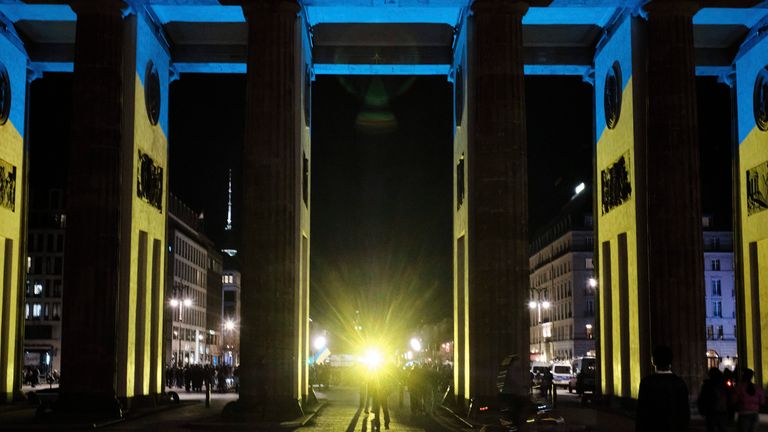
Image: File pics: AP
Berlin is Ukraine’s biggest military supporter. Since the Russianinvasion in 2022, it has provided Ukrainewith 39 billion euros (£34bn) of civilian aid and 55 billion euros (£48bn) of military support.
According to a poll by INSA for Bild media, 52% of Germans support increasing aid for Ukraine.
While the war has fundamentally altered Ukrainians’ lives, it has also forced Germany to change.
The month before Putin’s tanks rolled in, the Germans announced they would supply just 5,000 helmets to Kyiv.
The offer was heavily criticised and mocked at a time when other allies were sending anti-tank weapons and ammunition.
From 2022: ‘German help is a joke’ – Kyiv mayor
Advertisement
Fast forward to the present day, and Berlin has not only supplied items including air defence artillery, combat vehicles, and arms, but it’s also trained more than 24,000 Ukrainian soldiers in Germany.
Make no mistake, this transition hasn’t been easy. Germans have had to stump up the cash and battle with their own consciences.
When the then-defence minister announced the helmet offer, she cited a long-standing policy of not supplying weapons to a conflict zone.
Many Germans agreed, fearing they would spark an escalation that would drag them into the fight.
Advertisement
“I think there is a real danger that everyone will be in a big war and maybe a third world war,” Katharina told me at a peace rally in Berlin a few years ago.
“It’s very dangerous, and we have to say no.”
From 2022: Germany to help arm Ukraine
A radical shift in policy
Advertisement
Until I lived here, I didn’t fully comprehend how heavily Germany’s history weighs on its present.
The horrors of the Second World War, the shame of atrocities committed by the Nazis, the division of Germany and its remilitarisation during the Cold War, have all left scars.
Many Germans are inherently anti-war, and for those living in the former Soviet east in particular, the idea of German weapons being used against Russians was deeply alarming.
But the war in Ukraine forced the government’s hand, and the reality that Russian troops were encircling Ukrainian cities meant they could no longer watch from the sidelines.
Advertisement
Soon after ‘helmet-gate’, then-chancellor Olaf Scholz announced a radical shift in policy, a so-called “historic turning point” in which the country would use a €100 billion special fund to significantly increase military spending, reversing Germany’s previously cautious defence policy.
Efforts began to boost the military, neglected for years and described as “ageing and shrinking”.
Simultaneously, a top-secret plan to ensure the country could protect itself in case attack was updated, while war games were held to test civilian and military responses.
Change has continued under the current Chancellor, Friedrich Merz, who came to power condemning both Moscow and overreliance on the US, and has since pledged to create “the strongest conventional army in Europe”.
None of it is simple; while a survey in January by Leipzig University found the majority supported boosting the military and defence spending, few were willing to put their own lives on the line.
Only 16% of Germans said they would “definitely” take up arms to defend Germany, while 59% they would “probably not” or “definitely not” fight, according to a poll carried out last summer by the Forza institute.
Advertisement
Advertisement
From 2025: Are Gen Z willing to die for their country?
Meanwhile, the reintroduction of voluntary military service led to student protests by Gen Z, with one demonstrator, Levi, telling me “none of us want to die for a country that doesn’t really care about us.”
Advertisement
Regardless, Germany is ploughing on. The chancellor said today that “this war will only end when Putin realises he cannot win”.
Until then, he’s pledged to stay by Ukraine’s side.
Four years since Putin launched his attack, the world has changed, and Germany feels like a different place.
His attorney, Terrel Butler, described him as “completely heartbroken and deeply distressed” in a statement shared Friday with The Independent.
“His primary concern and source of intense frustration is his inability to continue the search for his wife of 25 years. The trauma of her disappearance, coupled with his current detention as a suspect, has left him in an extremely fragile state,” he said.
Advertisement
Hooker, who has not been charged, “unequivocally denies any wrongdoing,” according to Butler.
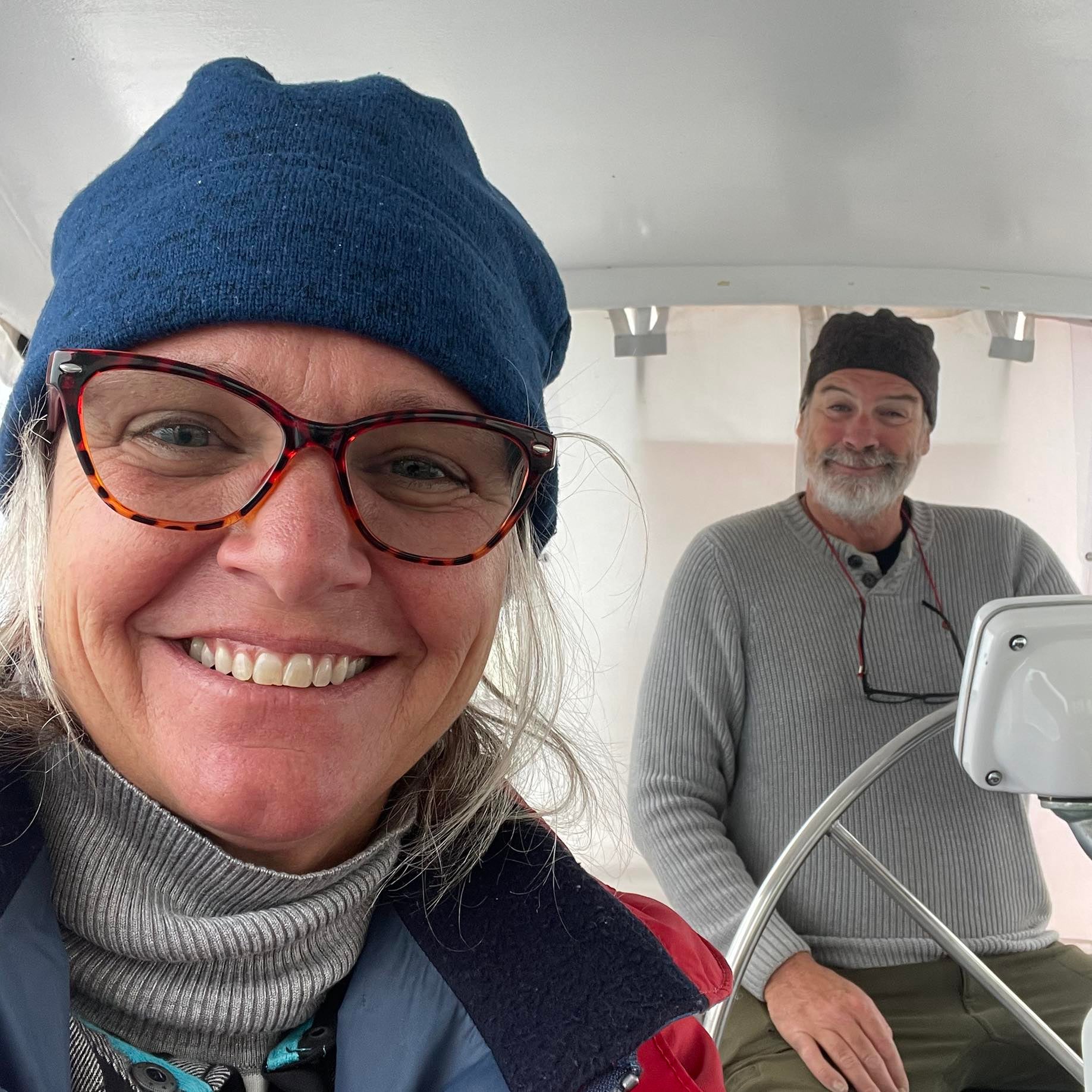
Brian Hooker told police his wife, Lynette Hooker, ’fell overboard’ (Facebook/Lynette Hooker)
Hooker is also suffering from a knee injury, which he sustained after falling overboard while police were searching his boat on the night of his arrest, according to his attorney.
“Under conditions of heavy rain and strong-force winds, he was taken by boat to his boat, the Soulmate for a police search. Despite the choppy and dangerous sea conditions, he was kept in handcuffs,” Butler said.
“While attempting to move sideways across the wet, unstable flooring of the boat to maintain his balance—with a bundle of clothes in his restricted hands—he lost his footing and fell overboard. He was submerged in the cold water and took in a significant amount of seawater before his life jacket brought him to the surface. He had to be rescued from the water by the police,” he added.
Hooker is expected to receive treatment at Rand Memorial Hospital.
Advertisement
The Independent has contacted the Royal Bahamas Police Force for comment.
Hooker initially told investigators his wife was carried away by “strong currents” after she “fell overboard” while they were on a boat together, the Royal Bahamas Police Force said Sunday.
“According to preliminary information, a male complainant reported that he and his wife, both U.S. nationals, departed Hope Town around 7:30 p.m. aboard an 8-foot hard-bottom dinghy enroute to Elbow Cay,” the agency said in a statement.
Lynette Hooker (Facebook/Lynette Hooker)
“During the journey, his wife reportedly fell overboard with the boat keys, causing the vessel’s engine to shut off. Strong currents subsequently carried her away, and he lost sight of her. He then paddled the vessel to shore,” the statement continued.
The agency announced Hooker’s arrest late Wednesday. Advardo Dames, the assistant commissioner of the Royal Bahamas Police, said he was “taken into custody as a suspect,” according to Reuters. The U.S. Coast Guard has also opened a criminal investigation into the incident.
Advertisement
Origin Deleveaux, a Royal Bahamas Defense Force commander, told NBC News crews are still searching for Lynette Hooker as of Friday.
Lynette Hooker’s daughter, Karli Aylesworth, has spoken out about the case in interviews with several media outlets. Aylesworth told NBC News she was unlikely to “just fall” off the boat, and explained the couple has a “history of not getting along, especially when they drink.”
During a Fox News interview, she also described her mother as a “very fit person” who was unlikely to lose her balance.
“I do believe something might have happened to her,” Aylesworth told the network. “There’s history of them choking her out and threatening to throw her overboard. So the fact that this is actually happening makes me believe there’s more to the story.”
Advertisement
Butler said his client denies Aylesworth’s claims.
“Mr. Hooker categorically and unequivocally denies any wrongdoing and in particular the allegations recently made by Karli Aylesworth. He has been cooperating with the relevant authorities as part of an ongoing investigation,” he said Thursday.
Sinitta has hit back at ITV viewers after facing backlash over her comments to Gemma Collins about her Chicago casting, saying parts of their conversation were edited out
Karen Price Assistant Editor of Screen Time and Yasmin Vince
21:29, 10 Apr 2026Updated 21:29, 10 Apr 2026
Sinitta has hit back at I’m A Celebrity viewers following their response to her on-screen clash with Gemma Collins. Thursday’s episode saw friction emerge between the pair, after Sinitta revealed to the TOWIE star that she had considered the announcement of Gemma succeeding her as Mama Morton in Chicago to be a ‘joke’.
Gemma had been set to portray the prison warden in 2022 but withdrew due to a “terrible injury”. During I’m A Celeb, Sinitta said: “We were like ‘is this like a joke announcement?’” before adding: “I thought you were like Zsa Zsa Gabor… You don’t do anything, but you make a great entrance! You make everybody laugh, but I didn’t know you could actually sing and dance.”
Gemma appeared visibly taken aback by the remark, responding: “I don’t think you’d get casted as Mama Morton in Chicago if you didn’t pass the audition.” She subsequently told producers: “I am not a joke. I was taken aback. It was just a bit weird.”
In a social media post, she said: “Goodness! I know none of you have ever heard of me before because you are young, if you did you would know I’m a very kind person who would never be horrible to Gemma Collins or anyone else.
“We actually bonded over discussing Chicago, I didn’t call her a joke, I said I thought the announcement was a joke at the time as I had not been aware that she sang and danced etc.
Advertisement
“There was lots of gossip about it in Theatreland when she didn’t do the show. Me and Brenda Edwards had to step in and play the role again,” reports the Mirror.
She went on to claim that ITV producers had “edited out” portions of their exchange. “I had nothing else in common with Gemma apart from Chicago so it was a natural thing to talk to her about and they edited out us speaking amicably about the director and her calling us ‘2 Mama Morton’s’.
“You are all being genuinely nasty here, because you love her, I get it. But I gave her a chance to tell her side from the horses mouth! Think about it…. That is not rude, it’s called conversations. Why do people fear open conversations?
“Maybe I’m too old school, but then I AM OLD and been working since the 80’s, I had a successful TV, theatre and film career before I even met Simon Cowell.”
Advertisement
Sinitta also took to her Instagram account to offer Gemma a public apology. Beneath a photograph of Kermit the Frog sipping Lipton tea, she wrote: “I am truly sorry that I hurt your feelings when I said I initially thought your Chicago announcement was a joke.
“I also apologised at the time of admitting it to you. People thought it was a joke when I was first announced too due to my tiny size and usually Pop vocals. I’m sad you were upset , prove everyone wrong, it feels good! Btw I love Zsa Zsa Gabor, that was a compliment.”
Greater Manchester Police descended on the sleepy Dicconson Lane in the early hours of Friday (April 10) morning, in an incident Assistant Chief Constable Steph Parker described as ‘challenging’.
Residents were not allowed to leave their homes as around 17 police vehicles – including armed police – took over the street.
The terraced houses at the Wigan-end of Dicconson Lane (Image: Dan Dougherty)
Assistant Chief Constable Steph Parker said: “Following this challenging incident, I can confirm the individual has been detained by our officers, and those involved have been safely secured and protected.
“I want to commend the bravery and professionalism of our officers and thank the public for their patience and cooperation while we worked to bring this situation to a safe conclusion.”
Advertisement
Dicconson Lane connects Westhoughton and Blackrod to Aspull and Wigan.
The terraced houses at Dicconson Lane (Image: Dan Dougherty)
The incident occurred at a row of terraced houses near the Wigan end of Dicconson Lane, near Aspull.
The incident started around 2am after police were called by concerned residents who had heard a disturbance.
Police arrived and engaged in ‘prolonged negotiations’ with the subject before making an arrest.
Advertisement
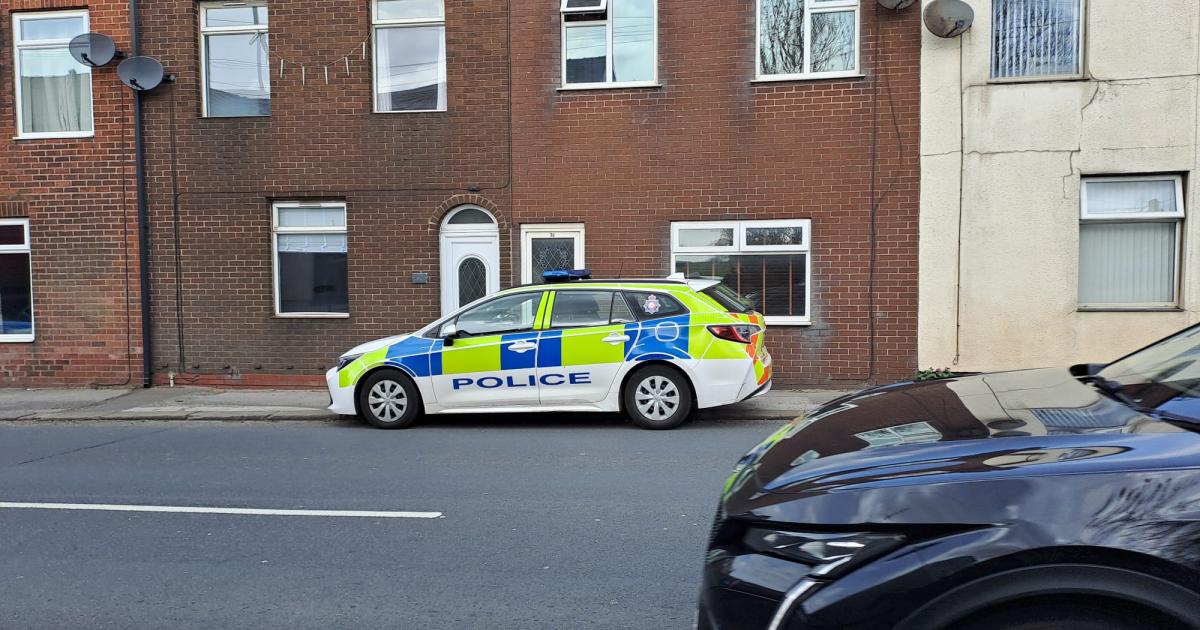
Dicconson Lane with the police car noticeable to the right (Image: Dan Dougherty)
Residents were not allowed to leave their houses during the incident, which lasted around 5 hours between 2am and 7am.
One resident – who did not want to be named – said: “We heard all the noise from about 3.30am onwards.
“There were 17 police vehicles on the road and men with guns.
Dicconson Lane (Image: Dan Dougherty)
“It was over in one of the terraced houses.
Advertisement
“A man got taken out and arrested, then what looked like a mother and children came out afterwards and talked to the police. It looked like they were negotiating with them.
“I didn’t know if it was her son and daughter, but they were definitely younger.”
A police car with two officers inside remained parked outside the house in question for much of Friday.
Dicconson Lane facing back towards Bolton (Image: Dan Dougherty)
The suspect was arrested on suspicion of false imprisonment and remains in custody for questioning.
Advertisement
Nobody was harmed during the incident, and neither were any of the people in the neighbouring houses.
Police have been made aware of a video depicting the incident, which has been circling on various local social media channels.
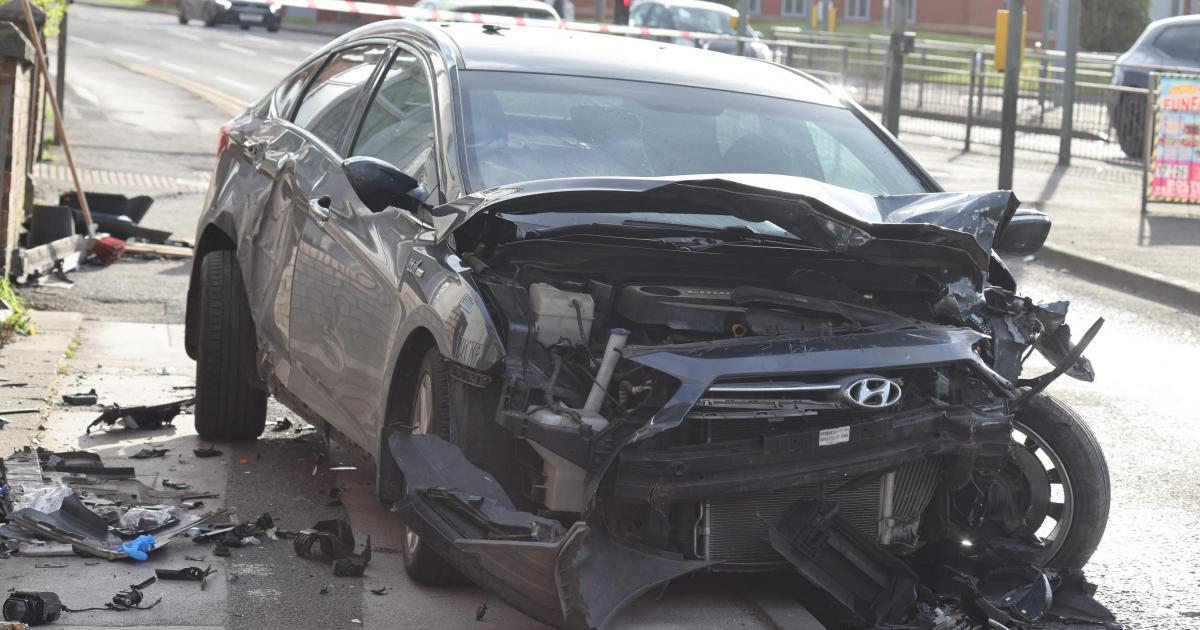
A pedestrian crossing signal was also severely damaged, and debris and an oil spill were left across the carriageway.
(Image: Phil Taylor)
A resident told The Bolton News: “It’s crazy, there are some shocking drivers out there but wouldn’t have thought it would happen right on my front door.”
By approximately 7.30pm, the scene was cleared, although traffic cones remained in place.
North West Ambulance Service (NWAS) has also been approached for comment.
Residents of Deansgate Square’s West Tower have been left in the dark for days after an internal electrical fault, with some forced into hotels as a luxury development struggles to restore basic services
21:02, 10 Apr 2026
Advertisement
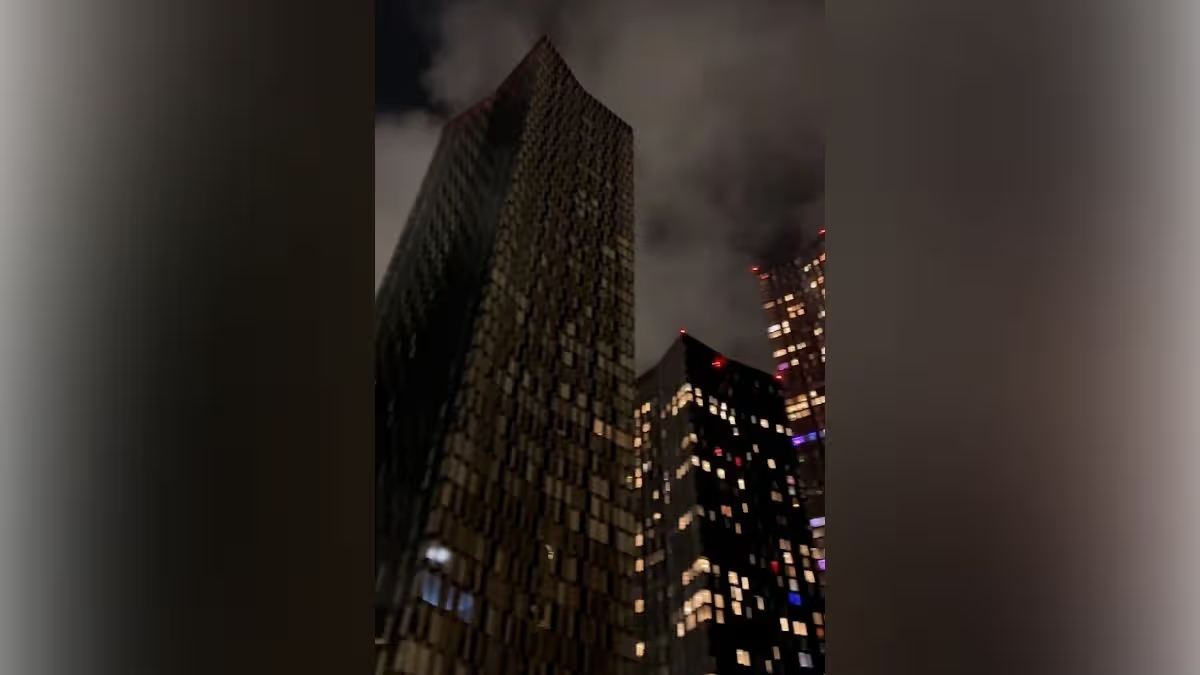
It is one of Manchester’s most luxurious apartment blocks. Towering over the city at 44 floors, the glass West Tower building permanently changed the city’s skyline when it opened and is home to wealthy footballers and social media influencers.
The Renaker development, which was completed just six years ago, comprises a cluster of four towers – named North, East, South and West – and is made up of 1,508 properties including one, two and three-bedroom apartments and three-bedroom penthouses. The properties are known as The Residences, marketed as ‘extraordinary apartments’ with ‘exceptional service’.
Situated at Deansgate Square, penthouses are sold for as much as £2.5m. They boast unrivalled views right across Manchester and offer their residents access to extensive facilities, including a 22,000 square foot health and wellbeing space.
Renters can expect to fork out anything between £1,400 and £2,300 a month for the privilege, up to £20,000 for penthouses and more premium apartments and duplex penthouses.
Advertisement
But for the third night the block will stand unilluminated. Residents have been forced to leave, having to find budget hotels elsewhere to stay in with a £120 per-night offering from the management firm, and an offering of food cover at up to £40 a day.
Residents had been given the choice of staying in their apartments without power, or to arrange the alternative arrangements amid the outage.
This is because the tower block was suddenly plunged into darkness at around 9pm on Wednesday night (April 8). The electrics first went off in the apartments, leaving no hot water and no way to use any facilities in each home. But it’s understood the management team first sought to reassure residents that works were ongoing to rectify the problem.
Advertisement
The power and hot water then remained off across Thursday (April 9), before a flurry of emails were sent to all residents advising them that the problem was more than it had seemed.
It will likely not be repaired until Monday.
But for a block of this size, suffering internal electrical faults, it has since left hundreds with no option but to crash with relatives or find budget hotels in and around the city, to then be reimbursed at a later date.
The plush block is known to be home to several high profile residents – including Premier League footballers. An insider has told the M.E.N that one footballer resident has been transferred to another apartment in an adjacent tower, while another has headed to a hotel like fellow residents.
Advertisement
One rental tenant has slammed the incident as ‘very concerning’ and claimed that they did not have the available finances to self-fund hotel stays. Another said the reception area was ‘busy with angry people’ on Thursday night as crowds packed their bags for a long weekend away from home.
Others, including a resident with cats, are reportedly opting to stay in their apartments without any electricity instead of forking out for rooms elsewhere.
The email to residents said costs would be covered of up to £120 per night for accommodation and that meal costs would be provided for single people and couples, while families were told to speak to staff for ‘further guidance’. The original email from The Residences also suggested a number of budget hotels residents could consider, including Motel One, Premier Inn or Romzzz Aparthotels which are ‘well within the £120 budget’.
The firm also added that their “immediate priority is to assist those who require urgent support, particularly those who are vulnerable, including elderly residents, individuals with disabilities, families with young children, and anyone experiencing financial hardship”.
The Manchester Evening News has learned that the cause of the power outage was identified as a ‘fault with the busbar within the Deansgate Square site’. A busbar acts as a central connection point which conducts and distributes electricity in industrial, commercial and residential systems.
It’s also understood that generator specialists Pleavin Power have been drafted in to deliver ‘disaster recovery support’ for the time being and remain at the site.
Advertisement
“This is not an old building we are talking about here”
“I think it’s concerning,” one resident told the M.E.N on Friday (April 10), who has opted to stay with relatives over worries about hotel prices in the city. “This is not an old building that we’re talking about here. This is a new building. There should be contingency plans in place.
“What I’ve seen over the past 24 hours has been chaos. It’s been people not knowing what is happening. People not being able to afford hotels and desperately finding family members to go with. In a world where we are heavily reliant on technology for electricity, where pretty much everything runs off electric now.
“Your home is somewhere you should feel safe, and if this was a normal house you’d have the electricity board round quickly or emergency electrician to fix it in 24 hours, so I find it all the more concerning that this can happen at a building of this size. It’s awful really when you pay so much for a service.
Advertisement
“A lot of these hotels don’t have cooking facilities, and a McDonald’s or UberEats isn’t the same as a homecooked meal in your own house, so the whole thing is worrying and stressful.”
On Friday night (April 10), a huge generator was placed outside the tower, with workers still remaining on site. One resident said: “They’ve got a generator outside and it’s all getting fixed up now, but it’s such a big job, they’ve got to get wires up to the 44th floor.
“It’s like a big monstrous tank and they’ve told us they’ll be working all night to get it set up. The generator will be live from Monday but I’ve been told it could have to stay there for weeks while they try to find out the problem.”
And responding to the offer of a £120 hotel reimbursement, they added: “They’ve sent an email saying you’ll get covered, and that it will probably be taken out of rent. That’s okay for people who can pay upfront for hotel stays, but unfortunately some people can’t afford to go to a hotel so are having to stay in their apartments without power.”
Advertisement
“There wasn’t even cold water. There was nothing at all”
Another resident has told of the moment electricity initially cut off on Wednesday night. They said they went to bed but woke up the following morning to find that the power outage remained.
“It was at around 11pm when it all went off and everybody sort of congregated wondering what was going on,” they said. “We didn’t really seem to know anything but there were rumours it would be sorted by 5am, so we just went to bed and thought that when we woke up, it’d be fine. But it was still off.
“There wasn’t even cold water, there was nothing at all. They were giving people bottles of water. I think everybody was just a bit p***ed because obviously it was like 11 at night.
“Everyone was tired. Everyone was just asking each other what they could do. I think most people will have left. We just decided to get a hotel and then got an email last night saying there wouldn’t be anything [power] until at least Monday. They recommended getting a hotel for the weekend.
Advertisement
“I think we’ll just leave for the foreseeable until we get another email. But even with the compensation, we don’t know when we’re going to get it back, so obviously people will have to spend at least £500 for the next five days.”
Multiple residents told the Manchester Evening News how power in communal areas and the use of emergency lighting remained, with the individual homes seemingly worst-hit by the outage. Manchester City Council confirmed that it had not been directly involved in dealing with or supporting displaced residents, with the management firm covering accommodation reimbursement costs.
Another resident of a two-bed apartment pays £2,400 a month. They chose to stay in the unpowered flat for their pet cats, adding: “There are so many pets in the building and they haven’t been considered at all in this situation. I’m having to stay in the building with no food, light or heating for my cats.”
Advertisement
On Friday evening, West Tower again stood for a third night mostly in darkness alongside its illuminated neighbours. It is not known how many people chose to vacate their homes or remain there without any power.
On Thursday, Deansgate Councillor Joan Davies echoed how power-cuts in high rise apartments like West Tower ‘have a huge impact’ with essentials like water supply affected.
“Power cuts in high rise buildings have a huge impact on residents, particularly where apartment water supply fails. I have contacted Electricity North West who confirm the problem is an internal building issue,” Coun Davies said.
“Deansgate Councillors would be interested to hear from residents and will be speaking with managing agents as soon as possible. We hope to hear that a permanent solution will be rapidly provided.”
Advertisement
An email from The Residences Management, seen by the M.E.N,was sent to residents on Thursday evening updating them of the situation. In it, they “sincerely apologise for the disruption and inconvenience caused”.
It said: “The cause of the outage has now been identified as a fault with the busbar within the Deansgate Square site, which is impacting power supply to all properties within West Tower.
“This section of the development is managed by a third party, who are working closely with their contractors to restore power as quickly as possible. The replacement component is bespoke and is currently being manufactured, with delivery expected onsite next week. Following this, insurers will investigate the cause of the outage and carry out the necessary loss adjustment process.”
It continued: “Although we had previously advised that the power may be restored to apartments this evening, due to unforeseen complications, it is anticipated that temporary generator power will not be in effect until Monday 13th April 2026.
Advertisement
“Whilst there is no power to apartments, we can confirm that there is an emergency supply to all lifts and life safety systems (fire alarm system, automatic opening smoke vents, sprinkler system) within the building, which remain fully operational during this period.
“In the meantime, residents have the choice to stay in the building or arrange alternative hotel accommodation from this evening until Monday 13 April 2026, when temporary power is anticipated to be restored.”
Legal and General (L&G), which owns the development also told the M.E.N generator power for homes in the high-rise apartment block should be in place from Monday. “We recognise the disruption this power outage has caused for our residents,” a statement read. “The technical issue has been traced to a fault within infrastructure managed by a third party, and their teams are working with contractors to restore supply as quickly as possible, with generator power expected to be in place from Monday, April 13.
“In the meantime, we’re reimbursing accommodation and meal costs for residents who choose to relocate, and those who remain can be reassured that emergency power to lifts and all life-safety systems remain fully operational. The wellbeing of our residents remains our top priority, and we thank them for their patience whilst this technical issue is resolved.”
HOUSTON (AP) — Their dramatic grand finale fast approaching, Artemis II’s astronauts aimed for a splashdown in the Pacific on Friday to close out humanity’s first voyage to the moon in more than half a century.
The tension in Mission Control mounted as the miles melted away between the four returning astronauts and Earth.
All eyes were on the capsule’s life-protecting heat shield that has to withstand thousands of degrees during reentry. On the only other test flight of the spacecraft — in 2022, with no one on board — the shield’s charred exterior came back looking as pockmarked as the moon.
Commander Reid Wiseman, pilot Victor Glover, Christina Koch and Canada’s Jeremy Hansen were on track to hit the atmosphere traveling Mach 32 — or 32 times the speed of sound — a blistering blur not seen since NASA’s Apollo moonshots of the 1960s and 1970s.
Advertisement
They didn’t plan on taking manual control except in an emergency. Their Orion capsule, dubbed Integrity, is completely self-flying.
Like so many others, lead flight director Jeff Radigan anticipated feeling some of that “irrational fear that is human nature,” especially during the six minutes of communication blackout preceding the opening of the parachutes. The recovery ship USS John P. Murtha awaited the crew’s arrival, along with a squadron of military planes and helicopters.
The last time NASA and the Defense Department teamed up for a lunar crew’s reentry was Apollo 17 in 1972. Artemis II was projected to come screaming back at 34,965 feet (10,657 meters) per second — or 23,840 mph (38,367 kph) — not a record but still mind-bogglingly fast before slowing to a 19 mph (30 kph) splashdown.
Artemis II’s record flyby and lunar views
Launched from Florida on April 1, the astronauts racked up one win after another as they deftly navigated NASA’s long-awaited lunar comeback, the first major step in establishing a sustainable moon base.
Advertisement
Artemis II didn’t land on the moon or even orbit it. But it broke Apollo 13’s distance record, making Wiseman and his crew the farthest that humans have ever journeyed from Earth when they reached 252,756 miles (406,771 kilometers). Then in the mission’s most heart-tugging scene, the teary astronauts asked permission to name a pair of craters after their moonship and Wiseman’s late wife, Carroll.
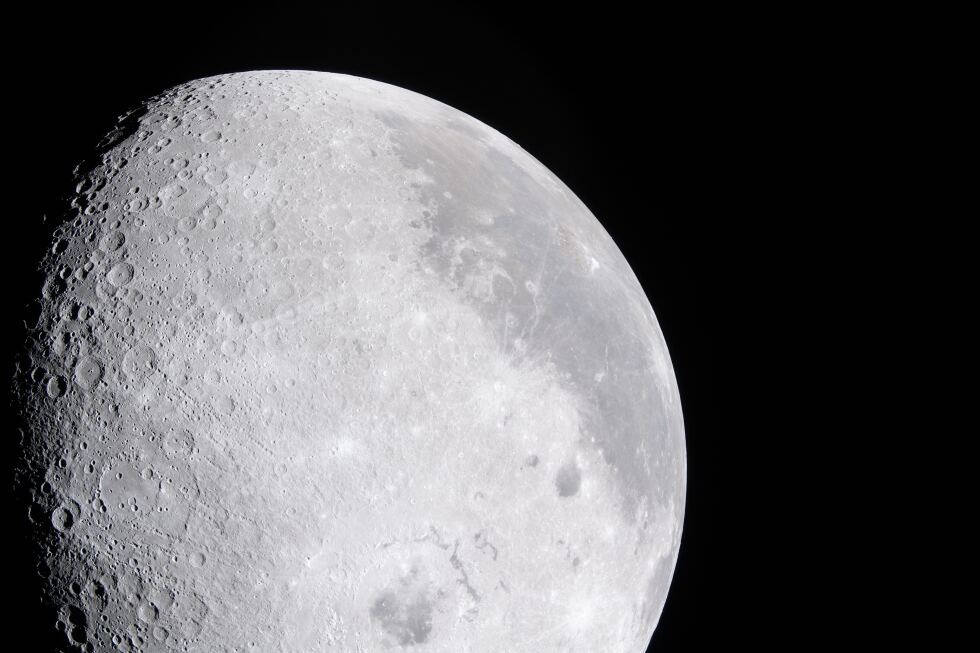
During the record-breaking flyby, they documented scenes of the lunar far side never seen before by the naked eye and savored a total solar eclipse courtesy of the cosmos thanks to their launch date. The eclipse, in particular, “just blew all of us away,” Glover said.
Their sense of wonder and love awed everyone, as did their breathtaking pictures of the moon and Earth. The Artemis II crew channeled Apollo 8’s first lunar explorers with Earthset, showing our blue marble setting behind the gray moon. It was reminiscent of Apollo 8’s famous Earthrise shot from 1968.
“It just makes you want to continue to go back,” Radigan said on the eve of splashdown. “It’s the first of many trips and we just need to continue on because there’s so much” more to learn about the moon.
Advertisement
Their moonshot drew global attention as well as star power, earning props from President Donald Trump; Canadian Prime Minister Mark Carney; Britain’s King Charles III; Ryan Gosling, star of the latest space flick “Project Hail Mary”; Scarlett Johansson of the Marvel Cinematic Universe; and even Captain Kirk himself, William Shatner of TV’s original “Star Trek.”
Artemis II was a test flight for future moon missions
Despite its rich scientific yield, the nearly 10-day flight was not without technical issues. Both the capsule’s drinking water and propellant systems were hit with valve problems. In perhaps the most high-profile predicament, toilet trouble prevented the crew from using it for No. 1 most of the trip, forcing them to resort to old-time bags and funnels.
The astronauts shrugged it all off.
“We can’t explore deeper unless we are doing a few things that are inconvenient,” Koch said, “unless we’re making a few sacrifices, unless we’re taking a few risks, and those things are all worth it.”
Advertisement
Added Hansen: “You do a lot of testing on the ground, but your final test is when you get this hardware to space and it’s a doozy.”
Under the revamped Artemis program, next year’s Artemis III will see astronauts practice docking their capsule with a lunar lander or two in orbit around Earth. Artemis IV will attempt to land a crew of two near the moon’s south pole in 2028.
The Artemis II crew’s allegiance was to those next Artemis crews, Wiseman said.
“But we really hoped in our soul is that we could for just for a moment have the world pause and remember that this is a beautiful planet and a very special place in our universe, and we should all cherish what we have been gifted,” he said.
Advertisement
___
The Associated Press Health and Science Department receives support from the Howard Hughes Medical Institute’s Department of Science Education and the Robert Wood Johnson Foundation. The AP is solely responsible for all content.
In a joint statement on Friday afternoon, Michelle O’Neill and Emma Little Pengelly confirmed that they have written to the Prime Minister
17:13, 10 Apr 2026Updated 17:27, 10 Apr 2026
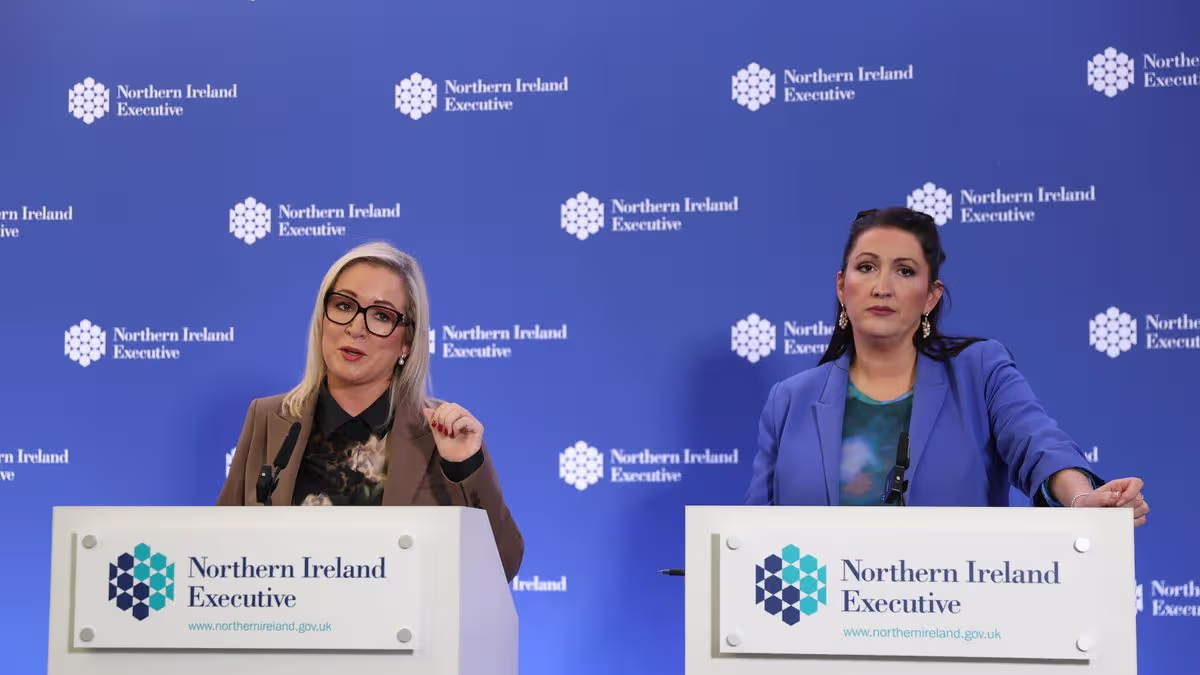
First Minister Michelle O’Neill and deputy First Minister Emma Little-Pengelly have called for a reduction in fuel duty and a package of measures to support hauliers, farmers and SMEs.
This comes after a series of protests similar to those in the Republic have been planned for Northern Ireland over the coming days.
In a statement issued late on Friday afternoon, Michelle O’Neill and Emma Little Pengelly confirmed that they have written to the Prime Minister calling on him to take urgent action.
Advertisement
“We are deeply concerned about the escalating pressures facing families, workers and businesses as fuel and energy costs continue to rise. The cost of fuel is putting significant pressure on, with increases not sustainable. These pressures are being felt in family homes here and beyond,” they said.
“Alongside rising fuel costs and escalating energy bills, there is also an impact on businesses. Our hauliers, our farmers, and small and medium-sized enterprises are facing sharply increased operating costs too and these costs are inevitably being passed on further, deepening the cost-of-living crisis.“Families and businesses cannot continue to absorb these sustained increases without intervention which is why we are calling on the Prime Minister to bring forward a package of measures to support those under pressure.
“This package should include a reduction in fuel duty to ease pressure on both households and businesses, targeted support for hauliers, farmers and SMEs and a comprehensive cost of living support package.
“Given the scale and immediacy of this crisis, we have asked the Prime Minister to act decisively and without delay.”
Advertisement
Earlier today, Alliance leader Naomi Long and Lagan Valley MP Sorcha Eastwood also wrote to the Prime Minister calling on a series of measures to be introduced to assist with the rising costs following the war in the Middle East. The pair asked the Prime Minister to consider a temporary reduction in fuel duty alongside a temporary reduction or removal of VAT on agricultural diesel and home heating oil, while also calling for an increased windfall tax on energy companies.
Protests have caused disruption across the Republic of Ireland in recent days, and similar protests have taken place in France and Norway.
As the Northern Ireland Ambulance Service raised concerns about the impact of the potential protests, the Ulster Unionist Party have stressed that demonstrations must remain lawful, protect access to the road network, and never hinder emergency services.
A Party spokesperson said: “The Ulster Unionist Party fully understands the frustrations being felt by everyone and businesses across Northern Ireland who are being hammered by sky high fuel costs. We also recognise the serious pressures facing our farmers, who are dealing with mounting fertiliser costs that will inevitably have knock on effects on food prices for everyone.
Advertisement
“Everyone has a legitimate right to protest, but it is a qualified right. Any protest must be lawful, must respect other people’s right to use the road network, to go about their daily lives and to run their livelihoods. Most importantly, protests must not impede the vital work of our emergency services.
“The Ulster Unionist Party will continue to call on the UK Government to implement a realistic, long-term plan for a substantial cut in fuel duty and to do so immediately. Working families, businesses and our farming community need support. These are the people being punished simply for going out to work and keeping our economy moving. Freezing or reversing duty increases is no longer enough; the Government needs bold action now.”
Now armed with the figures, I entered my address on Virgin’s site to confirm I could get the fastest speed (Gig1) in my area, closed my laptop and made a note to sort it out before the annual price increase on April 1st.
That was where I went wrong. In the four days that followed, I had six missed calls from Sky, presumably hoping to convince me to sign a new contract, and 12 from Virgin hoping to seal the deal. These came every couple of hours until I got so fed up, I blocked the number.
By the fourth day I was so angry that I contemplated no broadband at all just for some peace. Instead, I did what Virgin was no doubt hoping I would do: I opened my laptop back up and completed the switch. It took 10 minutes.
Advertisement
Before doing this, I rang Sky to see if it was able to match Virgin’s price for a similar speed. I’d always recommend this. Sadly, it came out £11 a month more expensive, despite my years of loyalty. I hung up, a little disappointed my 14-year relationship was resulting in divorce without so much as a trip to the couple’s counsellor.
Since the early days of Cuba’s 1950s revolution – which overthrew the US-backed dictatorship of Fulgencio Batista and replaced it with a socialist government led by Fidel Castro – the Cuban diaspora have played a large role in determining the island nation’s economic and political landscape.
The first wave of predominantly wealthy, white Cuban emigrants have for decades campaigned for a watertight embargo against their homeland. Many fled immediately after the revolution succeeded in 1959, primarily to the US, and have largely refused to visit their homeland on principle.
More recent Cuban emigrants who have left the island (again overwhelmingly to the US) since the economic crisis of the 1990s, are generally less affluent and have less political clout. They have forged cross-border links with friends and family members who remain on the island. Through the remittances they send back, these people are now a vital source of foreign currency for Cuba.
The regime in Havana has traditionally maintained a disdainful attitude towards the Cuban diaspora. In the early waves of migration, Cuba’s government officially referred to those who emigrated as gusanos (worms) – traitors aiming to overthrow the government. Expat investment in Cuba was subsequently banned.
Advertisement
But following recent negotiations with the US, this policy posture has changed significantly. After decades of restricting its relationship with the diaspora, the Cuban government announced in March 2026 that it would allow Cuban emigrants residing in places like the US to return to the country, invest in the private sector and own businesses.
In an interview with NBC News on March 16, Cuba’s minister of foreign trade and investment, Oscar Pérez-Oliva Fraga, said: “Cuba is open to having a fluid commercial relationship with US companies and also with Cubans residing in the United States and their descendants.”
Oscar Pérez-Oliva Fraga (right) alongside the Cuban president, Miguel Díaz-Canel (centre), in 2025. Ernesto Mastrascusa / EPA
Washington’s blessings
The policy change comes as Cuba desperately attempts to rescue its devastated economy. A slew of economic and fuel embargoes imposed by the US government since Donald Trump returned to the White House in January 2025 have led to a severe crisis in the country.
Many Cubans are struggling to find food, medicine and other essential goods, while severe energy shortages are causing periods of complete blackout across the nation. The situation has become so dire that, for the first time in six decades, sporadic protests have broken out against the Cuban government.
Advertisement
In one of these protests, people in the central city of Morón ransacked a Communist Party headquarters. Videos on social media showed a group of people approaching the building with flaming objects, shouting “freedom, freedom” as they threw them inside.
The current state of affairs in Cuba has presented the US with an opportunity to orchestrate regime change – something it has sought for years. And proclamations by Trump and his secretary of state, Marco Rubio, suggest this may well be the US government’s intention.
In comments made to reporters in March, Trump said he believes he will have “the honour of taking Cuba”. He added: “Whether I free [Cuba], take it – I could do anything I want with it. You want to know the truth? They’re a very weakened nation right now.”
Rubio, who is the son of Cuban emigrants and has traditionally been hawkish about delivering regime change in Cuba, then declared: “Who’s going to invest billions of dollars in a communist country run by incompetent communists? … Giving people economic and political freedom is important, but they come hand in hand. They come together.”
Advertisement
Despite this rhetoric, many in Washington remain cautious about triggering an outright collapse of the regime. State collapse would almost certainly lead to an increase in the flow of Cuban refugees to the US – something the Trump administration wants to avoid.
While weakened, the regime in Havana remains in place. The extended Castro family still wields considerable power and influence in the country. The men leading the talks with the US, Fraga and Raúl Rodríguez, are two of Fidel Castro’s great-nephews.
Cuba’s president, Miguel Díaz-Canel, has said he will not resign under US pressure. He told NBC News on April 9 that “the concept of revolutionaries giving up and stepping down [is] not part of our vocabulary”.
Russia’s deputy foreign minister, Sergei Ryabkov, later said that Moscow, a longstanding ally of the regime in Havana, had no intention of abandoning Cuba.
Advertisement
Despite publicly calling for fundamental reform to the power structure in Havana, Washington’s approach towards Cuba seems primarily aimed at using its leverage to encourage the regime to make concessions that diminish the island’s value to US adversaries.
Marco Rubio, a son of Cuban emigrants, has traditionally been hawkish about delivering regime change in Cuba. Will Oliver / EPA
The US government has encouraged Havana to open its doors to expat investment before. Under the presidency of Barack Obama, who is credited with reestablishing diplomatic relations with Havana in 2009 after half a century of diplomatic blockades, the flow of people and remittances between the US and Cuba expanded.
This warming of relations created some opportunities for increased investment in Cuba, both by US citizens and Cuban emigrants. But the Cuban government maintained significant restrictions on large investments by Cubans living abroad, which hindered the full potential of foreign investment.
Fast forward to today, and the far more desperate economic and political situation in Cuba has made the regime in Havana more open to the demands of the US to restructure its governance. At this juncture, Cuba’s diaspora can be a much-needed catalyst for change in their home country.






















































You must be logged in to post a comment Login