NEW YORK (AP) — As his daughter Olivia was born, Marlon White felt his wife’s hand slacken as she fainted. The baby, born at 29 weeks and weighing about 2 pounds, wasn’t making a sound as she was rushed to the neonatal intensive care unit. Terrified, he waited in the hall while the doctors stabilized his newborn and wife.
The next day, White, a welder, was back at work. Two days later, his wife, Farra Lanzer-White, was also back on the job, setting up a work station at the Denver hospital. For two months, first at one hospital then another, she kept up with emails and meetings as alarm bells went off each time Olivia stopped breathing, as she herself prepared for open-heart surgery for a condition discovered during her difficult pregnancy.
The Fort Collins, Colorado couple made a choice familiar to many parents with newborns in intensive care: Keep working while the baby is in the NICU to save any parental leave they might have for when the baby comes home. They are now part of a growing movement advocating for the adoption of NICU leave in the country’s patchwork of family leave policies, which differ between states, cities and companies.
Advertisement
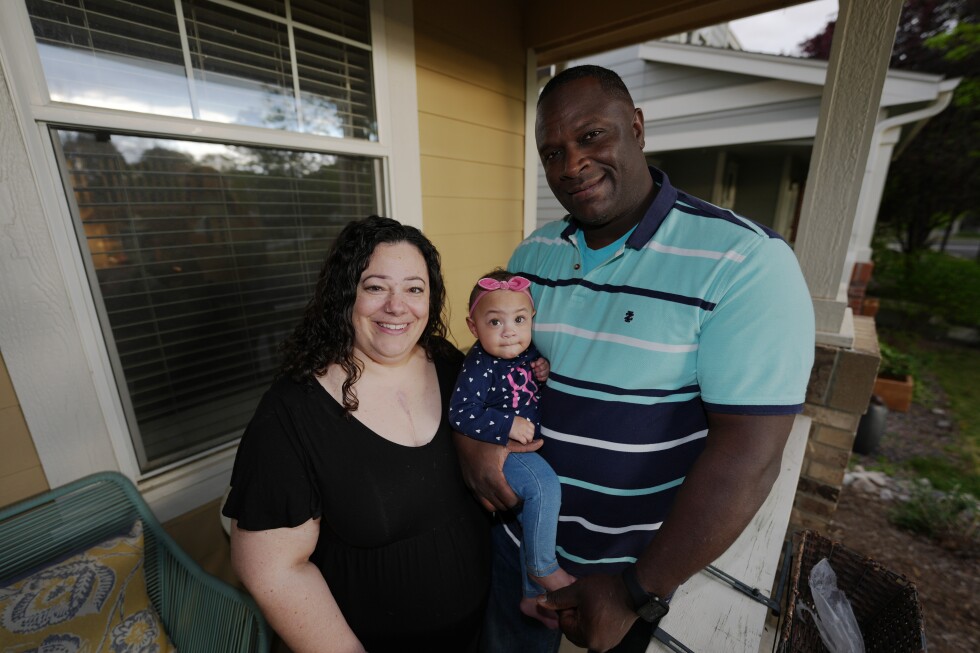
This photo provided by A Better Balance shows Farra Lanzer-White, left and Marlon White giving their daughter Olivia a bath on June 29, 2025 Fort Collins, Co. (A Better Balance via AP)
Advertisement
This photo provided by A Better Balance shows Farra Lanzer-White, left and Marlon White giving their daughter Olivia a bath on June 29, 2025 Fort Collins, Co. (A Better Balance via AP)
Advertisement
Advertisement
Advertisement
In January, seven months after Olivia was born, Colorado became the first U.S. state to adopt paid NICU leave, offering up to 12 weeks for parents with newborns in intensive care on top of the 12 weeks of parental leave under the state’s family and medical leave program. A more modest policy will take effect next month in Illinois, guaranteeing between 10 and 20 days of unpaid leave to NICU parents.
Advertisement
While advocates want more states to adopt NICU leave, a major focus now is galvanizing support for a federal bill to add NICU leave to the Family and Medical Leave Act, the 1993 law that entitles eligible workers nationwide to take unpaid leave for family and medical reasons, said Inimai Chettiar, president of A Better Balance, a nonprofit that advocates for paid leave and other workplace policies in support of families.
“We think it’s promising in terms of bipartisan support, because as we’ve approached people, it seems that they intuitively understand it,” said Chettiar.
U.S. Rep. Brittany Pettersen, a Colorado Democrat who is drafting the federal bill said it would offer up to 12 weeks of NICU leave on top of the 12 weeks of parental leave available under the FMLA.
Push for bipartisan support
The U.S. has no federal law mandating paid family or parental leave, an issue that has long divided Democrats and Republicans. While FMLA leaves out many workers who can’t afford to take unpaid leave, Pettersen said the goal is to win bipartisan support for the idea of NICU leave and bring it to the forefront of discussions surrounding parental leave.
Advertisement
The NICU leave bills passed in Colorado and Illinois offer mixed signals about the potential for bipartisanship. Colorado’s paid leave passed mostly along party lines, while the shorter, unpaid leave adopted in Illinois had overwhelming bipartisan support.
Unlike Colorado, Illinois does not already have a paid family leave program in which it could incorporate NICU leave, said Illinois state Rep. Laura Faver Dias, a Democrat who introduced the bill and whose twin boys were born at 27 weeks in 2014 and stayed intensive care for three months.
Several Republican lawmakers became co-sponsors, including state Rep. Nicole La Ha, whose daughter spent 45 days in the NICU in 2017 after her water broke at almost 30 weeks.
“Unless you have had this experience, you can’t fully understand why something like this is so meaningful,” said La Ha. “You have an infant who is struggling to eat and breathe. The last thing you want to think about is work but unfortunately you have bills to pay.”
Advertisement
While Colorado’s bill lacked bipartisan support, Colorado State Sen. Jeff Bridges said “it was the quietest opposition you could hear,” with few Republicans or business groups publicly speaking against it. Bridges introduced the bill a year after his son Kit was born two months early and weighing just 2 pounds.
“I wanted to share stories that were so moving that the lobbyists would look like monsters if they opposed it,” Bridges said.
A handful of businesses step in
Nearly one out of 10 babies born in the U.S. are admitted to a NICU, according to the most recent figures from the Centers for Disease Control and Prevention.
While in the NICU, newborns are still learning to swallow, breath on their own and regulate their body temperature, said Dr. Karen Puopolo, section chief for Newborn Medicine at Pennsylvania Hospital and chair of the Committee on Fetus and Newborns of the American Academy of Pediatrics. Parental presence has a “multitude of advantages both ways,” Puopolo said. Skin-to-skin contact slows down the baby’s heart beat, improves their breathing and helps the mother with milk production.
Advertisement
In recent years, a smattering of companies have adopted dedicated paid NICU leave, including Morgan Stanley, Pinterest and the organic baby formula company Bobbie, while others have extended the length of parental leave or added policies like caregiving leave, which could also help NICU parents.
But mostly, the plight of NICU parents has been a blind spot, said Sahra Cahoon, executive director Love for Lily, a Colorado-based organization that supports NICU families and advocated for Colorado’s new law.
Cahoon launched the organization after her daughter Lily, born at 24 weeks and five days, died after three-and-a-half months in the NICU. Cahoon, who owned a jewelry-making business at the time, said she worked, believing her daughter would survive.
“It’s probably one of my biggest regrets,” Cahoon said, though at the time she felt lucky to be able to work remotely from the hospital and didn’t feel she could afford to give up her income. “We did not know that our story was going to end that way.”
Advertisement
Feeling unprepared
When Rebeca Herrera-Moreno learned about Colorado’s NICU leave law last year, it brought her back to her son’s time in the NICU six years earlier and she decided to leap into advocacy for a similar provision in her home state of California.
When her son Nico was born at 32 weeks in 2020, Herrera-Moreno was already on disability leave, having entered preterm labor weeks earlier. Her husband, Martin Moreno, was entitled to six weeks of paid parental leave under California law at the time, but they decided he would save that time for when Nico could come home, which ended up being three weeks later.
Advertisement
This 2020 photo provided by Rebeca Herrera-Moreno shows Rebecca Herrera-Moreno, her husband Martin Moreno and their son Nico, in Los Angeles. (Rebeca Herrera-Moreno via AP)
This 2020 photo provided by Rebeca Herrera-Moreno shows Rebecca Herrera-Moreno, her husband Martin Moreno and their son Nico, in Los Angeles. (Rebeca Herrera-Moreno via AP)
Advertisement
Advertisement
Advertisement
This 2020 photo provided by Rebeca Herrera-Moreno shows her with her son, Nico, in Los Angeles. (Rebeca Herrera-Moreno via AP)
Advertisement
This 2020 photo provided by Rebeca Herrera-Moreno shows her with her son, Nico, in Los Angeles. (Rebeca Herrera-Moreno via AP)
Advertisement
Advertisement
Advertisement
This 2020 photo, provided by Rebeca Herrera-Moreno, shows her son, Nico, in Los Angeles. (Rebeca Herrera-Moreno via AP)
Advertisement
This 2020 photo, provided by Rebeca Herrera-Moreno, shows her son, Nico, in Los Angeles. (Rebeca Herrera-Moreno via AP)
Advertisement
Advertisement
Advertisement
She struggled to enjoy moments with her tiny son while holding him surrounded by machines, monitors and nurses. She would say “I love you” every day before leaving him while guilt swelled inside her that she hadn’t developed that feeling yet. Weeks later at home, she opened to up to her husband, Martin Moreno, who confessed that he had felt the same way.
Advertisement
Moreno, a health director for a labor union, said he was consumed at the time with his job, which suddenly intensified as the COVID-19 pandemic swept the country. To this day, his most vivid memory of the period isn’t with his son in the NICU, but of a video he helped produce to show workers how to properly wash their hands.
When he came home, he felt unprepared to care for Nico, who had to be fed on his side to prevent choking. He had been oblivious to his wife’s emotional turmoil.
“I wish I would have had more preparation with the medical staff to really feel like I had everything set. And that’s speaking to the medical piece of it — not even addressing being absent for Becky during so much of this,” Moreno said.
Being present
Nearly 800 people have applied for neonatal care leave since Colorado’s policy took effect in January, according to Tracy Marshall, director of Colorado’s Family and Medical Leave Insurance Division.
Advertisement
Among the first were Chris and Stevie Madden, whose son was born almost eight weeks early on Jan. 11.
Stevie Madden, a mental health professional who had been rushed to the hospital after her blood pressure spiked and she began bleeding, said she panicked about how to handle the crisis and work when she realized she had planned to start her maternity leave much later.
A nurse at the hospital, however, told Chris Madden about the new NICU leave, which they both applied for.
Madden, an oil field mechanic, said he wouldn’t have been able to keep him mind on his risky job while his son was fighting for his life. He said he learned how to handle his baby’s delicate skin — press gently, don’t rub — and gained the confidence he needed when Roczen stopped breathing once after returning home and had to be rushed the hospital.
Advertisement
He told every parent he met at hospital about NICU leave.
“It was life changing not to have to think about money and stress and just be present with your baby,” Madden said.
___ This story has corrected that the woman in the first paragraph lost consciousness during birth, not after, and has corrected the spelling of Rebeca Herrera-Moreno’s first name. ___
The Associated Press’ women in the workforce coverage receives financial support from Pivotal Ventures. AP is solely responsible for all content. Find AP’s standards for working with philanthropies, a list of supporters and funded coverage areas at AP.org.
The UK is home to beautiful coastal towns and villages, but there’s one less than two hours from Cambridge that has been named among the best, thanks to its traditional seaside charm
The UK’s best seaside destinations have been named – and one is less than a two-hour drive from Cambridge.
Advertisement
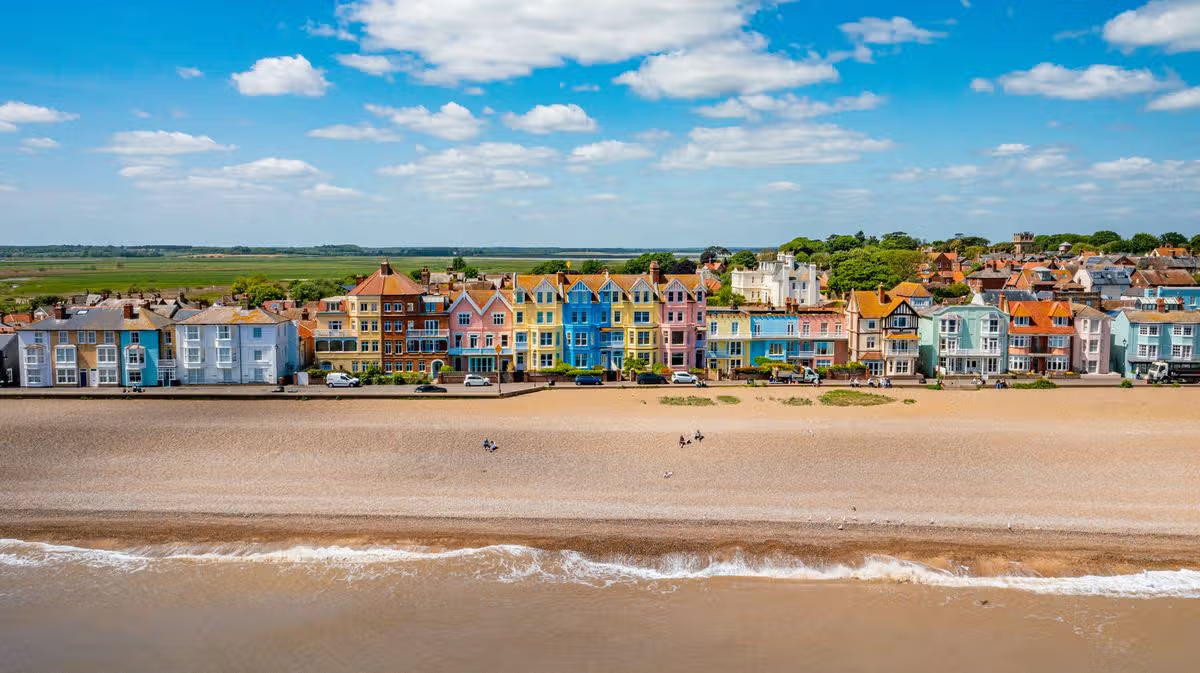
With sweeping expanses of smooth shingle beach and picturesque pastel-coloured Victorian architecture lining the promenade, Aldeburgh has earned recognition as a beloved coastal town. In research by Which?, the East Suffolk seaside destination was highly praised by visitors for its scenery, ambience, food and drink offerings, and shopping scene, all of which earned four stars out of five.
Elsewhere, the survey by Which?, with more than 3,500 people, also ranked Aldeburgh with three stars out of five for its beach, seafront, tourist attractions and value for money. This earned it an overall destination score of 80%, securing its place among the top five UK seaside towns and villages.
Its unspoilt shore is the type of place you’d want to pitch up a striped deck chair for a traditional day out at the beach and to admire its coastal vistas in a typically quieter resort. Adding to the authentic seaside charm, Aldeburgh is renowned for its award-winning fish and chip shops, which encourage visitors to enjoy the British dish ‘The Aldeburgh Way’.
Advertisement
There’s the family-run Aldeburgh Fish & Chip Shop, just a short walk from the beach, that has been open since 1967, serving up chips made from locally sourced potatoes and a selection of fish. Also on Aldeburgh’s High Street is The Golden Galleon, which offers pies and burgers, while The Upper Deck Diner is upstairs for indoor dining.
One happy customer hailed The Golden Galleon and shared on TripAdvisor, “Haddock and chips are the best in Suffolk!” Another noted The Upper Deck Diner for having ‘excellent fish and chips’, writing: “Wonderful fish and chips at a reasonable price, excellent service from the lovely staff.”
Aside from its fish suppers, there are pubs to grab a refreshing pint, inviting cafes and bakeries, and a range of restaurants, including Two Magpies Bakery Aldeburgh, Regatta Restaurant for seafood, Aldeburgh Munchies for a brew and people-watching, and Thai Street Cafe Aldeburgh. Elsewhere on its buzzing high street, there are a plethora of shops, including the independent Aldeburgh Bookshop, the women’s clothing shop, ORLANDO’S, the gift store, Alde River, and local favourite, The Pug And The Pussycat.
Advertisement
Aldeburgh even has some famous links, with former Manchester United footballer and Irish pundit, Roy Keane, said to have called the seaside town home, along with Peter Sinfield, the co-founder and lyricist of the 70s rock band, King Crimson. Benjamin Britten and Peter Pears are also big names in the town, having launched the Aldeburgh Music Club in 1952, while the Aldeburgh Literary Festival remains a major event enjoyed by locals.
Top 30 seaside towns and villages
Bamburgh — 84%
Tynemouth — 82%
St Andrews — 81%
Aldeburgh — 80%
Crail — 80%
Frinton-on-Sea — 80%
Portmeirion — 80%
St Davids — 79%
Bude — 78%
Southwold — 78%
North Berwick — 77%
Plockton — 77%
St Ives — 77%
Swanage — 77%
Lyme Regis — 76%
Lytham St Annes — 76%
Portstewart — 76%
Conwy — 75%
Dornoch — 75%
Filey — 75%
Lynmouth — 75%
Sidmouth — 75%
St Mawes — 75%
Tenby — 75%
Tobermory — 75%
Wells-next-the-Sea — 75%
Whitley Bay — 75%
Broadstairs — 74%
Falmouth — 74%
Llandudno — 74%
Rory Boland, Editor of Which? Travel, said: “The North East has emerged as this year’s favourite seaside spot, a reflection of its outstanding beaches and the fact that holidays here can be fantastic value for money.
“It also shows that there are special seaside towns in every corner of the UK. From Swanage to Plockton, Southwold to Conwy, you’ll have a great time in many of the country’s lesser-known destinations, and should save some money too.
“Whether you’re returning to a much-loved seaside town or discovering a hidden gem, there’s something for everyone.”
Advertisement
Do you have a travel story to share? Email webtravel@reachplc.com
One of the most exclusive beach resorts in Wales received one of the lowest ratings from the consumer body
Consumer body Which? has named what the seaside towns in Wales that are the least highly rated by visitors.
Advertisement
The magazine, which is published by the Consumers’ Association charity, said that Bangor was was the least well-thought-of seaside town in Wales based on its survey of 5,000 people.
Barry Island received the second lowest rating after those quizzed were asked to assess seaside towns on the quality of the beaches, scenery, food and drink, accommodation, tourist attractions, shopping and value for money.
One visitor said Barry Island was “tacky” and only worth visiting if you “love Gavin & Stacey”. Both Barry and Bangor scored more highly than the seaside town Which? rated the worst in the UK. Bognor Regis scored 41% and just one star in most categories. Visitors said it was “tired” and needed “major rejuvenation”.
At the top of the list, the mock Italian tourist village of Portmeirion built by architect Clough Williams-Ellis on the coast of north-west Wales close to Penrhyndeudraeth was the highest rated seaside town in Wales. It was closely followed by St Davids in Pembrokeshire.
Advertisement
Surprisingly, the millionaires playground of Abersoch on the Llyn Peninsula was was one of the lowest-scoring seaside towns in Wales because of its expensive reputation. It scored fourth-lowest coming only narrowly behind north Wales town Colwyn Bay and marginally above the west Wales port of Fishguard.
The lowest-rated seaside towns in Wales by Which?
Bangor – 46%
Barry Island – 54%
Colwyn Bay – 55%
Abersoch – 55%
Fishguard – 56%
One visitor to Barry Island said “Unless you are a big Gavin and Stacey fan I’d give it a miss.” Visitors described the seafront as “a bit tacky”, however the beach scored three stars and one visitor said it is an “old fashioned and lively seaside town, great beaches and interesting walks.”
Abersoch, where beach huts sell for the price of family homes, suffered when people were asked to rate tourist attractions and value for money.
For many years now the coastal town of close to the tip of the Llyn Peninsula has been loved by celebrities including Coleen Rooney and Bradley Cooper, who enjoy its beaches, fine dining and sailing. Homes on the exclusive Benar Headland sell for upwards of £1m and it has been compared to Sandbanks in Dorset.
One contributor said: ”Abersoch is very expensive. It’s a millionaires’ playground. Having said that, it’s a nice place to visit, people-watch, and spend lots of money. Good walking, sailing and nice beach.”
Advertisement
Another said: “‘Abersoch is extremely expensive because of all the people flocking in from the wealthy areas of Cheshire and Merseyside. The beaches are so quiet even at the height of the season because they are so big. Views are magnificent. Food expensive but good’
Fisghuard, which also scored poorly is a favourite of WalesOnline travel reporter, Portia Jones, who says it’s home to one of the best cafes in Wales, as well as top ranked bakers.
The highest-rated seaside towns in Wales
Portmeirion – 80%
St Davids – 79%
Conwy – 75%
Tenby – 75%
Llandudno – 74%
Portmeirion achieved 80% scoring highly on tourist attractions, scenery and its seafront.
St Davids in Pembrokeshire was valued it for its scenery and tourist attractions.
Advertisement
Bamburgh in Northumberland took the top spot in Which?’s survey for the sixth year running. With an overall destination score of 84 per cent, Bamburgh was given five stars for its beach, seafront and scenery. Visitors praised the “lovely beach overlooking Bamburgh Castle” and the “spectacular coastal scenery.”
In the survey, many popular seaside towns had middling scores. Despite their reputation as trendy destinations, Margate (53%) and Newquay (55%) received just one star for peace and quiet and two stars for value for money.
Rory Boland, Editor of Which? Travel said:“The North East has emerged as this year’s favourite seaside spot, a reflection of its outstanding beaches and the fact that holidays here can be fantastic value for money.
“It also shows that there are special seaside towns in every corner of the UK. From Swanage to Plockton, Southwold to Conwy, you’ll have a great time in many of the country’s lesser-known destinations, and should save some money too.
Advertisement
“Whether you’re returning to a much-loved seaside town or discovering a hidden gem, there’s something for everyone.”
After weeks on hold, deal between Israel and Lebanon is progressing, says US official
Harriette Boucher10 July 2026 01:03
Israel tells US of new plot to kill Trump: report
Israel has shared intelligence with the US that it said indicates a new plot to kill President Donald Trump, people familiar with the matter told The Wall Street Journal.
Advertisement
Trump has had a target on his back ever since he launched an airstrike that killed Qassem Soleimani, commander of the elite Quds Force with Iran’s Revolutionary Guards Corps, during his first term.
As hostilities with Iran resumed, Trump told reporters, “I’m No. 1 on the list for killing”.
The Independent has reached out to the Israeli embassy in Washington, D.C., and the White House for comment.
Rachel Dobkin10 July 2026 00:39
Advertisement
Fox News host says Rubio needs to ‘take the lead’ in Iran negotiations
Fox News host Brian Kilmeade has said US Secretary of State Rubio needs to “take the lead” in negotiations with Iran.
Kilmeade suggested sidelining US envoys Jared Kushner, President Donald Trump’s son-in-law, and Steve Witkoff.
“I don’t think that Witkoff and Kushner should be the ones doing this. They’re business guys. They have not been effective in Ukraine, not been effective in Gaza. They have not been effective in this”, the TV host said.
Advertisement
“We have a State Department for a reason”, he added. “Marco Rubio, even Democrats admit, has been looked at as a genius, internationally…he should take the lead on this. Because you can’t do this like a business deal. You have to understand the history of the region and how distrustful the Iranians have been”.
Rachel Dobkin10 July 2026 00:17
US military ‘fact checks’ Iran’s claim that it controls Strait of Hormuz
The US military has issued a “fact check” on Iran’s claims that it controls the Strait of Hormuz.
Advertisement
“Iranian state media claims that transit through the Strait of Hormuz is only permitted through routes designated by Iran”, US Central Command wrote on X.
CENTCOM then refuted the claim.
“Iran does not control the Strait of Hormuz. Since early May, U.S. forces have helped facilitate the successful transit of more than 800 commercial vessels and 380 million barrels of crude oil through the vital international trade corridor,” the US military wrote.
Rachel Dobkin10 July 2026 00:03
Advertisement
US still determined to reach resolution with Iran
The US is still engaging in technical talks with Iran and is committed to finding a resolution, an official has said.
A US official reiterated its oft-stated vow that Iran will not have a nuclear weapon, telling CNN: “The United States is still committed to finding a resolution, and technical talks continue. Iran can never possess a nuclear weapon,” the official said.
They added that the memorandum of understanding is “performance-based,” and Iran’s actions “constitute failed performance at an unacceptable level.
Advertisement
“Iran’s attacks on these innocent vessels are acts of terrorism.”
Harriette Boucher9 July 2026 23:39
Watch: US forces strike 90 military targets along Iran’s coastline
US forces strike 90 military targets along Iran’s coastline
Harriette Boucher9 July 2026 23:22
Advertisement
Trump floats US troop removal in Europe over Iran and Greenland tensions
(Getty)
Speaking to reporters on Wednesday, President Trump suggested the US might realign or pull back US troops in response to his frustrations over European leaders’ handling of the Greenland and Iran crises.
The Republican said “a lot’s going to depend on Greenland,” the Nato ally the US has been pushing to take over despite firm protests from Denmark and numerous other European nations.
Trump also claimed “a lot’s dependent on Iran”, reiterating his regular criticisms that Europe didn’t do enough to support the original US war effort.
Advertisement
“When they had a chance, an opportunity to help, they chose not to”, the president said. “But we’re sort of forgetting about that”.
Josh Marcus9 July 2026 23:00
Technical talks with Iran continue, US official says
A US official said on Thursday that Washington is still committed to finding a resolution with Iran and that technical talks were continuing.
Advertisement
Harriette Boucher9 July 2026 22:43
Netanyahu and Trump agree to continue coordination in phone call
Benjamin Netanyahu and Donald Trump held a call on Thursday and agreed to continue coordination between their countries on various fronts.
“As part of the continuous contact between prime minister Benjamin Netanyahu and US president Donald Trump, an additional conversation took place this evening between the two, during which the continued coordination between the countries in various sectors was established,” a statement from the Israeli prime minister’s office said.
Advertisement
It added that president Trump updated Netanyahu on “American moves in the Gulf.
“The prime minister, on his part, raised the severity of the statements made by Turkish president Recep Tayyip Erdogan and his people against the existence of the state of Israel, as well as the need for security zones along Israel’s borders.”
Harriette Boucher9 July 2026 22:15
Advertisement
Oil tanker traffic through Hormuz at near standstill as attacks strain Iran truce
Oil tanker traffic through the Strait of Hormuz was at a near standstill on Thursday, according to data and sources, as shipping risks escalated after the U.S. renewed airstrikes on Iran, triggering retaliation by Tehran in the Gulf.
Just two tankers had so far sailed through the strait in the early hours of Thursday. They included the crude supertanker Berg 1, which had loaded at Iran’s Kharg Island and is subject to U.S. sanctions, according to analysis from Kpler.
Ships gather outside strait on Thursday morning (MarineTraffic)
The Marshall Islands-flagged chemical tanker Well Sail, also transited the strait, Kpler analysis showed. Its previous loading destination was near Sharjah in the United Arab Emirates, according to LSEG ship tracking data.
Shipping industry sources said vessels were increasingly switching off their public AIS tracking transponders, making it harder to see all of the ships crossing.
With former defence minister Al Carns confirming he will not contest the Labour leadership, a coronation for Andy Burnham is all but guaranteed.
That will mean no clash of ideas, no test of mettle, no televised debate. For a man so thoroughly convinced he is uniquely placed to lead the Labour Party and the country to sunnier days, the outgoing Manchester mayor seems oddly averse to scrutiny.
He’ll write the odd opinion piece for a national newspaper and even entertain a Q&A with Reddit, the Left-leaning online forum (only answering the questions he wants), but a one-on-one telly grilling from the legendary broadcaster and Daily Mail columnist Andrew Neil these are not.
A leader as confident in his abilities as Burnham would surely relish the opportunity to press his Left-wing case in a leadership contest against some Blairite holdout, to debunk their policy proposals as Tory-lite and put forward prescriptions of his own.
Advertisement
He could place before the membership two sharply contrasting visions for their party and win their endorsement for his vision so emphatically that his internal opponents are forced to fall in line or at least scale back any efforts to undermine him.
If Burnham is the saviour he believes himself to be, it is in his interests to have a competition rather than a coronation.
Why, then, is he snatching at the crown? Given the ideological make-up of the Labour Party membership, there would be little risk of defeat were he to face a centrist rival.
The risk would be to the ego of a man who reeks of entitlement and seems to regard being Prime Minister as his destiny. That Burnham is this hostile to scrutiny while he loiters on the doorstep of No 10 does not bode well for his temperament once inside. The Labour Party will come to regret installing an untested leader in these most testing of times.
Advertisement
A leader as confident in his abilities as Burnham would surely relish the opportunity to press his Left-wing case in a leadership contest against some Blairite holdout, argues Stephen Daisley
The only voters given a say have been his constituents in the Makerfield by-election, and that in a part of the country very friendly to Labour. Such is the way of it with our constitution; neither a general election nor a leadership poll is required to change Prime Minister.
However, after a decade of ever-changing premiers, it is plain that some form of contest is advisable, if only to give the voters an opportunity to hear from their new Prime Minister and see what he’s all about.
Advertisement
When Liz Truss stood to replace Boris Johnson in 2022, there was a genuine contest thanks to the candidacy of Rishi Sunak. The pair debated, claimed, counter-claimed and squirmed through difficult questions about their intentions, and while the membership initially went with Truss, a bruising contest meant that when her tenure ended in catastrophe, there was a successor ready and waiting whom the country felt had been sufficiently tested.
Burnham’s unwillingness to submit himself to the most cursory democratic examination bodes ill. For the man himself, it means he will enter Downing Street without a popular mandate. When times get tough, and they will, he will not be able to fall back on this democratic endorsement.
He won’t be able to keep internal foes at bay by reminding them that the membership chose him. In declining to submit himself to a contest, he is implicitly admitting that a contest might return someone else as leader. That possibility will be chum in the water should his government get off to a rocky start.
Earning the job brings legitimacy but it also buys a level of protection from those around the Cabinet table who would do to him what he has done to Keir Starmer. Burnham is denying himself that protection.
Advertisement
Of course, he is only getting his coronation because the Labour Party is allowing him one. Without intending it, Labour is telling the country not that Burnham is the best man for the job but that he’s the only one they’re willing to countenance. What does it say about the party of government, an outfit which secured a landslide two years ago, that it cannot field a single alternative leader to a city mayor.
If their aim is to conceal tensions within the party, Burnham’s premiership might well thrust these divisions into the foreground.
Among the various reasons why Starmer failed so dismally is that, no matter what they promise, Labour governments always spend more.
Starmer arrived in No 10 to find there was little in the way of fiscal headroom. Without a significant cut in spending or increase in taxes, there would be no money to lavish on those items Labour MPs prioritise.
Advertisement
This is why Starmer first attempted to slash welfare expenditure, only to be trounced by indignant backbenchers. Burnham will now confront the same benefits bill, the same backbenchers – and the same sense that the Government is adrift and without direction.
The pressure will build and the momentum will grow for a fresh direction – another one – and Burnham will be denied an appeal to his mandate among party members.
Finally, and most importantly, a coronation does real damage to the country. Britain is facing a decline far steeper than anything seen in the 1970s.
Sluggish growth, uncontrolled immigration, compromised defences, runaway spending, the threat of separatism in Scotland and Wales, and the growth in Islamic extremism and other domestic security concerns – the scale of challenges the next prime minister must overcome is daunting.
Advertisement
Spurning a genuine competition of ideas in favour of bestowing the crown on a chippy, arrogant regional politician just because he wants it now and is willing to scream and scream to get it is a fatal mistake of national consequence.
It means gambling everything, including Britain’s future, on Burnham being as good as he tells everyone he is.
This is a not terribly impressive New Labour frontbencher who has lost every competitive leadership poll he has stood in, a self-styled political messiah whose only miracle has been spreading cash and sentimentalism across his own backyard.
Few men on the cusp of No 10 have been so shielded from the most basic assessments of competence and fortitude.
Advertisement
Should Burnham prove to be a dud, and he’s given us no grounds to suppose otherwise, it will mean yet another failed Prime Minister, more wasted years.
Britain cannot afford many more of these. This nation is in desperate need of a leader, but instead is being made to settle for another self-promoting member of the Westminster establishment. A lanyardista is a lanyardista, even if he likes pie’n’gravy and has spent time north of Luton.
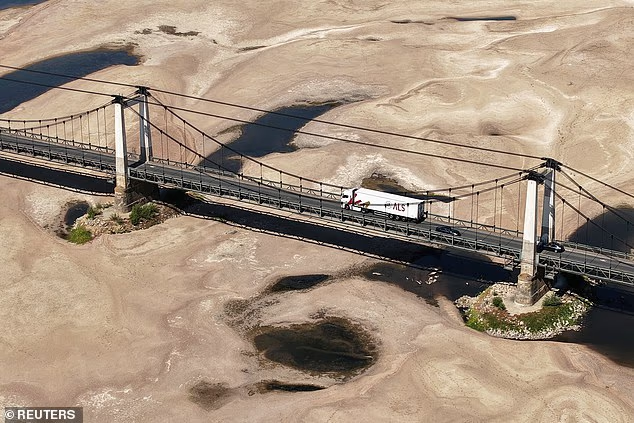
The dry river, which is 625 miles long, has been transformed into a desert-like landscape with only stagnant puddles that remain.
The Doubs River in the Maisons-du-Bois-Lièvremont commune is also devoid of water as a result of the blistering conditions.
Advertisement
The extreme temperatures have shut schools, knocked out power to tens of thousands of households and has claimed more than 2,000 lives across the country.
Water reserves have been destroyed by the soaring temperatures and almost a dozen departments had at least one commune under the highest ‘crisis’ level for tap water.
Households have been advised to restrict their water use and avoid watering plants, washing cars and filling private swimming pools.
Last month was also the second-warmest June globally, and the planet experienced the highest June sea surface temperatures since records began, the EU’s Copernicus Climate Change Service (C3S) said in a monthly bulletin.
Advertisement
Drought conditions are worsening in France as shocking images from today show a completely barren Loire River in Montjean-sur-Loire
A drone view shows a bridge with sandbanks of a branch of France’s longest river
The Doubs River in the Maisons-du-Bois-Lièvremont commune is also devoid of water as a result of the soaring heat (pictured on Thursday)
Advertisement
The average temperature in Western Europe last month was 20.74 degrees Celsius (69.3 degrees Fahrenheit), more than 3C above the average for June during 1991-2020, the data showed.
It comes as ‘catastrophic’ wildfires ravaged Southern France on Monday, while poisonous clouds swept through Greece and Costa Brava in Spain was put on alert as temperatures across Europe are predicted to reach 40C.
In southwestern France near the city of Perpignan, 700 firefighters backed by special aircraft battled to control a ‘gigantic’ blaze spreading in a hard-to-reach remote area, with more than 10,000 local residents evacuated.
Fanned by wind, intense heat and exceptionally dry air, the fire has nearly tripled in size since early Sunday, devouring 4,600 hectares and leaving a firefighter and a resident injured, local authorities said.
The extreme weather is being driven by a persistent pattern that traps hot air over the region for days, allowing temperatures to keep rising. Scientists say such events are being intensified by global warming.
‘Climate change is here, we are living the consequences and it is only the start of July,’ said French fire service Colonel Eric Belgioino as he appealed to people near the Pyrenees inferno to take precautions to avoid starting fires.
Advertisement
‘The season is going to be long for the soldiers fighting fires. You have to help us,’ he pleaded.
‘June 2026 underscored how profoundly the climate is changing,’ said Samantha Burgess, strategic lead at the European Centre for Medium-Range Weather Forecasts.
‘The result is increasingly intense heatwaves, a persistently warm ocean, and growing risks for people, ecosystems and infrastructure across Europe and beyond.’
Advertisement
The Loire River pictured just days before on Saturday, though the water levels were considered very low
Advertisement
A farmer stood in his field of dried out corn crops today as the heatwave hit Saint-Dolays in north-western France
A wildfire burning in the Aspres region seen from Millas, in the Pyrenees-Orientales department, southern France on July 5
People cooled off in the Trocadero Fountain near to the Eiffel Tower on June 24
National authorities reported more than 4,700 excess deaths in France, Belgium, Spain and the Netherlands during the June heatwave – with the total across other countries likely to be higher – while the intense heat also fueled wildfires in Iberia and France and exacerbated drought conditions.
Advertisement
Greenhouse gas emissions, mostly from burning coal, oil and gas, have increased the planet’s average temperature to around 1.4 C above pre-industrial times in the 19th century, according to the World Meteorological Organization.
That higher baseline means temperatures can now hit higher peaks during heatwaves.
‘The relationship between heatwaves and global warming is about as straightforward as it gets: on a hotter planet, there will be more heatwaves, and they will become more intense,’ said Joeri Rogelj, a climate scientist at Imperial College London.
Meteorologists say the system is creating a so‑called ‘heat dome,’ trapping hot air over western and central Europe and allowing temperatures to build day after day.
The freak Saharan heat dome is causing chaos across the rest of Europe including in Germany, the Netherlands, Belgium, Italy and in Spain where at least 212 died in three days.
Globally, C3S said other factors were at play in driving sea surface temperatures to a record high for June – including the development of a strong El Niño weather pattern in the Pacific Ocean.
C3S’s temperature records go back to 1940, and are cross-checked with global temperature records dating back to 1850.
“A number of people were involved, they know who they are and they are going to have to live with that for the rest of their lives.”
The murder of a man at an Eleventh Night bonfire in Co Antrim has had a “devastating effect” on his family police say as they continue their hunt for the culprits 26 years on.
Advertisement
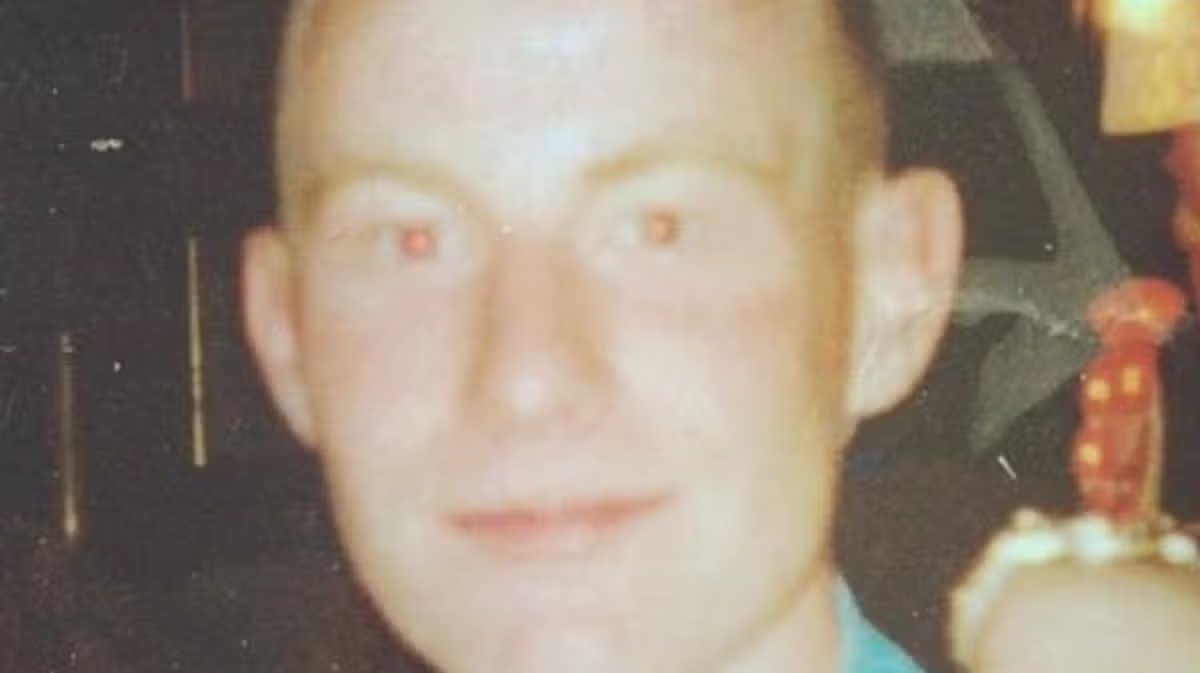
Detectives from Legacy Investigation Branch are appealing for information on the 26th anniversary of the murder of Andrew Cairns in Larne on 12 July 2000.
The 22-year-old was attending a bonfire at Boyne Square in Larne on 11 July ahead of the annual Twelfth of July celebrations when he was attacked and shot by a group of men in the vicinity of Greenland Drive. Andrew was taken to the nearby Moyle Hospital but died in the early hours of 12 July as a result of a single gunshot wound to his head.
A PSNI spokesperson said: “Andrew became involved in an altercation with a number of men at the Rangers Supporters Club while attending an Eleventh Night bonfire. This altercation became violent and Andrew was viciously beaten by up to ten men close to the bonfire before being shot.
“After Andrew was shot a number of the men continued to kick Andrew as he lay on the ground. All of his attackers then made off on foot. One of those involved was driven away from the scene in a red coloured Vauxhall Calibra car.
Advertisement
“This was a vicious attack on a young man who was out enjoying the evening. Even more so as it took place in full view of several hundred people who were attending the bonfire, including many young children.
“While a number of people were arrested as part of the original investigation and found guilty of offences linked to Andrew’s murder no one has been convicted for his murder. Andrew’s family deserve justice and answers to what happened to Andrew that night. ”
The officer added: “I am appealing to anyone who was at the bonfire that evening either before or after the murder; Did you witness any altercation before the attack on Andrew? Did you see the men attack Andrew? Did you observe anyone else involved in this attack? Do you know who these individuals were? Did you see them make good their escape after the attack?
“26 years have now passed since Andrew’s murder. A number of people were involved, they know who they are and they are going to have to live with that for the rest of their lives.
Advertisement
“I would appeal directly to them to think about the devastating effect this has had, and continues to have, on Andrew’s family and to come forward and make themselves known to police.”
Anyone with information, no matter how small, can contact detectives in Legacy Investigation Branch on 101, Extension 67258 or L&DSec@psni.police.uk quoting reference RM05001334. You can also submit a report online using our witness appeals form via https://reporting.psni.police.uk/appeals. Alternatively, call Crimestoppers anonymously on 0800 555 111 or online at http://crimestoppers-uk.org/.
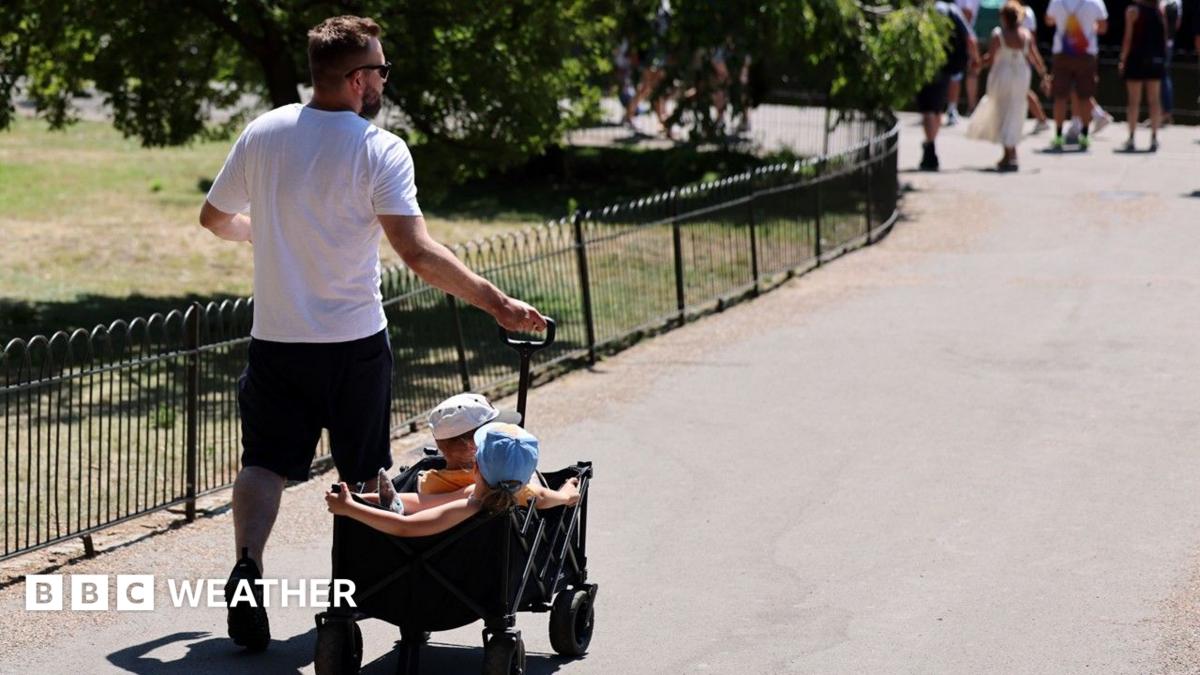
The current heatwave is not expected to break any daily temperature records, however, on Thursday the Met Office announced there have been eight days in 2026 where the heat has reached or exceeded 34C.
There were two in the May heatwave, four in June’s and so far two in this one, which is a record for the calendar year, surpassing 1976 and 2020. A further 34C plus reading is anticipated on Friday.
Wales also recorded its hottest June day with 35.9C in Cardiff, while Northern Ireland equalled its June record with 30.8C in Castlederg, County Tyrone.
Advertisement
Scotland fell just slightly short of hitting its all-time June record which was 32.2C set in 1893. In June its top temperature was 31.2C at Threave, in Dumfries and Galloway.
In this July heatwave the highest temperature so far this time has been 35.5C at Wisley in Surrey, on Thursday.
Although temperatures will drop off a little into the weekend, many places will still reach the official heatwave thresholds through much of next week.
People may be drawing comparisons with 1976, where the UK saw 16 consecutive days above 30C, but this record is not likely to be broken.
Advertisement
The highest temperature recorded in the UK was during the unprecedented heatwave of 2022, when an astonishing 40.3C was recorded in Coningsby, Lincolnshire.
To people, salt is a kitchen staple. But to crops, too much of it can be devastating.
Across coastal regions and irrigated agricultural land, salt is accumulating in soils, making it harder for plants to absorb water and reducing harvests. Scientists estimate that around half
of the world’s irrigated farmland is now affected by salinity to some degree.
The problem is only expected to grow. Rising sea levels can push saltwater into coastal farmland, while changing rainfall patterns and more frequent droughts are increasing reliance on irrigation. Poor-quality irrigation water and the overuse of fertilisers can worsen the problem, leaving salts behind in the soil year after year.
This is an issue because the global population is expected to approach 10 billion by the middle of the century, while demand for food continues to rise. Finding ways to grow crops in increasingly difficult conditions is becoming one of agriculture’s biggest challenges.
Advertisement
But plants are not passive victims. Beneath the surface, their roots are engaged in a constant battle with their environment. They sense danger, adapt their growth and deploy sophisticated strategies to survive.
Underground intelligence network
Roots do far more than anchor plants in the ground. They are the plant’s frontline, constantly gathering information about the soil around them. Every day, roots assess water availability, nutrient levels and environmental threats. When salt levels begin to rise, they are the first part of the plant to detect the change.
For plants, excess salt creates a double challenge. First, it makes it harder to draw water from the soil, almost as if the plant is trying to drink through a blocked straw. Second, sodium can build up inside tissues, damaging cells and interfering with essential biological processes.
Roots can detect these changes remarkably quickly. As salt concentrations increase, cells in the root begin sending warning signals through the plant. These signals trigger a cascade of responses, including shifts in hormone levels and the activation of emergency survival mechanisms designed to protect growth.
One of the most remarkable things about roots is their flexibility. Unlike the branches above ground, roots can continually reshape themselves in response to changing conditions. Faced with salty soil, they may alter how deeply they grow, how many side branches they produce and even the direction they travel.
In effect, roots can steer themselves away from trouble. Research has shown that plants can bend roots away from highly saline patches of soil while continuing to search for water and nutrients elsewhere. Growth may slow in certain areas, helping the plant avoid pushing vulnerable new tissues into harmful conditions.
This hidden reshaping of the root system can make a difference to the chances of survival. By avoiding the saltiest parts of the soil, plants can reduce the amount of sodium they absorb while continuing to access the resources they need.
At the same time, roots are working to control any salt that does enter the plant. Excess sodium is dangerous because it can damage proteins and cell membranes. To prevent this, root cells actively move sodium into storage compartments where it can do less harm, or pump it back into the surrounding soil.
Advertisement
The result is a carefully managed balancing act that helps protect the more sensitive tissues above ground.
Can plants ‘remember’ stress?
Perhaps the most surprising area of research is the idea that plants may be able to learn from experience. Scientists are increasingly finding evidence that previous exposure to environmental stress can influence how plants respond in the future. In crops such as rice, for example, plants that have encountered salt before can sometimes cope better when exposed to it again.
Rather than involving memory in the human sense, these experiences appear to leave lasting chemical marks on DNA and associated structures within cells. These marks can influence which genes are switched on or off when stress returns, allowing plants to respond more quickly or effectively.
Similar effects have been observed in responses to heat and drought stress. It suggests that plants may possess a surprisingly sophisticated ability to prepare for future challenges.
Some studies even suggest that aspects of these stress responses could be passed to the next generation, potentially helping offspring cope better with harsh environments. While many questions remain unanswered, the possibility that plants can retain and pass on information about past stresses is opening up an exciting new area of research.
But what does this mean for future food supplies? As salt levels in soil increase, crops face mounting pressure. Salinity can stunt growth, reduce yields and leave plants less able to cope with other challenges such as drought and extreme heat. In reality, these stresses often arrive together. That’s why understanding roots has become such an important scientific priority.
The better researchers understand how roots detect, avoid and tolerate salt, the better equipped breeders will be to develop crops that can thrive in difficult conditions. By identifying the root traits that help plants survive saline environments, scientists may be able to breed or engineer varieties capable of maintaining yields on land that would otherwise become less productive.
Advertisement
Much of this battle is invisible, unfolding centimetres below our feet. But the decisions that roots make underground could have profound consequences above ground. In a future where climate change is making agriculture increasingly unpredictable, the key to protecting food supplies may lie in understanding how plants wage their quiet war against salt.
Playing to an audience restricted to those with a Bolton postcode and in aid of Bolton Hospice, he delighted the packed hall.
David Pye, who was one of the lucky ones to have got a ticket said: “It was so good to see Peter back where it all began in his home town to a crowd made up of fellow Boltonians – and he didn’t disappoint.
“After announcing it was his first time back performing at The Albert Halls for 22 years, the first half of his show had a distinctly local feel.
Advertisement
“For anyone who has seen his latest show on his record-breaking tour, the first part of this show was different and without wanted to spoil it for anyone going, it takes a trip down a local Memory Lane.
“I have seen Peter loads of times, from big arenas to intimate warm-up shows and conversation fundraisers and this was as funny as ever. Peter was on top form on home turf.”
And even The Bolton News and local gets a mention as part of the act!
Those with tickets can book a Phoenix Nights themed meal at The Albert beforehand.
Advertisement
The Albert Halls is a venue he last performed at in 2003, recording the iconic Peter Kay: Live at the Bolton Albert Halls, which to this day is the biggest-selling stand-up DVD of all time in the UK.
And for those who are going to see the comic, you will be in for a treat as no one other than Boltonians would really get it.
Last year he appeared with fellow Boltonian Sara Cox at The Lowry Theatre for an ‘in conversation with’ and that was again for Bolton Hospice and also The Crescent Foodbank.













































You must be logged in to post a comment Login