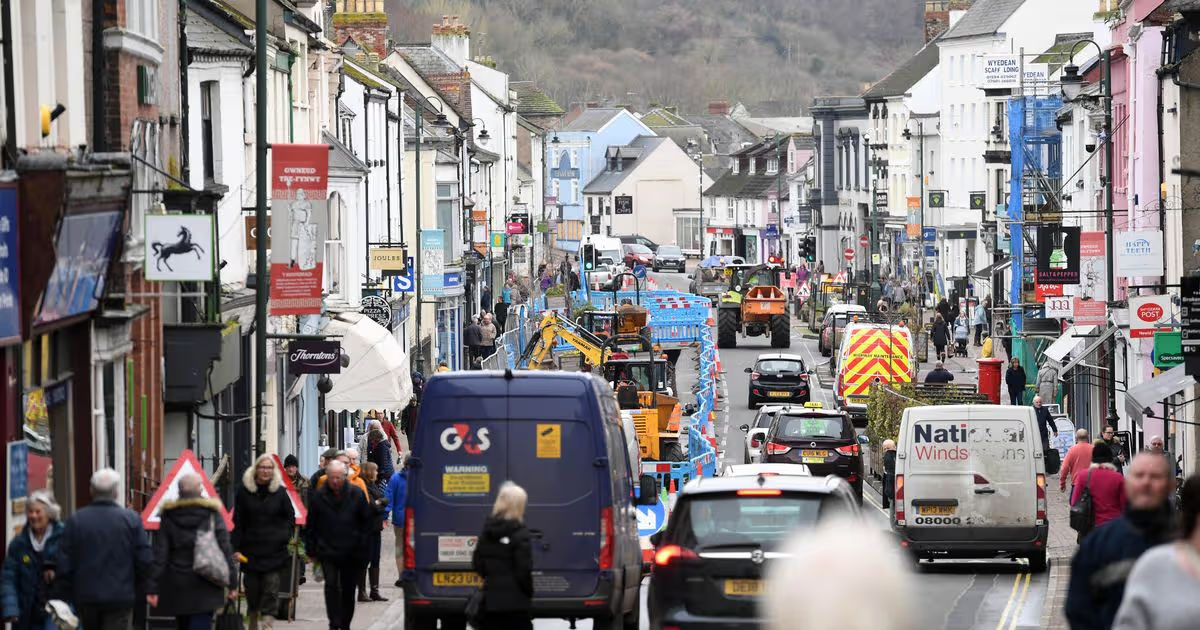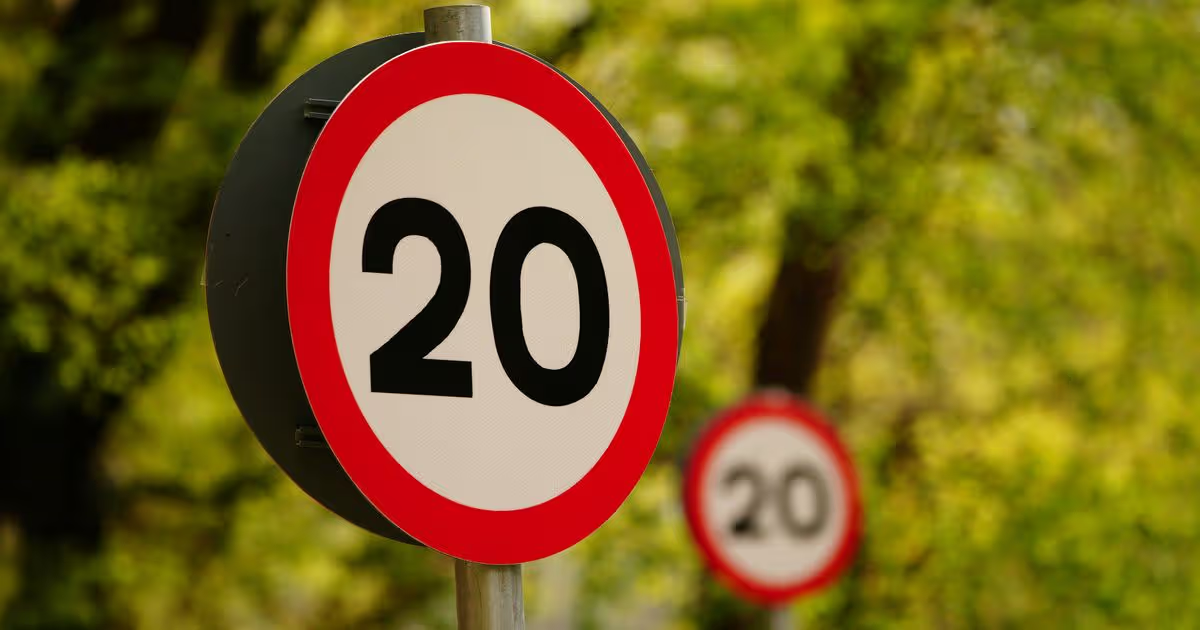
Supporters of the plans for a 20mph zone in Swavesey said the lower limits will make the village safer, but others questioned whether the limits will be followed.
A new 20mph zone is proposed in a village facing “nightmare traffic” where some claim speeding drivers can travel at 60/70mph on a 30mph road. Cambridgeshire County Council is considering implementing 20mph speed limits on most residential roads in Swavesey, with the exception of several more lightly-built up roads.
The county council said the lower speed limits could encourage drivers to slow down to improve road safety. A short extension of the 30mph speed limit in Rose and Crown Road is also proposed, as well as a 40mph buffer limit in Boxworth End.
Several other measures are proposed to cut the speed of drivers in the village. These include a priority give-way narrowing, with kerb build-out and cycle bypass in Boxworth End and Ramper Road, and “visual road narrowings” at two locations in Boxworth End.
The county council said proposals would be paid for from developer contributions from Northstowe, which had been provided to install traffic measures in neighbouring villages, such as Swavesey, to mitigate against increased traffic.
A statutory consultation was held by the county council to gather views on the plans, with 27 respondents objecting, 16 offering support, and two sharing neutral views. Some of those who shared support for the plans highlighted concerns about the extent of existing speeding issues they said the village is facing.
One supporter said: “This scheme is drastically needed to slow traffic down through the village, particularly at the part of Boxworth End that straightens out and cars are able to speed up, rarely sticking to 30mph. In some cases it has been recorded nearer 60/70mph.”
Another supporter said they had also seen drivers travelling at high speeds through the village. They said: “Some cars are travelling so fast along Boxworth End that it is impossible to even decipher what type of car they are driving. Some cars are exceeding 60mph and somebody will get killed if this is not sorted out.”
Another person said the traffic in the village is a “nightmare” and that they believed 20mph speed limits would make the area safer.
’20mph speed limits won’t stop speeding drivers’
Objectors questioned whether drivers will follow the proposed lower speed limits. One objector said: “20mph speed limit will do very little to deter people who will compulsively speed, no matter what the speed limit is. It will only serve to add to journey times for those of us who live near the Guided Busway end of the village and require access to the A14.”
Another objector also argued that the 20mph limits would “not stop speeders if they are already breaking 30mph and 40mph limits”. Concerns were also raised about some of the physical measures proposed to slow traffic.
Some objectors raised concerns that lane restrictions could “cause unnecessary traffic build up”. One objector said: “I feel that the proposed traffic calming measures will create more problems than solutions. It will create unnecessary congestion during peak hours. Most people abide by the speed limit, so it feels unnecessary to impose these restrictions.”
Cambridgeshire Constabulary said the force had no objection to the plans, but raised concerns about compliance with the proposed lower speed limits on some roads in particular. These included the High Street, School Lane, Fen Drayton Road, and Middle Watch.
The county council report acknowledged the concerns, recognising that the roads highlighted by the force are “relatively straight, wide, have more through-traffic importance and less on-street parking”.
However, they said the county council’s policy is to encourage 20mph speed limits to be implemented on a “zonal basis”, and that removing individual roads is “generally not recommended” as it had “practical implications”, including extra signage being needed.
The report added that if there is evidence of drivers not following the lower speed limits, additional measures could be considered to slow traffic. The report said: “The traffic calming measures have been designed to lower speeds on specific lengths of road where current traffic speeds are relatively high.
“They have been designed to avoid any undue inconvenience to residents, for example, the features will not prevent access to adjacent driveways. Only two give-way priority narrowings are proposed, so they are unlikely to create any widespread congestion or traffic jams.
“It is acknowledged that opinions vary on 20mph speed limits. In the case of Swavesey, there appears to be some opposition to a village-wide 20mph limit. However, the recent statutory process and the earlier parish council engagement exercises suggest that there is also a reasonable level of local support.
“Traffic calming and lower speed limit can have a secondary benefit of encouraging drivers to select an alternative route, which may be more appropriate. In summary, 20mph limits are widely used to encourage drivers to travel at lower speeds, particularly in residential areas where it is common for more vulnerable road users to be present.
“In addition, there are likely to be higher numbers of pedestrians and cyclists, who will feel safer and more confident if motorised vehicles are travelling at reduced speeds.
“20mph speed limits represent a relatively cost-effective way to improve road safety and encourage more sustainable modes of transport. Consequently, it is recommended that the proposed 20mph speed limit for Swavesey be implemented.”
A decision on whether to implement the 20mph zone and traffic calming measures is due to be made on February 25.
To get more breaking news and top stories delivered directly to your phone, join our new WhatsApp community. Click this link to receive your daily dose of CambridgeshireLive content.
We also treat our community members to special offers, promotions, and adverts from us and our partners. If you don’t like our community, you can check out any time you like. If you’re curious, you can read our Privacy Notice .