Officials have confirmed the device, identified as a 250kg German SC250, will be detonated in situ.
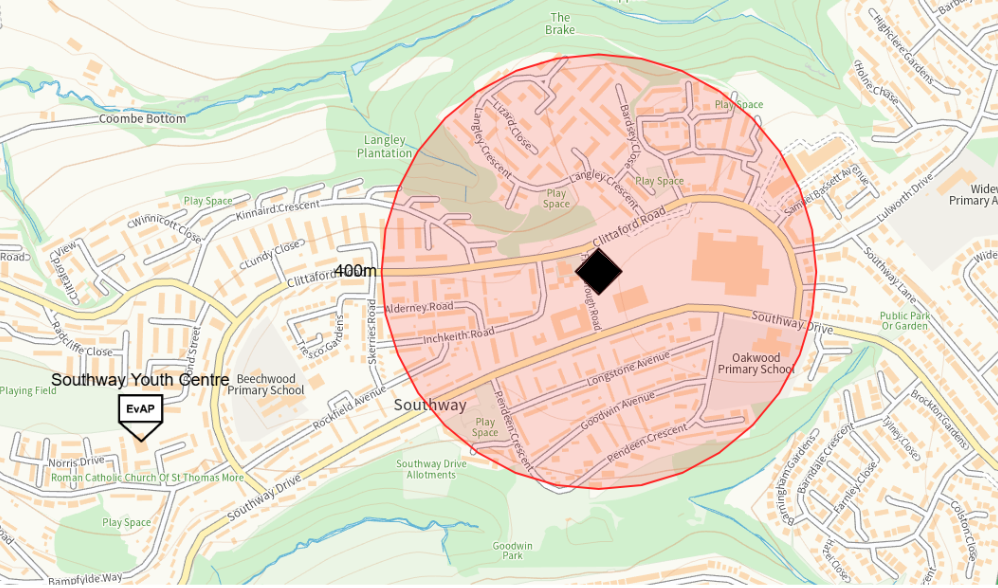
The discovery in Flamborough Road, Southway, led to a 400-metre cordon, with military experts concluding the device cannot be safely moved.
“Royal Navy and Army unexploded ordnance specialists have now completed a rigorous and detailed assessment of the device,” a council spokesman said.
Advertisement
“They have advised that it is not possible to safely remove it.
“The only safe option is to make the device safe in situ, which will involve a controlled detonation.
“This is planned to take place on Friday, once all safety measures are fully in place.”
The council said specialists were building a “sand mitigation structure” to reduce the impact of the blast.
Advertisement
“You will not be able to see the detonation and people are asked to stay well away from the area,” the spokesman said.
“A no-fly zone is also in place – drones are not permitted.”
Royal Navy UXO experts said the WWII device is a historic German SC250 – a 250kg air-dropped weapon (Plymouth City Council)
The 400-metre cordon remains in place and residents will not be able to return home until the device has been made safe.
Southway Youth and Community Centre has been opened for use by evacuated residents.
Since it opened more than 50 residents have been helped and 25 households placed in temporary accommodation.
Advertisement
Oakwood Primary School, Little Acorns Pre-School and Beechwood Primary School will remain closed on Friday.
Colonel Nick Handy, from 8 Engineer Brigade, said the condition of the fuses in the bomb made it impossible to move it safely.
“Unfortunately we cannot get a definitive X-ray of the second fuse and therefore it is not safe to move that item,” Col Handy said.
“We are going to blow it in situ.
Advertisement
“When I say blow it in situ, we are going to try our hardest to deflagrate that item and burn it inside of a structure which will limit the damage to the local surroundings.
“I am pretty confident that the mitigation that we put up will limit most of the damage, but we will look to do that at some point on Friday.”
Map of the 400m cordon in Plymouth as bomb disposal team works on the site (Plymouth City Council)
Col Handy said the device contained 130kg of explosives “that is 80 years old and it’s dangerous”.
“When that thing goes bang for want of a better expression, there will be damage,” he said.
“We will limit that as much as possible to ensure that nobody suffers.
Advertisement
“The mitigation that we put in place should affect only small amounts of damage on the outer extremities of the area.”
There were more than 50 Luftwaffe air raids on Plymouth between 1941 and 1944, killing 1,174 civilians in the city.
The first bombs fell on the city on July 6 1940, with the heaviest period of bombing occurring in March and April 1941.
Two years ago a 500kg German Second World War bomb was found in a garden in the Keyham area of Plymouth.
Advertisement
It forced the evacuation of thousands of people and was detonated at se
The Wimpole Estate is allowing visitors to get up close with its baby animals
A National Trust site on the Cambridgeshire border is offering visitors ther chance to meet its newest arrivals on the farm. Up until Sunday, May 10, if you are taking a trip to the Wimpole Estate, you will be able to see a range of baby animals at Home Farm.
Advertisement
Whilst walking around the farm, you will spot piglets, goat kids, calves, and chicks that were born throughout the spring. You might see a few of the animals taking their first steps, exploring their surroundings, and visitors can learn more about each animal and why it is important to preserve heritage livestock.
The activity might a great choice if you are looking for things to do to keep younger children occupied over the long bank holiday weekend. After taking a look at the cute animals, you could explore the rest of the Wimpole Estate, which has plenty of other family-friendly things to do.
Found close to Home Farm, children can let off some steam at the farm playground, which is surrounded by the countryside. The play area has a range of features including climbing frames and an adventure trail. There are also a few small farm play items as well as lots of picnic benches for parents to sit and watch their children. You could pick up a hot drink, snack or light lunch from the Farm Café to enjoy while relaxing.
If you are looking for something more active, you can take a walk around the acres of parkland surrounding the Wimpole Estate. The walled garden has high brick walls and gates making it feel hidden away from the rest of the world with a glasshouse for children to peak into.
You could also follow the many pathways around the countryside and visit the Gothic Tower or take a look around the lake to see if you can find any swans and ducks. You might prefer to cross over the Chinese Bridge and walk to the top of the hill to enjoy the views of the area.
After taking a walk around the countryside and watching the farm animals, you might want to grab a bite to eat. The Old Rectory could be the ideal spot for some lunch with its terrace that overlooks the garden.
Advertisement
The Old Rectory offers both hot and cold drinks as well as hot meals, lunches, homemade cakes, and cream teas. Many of the dishes available are made using “seasonal produce from Wimpole’s own gardens”.
Entry to Wimpole’s gardens and estate costs £21 for adults and £10.50 for children aged between five and 17. If you just want to visit the gardens and parkland, entry costs £11 for adults and £5.50 for children.
The Wimpole Estate can be found on the A603 just outside of Arrington, which is a 21-minute drive away from Cambridge. There is a free car park onsite for guests to use.
This is Moroccan-inspired and very good with roast lamb or spicy barbecued mackerel. If you want to have it on its own, yogurt or labneh are good alongside and, of course, flatbread or couscous. It might seem like a hassle to roast the fennel and tomatoes separately but it does make things easier when you assemble the salad. Each element stays intact.
You can use coriander or mint instead of parsley in the dressing, and extend the salad by adding fresh leaves (rocket, watercress or baby spinach). Just note that if you add leaves you’ll need to make more dressing.
A note allegedly written by Jeffrey Epstein in prison, said to contain the chilling words “time to say goodbye”, has reportedly been locked in a New York courthouse vault since 2019 as the New York Times petitions a judge to unseal it
21:38, 30 Apr 2026Updated 21:38, 30 Apr 2026
A suicide note penned by Jeffrey Epstein while in custody has reportedly remained under wraps for almost seven years.
The disgraced financier’s letter is understood to have been locked away in a vault at a New York courthouse.
A cellmate claimed he came across the note in July 2019, following an incident in which Epstein was discovered unresponsive with a strip of cloth tied round his neck. Epstein survived that episode, but weeks later was found dead in his cell.
Advertisement
On Thursday, The New York Times petitioned the judge to unseal the note, which said it was “time to say goodbye”, cellmate Nicholas Tartaglione claimed. The note had been sealed by a federal judge as part of the cellmate’s own criminal case, according to documents and interviews.
This meant that investigators looking into Epstein’s high-profile death were denied access to what might have been a crucial piece of evidence. A two-page document within the records reportedly outlines how the scrawled message became embroiled in Tartaglione’s legal proceedings, reports the Mirror.
It was said that Tartaglione’s lawyers authenticated the note, though there is no explanation of how this was done.
Tartaglione did mention the note on a podcast last year, yet the contents of the message were never disclosed, despite widespread demands for openness surrounding the investigation. Since December, the Justice Department has released millions of pages of documents related to Epstein.
Advertisement
Tartaglione, a former police officer, is currently imprisoned serving four consecutive life sentences for the murder of four individuals. Prison records reveal that a week after Epstein accused his cellmate of assaulting him in July 2019, he subsequently changed his account and claimed they “never had any issues”.
A Justice Department spokeswoman informed the New York Times that the agency hadn’t received it and that the department “underwent an exhaustive effort to collect all records in its possession,” including those from the Bureau of Prisons and the Office of the Inspector General.
Tartaglione claimed he discovered the note hidden inside a graphic novel after Epstein was transferred to a separate section of the facility. The note allegedly stated that investigators “found nothing” from their inquiries into the sex offender, Tartaglione recounted.
Advertisement
He maintained the message stated: “What do you want me to do, bust out crying? Time to say goodbye.”
Epstein was discovered dead in his cell at a federal detention centre in Manhattan, New York, in August 2019 while awaiting trial on sex trafficking charges. His death was determined to be suicide.
The US president cited the Scotch industry’s relationship with the American bourbon industry and the impact of the royals’ visit to the White House
John Scheerhout Crime reporter and Craig Meighan Press Association Scotland political reporter
21:48, 30 Apr 2026
Donald Trump has said he will remove tariffs on Scottish whisky following a visit from the King and Queen.
The US president cited the Scotch industry’s relationship with the American bourbon industry and the impact of the royals’ visit to the White House. Most Scotch producers source their casks from the US.
President Trump said that while “people have wanted to do this for a long time” the King and Queen “got me to do something that nobody else was able to do”.
Advertisement
The Scottish and UK governments had been lobbying the Republican to end the 10% tariffs on the industry, as the US is the single biggest market for Scotland’s whisky.
Confirming the news, Mr Trump posted on his Truth Social platform: “In honor of the King and Queen of the United Kingdom, who have just left the White House, soon headed back to their wonderful Country, I will be removing the Tariffs and Restrictions on Whiskey having to do with Scotland’s ability to work with the Commonwealth of Kentucky on Whiskey and Bourbon, two very important Industries within Scotland and Kentucky.
“People have wanted to do this for a long time, in that there had been great Inter-Country Trade, especially having to do with the Wooden Barrels used. The King and Queen got me to do something that nobody else was able to do, without hardly even asking!
“A wonderful Honor to have them both in the U.S.A. President DONALD J. TRUMP.”
Advertisement
Without the intervention, the industry could have seen another 25% in the spring as Mr Trump continues his tariff agenda.
Mr Trump’s previous 25% Scotch tariff between 2019 and 2021 resulted in the sector losing more than £600 million, or £1 million a day, the Scotch Whisky Association (SWA) previously said.
The trade body estimates the current 10% tariffs are costing whisky firms £3m in lost exports each week.
In 2025, First Minister John Swinney went to the White House to press the president following discussions during his visit to Scotland.
Advertisement
Mr Swinney hailed the decision as “tremendous news for Scotland”.
He said: “As First Minister, I have made it my mission to do everything possible to lift US tariffs on our whisky.
“People’s jobs were at stake. Millions of pounds were being lost every month from the Scottish economy.
“Yet despite this, and despite months of trade talks, it was obvious to me that the UK Government had done little to raise the issue of Scotch whisky, and the US president was not aware that there was an issue until he came here to Scotland.
Advertisement
“By meeting the president during his visit to Scotland and by going to Washington, to the Oval Office, we made Scotland’s case. We worked directly with the Scotch Whisky Association to get Scotland’s voice heard.
“And, we used every chance to drive our point home, not least the State Banquet hosted by His Majesty The King in London last September.”
Mr Swinney said that “hard work” had “paid off” and expressed his thanks to the president “for listening and acting to lift the tariffs”.
Advertisement
He also said that Scotland was “grateful” to the King for the “key role he played in this tremendous success”.
“Scotland needs a government that is always on Scotland’s side,” he added.
“It needs experienced leadership that is focused on delivering and knows how to get things done at the very highest level.
“That is what we offer and today shows how important it is.”
Advertisement
Russell Findlay, the leader of the Scottish Conservatives, accused Mr Swinney’s party of being dishonest.
He said: “The King has secured an agreement from the US president to remove tariffs on Scotch whisky. John Swinney is trying to claim credit. Why are the SNP so dishonest?”
The SWA, the industry’s trade body, welcomed the news.
Chief executive Mark Kent said: “This deal is a significant boost for the Scotch Whisky industry in our most valuable export market. Distillers can breathe a little easier during a period of significant pressure on the sector.
Advertisement
“We are hugely grateful for the sustained efforts on both sides of the Atlantic. For months, many have worked tirelessly to return zero-for-zero tariff trade for whisky and bourbon. The special relationship that the Scotch Whisky and American Whiskey industries share will be reinvigorated by this announcement.
“While challenges in our sector remain, we can now redouble our efforts to boost the benefits our two great industries bring to communities across Scotland and the US.”
Business and trade secretary Peter Kyle said: “This is great news for our Scotch whisky industry, which is worth almost £1 billion in exports and supports thousands of jobs across the UK.
“I have been advocating for lower tariffs on key exports like whisky to protect vital jobs and iconic British brands while strengthening our relationship with the US.”
It is unclear what the future holds for NIE’s meter readers following the announcement from the Economy Minister
Unite the Union, which represents staff at NIE have called for clarity on the future employment for meter readers following the announcement that smart readers are to be rolled out across Northern Ireland.
There are currently 932,000 electricity connections across Northern Ireland. It is estimated that the cost of rolling the meters out across Northern Ireland will be in the region of £500 million.
Unite general secretary Sharon Graham said: “Instead of financial support or price caps on surging electricity bills, the economy minister is bringing forward the installation of smart meters as a way to reduce household electricity bills.
“Northern Ireland already has the highest levels of fuel poverty – rather than encourage energy rationing we need to see real action to lower or cap costs.”
Advertisement
Unite regional officer, Joanne McWilliams said: “Unite is demanding that NI Electricity management provides protections for the future employment of meter readers.
“We have also sought assurances that all installations will be completed by professional, directly employed NIE staff, not outsourced to contractors. We will continue to work with the company’s management to secure the best interests of our members – the frontline NIE workforce.”
An NIE spokesperson said: “NIE Networks welcome the publication of the Smart Electricity Meters Design Plan. There remains a lot to be decided, and we look forward to working with partners to develop the detailed programme plan, which will provide more confirmation on how the programme will operate and the skills required.”
From May 23, the venue is brimming with activities such as Mini Beast Safaris, bug hotel building, lawn games, and numerous play spaces.
Inside the house, the Collections Care team has curated an array of engaging pursuits, including an indoor insect discovery programme, conservation insight sessions, and a bug trail.
In addition to these, crafty youngsters can engage in creating their wildlife-themed crafts.
The festive atmosphere continues with classic lawn games in the gardens and grounds from 10am to 6pm daily, promising fun for both the young and the young-at-heart.
Advertisement
May half term adventures at Harewood (Image: Tom Arber and Harewood House Trust)
An in-house “Bugs and Beasties House Hunt” featuring tiny yet troublesome creatures is scheduled from 10.30am to 3.30pm, alongside interactive wildlife crafts in the Servants Hall.
Dedicated time slots from Monday through Friday have been set for the “Minibeast Safari” from 11am to 12pm and 1pm to 2pm, where families can explore meadows, learning about the vital role of the smallest residents in maintaining the ecosystem.
Those intrigued by conservation can join the Collections Care Team daily for an hour-long “Conservation in Action” session in the Garden Room, starting at 1.30pm.
Here, methods to protect treasures from bugs will be showcased.
Advertisement
Nature Safari Bags packed with binoculars, compass, torch, magnifying glass, and a map of Harewood will be issued daily from the Membership and Information Hut, facilitating personal adventures from 10am to 4pm.
The Great British Food Festival (Image: Tom Arber and Harewood House Trust)
Come the weekend on May 30 and May 31 from 10.30am to 12pm, families can indulge in building a bug hotel for pollinators on the North Lawn.
The Great British Food Festival returns to Harewood for the bank holiday weekend (May 23-May 25), offering a melange of local and speciality food and drink.
The festival promises live entertainment, children’s activities, chef demonstrations, various competitions, and an abundance of hot food vendors.
Advertisement
The aromatic celebration goes beyond food by incorporating Great Britain’s rich culinary diversity and a few exotic surprises, offering something for everyone.
To keep the younger audience engaged, the food festival has introduced roaming entertainers, mini-challenges, a kids’ stage, and family bingo, ensuring an all-day enchanted affair for families.
The artist Charlotte Verity will grace the venue with her meticulously observed studies of plants and flowers.
Bugs and Beasties House Hunt (Image: Tom Arber and Harewood House Trust)
Her work will be exhibited across five state rooms, subtly guiding the audience through seasonal transformations.
Capturing nature’s cyclic essence, the exhibition invites visitors to delve into the intricate beauty of nature throughout the year.
Children can navigate through the exhibition space with a free Charlotte Verity-inspired activity booklet, trying their hand at an assortment of artistic skills inspired by the paintings.
Whether you choose to explore the vast gardens and parks or wish to become an honorary member of the Collections Care Team, the activities are said to promise a “day full of creativity and discovery for families in the enchanting realm of Harewood House”.
When a man stabbed Jewish people in Golders Green, London, in what police declared a terrorist incident, the story spread fast – through news alerts, social media and the whispered conversations of anxious adults. When this happens, children notice.
Whether they catch a fragment of a TV bulletin, overhear a parent on the phone, or simply sense that something has shifted in the atmosphere at home, the news has a way of reaching them before they are ready. The question isn’t really whether to talk to children about violence and fear; it’s how.
First, it’s important to know that children have the resilience and capacity to process difficult topics, but bear in mind that this needs to happen in a supportive environment.
Start with safety. Ensure your child feels relaxed and secure. Safety comes from routines, keeping daily rhythms and practising rituals that remind everyone you are together and safe – for example, a nighttime story or song, a special time on the couch after dinner.
Advertisement
Your capacity to deal with issues like violence and fear is the most important factor in contributing to your child feeling safe during these conversations. If you feel overwhelmed or anxious, wait until you feel calmer and more grounded, or have someone to support you with the conversation.
Some families – particularly those who face racism or other forms of discrimination – will already be familiar with these conversations. But if this is new to you, the main thing to do is to be honest and clear. Be direct and specific. Avoid metaphors and euphemisms and vague ideas like “bad people”.
Adjust your language to the child’s age, but don’t overthink it. Simply pause often, ask questions, and watch their face for confusion.
Children don’t stay afraid for long. They move in and out of difficult feelings quickly, which is why short, repeated conversations work better than one big, serious talk.
Advertisement
Come back to them to check understanding and listen for misunderstandings. Ask them if they have any questions. And don’t be surprised if the child looks particularly bored or disinterested. Children prefer delight and joy and play rather than serious adult conversations. It doesn’t mean they are not listening or appreciating the explanation, it just means their priorities are elsewhere – and that’s a good thing.
It’s important to make them feel safe. LightField Studios/Shutterstock.com
Keeping children grounded amid fear
Limit media exposure and try to avoid talking about scary events around them – they are always listening and there’s huge room for misunderstanding when they hear rather than take part in conversations.
Research shows that if children are exposed to media and talk about fearful events, that it’s important what they hear is mediated through a supportive adult who can explain the content appropriately. They can pick up on the signs of fear and anxiety from adults, particularly in times of uncertainty, even if they can’t fully understand the words in the conversation.
It’s OK to say “I don’t know” to questions you can’t answer. And it’s OK to say: “I know the answer, but it’s too much information for you at your age, I’ll tell you a little bit now and explain more when I think you are old enough.”
Most important of all, for you and your child, look at your circle of safety. Remind your child they are safe here and now with you, that there is a community that you live in and link with who are there to support you and keep you safe. Focus on hope and efficacy and on what can we do right now for the future we want.
A former DWP employee with over 40 years’ experience has shared insider tips to help people making a new claim for Personal Independence Payment, Adult Disability Payment, and other disability benefits — and those already receiving them
Linda Howard Money and Consumer Writer and Ashlea Hickin Content editor
20:35, 30 Apr 2026
The Department for Work and Pensions (DWP) has confirmed that no alterations will be made to Personal Independence Payment (PIP) until a review of the existing eligibility criteria has been finalised. Minister for Social Security and Disability Sir Stephen Timms is working alongside disabled groups and charities to co-produce the review, which is anticipated to conclude this autumn.
The SNP Government has stated that individuals receiving devolved disability benefits in Scotland will remain unaffected by modifications to PIP – though this position could shift should Labour secure victory in next month’s election. Adult Disability Payment (ADP) has replaced the DWP benefit for all new and current claimants with a Scottish postcode.
Meanwhile, a former DWP employee with more than 40 years of experience handling State Pensions, working age and disability benefits has offered some insider guidance which may assist people submitting a new claim for PIP, ADP and other disability benefits.
Advertisement
This advice could also prove extremely valuable for current claimants, as the number of individuals receiving disability benefits continues to hit record levels throughout Great Britain.
The most recent statistics from the DWP and Social Security Scotland reveal there are now more than 3.9 million people claiming PIP, 484,055 on ADP, over 1.7 million pensioners receiving Attendance Allowance and more than 175,700 claiming Pension Age Disability Payment. As the number of people claiming disability benefits continues to rise sharply, Sandra Wrench, a former DWP employee with 42 years’ experience in the welfare system, is encouraging new applicants to “keep a copy of the claim form they submit”, as it could prove invaluable when the award comes up for review, reports the Daily Record.
Submitting claims for PIP, ADP and Attendance Allowance online (limited number per week) makes it straightforward to save a copy to your home computer or laptop for future reference, while those completing a paper form should photocopy the original document before sending it off.
If you do not already have a copy of the PIP 2 evidence form – the health questionnaire you completed prior to your assessment – contact the PIP enquiry line on 0800 121 4433 and request that one be sent to you.
Advertisement
Retaining a copy will assist you with any future reviews for PIP, or ADP if you have transferred to the Social Security Scotland system.
The form can serve as a useful reminder of the original responses you provided to the daily living and mobility questions, but crucially, it can help you articulate how your condition affects you at present – particularly if your circumstances have changed, your health has deteriorated, or you have developed additional conditions.
The former DWP adviser told the Daily Record: “With PIP, and in some cases Attendance Allowance, the claim is allowed for a certain period of time before it is reviewed, so it is handy to know what you put down on the original claim form.
“One lady I helped with her PIP claim, I got her to keep a copy of her original claim, which made it easier for her to complete her PIP review form when the time came. Your medical condition can sometimes change from the date you submitted your original claim.”
Advertisement
Regarding Attendance Allowance claims, she added: “It is advisable to get all your medical evidence sorted out before you start completing the form.”
This is owing to the length of the application form, and she explained how collating medical notes, information, and relevant dates for appointments or operations in advance can significantly reduce the time needed to complete the claim. She said: “Once you have catalogued your medical history required for the claim you are halfway there.”
Nevertheless, Sandra cautioned: “Do not try and complete the form in one sitting, as it can be mentally draining.”
The former welfare adviser noted that the most crucial reason for retaining a copy of your original claim form is to ensure you “do not give any conflicting evidence when it comes to a review, which may give DWP reason to scrutinise your case further”.
Advertisement
She continued: “Also if your claim is disallowed by DWP and you seek help over this, the person looking at your case can see what you have put on the original form as to why it might have been disallowed.”
Other ways to protect future disability benefit payments
Maintaining a diary is amongst the most valuable tools for all disability benefit claimants, and it need not be a paper-based record. Using your mobile phone, computer, laptop or tablet can provide a straightforward means of documenting ‘bad days’ and recording significant moments connected to your condition.
Establishing a dedicated note, complete with time and date, allows you to capture details you may wish to reference during a future PIP review, or simply adding entries to the calendar function.
This doesn’t require daily input, merely noting matters relevant to how your condition impacts you. This might encompass everyday tasks you struggled to complete independently, instances of forgetting medication, or experiencing low mood or frustration stemming from your condition.
Advertisement
Additional considerations worth documenting would be instances when carrying out everyday activities:
Were painful for you
Take you a long time
Puts you or someone else in danger
Make you feel breathless
Make you unsteady
This form of note-taking, or diary maintenance, proves particularly useful for individuals with fluctuating conditions, as it could facilitate explaining to healthcare professionals the contrast between ‘good days and bad days’. It can also help identify the frequency of notable health events, which can sometimes occur so regularly they slip from memory.
It’s equally vital to retain records of any medical appointments connected to your condition, ensuring your documentation remains current. This may also include counselling or physiotherapy sessions. It may also prove beneficial to reach out to a charity with specialist understanding of your condition, even simply to ensure you’re not overlooking additional support available to you.
For those claiming ADP, you can include a charity or organisation from whom you’ve received assistance or guidance regarding your health condition, long-term illness, or disability, as supporting evidence.
These suggestions represent just a handful of the measures people receiving PIP, ADP or Attendance Allowance can adopt to begin safeguarding their future payment award by building a personal evidence trail that can simplify recalling specific instances of how their condition impacts them.
Advertisement
A successful new claim for PIP or ADP is now valued between £30.30 and £194.60, some £121.20 and £778.40 every four weeks throughout the 2026/27 financial year.
A successful new claim for Attendance Allowance or Pension Age Disability Payment is now valued at either £76.70 (lower rate) or £114.60 (higher rate) each week and as the benefit is typically paid every four weeks, this equates to either £306.80 or £458.40 every pay period. Find out more about making a new claim on GOV.UK.




















































You must be logged in to post a comment Login