PSNI are appealing to the public for assistance to help locate the Co Tyrone resident
Rob Currell Live news reporter
07:36, 24 Mar 2026Updated 07:39, 24 Mar 2026
Police in Strabane said they are becoming increasingly concerned for Strabane resident Tomasz Jabkiewicz.
Tomasz hasn’t been seen for a number of weeks and has not had contact with his family.
Advertisement
A spokesman for the force said: “Should you know of his whereabouts or have any information that could assist Police in locating him then please call 101 quoting 241-20/03/26.”
Labour lost six seats in Cambridge as the party suffered losses across the country
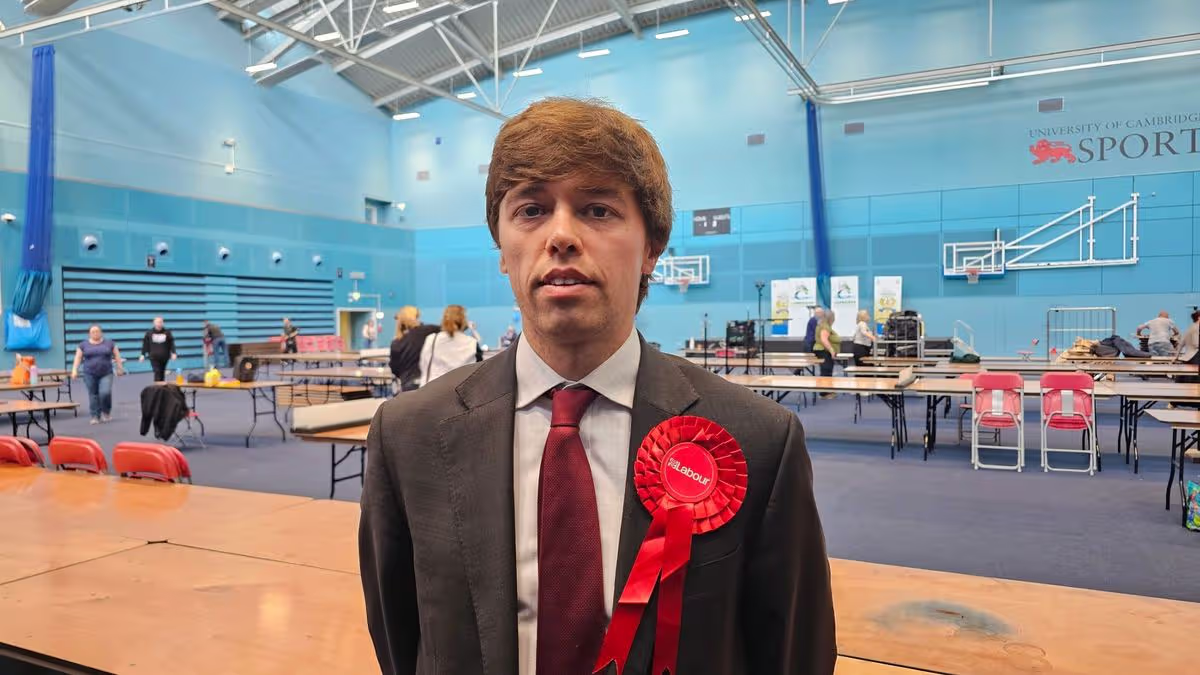
The leader of Cambridge City Council warns “there are no easy answers” after losing his seat to the Green Party. Friday’s local election count turned out to be a good day for the Greens – who walked away with seven seats, six taken from Labour.
Advertisement
Speaking after the election, Cllr Holloway said he was still “pleased” that Labour remains the largest party even without a majority. He added that he was proud of their “strong record” while in power on “building council homes, supporting our communities, protecting nature and tackling the climate crisis.”
He said: “I think there are a lot of people who are feeling disillusioned – feeling a bit fed up and it felt to me like a bit of a protest vote and a bit of a desire for something new.
“But there are no easy answers and the Greens offer an easy answer – there is not an easy answer in a complex world. In a world where economies are struggling, where there’s war, we need serious politicians – we don’t need people who are going to give easy answers.”
Standing in the Petersfield ward, he lost to Kathryn Fisher, who said she was “absolutely ecstatic” to win in a “fantastic day for the Cambridge Greens”.
She said: “I think it’s a massive achievement and a message to the Labour Party saying that people are not happy with what you’re doing.”
The first Green victory was in Abbey – already one of their strongholds – where Matthew Howard was replaced with Maria Margaret Cleminson. But, as results were declared the party continued to win – taking Arbury, Castle, Coleridge, Newnham, Petersfield and Romsey from Labour.
The Liberal Democrats held on to all four of their seats which were up for grabs – Market, Queen Edith’s and two seats in Trumpington, one of which was vacant.
The A64 eastbound between Askham Bryan (A1237) and Askham Bar / Bishopthorpe (A1036) is closed until 6am on Saturday (9 May).
This is due to a burst water main causing significant flooding in this section.
Yorkshire Water is working to have the water main repaired as soon as possible.
Advertisement
Traffic will be diverted via the A1237 ring road.
A spokesperson for National Highways said: “If you are planning to travel in this area, please allow plenty of extra time for your journey as significant delays are expected.
“Please follow the signed diversions and don’t rely on sat navs.
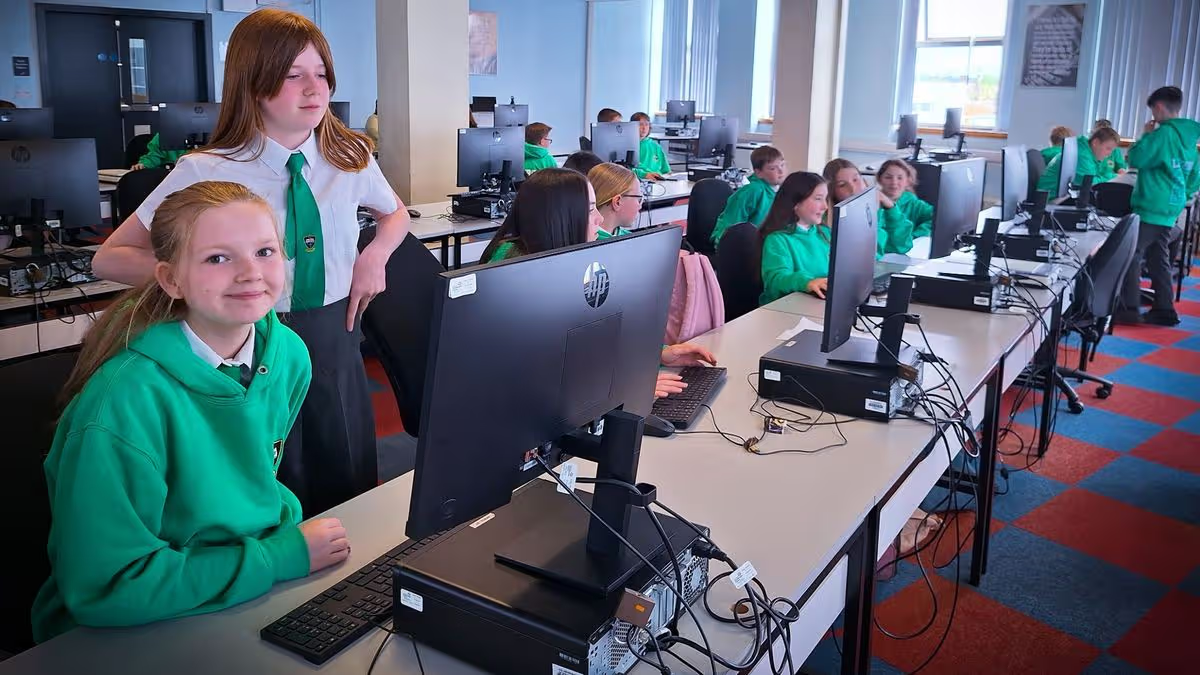
P6 and P7 youngsters from St Augustine’s Primary embraced the tech-themed challenge with great aplomb.
Coatbridge school pupils were ‘Pytch-perfect’ as they got a byte-sized taste of university life.
Advertisement
P6 and P7 youngsters from St Augustine’s Primary embraced the tech-themed challenge with great aplomb.
Following an intensive eight-week training course, they took part in a coding jam in the ICT suite of the prestigious Livingstone Tower at Strathclyde University.
The challenge was to create a Space Invaders video game using the Pytch programming language – a bridge between the child-friendly Scratch and the industry standard Python languages.
A St Augustine’s Primary spokesman told Lanarkshire Live: “Staff from the computing science department were highly impressed with how the pupils handled the high school and university level challenge with ease.
Advertisement
“The children themselves found creating virtual alien invaders an out-of-this-world experience!
“We’d like to congratulate them on their success, and thank Strathclyde University for all of their support.”
The Count of Monte Cristo is a 2024 film adaptation of Alexandre Dumas’ celebrated 1844 novel.
Pierre Niney leads the cast as Edmond Dantes, a young sailor wrongfully imprisoned for treason on his wedding day.
Advertisement
After escaping the fortress where he has been held for over a decade, he reinvents himself as a wealthy Count, forging a new life beneath a false identity.
Concealed behind this façade, he embarks on a mission to exact revenge upon those who betrayed him, reports the Mirror.
The synopsis reads: “Falsely accused, imprisoned for 15 years – now he’s out for revenge on those who wronged him. An epic drama of betrayal, love and vengeance starring Pierre Niney.”
The 2024 film has been split into four parts for BBC iPlayer after becoming a huge hit when it first premiered.
One fan hailed it an “excellent adaptation from the beautiful novel, with another calling it “absolutely terrific”.
One viewer branded it a “masterpiece”, while someone else said: “I truly loved this movie and I am not an avid movie watcher, easily one of the best movies I’ve ever seen.”
“A dream come true for Monte Cristo fans,” one said, as another review was titled “Absolutely stunning”.
Advertisement
“Go out of your way to see this one,” one viewer advised, while someone else called it “unmissible”. They continued: “I was absolutely captivated by the film from start to finish. Every moment kept me on the edge of my seat, and I wasn’t bored for a single second.”
“A gorgeous modern production of timeless epic,” another person said, while one fan called it “spectacular”.
Despite the widespread praise, French actor Pierre Niney previously admitted he was “pessimistic” about the project at the start.
Advertisement
He told Forbes: “I remember thinking ‘It’s not going to be made, they’re not going to find the money’. It would take people crazy enough to embark on a 1200 pages book to make one movie.
“So I was pessimistic at the start, thinking it was too good to be true. And actually it’s even better than what I had imagined, so it will stay engraved in my memory forever.”
The Count of Monte Cristo is available to watch on BBC iPlayer.
A joint statement from both , who married in 2003, said “there are no other parties involved in this decision”.
The post on Instagram said: “After much consideration, and with a deep sense of care and respect for one another, we have made the decision to separate amicably.
“This has not been an easy choice, but it comes from a place of mutual understanding and a shared desire for what is best for both of us.
Advertisement
“We remain great friends and more importantly, fully committed to our roles as loving and supportive parents, which will always be our priority.
“There are no other parties involved in this decision. We kindly ask for privacy during this time as we navigate this transition together.
“We will not be making any further public comments. Tess and Vernon.”
The former Strictly Come Dancing presenter, 57, and the BBC Radio 2 DJ, aged 52, are parents to daughter Phoebe, born in October 2004, and Amber, born in May 2009.
Advertisement
Both are former models who carved out successful careers as presenters.
Their marriage made headlines in 2010 when Vernon admitted he sent explicit texts to around five women, going on to apologise to hundreds of thousands of listeners on the Radio 1 show he hosted at the time.
He interrupted the programme to tell his two million listeners he had been “foolish and stupid”.
However a month later, Daly said their partnership was “worth fighting for” because they had had “10 great years together” and shared “two beautiful kids”.
Advertisement
She told the One Show: “Dealing with it in private is difficult enough, but dealing but with it in public is even harder”, adding that she was touched by the amount of support she had received.
Tess was born in Stockport and Vernon is from Horwich.
Their birthdays, in April, are just a day apart.
Although both were well-known faces when they married in 2003, they shunned offers of six-figure deals with glossy celebrity magazines for exclusive photographs of their wedding.
Advertisement
The couple, both dressed in white, instead posed for fans’ photographs outside St Mary’s Roman Catholic Church, in Horwich, near Bolton.
Strictly launched the following year and Tess took up her role next to the late Sir Bruce Forsyth.
She helmed the BBC dancing competition’s main show for 21 years with Claudia Winkleman, joining her every Saturday from 2014, after Sir Bruce stepped down.
Both stepped back last year, both choking back tears as they signed off for the final time in December.
In the shadow of the 2008 global financial crisis, trust in the financial system was at a historic low. Banks had failed, markets had collapsed, and confidence in central institutions had been deeply shaken.
It was in this moment of uncertainty that an anonymous figure, Satoshi Nakamoto, published the Bitcoin white paper – a nine-page document that quietly introduced a radical new idea: a financial system that would not rely on trust in institutions at all.
Rather than banks or governments, transactions would be verified by a shared digital network run collectively by its users – a system that became known as blockchain. But blockchain was never just about technology – it was about rethinking mechanisms of trust, so it could be engineered rather than delegated.
Nakamoto’s vision was made possible through a consensus mechanism known as “proof of work” (PoW), which required participants to solve complex computational problems to validate transactions. The system was intentionally costly to operate. That cost was precisely what made it secure: changing the shared record of transactions would require immense resources, making manipulation economically unviable.
Advertisement
Blockchain explained. Video: Whiteboard Crypto.
But as bitcoin’s popularity grew rapidly – from a niche experiment in 2009 to a network processing hundreds of thousands of daily transactions within a decade – so did its demands. Maintaining trust through continuous computation proved expensive – not just financially but environmentally.
The energy consumed by PoW systems began to rival that of entire countries, raising an important question: was this the most efficient way to produce trust?
A blockchain revolution
In 2022, the major global blockchain Ethereum – which underpins the second-biggest cryptocurrency after bitcoin – adopted another model of trust known as “proof of stake” (PoS). This was a response to the growing concern about the bitcoin blockchain’s excessive energy demands.
Advertisement
Rather than relying on large numbers of computers competing to solve mathematical problems, PoS selects validators based partly on how much cryptocurrency they lock into the network as a financial stake. They then help confirm transactions and maintain the system, without the energy-intensive process of mining used in bitcoin.
This chart illustrates Ethereum’s claimed energy use compared with some other industries and activities, demonstrating the large drop after its switch from a PoW to PoS blockchain system:
Advertisement
Estimates sourced from publicly available information, accessed July 2023. Ethereum, CC BY-SA
However, this increased energy efficiency introduced another kind of trade-off. Under PoW, influence is determined by access to computational resources. Under PoS, it is tied to ownership of financial assets – raising questions about whether control of this technology would be increasingly unequal.
This is not necessarily a flaw, but a reflection of a broader reality. Trust is never costless, and different systems distribute that cost in different ways.
Today, many newer blockchain platforms including Ethereum, Cardano and Solana use PoS. Bitcoin, though, continues to rely on PoW – in part because supporters argue its high computational cost remains central to both its security and principle of decentralisation.
Advertisement
Beyond cryptocurrencies, different blockchain systems are increasingly being explored for applications ranging from tracking goods in supply chains and energy trading to digital identity systems and cross-border payments. And this is ushering in a third evolution in blockchain trust technology: “proof of authority” (PoA).
Trust reconfigured again
Unlike its predecessors, PoA relies on a limited number of pre-approved validators – typically, organisations whose identities and reputations are known. This means only approved or verified participants can validate transactions within a particular network.
PoA-style systems and permissioned blockchain networks have already been adopted or tested by hundreds of organisations worldwide – particularly in finance, supply chains and energy infrastructure. In finance, banks including JP Morgan have explored private blockchain networks where only approved participants can validate and share transaction records.
This might seem like a major departure from blockchain’s original ethos. If trust is placed back in the hands of identifiable institutions, what remains of Nakamoto’s decentralised vision?
Advertisement
But in many real-world situations, such as tracking goods or processing financial transactions, participants do not require anonymity. They prioritise reliability, speed and accountability.
Rather than eliminating trust, PoA reorganises it. Although blockchain is often associated with anonymous cryptocurrency activity, its record-keeping structure makes transactions highly traceable and easier to audit over time.
For banks, companies and governments testing blockchain systems, this approach is often more practical than fully open blockchain networks that anyone can join. Brazil has used a government blockchain based on proof of authority, and the United Arab Emirates has promoted blockchain use across its public services and for some government transactions.
What is emerging is not the end of trust but its reconfiguration. Blockchain began as an attempt to bypass traditional institutions. Its evolution points to something more nuanced: a future where trust is reconfigured with the involvement of banks, payment providers, technology firms, energy companies and governments.
Advertisement
These organisations are not removing trust from the system – they are reshaping how it is created, verified and maintained.
Reform and the Greens picked up councillors across the region, as they did across England
Greater Manchester could give Labour the answer to turning its fortunes around, an MP has said – without mentioning Andy Burnham or Angela Rayner’s names.
Advertisement
Speculation is rife that the mayor and the former deputy Prime Minister will launch leadership bids to oust Keir Starmer following a disastrous set of local election results. Labour had haemorrhaged 1,357 councillors by 10pm on Friday (May 8), including sweeping losses in Manchester, Wigan, Salford, Oldham, and Tameside.
Reform and the Greens picked up councillors across the region, as they did across England. In the face of a two-pronged attack, some Labour figures have called for the Prime Minister’s resignation – and some want Burnham or Rayner to replace him.
Click here to get the biggest stories straight to your inbox in our Daily Newsletter
However, a Greater Manchester MP says the formula for Labour’s revival is clear to see in Bury – and it doesn’t mention either.
Advertisement
James Frith, MP for Bury North, released a 227 word statement on Friday explaining how Labour ‘bucked the trend’ to stay in power and won more seats than Reform did at the polls.
He said: “In Bury, we bucked the national trend and outperformed much of Greater Manchester, resisting the scale of political shift seen elsewhere across the region and the country.
“It may be too soon and overstated to offer it as a good example to follow but the exception is worthy of noting. Reform can be beaten back.”
He added most of Reform’s support in the town came from right-leaning areas: “In Bury North, only Conservative-held wards switched to Reform, and one was a defection earlier in the campaign, reinforcing the point that Reform’s advance was strongest where the Conservatives switched or collapsed rather than where Labour stood strong, present and reliable in our community.
Advertisement
“Where Labour won off the Tories in Bury North, this felt like the electorate understanding the threat to the one-time all one-nation Remain Tory ward and so they did the best thing to defeat Reform there, and voted Labour.
Get MEN Premium now for just £1 HERE – or get involved in our WhatsApp group by clicking HERE
“Labour still faced real challenges, with the Workers’ Party taking a seat from Labour, abetted by the Green vote. Despite the only Labour loss Labour still finished ahead of Reform who were a close third in a busy field.
“Ultimately, Reform will be only the second-largest opposition party on Bury Council, as the independent Radcliffe First group remains the official opposition to the Labour-led, Labour-retained council.”
Advertisement
The other reported leadership hopefuls is Health Secretary Wes Streeting. Numerous senior Labour figures have come out to back the Prime Minister.
Kyle Patrick, 23, drove at 119mph after offering to pick up Erin Slane, 19, and her friend outside a bar in Perth, Scotland – as the terrified women hurtled along rural roads Erin texted her friends
22:56, 08 May 2026Updated 22:58, 08 May 2026
A terrified teen texted her pals “I may not survive tonight. I’m scared. Kyle is steaming” as she was sped along country roads in the car of a drunk driver moments before her tragic death.
Erin Slane, 19, sent the message whilst sitting as a passenger in 23-year-old Kyle Patrick’s Ford Fiesta on September 1, 2024 after she accepted a lift from him, a court heard.
The High Court in Edinburgh heard Patrick was hitting speeds of up to 119 miles per hour on a secluded Perthshire road as terrified Erin texted her friends.
Advertisement
Patrick was speeding along the B9099 Luncarty to Stanley road when he lost control of the car and it left the road, tumbling down a grass embankment into a field before it rolled several times before coming to rest on its roof, Prosecutor Graeme Jessop KC told the court.
Patrick survived and Erin’s friend Keira Jones, also 19, also escaped from the wreck with injuries. However, Miss Slane lost her life, the Daily Record reports.
Police investigating the incident found Patrick had spent the night drinking with pals in Perth city centre before offering people lifts home – he took £10 from a teenager for a journey they took from Perth to Bankfoot.
Advertisement
He then picked up Miss Slane and Miss Jones and took them on a car journey which Mr Jessop said was taken at “excessive speed.”
Mr Jessop said: “During the journey, Erin Slane, the deceased, sent a couple of text messages to her friend group.
“At 0157 hours, she sent a message stating: ‘I may not survive tonight. I’m scared. Kyle is steaming.’ At 0205 hours, she wrote: ‘Kyle is steaming.’
“The fatal collision occurred about 0210 hours as the accused was driving his car towards Stanley on the B9099, Luncarty to Stanley Road, near to its junction with Gowrie Farm.
Advertisement
“The accused lost control of the vehicle whereby it crossed the opposing carriageway, left the road way, continued through wire fencing, down the grass embankment to a field, before rolling several times and coming to rest on its roof. The car was extensively damaged by impacts.
“At 0251 hours, the accused called Police Scotland stating he had been involved in a collision, he was the driver and had been drinking alcohol before so should not have been driving. He stated that he had pulled a passenger out of the car – the witness Keira Jones – and was so sorry for driving.
“Police, Fire Service and Ambulance crews attended a short time later. Upon their arrival, there was nothing they could do for Erin Slane who was clearly deceased still within the passenger seat of the car.”
Investigators who took blood from the first offender at 4.30 am – two hours and twenty minutes after the incident – found he was more than three times the drink driving limit at that time.
The story emerged after Patrick, of Scone, Perthshire, pleaded guilty to a charge of causing Miss Slane’s death and serious injury to Miss Jones by driving dangerously whilst being impaired through consuming alcohol.
The court heard that Miss Slane, Miss Jones and three other friends got talking to Patrick outside a bar in Perth and he offered them a lift. He had previously been drinking with friends before offering a boy a lift in exchange for £10 before returning to Perth Centre, the court heard.
The fatal crash happened just a short time later. Investigators examining his car’s infotainment module after the crash found he reached speeds of 119mph during the trip.
Advertisement
The court heard that following the collision Miss Jones suffered a fractured arm, nine broken ribs, a fractured pelvis and a fractured finger – she has now made a full physical recovery.
Miss Slane was 19. Her death took place two days before her birthday – she suffered from blunt force heard injuries caused as a result of her being a front seat passenger in the collision. The court heard that she was due to start studying at Napier University on September 14 2024 and had an older sister and two stepbrothers.
The court also heard that collision investigators concluded that the collision was caused by a number of factors. Mr Jessop added: “These factors being the grossly excessive speed at which the driver of this vehicle had been travelling at coupled with his general driving inexperience, both of which were compounded by him being under the influence of alcohol.”
Defence advocate Tony Lenehan KC said: “Mr Patrick knows the terrible harm he has done, causing the death of Ms Slane. No words of Mr Patrick can do anything to undo this harm.
Advertisement
“He pleads guilty knowing that he deserves a substantial prison sentence. He tells me if he could serve ten times the sentence and be able to undo everything that happened, he would.”
Lord Harrower remanded Patrick in custody and called for a report into his background. He added: “This is a terrible tragedy for Ms Slane and her family, and for Miss Jones and her family.”
As security guards placed Patrick in handcuffs to take him to prison, a man who was sitting in the public gallery shouted: “You should be hung,”
Patrick will be sentenced at the High Court in Dundee on June 9, 2026.
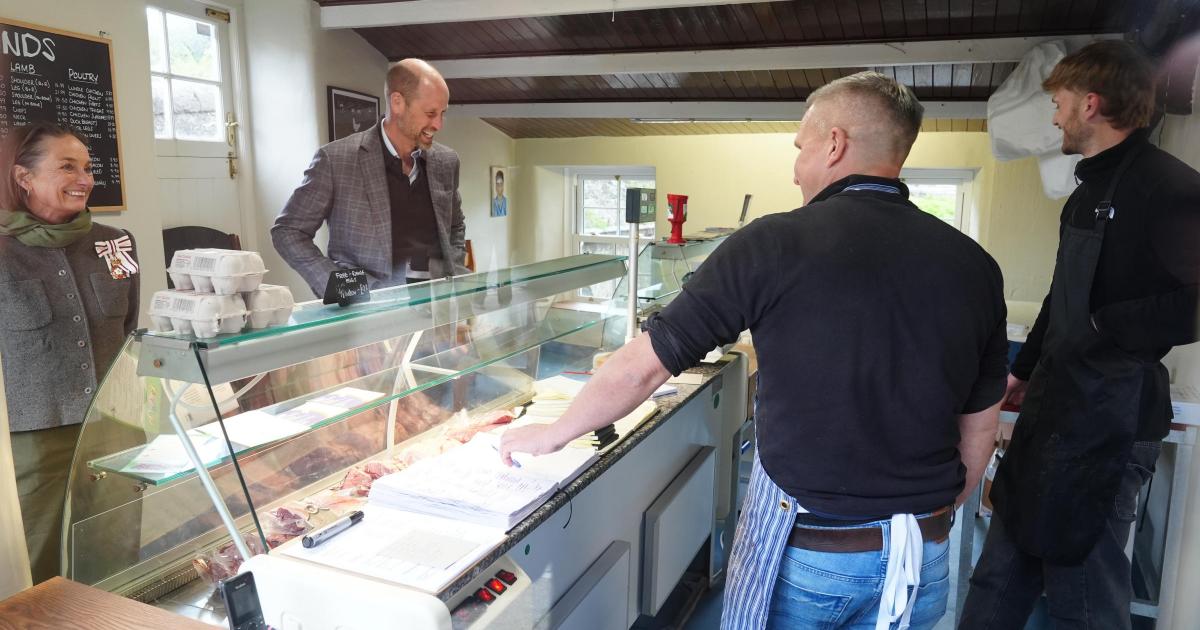
Hammonds Butchers, located in Bainbridge, Wensleydale, welcomed Prince William as part of a visit focused on rural communities and the challenges facing farmers on Tuesday (May 5).
The future King stopped by the well-known local shop after meeting nearby hill farmers in Swaledale, where he discussed the pressures facing the agricultural industry, including rising costs and the need to diversify.
The Prince of Wales speaks to butchers during a visit to the the village of Bainbridge in North Yorkshire (Image: Owen Humphreys/PA Wire)
The Prince of Wales during a visit to the the village of Bainbridge (Image: Owen Humphreys/PA Wire)
The Prince of Wales exiting Hammonds Butchers (Image: Owen Humphreys/PA Wire)
His visit to Bainbridge also highlighted the importance of small, independent businesses that play a vital role in supporting rural life across the Yorkshire Dales.
During his visit to the butchers, the prince didn’t buy anything but was seen chatting to two staff members behind the counter of the store.
Advertisement
Hammonds Butchers is a familiar name in the village, known for its high-quality meats and its role at the heart of the local community.
Set next to the bridge in Bainbridge, it’s a popular stop for both residents and visitors exploring the surrounding countryside.
The shop’s location makes it an easy addition to a day out in the Dales, with nearby attractions and scenic walks drawing tourists to the area year-round.
Advertisement
Visitors often pass through the village green before stopping at the butchers, which has built a reputation as a reliable spot for locally sourced produce.
During his visit, Prince William spent time speaking with members of the community, including those involved in the River Bain hydroelectric project that has been generating renewable energy for homes in the village since 2011.
He also met well-wishers on the green before heading into Hammonds Butchers, drawing attention to a business that reflects the strong link between Yorkshire’s food producers and its rural communities.
Victory Day is a holiday that commemorates the victory of the Soviet Union over Nazi Germany in 1945
Chris Hughes , Joe Smith and Husna Anjum Senior Live News Reporter
19:54, 08 May 2026
Donald Trump announced a three-day ceasefire between Ukrainian and Russian forces to mark Victory Day. In a post on Truth Social, the United States President also teased this could mean the ‘end to the war’.
The ceasefire will take place in Ukraine after four years of fighting, as The Mirror reports Victory Day is a holiday that commemorates the victory of the Soviet Union over Nazi Germany in 1945. It was first inaugurated in the 15 republics of the Soviet Union following the signing of the German Instrument of Surrender late in the evening on 8 May 1945.
Advertisement
The US president said he had asked for a halt in the fighting between May 9 and May 11, thanking leaders Vladimir Putin and Volodymyr Zelensky for accepting his proposal.
Announcing the news on his social media platform, Trump added: “This Ceasefire will include a suspension of all kinetic activity, and also a prison swap of 1,000 prisoners from each Country. Hopefully, it is the beginning of the end of a very long, deadly, and hard fought War.
“Talks are continuing on ending this Major Conflict, the biggest since World War II, and we are getting closer and closer every day.”
Want to see more of the stories you love from Belfast Live? Making us your preferred source on Google means you’ll get more of our exclusives… To add Belfast Live as a preferred source, simply click here.

















![Cardi B - Money [Official Music Video]](https://wordupnews.com/wp-content/uploads/2026/02/1770603085_hqdefault-80x80.jpg)




























You must be logged in to post a comment Login