Another police officer was also struck with a rock, while a third was spat at
Arrests have been made over disorder linked to anti-immigration protests that saw a police officer “seriously bitten” in Thetford. Increased policing powers will remain in place in Thetford on Friday evening (August 7) after three nights of disorder.
Advertisement
On Wednesday, August 5, “significant” police resources were deployed to the town after a large group of people gathered in Clover Way. At about 9.30pm, officers responded to reports that people in the group were trying to gain access to the property.
As police intervened, members of the group became “physically aggressive” towards officers, according to Norfolk Police. Two were taken to hospital after a male officer was struck with a rock and a female officer was “seriously bitten”. A third officer was also spat at.
A large crowd had gathered outside the police station beforehand for an anti-immigration protest. In the second night of disorder in the town following incidents on Tuesday night (August 4), properties were damaged by having windows smashed and fences broken. People also tried to break into a home.
Specialist officers were joined by colleagues from Hertfordshire, Bedfordshire and Cambridgeshire Constabularies as they responded to a number of incidents kl.
Advertisement
Officers attended an address on Chester Way at around 4.45pm on August 6, 2026 following reports of a group of people throwing eggs and stones towards the address. The group continued to damage the property, breaking the door. Residents of the address were subsequently escorted out by officers in order to ensure their safety.
Officers were also called to an address on Anne Boleyn Close after a group were seen to be throwing rocks towards a property, smashing its windows.
Six arrests have been made in relation to the three nights of disorder. These are as follows:
Brian Thompson, aged 68, who has been charged with possession of an offensive weapon.
A man in his 30s arrested for public order and a man in his 50s arrested for being drunk and disorderly, who have both been released and issued with conditional cautions.
A man in his 30s arrested for public order and harassment, who has been released on bail.
A man aged in his 40s arrested for inciting racial hatred, drug possession and public order who remains in custody.
A woman aged in her 30s, arrested on suspicion of assault of an emergency worker, assault and a public order offence who remains in custody.
In total, 12 dispersal orders were issued under Section 35 powers directing individuals to leave the area to prevent further disorder and protect public safety.
Assistant Chief Constable Julie Dean, who is overseeing the police response to the disorder, said: “We fully support the rights of people to protest peacefully and understand the concerns felt by many within the community. However, over recent nights we have continued to see behaviour that goes far beyond legitimate protest, and we have therefore responded robustly to keep people safe and maintain public order.
Advertisement
“Assaults on police officers carrying out their duties are completely unacceptable. Our officers are working tirelessly to protect the communities they serve, often the same communities they call home, and they deserve to be treated with respect.
“Those who choose to engage in violence, intimidation or criminality should be under no illusion that they will be identified, arrested and brought before the courts. At the heart of this situation are real people and real lives, and I would urge everyone involved to consider the impact their actions are having on the wider community.”
Increased policing powers will remain in place in Thetford this evening following the three nights of disorder. These powers include:
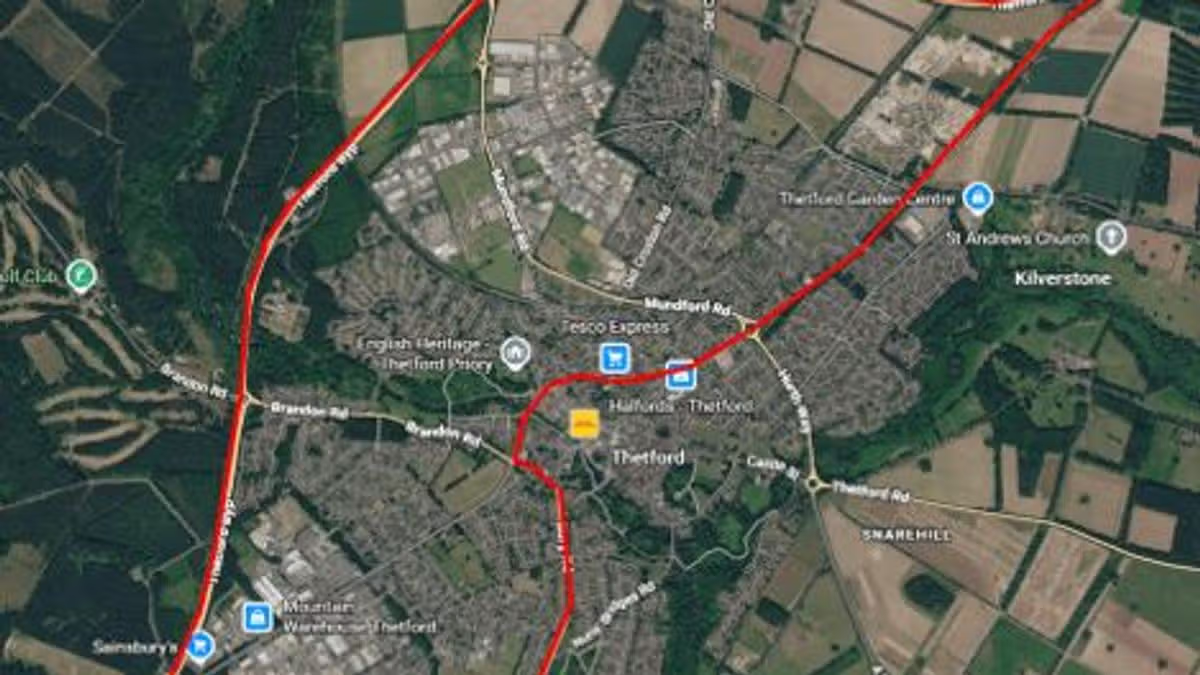
A Section 34 of the Anti-Social Behaviour, Crime and Policing Act 2014 which means officers can direct anyone committing, or who may commit anti-social behaviour to leave the area from 4pm on Friday, August 7 to 6am on Saturday, August 8 2026.
Anyone who refuses to remove a face covering when required to do so may be arrested. The powers will come into effect in the area designated in the map.
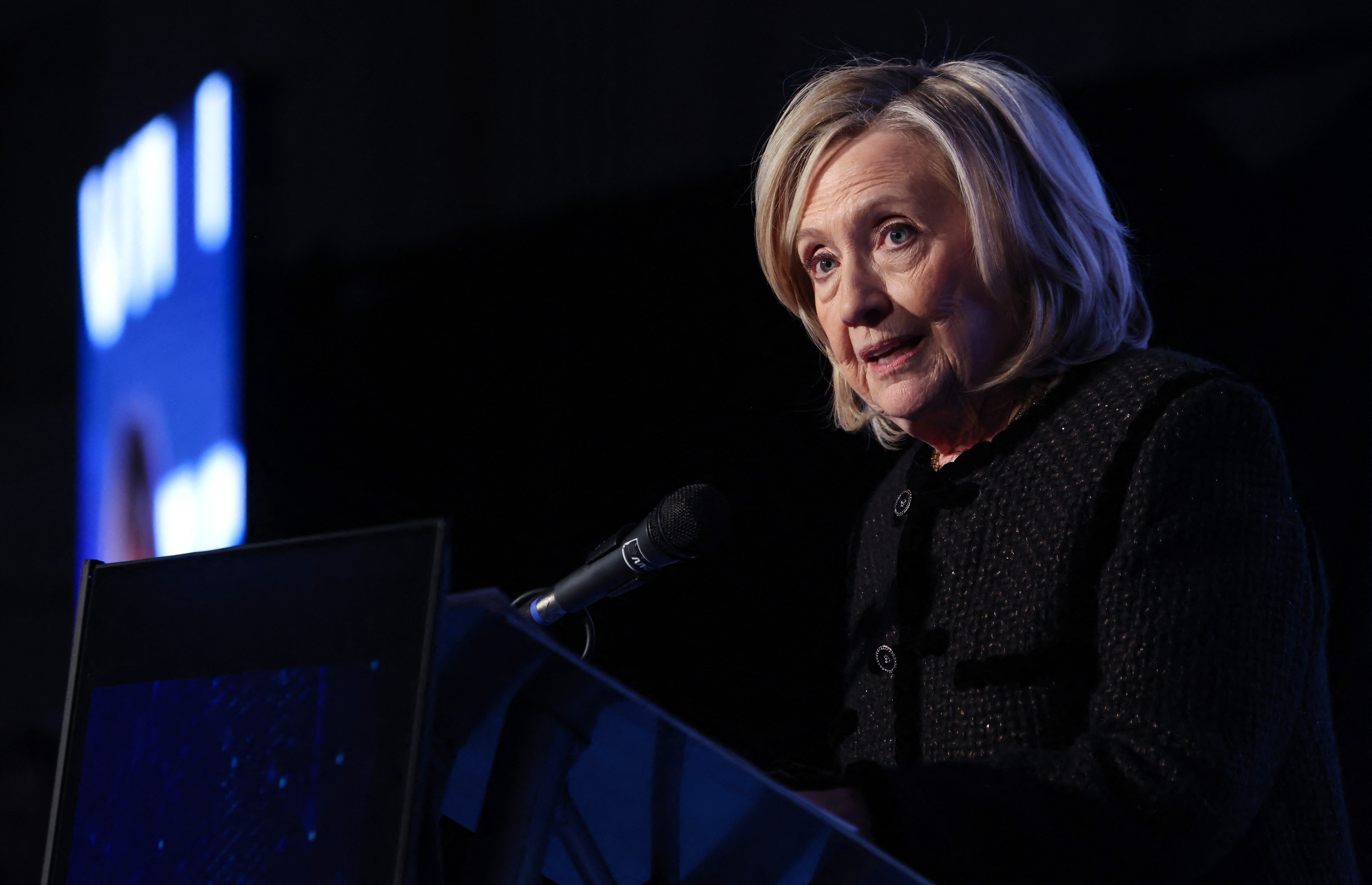
Former Secretary of State Hilary Clinton, a prominent Democrat who lost the presidency to Donald Trump in 2016, has warned of one Republican attack on progressive members of her party that will be “very effective” in the midterms.
After progressive Abdul El-Sayed’s victory over centrist congresswoman Haley Stevens in Tuesday’s Democratic primary for a U.S. Senate seat in Michigan, Clinton suggested that Republicans will baselessly label him as a “communist,” and it will work to dissuade voters.
“The real fight will be how do we make sure that people who voted for Haley feel comfortable voting for Abdul El-Sayed, and how do we get Independents to feel comfortable?
“And you can see that it’s not just about Michigan, but the Republican messaging is communist, socialist. It’s going to be a very effective attack,” Clinton told Kara Swisher during the journalist’s Pivot podcast with author Scott Galloway.
Advertisement
Former Secretary of State Hilary Clinton, a prominent Democrat who lost the presidency to Donald Trump in 2016, has warned of one Republican attack on progressive members of her party that will be ‘very effective’ in the midterms (AFP via Getty Images)
Trump was quick to celebrate El-Sayed’s election win, calling it “Great news for the Republican Party.”
“El-Sayed, a Communist loser who hates Jews and Israel, is the projected winner in his race with the Socialist…Now, the Dumocrats crazy policies will only get worse!” he wrote on Truth Social Wednesday.
Despite the pro-Israel group AIPAC spending tens of millions on Stevens’ campaign, El-Sayed — a former public health official who has accused Israel of genocide in its war against Hamas in Gaza — narrowly beat her in Tuesday’s race. Israel has vehemently denied allegations of genocide.
The prominent Democrat suggested the GOP will baselessly accuse members of her party, including progressive Abdul El-Sayed, of being communists, and it will work to dissuade voters (Getty Images)
When Swisher probed further on whether labeling a politician a communist is an effective attack, Clinton said, “That’s the attack that Trump is leading with and I assume they’ve tested it and I assume that they have reason to believe that it’s effective or they wouldn’t be beating the drum on it.”
“It’s not just him. [Vice President JD] Vance has done it. Others are doing it. They are trying to bring back scare tactics about our candidates, and it didn’t work in New York. [New York City Mayor Zohran] Mamdani was elected, and there was a lot of money spent against him,” Clinton said.
Mamdani, a democratic socialist who has been commonly misstated as a communist, won his election in November against a member of the Democratic establishment, former New York Governor Andrew Cuomo.
Advertisement
Two democratic socialists whom Mamdani backed in the June primaries in New York, Darializa Avila Chevalier and Claire Valdez, also won their races.
The 40-year-old sent sexual messages to someone he thought was a teenage girl
A convicted sex offender who sent explicit messages to someone he thought was a teenage girl has been sent to prison. Daniel Coleman, 40, contacted the account in May 2025, not knowing it was a decoy run by an online child abuse activist group.
Advertisement
Despite the “child” telling him she was only 13 years old several times, he proceeded to strike up conversations of a sexual nature before arranging to meet her. Despite not using his real name, officers traced the IP address of the profile back to Coleman and he was arrested.
Coleman, of Bishops Road, Peterborough, pleaded guilty to attempting to engage in sexual communication with a child, breach of a sexual harm prevention order, inciting a girl aged 13 to 15 to engage in sexual activity, and failing to comply with Sex Offenders Register Requirements.
He was sentenced to four-and-half-years in prison at Cambridge Crown Court on July 31. PC Alex Neill, who investigated, said: “Coleman is clearly a risk to children. Protecting young people from harm is one of our top priorities and we will do all we can to bring offenders to justice.”
Senior national co-ordinator for Counter Terrorism Policing, Vicki Evans, said: “As part of the ongoing investigation led by Counter Terrorism Policing South East into the murder of Ann Widdecombe, officers have reopened an investigation into an incident reported to police last year.
A reader looks back at how nuclear war has been portrayed in video games, from Missile Command in 1980 to the modern Fallout titles.
On the list of things that might ruin your day, nuclear war is probably right up there. I doubt anyone could argue that nuclear weapons aren’t mankind’s worst invention and it defies all logic that any country would keep a nuclear arsenal, let alone use it. However, I am drawn to the subject of nuclear weapons and nuclear war in fictional scenarios. Whenever nukes are involved in a story, tension and drama can be ratcheted up to unparallelled levels because the risk to humanity’s continued existence is understandably severe.
As demonstrated in the 1983 movie War Games, nuclear weapons and the pastime of computer gaming can sometimes overlap to generate an entertaining form of fusion. If asked specifically about the most effective use of nukes in games, almost certainly I’d mention the Fallout franchise. In my opinion Fallout 3 was a way better game, but with respect to a single unsettling moment that’s lodged itself in my memory, Fallout 4 certainly deserves a prize.
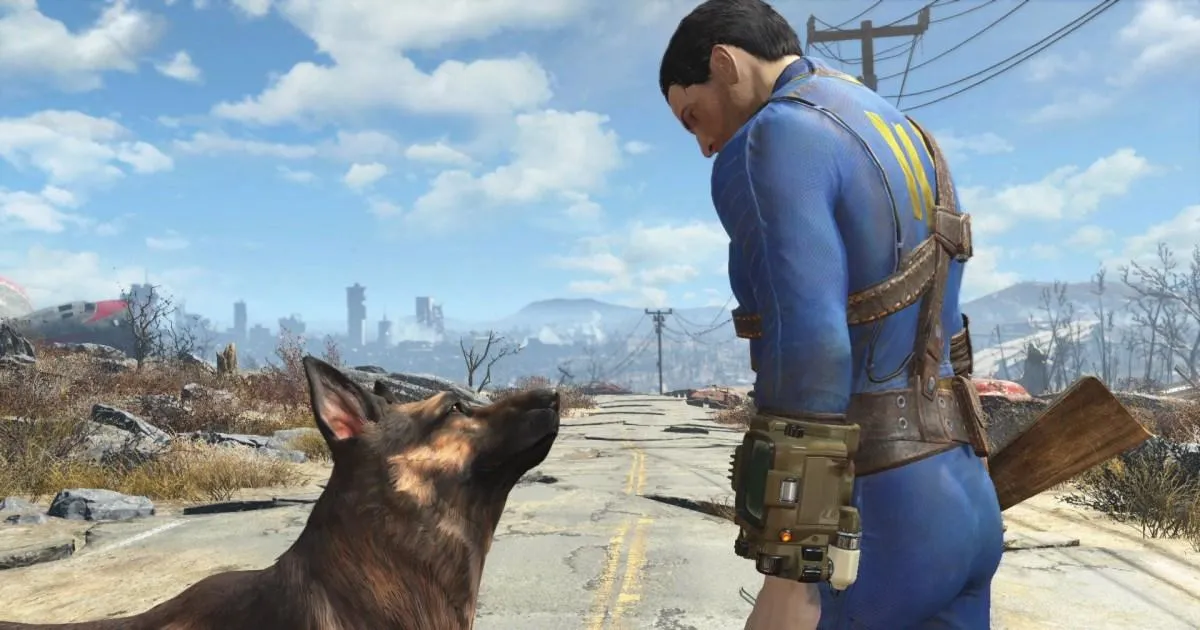
After a brief history lesson and a slick montage, Fallout 4 places you in front of a bathroom mirror with your wife/husband standing by your side. The year is 2077 and we’re in retro futuristic America and life seems fairly idyllic. You are one of the parents of a newborn baby. You live in a nice house that’s situated in what appears to be a nice suburb. It’s a bright and sunny day outside. There’s a knock on the front door, and so you go and answer it. A representative from Vault-Tec has an offer for you. In the event of a crisis, you and your family can enjoy shelter and residency in Vault 111.
Advertisement
The ensuing conversation gives you a chance to define your game character’s attributes via a registration form. The Vault Tec rep leaves and what follows is a precious family moment, with you and your spouse in your baby son’s bedroom. Plans to visit the park are made. Today could be a great day, if fate doesn’t have other plans. The mood distinctly changes when you’re called back into the living room by your multi-armed hovering robot, Codsworth.
There’s a troubling newsflash on the TV. Portentous music starts in the background. Confirmed reports come in of nuclear detonations in New York and Pennsylvania. An early warning siren begins to wail outside, and the next moment the three of you are on the move. You run through chaos and mass distress playing out on the street outside. Guided by soldiers, your tight family unit flees down a path and up to a gate through which only a privileged few are allowed. Quick, quick, onwards and onto that large circular platform. ‘We’re going to be okay’, says your partner. Famous last words.
Expert, exclusive gaming analysis
Sign up to the GameCentral newsletter for a unique take on the week in gaming, alongside the latest reviews and more. Delivered to your inbox every Saturday morning.
Advertisement
There’s a brilliant flash, and then you see it. A dreadful mushroom cloud, huge and all powerful and terrifying. The platform that you cower on lowers you and your small family into the ground just as the blast wave hits. You look up as the lift shaft above you closes. Pray for all of those poor souls who are left behind on the surface, because surely everyone who isn’t lucky enough to be a vault dweller is now dead.
Another game that’s strongly associated with nuclear war is Missile Command. This eighties arcade cabinet was fairly iconic. The game asked you to protect cities by shooting down incoming missiles. For me one of the defining characteristics of Missile Command was the trackball that you used to move your crosshair around the screen. The other memorable aspect of the game were the bright flashes that appeared whenever impacts happened.
Advertisement
Missile Command was designed by Dave Theurer for Atari, at the height of the Cold War between America and Russia, and as such was undoubtedly influenced by the tensions of that time. The game’s iconic status was further guaranteed when John Connor was seen playing it in Terminator 2: Judgment Day. Incidentally, director James Cameron’s classic 1991 film has what is almost certainly one of the most effective cinematic depictions of what a nuclear blast might do to a city and its residents. In Missile Command, once all of your cities suffer the same fate, a rather gloomy final message appears on screen: THE END.
There’s a rather good licensed version of Missile Command that you can play via your browser.
Missile Command: Recharged is also available from the usual digital game outlets. Recharged is an updated version of the game with flashy visuals and catchy music. Missile Command: Recharged is fun, if fun is the right word to use when you’re trying to save cities and their residents from being vapourised by incoming ballistic missiles. On the downside, I do think that the visual makeover of Recharged has taken away an important aspect of Missile Command.
Advertisement
The explosions in the reinvented game are now black voids, and so they don’t resemble nuclear flashes at all. I don’t know why this decision was made. Maybe nuclear war and atomic explosions were considered too upsetting or unpalatable for a modern audience. But the game does play well, even without a trackball. There are various modifiers that you can apply that quite effectively tweak the core experience of arcade mode, and there’s a missions mode to try out also.
Incidentally, I watched the film War Games again before writing this feature. Despite a rather corny score, the 1983 hacker thriller still holds up well. The wall screen representations of nuclear threats and strikes that feature in War Games are effectively realised and timeless, and the film’s story is worryingly prescient today, given the rise and mass adoption of artificial intelligence. Still, you’ve got to focus on the positives. Putting AI in charge of nuclear weapons might save some cash-strapped government a fair chunk of money. I mean, what’s the worst that could happen?
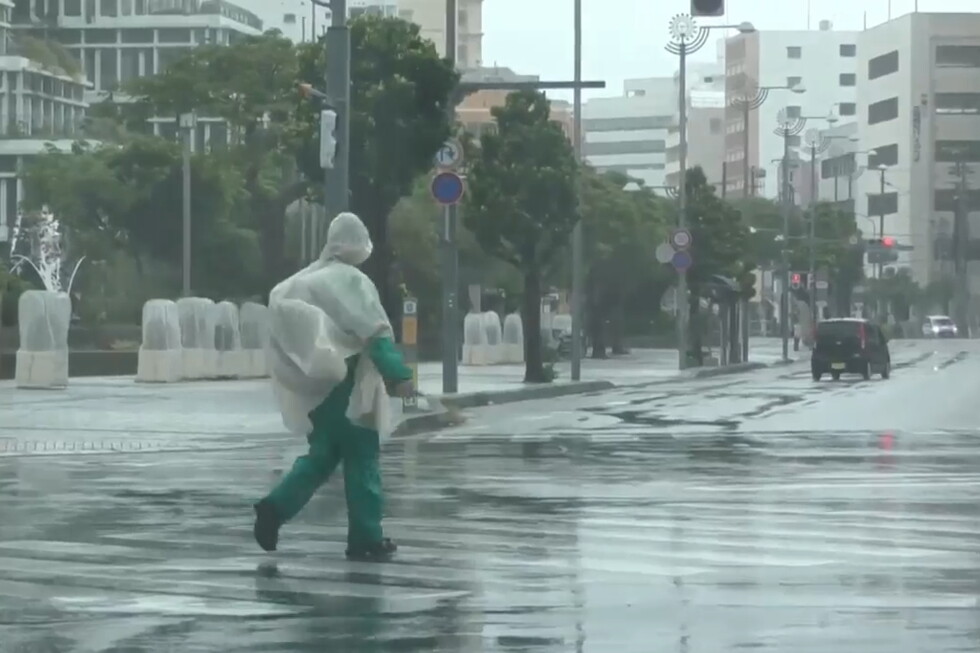
BEIJING (AP) — Authorities in eastern China shut schools and tourist sites as Typhoon Dolphin made its way towards land on Saturday.
The storm’s maximum sustained winds were estimated at about 162 kilometers per hour (101 mph).
It will bring heavy rains, creating a risk of severe flooding as well as landslides. It’s expected to hit Zhejiang province and northern parts of neighboring Fujian province late Sunday. Shanghai is also in the path of the storm.
National authorities declared a level III emergency response, the second lowest level.
Advertisement
Many tourist destinations in Zhejiang are shut Saturday and Sunday, as well as all water-based activities, including ferries and cruises. Authorities in the city of Ningbo, one of province’s largest, ordered schools and other educational facilities shut this weekend.
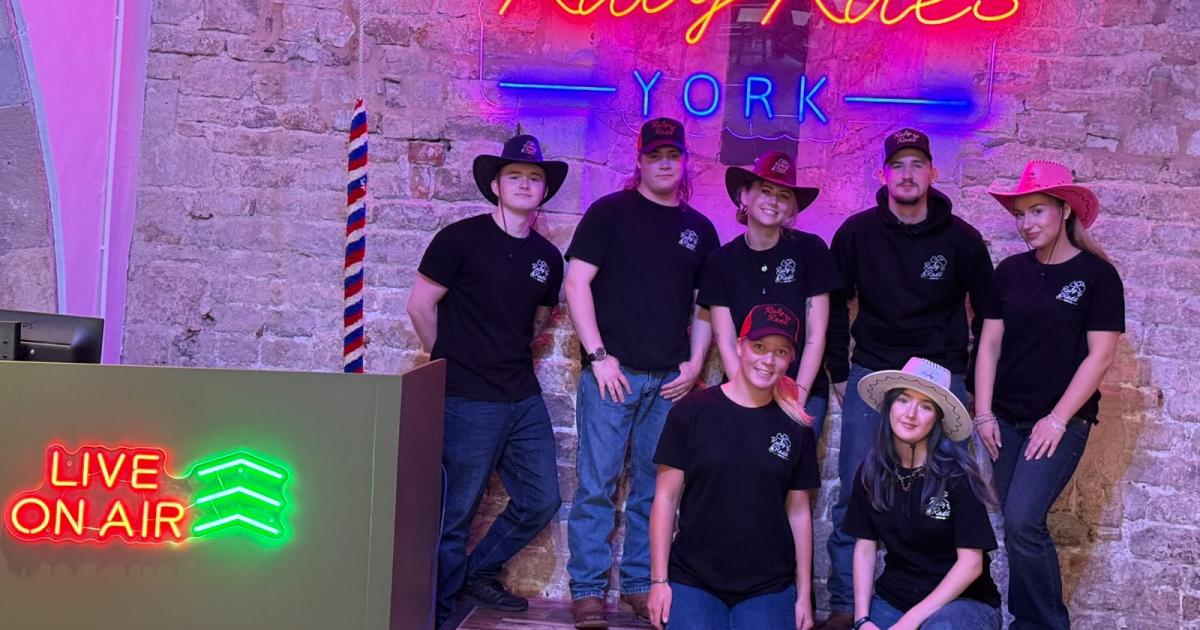
Ruby Rae’s Country Bar opened in the former Jalou nightclub on Bridge Street.
It adds to the recently opened Silver Spur a few doors away in Bridge Street, which form part of a thriving UK country and western scene.
Ruby Rae’s began in Newcastle and York is the company’s second venue.
RECOMMENDED READING:
Advertisement
Co-founder Dean Saunders chose the city as he has always loved it, he was a regular at Jalou, and when the former church became available, he could not refuse.
Business partners Dean Saunders and Dan Cooke (Image: Pic supplied)
Dean says he has been working on developing the York site since February, which will be inspired by the world-famous Ryman stage in Nashville.
The venue will open Thursday to Sunday.
More of the interior (Image: Pic supplied)
In the renovations of the former church, all the floors have been changed. Much LVT flooring has been used, which Dean says is great for line dancing.
Advertisement
A new bar has been created, there is a revamped stage and DJ booth.
The theme is Nashville (Image: Pic supplied)
Furthermore, to add character there are plates reflecting the region, ‘dollar walls’, flags, lots of vinyls and ‘lots of neon signs everywhere’ to create a Nashville look.
Dean said of the first night: “We were blown away by the support from everyone on the opening night in York.
“It was great to see hundreds of people come through the doors on a Thursday to enjoy some amazing country music!
Advertisement
A most impressive interior. (Image: Pic supplied)
“Chuck Walton, Bryan Watson and Tom Humphrey performed all night with a special guest appearance from Twinnie, who is coming back tonight.”
Business partner Dan Cooke said: “After such a long month getting it ready, it was amazing to see the venue finally open with everyone enjoying themselves inside and we are already excited for the rest of the weekend.”
The pair reflected: “But it was a huge success and everyone seemed to really enjoy themselves. There were some amazing people who really loved their country music.”
Plenty of neon on display at Ruby Rae’s (Image: Pic supplied)
Already the venue is receiving rave reviews online, with 28 five stars reviews received by 4pm Friday.
Advertisement
One said: “Opening night! What a venue, great music and atmosphere!”
Another said: “If you like country music then this is the place for you.”
Plenty of dollar bills! (Image: Pic supplied)
And another said: “Beer and live country music. What else do you want? Get down now!”
And one added: “Absolutely amazing! Fantastic atmosphere, great authentic singers & huge venue. Can’t WAIT to be back.”
Advertisement
Have you been to Ruby Rae’s? What did you think? Please share your thoughts in the comments below.
The August 12 solar eclipse will coincide with the peak of one of the year’s most spectacular meteor showers – here’s everything you need to know about the Perseids
Rachel Vickers-Price UK and World News Reporter and Eliana Nunes News Reporter
05:04, 08 Aug 2026
Perseid meteor shower: Difference between asteroids, comets and meteors
The solar eclipse won’t be the only spectacular celestial event next Wednesday as it falls just hours before the peak of one of the year’s most spectacular meteor showers – the Perseids.
The celestial double whammy will kick off in the early evening of Wednesday, August 12, and continue overnight into Thursday, August 13.
Advertisement
People in the UK will witness the most dramatic solar eclipse since 1999, with the Moon covering up to 95 per cent of the Sun in Cornwall and 94 per cent in Pembrokeshire. Skygazers in many other locations, including London, will see around 90 per cent coverage.
As darkness falls, attention will turn from the Sun to the stars, where the already active Perseid meteor shower will reach its peak overnight.
The Perseids – active between July 17 and August 24 this year – are widely regarded as one of the year’s best meteor showers because of their high number of meteors and bright, fast-moving streaks of light.
What is the Perseid meteor shower?
As the Earth orbits the Sun, it passes several times a year through trails of debris left by passing comets and sometimes asteroids.
The Perseids are caused by debris from Comet 109P/Swift-Tuttle.
When these fast-moving space rocks enter Earth’s atmosphere, the debris encounters resistance from the air, causing it to become extremely hot and eventually burn up. Sometimes the surrounding air glows briefly, leaving behind a fiery tail – the end of a “shooting star”.
Advertisement
According to NASA, the Perseids can produce between 50 and 100 meteors per hour during the peak, provided viewing conditions are favourable.
Timings for solar eclipse and peak of Perseid meteor shower
While the best time to see the Perseid meteor shower is between midnight and 5.30am on Thursday, Royal Museums Greenwich says the radiant of the Perseids is always above the horizon as seen from the UK, meaning observers should be able to spot some meteors as soon as the Sun sets on Wednesday.
The exact timings of the solar eclipse on Wednesday evening will vary depending on your location.
Advertisement
In Edinburgh and Glasgow, the eclipse will begin at around 6.08pm, reach its maximum – when the largest part of the Sun is covered – at around 7.05pm and end at about 8pm, according to Royal Museums Greenwich.
In London, Bristol and Cardiff, the eclipse will begin at around 6.17pm, reach its maximum at around 7.12pm and finish at around 8.06pm.
Timings for other locations in the UK are listed in the table below:
How can I watch the meteor shower?
Unlike a solar eclipse, you do not need any special equipment to watch a meteor shower.
Simply find a dark location away from city lights as competing sources of light – such as a bright Moon or artificial glow – are the main obstacles to a clear view of meteors. Cloud-free nights, particularly when the Moon is at its least bright, offer the best viewing conditions.
Royal Museums Greenwich notes: “In 2026 the peak of the Perseid meteor shower fortunately occurs during new Moon, so conditions are ideal for seeing the peak.”
For those without eclipse glasses, there are other ways to watch the eclipse safely using items you may already have at home, such as creating a pinhole viewer.
Key meteor shower dates for the rest of 2026
According to Royal Museums Greenwich, the following meteor showers are currently active or will take place later this year:
Date of activity: July 3 – August 15. Date of maximum: July 30.
Advertisement
Date of activity: July 12 – August 23. Date of maximum: July 30.
Date of activity: July 17 – August 24. Date of maximum: August 12-13.
Date of activity: October 6 – October 10. Date of maximum: October 9.
Date of activity: October 2 – November 7. Date of maximum: October 21.
Advertisement
Date of activity: September 10 – November 20. Date of maximum: October 10.
Date of activity: October 20 – December 10. Date of maximum: November 12.
Date of activity: November 6 – November 30. Date of maximum: November 18.
Date of activity: December 4 – December 20. Date of maximum: December 14.
Advertisement
Date of activity: December 17 – December 26. Date of maximum: December 22.
Following a sudden? influx of migrants into the Spanish enclave of Ceuta, the discussion on unauthorised migration to Europe is again heightened. In the UK this means a focus on small boat crossings and the policy surrounding them, particularly following 752 arrivals on July 29 – the highest number for one day so far this year, with four deaths recorded. The UK prime minster, Andy Burnham, has announced he will be “relentless” in addressing the issue, but is this the right approach? Our experts explain the statistics and language around small boat crossings into the UK, as well as what needs to change for immigration policies to succeed.
Why small boat arrivals have declined
Mihnea Cuibus, Senior Researcher, The Migration Observatory at The University of Oxford
Small boat arrivals have declined in 2026. Around 14,000 people crossed the Channel between January and July, 43% fewer than in 2025. Approximately 30,000 people arrived by small boat in the year ending July 31 2026, one-third below the levels seen last autumn, and slightly less than when Labour took office.
The government has made several policy changes since 2024, including scrapping the previous government’s Illegal Migration Act and Rwanda scheme. It then shifted to a model of temporary protection for refugees, restricted refugee family reunion. It has scaled up existing enforcement efforts and reached a deal to return some people who arrive by small boat to France.
Advertisement
Some government policies may have contributed to the decline. Restrictive family reunion policies are generally associated with fewer asylum claims, and physically preventing boat departures appear to have reduced crossings elsewhere. The deal with France may deter migrants if a high share of arrivals were to be swiftly returned, though this number remains relatively low, with 4% returned between September 2025 and June 2026. Smugglers have also changed how and where they operate in response to more enforcement in France, with more departures from Belgium this year.
However, external factors may have also played a role. Unauthorised arrivals into the EU have fallen since 2025, which may ultimately lead to fewer crossings to the UK. And changes to conflict situations in origin countries, such as Syria, can also affect migrant numbers.
Britain’s relationship with the EU
Simon Usherwood, Professor of Politics & International Studies, The Open University
In his comments about the influx of migrants in Ceuta at the end of July, Andy Burnham spoke of the need for “regular dialogue with the EU”. This was interesting for several reasons.
Advertisement
Despite Ceuta’s distance from the UK and its very particular relationship to the rest of the Schengen area of free movement, Burnham recognised that this has taken on a Europe-wide dimension. In a letter following the border crossing incident, 22 European leaders sharply criticised the Spanish government, and prompted broader discussion about “illegal border movements”. This will bring Channel crossings back up the European agenda, which might offer opportunities for Burnham to gather more support for action from the EU.
Andy Burnham visited HM Coastguard Maritime Rescue Coordination Centre, in Dover, where he inspected a recovered small boat. Jack Taylor/Alamy
Simultaneously, Burnham’s stance is a reflection of the very limited role that the EU currently plays in managing small boat crossings in the Channel. Competence for border controls and policing of people smuggling remains very much a matter for national governments, as seen in the recent ramping up of UK-French cooperation.
Since the UK left the EU, it no longer has access to the Dublin regulation arrangements that allowed it to return asylum seekers to other EU member states without considering their claims. Talking with the EU might sound good, but in practice it will be work with those countries on the edge of the Channel that delivers most results.
Finally, this is one of Burnham’s very first mentions of work with the EU since starting his path to Number 10. Yet, it’s an issue that isn’t an obvious priority for either side, and since the UK has little to offer the EU, we are likely to see limited progress. How this feeds into the more pressing elements of UK-EU relations – negotiations on food standards, youth mobility and the rest – will only become clear in the coming months.
Advertisement
Behind Burnham’s language
Erica Consterdine, Senior Lecturer in Public Policy, Lancaster University
Small boat crossings have come to dominate the immigration debate, despite accounting for only a small share of overall migration. Now, they serve as a visible symbol of a government’s perceived control over the border.
Many believe these crossings are a new phenomenon and evidence of a system in crisis. In reality, irregular movement across the Channel has existed for decades. What’s changed is that tighter border controls have made other clandestine forms of irregular entry harder. Successive governments have also restricted safe and legal routes for people to seek asylum in the UK, pushing more desperate people towards dangerous sea crossings.
Conservative prime ministers politicised small boats – Boris Johnson described Channel crossings as “criminal”, while Rishi Sunak elevated “stop the boats” into a defining slogan of his government. Labour’s rhetoric under Keir Starmer differed in tone but less so in substance. Rather than stopping the boats, Starmer promised to “smash the gangs”. The target changed, but the underlying emphasis on toughness remained.
Advertisement
That is why Andy Burnham’s comments are notable. In his 2015 leadership bid, he followed a protectionist line, setting out plans to ban EU citizens from claiming welfare benefits until they have worked for two years, while echoing a longstanding political narrative that frames anti-immigration sentiment as a “legitimate concern”.
His re-appointment of Shabana Mahmood as home secretary follows the Blue Labour tradition that has increasingly shaped Labour’s thinking on borders, belonging and immigration.
Burnham’s rhetoric of being “relentless” in reducing crossings follows the Labour playbook. But his recognition of needing to “build a system that offers safe routes for people as well” hints at an overdue shift that is grounded in reality, rather than the fantasy of borders being simply willed shut.
An assortment of small boats used by migrants to cross the Channel, stored at the UK Home Office facility in Dover, Kent. Toldga Akmen/EPA
The ‘taking back control’ narrative
Alex Balch, Professor of Politics, University of Liverpool
The framing of policy towards small boat crossings as “taking back control” might be seductive to politicians, but it illustrates how little the debate reflects the complexities around managing migration.
Advertisement
The government should be urgently responding to how many people are dying trying to cross the channel through dangerous means, and working hard to provide alternative routes and processes for people to seek protection or entry to the UK.
Governments can never fully dictate who wants to visit or live in a country. Complete and total control over national borders is not possible – or even desirable – if we want to continue to live in an open and free society. It would mean spending much more, and allowing the government to deploy high levels of somewhat indiscriminate violence, including on its own population, as seen in the US recently.
The best alternative to the ineffective (and costly) focus on trying to deter people from crossing is to commit to a more pragmatic and realistic approach to how irregular migration is better managed across Europe. This requires partnership with the non-European countries and regions that people are migrating from. Burnham’s promise to be “relentless” and “bring back that control” sounds familiar and risks the continued disregard for the needs and welfare of people moving across borders.
But the current situation does not work or adequately serve the interests of the country. Enforcement at the border and increasingly inside the country pushes people into ever more dangerous journeys and criminalises those seeking to contribute to Britain and make a better life for themselves and their families.
Advertisement
A different approach may not mean abandoning border controls, but having a more honest discussion about immigration. This includes the rights and dignity of those migrating, the costs of the current policies to the country, practice around detaining and deporting people, and recognising how the existing approach causes many of the harms we are witnessing.
Breaking the cycle: secure housing and the right to work
Jonathan Darling, Professor of Geography, University of Durham
Andy Burnham’s stated desire to avoid “playing politics” with asylum is a laudable one. Since 2019, successive governments have talked tough on asylum while doing little to improve the asylum system. Instead of tackling backlogs in decision-making and supporting integration, public resources have been wasted on attention-grabbing policies that punish asylum seekers.
Breaking this cycle is crucial if Britain is to have an asylum system that treats people with dignity. Burnham has reportedly considered ending the outsourcing of asylum accommodation, a system that is lucrative for private firms and costly to the taxpayer. This failed model of housing damages the lives of asylum seekers, placing them in unsafe and poor-quality accommodation, and creates community tensions through lack of engagement with residents.
Advertisement
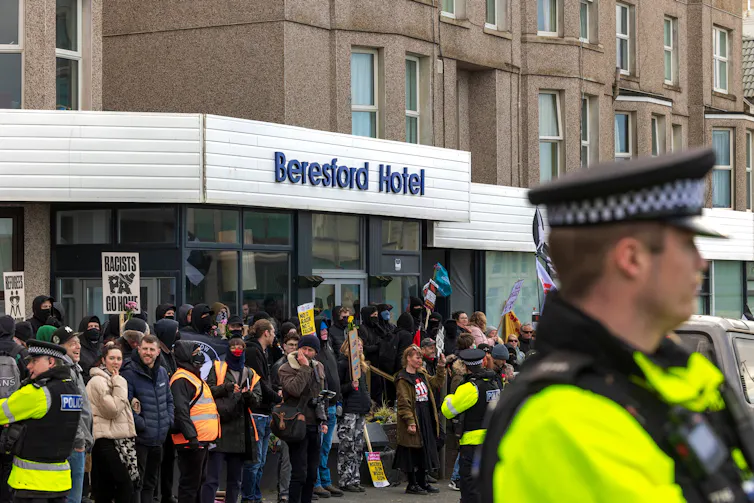
The Beresford Hotel, Cornwall, saw mass protests in 2023 due to housing asylum seekers. Jory Mundy/Shutterstock
Making local authorities responsible for asylum accommodation will not easily solve these issues. But empowering local authorities would mean that the asylum system benefits from the knowledge and expertise of local government on housing conditions, housing markets and social cohesion.
Where managed effectively and publicly, asylum housing can offer pathways to regeneration, the establishment of new communities and the growth of local economies. Working with devolved authorities to invest in accommodation would also align with the aims of Burnham’s wider devolution agenda.
A second positive step would be to give asylum seekers the right to work after six months in the asylum system. This would reduce costs of support on the state and would enable the economy to benefit from the skills and experience of new arrivals. The right to work would also have further benefits: tackling social isolation, improving mental health and facilitating integration.
A car was ‘set on fire’ and bricks were also thrown at a house in a Cambridgeshire city. Cambridgeshire Police were called to an incident at around 2.40am today (Friday, August 7).
Advertisement
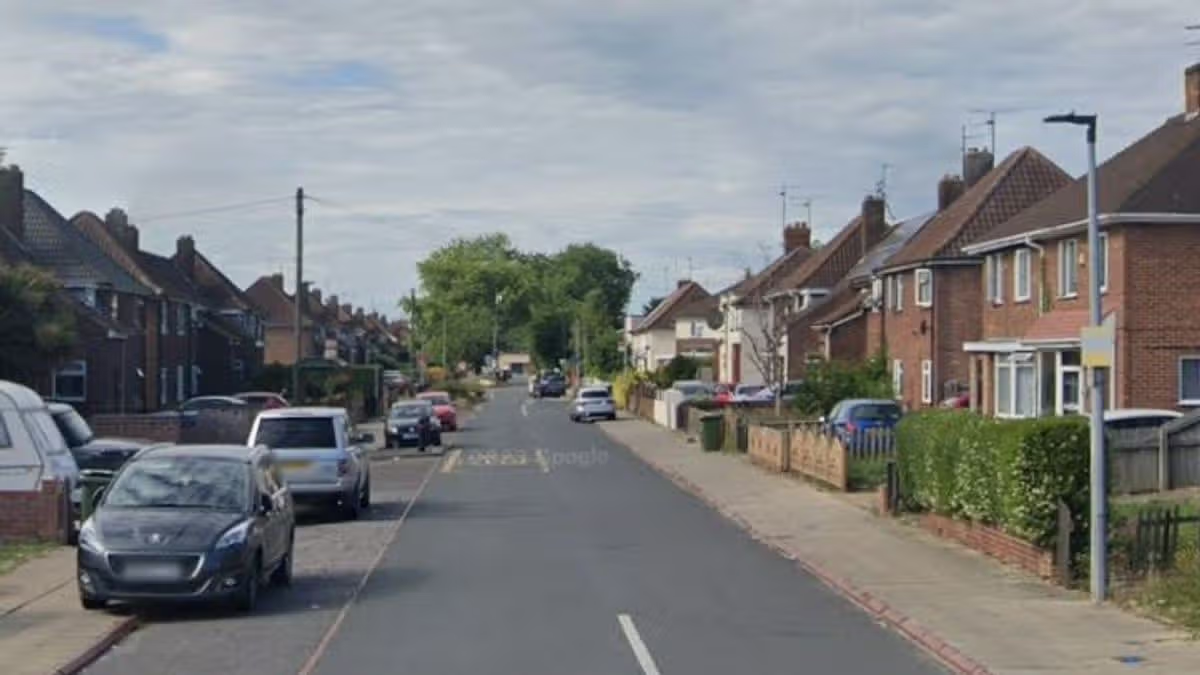
Police received reports a car was on fire and there were “bricks thrown into a house” in Saxon Road, Eastfield, Peterborough.
One woman suffered minor injuries, but she didn’t receive hospital treatment. A police spokesperson said: “Police are treating the fire as arson and an investigation is ongoing. No arrests have been made at this time.”
Cambridgeshire Fire and Rescue also attended. A fire spokesperson said: “At 2.43am on Friday, a crew from Dogsthorpe was called to a car fire on Saxon Road in Eastfield, Peterborough.
“Wearing breathing apparatus, firefighters used a hose reel to extinguish the fire before returning to their station by 3.45am. The cause of the fire is believed to be deliberate.”
Advertisement
Cambridgeshire Police is appealing for information. Anyone with information should contact police online or call 101 and quote incident 33 of August 7.
The UK is bracing for a fifth heatwave of the year, with forecasters predicting temperatures could soar to as high as 36C across 27 counties in England
Rachel Vickers-Price UK and World News Reporter and Conor Wilson
04:43, 08 Aug 2026Updated 04:44, 08 Aug 2026
Temperatures are set to soar once again, with a fifth heatwave on the horizon and a series of health warnings issued as the mercury looks poised to climb for a sweltering weekend.
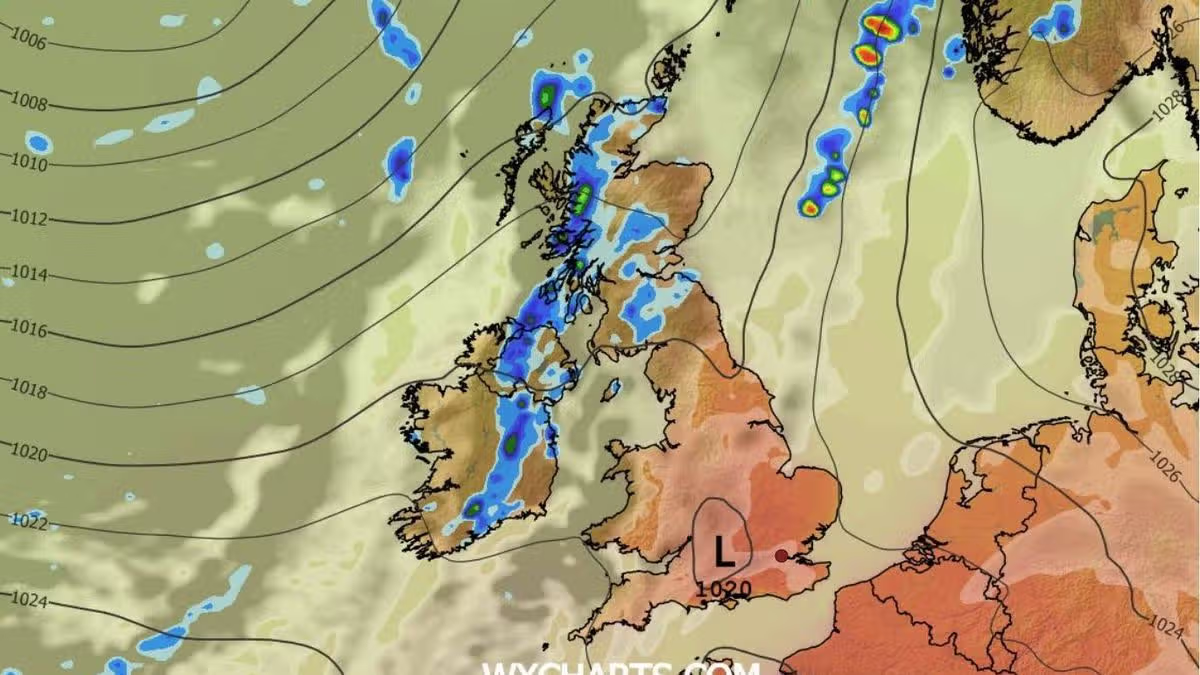
Then, heading into next week, conditions are expected to intensify further, with 27 counties anticipated to broil and push beyond 30C, according to the latest weather maps from WXCharts.com.
Advertisement
The latest weather maps from WXCharts.com indicate a ferocious blast of heat is forecast to scorch vast stretches of England, with temperatures surging as high as 36C.
The data suggests stifling conditions on August 13 will affect more than two dozen counties, with the most intense heat radiating from the South and South East through the Midlands and into eastern England. Across the remainder of the country, temperatures will be considerably cooler.
Scotland and Northern Ireland are largely sitting in the teens and low 20s, while western parts of Wales and northern England escape the worst of the furnace-like conditions.
Advertisement
Fresh heat alerts are due to take effect as the UK prepares for its fifth heatwave of the year, bringing blistering highs of 36C. The UK Health Security Agency (UKHSA) has issued yellow heat health alerts for the East Midlands, West Midlands, South East, South West, East of England, Yorkshire and the Humber and London.
The yellow heat health alerts run from 9am on Saturday to 9pm on Tuesday, cautioning that the scorching weather is likely to impact the wellbeing of the general public.
This follows the Met Office’s caution that heatwave conditions are anticipated to return to numerous parts of the UK next week, as temperatures climb throughout the weekend before rising more sharply into the middle of next week.
Weather specialists predict that temperatures could reach 36°C in parts of East Anglia and south-east England by Thursday, according to the Express.
Advertisement
Deputy chief forecaster Mike Silverstone said: “Temperatures will climb through the weekend and, more significantly, through much of next week. After a brief dip on Monday, high pressure will move across the UK before settling to the east, allowing a southerly flow to develop.
“A fairly widespread heatwave is likely across large parts of England and Wales, with hot conditions developing in places.
“The heat is expected to peak for much of England, Wales, Northern Ireland and Scotland on Wednesday, with up to 34°C possible in parts of central and southern England and southeast Wales.
Advertisement
“East Anglia and south-east England, however, could see temperatures even higher on Thursday.
“Humidity levels are also expected to increase through the week, which may make conditions feel more uncomfortable, particularly overnight.”
The agency’s long-range forecast for 12th to 21st August stated: “A mixed start is likely to this period, with some rain or showers in the north and quite breezy conditions while in the south it will be mostly dry, sunny and hot, even very hot in some places.
“Southern parts are likely to turn cooler and fresher next weekend though.”




















































You must be logged in to post a comment Login