A pregnant Co Armagh woman was killed in a “prolonged assault”, a murder trial has heard. Natalie McNally, 32, was killed at her home in Lurgan a week before Christmas in 2022.
Stephen McCullagh, 36, of Woodland Gardens in Lisburn, has denied murdering his girlfriend, Miss McNally, who was 15 weeks pregnant with their child.
McCullagh sat in the dock at Belfast Crown Court between two prison guards on Tuesday during the second day of his trial.
Following a break for lunch, the state pathologist for Northern Ireland was called to give evidence.
Advertisement
Dr James Lyness confirmed he carried out a post-mortem on Ms McNally’s remains at the Northern Ireland Forensic Mortuary on December 21, 2022 and conducted a second examination the following day.
He told the jury of six men and six women that he believed Ms McNally was subjected to a “prolonged assault” and that it was “likely” the 15-week male foetus she was carrying “died as a result of the assault.”
When asked by Mr MacCreanor what he considered to be the cause of Ms McNally’s death, Dr Lyness replied: “The cause of death in this case was given as compression of neck, stab wounds of neck and blunt force trauma of head.”
The pathologist then gave a detailed forensic descriptions of the multiple injuries Ms McNally sustained which included three stab wounds to her neck as well as compression injuries to her neck “suggestive of having been caused by fingertips.”
Advertisement
He also outlined five lacerations to her head and said this blunt force trauma was likely to have been caused by a weapon.
Dr Lyness noted other areas of multiple bruising to her scalp and face caused as a “result of blunt blows such as punches.”
In addition, the medical witness spoke of other injuries to her wrists and forearm which he said “could have been caused by blunt blows including if she had raised her arms to protect herself.”
He added: “Additional bruises on the backs of the hand may have been caused if she had punched a hard surface but could also have been the result of blunt blows in an attempt to protect her body.”
Advertisement
When asked to summarise his findings, Dr Lyness said it was a “complex case” and that it was “difficult to be certain of the exact fatal sequence from the autopsy findings.
“Both the neck compression and the stab wounds to the neck could have caused her death on their own.”
Also citing the seriousness of the head wounds, Dr Lyness told the court, “it would seem reasonable to conclude that the compression of the neck, the stab wounds to the neck and the blunt force trauma to the head all contributed to the fatal outcome.”
After being called to give evidence at Belfast Crown Court, the police officer confirmed he attended Ms McNally’s address on the evening of December 19, 2022.
He said that when he arrived at Silverwood Green, members from the Ambulance Service were at the scene along with other police officers.
Advertisement
Under questioning from Crown barrister Charles MacCreanor KC, the witness confirmed he then entered Ms McNally’s home.
The officer said he saw McCullagh in the hallway who was “very upset, he was crying.”
He said that after McCullagh was “led out” and taken to a police car by another officer, he walked up the stairs and observed Ms McNally’s feet at the top of the staircase.
When asked if he saw Ms McNally at the top of the stairs, the sergeant replied “I did” then said “she was lying on her back.”
Advertisement
He continued: “Her head was in the living room which was on the first floor. She was lying on her back with her feet protruding over the stairs.
“She was slightly raised on the left-hand side by a cushion, and her left arm was up against the wall.”
When the police officer was asked if blood was visible, he said: “Yes, there was blood visible around her neck. I noticed a puncture wound.
Advertisement
“There was bloo,d which was in a dog bowl. It looked almost like it had been used to collect the blood.”
Mr MacCreanor then asked the sergeant if he observed a small black-handled knife in the living room and he confirmed he saw this item lying on the floor “some distance away from the deceased’s head.”
He added that he also saw some blood “on the wall closest to the knife” then confirmed he “went no further than the top of the stairs” before exiting the property.
Mr MacCreanor then asked the witness if he was aware of the arrest of McCullagh at the scene at 11.40pm.
Advertisement
The sergeant confirmed this was the case and that McCullagh was taken into custody to Banbridge PSNI station.
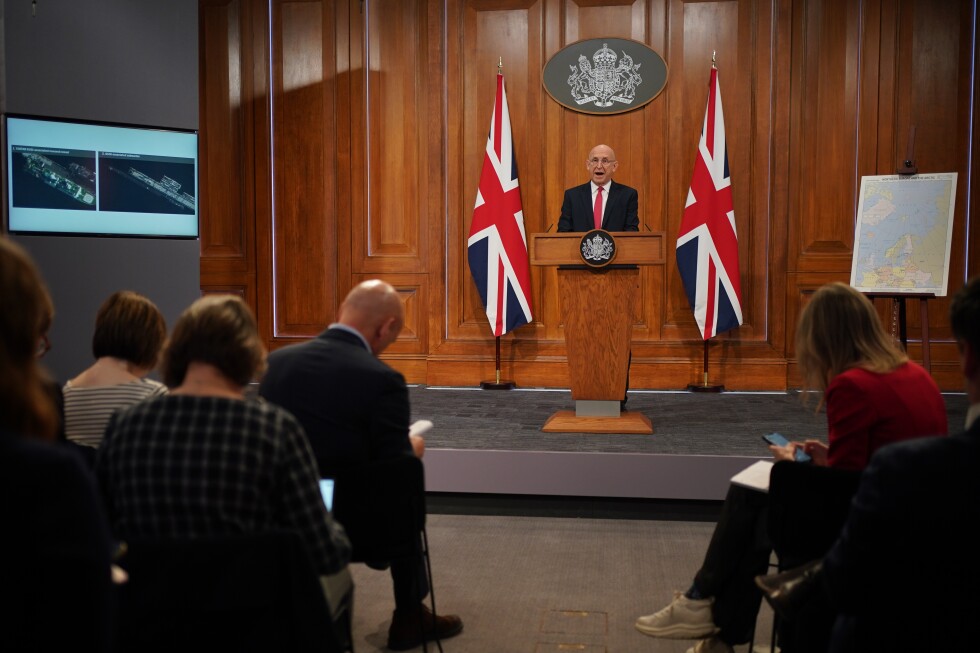
LONDON (AP) — British and Norwegian militaries led a weekslong operation to deter Russian submarines suspected of “malign activity” in the North Atlantic, the U.K. military said Thursday.
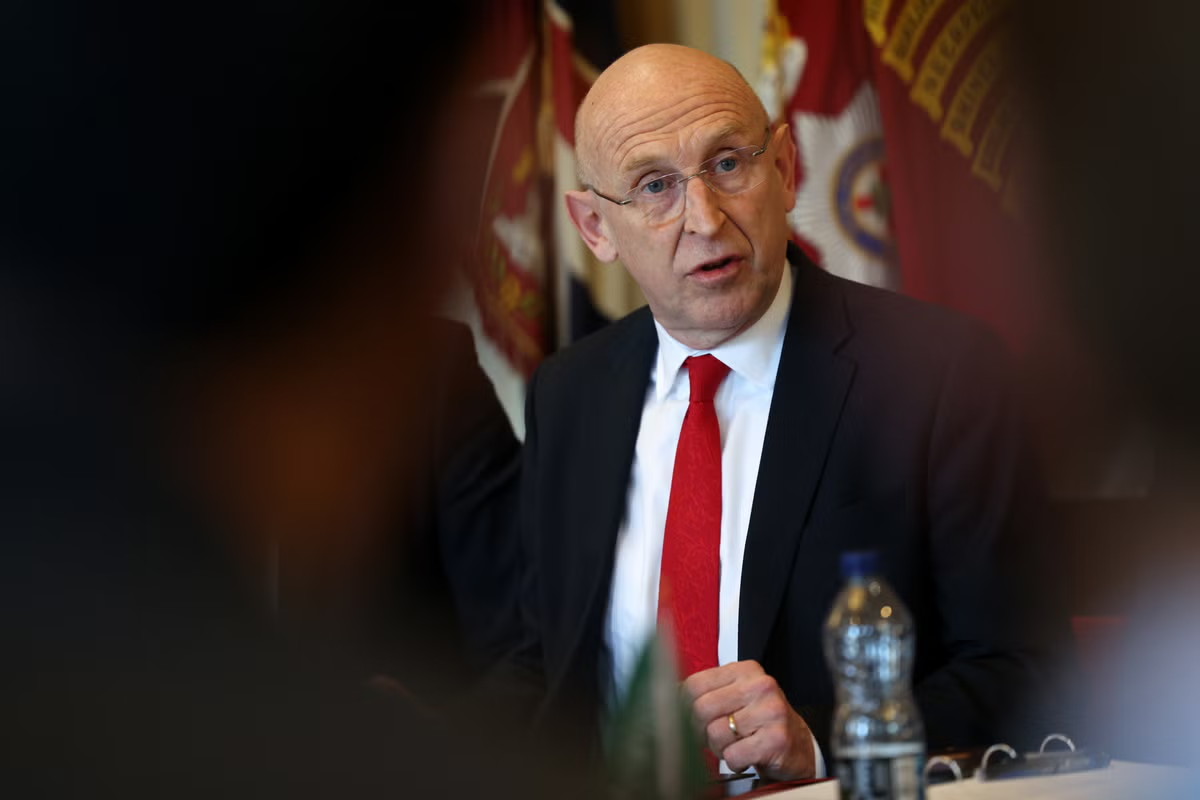
Defense Secretary John Healey said a frigate, planes and hundreds of personnel monitored a Russian attack sub and two spy submarines near undersea infrastructure north of the U.K. He said the Russian vessels eventually left after the operation that lasted more than a month.
Healey said his message to Russia was “we see your activity over our cables and our pipelines and you should know that any attempt to damage them will not be tolerated and will have serious consequences.”
Representatives of Norway’s defense and foreign ministries, as well as the armed forces, did not immediately respond to requests for comment.
Advertisement
British officials have tried to keep Russia in the international spotlight even as the world’s attention is focused on conflict in the Middle East. They have also stressed the overlap between conflicts there and in Ukraine, saying Russia has supplied Iran with drone parts and other support.
Healey told a news conference that “Putin would want us to be distracted by the Middle East,” but Russia is the main threat to the U.K. and its allies.
“We will not take our eyes off Putin,” he said.
In late March, the U.K. said its military was ready to seize ships suspected to be part of Russia’s “shadow fleet” of vessels shipping oil in violation of international sanctions over Moscow’s war on Ukraine. Previously, Britain had only helped France and the U.S. monitor ships before they were boarded.
Advertisement
“We are ready to take action” against the vessels, Healey said.
Even for a high-profile international footballer, sometimes mum knows best.
In September 2023, when, by his own admission, Manchester United defender Harry Maguire was at his lowest ebb, as he was abused and mocked during an England appearance against Scotland (“I came on, played really well, then scored an own goal”), his mum Zoe took to social media.
She called the treatment of her son “disgraceful and unacceptable”.
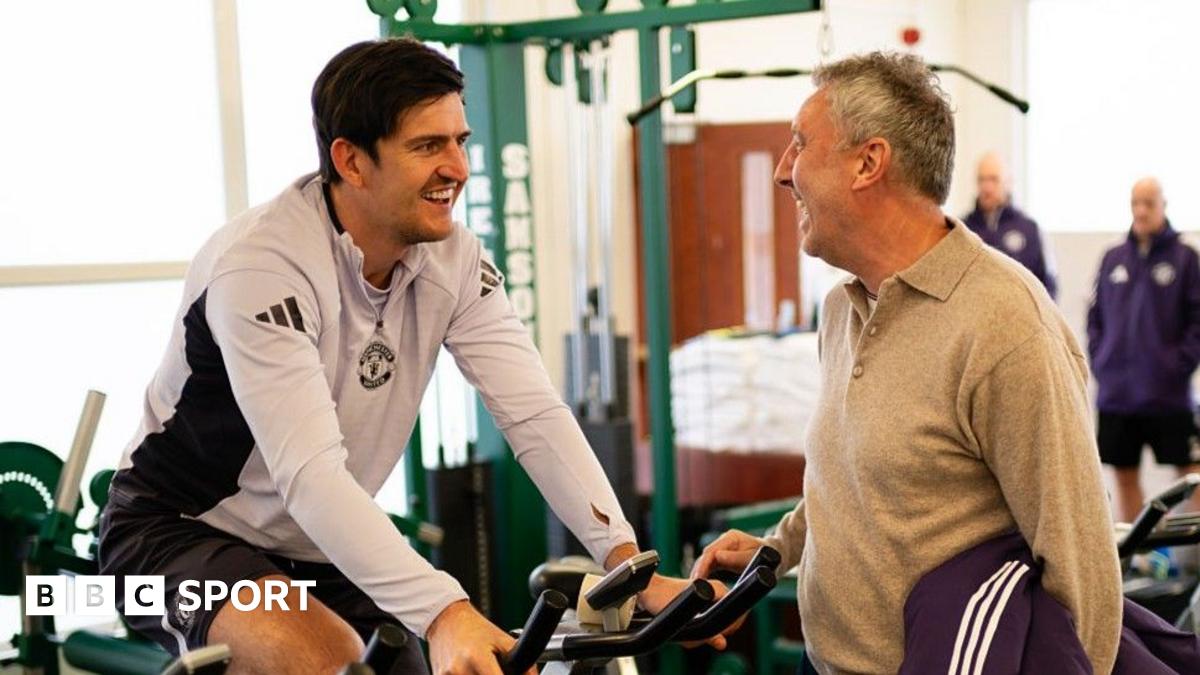
“I didn’t want her to, but she just said, ‘I’m doing it! I’m not listening to you!’” Maguire said, smiling, as he spoke at length about his career so far and hopes for the future to journalists at the club’s training camp in Maynooth, 20 miles outside Dublin.
Advertisement
“I think it probably does affect your family a little bit more in those moments. They’ve seen what we’re going through and how tough it is.
“That was probably the lowest point, but it’s part of the journey.
“I wouldn’t change where I’ve been and what I’ve been through. It’s definitely made me stronger and got me to where I am today.”
It seems unfair to focus on negatives.
Advertisement
Maguire, 33, feels he has “performed really well” in six out of his seven seasons at Old Trafford.
“I still believe, even at my age, I’m arguably one of the best defenders in the world in both boxes,” he said. “I don’t think that’s in question really; that I can be really effective later on in games, whether you’re holding on to a lead or trying to chase a game.”
Yet the openness and the honesty with which he assessed his more difficult moments made it an obvious area to probe, 24 hours after it had been confirmed Maguire had signed a new deal that will give him an eighth campaign at the club, and potentially a ninth.
After all, this is someone who had the captaincy taken off him by then-manager Erik ten Hag and the club were prepared to sell to West Ham a couple of months before that Scotland game.
Advertisement
“Obviously your first emotion is anger and disappointment, that’s natural,” he said of the captaincy call.
“But I always thought unless you are one of the superstars and a world, world class player, you have ups and downs and things that you have to deal with. That’s why you see so many players have two or three years at the top, drop off, go to a different country and you don’t hear too much about them again.
“Wayne Rooney was here, one of the best players to ever play for this club, and he got so much pelters at times when he wasn’t doing too well. I always looked to the experience with players like Wayne and David Beckham and how they overcame it.
“I just kept my head down. I have great self-belief, more importantly, that I’m a top player. That’s what helps me when things are tough.”
Advertisement
Clearly, strength of mind is a positive character trait.
Maguire accepts it has been bumpy at times.
He did not go as far as to say he benefited from having the captaincy taken away but did admit “the form came back” after it happened. “I believe the form would have come back whether I was captain or not,” he added.
However, he concedes not everyone would have the mental strength to navigate their way through his pathway.
Advertisement
“Yes probably,” he said, when asked if it would have broken most players.
“I think there’ll be a lot who want to just close the book, go elsewhere and restart their career. I think it’s probably broken them a little bit earlier. It got to a point with the mocking and the abuse – if you want to call it abuse – there was only one way it could go.”
The London Marathon is just around the corner, and while those of you taking part may be finishing up your training plans, you’re probably also dreaming of the meal you’re going to enjoy after running across the finish line. To help you celebrate, we’ve rounded up the best freebies you can claim after finishing the big race.
From burritos to beer, there are tons of ways to treat yourself, but the freebies start before the race even beings. On race day itself – Sunday 26 April – marathon runners and race officials can travel for free on TfL services (excluding the IFS Cloud Cable Car and river services) from 4.30am until 8pm. All you have to do is present an official running number, course photo ID or course pass.
We’re expecting tons of treats to be announced for London Marathon runners in the coming weeks, so we’ll be updating this story with the best ones we find. For now, keep scrolling for the best food and drink freebies we’ve found so far, including food and drink freebies from pubs and restaurants.
The best food freebies for London Marathon 2026 runners
Free burritos from Chipotle
(Chipotle)
Bring your medal into any Chipotle branch in London on Sunday 26 April or Monday 27 April to claim your choice of burrito, taco, salad or bowl. These meals are customisable and there’s lots of protein options, from plant-based sofritas to braised beef barbacoa.
Free roast dinner from Kitty Hawk
Advertisement
(Toast Marketing)
Once you’ve finished the race, take a stroll from the finish line to Trafalgar Square for a free Sunday roast at Kitty Hawk. This rooftop restaurant offers views of London’s skyline.
No booking is required to get the free roast – just show your medal on the day.
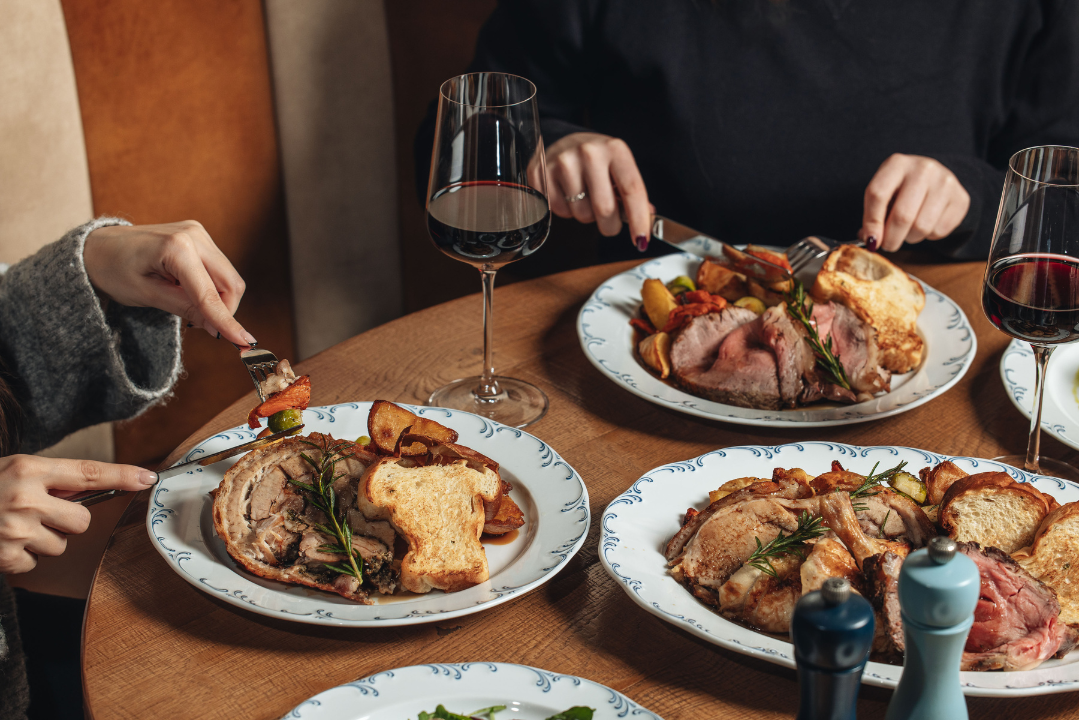
Free Italian-style roast dinner from LAVO at the BoTree
(iStock)
If you would prefer something a little different for your Sunday lunch, LAVO at BoTree are offering London Marathon finishers a free, re-imagined roast dinner. Tuck into beef striploin, corn-fed chicken, porchetta, or roast cauliflower alongside roast potatoes, seasonal vegetables and panino semidolci.
Bookings are required, so grab your slot between 12pm and 5pm. Remember to show your medal upon arrival.
Free salad bowl from atis
Advertisement
(atis)
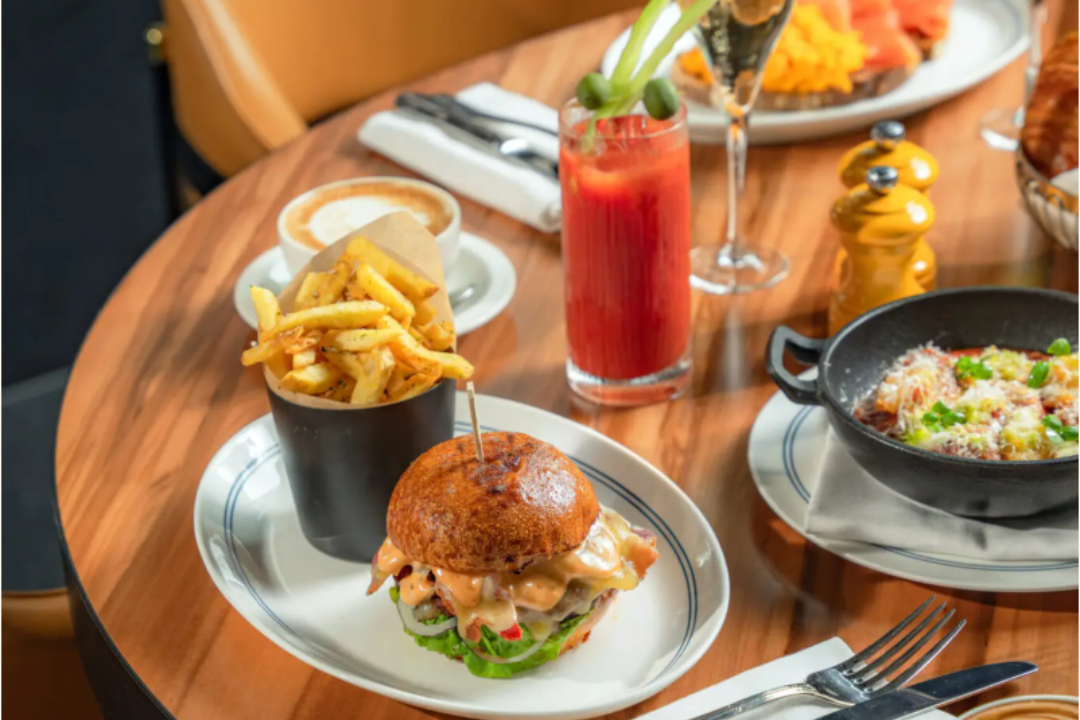
Personally, if I ran 26.2 miles, the last thing I would be eating is a salad. But if you want to reward your body with the good stuff, atis is offering London Marathon finishers a free standard-size salad bowl at any of their London locations.
There’s a range of options to choose from, including plant-based bowls and atis’s limited-edition marathon salad bowl in collaboration with Runna, which is pictured above and contains sweet potato, black beans, wholegrain rice and a cashew satay dressing. Any extras will be charged separately.
Show your medal in person on either Sunday 26 April or Monday 27 April to redeem your bowl.
Free chaat from Cinnamon Bazaar in Covent Garden and Cinnamon Kitchen in Battersea
(Roche Communications)
Enjoy traditional Indian street food on race day with free chaat for London Marathon medal holders. Chaat is a popular fried dough dish that’s both sweet and tangy. This freebie is available at both Covent Garden and Battersea.
Free cheesecake from La Maritxu in Carnaby
Advertisement
(La Maritxu)
If you’re around Carnaby after the race, it’s worth popping into La Maritxu at Kingley Court, as it’s giving away a free slice of basque cheesecake to the first 100 runners who show their medals. This is a San Sebastián-style burnt cheesecake that’s creamy and crustless.
You don’t need to book this one, but you will need to race your fellow runners for a second time to get your hands on this treat.
Free dessert at Ham Yard Hotel in Soho
(Ham Yard)
If you’re planning to have an extravagant celebration, Ham Yard Hotel is rolling out its dessert trolley for London Marathon finishers. This isn’t a proper freebie, as one lunch course starts at £39 per person, but you’ll be able to choose from chocolate drenched profiteroles, Victoria sponge and more at no extra cost.
Lunch is served between 12pm and 5pm, so it’s worth considering whether you’ll finish the race in time. Booking is required – just click below.
The best drink freebies for London Marathon 2026 runners
Advertisement
Free smoothie from Lanes of London in Mayfair
(Roche Communications)
Nothing beats a smoothie after a long run, so if you happen to be in Mayfair on race day, show your medal to get a refreshing beverage with banana, berries, coconut water, orange juice and greek yogurt.
Free matcha at Jenki
The best alcohol freebies for London Marathon 2026 runners
Free pint from Pretty Decent taprooms
Advertisement
(Pretty Decent)
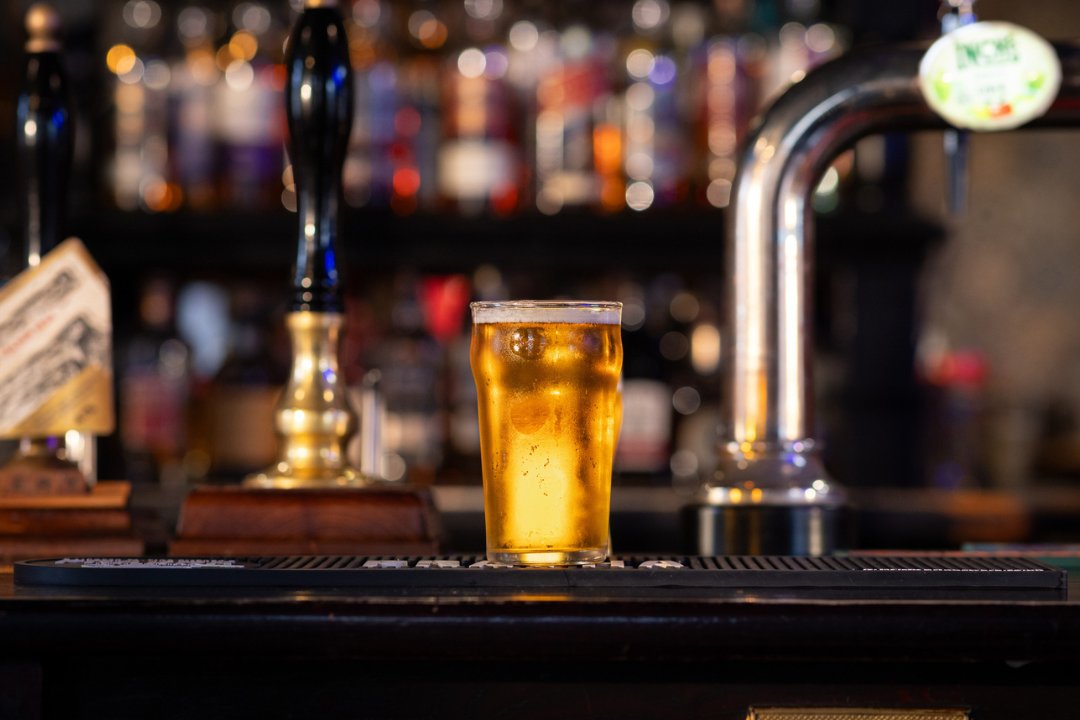
Pretty Decent is an independent East London brewery with locations in Victoria Park, Forest Gate and Walthamstow. Runners who show their London Marathon 2026 medal can get a free pint on race day, plus, there will be £4 pints available all day.
Free pint from Mrs Fogg’s Taverns
Free pint from Sport London pubs
Free pint of Camden Hells from Castle Pubs
(iStock)
Enjoy a draft pint of Camden Hells at Castle Pubs across London when you show your medal on Sunday 26 April. Locations include The Gipsy Moth in Greenwich, The Sun Inn in Barnes, The White Horse in Parsons Green and The Engineer in Primrose Hill.
Free pint or glass of bubbles from The Brush East London Grand Café in Shoreditch
Advertisement
(Roche Communications)
This Shoreditch pub is giving London Marathon medal-holders a free pint or glass of bubbly on race day. It’s probably a good idea to book this one, which you can do below.
Free pint or wine from The Lamb in Bloomsbury
(Roche Communications)
Pop into The Lamb in Bloomsbury and get a free pint or small glass of house wine when you show your medal on race day. This pub is based in central London, so it’s worth booking, to avoid disappointment.
Pint of Jubel from Bow Street Tavern
(Roche Communications)
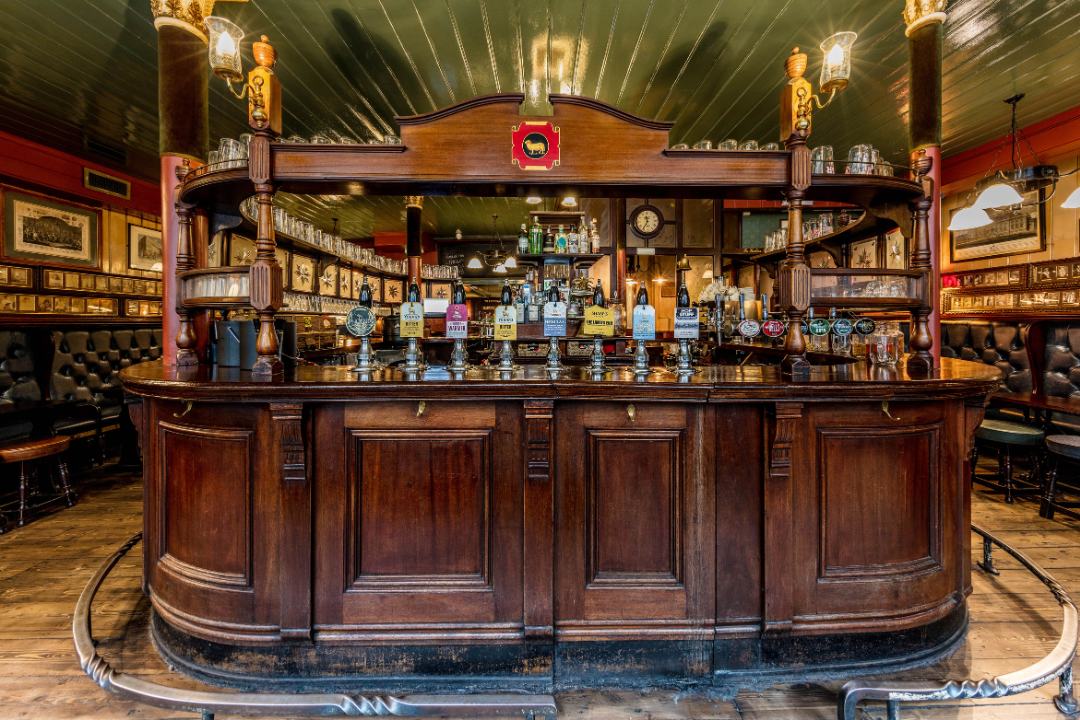
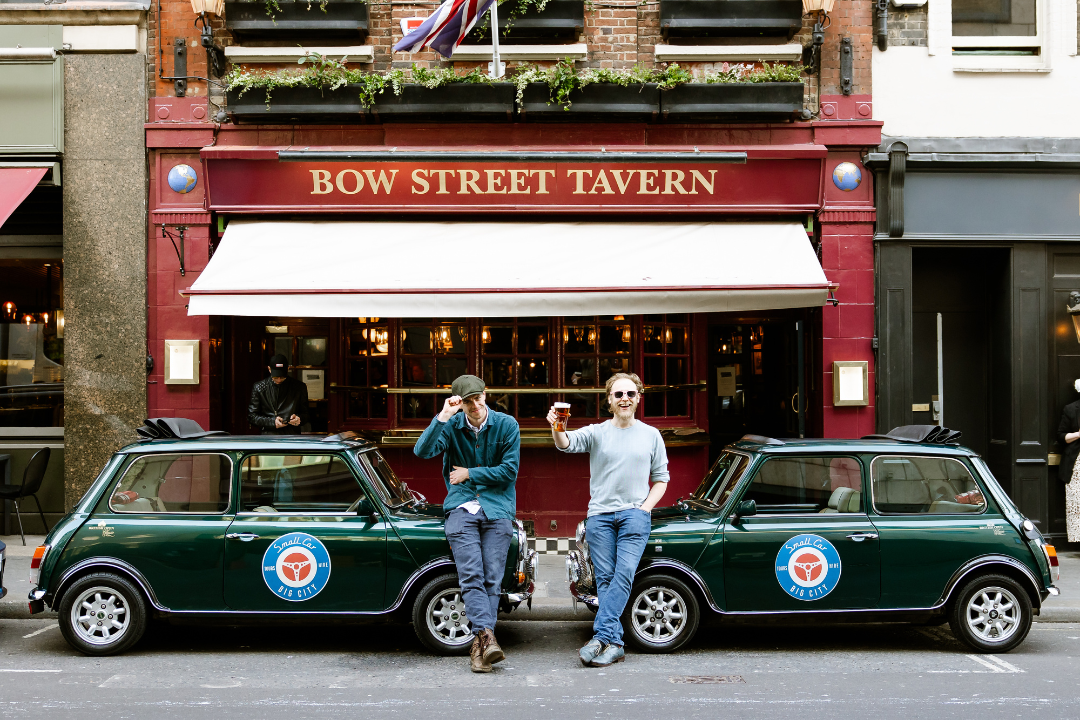
Head to Bow Street Tavern in Covent Garden to get a free pint of Jubel on race day. Again, it may be worth booking to avoid disappointment in busy central London.
The best shopping freebies and discounts for London Marathon 2026 runners
Free socks from Happy Socks
Advertisement
25 per cent off at Vivobarefoot
Free hand and arm massage and samples from Elemis
For more great offers and discount codes, check out our dedicated deals section
For much of their Conference League campaign, Palace supporters have looked disillusioned, distracted by Glasner’s comments, but also harbouring plenty of resentment towards UEFA for their demotion from the Europa League following a messy dispute with the governing body around their ownership model.
HONG KONG (AP) — Oil rose again and world shares were mostly down Thursday on skepticism over a fragile ceasefire between the U.S. and Iran.
Investors were closely watching whether a two-week ceasefire between the United States and Iran was already slipping after a round of intense Israeli strikes on Lebanon that killed and injured hundreds. Iran again closed the Strait of Hormuz, in response to the attacks in Lebanon.
In early European trading, Britain’s FTSE 100 fell 0.3% to 10,572.73. France’s CAC 40 dropped 0.8% to 8,198.77, while Germany’s DAX lost 1.3% to 23,771.68.
Asian shares closed mostly lower. Tokyo’s Nikkei 225 dropped 0.7% to 55,895.32, while South Korea’s Kospi lost 1.6% to 5,778.01. Hong Kong’s Hang Seng fell 0.5% to 25,752.40. The Shanghai Composite index was down 0.7% to 3,966.17. Australia’s S&P/ASX 200 edged up 0.2% to 8,973.20. Taiwan’s Taiex was 0.3% higher, while India’s Sensex dropped 1.6%.
Advertisement
U.S. futures were down more than 0.4%.
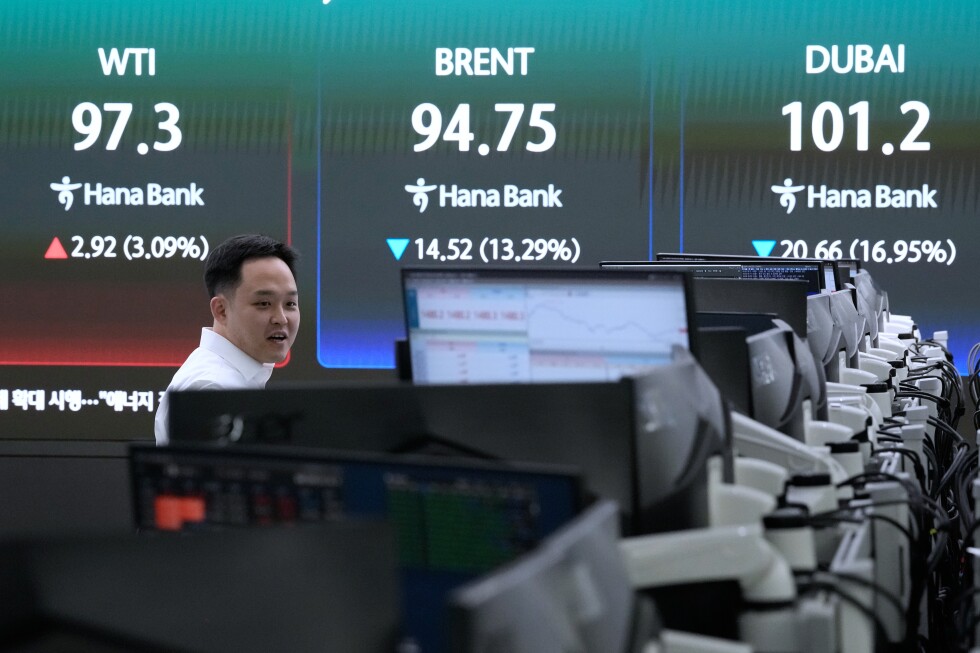
Oil prices were up Thursday, reversing an earlier plunge on optimism over the temporary ceasefire agreement. Brent crude, the international standard, was up 3.5% to $98.09 per barrel. Benchmark U.S. crude was 3.6% higher on Thursday at $97.83 a barrel.
Uncertainties over global energy supply remained. The Strait of Hormuz, a chokepoint for energy transport where a fifth of the world’s oil typically passes, was largely closed even though the U.S. repeatedly demanded that it must be reopened.
“(Oil) prices rebounded as fighting in the Middle East continued, and the ceasefire outlook deteriorated, keeping uncertainty around the Strait of Hormuz firmly in focus,” ING Bank analysts Ewa Manthey and Warren Patterson wrote in a note Thursday.
Advertisement
Talks to pursue a permanent end to the war could start in Pakistan on Saturday, and Vice President JD Vance is expected to lead the U.S. delegation. President Donald Trump posted on his Truth Social media platform that U.S. military will remain around Iran “until such time as the REAL AGREEMENT reached is fully complied with.”
Wall Street closed higher Wednesday following Trump’s announcement of a two-week ceasefire with Iran late Tuesday.
The S&P 500 jumped 2.5% to 6,782.81. The Dow Jones Industrial Average rose 2.9% to 47,909.92. The Nasdaq composite was up 2.8% to 22,635.00.
Following renewed hopes over de-escalation of the war, shares of United Airlines surged 7.9% on Wednesday, American Airlines was up 5.6%, while cruise ship operator Carnival jumped 11.2%, trimming losses since the Iran war began on concerns over rising fuel costs.
Advertisement
In other dealings, gold and silver prices fell. Gold’s price dropped 0.6% to $4,750.20 an ounce. The price of silver fell 1.7% to $74.08 per ounce.
The U.S. dollar rose to 158.95 Japanese yen from 158.57 yen. The euro was trading at $1.1675, up from $1.1663.
___
Associated Press writer Aniruddha Ghosal contributed to this report.
RAINELLE, W.Va. (AP) — Every month, Rebecca Michalski takes a deep breath before opening her electric bill. She lives on a fixed income, and heating her small house this winter has been staggering: Her February charge was $940.08 — more than her check.
It makes no sense. She turns the lights off during the day and only burns one lamp with an energy-efficient bulb in the living room at night, but she keeps falling further behind on payments. In desperation, she took out a loan after getting a cut-off notice during an extended arctic blast that kept the state’s heaters cranking when temperatures regularly dipped below zero.
“Every time you see that power bill, you’re just sick,” Michalski said, rifling through a stack of statements totaling thousands of dollars. “I already know before I open it. I just dread seeing how much.”
She’s taken to social media, demanding answers alongside thousands of other West Virginians who have been posting screenshots of their monthly charges. They are angry and perplexed over soaring utility costs that are surpassing rents and mortgages in one of the most energy-rich, yet poorest, corners of America, where some families have been forced to choose between paying for food or heat.
“And if it doesn’t work out, you’ll say, ‘Oh well, I voted for him, I still got them down a lot,’” he said. “You will never have had energy so low as you will under a certain gentleman known as Donald J. Trump.”
It hasn’t worked out.
Instead, electricity increased 4.8% in February nationwide and piped natural gas prices rose 10.9%, both compared with a year earlier, according to the Labor Department’s Consumer Price Index. That surpassed inflation even before the attacks on Iran by the U.S. and Israel sent energy costs ballooning.
Advertisement
It’s becoming an increasingly aggravating issue for some voters. Rising electricity bills emerged as a campaign issue in recent elections, including during gubernatorial races won by Democrats in New Jersey and Virginia. Cost concerns are expected to surface during midterms this fall, and an analysis by the nonprofit PowerLines found residents are not likely to get a break any time soon because new gas and electricity rate hike requests could affect more than 80 million Americans. An AP-NORC poll conducted in March also found 35% of U.S. adults were “extremely” or “very” concerned about being able to afford electricity in the next few months.
Rebecca Michalski pauses as she talks about electric bills she cannot pay while sitting next to her Chihuahua, Enos, at her home in Rainelle, W.Va., Saturday, March 21, 2026. (AP Photo/Carolyn Kaster)
Advertisement
Rebecca Michalski pauses as she talks about electric bills she cannot pay while sitting next to her Chihuahua, Enos, at her home in Rainelle, W.Va., Saturday, March 21, 2026. (AP Photo/Carolyn Kaster)
Advertisement
Advertisement
Advertisement
“It’s breaking me. And there’s nothing that can be done for it, unless the president does something,” Michalski said about her skyrocketing power bills, adding she no longer supports Trump. “And I don’t see him doing it. He’s had plenty of time.”
Increased demand, extreme weather and events, upgrading and maintaining aging infrastructure and rising natural gas prices are pushing electricity bills higher. Rising energy costs — including gas pump sticker shock now topping an average $4 per gallon nationally — could further be exacerbated by the war in Iran along with the Trump administration’s push to export higher volumes of liquefied natural gas — which, in turn, depletes domestic supply. Ratepayers are also wary as more power-gobbling data centers for artificial intelligence and cloud computing are being built or warmly embraced by politicians in places like West Virginia — where residents deep in Trump country have gone from having the cheapest electricity rate nationwide in 2005, to experiencing one of the fastest increases in the country, far outpacing the national average, according to data from the U.S. Energy Information Administration.
All in a place where people are living atop vast deposits of coal, oil and gas.
Advertisement
King Coal
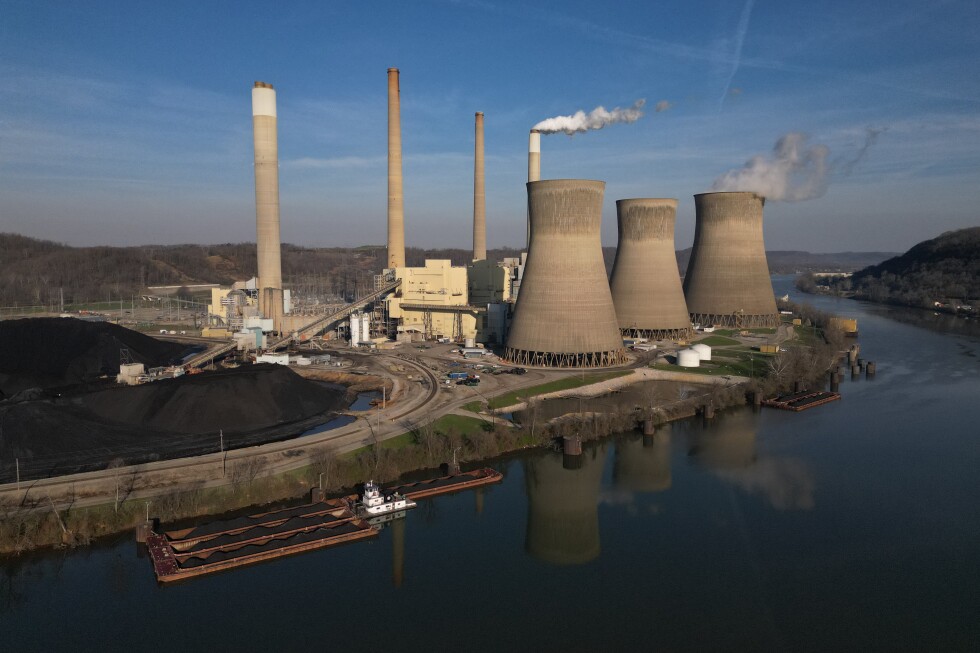
Coal remains king here, but it wears a pricey crown. The state is an outlier nationwide because of its stubborn resistance to adopting cleaner, cheaper sources of energy, such as nuclear power, natural gas — even though it’s one of the nation’s top producers — and renewables like wind and solar. Instead, West Virginia clings to aging coal-fired electric plants more than anywhere else in the country — about 87% of all production. Its supermajority Republican-led government — there are only 11 Democrats in the House and Senate — has doubled down on this reliance, blaming past Democratic administrations for a war on coal fueled by increased federal regulations and restrictions, while Trump poses for photo ops with coal miners at the White House and regularly touts “beautiful, clean coal.”
“Lowering electricity prices is a top priority for President Trump,” said White House spokeswoman Taylor Rogers, blaming former President Joe Biden for the problem. “He is aggressively unleashing reliable energy sources like coal and natural gas.”
Trump has forced unprofitable coal-powered plants to remain open, rolled back pollution standards for them and provided hundreds of millions of dollars in funding to improve them. He’s also streamlined permitting and regulations to push for mining expansion when coal mines have been shutting down in the state, including several operations this year that eliminated more than 700 jobs.
Advertisement
American Electric Power’s John Amos coal-fired power plant in Winfield, W.Va., stands across the Kanawha River, March 22, 2026. (AP Video/Carolyn Kaster)
Advertisement
“If you’re not 100% in on coal, then you’re a traitor. … It’s like a measure of patriotism,” said Jamie Van Nostrand, policy director at the nonprofit Future of Heat Initiative and a former West Virginia University professor who wrote a book about the state’s reliance on coal energy. “I think if you went to the average West Virginian and said, ‘Yeah, we understand you want to support the coal industry, but do you want to support it to the extent that you’re OK paying twice as much as you should be for electricity?’”
The state’s average household electricity rate per kilowatt-hour has surged 73%, natural gas has increased 51% per 1,000 cubic feet and water has risen 45% per 1,000 gallons from 2015 to 2025, according to West Virginia’s Public Service Commission, a three-member panel. It includes a former power company lobbyist and the former head of the state coal association — appointed by the governor and charged with approving rate hikes.
Even though monthly bills remain higher in other states, salaries in West Virginia have simply not kept pace — it’s the only place in the country where the median inflation-adjusted household income was lower in 2023 than it was in 1970, according to the Urban Institute. That means residents are seeing larger chunks of their paychecks going to utilities compared to people in other places.
Michalski, who’s disabled and uses a walker to get around, said she tries not to run anything in her house that can suck electricity, including her air conditioning in summer. But she simply can’t turn off the heater. During the past year, her statements totaled over $5,000. She asked family for help paying the bill this winter, but said she’s now out of options.
Advertisement
She knows what’s next.
“They come and cut off your power. Then you’re sitting in the dark. And I see that happening,” she said. “And I think for a lot of other people, it’s gonna happen too.”
“It only makes the rich richer”
Advertisement
Ed Tierney, left, and David Horne, struggle to load an overloaded pallet onto a truck at they close up one of two JCD Bargain and Trade stores, to consolidate with the other location, in Ravenswood, W.Va., Friday, March 13, 2026. (AP Photo/Carolyn Kaster)
Ed Tierney, left, and David Horne, struggle to load an overloaded pallet onto a truck at they close up one of two JCD Bargain and Trade stores, to consolidate with the other location, in Ravenswood, W.Va., Friday, March 13, 2026. (AP Photo/Carolyn Kaster)
Advertisement
Advertisement
Advertisement
Isolated by its beautiful, rugged mountains, West Virginia sits entirely within Appalachia and has long been listed at the bottom of a laundry list of failings, including poor health and a lack of education. Many residents from rural areas have lived on the same land for generations, watching a cycle of outside companies profit from extracting the state’s resources — from timber to coal and oil and gas — only to pollute and abandon communities afterward. Its people are known for being fiercely independent and proud despite their hardships, including a lack of clean drinking water that has persisted for decades in some areas, forcing residents in the southern coal fields to ferry jugs to and from roadside springs or abandoned mines while spending up to $250 a month for bottled water to cook with and drink. They also pay for public water piped into their homes that often runs black, yellow and brown.
Some, including those living in scenic areas where tourism is a major revenue driver, are protesting Big Tech companies rushing to build enormous data centers, fearing they could lead to the next cycle of outsiders taking advantage of the state’s resources. They have been loud over a lack of public input and transparency around plans to build the complexes, questioning noise pollution, huge water consumption and the effect on ratepayers’ electricity prices.
“We just roll back regulations and we keep being promised that deregulating and privatizing our systems is gonna fix everything, and it never does,” said Caitlin Ware, a pastor who advocates for clean water in southern West Virginia — her thoughts briefly interrupted as the electricity abruptly went off in her Sandyville United Methodist Church. “It only makes the rich richer, and it only puts us in a worse situation.”
Advertisement
In February, Gov. Patrick Morrisey proudly announced plans to build a data center on nearly 550 acres in Berkeley County.
“This $4 billion investment is a historic win that proves West Virginia can compete at the highest level for the global tech economy,” he said in a statement. It did not explain where the water or electricity would come from to run the 600 megawatt, 1.9 million square foot facility.
Morrisey’s office did not respond to a request for comment.
Skyrocketing electricity costs and the growth of data centers, which can use enough power to run 100,000 homes, faced voter backlash in Georgia last fall where Democrats ousted two Republicans on the state’s utility regulatory commission for the first time in nearly two decades. Trump recently tried to ease Americans’ concerns by announcing a “ratepayer protection” pledge at the White House with Big Tech companies promising to bear the cost and produce their own energy, though it’s not clear how that would be enforced.
Advertisement
The reasons behind nationwide utility price hikes are complex and vary among regions. They include adding new transmission, distribution lines and power poles; increased brutal high and low temperatures; extreme weather events such as hurricanes and wildfires; and volatility in fuel costs such as surging gas prices during the war in Ukraine.
These all play a huge role in rising bills that have left some 80 million Americans struggling to pay their monthly gas and electric bills, said Charles Hua, founder of consumer advocacy organization PowerLines that found investor-owned gas and electric utility companies asked for nearly $31 billion in increases last year nationwide, double the amount requested a year earlier. He said utility costs have become the new affordability issue akin to soaring egg prices that previously enraged consumers, making it a possible player in this fall’s elections to control Congress.
“Electric bills have gone up 40% over the last five years,” he said. “This is likely to continue to rise. This is definitely something that the Trump administration and President Trump are very concerned about.”
Advertisement
Ashley Nicole Dixon looks through her truck for electric bills outside one of her homes in Danese, W.Va., Saturday, March 21, 2026. (AP Photo/Carolyn Kaster)
Advertisement
Ashley Nicole Dixon looks through her truck for electric bills outside one of her homes in Danese, W.Va., Saturday, March 21, 2026. (AP Photo/Carolyn Kaster)
Advertisement
Advertisement
In West Virginia, all 55 counties voted for Trump in 2024. But it was a Democratic stronghold for decades prior to the switch when coal mines were the lifeblood, and unions were virtually unbreakable. The state has struggled immensely under both parties: It has experienced a major brain drain, a devastating opioid epidemic, a growing elderly population and its coveted coal industry jobs have dried up with nothing to replace them. That leaves people who work minimum wage jobs, those on fixed incomes and even college-educated middle-class families with two paychecks being pushed to the breaking point with affordability issues, including rising car insurance, grocery bills, health care and housing.
Ashley Nicole Dixon of Danese works as a manager at a Dollar General store and has a teenage daughter at home and another in college. She flipped through bills on her phone totaling more than $5,000 charged last year for electricity in her house that’s just over 1,000 square feet, even though her air conditioner didn’t work last summer. She voted for Trump, but said she’s done with him because he and other Republican politicians in West Virginia’s Capitol aren’t looking out for her interests.
Advertisement
“I love West Virginia because it’s beautiful. But anymore, it’s just a sham from the local government all the way up to Charleston,” she said, adding she believes the state’s Public Service Commission should be elected, and Trump should send her a check since he promised to cut electricity bills in half.
“I have no choice. It has to be paid,” she said. “And that’s what makes me sick because now I’m going to have to go … take more money out of my savings account just to keep the lights on.”
“Why is this so high?”
The coldest winter months were the hardest. Some people confined themselves to one room with small space heaters or used generators when they got behind on their electricity bills and were disconnected. Others were forced to choose between food, medicine and warmth, with some turning their thermostats down to 60 degrees and bundling up or coming out of retirement to take part-time jobs.
For some, the spiral began in November when their Supplemental Nutrition Assistance Program, or SNAP, benefits were put on hold due to the federal government shutdown. United Way’s Central West Virginia helpline saw more than a 1,300% increase during that time, and calls for help paying utilities were second only to housing last year.
Advertisement
Retired railroad worker and Army veteran Charles “Duke” Hodge watches old Westerns with Sophie, one of his two Yorkies, in his home at the Olde Oak RV Park and Campground where he lives and works in West Columbia, W.Va., Tuesday, March 17, 2026. (AP Photo/Carolyn Kaster)
Advertisement
Retired railroad worker and Army veteran Charles “Duke” Hodge watches old Westerns with Sophie, one of his two Yorkies, in his home at the Olde Oak RV Park and Campground where he lives and works in West Columbia, W.Va., Tuesday, March 17, 2026. (AP Photo/Carolyn Kaster)
Advertisement
Advertisement
Advertisement
More than one in three West Virginia households is considered energy burdened, spending more than 6% of their income on electricity and other fuel costs. Of those, about 20% are low-income residents who shoulder some of the highest energy costs in the state.
Advertisement
Last year, Trump fired the staff of a federal program that assists millions of low-income Americans with heating bills in the winter and proposed eliminating all of its funding in his budget — a move repeated this year. Congress allocated money for it, but billions of dollars were delayed due to the shutdown. However, many West Virginians falling behind on bills are not eligible to apply because they make just a little too much money.
Jennifer Brown of Kingwood lands in that category. She’s employed at West Virginia’s federally funded Head Start program for low-income children and her husband is a postal worker. They have four kids and during the winter months, their combined utilities can climb to $1,000 a month, eclipsing their $798 mortgage. They were on a payment plan for their gas this winter after receiving a shut-off notice, and she said they were still paying off a water bill from their previous home.
“Every month we get our utility bills, I’m so angry. I’m like, ‘Why is this so high?’” she said, adding it’s not unusual to pay $200 to $300 for electricity and the same for water, sewage and garbage combined every month. “And we can’t figure it out. Nothing seems to be wrong … and we’re not wasteful.”
Bills introduced that would have temporarily frozen electricity rates in West Virginia or helped those who are most vulnerable went nowhere this year in the state legislature even though increased energy costs are often passed on to ratepayers. The Public Service Commission has approved a flurry of rate hikes in recent years as private utilities grapple with maintaining profits while improving infrastructure in a mountainous, sparsely populated state.
Advertisement
The town of Ravenswood, W. Va. (AP Video/Jesse Wardarski)
Advertisement
It’s been a particularly tough burden for some small businesses to carry. In the western town of Ravenswood, just across the river from Ohio, some shop owners were forced to shut down this winter because they couldn’t pay their electric bills.
Heather Santee said the power at her bakery was abruptly terminated just ahead of Valentine’s Day. She was behind on her bill, but said she would have been able to pay the necessary chunk of the $4,000 she owed if she could have stayed open long enough to fulfill the holiday orders. Instead, the shut-off forced her out, leaving the tenants living in apartments upstairs without heat too.
“Once I started getting those high electric bills in the winter, I was like, ‘This will be what closes me down,’” she said, adding the bakery was her dream and the loss has her thinking maybe it would be better to just leave the state altogether. “West Virginia is holding back a lot of people because they are allowing these bills to be so high.”
Advertisement
She’s not alone. Just a couple blocks down the street, Anthony Crihfield Jones packed up his overstock retail shop, JCD Bargain and Trade, moving inventory to another warehouse because he can no longer afford to pay thousands of dollars in electricity charges for his home and businesses.
Anthony Crihfield Jones wipes tears outside his JCD Bargain and Trade store near Ripley, W.Va., Friday, March 13, 2026, as he closed his other nearby location to consolidate his businesses under one roof due to high electric bills. (AP Photo/Carolyn Kaster)
Advertisement
Anthony Crihfield Jones wipes tears outside his JCD Bargain and Trade store near Ripley, W.Va., Friday, March 13, 2026, as he closed his other nearby location to consolidate his businesses under one roof due to high electric bills. (AP Photo/Carolyn Kaster)
Advertisement
Advertisement
Advertisement
Advertisement
Even though he still supports Trump, after leaving the Democrats to vote Republican, he’s becoming increasingly concerned that neither party cares about struggling people in America.
“All I heard was … ‘Drill, baby, drill,’” he said, repeating Trump’s popular catch phrase to encourage domestic energy production. “OK. Well, they’re drillin’. Why’s my bill the same?”
Crucially, this version of the show is pre-recorded (aside from the final, which will be filmed live in London), meaning the format of the episodes differs from the traditional series.
Advertisement
Not only is there no public voting, but the decision on how each episode will end is entirely in the hands of the producers, which has caused rumblings of discontent among fans.
Get personalised updates on I’m A Celeb
Wake up to find news on your TV shows in your inbox every morning with Metro’s TV Newsletter.
Sign up to our newsletter and then select your show in the link we’ll send you so we can get TV news tailored to you.
Advertisement
The first night ended with the tease of the GC’s highly anticipated arrival, and the second concluded halfway through the eating trial before Gemma and Craig were challenged with downing thirty shots of bull’s blood.
Now, the latest entry has followed the same pattern, wrapping up during a trial where Seann Walsh and Sinitta were wearing perspex helmets with snakes in them.
Sinitta and Seann Walsh were left writhing in horror at the end of the episode (Picture: ITV/Shutterstock)
Before we could find out if their respective teams had done enough for them to escape with the win, the credits started rolling.
Now fans are sharing their frustration at the annoying habit, with fears the trend will continue for the whole season.
Advertisement
‘Are we heading for another infuriating cliffhanger finish?’ educational_two1168 wrote on Reddit.
‘These cliffhangers aren’t a good decision, does anyone really care what camp gets dinner?’ moonserin reflected.
‘If they keep ending the show on a trial cliffhanger I am going to riot in the streets. There’s actually nothing more annoying…’ DaMoonMoonMore echoed.
The night before had ended before the eating trial was over (Picture: ITV/Shutterstock)
‘Utterly unnecessary cliffhanger. Fellas we’re watching the show RIGHT NOW stop worrying about getting an extra 30 seconds of trial at the start of every show it’s gonna just p**s the people actually watching off,’ LiamJonsano warned.
‘It’s one thing to cliffhanger and it’s another to end the episode really early just to cliffhanger. That’s not gonna make people watch, that’s gonna put people off.
Advertisement
‘Why watch the trial when you can watch the first 5 minutes and see the conclusion?’ stormflier agreed.
‘Another cliffhanger, oh how original,’ thothYnwa shared.
It’s even risking losing viewers, as Charles Love wrote: ‘Won’t be watching tomorrow, as someone previously said, it’s not a soap! Should be a proper episode without the unnecessary cliffhanger.’
For those keen to immerse themselves in the live format of the show, there is an opportunity to attend the final in person as advertised on the free ticket website Applause Store.
Advertisement
The final, at least, will be live (Picture: ITV/Shutterstock)
‘You are invited to join Ant and Dec as the celebrities gather for one last night to find out who will be crowned the ‘I’m a Celebrity Legend’ 2026!’ the advertisement states.
‘All the finalists will be in the studio, and the atmosphere promises to be truly electric as the result is revealed live on ITV1.’
The rest of the show, filmed last year, is set in the world-renowned Kruger National Park.
I’m A Celebrity South Africa returns tonight at 9pm on ITV1.
Got a story?
Advertisement
If you’ve got a celebrity story, video or pictures get in touch with the Metro.co.uk entertainment team by emailing us celebtips@metro.co.uk, calling 020 3615 2145 or by visiting our Submit Stuff page – we’d love to hear from you.
The UK has issued a stark warning to Vladimir Putin after Russian attack and spy submarines were found operating in the North Atlantic.
Defence secretary John Healey revealed UK and allies monitored the vessels for a month before they retreated.
Speaking from Downing Street on Thursday, he said that in the past few weeks, while many eyes were trained on the Middle East crisis, the UK, in partnership with Norway and other allies, responded to “increased Russian activity” in the Atlantic north of the UK.
Addressing the Russian president directly, Mr Healey said: “We see your activity over our cables and our pipelines, and you should know that any attempt to damage them will not be tolerated and will have serious consequences.”
Black Sea fleet frigate Admiral Grigorovich is said to have accompanied a pair of shadow fleet ships on Wednesday, which were followed by a British naval vessel.
According to the newspaper, the vessel observed the flotilla off England’s south coast while RFA Tideforce, a Royal Fleet Auxiliary tanker, was in their wake.
It comes after the prime minister last month said that the Navy will intercept Russia’s shadow fleet. The armed forces and British law enforcement are now able to board and halt sanctioned vessels that are passing through UK waters.
Advertisement
Sir Keir’s announcement came in conjunction with European allies in an attempt to cut off funding for Moscow’s war with Ukraine,
It is understood that Russia’s shadow fleet consists of approximately 700 vessels, carrying around 40 per cent of all Russian oil exports. The UK has sanctioned 544 Russian shadow fleet vessels to date.
They illicitly ship oil and other goods out of Russia by flying the flags of other countries, with the aim of evading sanctions imposed by the West since the invasion of Ukraine began.
The foreign secretary said on Thursday that the government has given permission for action to be taken against the Russian shadow fleet but would not comment on the details of military operations.
Those genocidal remarks sparked widespread horror.
The government did not respond to the shocking remarks at the time and a subsequent ceasefire deal luckily meant Trump did not escalate any further tensions with Iran.
Advertisement
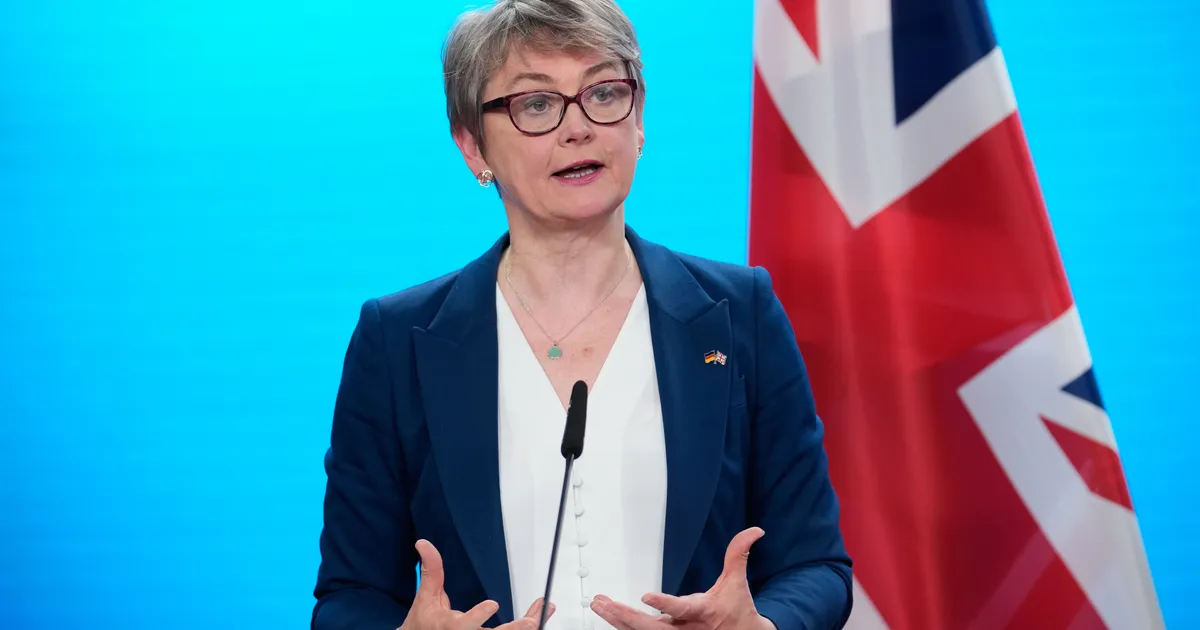
But on Thursday, foreign secretary Yvette Cooper suggested Trump had gone too far.
She told Sky News: “We take a different view from the US on issues, and it is possible for us to be strong, close partners on a whole range of issues, but also to take different decisions on issues.
“I think that the rhetoric that we’ve seen used, I think, has been completely wrong. I think that sort of escalatory rhetoric can have escalatory consequences.”
She also called for a clear line to be drawn between the Iranian regime and the general population.
Advertisement
She said: “More significantly, we should always distinguish between this malign Iranian regime that we have seen threaten its neighbours over a long time, and the people of Iran, many of whom have been brutally repressed by this Iranian regime.”
The cabinet minister hit out at Israel’s strikes against Lebanon too, which took place after the ceasefire deal was agreed.
She split with the US by saying Britain wants the ceasefire extended to cover Lebanon.
“We’ve seen the mass displacement of civilians in Lebanon with significant humanitarian consequences,” she said.
Advertisement
“This escalation in damaging, it’s wrong… we want the ceasefire extended to cover Lebanon.”
Meanwhile, US vice-president JD Vance insisted it was a “misunderstanding” and that Lebanon had never been part of the US-Israel agreement with Iran.
Cooper’s words come amid a widening gulf between the UK and the US over the Iran war.
Trump has frequently lambasted Britain for not joining in with his offensive, even comparing UK prime minister Keir Starmer to Neville Chamberlain who championed the Nazi appeasement policy before World War 2.
Advertisement
The PM hit back on Wednesday, by suggesting the Iran conflict broke international law and was started with no plan on how to end it.
Starmer said: “I’ve acted as you would expect of a British prime minister, which is by being absolutely focused on what is our national interest, and that’s why I’ve applied my principles and my values throughout.
“And my principles and values made sure that our decisions were that we wouldn’t get involved in the action without a lawful basis, without a viable, thought-through plan.”
Subscribe to Commons People, the podcast that makes politics easy. Every week, Kevin Schofield and Kate Nicholson unpack the week’s biggest stories to keep you informed. Join us for straightforward analysis of what’s going on at Westminster.
As part of the campaign, donations of £25 or more will be rewarded with a limited-edition pin badge featuring exclusive artwork of Bridge 42.
The bridge is the vital structure that allows trains to run from Grosmont to Whitby, without which the NYMR cannot operate its full heritage route from Pickering to Whitby.
The North Yorkshire Moors Railway has launched a fundraising campaign to help save Bridge 42 (Image: Supplied)
Laura Strangeway, CEO at the NYMR, said: “Bridge 42 is absolutely essential to the future of the railway.
“This campaign is an affordable way for people to feel part of saving something that really matters.
Advertisement
“Every donation takes us one step closer to the full repair of the bridge, and we’re hugely grateful to everyone who chooses to support us.
“We are so thankful to David for getting in touch and volunteering his time and expertise to help save Bridge 42, without which we cannot run to Grosmont and Whitby.
“It’s great to be working with a Yorkshire artist and for our supporters to be able to purchase these stunning limited-edition prints and be part of our story to save Bridge 42.”
Repairs to Bridge 42 are estimated to cost around £800,000.
Advertisement
A total of £215,000 has already been raised, but further support is needed to reach the fundraising goal.
Leeds-based printmaker David Cockayne has also donated his skills to the campaign.
His linocut artwork, which focuses on industrial heritage, architecture, and the relationship between built environments and landscape, will be featured in limited-edition prints.
These will soon be available for purchase in shops along the NYMR line and online.
Advertisement
After seeing news of the fundraiser, Mr Cockayne got in touch to offer his services to raise funds.
Following detailed inspections, it was determined that temporary propping is necessary to guarantee safety and operational reliability.
This measure will allow trains to continue crossing Bridge 42 throughout the 2026 season.
During this time, NYMR will finalise a full repair programme, scheduled for implementation over the winter of 2026/27.
Advertisement
To support the campaign or learn more, visit nymr.co.uk/bridge42.





.png)




















































You must be logged in to post a comment Login