


Connect with us

NewsBeat

Prosecutors says Rihanna, A$AP Rocky and kids were at home when shots were fired

Published

on

Prosecutors says Rihanna, A$AP Rocky and kids were at home when shots were fired

LOS ANGELES (AP) — Rihanna, her partner A$AP Rocky, their three children and her mother were all at home when a woman now charged with attempted murder and many other felony counts is alleged to have fired at the property, a prosecutor said Tuesday.

Ivanna Lisette Ortiz, 35, of Orlando, Florida, was charged with attempting to kill Rihanna, along with 10 counts of assault on a person with a semiautomatic firearm and three counts of shooting at an inhabited vehicle or dwelling, authorities said. No one was injured.

The singing superstar and her rap star partner were together in a trailer on the property at the time of the Sunday afternoon shooting, while other family members and staffers were in the Beverly Hills-area home, Los Angeles County District Attorney Nathan Hochman said outside a court hearing.

Inside court, Deputy Public Defender Jamarcus Bradford, Ortiz’s attorney, at first entered a plea of not guilty on her behalf, but then withdrew it in favor of postponing arraignment until March 25. She was ordered held on $1.8 million bail. Ortiz wore blue jail clothes with her blond hair in braids and spoke to the lawyer through a glass divider.

Advertisement

Bradford didn’t talk to reporters outside court.

The LA County Public Defender’s Office said in a statement that it could not comment on the pending case against Ortiz.

“As in every case, we will work to ensure that our client receives the full protections guaranteed under the Constitution,” the statement said.

Ortiz could get life in prison if convicted on all charges. All 14 counts against her are felonies. The three counts of firing at a dwelling were for Rihanna’s house, her trailer, and a neighbor’s house, prosecutors said. The 10 assault counts were for Rihanna and family, two staffers and two people in the neighboring house.

Advertisement

“LA based celebrities should not be additionally worried because of this,” Hochman said, “in large part because of the response of the police.” He praised officers for arresting Ortiz soon after the shooting, several miles (kilometers) to the north in the suburb of Sherman Oaks.

Judge Theresa McGonigle issued a protective order for Ortiz to stay away from Robin Fenty and Rakim Mayers –- the legal names of Rihanna and A$AP Rocky –- and their home. McGonigle also said Ortiz is not allowed to possess any firearms or ammunition along with several other conditions.

The hearing was held in a courtroom a few floors from where Rocky went through a trial where he was acquitted just over a year ago. Rihanna was often in attendance, sometimes with their sons.

And the lead prosecutor in the new case is Alexander Bott, the deputy district attorney who successfully prosecuted rapper Tory Lanez in a trial where he was convicted of shooting hip-hop star Megan Thee Stallion in the feet.

Advertisement

Hochman would not say where any of the bullets landed, would not say how long Ortiz had been in California, or discuss her motivation or any connection to Rihanna, saying all were under investigation.

Public records show her most recent address was in Orlando and that she has been a licensed speech pathologist for more than a decade.

AP also sent emails seeking comment from Rihanna’s publicist and manager.

In 2018, a man was accused of breaking into another home belonging to Rihanna in the Hollywood Hills and spending 12 hours there. The man pleaded no contest to felony counts of stalking and vandalism and a misdemeanor count of resisting arrest in 2019. He was sentenced to probation.

Advertisement

A nine-time Grammy Award winner, Rihanna has 14 No. 1 hits on the Billboard Hot 100, including “We Found Love,” “Work,” “Umbrella” and “Disturbia.” She founded the makeup brand Fenty Beauty in 2017.

She and A$AP Rocky announced the birth of their third child, a girl named Rocki Irish Mayers, in September.

___

Associated Press Writer Christopher Weber contributed.

Advertisement

Source link

Advertisement
Continue Reading
Click to comment

Leave a Reply

Your email address will not be published. Required fields are marked *

NewsBeat

Six dead and five injured in ‘deliberate’ Swiss bus fire | World News

Published

on

Firefighters approach the bus. Pic: Wir Freiburg

At least six people have died in a bus blaze in Switzerland, which was allegedly started by a man inside the vehicle, according to police and local media reports.

Police said the blaze took place in Kerzers, a town in the western canton of Fribourg, at around 6.25pm on Tuesday. The victims have not yet been identified.

Five people have been injured, including an emergency responder, and three of them have been taken to hospital in critical condition, Fribourg police said in a statement.

Image:
Investigators examine the charred shell of the bus. Pic: AP

Man ‘set himself alight’ in possible ‘wilful act’

Advertisement

It is unclear whether any other people have been hurt in the blaze, as officials said it is not known how many people were inside the bus when the fire, which “totally engulfed” the vehicle, started.

A man inside the bus “poured out petrol and set himself alight”, a witness claims in a video shared with Swiss newspaper Blick. This account was corroborated by other witnesses, according to the report.

The fire could have been a “wilful act”, the spokeswoman of Fribourg’s police said at a news conference, adding the force had “information that a person is the cause of the fire”.

She said that while police have received information that someone had poured petrol over themselves, she could not confirm this.

Advertisement

Another spokesperson said the fire could have been “deliberately” started, and added police would not reveal whether the alleged perpetrator is among the injured or dead.

Firefighters and police officers install barriers to secure the area. Pic: AP
Image:
Firefighters and police officers install barriers to secure the area. Pic: AP

Police have not ruled out a terror act and said an investigation is under way.

Officers are set to remain at the scene, where the burnt-out bus is shielded from view by barriers. Residents have been asked to avoid the area.

President ‘saddened’ by another deadly blaze

Schweizerische Post, the company operating the bus, said in a statement to Swiss paper Der Bund: “Our thoughts are with the injured and the families of the deceased.”

Advertisement

Swiss President Guy Parmelin said in a post on X: “It distresses and saddens me that yet more people in Switzerland have lost their lives in a serious fire.

“The background is being clarified. To the relatives of the deceased from Kerzers, I extend my condolences. And I think of the injured & the emergency services.”

Barriers surrounding the charred remains of the vehicle. Pic: AP
Image:
Barriers surrounding the charred remains of the vehicle. Pic: AP

The bus fire comes just months after a bar blaze in the Swiss mountain resort of Crans-Montana killed 41 people and injured 115 more in the early hours of 1 January.

Most of those who died were teenagers, and many were foreigners, including several from France and Italy.

Advertisement

Source link

Continue Reading

NewsBeat

The best pressure washers for cleaning cars, decking and patios

Published

on

The best pressure washers for cleaning cars, decking and patios

Pressure washers have endless uses, from cleaning your car or bike to the patio, the gutters, a well used barbecue, dusty garden chairs and even your windows. Some even use them to clean carpets and chimneys, which seems foolhardy, but the trick is to use the best pressure washer for the job since the likes of Kärcher and Clarke differ from Bosch and Worx.

Using high pressure is essential to lift any sort of deeply ingrained dirt, but lower-pressure washers are more economic if you’re just cleaning mucky boots. Either way, these handy devices use less water than trying to clean stubborn dirt with a hose because they require far less water to make an impact.

Pressure washers can cost anything from £50 to £650, but you can find in-depth reviews of all the biggest brands in the business below, and some advice from a professional gardener on how to use them. First, here’s a quick look at our top five:

Advertisement

The best pressure washers: At a glance

JUMP TO REVIEWS

How to choose the best pressure washer

The key thing to look at is the cleaning pressure. Anything over 150 bar is high, capable of blast-cleaning concrete, while anything under 50 bar is low and best left for plastic garden furniture. Consider the quality of the materials too, metal pumps are better than plastic ones, for example.

Also take into account any additional features and accessories it comes with – such as nozzles, spray washers or a remote control – since these can be expensive to buy separately. Hose length, noise level, weight and value for money are also important. They generally draw between 1,400 and 2,800 Watts, which at today’s prices will cost between 37p and 74p an hour to run

As with other power tools (see our guides to the best lawn mowers, best hedge trimmers, best leaf blowers and best strimmers) pressure washers vary greatly in weight, power and usability.

Advertisement

How we test pressure washers

Source link

Continue Reading

NewsBeat

Pentagon says US sunk 16 mine-laying ships after Trump threatens Iran over reports of mines in the Strait of Hormuz

Published

on

Pentagon says US sunk 16 mine-laying ships after Trump threatens Iran over reports of mines in the Strait of Hormuz

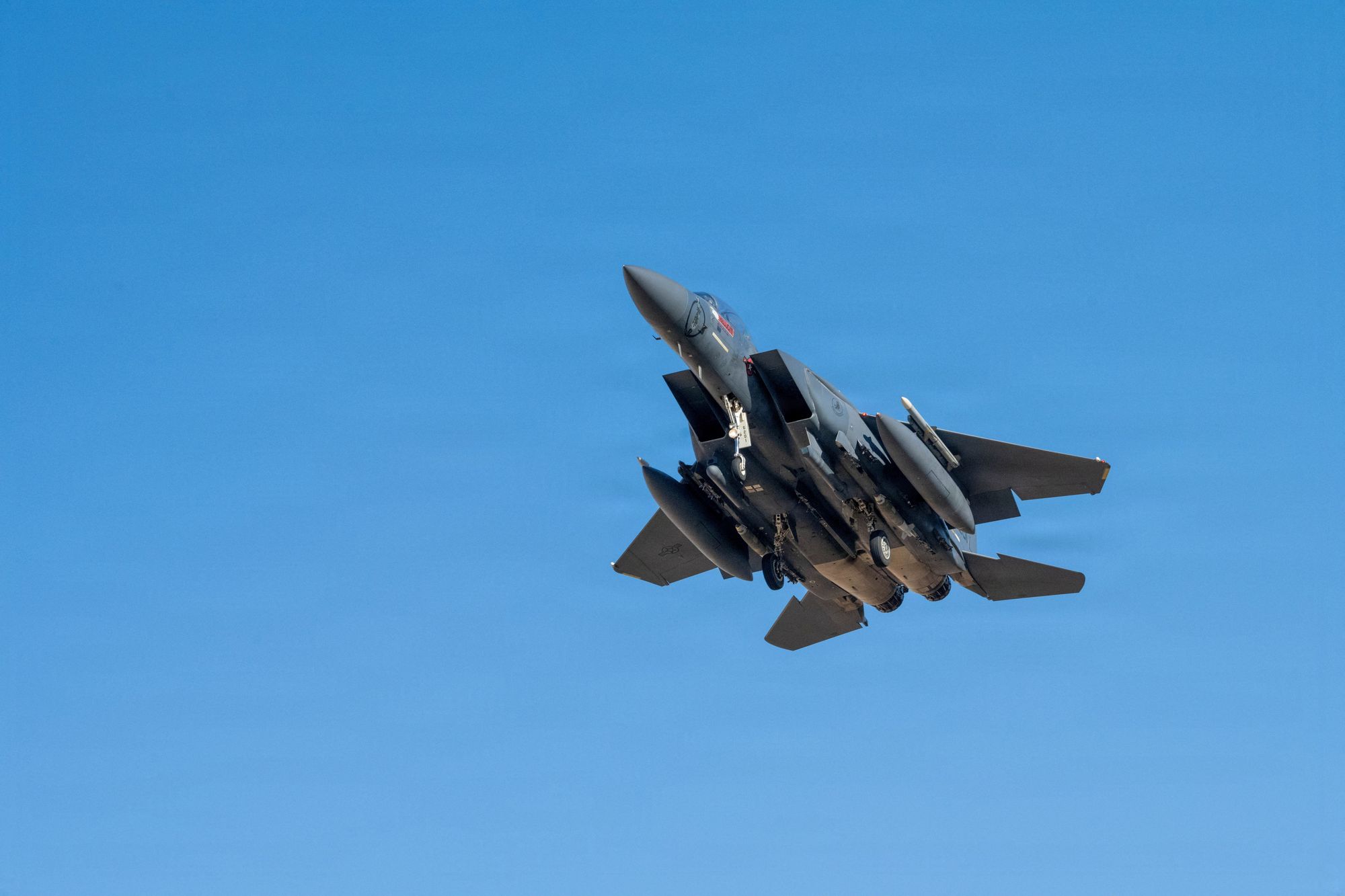
The Pentagon said the United States has sunk 16 mine-laying ships soon after President Donald Trump threatened Iran over reports of mines in the Strait of Hormuz.

“I am pleased to report that within the last few hours, we have hit, and completely destroyed, 10 inactive mine laying boats and/or ships, with more to follow!” Trump wrote on Truth Social Tuesday afternoon.

U.S. Central Command later wrote on X the military destroyed a total of 16 mine-laying ships near the Strait of Hormuz.

Trump’s announcement came minutes after the president warned against Iran placing mines in the waterway that carries about a fifth of the world’s oil supply.

Advertisement

“If for any reason mines were placed, and they are not removed forthwith, the Military consequences to Iran will be at a level never seen before,” Trump wrote on Truth Social earlier Tuesday.

The Pentagon says the US has sunk 16 mine-laying ships after Trump threatened Iran over reports of mines in the Strait of Hormuz

The Pentagon says the US has sunk 16 mine-laying ships after Trump threatened Iran over reports of mines in the Strait of Hormuz (AFP/Getty)

CBS News had reported Iran may be getting ready to deploy mines in the Strait of Hormuz, citing U.S. officials.

People familiar with U.S. intelligence reporting on the matter told CNN Iran had already laid a few dozen mines in the key waterway in recent days.

Advertisement

Trump said the U.S. was using “the same Technology and Missile capabilities deployed against Drug Traffickers to permanently eliminate any boat or ship attempting to mine the Hormuz Strait.”

The president was seemingly referring to the controversial boat strikes the U.S. has carried out in the Caribbean and Pacific, which have killed more than 150 people.

Defense Secretary Pete Hegseth said Tuesday the U.S. “will not allow terrorists to hold the Strait of Hormuz hostage.”

“At the direction of President Trump, @CENTCOM has been eliminating inactive mine-laying vessels in the Strait of Hormuz—wiping them out with ruthless precision,” Hegseth wrote on X. “To the weakened Iranian regime: you have officially been put on notice!”

Advertisement
The Strait of Hormuz is a waterway bordered in the north by Iran that carries about a fifth of the world’s oil supply

The Strait of Hormuz is a waterway bordered in the north by Iran that carries about a fifth of the world’s oil supply (AFP/Getty)

Iran has threatened to attack any ship that tries to pass through the Strait of Hormuz, which is bordered in the north by the Middle Eastern country.

Ebrahim Jabari, a senior official with Iran’s Islamic Revolutionary Guard Corps, said last week, “The strait is closed. If anyone tries to ​pass, the heroes of the Revolutionary Guards and the regular navy will set ​those ships ablaze,” according to Reuters, which cited Iranian state media.

Tankers that travel through the Strait of Hormuz transport oil and gas from Iran, Saudi Arabia, Kuwait, Iraq, Qatar, Bahrain, and the United Arab Emirates, the Associated Press reported. Most of the oil carried through the waterway is sold to Asia.

Advertisement

Oil prices surged Monday to nearly $120 a barrel, the highest since 2022. Oil prices later recovered, dropping back below $90 after Trump told CBS News the Iran war is “very complete, pretty much.”

Iran has “no navy, no communications, they’ve got no air force. Their missiles are down to a scatter. Their drones are being blown up all over the place, including their manufacturing of drones,” Trump said.

But uncertainty about how long the U.S. will continue its military campaign against Iran remains during the second week of the conflict.

The Iran war, which began more than a week ago, has caused uncertainty in the oil and gas industry

Advertisement
The Iran war, which began more than a week ago, has caused uncertainty in the oil and gas industry (Middle East Images)

A new Quinnipiac University poll found 18 percent of American voters think it will take weeks for the Iran war to end, 32 percent think it will take months and 26 percent think the conflict will last longer than a year.

At least 1,230 people in Iran have been killed in the conflict, according to the Associated Press. The joint U.S.-Israeli strikes killed the late Ayatollah Ali Khamenei. His son, Ayatollah Mojtaba Khamenei, has taken over as Iran’s supreme leader. At least seven American service members are dead over the conflict.

Iranian Foreign Minister Abbas Araghchi has decried Trump’s argument for starting the Iran war.

“The claim that Iran was planning on attacking the U.S. or U.S. Forces, whether preventively or preemptively, is a sheer and utter lie,” Araghchi wrote on X Tuesday. “The sole purpose of that lie is to justify Operation Epic Mistake, a misadventure engineered by Israel and paid for by ordinary Americans.”

Advertisement

Trump has insisted Israel did not force America’s hand to launch military strikes against Iran, in an effort the U.S. has dubbed Operation Epic Fury.

“I might of forced their hand,” the president told reporters.

Source link

Advertisement
Continue Reading

NewsBeat

Travis Kelce says Taylor Swift inspired him to continue playing for Chiefs

Published

on

Travis Kelce says Taylor Swift inspired him to continue playing for Chiefs

The track climbed the UK charts and became Swift’s sixth number one single earlier this year after the singer released an accompanying star-studded music video which featured actor Cillian Murphy, singer Lewis Capaldi, TV presenter Graham Norton, About Time star Domhnall Gleeson and actresses Greta Lee and Jodie Turner-Smith.

Source link

Continue Reading

NewsBeat

How driverless vehicles can be made safer for deaf and hard of hearing people

Published

on

How driverless vehicles can be made safer for deaf and hard of hearing people

Self-driving cars are very much a reality and no longer a vision from science fiction. In the UK, automated vehicles (AVs) such as self-driving shuttles are already being tested on public roads.

Self-driving taxi services are expected to launch in 2026, and the Automated Vehicles Act is scheduled for implementation in 2027. This act establishes the legal groundwork for driverless cars to operate on Britain’s roads.

As these vehicles move from research labs to our streets, one question becomes critical: how will they communicate safely with the people around them? Researchers and designers have proposed installing equipment on the vehicles called external human–machine interfaces. These are designed to help driverless vehicles signal their behaviour to pedestrians and other road users (cyclists, wheelchair users and human drivers).

The driverless vehicles would employ pulsing lights around the vehicle, text displays showing the car’s intentions, and auditory cues that announce forthcoming actions, such as “I’m stopping” or a truck-like reversing sound.

Advertisement

However, much of this research still overlooks people with disabilities, including pedestrians with hearing loss. When accessibility isn’t built in from the start, the resulting designs often fail. So how can this be improved?

There are many examples of where current driverless vehicles fall short. Text-only displays may appear universal, but they can be less accessible for people whose primary language is sign language. They are also inacessible to blind people. Auditory cues, such as hums or droning sounds, could help the blind, but are difficult or impossible to detect for many people with hearing loss – even those with hearing aids.

Speech-based cues, meant to help people with low vision, can unintentionally introduce new risks. Hearing loss can distort speech, so a message like “I’m stopped” may be heard only as “stop” – completely altering its meaning.

One size fits all

Driverless vehicles are not inherently unsafe for deaf and hard of hearing people – the challenge lies in a design process that assumes a universal, one-size-fits-all approach. Historically, communication interfaces in regular vehicles have been built with an assumed “typical” hearing pedestrian in mind.

Advertisement

When accessibility becomes an afterthought, communication becomes unreliable, and the systems meant to increase safety may end up excluding the people who need them most. Technology alone cannot solve this problem.

Cars could use lights and text to signal their ‘intentions’ to deaf people.
Peakstock / Shutterstock

Only thoughtful, inclusive design can. Our research shows that combining visual (pulsing lights and a text display) and audio (speech) cues can significantly increase trust and support safer decisions for pedestrians in general. But much more development is needed to ensure these communication interfaces are equitable for all people with special needs.

This gap between technological promise and lived experience reflects a broader pattern. Even though the Automated Vehicles Act aims to improve accessibility, most research in this area in this area still neglects people with special needs, including those with hearing loss.

If we want driverless vehicles to create more accessible streets – and not merely introduce new barriers – then people with special needs must be included in research, design and policy from the beginning.

Advertisement

Drawing on a series of user studies, we offer several practical recommendations to guide industry, researchers and policymakers toward a safer, more inclusive driverless car ecosystem.

Manufacturers should include diverse populations in the design and evaluation of their vehicles. We found that pedestrians with hearing loss may experience external human–machine interfaces differently from hearing people. Designers cannot fully anticipate the potential risks unless they inclusively involve user testing groups.

People need to understand not just that a vehicle exists, but what it intends to do. Displaying the vehicle’s “state”, such as “stopped”, and transitions, such as “slowing down”, helps pedestrians accurately judge the situation and feel more assured.

Combining audio and visual cues increases trust, acceptance and perceived safety. No single mode of communication is effective for everyone, but together, they offer back-ups and clarity.

Advertisement

Relying on just one type of visual cue is risky – lights, text or icons can fail in certain conditions. Providing combined visual information helps ensure that if one fails, another still supports pedestrian understanding.

Urban soundscapes can interfere with with audio cues, especially for pedestrians with hearing loss. Studying external human–machine interfaces in realistic environments is essential for ensuring they work when it matters.

Vehicle manufacturers must work with hearing aid and cochlear implant manufacturers to help ensure that audio cues are distinguishable, rather than confusing.

In many cases, barriers to inclusion arise not from technology itself, but from a lack of awareness or consultation. When people with special needs are excluded from design decisions, systems are built on assumptions rather than lived experience.

Advertisement

When they are actively involved, however, we are a step towards an inclusive and equitable future. Driverless vehicles have the potential to make our roads safer for everyone. But that future depends on purposeful, inclusive design choices today.

If developers, policymakers and researchers commit to engaging with deaf and hard of hearing people, along with others, we can help create streets that are safer, more accessible and more equitable for all.

Source link

Advertisement
Continue Reading

NewsBeat

HMRC tax refund warning as 1 million Brits risk missing out

Published

on

Wales Online

You could be left out of pocket if you do not act

The taxman has issued a stark warning that as many as one million Britons could be missing out on unclaimed tax refunds worth an average of £453 each.

Advertisement

It has also emerged that hundreds of thousands risk losing out simply because they have failed to check their accounts. In a brief post on X this week, HM Revenue & Customs (HMRC) revealed that approximately one million taxpayers have yet to claim money they are owed from overpaid tax – often because they never checked whether they were entitled to a refund.

The government body warned that ordinary workers and pensioners could be left thousands of pounds out of pocket if they fail to act promptly. According to the official alert, the typical sum owed to these taxpayers stands at around £453 per person, with many overpayments resulting from straightforward errors such as being placed on the wrong tax code, changing jobs, or retiring without updating HMRC’s records.

HMRC has stressed that this money will not be paid out automatically – claimants must check their personal tax account on GOV.UK or via the HMRC app and submit a claim themselves.

Advertisement

Officials have also cautioned that fraudsters are exploiting the situation by sending bogus texts, emails or making calls falsely claiming that taxpayers are owed refunds, in an attempt to steal personal and banking details. More than 135,000 HMRC-related scam reports have been logged recently, including around 29,000 involving fake tax refund claims, and the number of fraudulent approaches continues to climb.

Content cannot be displayed without consent

Lucy Pike, HMRC’s Chief Security Officer, said: “Millions of people file a tax return each year and scammers mimic HMRC to try and catch unsuspecting victims out. I’m urging people to stay vigilant and if any emails, text messages or phone calls appear suspicious – don’t be lured into clicking on links or sharing your personal information – report it directly to HMRC.”

Experts say thousands are missing out on money simply by ignoring letters or failing to set up online tax accounts – and with scammers operating, the risk of handing over cash to fraudsters is significant. Genuine tax refunds will be communicated through HMRC’s secure system or by post – the department will never request bank or personal details via an unsolicited email or text.

Advisers are urging taxpayers to log into their accounts today – before it’s too late and the unclaimed refunds are lost.

Advertisement

Source link

Continue Reading

NewsBeat

Holidaymakers told ‘don’t book trip abroad’ without key document

Published

on

Wales Online

Holidaymakers travelling overseas this Easter are being urged to do one thing before jetting off

Brits planning holidays this spring are being urged to check their passports immediately to avoid potential travel disruption. The warning comes as millions of families across the country prepare for travel during the busy Easter period.

Advertisement

The alert was issued by HM Passport Office in a social media post on Tuesday. Officials stated: “Planning spring or Easter travel? Check your passport now.”

They also directed travellers to the official government website to begin the process if they require a new passport, adding: “If you need to renew, go to: “https://www.gov.uk/apply-renew-passport.”

The UK Government advises holidaymakers to regularly ensure their passport is valid before making international travel plans. Officials warn against making any bookings until a valid passport is physically in hand.

This is due to the fact that a new passport will not have the same number as the old one, which could cause problems if travel arrangements are made prior to receiving the document.

Advertisement

Those still holding a burgundy passport with “European Union” on the cover can continue to use it until its expiry date. The design change following Brexit does not affect the validity of the passport.

Travellers can apply for, renew, replace or update their passport online via the official government service. Applying online is also £12.50 cheaper than applying by post.

According to the HM Passport Office, applicants will need a debit or credit card to complete the process online. It’s also recommended for travellers to check the current processing times before submitting their application.

Advertisement

For those urgently needing a passport, expedited services are available. These include the Online Premium service and the one-week Fast Track option.

Content cannot be displayed without consent

Holiday hopefuls needing help with an online application can visit a Post Office branch. Staff there can take a digital photo and assist in filling out the application via the digital Check and Send service, although this does come with an extra fee.

Paper passport application forms can also be picked up from Post Office branches. However, the government notes that applying by post usually takes longer than applying online.

Officials advise that checking your passport now could save travellers stress closer to departure. With the Easter break approaching, making sure documents are valid could avoid last-minute travel headaches.

Advertisement

Source link

Continue Reading

NewsBeat

‘We believe in saints, not weapons’: Worshippers forced to shelter under church from strikes | World News

Published

on

Locals say Sami Ghafari was killed while tending to his vegetables

Amid the sound of bombs and distant gunfire, we heard church bells ripple through Beirut’s suburbs. Then we saw a large group of people congregate, all dressed in black. 

They had to come to a Maronite place of worship, Sacred Heart church, to commemorate the death of man called Sami Ghafari.

The 66-year-old had been killed in a drone strike in a village in south Lebanon.

Image:
Locals say Sami Ghafari was killed while tending to his vegetables

Iran war latest: US strikes 16 ‘mine-laying boats’

Advertisement

The congregation was also commemorating the death of the village itself.

The community, Alma al Shaab, is home to some 200 Christian families who have all been forced to flee their homes.

The last group of evacuees, numbering 83, had been guided out of the area by UN peacekeepers that morning – the majority proceeding straight to the church.

We spoke to resident Elias Konsol as he got out his car. He said the past nine days had been “terrifying”.

Advertisement

“Every day that we sleep, we don’t know in the morning if we will be alive,” he said.

“Was there a moment,” I asked, “when you thought, ‘right, we need to leave?’”

Elias said the past nine days had been 'terrifying'
Image:
Elias said the past nine days had been ‘terrifying’

“Yesterday, at midnight,” he replied. “We thought that they were coming inside.”

“Who, the Israelis?”

“Yes, [the Israelis] are coming to Alma,” said Elias. “What will we do?”

Advertisement

A cloud of sorrow hung over the church and we watched members of the congregation struggle to control their emotions. Many seemed completely exhausted.

The funeral took place in a Maronite church in Beirut's suburbs
Image:
The funeral took place in a Maronite church in Beirut’s suburbs

On 1 March, the residents of Alma al Shaab rang the bells of the village church when they learnt the Israeli military had issued an evacuation order requiring them to leave.

But many refused to leave their homes.

When the Israelis started to bombard the village, residents brought their blankets and bedding and packed themselves into the hall beneath the church.

Villagers had sought refuge under their church
Image:
Villagers had sought refuge under their church

One villager, Joe Sayyah, told us they had tried to adapt.

“Every day at five or six, we went under the church to the hall. This is the time when the shelling and strikes would happen all around the village, even during the day,” he said.

Advertisement

“We could only check on our homes and come back. We couldn’t do anything else.”

Advertisement

Iran war briefing: Day 11 with Sean Bell

Advertisement

‘We are not 83 martyrs to be’

It seems the death of Sami Ghafari was the final straw. He was killed, say residents, by an Israeli missile as he was watering vegetables in his garden

The mayor of Alma al Shaab is called Shady Saayah and he looked distraught. He has lost a friend, as well as his village.

“What is going through your mind?” I asked.

Advertisement

“Loss, the loss of our land, the loss of our dignity, Lebanon starts from Alma [al Shaab].”

Read more:
Why it took so long to deploy UK warship
What is crossing Strait of Hormuz?

UN troops helped the remaining residents to evacuate
Image:
UN troops helped the remaining residents to evacuate

The mayor said the remaining villagers had decided to flee when the local commander of the UN peacekeeping detachment (UNIFIL) said they could not protect them.

“He said you have the right to stay, but if you do we are not responsible. It is very dangerous. We asked the priest to contact the Vatican, [and they said] it is up to you, so everyone left us.

“So we decided we are not 83 martyrs to be.”

Advertisement
Mayor Shady Saayah showed his tattoo of a cross and Lebanon's patron saint
Image:
Mayor Shady Saayah showed his tattoo of a cross and Lebanon’s patron saint

He then took off his jacket and showed me a tattoo of a cross and the patron saint of Lebanon on his left forearm.

“We believe in saints, not weapons,” he said. “All we want is peace.”

This gathering at the Sacred Heart church is one story of many – from little more than one week of war. But this conflict has created a humanitarian disaster that has turned a nation upside down.

Source link

Advertisement
Continue Reading

NewsBeat

a novella that tells the history of Iran through women’s bodies

Published

on

a novella that tells the history of Iran through women’s bodies

Women Without Men by Shahrnush Parsipur is an innovative feminist story set in Iran. The story follows five women and the circumstances that make them leave their lives to start anew in a garden on the outskirts of Tehran.

Written in the late 1970s, it was immediately banned on publication. Shortly after, Parsipur was arrested and jailed for her frank and defiant portrayal of women’s sexuality. This groundbreaking book is now available for the first time in English, translated by Faridoun Farrokh.

Set against the backdrop of the 1953 CIA-backed coup in Iran, the story deliberately shifts the lens of history away from the big politics to focus on its impact on intimate, gendered spaces. In doing so, Parsipur frames national upheaval as something lived and inscribed upon women’s bodies and interior lives.

The novel insists that authoritarianism doesn’t begin in the halls of power; it begins in the household within layered patriarchal systems that confine women’s autonomy. Parsipur’s blending of realism and magical elements unsettles conventional narrative authority and mirrors the instability of a society in crisis. The personal and the political are inseparable: women’s silences, desires and acts of refusal become subtle yet radical forms of resistance.

Advertisement

What makes this novel enduring is its refusal to separate the personal from the political. The magical elements are not decorative; they expose emotion that realism alone cannot capture. The garden the women flee to is not an escape from reality, but a feminist space where reality is reimagined.

The novel has sadly taken on an urgency and relevance in the face of the the US and Israel’s war on Iran. It reminds readers that foreign intervention often intensifies internal authoritarianism. By revisiting the legacy of the 1953 coup, the book encourages readers to see today’s crisis not as an isolated eruption. Instead, it is part of a deeper historical continuum, shaped by external intervention and power structures within Iranian society.

Through intimate storytelling, Parsipur invites readers to confront the cultural assumptions that have shaped women’s lives for generations. To read Women Without Men is to enter a layered narrative that is at once poetic, historical and contemporary. It bears to witness how deeply gender norms are embedded in everyday life, and how quietly, yet powerfully, women resist them.

Shahrnunsh Parsipur was jailed for her frank depiction of female sexuality.
Mahgameh Parvaneh

Sexuality

In Women Without Men, virginity is an ideological construct by which a woman’s worth is regulated. Through the characters of Faezeh and Munis, we see how chastity functions as a mechanism of control long before any formal punishment is imposed.

Advertisement

Faezeh embodies internalised patriarchy, believing a woman’s honour depends entirely on social perception and reputation to survive. When she and Munis are sexually assaulted, the violence is overshadowed by shame.

The metaphor “watering the earth”, used by a man to describe sexual penetration, is chilling because it recasts violation as something natural and productive. It depicts a woman as if she were soil to be cultivated, rather than a person with agency.

By framing assault in agricultural terms, patriarchal language erases harm and presents male entitlement as biological inevitability, while placing the burden of “dishonour” on the woman’s body. This symbolic logic mirrors the broader Iranian legal and social framework in which virginity carries material and moral weight, reinforcing the idea that women’s bodies are sites of regulation rather than autonomy.

The Iranian Civil Code of 1931 codified male guardianship and authority in marriage and family matters. In this context, virginity becomes not only a cultural expectation but part of a larger system in which women’s bodies are governed by both family and state.

Advertisement

Zarrinkolah’s narrative offers one of the most unsettling critiques of patriarchal objectification in Women Without Men. Zarrinkolah is a prostitute who begins to see all of her clients as headless men. It is an attempt to “cure” this condition through an act of purification that leads her to abandon prostitution.

Zarrinkolah’s journey isn’t a simple redemption, but a reconfiguration of subjectivity. By shifting from being seen as nothing more than a body to recognising herself as a person with her own thoughts, emotions and agency, she disrupts the cultural logic that renders women’s bodies interchangeable and morally policed. Her withdrawal from prostitution is not a return to purity, but a refusal of the system that defined her solely through male consumption.

The stillness of marriage

Farrokhlaqa’s story reveals the psychological and social confinement of marriage. Her marriage was a “32-year-old habit of not moving”. Patriarchal expectations have infected her, and she has become self-policing. She does not need to be actively restrained; she restrains herself. However, she no longer experiences her lack of freedom as oppression but as natural and inevitable.

Her response to widowhood is not retreat but a shift from passivity to agency. She purchases the garden, transforming inherited wealth into spatial autonomy, creating space for “women without men”. Her liberation is, therefore, negotiated by unlearning the stillness marriage imposed. Through her, Parsipur suggests that domestic patriarchy is sustained not only by law but by cultural perceptions that normalise women’s obedience to husbands.

Advertisement

The garden functions as a feminist counter-public sphere outside patriarchal governance. Within its walls, women work, speak and rest without male supervision. Iranian women’s groups have created similar spaces of solidarity, which were fragile yet transformative. They demonstrated that collective awareness could exist even within repressive conditions before and after the Islamic Revolution.

Faridoun Farrokh
Faridoun Farrokh has translated Women Without Men into English for the first time.

Parsipur does not allow the garden to become utopia, however. The women do not remain there, most return to Tehran and reenter life. Liberation cannot survive in isolation from society, Parsipur tells us. This narrative choice mirrors Iranian women’s rights history: reforms have emerged through resistance, reversal, and renewed struggle – not through escape.

Women Without Men is not simply a novel about five women seeking refuge in a garden. It is about freedom, embodiment and the struggle for equal dignity. Shahrnush Parsipur gives us women who question, transform, challenge and resist.

This article features references to books that have been included for editorial reasons, and may contain links to bookshop.org. If you click on one of the links and go on to buy something from bookshop.org The Conversation UK may earn a commission.

Advertisement

Source link

Continue Reading

NewsBeat

Epstein had two key aides

Published

on

Epstein had two key aides

The court filings claim that, on one occasion, Indyke took two cheques to a New York bank to withdraw cash – $7,500 from one of Epstein’s personal accounts and $4,000 from Indyke’s business account. He cashed one of the cheques and, the papers claim, said he would return the following day to cash the second in order to “avoid all the paperwork”.

Source link

Continue Reading

Trending

Copyright © 2025