NewsBeat
Ready to take charge: three innovative types of energy storage

Energy storage is a crucial component of the UK’s power network, but these systems range radically in terms of scale and function. From mammoth molten salt-filled thermal storage units to systems that use liquid air, here’s the latest in storage tech
Renewable energy is all very well, but how do you keep the lights on when the sun doesn’t shine and the wind doesn’t blow? It’s a hackneyed complaint, but it contains a germ of truth.
As Nathan Ritson, technical manager at renewable energy supplier Good Energy, says, “With the good old British weather, you find you’re over-generating at certain times, and under-generating at others.” Solar and wind already account for over one-third of the UK’s electricity, and that proportion is growing rapidly. But their inherent intermittency is an ongoing issue.
A key part of the solution is to store surplus electricity. Batteries can play a vital role here, explains Ritson, both in the commercial and domestic space. Grid-scale battery storage is becoming increasingly common too, balancing supply and demand across the country.
The ability to store surplus electricity is becoming crucial, as more renewables come online. YoungNH
But batteries aren’t the only storage game in town. Here are three emerging technologies that may well play a valuable supporting role in keeping our lights on in the future.
Spinning into the future with flywheels
Flywheels have been around for a while. Leonardo da Vinci conceptualised one. Three centuries later, Scottish engineer James Watt was using them to help his steam engines run smoothly. The basic principle is that a source of power – for example renewables – sends a rotor spinning, storing energy as motion that can later be released to generate electricity.
Independent energy consultant Eugene Bryce lists the flywheel’s advantages: it can last for decades, unlike batteries, which degrade much sooner; it’s super-efficient (up to 90%); and it can be charged and discharged very rapidly. The latter makes it ideal to deliver power as and when needed, which is precisely what today’s electricity grid requires.
Less ideal is the fact that its upfront costs are relatively high, and you’d need an awful lot of flywheels to store enough power to light a city. But in combination with batteries, says Bryce, they could prove useful indeed.
They’re starting to appear as storage devices across the globe; the world’s largest has just been connected to the grid in China’s Shanxi province. A cutting-edge example of the technology, the Dinglun Flywheel Energy Storage Power Station consists of 120 high-speed magnetic levitation (MAGLEV) flywheels, with a combined capacity of 30MW. That’s enough electricity to power around 10,000 UK homes.
Making power out of thin air
Liquid air sounds like a contradiction in terms, but it could have a place in the energy storage landscape. Unlike the flywheel, this is a relatively new technology, first mooted seriously in the 1970s.
Essentially, it works like this: air is taken in and compressed to a very high pressure using surplus electricity. The pressurised air is then cooled, via a complex form of heat exchanger, until it reaches a liquid state. When energy is needed again, the liquid is pumped out as a gas and used to drive turbines to generate electricity – a little like steam does in a conventional power station.
As the demand for energy storage has grown, it’s spurred fresh interest in this method. Now the world’s first commercial-scale application is taking shape in Manchester, where liquid air specialists Highview Power are building a plant due to come online in 2027. It will make money by using electricity when it’s cheapest to create the storage solution, and then release the air to generate power when demand is high relative to available supply.
Energy storage specialist Shaylin Cetegen of the Massachusetts Institute of Technology told the BBC that, while the initial economics may seem challenging, liquid air “stands out as a particularly cost-effective option for large-scale storage”.
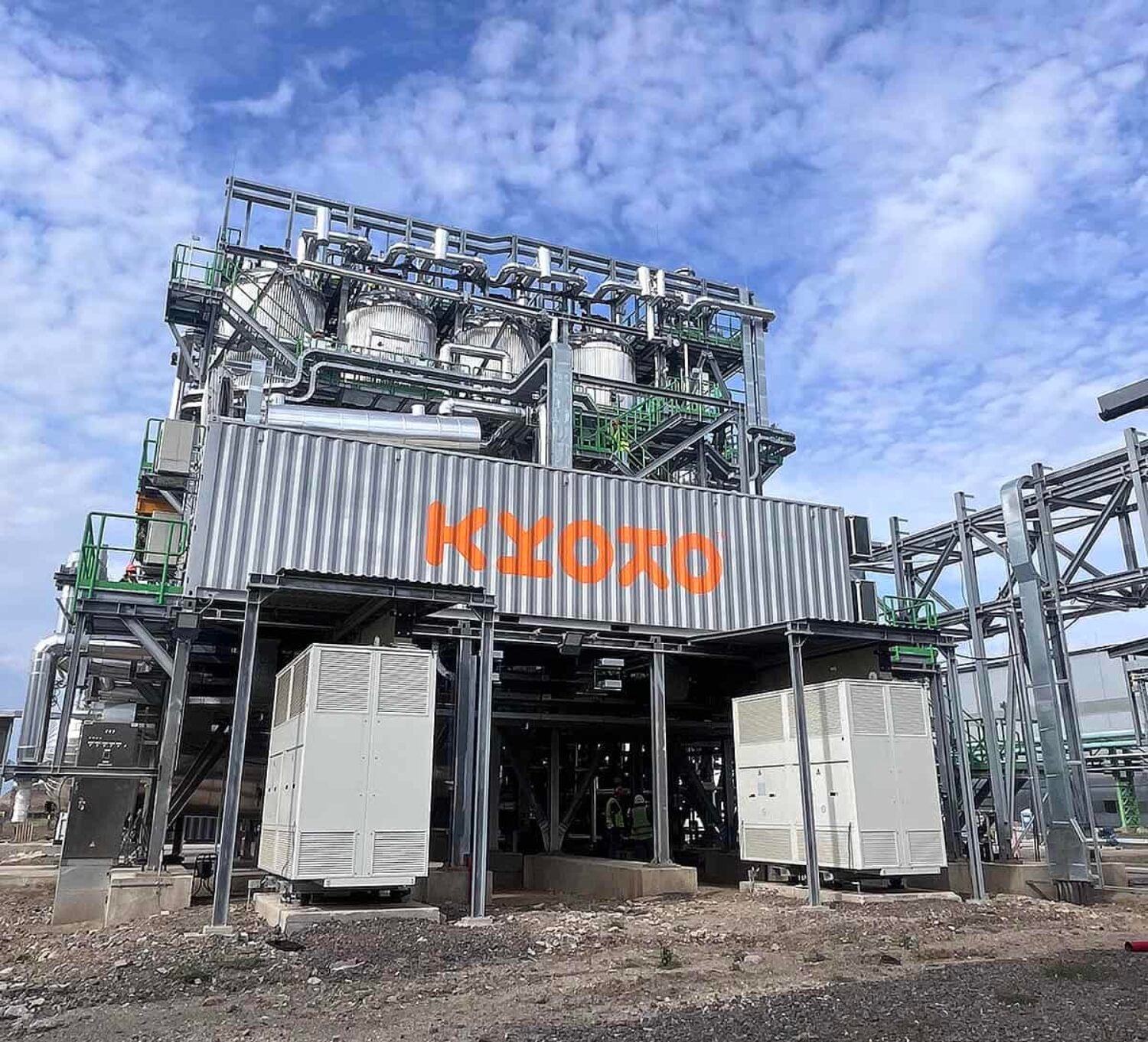

The ‘heatcube’ design uses renewable electricity to heat up tanks of salt when prices are low. Image: Kyoto Group
Some like it hot
How can solar power produce electricity in the dead of night? It sounds like a riddle – and the answer is … salt.
Molten salt, to be precise. In Spain, Morocco and elsewhere, concentrated solar plants use vast arrays of mirrors to heat thermal oil to the point where it can produce steam to drive turbines and so generate electricity. Some plants focus the heat on special mixtures of salts, which can retain it for long periods of time – including overnight. When electricity is required, the hot molten salt is pumped to a steam generator, producing super heated steam to drive turbines.
Liquid air sounds like a contradiction in terms, but it could have a place in the energy storage landscape
But electricity isn’t the only type of energy that industry needs – heat is often essential, and there is growing interest in using salt to store it for industrial processes. One promising application comes courtesy of Norway’s Kyoto Group. Its ‘heatcube’ design uses renewable electricity to heat up tanks of salt when prices are low. The heat, in the form of steam, can then be used on-site – to sterilise goods as part of food production, for example.
It’s one of a range of innovations – using salt, sand or other mediums – that promise to revolutionise the way we generate and store heat for industry and, conceivably, domestic use, too. But it’s salt that is capturing a significant amount of attention. Storage expert Robert Barthorpe of the University of Sheffield told The Guardian: “[Molten salt] is a fantastic technology, offering high temperatures at industrial scale. [It’s] going to be an important part of the energy mix.
Illustration by Studio Ianus
You must be logged in to post a comment Login