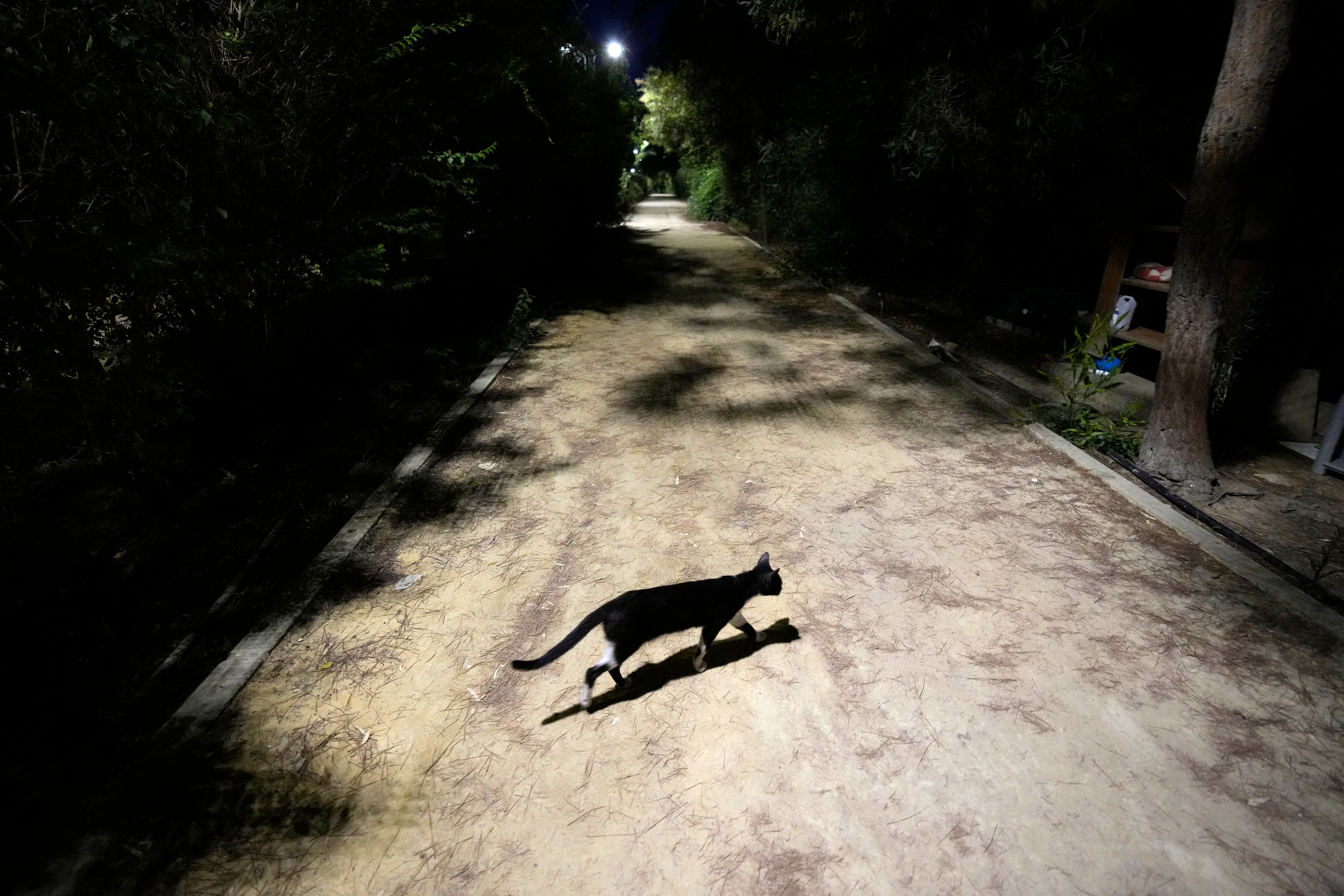
We all know cats represent a major threat to native animals and birds. Australia’s 5.3 million domestic cats kill a total of 546 million animals each year in Australia. What’s less well known is that allowing your domestic cat to roam outside exposes them to considerable danger – and the risk of a short life.
About two-thirds of all Australian cat owners have had a cat die while out roaming. The top risks are road traffic accidents, fighting and falls.
Our recent research review found keeping your cat at home at all times isn’t just good for wildlife – it’s much safer for your cat.
Losing a cat is tragic. But there are other risks too. Many owners rack up large veterinary bills while their cats are left with lifelong health conditions. Our review also found this situation is not unique to Australia, but reflects the global risk faced by free-roaming cats.
Advertisement
What are the risks?
Cameras mounted on collars provide a cat’s-eye view of the hazards roaming cats face. In one study of 55 free-roaming felines in the United States, 25% risked poisoning by eating or drinking while away from home – any substance could be hazardous. Nearly half (45%) crossed roads, 25% encountered other cats, 20% crawled under houses and 20% explored storm drains.
A research review found that keeping your cat at home is much safer for your cat (Getty)
This isn’t just American feline bravado. When cameras were fitted to 37 cats in New Zealand, 59% drank away from home, 40% ate away from home, 32% crossed roads and 21% risked falling by climbing onto roofs.
Advertisement
Australian cats are no exception. In one study, 428 radio-tracked cats averaged 4.8 road crossings per day.
What are the outcomes?
If you’re a fan of The Simpsons you might recall the fate of their family cats: Snowball I and Snowball II died on the road, Snowball III drowned, Coltrane (AKA Snowball IV) fell to his death, and Snowball V is still with us. The reality is uncomfortably similar. Our review found that trauma – mainly road traffic accidents, fighting and falls – kills or injures many free-roaming cats globally.
In a recent UK study, road traffic accidents were the leading cause of death for cats aged less than one year old all the way to eight-year-old cats.
Advertisement
This aligns with European estimates, which suggest 18–24% of cats are struck by a car during their lifetime, with around 70% of those incidents proving fatal. Victims are often under five years old and predominantly male. Risks are higher for those not desexed, as they tend to roam wider and more frequently.
Love and status offer no protection. Former New Zealand Prime Minister Jacinda Ardern’s cat, Paddles, colloquially known as New Zealand’s first cat, died after being hit by a car in 2017.
In a recent UK study, road traffic accidents were the leading cause of death for cats aged less than one year old (AP)
The dangers extend well beyond road accidents. Roaming pet cats face serious infectious diseases, such as Feline Immunodeficiency Virus (FIV), and frequently engage in fights, often developing abscesses that can kill and require expensive veterinary treatment.
Advertisement
While it’s hard to quantify the instances of deliberate human cruelty to cats, there is global evidence for deliberate poisoning and injury to roaming cats, many of which die before receiving medical intervention.
In one study tracking 55 roaming cats in Western Australia over just eight months, two were poisoned, one lost a front leg in a traffic accident, one fractured two canine teeth in a fall, and two required veterinary treatment for fight-related injuries.
Drawing all these factors together, we estimated outdoor pet cats have lives at least 2–3 years shorter than the population of contained pet cats. Those that survive accidents or disease may have lifelong disabilities.
How can you reduce the risks?
Advertisement
The simplest way to protect your cats is to contain them on your property, just as Australians do with other domestic animals. Extensive advice is available on how to keep cats happy and healthy while contained.
Importantly, containment doesn’t mean keeping your cat indoors at all times. Backyards can be modified with fence-top rollers to prevent escape. Some owners enclose part of the yard to create a “catio” – an outdoor cat enclosure – allowing their cats to enjoy fresh air and sunshine while remaining secure.
About the authors
Mike Calver is an Associate Professor in Biological Sciences at Murdoch University. Heather M. Crawford is an assistant researcher at Murdoch University and Trish Fleming is a Professor at Murdoch University.
Many cats can also be trained to walk on a harness or leash, making it possible to take them for supervised outings. A recent report from Norway found providing controlled outdoor access is often important for maintaining cat wellbeing.
Cats need to be entertained when in the house. They enjoy outside views, toys, scratching surfaces, above-ground climbing and sitting spaces, and opportunities for play. They are naturally solitary animals, so places to hide are useful.
If cats can’t go outside to toilet, they will need two indoor litter trays. Because cats are fastidious, trays must be cleaned frequently. In multi-cat households, provide one litter tray per cat, plus an extra. Place the trays in separate, quiet locations, and never beside the food bowl.
Responsible cat ownership
Advertisement
Australians love their cats. In 2019, roughly a quarter of Australian households owned a cat. By 2025, that figure had risen to a third. Over the same period, households reporting they kept their cats indoors rose from 36% to 48%.
Perhaps we are finally valuing our cats as we do our dogs and listening to Aussie songwriter and singer Eric Bogle’s sage advice: “Oh you who love your pussy be sure to keep him in. Don’t let him argue with a truck, the truck is bound to win. And upon the busy road don’t let him play or frolic. If you do I’m warning you it could be CAT-astrophic.”
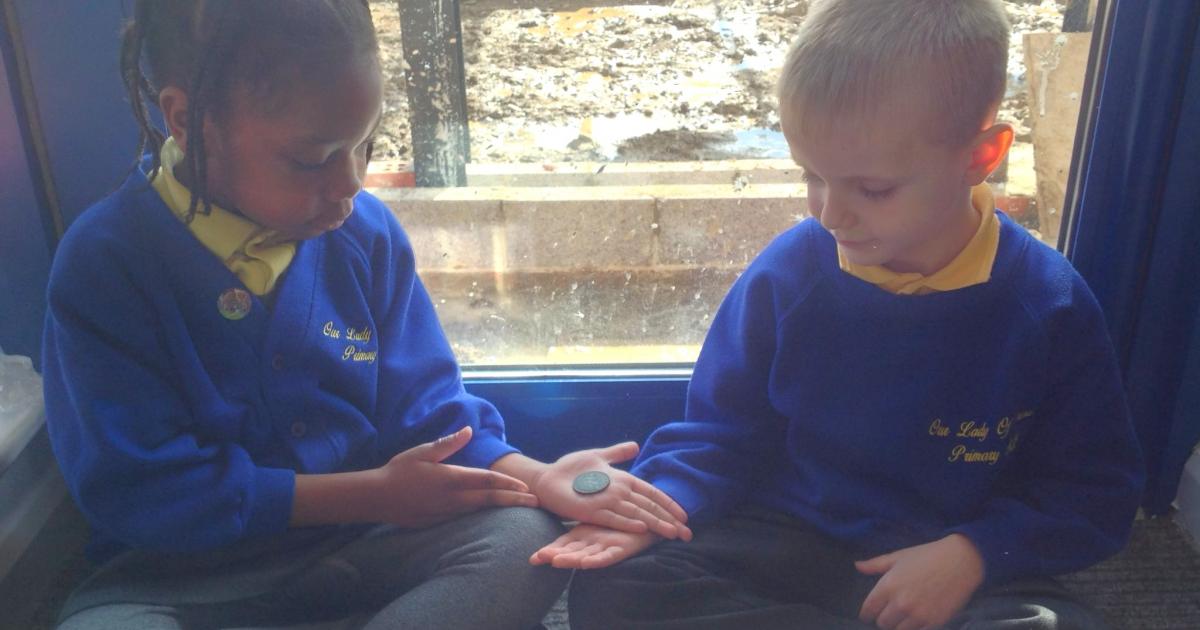
The 1928 coin was uncovered during nursery building works at Our Lady of Lourdes Catholic Primary School in Shotton Colliery.
Reception pupils Mirabel and Lester, both five, described the coin as “treasure” and said they were “thrilled” by the find.
1928 coin uncovered during nursery building works (Image: Supplied)
Lester said: “It was so exciting to find treasure!”
Lynsey Wetherell, EYFS lead at the school, said: “This remarkable discovery coincides with the very year our school was established, making it a piece of history that holds special significance for us.”
Advertisement
The King George V penny prompted conversations about life in Shotton Colliery a century ago, with pupils imagining who might have held the coin and what the area once looked like.
1928 coin uncovered during nursery building works (Image: Supplied)
Ms Wetherell said: “This discovery has not only brought history to life for our students but also connected our past with our future as we continue building our nursery.
“Finding such a piece of history on our school grounds is a wonderful reminder of our roots and the stories waiting to be discovered.
“It was a lovely reminder of the hidden stories beneath our feet, leaving everyone curious about what other treasures might still lie undiscovered.”
Advertisement
The school’s new purpose-built nursery is set to open in Autumn 2026 and will offer flexible 15 and 30-hour places for children aged three and above.
Our Lady of Lourdes Catholic Primary School is part of the Bishop Chadwick Catholic Education Trust.
To learn more about nursery places, email office@ourladylourdesdurham.org.
Details about the trust are available at www.bccet.org.uk.
“Told through the lens of the artists, craftspeople, and technicians bringing J.K. Rowling’s beloved books to life for a new generation,” it will offer “an in-depth look at the making of the first season,” a press release states.
Narrated by Nick Frost, who plays Rubeus Hagrid in the show, the exclusive will also feature interviews with key cast members, including John Lithgow, Janet McTeer, and Paapa Essiedu, who star as Albus Dumbledore, Professor McGonagall and Professor Snape, respectively.
Advertisement
In a trailer for the special, released Thursday, a set designer standing beside a mock of the Hogwarts castle says: “To play in a sandbox this big, it really is incredible. We’re adding a level of world-building beyond what the audience is familiar with.”
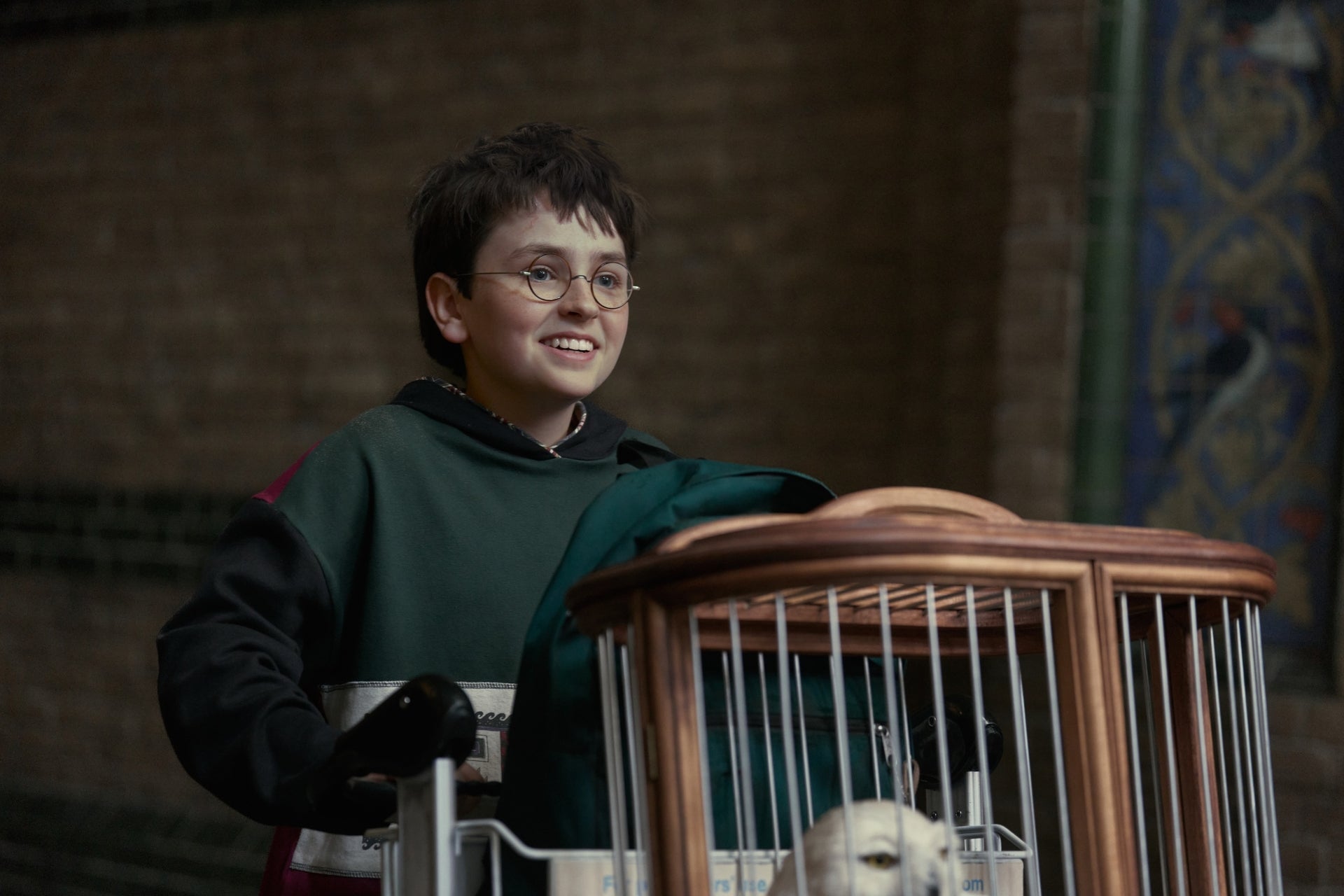
‘Finding Harry: The Craft Behind the Magic’ will premiere April 5 on HBO Max (HBO)
Each season of the series will be based on one of Rowling’s seven books, with the first eight-episode season covering the events of Harry Potter and the Philosopher’s Stone.
It will welcome young newcomers Dominic McLaughlin, 12, Alastair Stout, 12, and Arabella Stanton, 11, as the leading trio Harry, Ron and Hermione. All three are reportedly being paid £500,000 for the first season, with a source recently telling The Sun that they are “on track to be multi-millionaires before they turn 18.”
Last week, HBO dropped the first trailer for the highly anticipated show, offering a glimpse of Harry’s journey from living under the stairs to discovering a new world as the Boy Who Lived. The two-minute clip became the most-watched HBO trailer in history. It amassed more than 277 million organic views across platforms in its first 48 hours online.
ADVERTISEMENT. If you sign up to this service we will earn commission. This revenue helps to fund journalism across The Independent.
Dominic McLaughlin takes over for Daniel Radcliffe as the Boy Who Lived in the new Harry Potter series (Aidan Monaghan/HBO)
“There is nothing special about Harry Potter — at least that’s what his Aunt Petunia always says. On his 11th birthday, a letter of admittance to Hogwarts School of Witchcraft and Wizardry opens up a hidden world for Harry: one of fun, friendship and magic. But with this new adventure comes great risk as Harry is forced to face a dangerous enemy from his past,” reads an official season one logline.
Finding Harry: The Craft Behind the Magic will stream April 5 at 8 p.m. GMT/3 p.m. ET/12 p.m. PT on HBO Max.
Sunderland City Council’s planning and highways committee this week refused plans for land at Mulberry Way in the city’s Houghton ward.
Persimmon Homes were seeking permission for 58 homes with “associated access, landscaping, open space” and a “sustainable urban drainage system.”
During a council consultation exercise there was significant public opposition, with around 122 formal objections and a 151-signature petition.
Advertisement
Public concerns listed in a council report included loss of greenspace, highway safety, flood risk, wildlife impacts and the developer’s “violation of previous planning promises.”
The site formed part of a larger development granted in 2001 which included a condition which developers Persimmon “failed to fulfil”, council documents state.
A council report said developers were now “immune” from council enforcement action due to the time that had passed but noted developers “wished to mitigate the failure to provide children’s open space/informal recreation area and meadow space offsite”.
However, council planners said it was “premature” to consider housing plans until the “outstanding issue” had been addressed, adding the new application would “result in a loss of open play space for existing residents of the adjacent estate.”
Advertisement
The application came before the planning and highways committee on Monday (March 30) and planning officers recommended the housing be refused.
Reasons included the historic play park issue, access worries and concerns about flood risk and ecology assessments.
Members of the public and Houghton councillors John Price and Mark Burrell spoke against the plans at City Hall.
A planning agent for Persimmon also requested the “gift of time” to address planning issues and agree details of improvements to the nearby Keir Hardie Park.
Advertisement
Councillors later voted to refuse the housing plans, however the decision can be appealed.
A Persimmon Homes spokesperson said it was disappointing that developers had “not been able to find a way forward” with the council to “deliver much needed new housing”.
They said they had engaged with local councillors and residents on plans to “invest in the play park at the nearby Keir Hardie Park” and added it was “disappointing that time has not allowed for these plans to be presented and for the other matters to be resolved.”
For more information, visit the council’s planning portal website and search for reference 25/01316/FUL
It brings the total number of arrests in connection with the disorder to 17.
Four more people have been arrested in connection with disorder among Rangers and Celtic fans at Ibrox Stadium.
Advertisement
Ugly scenes broke out following the Scottish Cup Final on Sunday, March 8. It saw flares fired into the midst of fans, while supporters, police officers and those working at the stadium came under attack.
A steward was seen being carried from the pitch, believed to have been injured in the chaos, and a number of people were pictured receiving medical treatment. The most recent arrests bring the total number to be made under the operation to 11.
Following the match, Celtic striker Tomáš Čvančara, who scored the winning penalty for his side, was interviewed for TV wearing a blood-stained shirt. He had been photographed intervening in an incident on the field. A member of Celtic’s coaching staff was also reportedly attacked. There was also violence outside of the stadium following the game.
Advertisement
Operation Moonglint was subsequently launched by Police Scotland to trace those responsible. Police have confirmed four further men, aged 20, 26, 30 and 47, were arrested and charged and have been released on an undertaking to appear at court at a later date.
It brings the total number of arrests in connection with the disorder to 17.
Police say inquiries to trace those responsible are ongoing.
Detective Chief Inspector David Lamont said: “Extensive inquiries remain ongoing to identify and trace those involved. We will ensure those involved in acts of violence and disorder will face the consequences of their actions that day. Further arrests will be made.”
Advertisement
Anyone with information can call 101 or contact Crimestoppers anonymously on 0800 555 111. Information can also be sent directly to the investigation team.
The Major Incident Public Portal (MIPP) is a website that gives the public access to a form to pass information, images and footage directly to the Major Investigation Team and can be accessed here: https://mipp.police.uk/operation/SCOT26G03-PO1
Get more Daily Record exclusives by signing up for free to Google’s preferred sources. Click HERE.
Lamerd, a town in southern Iran, came under attack on 28 February. CCTV footage published by Iranian state media – which was authenticated and geolocated by BBC Verify – showed a munition moments before it exploded above a residential area. Experts identified it as likely being a US missile, based on its appearance, the size of the blast and the distance from potential US launch sites in the Middle East.
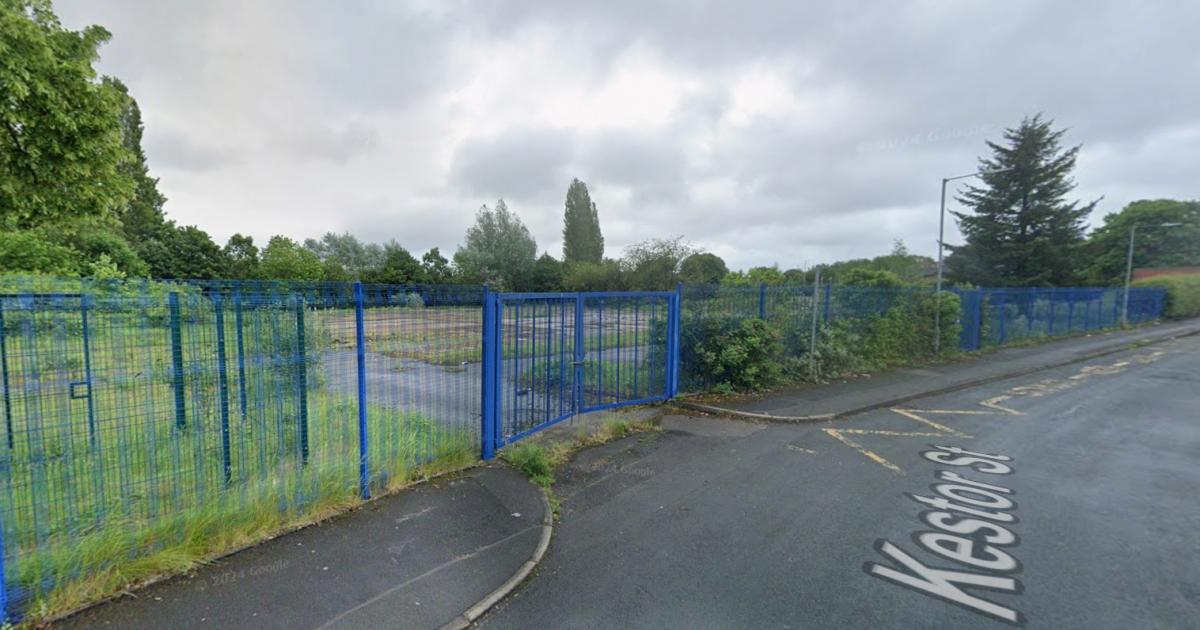
The vacant plot of land off Kestor Street in The Haulgh formerly housed Bolton Parish Primary School before they moved to their current school on Chadwick Street.
A design and access statement submitted by RA Design and Project Management said that “existing access into the site is tight” and “a dropped kerb will make access easier in the future”.
They continued: “There is no firm plan for the site but several prospective future users have commented that the access is too narrow”.
Advertisement
They have proposed dropping the kerb and widening the entry gate to make the site easier for future occupiers to use.
Bolton Council’s town planning officers agreed with the proposal which they said “would not have any significant impact upon the visual amenity of the area”.
In their report, they said the area is predominantly in commercial and industrial use “with commercial fencing visible along Kestor Street”.
Officers were called to Northumberland Road on Thursday (April 2) at around 3.30am.
A cordon was erected as white-suited investigators probed the semi-detached home later on Thursday, with pictures showing how the property had two smashed windows.
No injuries were reported during the incident, although people were inside at the time.
Cleveland Police has today (Friday, April 3) confirmed no arrests have yet been made and the investigation remains ongoing.
Advertisement
(Image: NORTHERN ECHO)
Crime scene investigators were seen wearing white suits with blue masks and gloves on Thursday within one of three police cordons set up along the road.
The road was fully blocked off at the junction with Thornaby Road, where an officer was standing guard beside a police van.
Detective Chief Inspector Chris Pringle, from Stockton CID said: “At 3.30am on Thursday, April 2, police received reports of a firearm being discharged towards a property on Northumberland Road in Thornaby.
“While occupants were inside the property at the time, there were no injuries reported.
Advertisement
“Enquiries are ongoing and anyone with information, dash cam or doorbell footage is asked to call Cleveland Police on 101 quoting reference number 060930.”
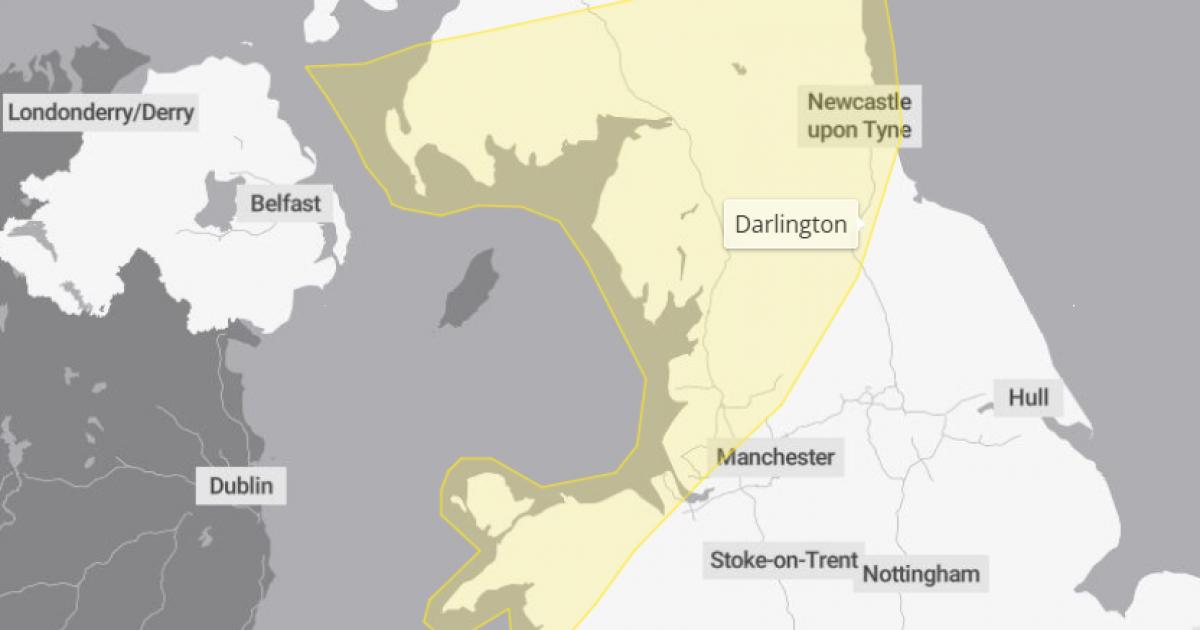
The wind alert will now be in place until 7am on Easter Sunday, with the forecasters warning of possible disruption across Darlington and County Durham over the weekend.
Storm Dave will move in towards the North East during Saturday evening (April 4), bringing gusts of up to 50 to 60 mph and up to 60 to 70 mph in more exposed locations.
The spell of very strong winds later on Saturday and overnight into Sunday morning could lead to damage and travel disruption.
Advertisement
Where will be affected?
The yellow weather warning runs from Saturday 5pm until Easter Sunday 7am (extended from Saturday evening) and applies to the following areas in the North East, including:
· Darlington · Durham · Gateshead · Newcastle upon Tyne · North Tyneside · Northumberland · South Tyneside · Sunderland
Forecasters rate the potential impact of the weather warning as medium, with the likelihood of the disruption being “very low.”
Advertisement
The Met Office said: “A rapidly deepening area of low pressure, Storm Dave, is likely to move North Eastwards close to or across northwestern parts of the UK during Saturday evening and night, clearing to the North Sea by Sunday.
“While there is some uncertainty over the exact track, intensity and shape of this area of low pressure, a period of strong west to south-westerly winds is expected during Saturday night and into the first part of Easter Sunday, before gradually easing through the day.
“Peak gusts of 50-60 mph will be possible fairly widely, with 60-70 mph in more exposed locations.”
‘The design of the development will create a vibrant neighbourhood with strong connections to the local community’
Plans are under consideration to build over 200 houses in a sleepy Welsh village. Developer BDW Trading Ltd has lodged an application with Vale of Glamorgan Council to build 232 houses and a foodstore that could be as large as 20,000 sq ft on Church Farm in St Athan.
Advertisement
The development would feature a mix of one, two, three and four-bedroom properties. These properties would be split into 150 homes for the open market, 54 social rented units and 28 “low-cost home ownership units”.
The application reads: “The development has been structured around a clear street hierarchy and integrated network of green infrastructure and public open spaces to create a high-quality and inclusive residential environment” For the biggest stories in Wales first sign up to our daily newsletter here
The affordable homes on site are located throughout the development, “providing integration with the open market housing”.
Planning documents read: “The proposals make efficient use of the site by providing much needed market and affordable homes, in addition to a new foodstore.”
It continues: “The design of the development will create a vibrant neighbourhood with strong connections to the local community.”
The documents also outline that a total of 498 private car parking spaces will be provided, with the numbers per plot ranging from one to three depending on “dwelling size”
There will also be 48-off carriageway visitor parking spaces.
Advertisement
Four-hundred metres of hedgerow are proposed to be removed as well as 12 small hawthorn trees to make way for the development.
In return, a total of 200 trees are proposed to be planted across the development in addition to 600m of hedgerow, over 500sq m of “native shrub planting” and over 3,500sq m of native grassland and wildflowers.
The application reads: “The development includes the creation of several open spaces and green corridors within the site.
“This includes three large open spaces, with two primarily focusing on formal and informal play and the larger space combining informal play, biodiversity and sustainable drainage systems use.”
Advertisement
Regarding the proposed foodstore, the application reads: “Given the limited food retailing options within St Athan currently, the proposed foodstore would make a significant contribution to the settlement as a whole and reduce longer journeys by private car to other foodstores further afield.”
It continues: “The provision of a food store will have significant sustainability benefits and have the potential to create a range of new employment opportunities.”
In its latest operational update, the Ministry of Defence said RAF Regiment gunners downed multiple Iranian drones overnight, while UK Typhoons and F-35 jets, together with Wildcat helicopters, continued their defensive missions over Cyprus, Jordan, Qatar, UAE, and Bahrain.





















































You must be logged in to post a comment Login