Connect with us
DAPA Banner
DAPA Coin
DAPA
COIN PAYMENT ASSET
PRIVACY · BLOCKDAG · HOMOMORPHIC ENCRYPTION · RUST
ElGamal Encrypted MINE DAPA
🚫 GENESIS SOLD OUT
DAPAPAY COMING

NewsBeat

Revealed: Alarming reasons behind Britain’s alcohol death crisis – according to the scientists that spotted the surge in victims (and it’s not just Covid)

Published

on

Alexandria Hughes (left) launched a petition after her sister Zoe (right) spent up to £1,500 a month on booze delivered directly to her home before her death

Food delivery apps, cheaper-than-ever booze and the myth that wine is ‘healthier’ than spirits are fuelling a deadly liver disease crisis in the UK, experts have warned.

Alcohol-specific deaths – the majority of which involve liver disease – have risen sharply since the pandemic, climbing by more than 35 per cent since 2019. 

oRecent research published in the prestigious Lancet journal found nearly 4,000 extra Britons died from booze-related reasons between 2020 and 2022, compared to the average two-year figure. 

Scientists have noted that the rise has been the most significant among men and those from poorer backgrounds, however data also show a worrying uptick among middle-aged women.

Advertisement

Some experts have put the rise down to the Covid lockdowns, suggesting that the isolation encouraged heavy drinkers to drink more. 

‘People who were already drinking at risky levels increased their consumption,’ Dr Melissa Oldham of the University College London Tobacco and Alcohol Research Group – one of the authors of the Lancet paper – told the Daily Mail.

However, there are other, lesser known yet intriguing factors that researchers say can be overlooked. 

Alcohol is easier to get hold of than ever before 

For decades we’ve been able to buy alcohol in countless shops and supermarkets, but fast-forward to 2026 and off-licenses are dispatching bottles of alcohol to homes on the back of a moped.

‘There’s growing concern in the public health community about rapid alcohol delivery services – where people can get drinks within 20 minutes or a couple of hours,’ says Dr Oldham.

Advertisement

‘They are definitely changing the scope of how and when people access alcohol.’

Campaigners are calling for tighter regulations – or outright bans – on apps that sell and deliver alcohol, with some grieving families claiming they are making alcoholism and addiction harder to manage and control. 

In March, the sister of an alcoholic who was spending up to £1,500 a month on drink through delivery apps called for tighter controls on alcohol sales by food-delivery companies.

Mother-of-two Zoe Hughes, 35, was found dead at the bottom of her stairs in July 2023 after battling alcoholism for several years while struggling with personal problems.

Advertisement

Her family later discovered that her drinking had intensified as alcohol became increasingly easy to order online. In the months before her death, she had regularly used Just Eat, Deliveroo and Uber Eats to buy alcohol, even taking delivery of it when she was visibly intoxicated and at her most vulnerable.

Colin Angus, Professor of Alcohol Policy at the University of Sheffield who was also involved in the Lancet study, says that Britain’s access to alcohol often comes under the spotlight through the eyes of foreign visitors.

‘I’ve met alcohol researchers from overseas who had never visited the UK before, and they were astonished by just how easy it is to buy alcohol here,’ he tells the Daily Mail.

Advertisement

Alexandria Hughes (left) launched a petition after her sister Zoe (right) spent up to £1,500 a month on booze delivered directly to her home before her death

‘They were particularly shocked that it is sold in petrol stations.

‘Our team used market-research data to map every licensed premises in Great Britain. Covent Garden had the highest concentration anywhere in the country.

‘If you stood outside Covent Garden Underground station, there were more than 1,000 places selling alcohol within a one-kilometre radius.

Advertisement

‘Although the number of pubs has fallen since then, the availability of alcohol in shops has increased hugely.’

The sheer variety of alcohol has also surged, with beers, wines and spirits now nestling for attention with much stronger alcopops and premixed cocktails.

Experts – including Professor Angus – believe that the foundations of the crisis have been forming since the 1960s when licensing laws first began to change after wartime restrictions imposed at the turn of the century.

Slowly, alcohol became cheaper, easier to buy and more deeply embedded in everyday life.

Advertisement

In the 1960s pubs were tightly restricted by ‘permitted hours’ – they were typically allowed to serve alcohol for only nine hours from Monday to Saturday. Most opened from around 11am to 3pm, then shut before reopening between 5.30pm and 10.30pm. Sundays were even more limited, with pubs required to observe a five-hour afternoon closure.

Pubs in the 1960s were more male-centric

Pubs in the 1960s were more male-centric 

That began to change with the Licensing Act 1988, which abolished the compulsory afternoon break in England and Wales. For the first time since the First World War, pubs could remain open continuously from 11am to 11pm on weekdays and Saturdays. Sunday restrictions lasted longer, with continuous opening finally permitted following changes introduced in 1995.

Buying alcohol to drink at home was also far less convenient than it is today. In the early 1960s, most people relied on specialist off-licences, wine merchants or pub off-sales counters. But as supermarkets such as Sainsbury’s and Tesco secured alcohol licences, beer, wine and spirits became cheaper, more visible and easier to add to the weekly shop.

Advertisement

It’s cheaper than ever to drink 

NHS figures released in 2024 revealed that alcohol is 91 per cent more affordable than it was in 1987.

This, says Professor Angus, is mostly driven by supermarkets offering cheaper prices than pubs and bars. 

‘When you compare the prices in pubs to the prices in shops, they’re on completely separate trajectories,’ he explains.

Advertisement

‘As alcohol became much more available in shops, it also became much cheaper, and people have shifted their drinking from pubs to home.

‘It was maybe only 30 years ago that about three quarters of the alcohol sold in the UK was drunk in pubs. Now it’s drunk at home.’ 

But the cost disparity has changed not only how much we drink, but where – and for how long.


Most people are familiar with ‘pre-drinks’: having alcohol at home before a night out to avoid expensive bar and pub prices. But the growing availability of cheap, shop-bought alcohol has also encouraged a more significant cultural shift, with many people skipping the pub altogether and drinking at home instead.

Advertisement

‘There has been a huge cultural shift in where we’re drinking, and it is very difficult to say if it is because people prefer to drink at home or they do it because it is simply more affordable,’ says Professor Angus.

‘One major issue is that if people are drinking at home, there’s no hard stop to it. 

‘If you were in a pub and subject to licensing rules, people are getting kicked out at last orders, but at home, people can just keep going.’

Women are drinking more… and are officially allowed in pubs  

Advertisement

Until well into the 20th century, many British pubs treated the public bar as a male preserve, with women often expected to sit in a separate lounge or snug and receive table service. 

Although this was not a universal legal ban, pubs could still operate discriminatory policies. In 1982, the Court of Appeal ruled that London drinkery El Vino’s policy of preventing women from standing at the bar and requiring them to sit in a back room was unlawful under the Sex Discrimination Act. 

Today, millions of women think nothing of describing their personality as being a ‘wine mom’ and proudly fetishise drinking prosecco at every opportunity. 

Do you want to lose a stone in six weeks?
Advertisement


Hi, I’m Emma Bardwell, a nutritionist with more than 15 years’ experience helping people improve their health and lose weight.

I’ve been there. I was overweight, unhappy with my skin and stuck in a rut. Then I changed the way I eat. You can now do the same with my tried-and-tested healthy eating plan. And for DailyMail+ subscribers, it’s completely free. 

Advertisement

Click here to sign up and start your journey

<!- – ad: https://mads.dailymail.co.uk/v8/de/health/none/article/other/mpu_factbox.html?id=mpu_factbox_1 – ->

‘Looking at trends in liver disease, which are very highly correlated with alcohol, they have tripled in women,’ says Professor Angus, who adds that much of this can be traced back to the 1960s. 

Advertisement

‘Back then, drinking for women was much rarer and a bit more taboo before slowly becoming more socially acceptable. 

‘Drinking alcohol also started to move from being very much a thing that happens in pubs, which were very male-dominated, beery environments, to drinking at home, and wine became much more available.’ 

Speaking of wine, Professor Angus adds that he finds it astounding that wine is marketed so aggressively at women.

What is also striking is that alcohol is exempt from the nutritional labelling rules that apply to almost every other food and drink product,’ he explains.

Advertisement

‘Manufacturers do not have to list the ingredients or nutritional information, including calorie content. So, if you pick up a bottle of Heineken and a bottle of Heineken Zero in a supermarket, only the alcohol-free version has to tell you what is in it.

‘It is difficult to understand how we have ended up in that position without considering the influence of alcohol-industry lobbying. 

‘I suspect one reason the industry resists clearer labelling is that it does not want people to realise just how many calories can be contained in a glass of wine.’ says.

Source link

Advertisement
Continue Reading
Click to comment

You must be logged in to post a comment Login

Leave a Reply

NewsBeat

Boy, 14, charged with terror offence targeting London mosques

Published

on

Catherine Turnbull is smiling at the camera. She is wearing a pale blue t-shirt and dark framed glasses. Catherine has short light brown hair. She has some bushes behind her with are slightly out of focus.

A 14-year-old boy has been charged with offences linked to “extreme right-wing terrorism” in connection with an alleged plan to target two mosques in Sutton, south London, the Metropolitan Police said.

The child was initially arrested on suspicion of criminal damage to a vehicle. Officers searching an address then found “a number of documents of concern”, a Met spokesperson said.

He has also been charged with damaging property belonging to another without lawful excuse, intending to damage such property, namely a car window. The offence was racially aggravated, the force added.

This breaking news story is being updated and more details will be published shortly. Please refresh the page for the fullest version.

Advertisement

You can receive Breaking News on a smartphone or tablet via the BBC News App. You can also follow @BBCBreaking on X, external to get the latest alerts.

Source link

Continue Reading

NewsBeat

Andy Burnham’s first Labour Cabinet in chaos before he even starts work as Ed Miliband fights Shabana Mahmood and Yvette Cooper for keys to No11 as chancellor

Published

on

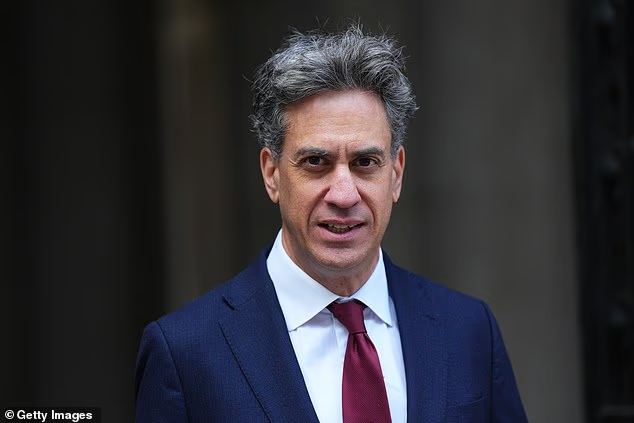
Speculation had been rife that Mr Miliband, a former party leader who is now Energy Secretary, would replace Rachel Reeves in No11 on Monday

Andy Burnham‘s new Cabinet has become embroiled in chaos before even being created as senior Labour figures fight to become his chancellor.

Ed Miliband, Shabana Mahmood and Yvette Cooper are embroiled in a major briefing war as they all put forward their claim to the senior financial post.

With just days to go until Mr Burnham replaces Sir Keir Starmer, reports suggest he has yet to decide who to appoint to run No11.

Mr Miliband, the environmentally conscious Energy Secretary, appears to be the choice of Labour members, but has been opposed by figures around the incoming Prime Minister over his run-ins with business and trade unions. 

Advertisement

Ms Cooper, who was a Treasury minister almost 20 years ago under Gordon Brown, and Home Secretary Ms Mahmood, a former shadow Treasury minister, have now been linked with the post.

Ms Mahmood is unpopular with the party Left because of hardline immigration reforms, and a move would allow Mr Burnham to shake things up. 

One veteran Labour MP on the Left of the party told the Daily Mail: ‘I don’t think Miliband will get No 11. He would be too big a risk.’ 

Mr Miliband was seen as the least market-friendly candidate in a poll by Bloomberg, while he has also clashed with unions over North Sea oil jobs that could be affected by the push for green power he champions. 

Advertisement

Speculation had been rife that Mr Miliband, a former party leader who is now Energy Secretary, would replace Rachel Reeves in No11 on Monday

But allies of the incoming PM say he has yet to make up his mind about who would control the nation's finances, with Shabana Mahmood, the current Home Secretary, also an option

But allies of the incoming PM say he has yet to make up his mind about who would control the nation’s finances, with Shabana Mahmood, the current Home Secretary, also an option

It comes after Mr Burnham said people’s everyday living expenses are ‘the issue of our times’ as he was quizzed on his plans for government. 

Advertisement

Speaking to reporters in Parliament last night he said: ‘I’ve been setting out plans that I believe will bring some much-needed change in terms of people’s everyday living expense. I think that is the issue of our times.

‘If we want to connect politics better with people, well, let’s deal with some of the pressures people are under in terms of the everyday cost of transport, the bills that they’re paying. I heard it so often on doorsteps in the campaign.’

‘You know, life has changed for people, and it’s not necessarily got better’, he added.

‘And I think we just need to be relentlessly focused on that.

Advertisement

‘I have talked about more public control of the basics, and then through that control, cutting the cost. I did that with buses in Greater Manchester, and I carry that same principle forward.

‘To me, the cost of living and reducing it is everything, and I think we need to regain the confidence in the public that we’ve got a credible plan to do that and make life better.’

Earlier this month a YouGov poll of Labour members found 69 per cent believed Mr Miliband would do a good job, compared to 30 per cent for Ms Mahmood.

But he has been the source or ire for some trade unions over his lack of backing for the North Sea oil and gas industry as he tries to make UK power greener.

Advertisement

In March, Unite’s Sharon Graham said he should not ‘let go of one rope before having hold of another’.

‘We all know that whatever happens the UK will still need oil and gas for decades to come and the war in Iran is just the latest reminder that when we rely on overseas production our energy security is at the mercy of global events,’ she said.

Reports this week suggested Mr Miliband might be prepared to U-turn on North Sea oil and gas if made chancellor. 

He is said to be keen to give the go-ahead to the Jackdaw gas field in order to show he is not a Net Zero ‘zealot’ and to calm jitters about his possible appointment at the Treasury.

Advertisement

Mr Miliband is reported to have privately signalled his willingness to grant consent for Jackdaw, but cannot confirm the move until a consultation closes next month.

It came as the PM-in-waiting was accused of ‘running scared’ after MPs were denied the chance to quiz him until after the summer.

He will become Prime Minister on Monday but the House of Commons rises for its summer break on Thursday so he will be spared scrutiny for six weeks.

The Conservatives have been calling for one extra day next week so Mr Burnham could give a statement – and face questions – and planned to put pressure on the Government by holding a vote on Wednesday. 

Advertisement

But on Tuesday in an unprecedented move ministers cancelled the Opposition Day debate, saying the time was needed to discuss Iran instead.

It means Mr Burnham, who won so many backings no rival candidate can now be nominated, will not answer questions from MPs until September 1.

Tory leader Kemi Badenoch led the outrage, saying: ‘In an unprecedented move, Labour have scrapped the Conservative vote to force Andy Burnham to come to Parliament to answer questions when he becomes PM on Monday. 

‘Labour are running scared because they know the honeymoon will be over the minute he has to tell us his plans.’

Advertisement

Source link

Continue Reading

NewsBeat

The Odyssey: Christopher Nolan film starring Matt Damon and Zendaya receives rave reviews

Published

on

Catherine Turnbull is smiling at the camera. She is wearing a pale blue t-shirt and dark framed glasses. Catherine has short light brown hair. She has some bushes behind her with are slightly out of focus.

Universal Studios will have high hopes for the film at the box office, after Oppenheimer took $975m (£723m) globally.

However, Oppenheimer enjoyed a huge audience boost from the Barbenheimer phenomenon, the 2023 viral trend that prompted movie fans to buy tickets to see Barbie and Oppenheimer on the same day.

The Odyssey is a film with “thrilling ambition, boldness, seriousness, generosity and flair”, wrote the Guardian’s Peter Bradshaw, external, awarding five stars

“There are some broad-brush moments in the dialogue, yes, but even these are applied with a muscular flourish,” he added.

Advertisement

The Odyssey is “the definition of epic”, according to Empire’s John Nugent,, external in another five-star review.

“The scale and scope here is, frankly, jaw-detaching,” he said. “It is filmmaking at a magnitude few modern directors could ever realistically imagine, demand, or execute.”

Source link

Advertisement
Continue Reading

NewsBeat

What if disabled astronauts are just better suited to space?

Published

on

What if disabled astronauts are just better suited to space?

The UK Space Agency and space startup Vast just signed an agreement to send Paralympic sprinter and below-knee amputee John McFall into orbit as early as 2027. Most coverage framed it as a victory for inclusion. As a space health researcher, I think something far more interesting happened.

For 70 years, spaceflight has assumed a rigid archetype: a healthy white man with a military background. The assumption was that physical uniformity minimised risk. As we prepare for Mars, the evidence increasingly suggests the opposite.

Star Trek understood this decades ago: exploration rewards difference. The further you travel into uncertainty, the more kinds of human experience you need. It debuted in 1966 with a Black female communications officer, a Japanese helmsman, a Russian navigator, a biracial Vulcan, and a captain who made mistakes and felt his humanity down to the last drop.

What strikes me now as a scientist is not how idealistic that vision was, but how practical. Despite decades of spaceflight, we still cannot reliably predict how one person’s health will change in space. Consider Mars 500, a 520-day simulated isolation mission between 2007 and 2011 where six male crew members in identical conditions diverged dramatically in psychological resilience. Two participants remained stable; three developed severe sleep disturbances; and one suffered persistent depression.

Advertisement

Additionally, around 17% of astronauts experience significant physical deterioration in spaceflight despite following identical exercise regimes. Disability does not necessarily introduce uncertainty into spaceflight; uncertainty is already the norm.

Who performs best in space?

Sometimes those excluded perform better. In 1961, several female pilots outperformed the men of Mercury 7 programme, the first US astronauts. Jerrie Cobb scored in the top 2% of all candidates ever assessed by NASA. Several of the women outperformed the men on cardiovascular endurance. And the late Wally Funk remained in an isolation tank for over ten hours while the male Mercury astronaut record was just over three. But the women never flew. NASA insisted on military jet pilot experience as an entry requirement, while simultaneously barring women from flying military jets.

About a decade earlier, NASA recruited eleven deaf men to study motion sickness, a condition affecting 60 to 80% of astronauts in their first days of weightlessness. Motion sickness happens when conflicting inner-ear signals cause nausea and disorientation severe enough to impair performance. Most of the eleven men had lost vestibular function (the inner-ear balance system) following childhood meningitis. In rotating rooms and on rough seas, as experienced test pilots were sick around them, the deaf participants played cards. The trait that excluded them from military careers made them unusually tolerant of the environments that undid everyone else.

Researchers are finally investigating this issue: like asking whether amputees, who carry less mass and respond differently to microgravity, offer advantages in space. People with lower-limb mobility impairments or vascular differences may be naturally adapted to the headward fluid shifts of weightlessness that cause brain swelling and vision changes in around 70% of astronauts.

Advertisement

When a cooling leak filled Italian astronaut Luca Parmitano’s helmet with water during a 2013 spacewalk, it left him nearly blind and deaf to mission control. He survived by navigating back to the airlock using touch alone. On Mars where dust storms reduce vision to near-zero, blind people would have an advantage here as they are dependent on other senses.

There is no perfect astronaut

The myth of the perfect astronaut has always been just that – a myth. Chuck Yeager, celebrated as the gold standard of what an astronaut should be, broke two ribs the night before he broke the sound barrier in 1947. He concealed the injury, improvised a way to seal his cockpit door using a broom handle, and flew anyway. The right stuff was never about physical perfection. It was about adaptation.

In 1985, Soviet cosmonauts Vladimir Dzhanibekov and Viktor Savinykh manually docked with the dead and uncontrolled Salyut 7 station and spent a week manually rewiring it in freezing pitch-black conditions to bring it back to life. For many people in the disability community, navigating broken infrastructure, sensory issues and isolation is an everyday reality. Disabled people spend their lives adapting to environments designed for somebody else. That makes us experts at navigating the unknown.

Advertisement

The real “right stuff” is interdependence: being creative together with your crew when a plan fails. When Apollo 13’s oxygen tank exploded in 1970, the crew came home not because of perfect engineering, but because people depended on each other under pressure. A Mars mission, years from home and communication delays of 20 minutes each way, will demand it. Astronauts will face problems nobody could anticipate, because that is the nature of exploration.

Disability is an extreme environment

Every person who lives long enough will experience disability at some point. It is my normal. In my research career, I have improvised creative solutions to inaccessible equipment, and learned to pace my energy carefully. Even getting into the building or having access to a bathroom could be my engineering problem for the day.

The author at Space Park Leicester, University of Leicester.
Zoe Swann Baillie/University of Leicester, Author provided (no reuse)

I’ve been told using a mobility aid is unprofessional and for years, even doctors dismissed my symptoms. When they finally had an answer, it came with a caveat: there is no cure and no treatment pathway. The medical system had reached its limit. I had not. These experiences forced me to monitor my own health, adapt and advocate for myself. On a Mars mission, millions of miles from the nearest specialist, every astronaut will need exactly that skill.

Advertisement

Perhaps the most undervalued asset the disability community brings to space is its relationship with joy. Disabled people do not survive extreme environments through stoicism alone. They survive through humour, putting flowers on their wheelchairs (like mine), and deeply loving communities. On a three-year Mars mission, that may be the most critical thing of all.

Design can be better too. Deaf pilot Sheila Xu described in June 2026 at the United Nations how she designed a colour-changing light signal system to use instead of auditory cues during parabolic flights, aircraft that fly a steep arc to produce brief periods of weightlessness, used in astronaut training. It improved safety for everyone on board, deaf or not, when engine roar made verbal commands impossible. This is the “curb cut effect”: solve for the margins, and you make the system better for everyone.

The good news is we are seeing a paradigm shift. In 2021, Hayley Arceneaux spent three days in orbit on SpaceX’s Inspiration4, becoming the first person with a prosthetic bone to reach space. In 2025, ESA engineer Michaela Benthaus became the first wheelchair user on a suborbital commercial flight. McFall’s selection marks the first time a major space agency has cleared a disabled astronaut for long-duration scientific work in orbit.

Advertisement

Progress does not come from excluding each other, but from discovering what becomes possible when the universe’s criteria finally replace our own.

The goal, then, should not be simply to send one disabled astronaut to space and call it progress. It is to involve disabled thinkers, engineers, and designers at every stage of mission planning. The systems they would help build would be demonstrably better for it.

Adaptation, more than perfection, may turn out to be what matters most.

Advertisement

Source link

Continue Reading

NewsBeat

Charlize Theron’s daughters August, 12, and Jackson, 14, make rare public appearance at The Odyssey premiere

Published

on

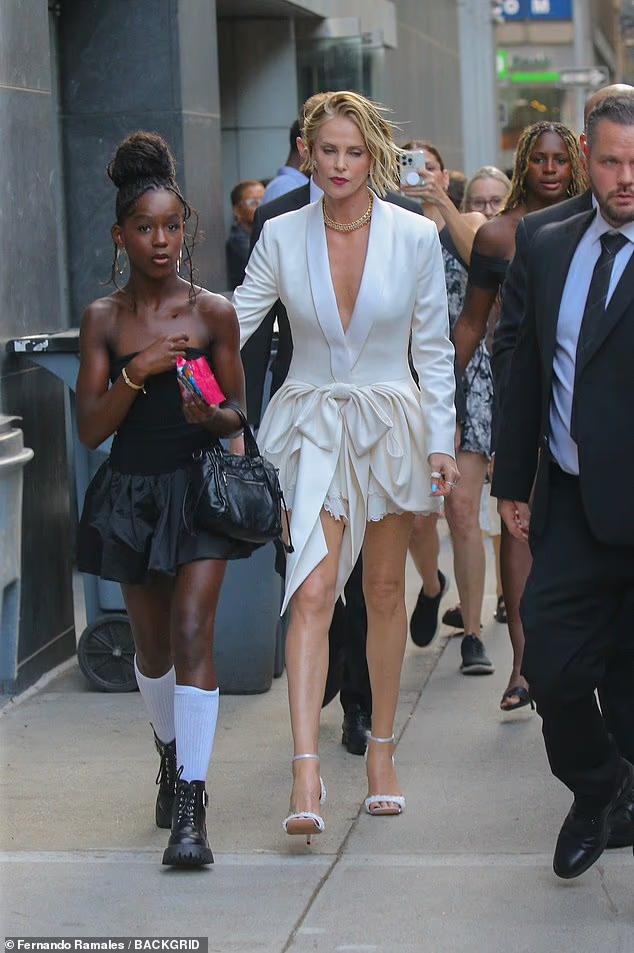
Charlize Theron had her daughters August and Jackson with her at the premiere of The Odyssey in New York City on Tuesday

Charlize Theron had two VIPs with her at the premiere of The Odyssey. 

The actress, 50, was joined by her daughters August, 12, and Jackson, 14, at the New York City debut of her star-studded Greek epic on Tuesday. 

While it was a school night, clearly Theron had made an exception given the very special occasion. 

The trio were seen making their way through the event hustle and bustle, with Theron gently guiding her daughter August through the throng as Jackson followed close behind. 

Advertisement

August wore a stylish black dress, trendy Doc Martens, and knee-high socks, while Jackson donned an off-the-shoulder look with black wedges. 

Theron, meanwhile, stunned in a white bow-adorned mini dress with strappy heels, a gold choker necklace, and bold red lip.

Charlize Theron had her daughters August and Jackson with her at the premiere of The Odyssey in New York City on Tuesday

Advertisement

It marked a rare public appearance for Jackson and August, who Theron adopted in 2012 and 2015, respectively.

Adoption was always an avenue Theron wanted to pursue when it came to her family.   

‘I don’t feel like I’m missing out on something,’ she she explained during a 2018 interview with Chelsea Handler for Elle. ‘This was always my first choice, even when I was in a relationship.

‘I was very honest with my partners that I was open to having my own biological kids but that adoption had to be a part of my life. I felt that strongly about it.’

Advertisement

Theron’s daughters have enjoyed A-list experiences with their mother over the years, going to runway shows and now the premiere of her new action film. 

Theron plays portrays Calypso in the Christopher Nolan movie, an adaptation of Homer’s ancient Greek epic the Odyssey.

The story follows the titular Greek King embark on a perilous journey home after the Trojan War in a bid to reunite with his beloved wife Penelope.

Despite the film being in the trusted hands of Oscar-winning director Nolan, fans haven’t quite got to grips with the casting yet.

Advertisement
Theron guided her daughter Jackson through the premiere hustle and bustle, placing a gentle hand on her waist

Theron guided her daughter Jackson through the premiere hustle and bustle, placing a gentle hand on her waist 

In what has been dubbed his ‘most extreme project to date’ alongside an incredibly starry cast – the pressure for Nolan to win over critics is like no other.

Already known for his impressive art and high-budget fare, Nolan’s latest film could prove to be his most ambitious yet, with the $250million budget the most expensive of his career, his first shot entirely on IMAX 70mm cameras.

Lead stars Matt Damon is starring as the titular hero Odysseus, while Devil Wears Prada icon Anne Hathaway plays his devoted queen, who is forced to fend off potential suitors in her husband’s absence.

Advertisement

Yet, the film has received heaps of attention for all the wrong reasons – sparking backlash over its ‘bizarre’ casting, being accused of fuelling ‘brutal repression’ and sending Elon Musk into meltdown.

Nolan recently defended his decision to cast Kenyan-Mexican actress Lupita Nyong’o in the movie after Musk called the casting ‘historically inaccurate.’

The star let her children enjoy a school night out to celebrate her big movie

The star let her children enjoy a school night out to celebrate her big movie 

The star-studded film boasts a cast featuring Anne Hathaway, Lupita Nyong'o, Zendaya, and Samantha Morton

The star-studded film boasts a cast featuring Anne Hathaway, Lupita Nyong’o, Zendaya, and Samantha Morton

Advertisement
Theron plays portrays Calypso in the Christopher Nolan movie, an adaptation of Homer's ancient Greek epic the Odyssey

Theron plays portrays Calypso in the Christopher Nolan movie, an adaptation of Homer’s ancient Greek epic the Odyssey

Nyong’o, 43, is set to play Helen of Troy’s sister Clytemnestra, and was named People Magazine’s ‘Most Beautiful Woman’ in 2014 following her triumphant Best Supporting Actress Oscar win for 12 Years A Slave.

Nolan defended his castings, saying: ‘Hopefully they’ll enjoy the film, even if they don’t agree with everything. The oldest depictions of Homeric characters tend to be depicted in the manner of people living in Homer’s time…

‘So there’s a pretty strong case there for portraying things that way because that’s the way the first audience received the story.’

Advertisement

Musk was called out for his remarks about the casting in January by The View host Sunny Hostin.

She said: ‘Anyone can portray a fictional character. It doesn’t have to be a white person that plays this part.’ She added: ‘I think we have to call a thing a thing when we’re talking about someone like Elon Musk… We know what this is.

‘He is a white supremacist. In my view, he is a racist.’

Emmy-winner Alec Baldwin has since weighed in on Musk’s anti-woke campaign against Nolan’s movie.

Advertisement

In a public display of support for Lupita and Nolan, Baldwin wrote on Instagram: ‘Dear Elon… but she IS the most beautiful woman in the world…Alec.’

Source link

Continue Reading

NewsBeat

Northern rail disruption after signalling fault in Bolton

Published

on

Northern rail disruption after signalling fault in Bolton

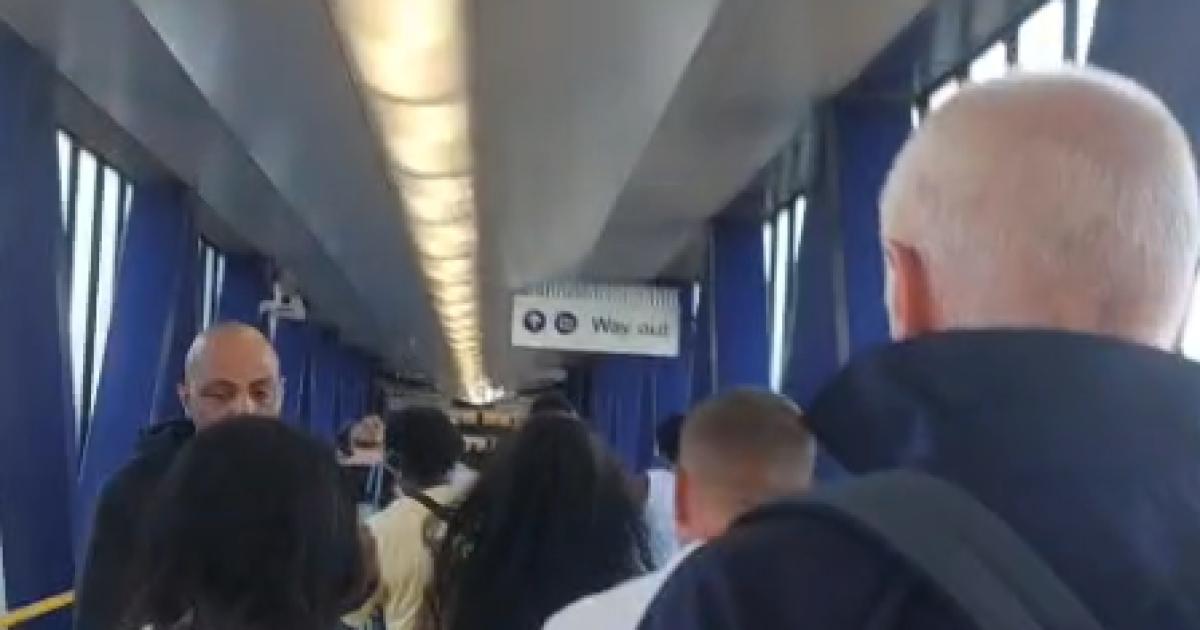
Northern has warned that train services have been cancelled, delayed, or revised after a signalling fault between Salford Crescent and Bolton.

The disruption began on July 15 and is expected to continue until the end of the day, with just hours until England kick off their World Cup semi-final with Argentina at 8pm.

(Image: NQ)

And Three Lions supporters travelling between Bolton and Manchester for the match have been warned disruption will last for hours.

A spokesperson for Northern said: “It is a signalling system that has gone down, we expect it to last for the rest of the day.

Advertisement

“There is nothing running at the moment, no trains between Bolton and Salford Crescent, just keep an eye on our website for updates.”

Network Rail staff are at the scene working to resolve the fault.

Services between Manchester Airport and Blackpool North, Manchester Airport and Barrow or Windermere, Rochdale and Blackburn or Clitheroe, and Southport and Stalybridge are among those affected.

Northern added via social media: “You can travel on Transport for Greater Manchester bus services at no extra cost until further notice on the following: V1, V2, 8, 35, 36, 37, 38, 132, 615, 575, 576, 516, 607, 608, 609, and 615.”

Passengers can also use the next available Northern service where possible, while ticket restrictions, including Advance and Peak restrictions, have been lifted in the affected area during the disruption.

Those travelling are advised to check their full journey before setting off, as other train operators may also be affected.

Advertisement

Source link

Continue Reading

NewsBeat

Andy Burnham Promises To Be ‘Very Upfront’ With Trump After President’s Dig

Published

on

Andy Burnham Promises To Be 'Very Upfront' With Trump After President's Dig

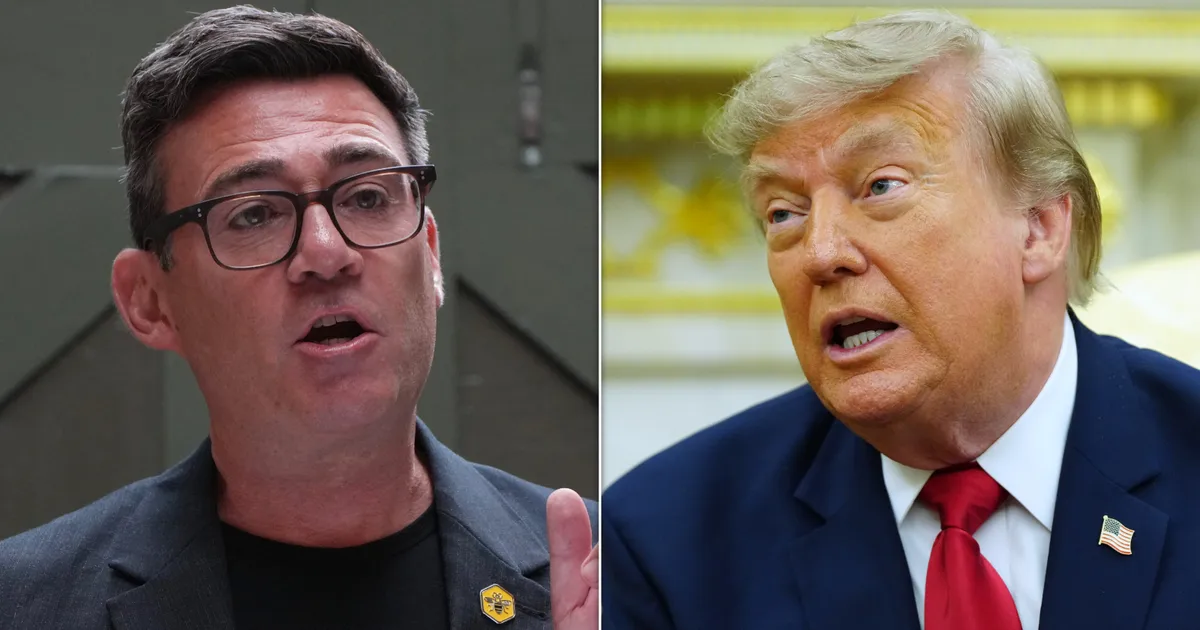
Andy Burnham intends to be “very upfront” with Donald Trump once he’s in office, the incoming prime minister said.

Burnham will be sworn in as Labour leader on Friday and receive the keys to No.10 – formally becoming Keir Starmer’s replacement – on Monday.

But he has already made it clear that he will not try to replicate the reputation Starmer secured early on in his premiership as the “Trump whisperer”.

Speaking on Gary Lineker’s podcast, Burnham said: “Maybe in a similar way to the way I’ve just described, I’ll just meet him where he’s at.

Advertisement

“And, you know, I like to think I’ve got some personality myself and I’ll just, you know, I’ll deal with him very upfront in the same way.

“I think he likes people to deal with him.”

The US president has already lashed out at Burnham, describing him as “extremely liberal” last month and predicting he “probably won’t open up the North Sea” for fresh exploration.

He dismissed the incoming PM as “the mayor of a town” too, a reference to Burnham’s previous job in Greater Manchester.

Advertisement

Burnham told Lineker: “He described Manchester as some town when he was referring to my position.

“And I might have to… you know what Manx are like, Gary, that won’t have gone down fantastically well in the city I used to represent.

“But yeah, you know, it’s about being yourself, isn’t it?

“It’s about respecting the office, the relationship, the UK-US relationship.

Advertisement

“But, you know, where you disagree, do it, but do it in a way that is kind of meeting him where he’s at.”

While Starmer and Trump got on very well at first – with the prime minister even offering the US leader an unprecedented second state visit to the UK – their relationship went into decline this year.

Starmer rejected the president’s calls for Europe to “give” him Greenland as the semi-autonomous island belongs to Denmark.

He also rejected Trump’s false claims that Nato had never “been there” for the US, reminding the president that the defence alliance went to war in Afghanistan after the 9/11 attacks in New York.

Advertisement

The prime minister then refused to allow US troops to use UK military bases for offensive strikes on Iran – and Trump ended up publicly attacking him, saying Starmer was “no Winston Churchill”.

Listen to Commons People, the podcast that makes politics easy. Every week, Kevin Schofield and Kate Nicholson unpack the week’s biggest stories to keep you informed. Join us for straightforward analysis of what’s going on at Westminster.

Source link

Advertisement
Continue Reading

NewsBeat

Trump’s spy chief pick admits he’s to blame for Epstein leak that exposed victims as he seeks keys to US intel

Published

on

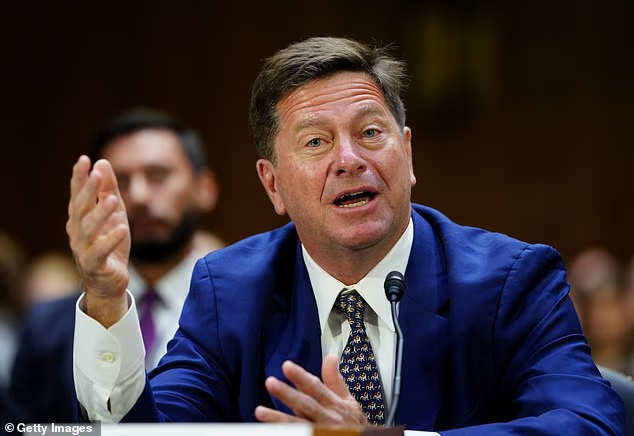
Jay Clayton, US Attorney for the Southern District of New York, appears before the Senate Intelligence Committee on Capitol Hill on Wednesday

President Donald Trump‘s nominee for director of national intelligence took blame for insufficient redactions of material released about Jeffrey Epstein‘s victims in a congressional hearing on Wednesday.

Jay Clayton admitted that the buck ultimately stopped with him when a batch of files was released in January, which was chalked up to a ‘technical review error.’

The released information included addresses and even nude photos of potential Epstein victims in the release, and victims’ lawyers said this re‑traumatized survivors and ‘turned their lives upside down.’ 

Clayton serves as the US Attorney for the Southern District of New York, and part of the Epstein case was investigated within his jurisdiction. 

Advertisement

As the US Attorney for the Southern District of New York, Clayton was tasked to personally certify that unsealed grand jury material did not disclose victims’ personal information.

The judge added this requirement so that a clearly identifiable DOJ official would ‘take ownership’ of reviewing sensitive discovery.

Senator Martin Heinrich of New Mexico invoked Harry Truman’s saying, ‘The buck stops here,’ and asked where the buck stops in this case, to which Clayton answered, ‘For the Southern District documents, it was me.’ 

Clayton finally took his seat before the Senate Intelligence Committee on Wednesday, roughly a month after President Trump torpedoed his own nominee’s confirmation hearing in a pre-dawn Truth Social post that threw Capitol Hill into chaos.

Advertisement

Jay Clayton, US Attorney for the Southern District of New York, appears before the Senate Intelligence Committee on Capitol Hill on Wednesday 

In the hearing, Clayton admitted mistakes in the release of files related to Jeffrey Epstein

In the hearing, Clayton admitted mistakes in the release of files related to Jeffrey Epstein

The irony: Clayton had been sailing toward an easy, bipartisan confirmation, with senators in both parties eager to replace acting spy chief Bill Pulte, who has no intelligence background. Then Trump pulled the plug himself.

Advertisement

In June, the President abruptly canceled the hearing and vowed to keep Pulte in place, refusing to let the nomination advance until a string of separate demands were met, among them the confirmation of Jamie McDonald as US Attorney and passage of the SAVE America Act, his voter-ID bill.

‘We are canceling the Senate Hearing RE: DNI today, and will not be going forward until Jamie McDonald is approved to be U.S. Attorney,’ Trump wrote at the time. ‘In the meantime, Bill Pulte will remain as the Acting Director of National Intelligence.’

The stunt drew a pointed rebuke from the committee’s ranking member, Mark Warner, who used his opening statement to needle the President. 

Warner said he could not recall another nominee senators had agreed, on a bipartisan basis, to ‘move heaven and earth’ to confirm quickly, only for the president to yank the hearing and, in the process, blow up the critical FISA authorization. ‘I know you had nothing to do with that,’ Warner told Clayton. ‘So I guess congratulations about getting finally in front of this committee.’

Advertisement

The urgency is real. Section 702 of the Foreign Intelligence Surveillance Act, a key spy power, has been expired for over a month since it lapsed in the middle of June, and lawmakers in both parties want a confirmed, credentialed DNI in place.

Democrat Mark Warner of Virginia and Tom Cotton, an Arkansas Republican, at the nomination hearing of the Senate Intelligence Committee on Wednesday

Democrat Mark Warner of Virginia and Tom Cotton, an Arkansas Republican, at the nomination hearing of the Senate Intelligence Committee on Wednesday

Clayton is Donald Trump's nominee for director of intelligence

Clayton is Donald Trump’s nominee for director of intelligence 

Clayton’s chief vulnerability is that he has never held a formal national security role. Committee chairman Tom Cotton moved to inoculate him, casting Clayton’s day job as US Attorney for the Southern District of New York as perhaps ‘the number one national security-related US Attorney’s office in the country.’ 

Advertisement

That office prosecuted the case against captured Venezuelan leader Nicolas Maduro. Clayton also chaired the SEC from 2017 through the COVID pandemic, a stretch Senator Mike Rounds of South Dakota called ‘a period of significant uncertainty for financial markets.’ 

‘National security and economic security are synonymous,’ Clayton told the committee. Rounds added that Clayton already has a working relationship with CIA director John Ratcliffe to build on.

Clayton was Trump’s second choice. 

His first pick, Federal Housing Finance Agency head Bill Pulte, drew swift blowback over his lack of intelligence experience. 

Advertisement

The vacancy opened when Tulsi Gabbard resigned to support her husband, Abraham, through cancer treatment.

Asked Wednesday whether he had been told why his hearing was delayed, Clayton declined to reveal the internal discussions.

Cotton noted Wednesday that he intends for the Intelligence Committee to vote to pass along Clayton’s nomination to the full chamber early next week.

Source link

Advertisement
Continue Reading

NewsBeat

Trump defends traffic stops as ICE pauses them in the wake of two deadly shootings

Published

on

Trump defends traffic stops as ICE pauses them in the wake of two deadly shootings

President Donald Trump has leapt to the defense of Immigration and Customs Enforcement after its agents were told to pause traffic stops after two deadly shootings just days apart.

“The men and women of ICE are doing a GREAT job, one that has to be done,” the president wrote on Truth Social early Wednesday.

“CRIME IS WAY DOWN IN AMERICA, in many cases with numbers that haven’t been seen in decades. The Open Border Policy of Sleepy Joe Biden allowed 25,000,000 people to pour into our Country, unchecked and unvetted. Many were Criminals, and we have to get them out,” the president wrote. “In order to do this, we must be strong, tough, and smart, and we CANNOT give up one of I.C.E.’s most important and effective Crime Fighting tools, THE TRAFFIC STOP! Once we do, we are playing right into the criminal’s hands.”

He continued: “The Radical Left Dumocrats would like to see this done, but it won’t happen on my watch. I.C.E., be judicious, fair and smart, and go back and do your very important job. Keep those Crime Stat Records coming! Remember, you are loved and respected in America.”

Advertisement

The president’s post came after Homeland Security Secretary Markwayne Mullin ordered the pause “effective immediately,” advising federal agents to “prioritize other existing operational methods” in an internal email seen by The Atlantic.

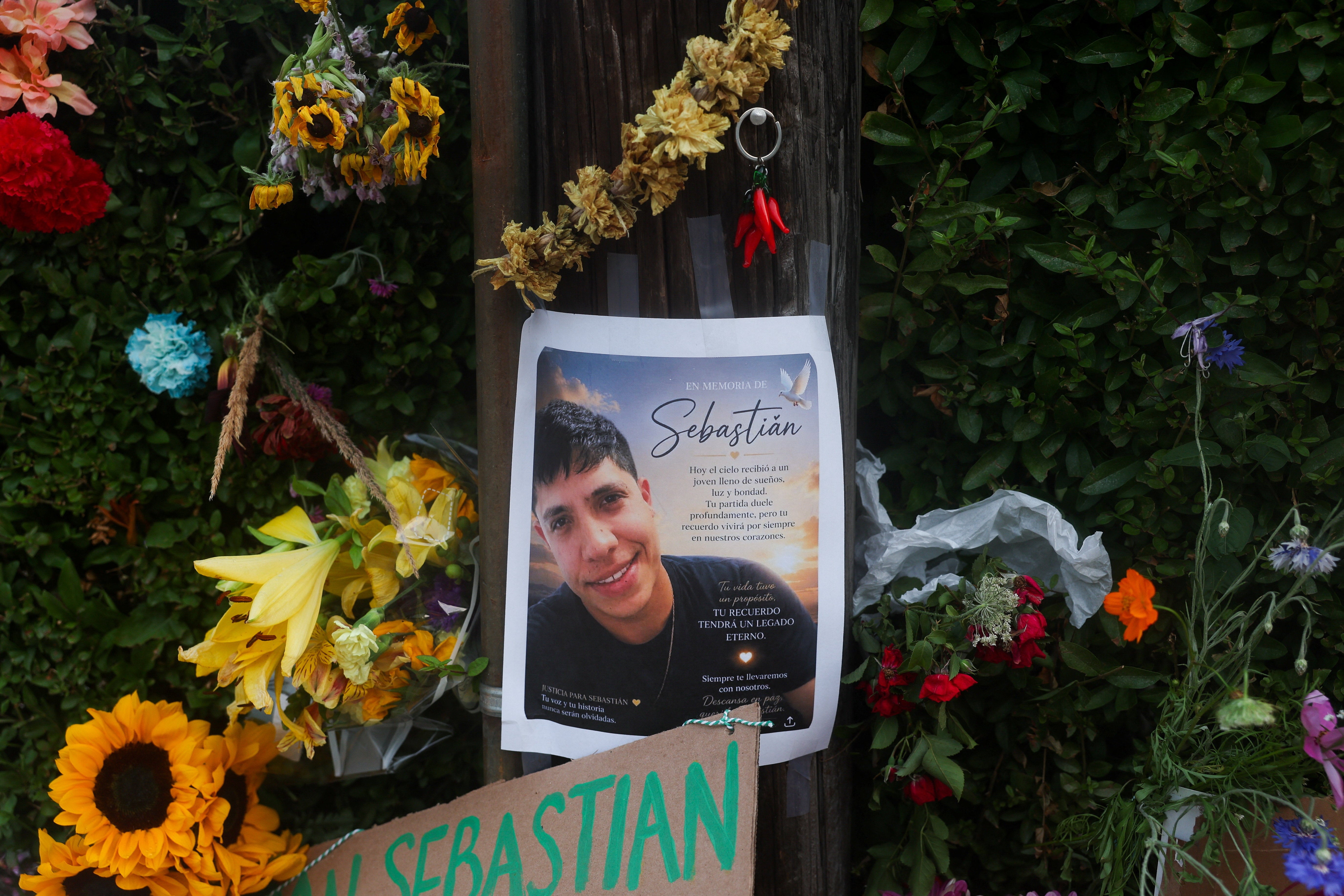
A memorial to Joan Sebastian Guerrero in Biddeford, Maine, after he was shot dead by ICE agents Monday. Officials said they were pausing traffic stops by ICE in the aftermath of two shootings, but President Donald Trump is now calling for them to resume
A memorial to Joan Sebastian Guerrero in Biddeford, Maine, after he was shot dead by ICE agents Monday. Officials said they were pausing traffic stops by ICE in the aftermath of two shootings, but President Donald Trump is now calling for them to resume (Reuters)

The order came in response to the killing of Joan Sebastian Guerrero, a 28-year-old Colombian man living in Maine, and the death of Lorenzo Salgado Araujo, a 52-year-old father of three children in Houston.

Both men died after having their vehicles stopped by agents, becoming the 10th and 11th people to be shot dead since the Trump administration began its large-scale round-up of suspected undocumented migrants last year.

An ICE spokesperson told The Independent of the change of strategy: “We are always evaluating our procedures to keep our officers safe and criminals off our streets. We will not disclose or discuss law enforcement tactics.”

Seeking to reassure the public Tuesday, White House border czar Tom Homan characterized the traffic stop decision as a “necessary short-term pause” and told reporters it was important for ICE to establish the facts about the deaths of Guerrero and Salgado Araujo and ask itself: “Is the training sufficient? Did anything go wrong?”

Advertisement

“I’m confident they’re going to get back to their policy of vehicle stops, but they’re doing… what they believe is a necessary short-term pause just to look at it and make sure everything’s good,” he said.

As was the case with the killings of Renee Good and Alex Pretti in Minneapolis earlier this year, the version of events offered by officials has been met with a degree of skepticism that are often proven incorrect from witness video and testimony.

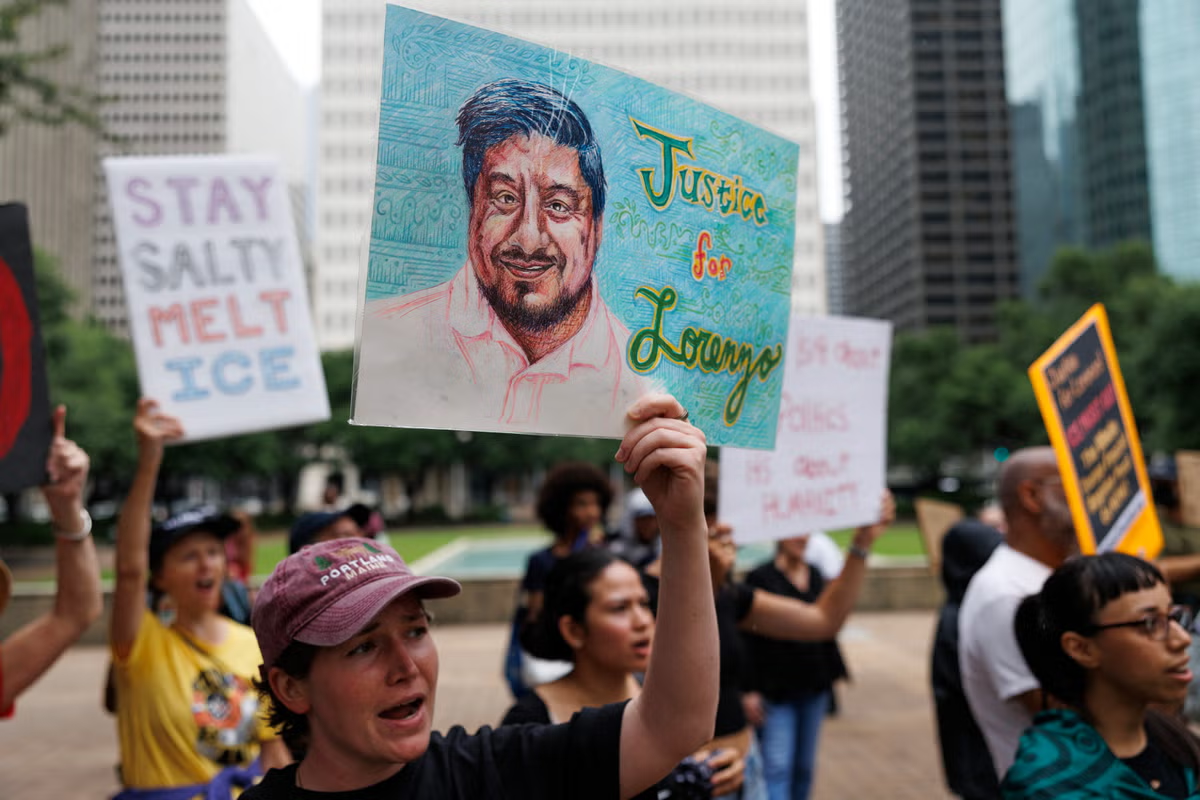
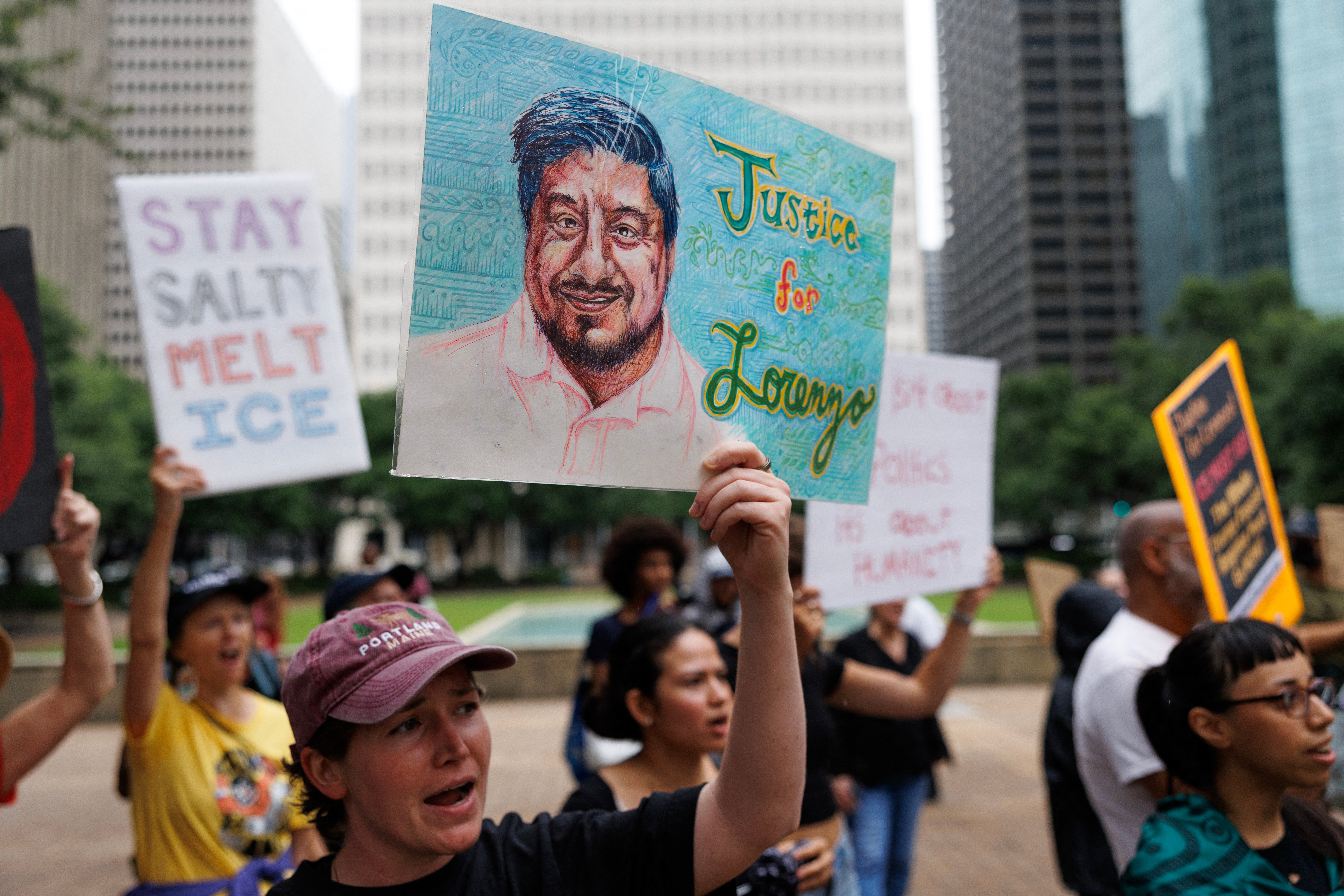
Demonstrators hold up a portait of Lorenzo Salgado Araujo, who was killed by federal agents, at a Tuesday protest outside of City Hall in Houston
Demonstrators hold up a portait of Lorenzo Salgado Araujo, who was killed by federal agents, at a Tuesday protest outside of City Hall in Houston (AFP/Getty)

An ICE spokesperson said its officers “attempted to conduct a vehicle stop” on Guerrero in the coastal town of Biddeford, Maine, Monday morning when “the vehicle attempted to flee the scene,” prompting an agent “fearing for public safety” to fire his weapon.

Similarly, a DHS spokesperson said that Salgado Araujo had tried to “evade arrest” and “weaponized his vehicle” in an attempt to “run over” an ICE officer in Houston, days earlier, leaving the latter to fire “in self-defense.”

However, in neither case were the agents involved wearing body cameras, despite a directive issued by Mullin’s predecessor Kristi Noem that they should do so to record their interactions in the interest of transparency.

Advertisement

Witnesses who saw the Salgado Araujo confrontation, including the deceased’s brother and two co-workers, have challenged the official narrative and since alleged that immigration authorities have pressured them to sign deportation orders to ensure they leave the U.S.

In a statement to The Independent, DHS said the agency’s Office of Inspector General was leading an investigation into the fatal shooting while the FBI’s Houston office is leading a probe “into the potential assault on a federal law enforcement officer.”

Agents have shot at least 20 people within the last year and nearly all of them were in their cars.

Source link

Advertisement
Continue Reading

NewsBeat

Andy Burnham: I’m not afraid to disagree with Donald Trump

Published

on

Andy Burnham: I’m not afraid to disagree with Donald Trump

Andy Burnham has said he won’t be afraid to disagree with American president Donald Trump, adding that he would try to “meet him where he’s at” while “respecting the office”.

The prime minister-in-waiting told Gary Lineker in an interview for Goalhanger: “Maybe in a similar way to the way I’ve just described, I’ll just meet him where he’s at. And, you know, I like to think I’ve got some personality myself and I’ll just, you know, I’ll deal with him very upfront in the same way. I think he likes people to deal with him.

“He described Manchester as some town when he was referring to my position. And I might have to, you know what Mancs are like, Gary, that won’t have gone down fantastically well in the city I used to represent.

“But yeah, you know, it’s about being yourself, isn’t it? It’s about respecting the office, the relationship, the UK-US relationship. But, you know, where you disagree, do it, but do it in a way that is kind of meeting him where he’s at.”

Advertisement

The interview came after Sir Keir Starmer was told he would be remembered as a “giant of the Labour movement” as he marked the final meeting of his top team of ministers on Wednesday.

Andy Burnham: ‘I like to think I’ve got some personality ... I’ll deal with [Trump] very upfront’
Andy Burnham: ‘I like to think I’ve got some personality … I’ll deal with [Trump] very upfront’ (PA)

Elsewhere in the interview the future prime minister declined to rule out a wealth tax and suggested the Government “might be having to ask for a little more” at some point.

He did not commit to a change but said the UK needed a “greater sense of fairness”.

On the prospect of a wealth tax, he told Gary Lineker: “I’m going to obviously take my time to properly look at the state of things, particularly the state of finances. And I just said a moment ago, Gary, about bringing people together. You know, I don’t want to come in and sort of, if you like, create new divisions and pitch people one against another.

“I’m not going rule things out right now. I do believe we need a greater sense of fairness and people feeling that things are being done in the right way and a fair way. But at the same time, you know, I don’t want to sort of be perceived as somebody who’s coming in with grudges and agendas and, you know, going to just immediately find or demonise one group or create a new way of dividing people.”

Advertisement

He added: “So, you know, decisions to be taken in time, they’re going to be difficult. I’m not going to shy away from that. You know, we are going to have to work quite hard to make sure, you know, we can pay our way.

“And at some point that might be having to ask for a little more. But, you know, those decisions are not for now. They’re for another day.”

Source link

Advertisement
Continue Reading

Trending

Copyright © 2025