Iran has long threatened to drag the region into total war if attacked, making good on that promise in response to the USA starting ‘major combat operations’ to destroy Iran’s uranium enrichment facilities.
A few days on, Manchester United legend Rio has now given an insight into what life in Dubai looks like right now.
Last year the retired footballer, 47, moved to the Middle East with his wife Kate, 34, and their children, Shae, two, Cree, five, as well as Rio’s daughter Tia, 14.
The couple moved to the city with their family last year (Picture: Kate Ferdinand/ Instagram)
However they were forced to shelter in their basement at the weekend (Picture: Kate Ferdinand/ Instagram)
During the latest episode of his football podcast, Rio Ferdinand Presents, he opened by admitting it had been a ‘bit of a different week’.
‘Firstly, I’m in great condition this morning as the whole family did a workout. A bit like in Covid, the whole family is doing things we wouldn’t usually be doing together,’ he explained.
‘Home-schooling a bit today. It’s frightening when you hear missiles, planes and fighter jets – I don’t know what it is – going above us, and you’re hearing big bombs, and what that is we don’t know as we don’t know the details of what they are.
Advertisement
‘It’s telling your kids what it is and helping them navigate through this moment, which is important especially as the dad of the house. You want to try and remain calm and keep everybody as calm as possible.
‘I’ve got to be honest guys; it’s been a bit of a scary situation but at the same time weirdly enough I’ve felt very secure and looked after. My studio has become my bunker.’
He went on to share: ‘We were advised to go into the basement on the first night of all the noise started and we were down here sleeping with duvets and stuff. We are utilising the space wisely.’
Rio admitted they were facing a ‘scary situation’ (Picture: Kate Ferdinand/ Instagram)
His comments come after Kate shared a series of updates on social media over the weekend, which came after what she described as a ‘very scary night’.
Taking to her Instagram Story, Kate apologised for her initial silence on the matter, thanking fans for their concerned messages.
Advertisement
‘I just haven’t been able to find the words. We are safe,’ she began.
‘The government are doing an amazing job of keeping it that way and despite my nerves I feel we are in very safe hands.
‘We are hoping for a calmer evening tonight, last night was very scary.’
She added that ‘Cree and Shae loved it as they couldn’t believe we all got a sleepover in the basement’.
Advertisement
Kate shared an update on social media after the strikes (Picture: Kate Ferdinand/ Instagram)
‘Thank you for all of your prayers, this whole experience is very eye opening & I am praying for anyone affected,’ she concluded.
Rio’s sons with late wife Rebecca, Lorenz, 19, and Tate, 17, did not relocate with the family when they moved to Dubai last year due to their budding football careers back home in the UK.
But Kate – who rose to fame appearing on The Only Way is Essex – previously admitted she was finding it difficult returning to Dubai after spending Christmas back in London.
‘I feel like we’ve opened our eyes to a different world. But I love London, I love the UK. I love so many things about the UK. I do feel happy in Dubai, but I’m just missing a part of me,’ she said on her Blended podcast.
‘I think it’s an amazing place to live, I think it’s amazing for the children. The children are thriving and happy and living a life of just outside freedom.
Advertisement
‘Rio loves it so much. I am enjoying it, but I miss home quite a lot. I get upset. I miss the big boys a lot and I’m just struggling with that.’
However, she added: ‘I know this decision is right for my younger children and as a family we are settled there, but the boys are following their football careers. So, they’re doing what they want to do otherwise they’d be with us. But it’s very hard because we’ve been through so much as a family and we’ve always been together and that’s a huge adjustment.’
But speaking on LBC Radio in November, Rio revealed that the move has allowed him to spend more time with family, which he said had been a ‘great thing’.
‘I love England and I’m a patriotic guy in that sense, but a new journey, a new chapter, something different, I think is a refreshing new chapter in my life,’ he explained.
Advertisement
When revealing their overseas move publicly, Rio and Kate shared: ‘We’ve talked about this for so long, and now it’s finally real… we’re here, we are making a new home in the place we met!’
‘Missing some of our specials already & a bit scared, excited & nervous – but more than anything, ready for fresh starts and new beginnings.’
When announcing their move last year, the couple expressed their excitement for a ‘new start’ (Picture: Tristan Fewings/ Getty Images for Atlantis The Royal/ Carbone)
They have since moved to a £6.5million mansion in the luxurious gated community of Al Barari.
On Saturday, the UK Foreign Office warned Brits in Dubai that they should ‘immediately shelter in place’.
Advertisement
Prime Minister Keir Starmer has also said in a joint statement with the leaders of France and Germany that Iran must ‘refrain from indiscriminate military strikes’.
Got a story?
If you’ve got a celebrity story, video or pictures get in touch with the Metro.co.uk entertainment team by emailing us celebtips@metro.co.uk, calling 020 3615 2145 or by visiting our Submit Stuff page – we’d love to hear from you.
There was a heated exchange over the law in what was one of the the last sitting plenary session before the Senedd elections in May
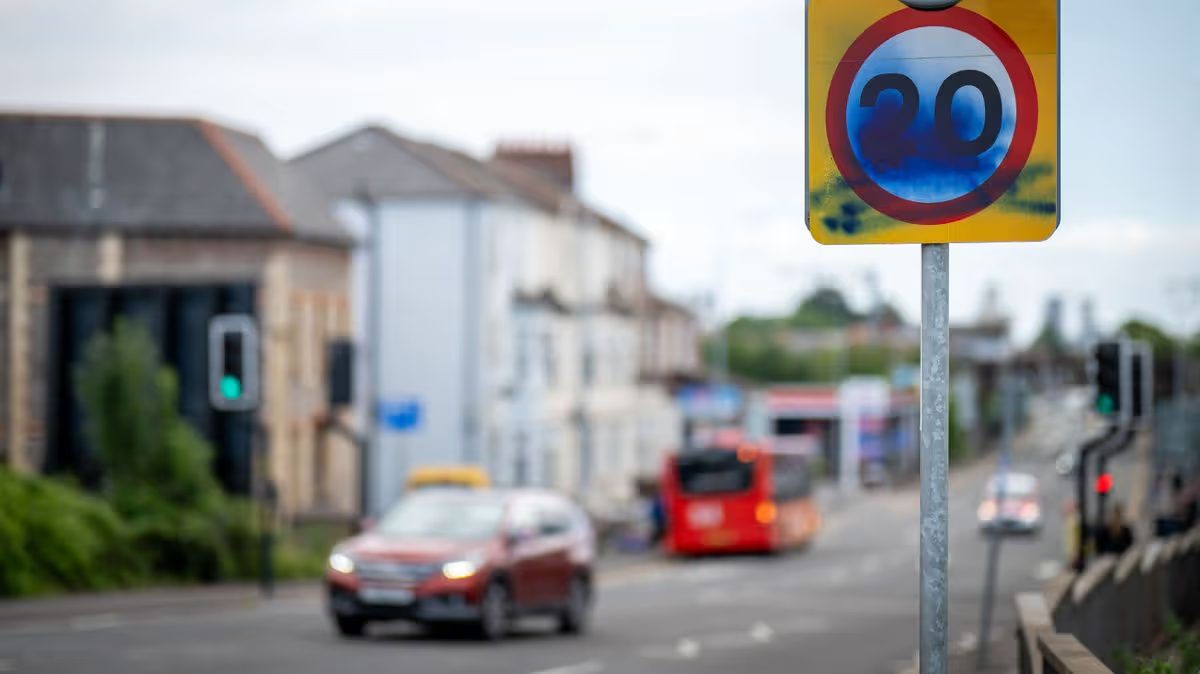
A senior Welsh Government figure has defended the Welsh Government’s 20mph law in Wales. Julie James told Conservative Tom Giffard that by opposing the law, his party was putting lives at risk.
Advertisement
She told him: “The idea you want to drive faster at the risk of a child’s life should be something you should be ashamed of”. In a heated exchanged, on the second to last sitting of plenary ahead of the Senedd being dissolved for the election campaigns to begin in earnest ahead of the Welsh election on May 7, the pair clashed over the policy.
Labour introduced the policy which came into force in September 2023.
Deeply unpopular, the party has watered it down since, but it remains the default speed limit. The Conservatives have said they will “reverse Labour’s unnecessary 20mph speed limits” in their manifesto. Labour is yet to publish its manifesto.
Having been criticised for the policy by Mr Giffard, Julie James, the current counsel general but who was climate change minister when the policy was introduced, told him the policy had saved lives.
Advertisement
“The 20mph shibboleth a policy that has cleaned up our air, saved the lives of children, stopped countless families from suffering the misery of extreme injury and death, has lowered the insurance costs of most people across Wales,” she said. “And saved the NHS a lot of money by any measure, is one you should be embracing.
“Let me tell you this, because the Tories don’t know anything about social justice, 20mph is a real social justice issue. It makes streets safer for women and children, it makes them safer to walk on without you suffering poor air, makes people safer in our cities and towns
“The idea you want to drive faster at the risk of a child’s life should be something you should be ashamed of”.
The final list of parties standing in the election on May 7 will be published in full on April 10.
There has been a significant development in Welsh rugby, with the Ospreys now set to play at St Helen’s next season
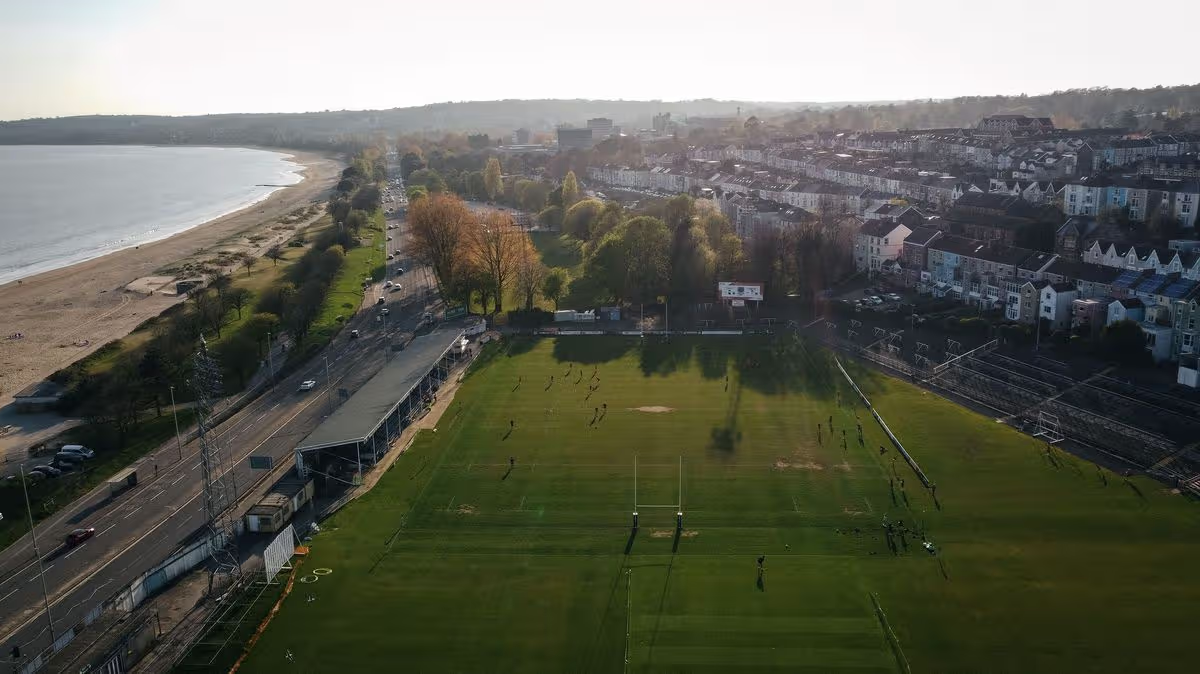
Swansea Council and the Ospreys are set to go ahead with new plans to redevelop St Helen’s in time for next season in a dramatic Welsh rugby twist.
Advertisement
The move comes despite a lack of certainty surrounding the region’s future and months of angry exchanges between Swansea Council leader Rob Stewart and senior Ospreys and Y11 figures.
The redevelopment of St Helen’s had initially been put on hold due to the Welsh Rugby Union’s controversial plans to reduce the number of professional clubs in Wales from four to three, with the governing body refusing to give assurances the Ospreys would survive as they look to rubberstamp Y11’s deal to buy Cardiff.
Up until this point the council has refused to release the full funding to redevelop the ground unless the Ospreys’ future is guaranteed, but an unexpected announcement on Tuesday evening has seen them join forces with the Ospreys with new plans to push ahead with work at the iconic ground.
A couple of weeks ago, minutes were released of a meeting between WRU CEO Abi Tierney, Ospreys CEO Lance Bradley and Swansea Council leader Rob Stewart, which appeared to show Bradley suggesting the Ospreys would cease to exist as a professional rugby side beyond the end of next season if Y11’s bid to buy Cardiff succeeded. The WRU and Bradley have insisted the claims are inaccurate.
Advertisement
In a bid to prevent Y11 buying Cardiff, Swansea Council have taken legal action against the WRU while they have formally asked the Competitions and Markets Authority to investigate the deal.
Nevertheless, relations appear to have eased between the council and the club, with long time Ospreys director Rob Davies now conspicuous with his involvement.
The initial plan was for the council to pay for the full development with the Ospreys paying rent, but the club will now invest a significant sum of money themselves to ensure St Helen’s is ready for the 2026/27 season.
Advertisement
Central to the plans is a new state‑of‑the‑art 4G playing surface, which would be used by the Ospreys for match days and weekly team run‑outs, Swansea RFC and opened to schools, clubs and community groups for the rest of the week.
Under the joint investment model, Swansea Council would fund key community‑focused upgrades including the pitch and floodlights, while the Ospreys would deliver professional‑level enhancements such as a new stand, fan zone and broadcast facilities.
The proposals will be discussed by the council’s cabinet on Wednesday, March 24, and follow positive talks with the Ospreys.
If agreed, works could start in April so that the Ospreys can use the stadium next season.
Advertisement
A new Swansea Rugby Community Board is also proposed to ensure the redevelopment delivers maximum benefit for local people.
Alun Wyn Jones, the former Ospreys, Wales and British and Irish Lions captain, has agreed to work with the council to ensure the collaboration maximises the benefits for grassroots rugby and the community.
“The future of St Helen’s has been on hold due to ongoing discussions about regional rugby in Wales which are unlikely to end anytime soon,” said Council leader Rob Stewart.
Advertisement
“The WRU is not giving us the answers we need to move forward despite our requests, such as how Y11 can own two teams for a long period of time. In light of the impending EGM, I doubt the WRU knows where it is going.
“We must break that deadlock in the meantime and find how we can move forward as a city despite the WRU’s lack of answers. We propose to create a new model that strengthens both professional and grassroots rugby across Swansea and the Ospreys region.
“Our joint investment would give the Ospreys a home worthy of professional rugby while opening up this iconic ground to the community like never before.
“This continues our support for the Ospreys remaining as a professional rugby region based in Swansea.”
Advertisement
Crucially, despite the new agreement, the council’s legal action against the Welsh Rugby Union’s proposed deal for Y11 to buy Cardiff Rugby continues.
If approved, the Ospreys would significantly expand their community programme, offering club nights, school sessions, open training events and coaching development opportunities. Year‑round access would support junior and youth rugby, schools, Swansea RFC and local clubs.
The proposals aims to reconnect the professional and community game in Swansea, boost participation among children and young people, strengthen coach and volunteer development, improve health and wellbeing and create inclusive rugby opportunities for all ages and backgrounds.
“We have been working with Swansea Council for many months on the redevelopment of the iconic St Helen’s ground,” said Ospreys director Rob Davies.
Advertisement
“We’re delighted that we’ve found a way to not only progress our plans to play back in Swansea from next season, but also to further enhance the work we’ve always done in our community.”
The developers want to “meet the needs of the residents”
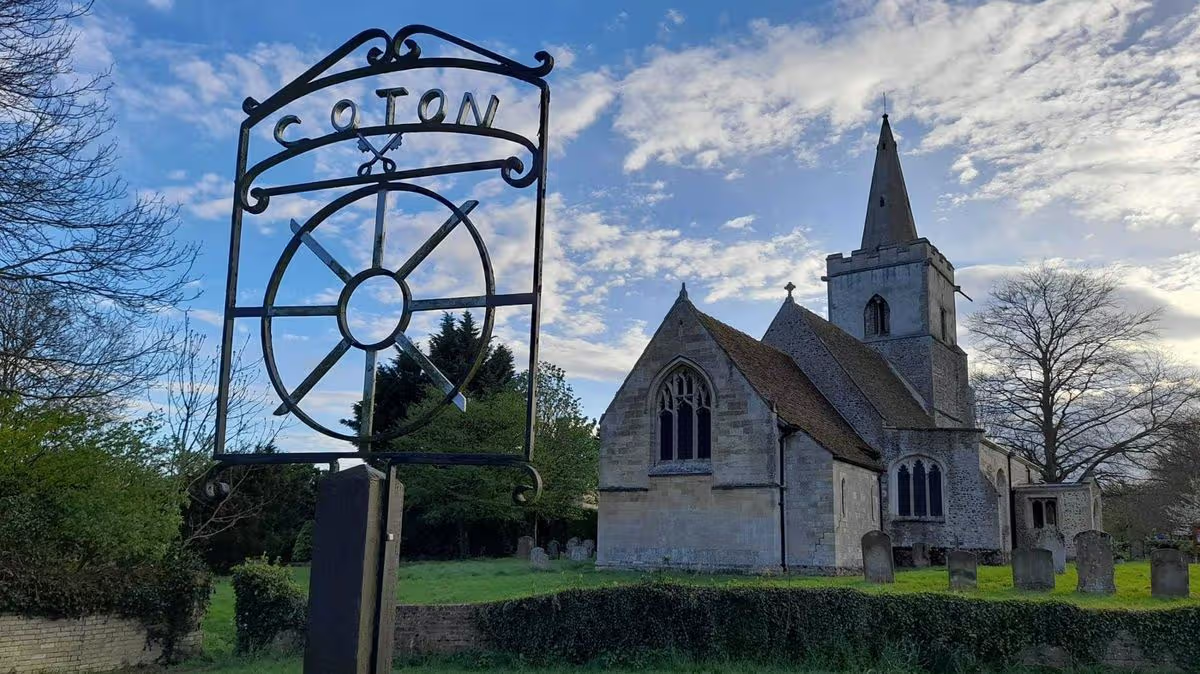
A Cambridgeshire village could get 80 new homes if plans go ahead. Martin Grant Land Limited proposes to build up to 80 homes on land at Pendrick Close in Coton, approximately two miles west of Cambridge.
Advertisement
The plans, submitted by Stantec, on behalf of Martin Grant Land Limited also propose a new public open space as well as a play area. They want to build the homes to help “meet the needs of the residents which would also be of benefit to existing local residents”.
If approved, the development would create over 200 jobs, including apprenticeship opportunities. Local businesses are also expected to benefit from the development.
The application said: “Future residents would also contribute towards local spending to the benefit of business in Cambridge. The site would therefore contribute to expansion of the local economy.”
The outline form does not provide house types at this stage. The developer added: “Future house types will be guided by the existing vernacular in the area to ensure it assimilates into the village.”
Advertisement
Of the homes, half would be made available as affordable housing, which the plans say would benefit people moving to the area “by offering a varied housing mix”.
The 64-year-old plays the disgraced BBC News presenter in Channel 5’s new two-part drama Power: The Downfall of Huw Edwards.
Clunes said that one of the main reasons he went for the part was due to the script.
Speaking to the Radio Times, he shared: “The script is always the most important thing and I thought it was really powerful and compelling – it’s always good when drama tackles difficult stories, especially when it does so as intelligently as this project.
Advertisement
“Beyond the salacious curiosity around this story, I really thought there was another story worth telling, that of ‘Ryan’ and his family.
“Obviously the press and the media have focused on the fallen big man, Huw Edwards, which, of course, is a big story.
“But behind that, there’s this lad and his family whose lives got turned upside down and rather spoiled.”
The drama is based on interviews with key individuals connected to the case, but not with Edwards himself, who was not involved in the project.
Clunes appears alongside Osian Mrogan, who plays ‘Ryan’ – not his real name – the young man at the centre of the story, who was 17 years old when he came into contact with the broadcaster.
Advertisement
“I thought he was out of my reach as far as directors go”
Another major factor behind Clunes’ involvement was the opportunity to work with director Martin Samuels.
He said: “I’m also a massive fan of the director, Michael Samuels, and I never thought I’d get to work with him.
“I thought he was out of my reach as far as directors go, so I was really thrilled about the chance to work with him on this.”
Advertisement
Samuels has been involved with plenty of TV films and series, including Any Human Heart, The Fear, The Windermere Children and Man in an Orange Shirt.
Edwards has since publicly criticised Wonderhood, the production company behind the drama.
In a statement to the Daily Mail, he said: “[They] made no attempt to check with me the truth of any aspect of their narrative before going ahead with the production.
“They belatedly asked for a response after the drama had been made, while reserving the right to edit any such response.
Advertisement
“They also refused to disclose whether any of those making allegations had been paid for their contributions.
Recommended reading:
“Channel 5’s ‘factual drama’ is hardly likely to convey the reality of what happened.”
The broadcaster has defended the drama, insisting it gives a voice to Edwards’ alleged victim so that “no one who has been silenced feels they are alone”.
Advertisement
Edwards received a six-month sentence, suspended for two years and was placed on the sex offenders register for seven years in September 2024 after pleading guilty to three counts of making indecent images of children.
The accused also pleaded guilty to stealing a jacket and hat, a charge of common assault and both resisting and assaulting police
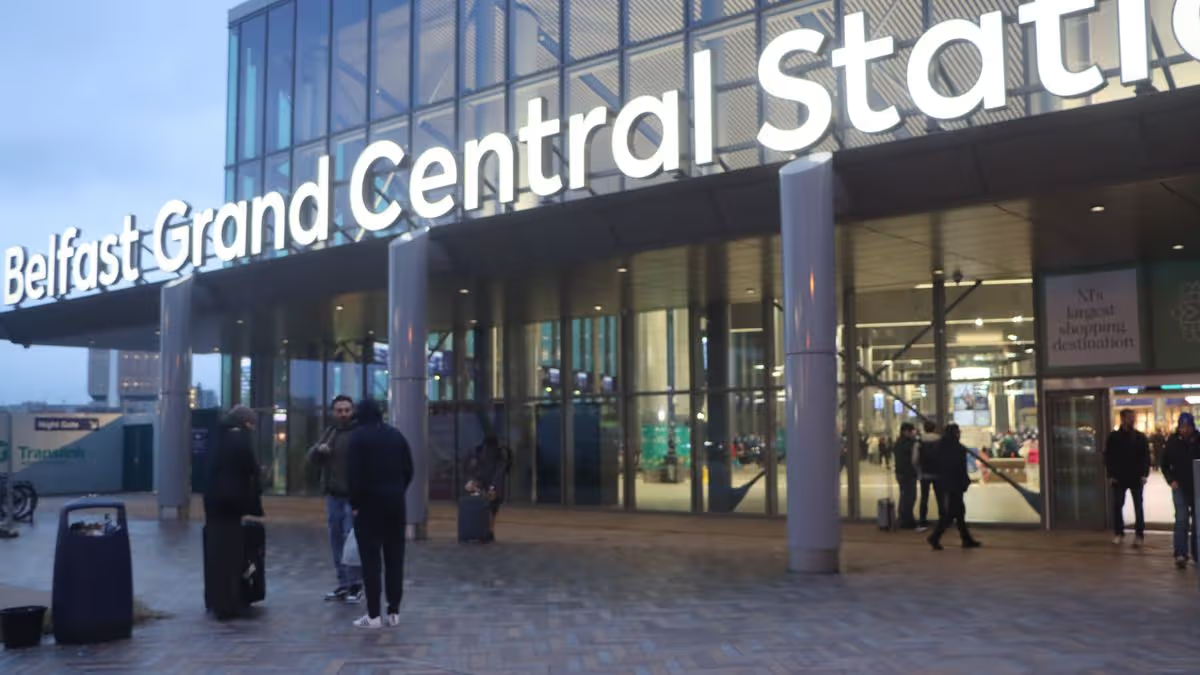
A 34-year old man is to be sentenced later this week on a range of offences including breaking into Grand Central Station.
Advertisement
Gary Kenneth James O’Hara appeared at Belfast Crown Court today via a videolink with HMP Maghaberry.
With an address on the court papers as ‘no fixed abode’, O’Hara was arraigned on a total of seven charges dating back to last October.
He was charged with, and pleaded guilty to, breaking into Grand Central Station in Belfast with intent to steal on October 14, 2025.
O’Hara also admitted going equipped for burglary by having a glass safety hammer at Grand Central Station and of causing criminal damage to three glass doors and a glass panel belonging to Translink on the same date.
Advertisement
In addition, O’Hara entered guilty pleas to breaking into a Translink portacabin and stealing a jacket and hat, a charge of common assault and both resisting and assaulting police on October 14, 2025.
When Judge Patrick Lynch KC asked about a pre-sentence report, solicitor Ciaran Toner said he had spoken to his client who was “keen to advance the matter” before Easter without the report.
The case was listed for plea and sentence this Friday (27th) when O’Hara will be produced in person.
17th-century St Andrew’s Church catches fire in central Lviv(Picture: east2west news)
Vladimir Putin’s spring offensive into Ukraine is underway after a huge barrage of drones struck civilian areas, killing six people including a child.
At least 46 people were injured in the rare daylight attack that struck a UNESCO world heritage site in Lviv, officials said.
It comes as Moscow’s army stepped up efforts to break through Ukrainian frontline defences by firing almost 400 long-range drones at Ukraine overnight in its biggest attack in weeks.
The onslaught continued into Tuesday morning as dozens of drones targeted the capital Kyiv during daylight.
Advertisement
Russia unleashes daytime drone barrage on western Ukraine, wounding civilians in central Lviv(Picture east2west news)
Russia launched swarms of Iranian-designed Shahed drones, hitting at least seven cities, Ukrainian foreign minister Andrii Sybiha said on X.
Daytime strikes injured 13 people, including three children, in the central Ukraine city of Dnipro, and another daylight attack hit an apartment block in the centre of the western city of Lviv, near the Polish border, where 13 people were injured, regional officials said.
Advertisement
The Lviv attack set fire to the city’s 17th-century St Andrew’s Church, which is part of a Unesco World Heritage Site, prime minister Yulia Svyrydenko said.
In the central city of Ivano-Frankivsk, the attack damaged maternity hospitals and about 10 apartment buildings, according to Svitlana Onyshchuk, the head of the regional military administration.
Two people were killed and four injured, including a six-year-old child, she said.
Advertisement
Ukrainian civilians have endured relentless barrages since Russia launched a full-scale invasion of its neighbour more than four years ago.
US-brokered talks between Moscow and Kyiv over the past year have brought no respite, with Russia rejecting Ukraine’s offer of a ceasefire, and in recent weeks the Iran war has diverted international attention from Ukraine’s plight.
On the roughly 1,250-kilometre (750-mile) front line snaking along eastern and southern parts of Ukraine, the short-handed defenders have been bracing for a new offensive by Russia’s bigger army as the weather improves.
The commander-in-chief of Ukraine’s armed forces, General Oleksandr Syrskyi, said Russian troops in recent days have made simultaneous attempts to break through defensive lines in several strategic areas.
Advertisement
‘Fierce fighting unfolded along the entire line of contact,’ Gen Syrskyi said on Monday on the Telegram messaging app, with Russia launching 619 attacks in four days.
‘The occupiers are attempting to bring up new units and are preparing to continue attacks’, Gen Syrskyi said, adding that Ukraine had deployed reinforcements to counter the assaults.
The Institute for the Study of War (ISW), a Washington-based think tank, said Gen Syrskyi’s report backed up its assessment that Russia’s spring-summer offensive is now underway.
Russia has escalated its strikes since March 17 and has moved heavy equipment and more troops to the front line, the ISW said late on Monday.
Advertisement
Each year, as the weather improves, Russia has moved its grinding war of attrition up a gear.
However, it has been unable to capture cities and has made only incremental gains across rural areas.
Russia occupies about 20% of Ukraine.
That includes the Crimean Peninsula, which Russia seized in 2014.
Advertisement
Ukraine has developed advanced drone technology to make up for its shortage of infantry.
There’s something special about finding a home-from-home that lets you unwind without the having to travel too far
This article contains affiliate links, we will receive a commission on any sales we generate from it. Learn more
Advertisement
If you’re looking to switch up your usual holiday plans, staying in the UK is proving to be just as rewarding as going abroad.
Staying in a Welsh cottage can allow you to experience beautiful coastlines or peaceful countryside escapes, there’s something special about finding a home-from-home that lets you unwind without the having to travel too far. A secluded cottage near coastal areas are quickly becoming some of the most sought-after stays for 2026.
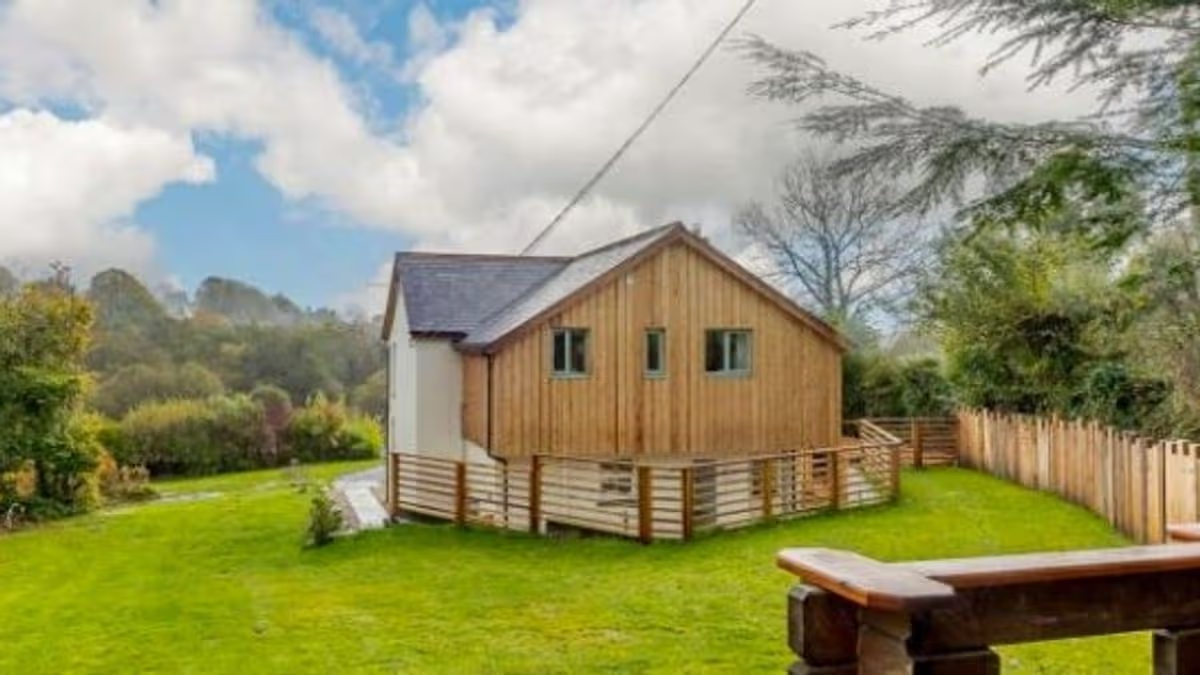
Hen Efail is set in a secluded and tranquil location and offers the perfect balance of countryside peace and coastal beauty. Sleeping up to six guests and welcoming two dogs, it’s ideal for families or groups of friends looking to spend quality time together. Despite its quiet location, you’re just a short drive from the stunning West Wales coastline, with charming seaside spots like New Quay within easy reach.
Advertisement
Hen Efail offers a laid-back, memorable escape that keeps people coming back which is exactly why it’s already proving to be such a popular booking.
2 bathrooms – downstairs shower room and WC, family bathroom with bath and separate shower
Wood burner (logs provided), underfloor heating on ground floor
Smart TV in the living room and TVs in all 3 bedrooms
Enclosed patio area with dining furniture and charcoal BBQ, firepit, large lawned garden area
Wood-fired hot tub-requires attention to lit and warm up- approximately 1-2 hours to reach temperature
Garden games cabin with pool table, table tennis and dartboard
Private parking for 4 cars
Local pub 0.5 miles, shops and beach 8 miles
One stayer of the Hen Efail has said: “Beautiful house in a beautiful setting. Would definitely recommend a visit. I can only imagine how gorgeous this place would be in the summer months!”
However, one thought: “Lovely peaceful cottage nothing really around, need to drive for amenities shop/ pub ect. Beds so comfortable, cottage very clean. Cottage and gardens beautiful.”
Stayers have spoken highly of their time in the Hen Efail, another said: “A lovely cottage in a fantastic location. We couldn’t have asked for anything more.
For those willing to travel, the Thompson Rigg Barn in the North York Moors National Park has also been recognised by Sykes Cottages as a great stay for couples.
Households across the country will see changes to the costs of their energy bills from April onwards
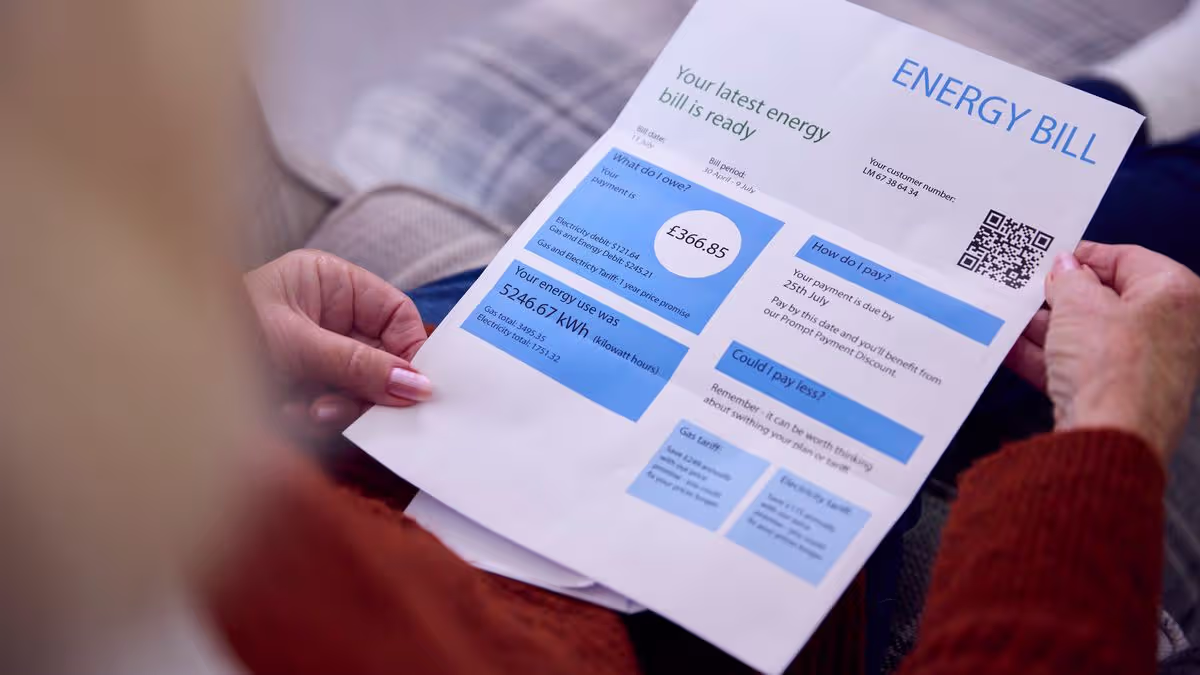
UK households are set to be hit with changes to their energy bills from next month. Energy regulator Ofgem confirmed that the energy price cap – which determines the maximum amount people can be charged per unit of gas and electricity on a standard tariff – will be reduced by 6.7 per cent for the average household from April.
Advertisement
A typical household will save £117 a year on their energy bills from April 1, 2026, saving around £10 each month. The price cap will fall to £1,641 a year for dual-fuel customers paying by Direct Debit, making bills 11 per cent, or £208, lower than for the same period in 2025.
The reduction comes after a difficult year for households. Between April and June 2025, the price cap rose to £1,849 a year following a six per cent increase of £111 that affected around 11 million customers on default tariffs.
Get MEN Premium now for just £1 HERE – or get involved in our WhatsApp group by clicking HERE. And don’t miss out on our brilliant selection of newsletters HERE.
The rise was driven by an 11 per cent jump in wholesale energy costs, adding £86 to the average bill. It marked the third consecutive quarterly increase, with bills soaring nine per cent higher than the previous year.
Advertisement
But while the new price cap will be “welcome relief” for many households, bills remain significantly higher than pre-crisis levels, says Shay Ramani from Free Price Compare, a UK-based comparison service.
“The £117 saving works out at just over £10 a month, which barely scratches the surface for the estimated six million households still in fuel poverty,” Mr Ramani said. “Families should use this window to review their energy usage, consider switching tariffs if better deals emerge, and ensure they’re claiming all available support.”
The April 2026 price drop is partly caused by changes to how environmental and social schemes are funded. The UK government announced this will be done by ending funding for the Energy Company Obligation scheme, as well as removing 75 per cent of costs for the Renewables Obligation scheme from people’s energy bills, saving customers an average of £150.
A further £38 reduction comes from falling global wholesale energy prices, according to Ofgem data.
Advertisement
Under the new cap, electricity will cost 24.67 pence per kilowatt hour for customers on standard variable tariffs paying by Direct Debit, with a daily standing charge of 57.21 pence. Gas will be charged at 5.74 pence per kilowatt hour, with a standing charge of 29.09 pence per day. These rates represent averages across England, Scotland and Wales, including five per cent VAT.
The reduction will be automatically applied to your bill from 1 April onwards. The exact amount each household saves will depend on how much energy is used and the type of tariff:
Standard variable tariff
For energy used after 1 April, the savings will be applied to your unit rate for gas and electricity. Your energy supplier will contact you to confirm the details of your new rates.
Advertisement
Fixed price tariff
Suppliers have confirmed that the savings will be passed on in full to customers on fixed price tariffs. This means if you are already on a fixed price tariff on 1 April, your tariff will be amended so that savings are applied to your unit rates going forward.
Your energy supplier will contact you to confirm your new rates. For anyone signing a new fixed price tariff after 1 April, we expect the savings to be taken into account.
Pre-payment meter
If you are on a smart pre-payment meter, your energy supplier will automatically apply the savings to any energy used from 1 April. If you are on a traditional pre-payment meter – such as those which use a key or card, you will benefit from the savings the first time you top up your key or card after 1 April.
Other types of tariffs
Some examples of these include:
Advertisement
Tracker tariffs, where unit costs for gas and electricity fluctuate daily to reflect live wholesale prices
Time-of-use tariffs, where the unit cost for electricity changes depending on the time of day, with cheaper rates offered during off-peak times like overnight
Where a tariff includes costs associated with either the Energy Company Obligation or Renewable Obligation schemes, the savings will be passed on from April.
How you receive the savings will depend on the specific tariff you are on. For example, the impact may vary across different times of day or pricing periods.
Your energy supplier will provide you with more information on how these changes will work.
ATLANTA (AP) — Georgia could become the first state to require every student to be checked for weapons when arriving at a public school each day.
A bill is nearing passage that would require weapons detection systems in a further reaction to a 2024 school shooting that killed four.
“That rifle would have never reached our hallways,” said Daria Lezczynska, a junior at Apalachee High School in Winder, where the shooting took place. “Lives would have been saved. Families would not be grieving, Students like me would not be carrying this trauma.”
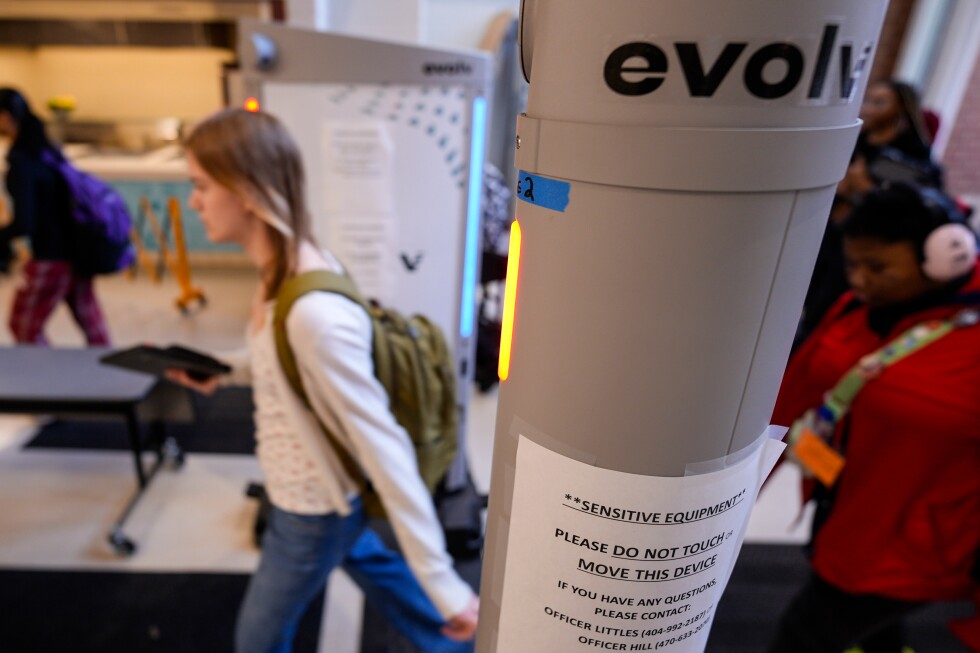
Some schools have long used metal detectors or required students to carry clear backpacks to cut down on weapons. But a new generation of technology marries computer analysis with cameras or the same electromagnetic fields as metal detectors to detect knives and guns. The systems have spread rapidly through schools, arenas, stadiums and hospitals.
Advertisement
“It’s very commonplace for me to walk through a weapons detection system when I enter into a courthouse,” said Chuck Efstration, the bill’s sponsor and Republican house majority leader who represents the Apalachee campus. “Georgia’s students and educators deserve similar security with weapons detection systems inside of every Georgia public school.”
There’s little rigorous research nationwide proving that weapons detectors prevent school shootings. In Georgia, there are questions about who will pay what can be $10,000 or more per system. School employees must staff checkpoints and search bags. And even supporters of the systems say searchers can become dulled by a multitude of false alarms and miss the few actual weapons. Some question whether weapons detectors are necessary in elementary schools, as Efstration’s bill mandates. And those who find Georgia’s gun laws too permissive say installing weapons detectors everywhere is a form of surrender, accepting that society will be awash in guns and violence.
A Senate committee on Monday passed an amended version of Efstration’s bill, meaning it needs final votes in the Senate and House in the closing days of Georgia’s 2026 legislative session before reaching Republican Gov. Brian Kemp’s desk for his signature or veto.
Few schools traditionally required weapons checks
It’s unclear how many schools nationwide use weapons detectors. A U.S. Department of Education survey found that in the 2021-2022 school year, 6.2% of all schools and 14.2% of high schools nationwide required random metal detector checks. Only 2.4% of all schools and 6.2% of high schools required daily metal detector checks. More schools required clear bookbags or banned bookbags than required daily metal detector checks. Checks were more likely to be required when a school was in a city, when the majority of students were nonwhite, and when large majorities of students were poor.
Advertisement
Atlanta’s school district spent more than $4 million to roll out new systems in 2021 in middle and high schools, replacing old-style metal detectors. District Police Chief Ronald Applin said officials wanted something that students could move through more quickly, saying traditional detectors were “too cumbersome.”
Applin said guns found at Atlanta schools fell from 32 the year before the new system to four so far this year.
The 1,700 students at Midtown High School typically hold their laptops in the air as they pass through detection gates, with a computer screen telling employees whether a bag needs a secondary search.
“It’s not real adversarial at the metal detector,” said School Resource Officer Meredith Littles. “A lot of people get worried about the dynamics of what that looks like. But it’s very non-intrusive.”
Advertisement
False alarms can dull vigilance
One key question is how sensitive to make the system, said Nikita Ermolaev, a research engineer at IPVM, which tests and researches security technology. Too sensitive, and alarms go off for everything. Not sensitive enough, and weapons slip through. And trying to maintain vigilance is a challenge.
“You have 100 alarms and the first 99 of them are false alarms on laptops or binders, right? You’re naturally going to assume that the 100th alarm is also going to be on something benign,” Ermolaev said. “And that’s how sometimes weapons such as guns or knives can go through the system.”
Then there’s the cost. Georgia gives each public school campus $50,000 a year for school safety, but many districts are already using that money to pay on-campus officers. House budget writers have proposed borrowing an additional $50 million for grants to districts.
“While we absolutely think weapons detection is imperative, it can only be made possible with appropriate funding,” said Gretchen Walton, an assistant superintendent in Cobb County, which with 103,000 students is Georgia’s second-largest school system.
Advertisement
Others, including some Democrats, see the focus on weapons detection as misplaced. They say Georgia should be looking to limit children’s access to guns.
“We have allowed guns and weapons of war to become more available than a pack of gum in this state, then act confused when people keep dying,” said Democratic state Rep. Bryce Berry, a public school teacher who voted against the bill in the House. “Let’s stop hiding behind procedure and politics and pretending that the threat our children face is some vague, mysterious force.”















































You must be logged in to post a comment Login