

Crypto World
Securitize (CEPT) teaming with NYSE (ICE) on new platform

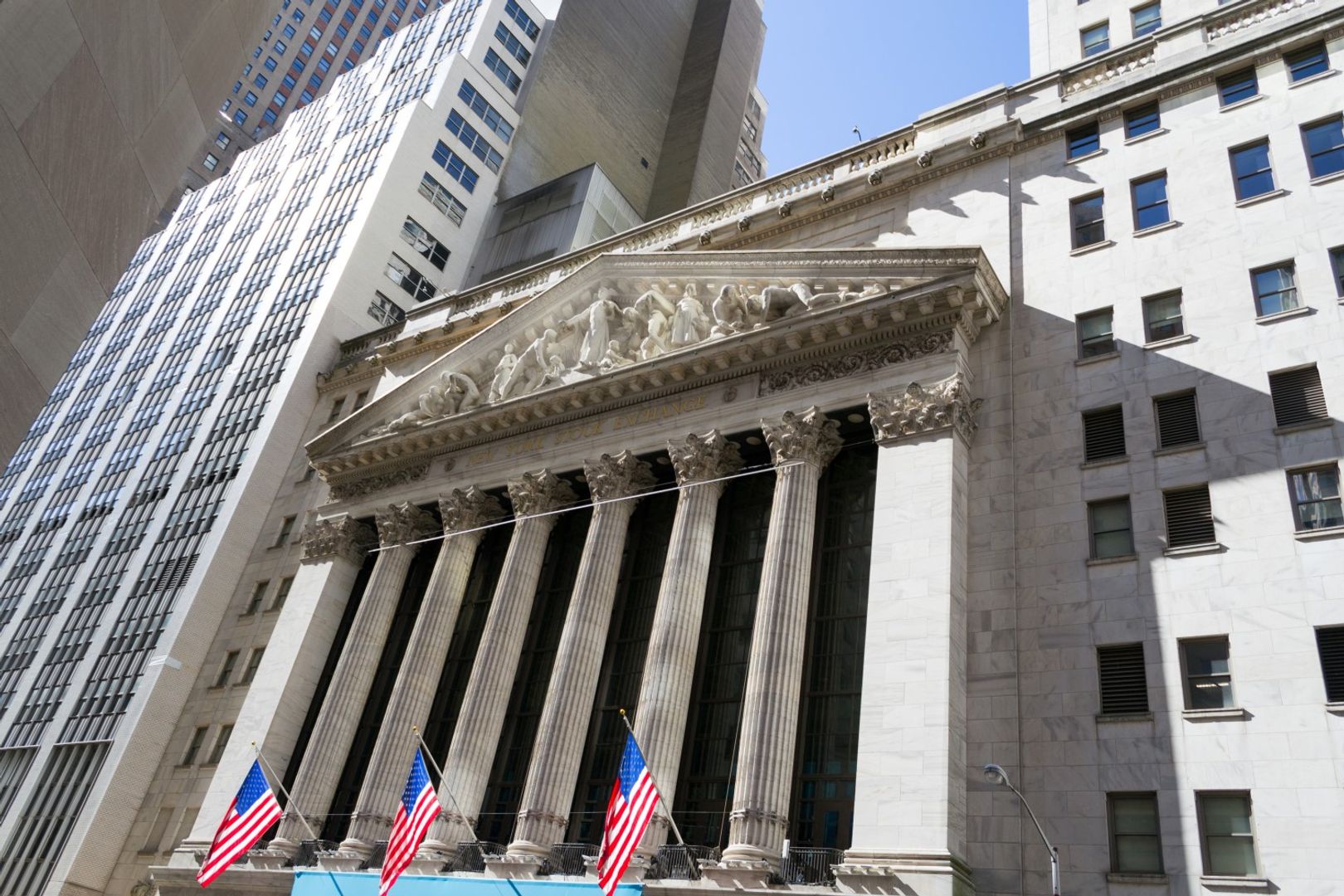
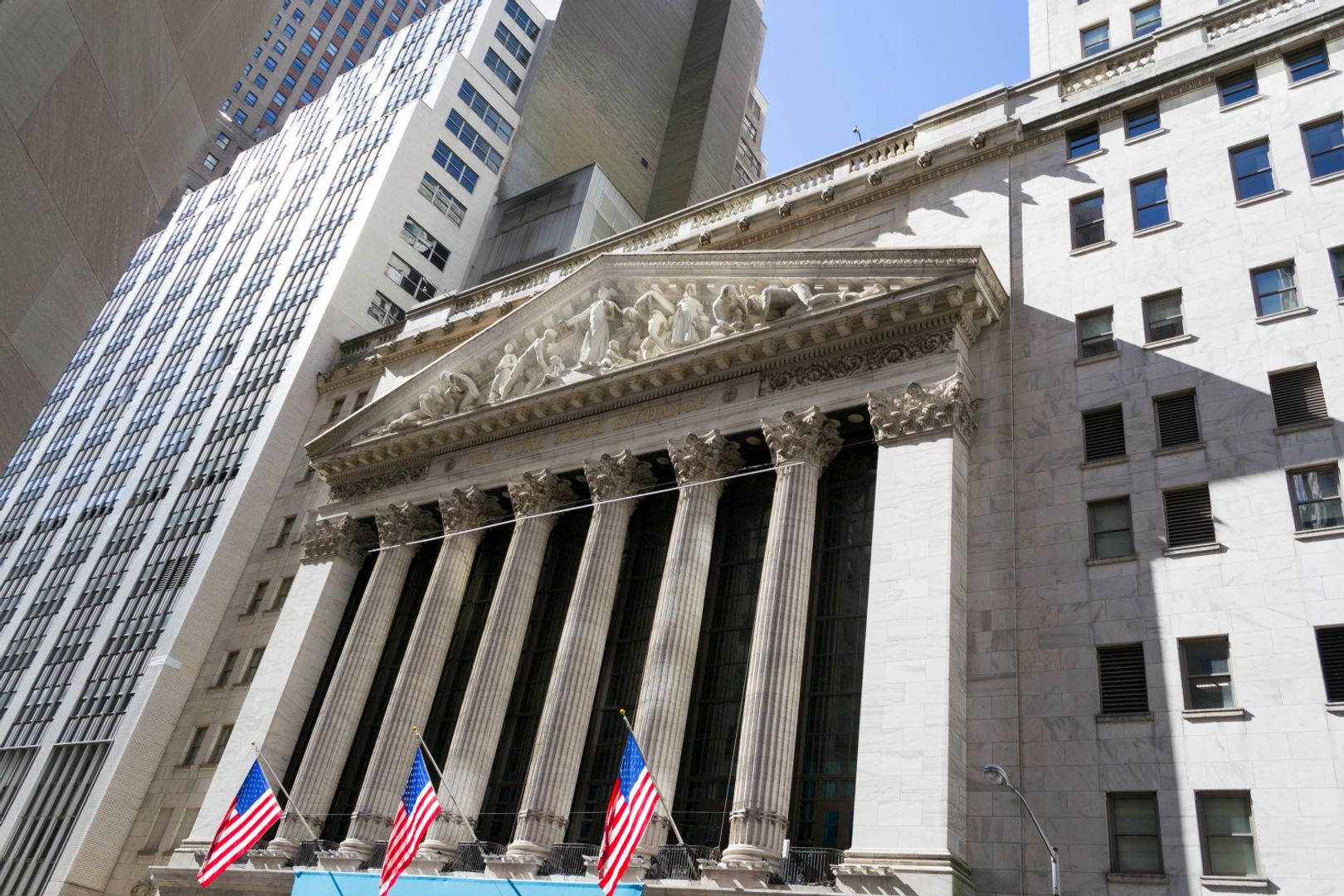
The New York Stock Exchange (ICE) is teaming up with tokenization specialist Securitize to help design the infrastructure behind tokenized securities trading, according to a Tuesday press release shared with CoinDesk.
Securitize is aiming to go public this year via a SPAC deal with Cantor Equitize Partners (CEPT). CEPT shares are higher by 6% premarket. ICE shares are flat.
The two firms signed a memorandum of understanding to build NYSE’s planned Digital Trading Platform. Securitize will serve as a design partner, focusing on how transfer agents — the entities that track ownership and handle corporate actions — operate when securities are issued and settled on blockchain rails.
Securitize, backed by large asset managers like BlackRock and Ark Invest and registered with the SEC as a transfer agent, is expected to be among the first firms eligible to mint tokenized versions of stocks and ETFs on the platform, subject to regulatory approvals.
The firm’s broker-dealer arm could also take part in trading, giving it a foothold across both issuance and market activity.
The move comes as traditional exchange behemoths like NYSE and Nasdaq are doubling down on tokenization efforts to bring blockchain rails into stock trading. That tech would enable around-the-clock trading and near-instant settlements, similar to crypto markets.
Recently, NYSE-parent Intercontinental Exchange invested in crypto exchange OKX to develop tokenized stocks and derivatives products. Rival exchange Nasdaq obtained regulatory approval for its tokenized stock trading framework and has tapped Kraken to distribute stock tokens globally.
“As we explore how tokenization can enhance capital markets, it is critical that new infrastructure is developed in a way that preserves the trust, transparency, and protections investors expect,” NYSE Group President Lynn Martin said.
Read more: Here is why Nasdaq and owner of NYSE are putting the $126 trillion equity market on blockchain

Crypto World
Circle (CRCL) is trying to prove it’s more than just a stablecoin company with $3 billion blockchain
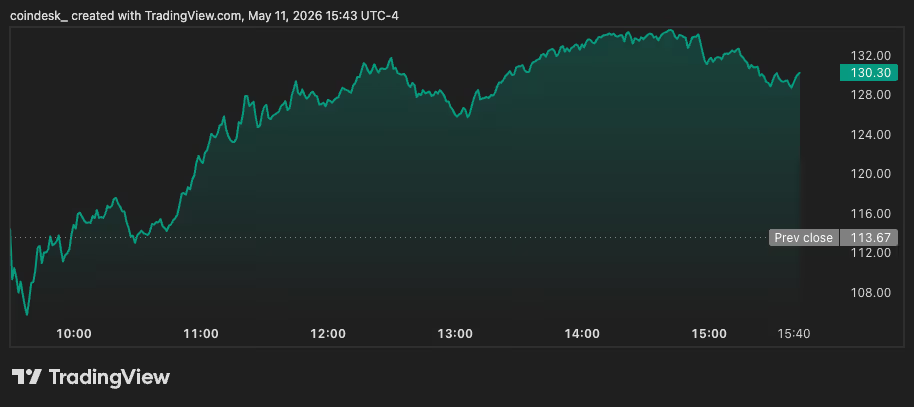
Circle’s (CRCL) upcoming Arc blockchain and its $222 million token presale are raising a broader question for crypto investors: should Circle still be valued mainly as a stablecoin issuer, or as an infrastructure company building the rails for digital finance?
Alongside its quarterly earnings this week, the company announced a major fundraising round for Arc ahead of a planned summer launch, valuing the network at roughly $3 billion backed by investors including a16z crypto, Apollo, BlackRock and ARK Invest.
While earnings results were mixed, the news resonated well with investors, as Circle shares surged more than 15% on Monday, suggesting the launch addresses a critical compliance gap for Wall Street.
“We have built what we believe will be one of the most institutionally-ready networks in the world,” Allaire explained during the earnings call, describing Arc as a system designed to be operated by financial institutions with the “trust required for global economic infrastructure.”

While this move was cheered by the market and some analysts, including Clear Street’s Owen Lau, who called Arc a “second growth engine” for the USDC issuer, there are still questions about the valuation of Circle’s shares versus Arc’s token, as well as rising competition.
The move also comes as Congress advances stablecoin legislation that could eventually allow banks, fintechs and payment firms to issue their own digital dollars. That prospect has led some investors to question whether stablecoins themselves may become commoditized over time.
What is Arc?
The Arc chain, in test mode since October with plans to go live this summer, is Circle’s attempt to expand its stablecoin business into a broader infrastructure layer.
During the company’s Monday earnings call, CEO Jeremy Allaire pitched Arc as an “economic operating system” designed for payments firms, asset issuers and capital markets.
“We built the highways for USDC,” Allaire said on the earnings call. “Now we’re opening them to other stablecoin and real-world asset issuers.”
The idea, he said, is to make stablecoins and tokenized assets easier to move, while keeping the level of control, compliance and reliability that large financial players expect. The chain is also being built to be ready for AI agents gaining ground in finance, he added.
Allaire’s comments are signs of where the stablecoin industry is heading. The industry’s market cap is at an all-time high, rising above $320 billion. Almost every crypto or traditional firm is either building a stablecoin or rails to service the industry, touting a more efficient, less expensive alternative to legacy systems. A16z, lead investor in Arc’s fundraising, perhaps put it aptly when it said that stablecoins are becoming “one of the most important tools for global finance.”
However, the VC firm noted that the underlying blockchain infrastructure remains fragmented and is largely optimized for crypto-native users rather than banks and corporations. According to a16z, this is where Arc comes in, by aiming to bridge that gap, offering fast settlement, configurable privacy and known validators, features that align more closely with institutional requirements, the firm said.
“As the world’s finance moves onchain, we believe that a handful of blockchain networks will together emerge as the new backbone of the financial system,” a16z partners Ali Yahya and Noah Levine wrote. “Arc is in a strong position to become one of them,” they added.
Circle shares vs Arc token
However, given Arc’s token presale, questions remain about how Arc affects Circle’s valuation in the long term: Why should one buy the shares if they can now buy the token?
To Clear Street’s Lau, they are “two very different concepts.”
He described Arc as the infrastructure layer while USDC operates as an application running on top of it. “You have one more tunnel for your apps to run on. It just means that you have more channel, more opportunity to expand your USDC down the road,” Lau told CoinDesk in an interview.
Lau compared Arc to Ethereum or Solana — layer-1 blockchains that support applications, payments and tokenized assets. In a note earlier on Monday, he argued the network could reinforce USDC adoption, particularly as Circle pushes into AI-driven payments, tokenized finance and commercial settlement systems.
Still, Lau acknowledged Arc remains highly speculative, at least for now.
“It depends on the network activity,” he said. “We still don’t know what apps will actually run on Arc.” For now, he views Arc as “option value” rather than a tangible contributor to Circle’s business.
That caution is shared by Compass Point analyst Ed Engel, who warned investors against assigning too much value to the project before meaningful usage emerges.
“We would prefer to wait for Arc to generate meaningful transaction activity before ascribing value to ARC tokens,” Engel wrote in a research note on Monday. He added that crypto venture firms have a long history of backing blockchain projects at elevated valuations, only for token prices to later decline after launch.
The economics behind Arc remains another open question.
Circle has said fees on the network can be denominated in stablecoins while still accruing value to the ARC token through validator rewards and token burns. Analysts say the structure resembles Ethereum’s model, in which network activity drives demand for the underlying token.
Lau said the $3 billion valuation attached to the presale appears credible given the caliber of the institutional investors involved. “I don’t think that’s crazy,” he said. For now, Arc may matter less for what it generates today than what it signals about Circle’s future ambitions.
‘Significant competition’
The disagreement on what to buy: Token or the share, highlights a central debate now emerging around Circle and the stablecoin industry: whether owning blockchain infrastructure becomes more important as digital dollar issuance itself becomes more competitive.
On one hand, with the launch of Arc, incumbent networks would face increased competition, according to digital asset investment bank FRNT. “Incumbent networks will face significant competition as solutions such as Arc increase in maturity,” the firm wrote in a note.
On the other hand, the industry is dominated by mostly Tether’s USDT and Circle’s USDC, and other stablecoins such as PayPal aren’t gaining market share, according to Clear Street’s Lau. But now, Circle adding Arc creates new competitive tensions, he added.
By launching its own blockchain, Circle is no longer just a customer of crypto infrastructure providers like Ethereum and Solana. Lau said Arc now competes directly with those networks and potentially with Coinbase’s Base blockchain as well.
While there are questions about valuation and the longer-term competitive impact, launching Arc fits a pattern in which crypto developments have increasingly shifted focus to large financial institutions and Wall Street, rather than retail users.
Tempo, incubated by payments giant Stripe and investment firm Paradigm, raised $500 million at a $5 billion valuation in October to launch a payments-focused blockchain. Digital Asset, developer of the Canton Network, has attracted backing from Goldman Sachs, DRW, Citadel Securities, BNY and Nasdaq, and is reportedly raising another $300 million at a $2 billion valuation.
Arc’s fundraising is another example that big-money investors bet that large financial firms increasingly want blockchain infrastructure designed around how institutions actually move money — cross-border payments, treasury management, FX and tokenized assets — rather than the open, retail-first systems crypto started with. And Circle is betting on the trend by going all-in on Arc.

Bitcoin (BTC) appears positioned for a potentially extended uptrend as a key valuation metric moves toward a bullish cross with a long-term moving average. CryptoQuant analysts highlighted that the Market Value to Realized Value (MVRV) ratio is on track to print a golden cross against the 200-day moving average, a signal historically associated with powerful rallies. While markets remain cautious, the signal adds to a growing cadence of optimism among a subset of traders and analysts.
Among market participants, there is still debate about the near-term path. Some traders contend that the bear market found its bottom around $60,000, and a substantial breakout could follow as the market digests the latest bullish indicators. The mix of on-chain metrics and price action has kept the discussion lively, with several analysts weighing in on what a new cycle might entail.
Key takeaways
- Bitcoin’s MVRV ratio is approaching a golden cross with the 200-day EMA, a pattern historically followed by major upswings.
- There is a contingent view that $60,000 marked the bear-market bottom, with expectations of a substantial breakout ahead.
- The looming MVRV-200D EMA cross is framed by some analysts as a sign of a trend reversal rather than a mere consolidation phase.
- Short-term cost-basis bands for the most recent holders imply room for further upside, with key levels around $92,000 and $104,000 identified as “heated” and “overheated” zones.
MVRV momentum: a potential trend reversal in the making
Bitcoin’s MVRV ratio — a gauge that compares market value to the realized value of coins — is on the cusp of a bullish crossover with the 200-day moving average, according to CryptoQuant analyst CW8900. In a recent post, CW8900 described the anticipated cross as a “golden cross” and said, “This signal is a representative trend reversal signal and is a bullish indicator.”
The last times such a cross appeared served as notable inflection points. The immediate past example occurred after the 2022 cycle bottom, when BTC subsequently rallied about 90% to roughly $31,000 from about $16,300 in Q1 2023. A later cross in September 2023 was followed by a multi-fold rally, culminating in a peak near the all-time high observed in October 2025.
Earlier in the cycle, CW8900 had flagged a golden cross when the 30-day simple moving average of the MVRV ratio crossed above the 90-day SMA in late April, suggesting a broader bullish tilt for BTC. Such assessments align with a growing array of on-chain signals that traders watch for potential regime shifts.
Near-term price action and the cost-basis narrative
Bitcoin’s latest rally took it into the high-$70,000s and toward $83,000, reinforcing the view that bulls are testing key resistance levels. The market is now confronting the 200-day moving average around $82,500, a level that has historically served as a pivot between range-bound action and a breakout. A sustained move above this line could mark an end to the prevailing multi-month downtrend; conversely, failure to clear it might invite renewed downside pressure toward pivotal supports, including around $50,000.
Analyst Shib Spain argued that BTC’s break above a multi-month downtrend line on the weekly chart signaled a structural shift away from bearish dominance, reinforced by a MACD bullish crossover. “Bitcoin’s huge breakout is coming. MACD bullish reversal forming,” the analyst wrote, claiming the bull run is just getting started.
Market observers have also highlighted the growing support from on-chain metrics tied to long-term and short-term holders. In particular, the short-term holder (STH) cost basis — the average price paid by wallets that held BTC for fewer than 155 days — has moved with the price, indicating that newer buyers have reentered at levels that could support further upside. When viewed through the lens of cost-basis bands, the chart suggests BTC could move into the “heated” zone near $92,000, with a further push toward the “overheated” band around $104,000 if momentum strengthens.
Is a supercycle on the horizon, or is this a more modest expansion?
Beyond the immediate technicals, several observers have framed the current setup within a potential larger structural move. Cointelegraph coverage and market commentary have pointed to the possibility of a “supercycle” rally, with forecasts ranging into the $180,000–$250,000 area within a relatively short horizon, backed by institutional accumulation and an improving technical footing. While these projections reflect a segment of the market’s most optimistic voices, they come with caveats about macro conditions, regulatory developments, and the durability of on-chain demand.
As with any cycle-high narrative, readers should consider the balance of factors: retail and institutional participation, macro liquidity, and how on-chain metrics align with price action across multiple timeframes. The coming weeks could test whether the current signals translate into a sustained uptrend or if resistance at key levels reasserts itself.
Related coverage notes a broader context in which notable investors and firms continue to express interest in BTC exposure, including high-profile moves and statements that have kept conversations about the asset’s strategic role in diversified portfolios alive. For a broader perspective on recent developments, see the referenced materials linked in this report.
What lies ahead for BTC will hinge on a confluence of technical signals and macro catalysts. A decisive move above the $82,500–$83,000 zone would bolster the bulls’ case, while a rejection could set the stage for a renewed test of lower supports. Investors and traders should monitor the evolving MVRV signal, the MACD dynamics, and the on-chain cost-basis bands as the market weighs its next big move.
Further reading and related discussion can be found in coverage that examined Saylor’s activity and other BTC buy-sell signals in Q1 earnings context as the narrative around price discovery continues to evolve.
Readers should stay tuned for how BTC behaves around the 200-day moving average and whether the anticipated MVRV cross materializes into sustained demand, especially given the divergent opinions about the path of a potential “supercycle.”
Robert Kiyosaki warns that the global economy is heading for a 2026 crash. The author of Rich Dad Poor Dad named silver as one of his best current investments.
The veteran investor framed the coming downturn as an opportunity for prepared buyers. He pointed to silver as a real asset that fiat money cannot replicate.
Why Kiyosaki Sees a 2026 Crash
Kiyosaki has repeated this warning across X (Twitter) in recent months, tying it to his 2002 book Rich Dad’s Prophecy. He argues the “Everything Bubble” he flagged decades ago is finally unwinding.
He blames roughly $39 trillion in US debt and a weak dollar dating to 1974. Fragile baby boomer retirement accounts add another layer of vulnerability.
Past crashes in 1987, 2000, 2008, and 2022 made him richer, he says, because he held real assets. He plans to run the same playbook in 2026.
“In 2026 the global economy is about to crash. That’s good news for those that can see the future. Bad news for the blind,” Kiyosaki stated.
However, mainstream forecasters do not share the Great Depression framing. Most institutions still project moderate global growth in 2026, while flagging sovereign debt and geopolitical tension as downside risks.
Why Silver Is His Top Pick
Kiyosaki said he began stacking silver in 1965 at 18 years old, when prices traded in cents. He now treats it as both a monetary hedge and a critical industrial metal.
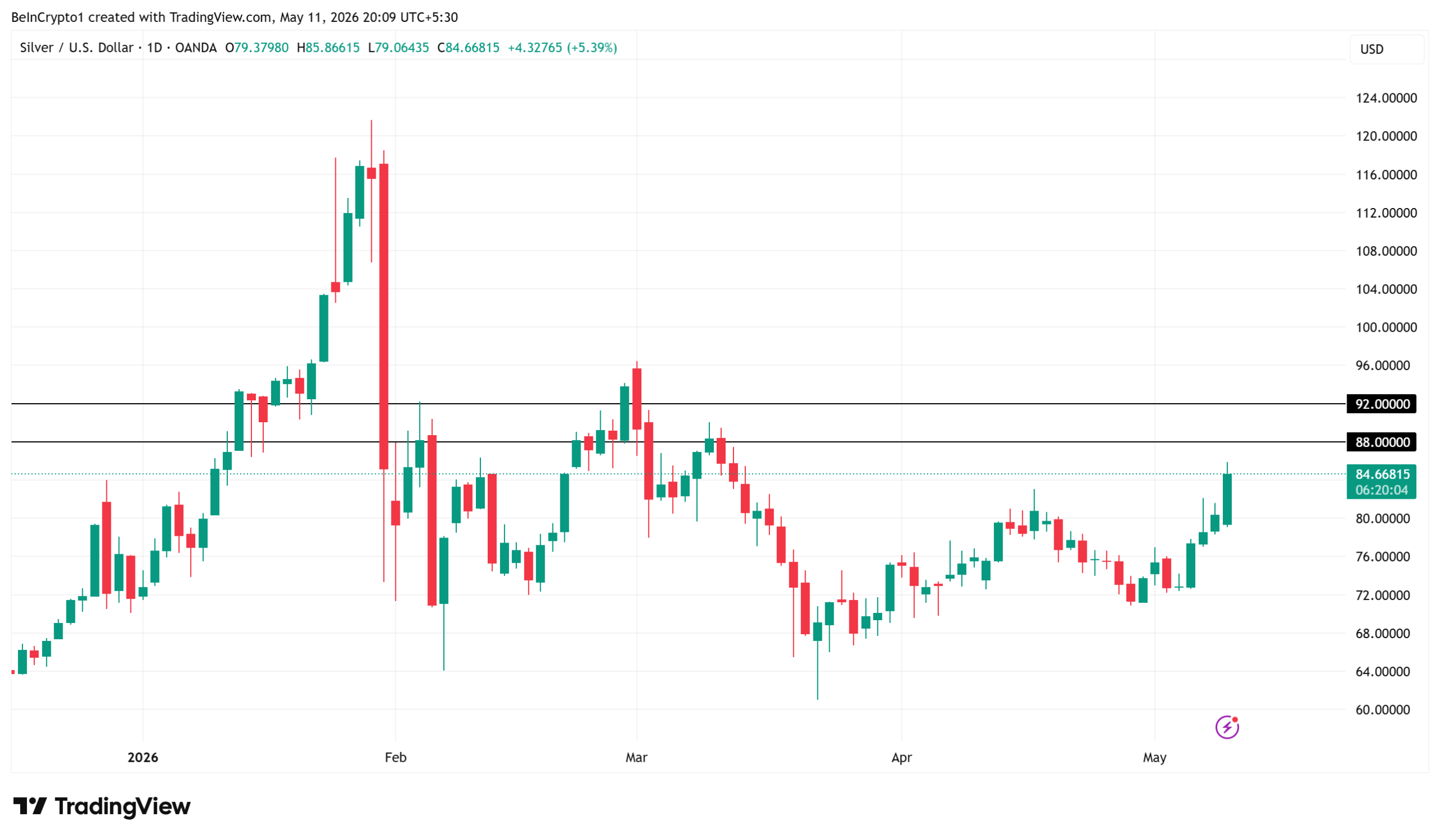
The asset feeds solar panels, electric vehicles, batteries, and artificial intelligence (AI) infrastructure. Spot silver trades near $85 an ounce after a sharp run-up over the past year.

Kiyosaki has previously floated $200 as a 2026 target. He frames physical silver as a cheap starting point for any new investor.
The fundamentals support parts of his case. The market is running its sixth straight year of structural deficits. Industrial demand now accounts for roughly half of total consumption.
Other Voices Echo the Silver Trade
Kiyosaki is not alone. Veteran trader Vijay called silver near $75 to $80 too cheap to ignore. He cited the lowest CME inventory since January 2025.
“Next 6 months, likely to surprise on the Positive side. It is a a scarce commodity (Lowest inventory on the CME since January2025 ) & one of the most hated asset class,” the trader wrote.
Research firm World of Finance and Associates set a $88 to $92 ceiling if macro shocks stay limited, while other precious metals analysts see silver miners as leveraged plays.
Kiyosaki’s six-asset survival list for 2026 also includes gold, oil, food production, Bitcoin, and Ethereum. Whether his crash call arrives on schedule will determine how the silver bet looks by year-end.
The post Robert Kiyosaki Warns of Global Economy Crash, Recommends This as Top Investment appeared first on BeInCrypto.

XRP price is trading at $1.45 with a 24-hour gain of more than 2%, as crypto prediction turns bullish. For XRP, the catalyst behind the move is not what most expected. Upbit, a South Korean exchange, could be the trigger for its spot price, with order-flow data showing XRP volume surpassing BTC, ETH, and even USDT.
— Xaif Crypto (@Xaif_Crypto) May 11, 2026
 XRP dominates South Korea’s biggest exchange.$XRP is now the #1 traded asset on Upbit by 24H volume surpassing Bitcoin, Ethereum, and USDT.
Korean retail demand for XRP continues to stand out globally. https://t.co/rJzGwkXl27 pic.twitter.com/LKxEEY8oCj
Simultaneously, Coinbase has accumulated nearly 15 million XRP via a time-weighted average price (TWAP) strategy. It’s a methodical accumulation pattern for institutional positioning, far away from retail speculation.
Add JPMorgan’s recent settlement of tokenized treasuries on the XRP Ledger on top of that, and the bullish case starts building its own momentum.
JPMORGAN AMONG OTHERS TO USE XRP LEDGER FOR TOKENIZED TREASURYS
JPMorgan, Ripple, Mastercard and Ondo completed a cross-border redemption of tokenized US Treasuries on the XRP Ledger.
The tokenized asset moved on public blockchain rails, while the dollar payout still settled… pic.twitter.com/OaYv6ZSEQ2— Coin Bureau (@coinbureau) May 10, 2026
Discover: The best pre-launch token sales
XRP Price Prediction: Break $1.50 and Target $2.80
XRP is consolidating in a band with a 24-hour range of $1.42 low to $1.50 high, and the setup looks increasingly like coiled energy. Support at $1.40 has been held on multiple tests. Resistance clusters at $1.50, the persistent ceiling that needs a decisive close above to validate the next leg higher.
The Coinbase TWAP accumulation of 15 million XRP matters here. Institutional buyers don’t deploy TWAP strategies unless they expect a protracted move; they’re building size without moving the market against themselves. That’s a bullish structural signal.

Analyst models have revised targets sharply upward following JPMorgan’s XRPL settlement and potential CLARITY Act progress, with the bull-case scenario sitting at $2.80 on projected ETF inflows.
If XRP close above $1.50 on volume, Upbit selling stays subdued, and institutional accumulation continues, its price could open a path toward $2.80.
Institutional adoption trends remain structurally supportive, but the Upbit concentration risk is real. Traders tracking regional exchange flows now have an edge that the broader market lacks.
Discover: The best crypto to diversify your portfolio with
LiquidChain Could be The Play as XRP Tests Critical Resistance
XRP’s $2.80 bull target is compelling, but at a current market cap already measured in tens of billions, the percentage upside is bounded. Early-stage infrastructure plays operate on a different return curve entirely. That asymmetry is exactly where LiquidChain is positioning its presale.
LiquidChain is a Layer 3 blockchain designed to solve the fragmentation problem that costs DeFi traders real money every day, a disconnected liquidity across Bitcoin, Ethereum, and Solana. The architecture fuses all three ecosystems into a single execution environment: unified liquidity pools, verifiable cross-chain settlement, and a Solana-class VM for real-time DeFi execution.
The final layer emerges.
LiquidChain is the future.⟁https://t.co/vqvBcdSQYC pic.twitter.com/gAhIyFxdXV
— LiquidChain (@getliquidchain) May 10, 2026
With Liquid, developers only need to deploy once and access users across all three chains simultaneously. It offers a meaningful unlock for dApp builders currently forced to choose.
The presale is live at $0.01458 per $LIQUID, with $750K raised to date, and an added 1500% APY on staking bonus only for early presalers. Features include a Unified Liquidity Layer, Single-Step Execution, and Deploy-Once Architecture. Security audit by crypto security benchmark, Certik, is also included.
Traders monitoring XRP’s breakout window may want to research LiquidChain’s presale terms while current pricing holds.
The post XRP Price Prediction: South Korean Market Sends XRP Above $1.45 Resistance appeared first on Cryptonews.

TLDR
- Bitmine reduced its weekly ether purchases after months of rapid accumulation in 2026.
- The company bought 26,659 ETH last week, worth about $63 million at current prices.
- Bitmine now holds more than 5.2 million ETH, which equals about 4.31% of Ethereum’s circulating supply.
- Tom Lee said the firm slowed buying as it approached its long-term goal of owning 5% of supply.
- Bitmine has acquired over 1 million ETH since the start of this year.
- The company’s total crypto and cash holdings stand at $13.4 billion.
Bitmine Immersion Technologies has reduced its weekly ether purchases after months of rapid accumulation. Chairman Tom Lee confirmed the shift after the firm approached its 5% Ethereum supply target. The company still holds over 5.2 million ETH after buying more than 1 million tokens this year.
Bitmine Eases Weekly Ether Accumulation Pace
Bitmine bought 26,659 ETH last week, valued at about $63 million at current prices. However, that figure equals roughly one quarter of its recent weekly average. The purchase increased total holdings to over 5.2 million ETH, or about 4.31% of the circulating supply.
Tom Lee addressed the change during remarks at Consensus 2026 in Miami. He said the company would reduce weekly purchases from over 100,000 ETH. “Our previous pace of buys would have us reach 5% by mid-July,” Lee said in a statement.
The company adjusted its pace as it neared its long-term acquisition target. Lee said Bitmine considered easing purchases once it approached the 5% threshold. The firm has already acquired more than 1 million ETH since January 2026.
Bitmine continues to buy ether despite the broader market downturn. Lee stated that the company remains committed to its treasury strategy. He described the recent months as one of the fastest accumulation periods in the crypto sector.
He also expressed confidence in current market trends and recovery signals. “We have decided to slow down our pace of weekly accumulation,” Lee said. He linked the change to timing rather than a shift in outlook.
Ethereum Holdings and Treasury Composition
Bitmine’s total crypto and cash holdings stand at $13.4 billion. The company holds 201 Bitcoin alongside its Ether reserves. It also maintains $775 million in cash and equity stakes.
Those equity investments include Beast Industries and Eightco Holdings. However, ether remains the core asset in the company’s treasury. The firm focuses its strategy on Ethereum’s long-term supply position.
Bitmine has staked more than 4.7 million ETH from its total holdings. That amount represents over 90% of its ether balance. The staked assets currently hold an estimated value of $11.1 billion.
The company operates its MAVAN staking platform to manage these assets. It launched the platform earlier this year for institutional clients. Bitmine also uses MAVAN for its internal treasury operations.
Lee reiterated his outlook for Ether’s price performance. “If ETH closes above $2,100 at the end of May, this would be the third consecutive monthly gain,” he said. He added that such a streak has not occurred during a crypto bear market.
The company continues to monitor Ether’s monthly performance levels. Lee linked price strength to improving sentiment in software and growth stocks. He maintained that what he calls “crypto spring” has begun.

Crypto World
Crypto platform Kraken is raising capital at $20 billion valuation ahead of its planned IPO


Payward, the parent company of crypto platform Kraken, is raising new capital at a $20 billion valuation, according to two people with knowledge of the matter.
Kraken declined to comment on the raise.
The latest fundraising round comes as the company ramps up spending on takeovers.
Most recently, it bought stablecoin-focused payments firm Reap for $600 million and digital asset derivatives platform Bitnomial for $550 million as it continues to scale up ahead of a planned IPO. Payward was valued at $20 billion in both transactions.
Its biggest deal came in 2025 with the $1.5 billion acquisition of NinjaTrader, a U.S.-based retail futures platform and CFTC-registered futures commission merchant. The acquisition gave Kraken a major foothold in the U.S. derivatives market while expanding its reach to a broad base of active futures traders.
Payward said it confidentially submitted a draft S-1 registration statement to the U.S. Securities and Exchange Commission on November 19, marking the first step toward a potential public listing.
CoinDesk reported in March that the company had paused its IPO plans amid unfavorable market conditions. Sources said the firm remains interested in going public, though likely only once market conditions improve.
At Consensus Miami last week, Payward and Kraken co-CEO Arjun Sethi said the exchange is “80% ready” to go public.
Kraken is a U.S.-based cryptocurrency exchange that lets users buy, sell and trade digital assets, including bitcoin and ether, using either fiat currencies or crypto. The company has expanded beyond spot trading into products such as derivatives, staking and custody, transforming itself into a broader full-service crypto platform.
In recent years, the Wyoming-based firm has adopted a more focused but increasingly strategic acquisition strategy aimed at expanding beyond core crypto trading into derivatives and broader multi-asset market infrastructure.
Deutsche Börse stake
Deutsche Börse (DB1), the owner of the Frankfurt Stock Exchange and Xetra, announced in April that it had taken a $200 million stake in Payward.
The stake, acquired through a secondary share sale, represented roughly 1.5% of the company. The transaction valued Payward at $13.3 billion, down from the roughly $20 billion valuation attached to previous fundraising rounds. Payward did not receive any proceeds from the transaction.
Last November, Kraken said it had raised $800 million in two tranches to support its push into bringing traditional financial products onchain. The round included backing from investors such as Jane Street, DRW Venture Capital and Tribe Capital, while Citadel Securities later agreed to a separate $200 million strategic investment at a $20 billion valuation.
Read more: Kraken parent goes for the OCC charter in bid to become a federal crypto bank
Co-founder Adeniyi Abiodun unveiled confidential transactions at Sui Live Miami, the same week SUI Group Holdings staked its entire $140M treasury.

Key Takeaways
- AST SpaceMobile shares climbed 12.15% Monday before its Q1 2026 quarterly results, scheduled for release after market close
- Wall Street consensus calls for a $0.2125 per-share loss with $37.5 million in quarterly revenue
- The company lost a BlueBird 7 satellite following a Blue Origin launch malfunction; insurance coverage anticipated
- Rising rivalry from Amazon’s $10.8 billion Globalstar acquisition and SpaceX’s Starlink platform intensifies market dynamics
- Implied volatility suggests a roughly 12.1% price swing following the earnings announcement
Shares of AST SpaceMobile (ASTS) surged more than 12% during Monday’s session, reaching $75.05, as market participants braced for the company’s first-quarter 2026 financial results set to drop after the closing bell.
Despite Monday’s strong performance, the stock remains significantly below its 52-week peak of $129.89, indicating substantial ground left to recover.
Analyst consensus points to a quarterly loss of $0.2125 per share alongside revenue of $37.5 million for the March period. These figures would represent progress from the previous quarter’s $0.26 loss per share, although revenue is projected to decline from the $54.3 million recorded in Q4.
Per-share loss estimates have deteriorated by 15.1% during the last two months, reflecting increasing analyst skepticism ahead of the results.
Launch Failure Raises Questions About Deployment Strategy
A failed Blue Origin New Glenn rocket mission last month resulted in AST‘s BlueBird 7 satellite being placed in an incorrect orbit. The satellite has since reentered the atmosphere and is classified as a complete loss, although the company confirms insurance will cover the incident.
Initial projections called for deploying 45 to 60 satellites throughout this year. Industry analyst Tim Farrar now forecasts actual deployments between 21 and 42 units, complicated by the FAA’s current grounding of the launch vehicle.
Market observers will pay close attention to any guidance updates regarding adjusted deployment schedules and backup launch provider arrangements.
Company leadership previously established a 2026 revenue goal ranging from $150 million to $200 million, banking on accelerated commercial launches during the year’s latter half. Wall Street projects revenue could hit $1 billion in 2027.
Amazon and SpaceX Intensify Direct-to-Device Battle
Competitive dynamics have evolved rapidly. Amazon’s approximately $10.8 billion deal to purchase Globalstar represents a major entry into satellite-to-device communications. Deutsche Bank subsequently lowered its AST price target, anticipating increased pricing competition.
SpaceX’s Starlink platform maintains market leadership and currently operates commercial services in partnership with T-Mobile.
Industry forecasts project the direct-to-device sector will expand from $570 million in 2025 to $2.64 billion by 2030, underscoring the importance of successful execution.
Among 10 analysts tracking ASTS, three maintain buy ratings, five recommend holding, and two advise selling. The average price target stands at $83.90, suggesting approximately 12% potential upside from current trading levels. Price targets span from Scotiabank’s $41.20 to Clear Street’s $115.
Options trading volume ahead of earnings runs at 1.6 times typical levels, with call options outnumbering puts by a 3-to-1 margin. Derivatives markets indicate an expected price movement of approximately 12.1%, or roughly $10, following the earnings release. Historical data shows a median 9% post-earnings move across the previous eight quarters.
The broader space technology sector also posted gains Monday, contributing momentum to ASTS’s advance.


For years, Audemars Piguet (AP) timepieces were regarded as a mark of success for a certain kind of crypto bro. Over the weekend, the watchmaker announced that it’s collaborating with Swatch, an entry-level watchmaker.
The “Royal Pop” collab has, in the eyes of crypto investors who bought into AP’s ostensibly exclusive brand, destroyed its reputation as a wealth signal for crypto bros who’ve made it.
Indeed, Protos spoke with two watch resellers who say that complaints from AP owners are “raining in.”
The AP watch that inspired the upcoming Swatch design, AP’s Royal Oak, has long sold for north of $30,000. Models of Royal Oak with more rarity, such as the 15202ST, have even resold for six figures.
To the dismay of collectors who thought AP would protect its brand, both companies called the partnership a “disruptive collaboration that fuses joyful boldness.”
Translated into crypto jargon, it was a rug-pull.
Social status devastation
Crypto Twitter understood the framing immediately. “Imagine owning a Royal Oak and a dude in a Swatch comes up to you like hey man nice watch I got one too 10/10 for crypto influencers all over again lmao.”
Another commentator wrote what others were thinking: “The crypto bros can finally get their AP. Even the ones who roundtripped their entire port or are down 96.69%. Shoutout to Swatch.”
An NFT veteran with more than 277,000 followers laughed, “Can’t wait to buy my black royal oak x swatch so I can act like a cool kid at my next crypto event.”
AP’s Swatch collab, announced over the weekend, drops on Saturday, May 16. In plastic. For approximately $500.
Chopping the Royal Oak down
High-end AP watches like Royal Oak earned the attention of newly enriched crypto influencers. Their watches had scarce supply, cultural cachet, a chart that only went up.
From 2019 to early 2022, AP prices charted like a crypto runner.
The Royal Oak 15202ST Jumbo averaged about $21,800 on the secondary market in 2016, per dealer data. By 2021, it averaged $69,000. By 2022, it peaked near $106,000.
The move tracked the crypto bull market in lockstep which peaked in November 2021, before losing two-thirds of its value within 12 months.
Even before this week’s disappointment, dealer data showed AP 15202ST watches changing hands at roughly one-third less than their 2022 peak.
Read more: Bitconned: The story of Miami crypto bros facing 100 years in prison
Even prior to the Swatch collab, AP has performed the worst this year among its big three Swiss peers on the secondary market.
AP resales struggled to stay up just 3.4% according to SwissWatchExpo and Le Watch Buyers data cited by Borro. In contrast, Patek Philippe gained 16% and Rolex added 8%.
Got a tip? Send us an email securely via Protos Leaks. For more informed news and investigations, follow us on X, Bluesky, and Google News, or subscribe to our YouTube channel.
Digital asset company Galaxy and Ethereum treasury platform Sharplink will launch a private fund that will invest Ether in decentralized finance (DeFi) strategies, signaling growing institutional interest in earning onchain yield from crypto holdings.
The proposed fund, called the Galaxy Sharplink Onchain Yield Fund, is expected to launch in the coming weeks with $125 million in initial commitments, the companies said Monday.
Sharplink plans to contribute $100 million from its staked Ether (ETH) treasury, while Galaxy will commit $25 million and serve as the fund’s manager.
The fund will allocate capital to DeFi liquidity protocols and other onchain yield opportunities, with the goal of generating additional returns while allowing Sharplink to maintain its long-term exposure to Ether.
Galaxy CEO Mike Novogratz said the structure reflects growing institutional demand for blockchain-based investment products that offer yield and risk management tools similar to those used in traditional finance.

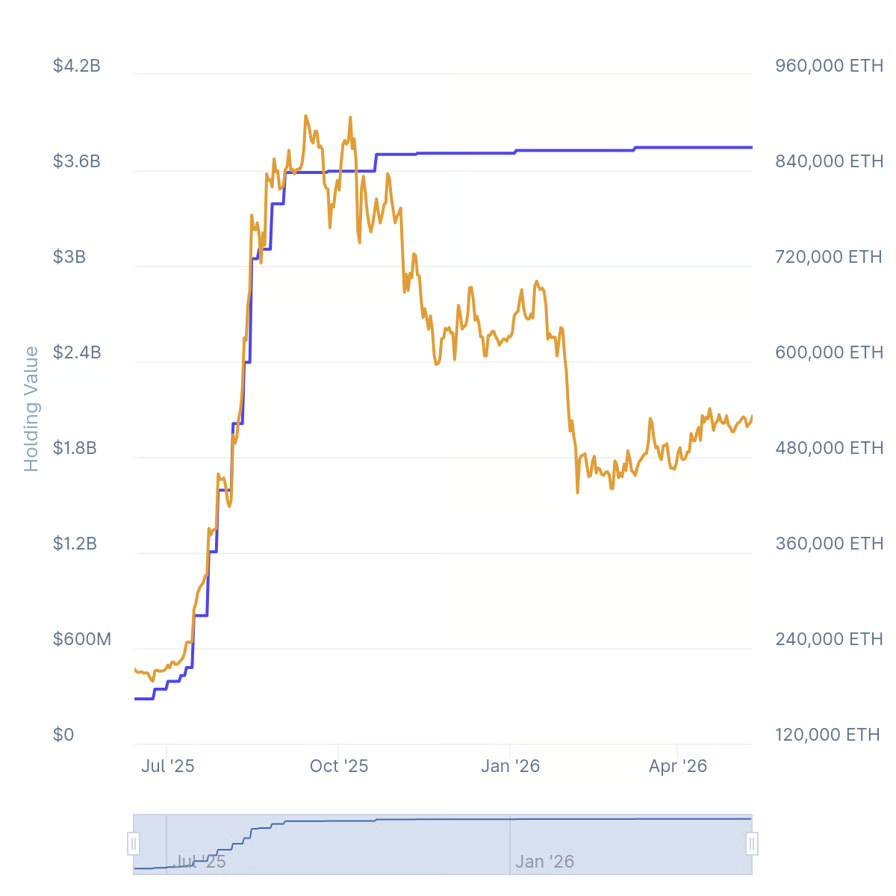
The value of Sharplink’s Ether portfolio. Source: CoinGecko
Sharplink is one of the largest corporate holders of Ether, with more than 868,000 ETH on its balance sheet. At October market highs, those holdings were valued at nearly $4 billion.
Related: Crypto Biz: Wall Street wants more than just Bitcoin
Sharplink posts nearly $686 million Q1 loss as ETH price declines
Sharplink has continued to expand its Ethereum treasury strategy despite a sharp first-quarter loss driven by Ether’s price decline.
The company on Monday reported a net loss of $685.6 million, or $3.25 per diluted share, primarily due to non-cash accounting charges related to the drop in ETH prices during the quarter. Of that total, $506.7 million was attributed to unrealized losses on its Ether holdings.
Ether fell from a mid-January high of about $3,354 to $2,104 on March 31, according to CoinMarketCap data. It was last trading hands on Monday at about $2,339.
Revenue in the quarter rose to $12.1 million from $700,000 a year earlier, reflecting growth in the company’s operating business.
Since launching its Ether treasury strategy in June 2025, Sharplink has earned approximately 18,800 ETH in cumulative staking rewards. The company ended the first quarter with $16.9 million in cash.

Sharplink’s balance sheet as of March 31, 2026. Source: Sharplink
The results underscore the volatility associated with crypto treasury strategies, particularly for companies that accumulated large positions over the past year. Similar pressures have affected Bitcoin treasury companies, where earnings can swing sharply with underlying asset prices.
Related: Crypto treasury companies likely to consolidate in 2026: Crypto exec
Circle (CRCL) is trying to prove it’s more than just a stablecoin company with $3 billion blockchain

Star Trek’s Warp Drive Is Actually A Weapon Of Mass Destruction

State pensioners could get extra cash on top of regular payments

Manchester United reach agreement with Casemiro over contract clause amid transfer speculation

US brings back mandatory military draft registration

Steven Gerrard disagrees with Gary Neville over ‘shock’ Chelsea and Arsenal claim | Football


-
 Crypto World3 days ago
HarrisX Poll Found 52% of Registered Voters Support the CLARITY Act
-

 Fashion3 days ago
Weekend Open Thread: Marianne Dress
-

 Crypto World4 days ago
Upbit adds B3 Korean won pair as Base token gains Korea access
-

 Tech7 days ago
Image AI models now drive app growth, beating chatbot upgrades
-
 NewsBeat5 days ago
NCP car park operator enters administration putting 340 UK sites at risk of closure
-

 Tech2 days ago
Auto Enthusiast Carves Functional Two-Stroke Engine from Solid Metal
-

 Politics3 days ago
Politics Home Article | Starmer Enters The Danger Zone
-
 Business2 days ago
Ignore market noise, India’s long-term story intact, say D-Street bulls Ramesh Damani and Sunil Singhania
-

 Crypto World6 days ago
UAE Free Zone Deploys Blockchain IDs to Verify Registered Firms
-

 Tech13 hours ago
GM Agrees To Pay $12.75 Million To Settle California Lawsuit Over Misuse Of Customers’ Driving Data
-

 Crypto World5 days ago
BlackRock CEO Larry Fink Discusses a New Asset Class
-

 Crypto World5 days ago
Robinhood says Wall Street is building onchain
-
Entertainment7 days ago
Serena Williams hits Met Gala in metallic dress after GLP-1 reveal
-

 Tech6 days ago
Apple and Samsung are dominating smartphone sales so thoroughly that only one other company makes the top 10
-

 Tech6 days ago
I tested the Xiaomi 17 Ultra’s camera and I don’t think I’ll ever go back to an iPhone
-

 Fashion5 days ago
The Best Work Pants for Women in 2026
-

 Entertainment5 days ago
Sarah Paulson Called Out For Met Gala ‘Hypocrisy’
-
 Tech4 days ago
AI agents are missing all the discussions your team is having. SageOX has an answer: agentic context infrastructure
-
 Sports7 days ago
Everton v Man City LIVE: Haaland’s two-word response as visitors collapse to hand Arsenal advantage in Premier League title race
-

 Politics7 days ago
Met Gala 2026: Madonna’s Dramatic Red Carpet Look Steals The Show
You must be logged in to post a comment Login