Russia’s crucial oil and gas revenues, which have sustained its war against Ukraine, have suddenly dwindled to multi-year lows as the fourth anniversary of the full-scale invasion approaches.
The resulting revenue drop is forcing President Vladimir Putin to borrow from Russian banks and raise taxes.
While these measures are currently keeping state finances “on an even keel”, they only increase strains in a war economy now plagued by slowing growth and stubborn inflation.
Advertisement
In January, Russian state revenues from taxing the oil and gas industries fell to 393 billion rubles (US$5.1 billion). This is down from 587 billion rubles ($7.6 billion) in December and from 1.12 trillion ($14.5 billion) in January 2025.
Janis Kluge, an expert on the Russian economy at the German Institute for International and Security Affairs, says this is the lowest level since the Covid-19 pandemic.
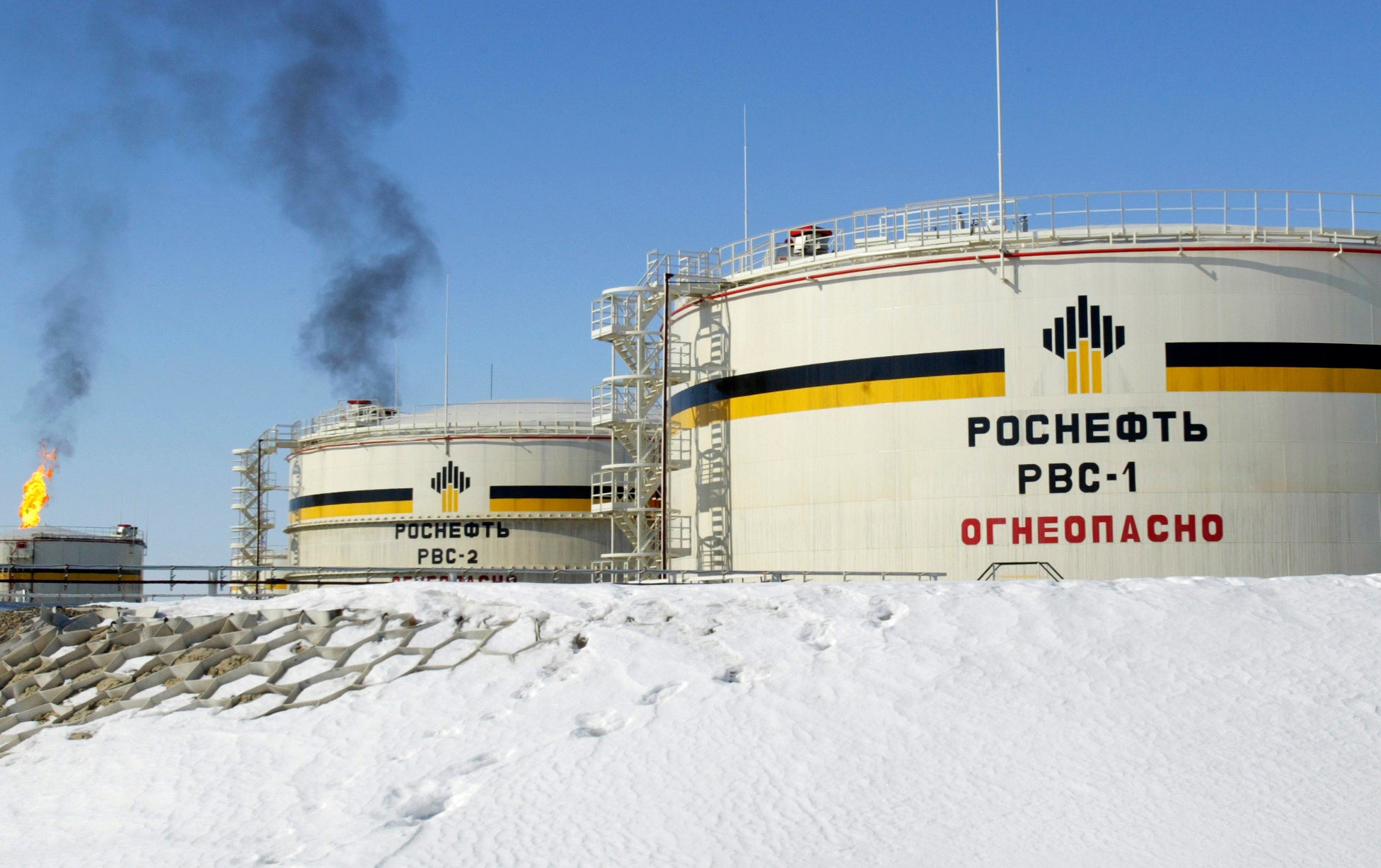
To pressure the Kremlin to halt fighting in Ukraine, the Trump administration imposed sanctions on Russia’s two largest oil companies, Rosneft and Lukoil (Associated Press)
In January, Russian state revenues from taxing the oil and gas industries fell to 393 billion rubles ($5.1 billion).
Advertisement
That’s down from 587 billion ($7.6 billion) in December and from 1.12 trillion ($14.5 billion) in January 2025. That’s the lowest since the COVID-19 pandemic, says Janis Kluge, an expert on the Russian economy at German Institute for International and Security Affairs.
A new approach to sanctions
To pressure the Kremlin to halt fighting in Ukraine, the Trump administration imposed sanctions on Russia’s two largest oil companies, Rosneft and Lukoil, from 21 November. That means anyone buying or shipping their oil runs the risk of being cut off from the U.S banking system — a serious concern for any multinational business.
On top of that, on 21 January, the EU began banning fuel made from Russia crude — meaning it could no longer be refined somewhere else and shipped to Europe in the form of gasoline or diesel fuel.
Advertisement
The head of the EU’s executive commission, Ursula von der Leyen, on Friday proposed a full ban on shipping services for Russian oil, saying sanctions offered leverage to push Russia to halt the fighting. “We must be clear-eyed: Russia will only come to the table with genuine intent if it is pressured to do so,” she said.
The head of the EU’s executive commission, Ursula von der Leyen, on Friday proposed a full ban on shipping services for Russian oil, saying sanctions offered leverage to push Russia to halt the fighting (Copyright 2022 The Associated Press. All rights reserved.)
The latest sanctions are a step beyond the oil price cap imposed by the Group of Seven democracies under the Biden administration. The $60 per barrel cap, enforced through insurers and shippers based in G-7 countries, was aimed at reducing Russia’s profits, not banning imports, out of concern over higher energy prices.
The cap did reduce government oil revenues temporarily, especially after an EU ban on most Russian seaborne oil forced Russia to shift sales to China and India.
Modi hasn’t commented. Foreign affairs spokesman Randhir Jaiswal said India’s strategy was “diversifying our energy sourcing in keeping with objective market conditions.” Kremlin spokesman Dmitry Peskov noted that Moscow was monitoring the statements and remains committed to our “advanced strategic partnership” with New Delhi.
Advertisement
In any case, Russian oil shipments to India have declined in recent weeks, from 2 million barrels per day in October to 1.3 million per day in December, according to figures from the Kyiv School of Economics and the U.S. Energy Information Administration.
Buyers are now demanding bigger discounts on Russian oil to compensate for the risk of running afoul of U.S. sanctions and the hassle of finding payment workarounds that skirt banks reluctant to touch the transactions. (Associated Press)
Data firm Kpler says “India is unlikely to fully disengage in the near term” from cheap Russian energy.
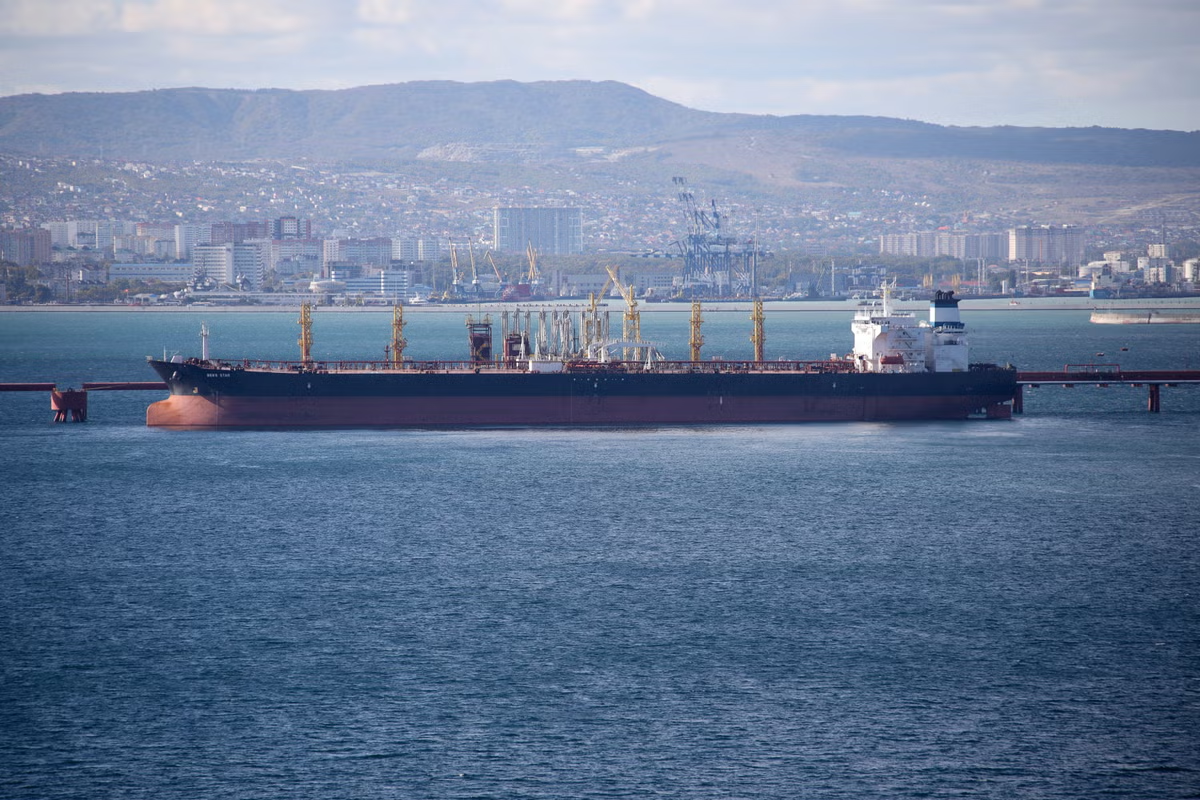
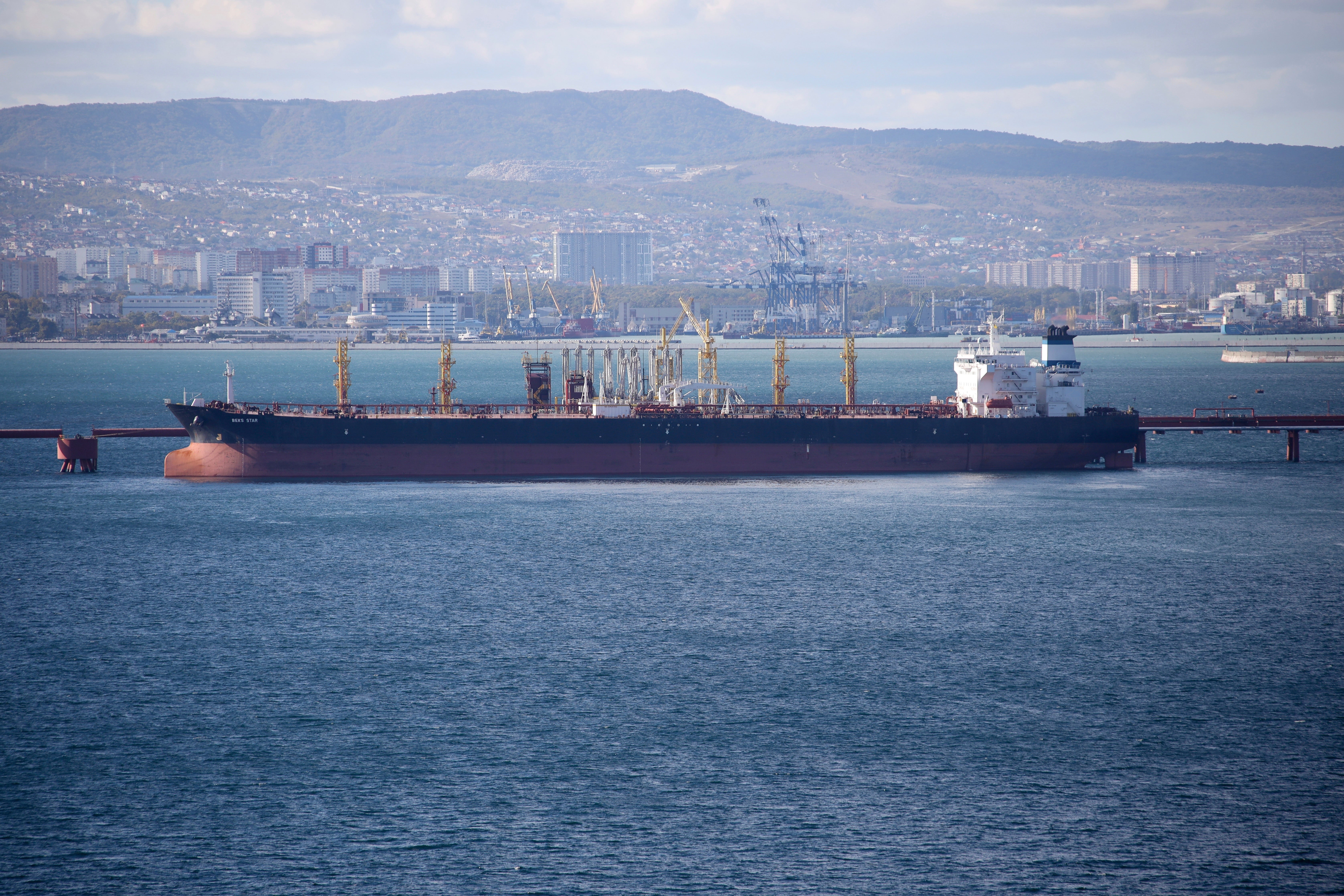
Ukraine’s allies increasingly have sanctioned individual shadow tankers to deter customers from taking their oil — raising the number to 640 among the U.S., U.K. and EU. U.S. forces have seized vessels linked to sanctioned Venezuelan oil, including one sailing under a Russian flag, while France briefly intercepted a suspected shadow fleet vessel. Ukrainian strikes have hit Russian refineries, pipelines, export terminals and tankers.
Advertisement
Russian oil is trading at a steep discount
Buyers are now demanding bigger discounts on Russian oil to compensate for the risk of running afoul of U.S. sanctions and the hassle of finding payment workarounds that skirt banks reluctant to touch the transactions.
The discount widened to about $25 per barrel in December, as Russia’s primary crude export, Urals blend, fell below $38 per barrel, compared with about $62.50 per barrel for international benchmark Brent crude.
Since Russia’s taxes on oil production are based on the price of oil, that cuts into state revenues.
Advertisement
“It’s a cascading or domino effect,” said Mark Esposito, a senior analyst focused on seaborne crude at S&P Global Energy.
Ukraine’s allies increasingly have sanctioned individual shadow tankers to deter customers from taking their oil (Associated Press)
Including diesel and gasoline created “a really a dynamic sanctions package, a one-two punch that are impacting not only the crude flow, but the refined product flow off of those barrels. … A universal way of saying, if it’s coming from Russian crude, it’s out.”
Reluctance to take delivery has meant an inordinate amount — about 125 million barrels — has built up in tankers at sea. That has driven up costs for scarce capacity, with rates for very large oil tankers reaching $125,000 per day “and that’s directly correlated with the ramifications of the sanctions,” said Esposito.
Advertisement
Slowing growth strains Russia’s budget
On top of that, economic growth has stalled as the boost from war-related spending reaches its limits and as labor shortages put a cap on potential business expansion. And lower growth means less tax revenue. Gross domestic product increased only 0.1 per cent in the third quarter.
Forecasts for this year range between 0.6 per cent and 0.9 per cent, down from over 4 per cent in 2023 and 2024.
“I think the Kremlin is worried about the overall balance of the budget, because it coincides with the economic downturn,” said Kluge. “And at the same time the costs of the war are not decreasing.”
Advertisement
The Kremlin responds by raising taxes and borrowing
The Kremlin has resorted to higher taxes and borrowing to fill the gap left by dwindling oil revenues and by slower economic growth.
The Kremlin-controlled parliament, the Duma, raised value-added tax paid on consumer purchases at the cash register to 22 per cent from 20 per cent and increased levies on car imports, cigarettes and alcohol.
The government has increased its borrowing from compliant domestic banks and a national wealth fund still has reserves to patch budget holes.
Advertisement
So the Kremlin has money — for now. But raising taxes can slow growth even more. And borrowing risks worsening inflation, brought down to 5.6 per cent through interest rates of 16 per cent from the central bank, down from a peak of 21 per cent.
“Give it six months or a year, and it could also affect their thinking about the war,” said Kluge. “I don’t think they will seek a peace deal because of this, but they might want to lower the intensity of the fighting, focus on certain areas of the front and slow the war down. This would be the response if it’s getting too expensive.”
This article features advice from Dr Georgia Pavlopoulou, Associate Professor at children’s mental health charity Anna Freud, and director of Autism Central.
If your child has been diagnosed, you might not know how to explain this to them in an age-appropriate way.
Dr Georgia Pavlopoulou, Associate Professor at children’s mental health charity Anna Freud, told HuffPost UK: “For younger children, autism can be explained by saying: ‘Everyone’s brain works in different ways. Your brain has its own way of noticing things, communicating, learning and feeling.’”
Advertisement
Reframing Autism recommends talking about how physical differences between people are normal, and the same goes for differences of the brain.
For older children, a little extra detail might be warranted.
Dr Pavlopoulou suggested parents could say something like: “Autism means your brain experiences and processes the world in its own way. This can shape how you communicate, how your senses respond to things like sounds, lights or textures, and how your mind thinks about ideas and interests.
“These differences can bring strengths, such as creativity, deep focus on things you care about, or noticing details others might miss, while also meaning that some environments or expectations might not always work well for you.”
Advertisement
Photo by Caleb Woods on Unsplash
As part of this conversation, it can also help to connect your explanation to your child’s own experiences. For example, why they might love focusing on certain interests, need quieter spaces at times, or prefer different ways of communicating.
Dr Pavlopoulou, who is also the director of Autism Central, a peer support service for the support network of autistic people, suggested that once a child is diagnosed, they can begin to better understand themselves and their experiences.
“Creating a sense of safety, acceptance and positivity can really help,” she said. “Avoid terms like ‘there’s something wrong’ or ‘we need to fix this’ or ‘superpower’ narratives.
“Instead, focus on offering support and understanding, and emphasising that autism is a natural difference in how people think, learn and experience the world.”
Advertisement
The expert urged parents to give their children space to ask questions and share their thoughts and feelings following their diagnosis. It can also help to reassure them that how they feel about it can evolve over time.
She ended: “What matters most is that they feel supported, respected and understood.”
The Artemis 2 mission will soon send four astronauts farther into space than anyone has ever been as humanity returns to the Moon for the first time in decades
21:39, 01 Apr 2026Updated 21:44, 01 Apr 2026
Artemis II – Nasa’s mission to the moon
The Artemis 2 mission – NASA’s first manned mission to the Moon in 54 years – is about to launch.
The four Artemis astronauts have said their goodbyes and entered the Orion capsule on NASA‘s Space Launch System (SLS) rocket. The launch is scheduled for 11.24pm UK time tonight, weather permitting.
Commander Reid Wiseman, Victor Glover and Christina Koch from NASA, and Jeremy Hansen of the Canadian Space Agency, are the lucky four who get to take part in the mission that will pave the way for Artemis 3. Artemis 3 aims to land a crew on the Moon’s south pole as early as 2028.
The rocket will launch from the Kennedy Space Center in Florida. For those who live in and around the US state, they will be able to catch a glimpse of Artemis 2 as it launches through the sky and into space.
NASA may be forced to delay the launch if weather conditions aren’t favourable, but the space agency said in its latest update that there’s still an 80 per cent chance the weather will be good enough.
The US space agency has been targeting a launch window that starts tonight on April 1. Speaking at a press conference, Ms Blackwell-Thompson added: “Our team has worked extremely hard to get us to this moment and I am so very proud of the work that they have done.”
The mission was originally planned for February but after problems during testing, the launch has been pushed back to a six-day launch window in April. The launch will mark the first time since 1972 that astronauts have flown to the Moon.
Advertisement
Timing is crucial for the mission to work properly, the space agency said. “The trajectory for a given day must ensure Orion is not in darkness for more than 90 minutes at a time so that the solar array wings can receive and convert sunlight to electricity, and the spacecraft can maintain an optimal temperature range.”
Israel’s security has been a political mantra for Benjamin Netanyahu during his decades in office. In the early days of the war in Iran, he said Israel had already changed the Middle East, and its own power within it, but more than a month into the campaign the regime in Tehran is still in power, still firing missiles at Israel, and still in possession of its stockpile of highly-enriched uranium – enough, experts say, to make around a dozen nuclear bombs if further refined.
Officers responded to reports of antisocial behaviour involving a group of several hundred young people in Clapham High Street and Clapham Common, from around 5pm on Tuesday, according to the Met.
Young people were reported to be attempting to access shops and a restaurant on Clapham High Street as well as lighting fires and setting off fireworks on Clapham Common, the force said. Similar behaviour took place in the same area on Saturday night, with videos shared widely on social media on Monday.
Footage circulating on social media appeared to show large crowds of young people, many wearing masks, gathering on Clapham High Street on Tuesday evening, as several supermarkets closed their doors.
Advertisement
Teenagers wreak havoc in Clapham during Easter holiday ‘link-up’ (Instagram)
In one TikTok video, smoke could be seen billowing from Clapham Common while a number of police officers attended the scene. A caption on the video read: “Do NOT attend Clapham Courts linkups.”
A dispersal order was put in place on Tuesday night, while around 100 officers were involved in the police response.
Five people were assaulted, including four police officers. One officer was taken to hospital as a precaution after suffering an injury to his arm while making an arrest.
Three girls, including a 17-year-old and two aged 13, were arrested on Tuesday night on suspicion of assaulting an emergency worker. The 17-year-old has been charged and bailed to appear at court later this month. The two 13-year-olds have been granted bail.
The Met said more arrests would follow in the coming days, adding that officers are also working to identify those who played a leading or organising role.
Advertisement
Detective Chief Superintendent Emma Bond, who leads policing in the area, said: “We have a clear plan in place should any further disorder take place in the coming days, and are in close contact with our partners and businesses in the area.
“Our officers will continue to maintain a strong, visible presence around Clapham, and we will respond robustly to any reports of disorder, thefts or planned meet-ups.
“I’d urge those young people who think this is just a bit of fun to carefully consider the consequences. Events like this, fuelled by online trends and viral content on platforms such as TikTok, can quickly escalate and lead to serious outcomes.
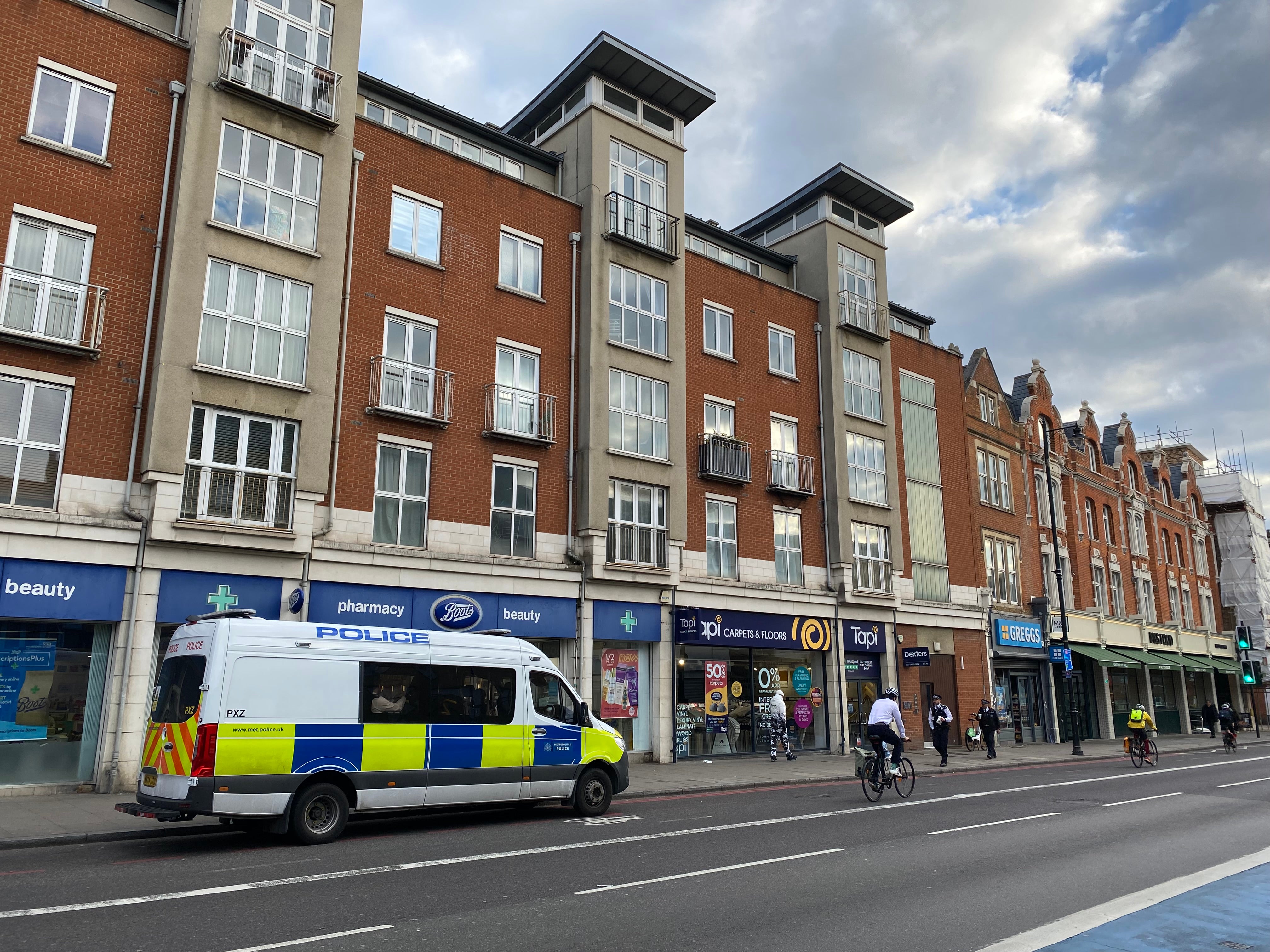
A police van on Clapham High Street on Wednesday morning (The Independent)
“If you join in or cause further disorder, you should expect to be arrested and risk a criminal record, which can have long-lasting consequences for your future, including employment opportunities and potentially your ability to travel.
“There is widespread CCTV coverage on streets and in businesses in the area, and we’re already reviewing that footage, as well as officers’ body-worn video cameras, to identify those who committed offences on Saturday and last night.
Advertisement
“The parents/guardians of those involved in last night’s disorder also have a role to play. I’d appeal to them to take responsibility – to be proactive in knowing where their children are and who they’re with, and to take steps to make sure they’re not involved in this sort of unacceptable antisocial behaviour.”
Ms Canning told The Independent on Wednesday: “On Saturday there were some people that came and stood in the shop, just people walking by that came in for cover.
“Last night, as well, there was a pregnant lady and her husband, they came in for about 10 to 15 minutes.”
Advertisement
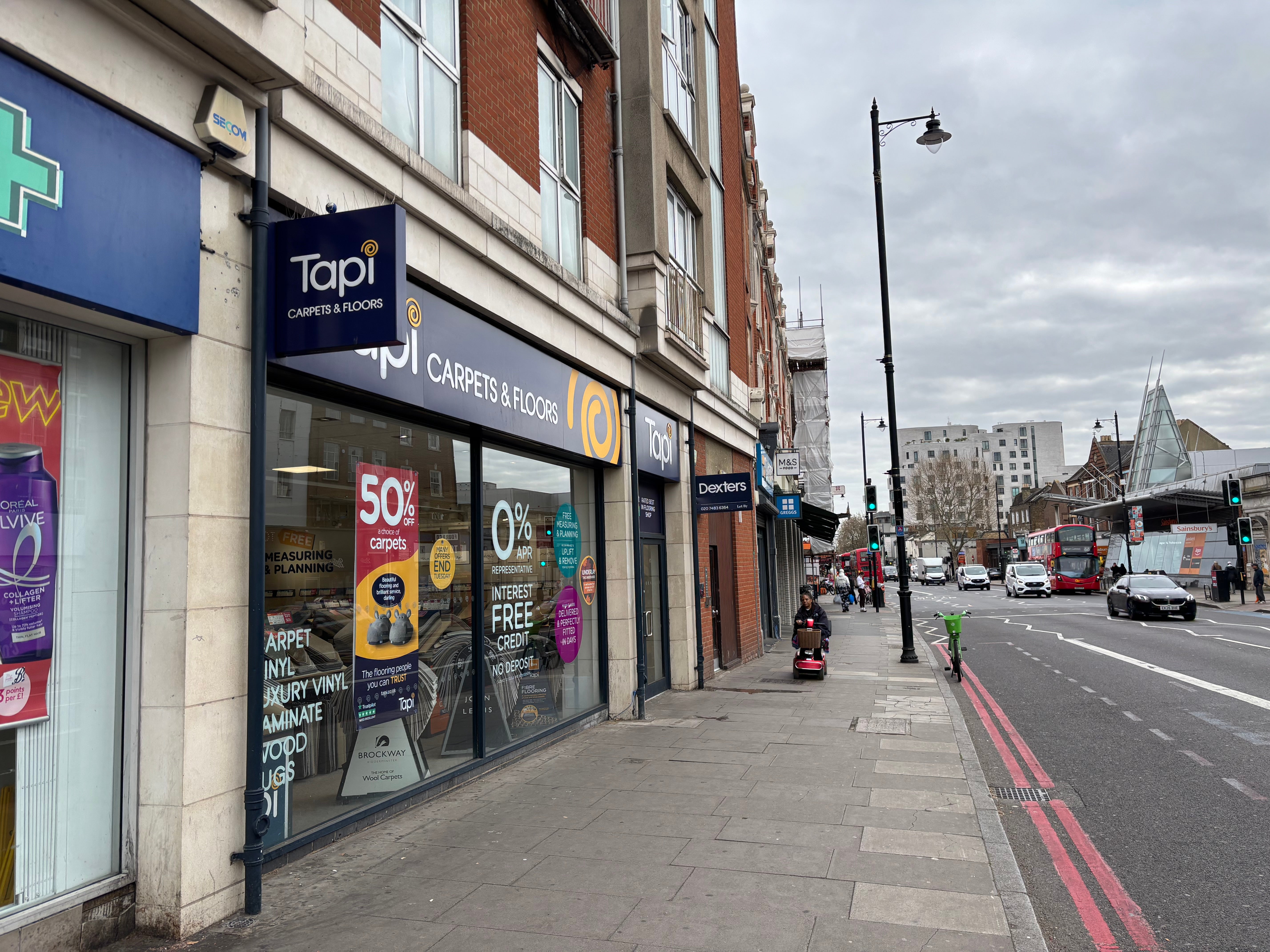
Passers by took shelter in Tapi Carpets and Floors in Clapham (The Independent)
She added: “She would be [panicked], being pregnant, you would be worried about being knocked over. But I don’t think [the young people] were physically threatening towards members of the public, to be fair.”
The store manager described the scenes that unfolded as “scary”, but said that those who gathered were mainly targeting food shops.
Ms Canning said she had been told by other people who worked on the road to be vigilant on Tuesday afternoon, as they had heard of another planned gathering that appeared to have been advertised on social media.
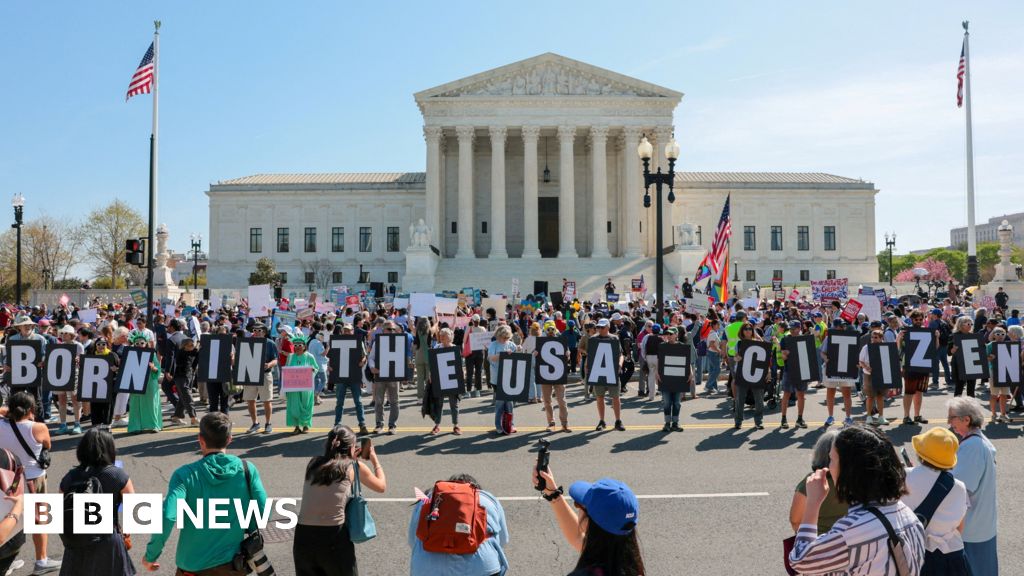
During more than two hours of arguments, U.S. Solicitor General John Sauer sought to convince the justices that the 14th Amendment – which establishes birthright citizenship and was extended to formerly enslaved people – and subsequent court rulings and laws passed by Congress all mistakenly expanded birthright citizenship.
The State Pension age is set to start rising from 66 to 67 this month, with the increase due to be completed for all men and women across the UK by 2028
Linda Howard Money and Consumer Writer
21:00, 01 Apr 2026
The State Pension age is set to begin increasing from 66 to 67 this month, with the transition due to be finalised for all men and women throughout the UK by 2028. The scheduled adjustment to the official retirement age has been enshrined in legislation since 2014, with a subsequent rise from 67 to 68 expected to take effect during the mid-2040s.
The Pensions Act 2014 brought forward the State Pension age increase from 66 to 67 by eight years. The UK Government also modified how the rise in State Pension age is phased, meaning rather than reaching State Pension age on a particular date, individuals born between March 6, 1961 and April 5, 1977 will become eligible for the New State Pension on their 67th birthday.
Advertisement
It’s crucial to be mindful of these alterations now, particularly if you have a retirement strategy in place. Everyone impacted by modifications to their State Pension age will receive correspondence from the Department for Work and Pensions (DWP) well beforehand. Under the Pensions Act 2007 the State Pension age for men and women will rise from 67 to 68 between 2044 and 2046.
The Pensions Act 2014 provides for a regular review of the State Pension age, at least once every five years. The review will be based around the idea people should be able to spend a certain proportion of their adult life drawing a State Pension. The UK Government has recently established a new Pension Commission to examine ways of increasing pension saving, with its conclusions set to be released in 2027. Key areas under consideration will encompass auto-enrolment saving rates, improving savings amongst groups such as the self-employed, and a review of the State Pension age, reports the Daily Record.
Dr Suzy Morrissey will report on factors the UK Government should consider relating to State Pension age and the Government Actuary’s Department will prepare a report on the proportion of adult life in retirement. The State Pension age review will factor in life expectancy alongside a variety of other relevant considerations when determining the appropriate State Pension age.
Once the review has concluded, the UK Government may opt to put forward amendments to the State Pension age. Nevertheless, any such proposals would need to pass through Parliament before being enshrined in law.
Advertisement
Your State Pension age is the earliest point at which you can begin claiming your State Pension, and may differ from the age at which you can access a workplace or personal pension. Anyone, regardless of age, can utilise the online tool at GOV.UK to check their State Pension age, which can prove invaluable when planning for retirement.
The fire service were called to the blaze at 7am on Wednesday
21:07, 01 Apr 2026Updated 21:09, 01 Apr 2026
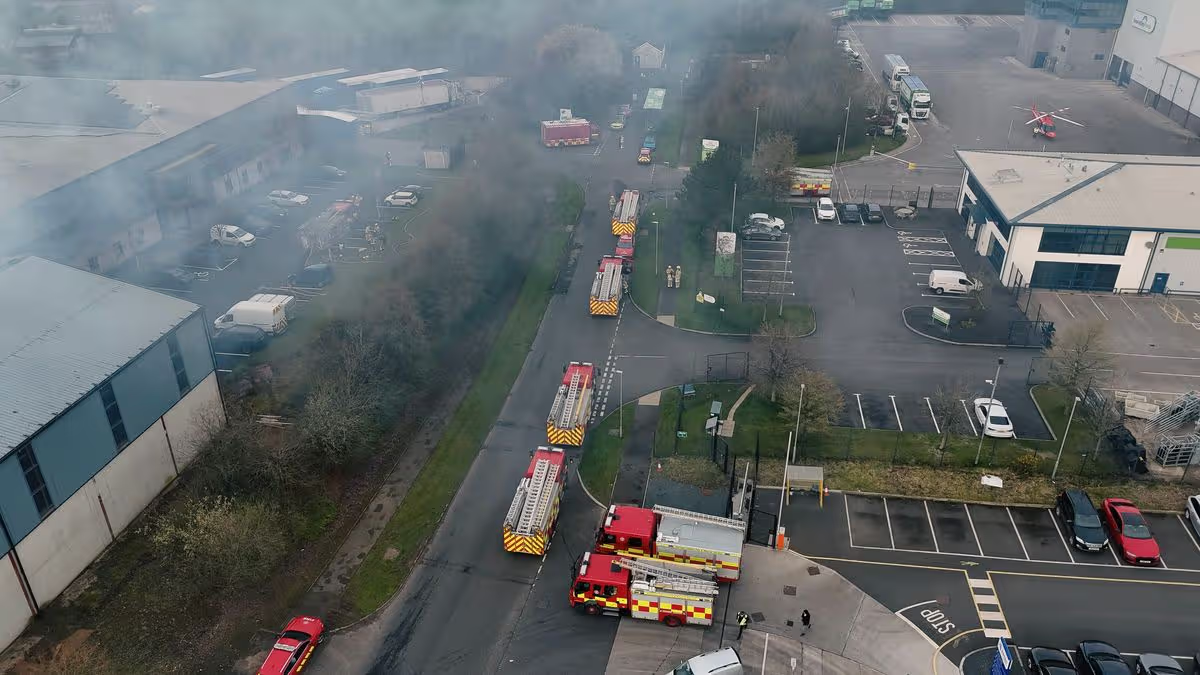
A person was airlifted to hospital as over 100 firefighters dealt with a “dust explosion” fire in Omagh.
The fire service were called to the blaze in the Bankmore Road area of Omagh, after receiving a call around 7am on Wednesday morning. Over 100 firefighters and 15 appliances were sent to the scene with it taking nearly 12 hours to deal with fire.
One person was taken to hospital by the air ambulance due to injuries they sustained in the incident.
Advertisement
A NIAS spokesperson said: “The Northern Ireland Ambulance Service received a 999 call at 07:21 on Wednesday, April 1, following reports of an incident in the Bankmore Road area, Omagh.
“NIAS dispatched one Emergency Ambulance and the Charity Air Ambulance with HEMS on board, to the scene.Following assessment and initial treatment at the scene, 1 person was taken to Royal Victoria Hospital, Belfast.”
Firefighters remained at the scene into the evening with the fire being dealt with at 6.13pm.
Northern Ireland Fire & Rescue Service (NIFRS) Western Area Commander David Doherty said: “The large fire at a commercial premises at Doogary West Industrial Estate, Bankmore Road, Omagh has now ended. The initial call was received at 7.19am this morning, Wednesday 1 April 2026.
Advertisement
“Firefighters worked tirelessly throughout the duration of the incident to bring the fire under control and prevent further spread.
“At the height of the incident over 100 Firefighters and personnel were involved in the operational response with Appliances from Omagh, Fintona, Newtownstewart, Strabane, Dromore, Irvinestown, Clogher, Castlederg, Enniskillen, Northland, Maghera, Magherafelt, Dungannon, Cookstown and Central Fire Stations, including 2 Aerial Appliances from Northland and Knock Fire Stations, 2 Water Tankers from Pomeroy and Belleek Fire Stations, 1 High-Volume Pump from Northland Fire Station, Specialist Rescue Teams from Central Fire Station and a Command Support Unit from Strabane Fire Station.
“We would like to thank the public for their patience whilst we dealt with this incident.
“The cause of the fire is believed at this stage to be accidental ignition due a dust explosion from a hopper and the incident was dealt with by 18:13pm on Wednesday 1 April 2026.”
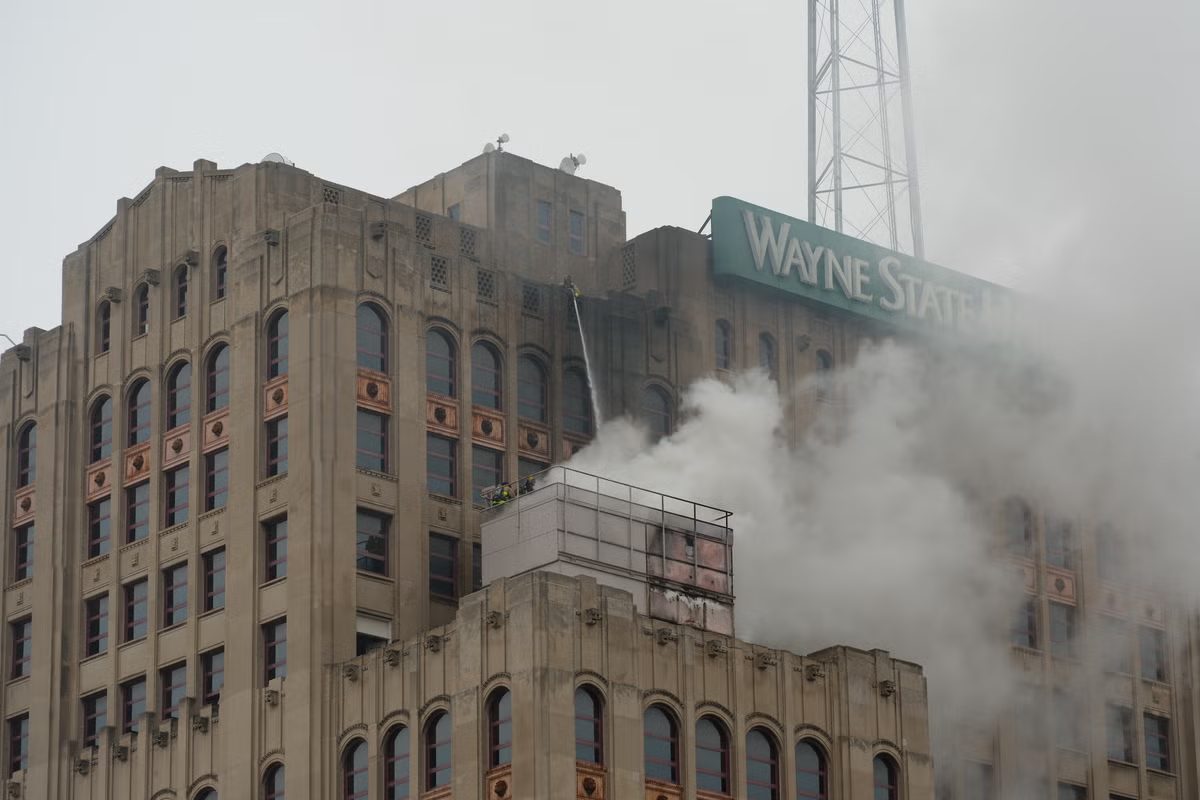
Video from TV stations showed thick rolling clouds of black smoke near the top of the 14-story Maccabees Building, a nearly century-old building designed by Albert Kahn, along Woodward Avenue, just north of downtown.
The fire on the 11th floor was contained, Wayne State said on social media, and no injuries were reported. Authorities said it likely began in the heating and cooling system.
Wayne State has owned the building for more than 20 years and has offices there, including the Computer Science Department and African American Studies. But it is not generally known as a place for classes.
Advertisement
The Maccabees was the home of early radio and TV studios, including radio broadcasts of “The Lone Ranger,” starting in the 1930s, and “The Green Hornet.”
The character was introduced to us last year. He arrived in the village looking for Robert and when he eventually laid eyes on him, Kev made a comment that allowed us to discover he’s Robert’s husband.
Kev rocking up was so badly timed, as Robert had just got back on track with Aaron Dingle (Danny Miller). A flashback episode allowed us to learn that Kev and Robert tied the knot in prison after spending months developing a secret relationship.
As we got to know Kev, it became clear that the complex character had a possessive streak and was absolutely terrified about losing Robert. Behind bars, Kev had told Robert that he was dying, and also stabbed himself when he learnt about Robert’s attempt at appealing against his case.
Advertisement
Robert ended his relationship with Kev because he couldn’t continue pretending to be in love with him, while seeing Aaron. When reality hit Kev that he had lost Robert, he held him, Aaron and Liam Cavanagh (Jonny McPherson) hostage in Mill Cottage flat with a sword.
Kev was introduced to us asRobert’s secret prison husband (Picture: ITV)
Kev headed out of the village but made a return towards the end of last year. He had been captured by John Sugden (Oliver Farnworth), who was busy creating a plan to get rid of Robert so he could be with Aaron.
Kev ended up alerting Aaron to the imminent danger and fled the Dales once more. Even though Kev is unpredictable and intimidating, fans of the ITV soap really enjoyed getting to know him.
The character is set to head back to the Dales in the not too distant future. When he arrives, it becomes clear Kev has been very busy as he’s launched a new business venture – and it’s set to stir up trouble for the locals.
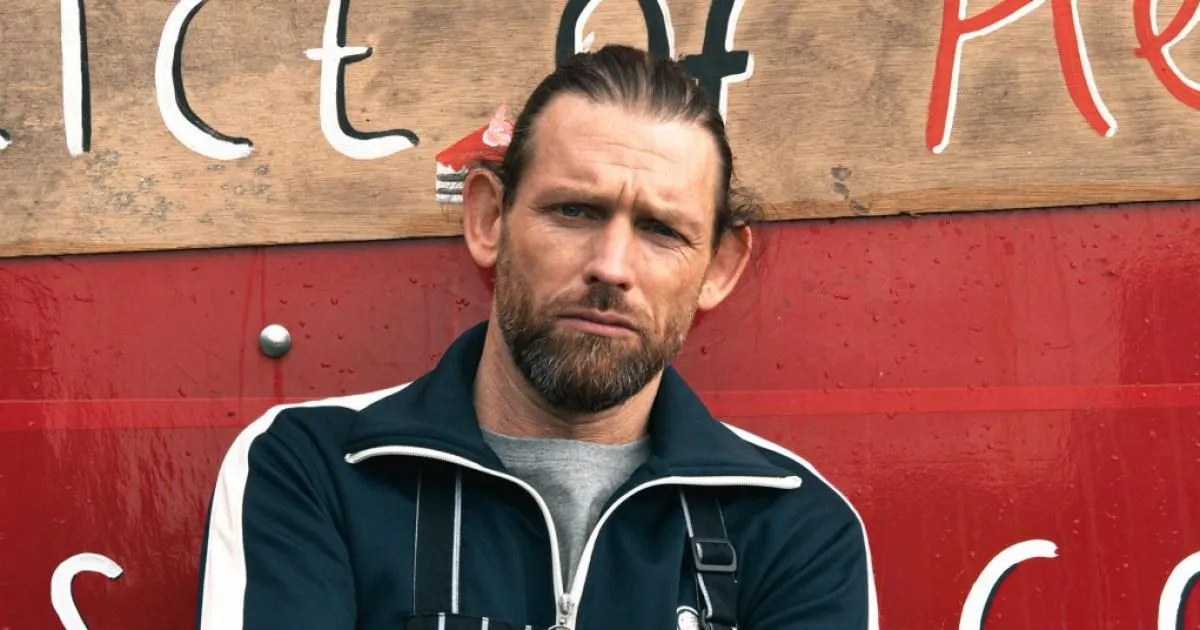
Judging by the picture in this article, Kev appears to be starting a new pop-up café., It’s called A Slice of Kev-en, which honestly makes me want to get up off my chair and applaud.
Advertisement
Kev is the biological father of Lewis Barton (Picture: ITV)
Discussing the return, producer of the show Laura Shaw said: ‘Both Chris and the character of Kev made a massive impact on the show last year, so Chris is most definitely back by popular demand. With Kev’s son, Lewis, in the village still unaware of who his father is, it’s safe to say that there’s a lot of unfinished business and drama ahead.’
Chris Coghill added: ‘I’m really pleased to be returning to Emmerdale, I had a brilliant time last year. Kev is a complex character that I love playing.
Don’t miss a Soaps scoop! Add us as a Preferred Source
As a loyal Metro Soaps reader, we want to make sure you never miss our articles when searching for stories. We have all the latest soaps news, spoilers, videos, and interviews, with a vibrant community of highly engaged readers.
Click the button below and tick Metro.co.uk to ensure you see stories from us first in Google Search.
Now you can ensure you never miss a story from the Soaps team
‘He has psychopathic tendencies but also an energy and vulnerability that I think makes him pretty unique. I’m properly looking forward to getting back at it.’
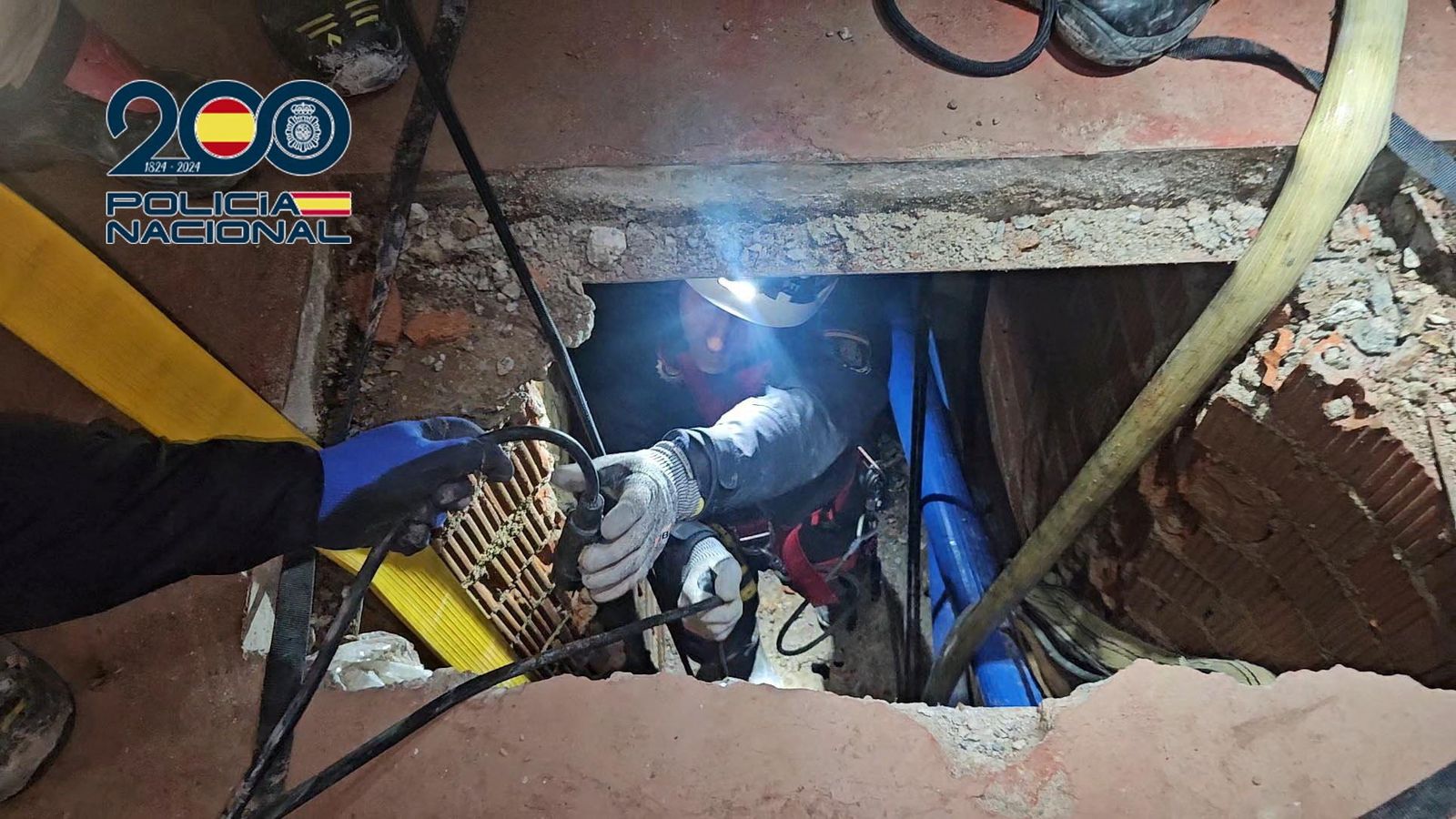
Spanish police have discovered a tunnel in the North African exclave of Ceuta, to smuggle tons of hashish from Morocco into Spain.
Police said the structure, concealed beneath an industrial warehouse, extended over three levels, including a descent shaft, an intermediate chamber for pallet storage, and the tunnel itself.
Authorities seized 17 metric tons of the drug, €1.4 million (£1.2m) in cash, and arrested 27 people in connection with the operation.
The tunnel had a rail system and underground crane used to transport the hashish.
Advertisement
Image: The tunnel was concealed under a warehouse. Pic: Spanish Police/Reuters
Spain is a major entry point for hashish, which is derived from cannabis resin, into Europe.
Ceuta, along with the Spanish exclave of Melilla to the east, surrounded by Morocco, forms the European Union’s only land border with Africa.
Hashish is usually trafficked into Spain by sea using speedboats.
In the northwestern region of Galicia, submarines or semi-submersible vessels have been used to transport cocaine from South America, underscoring Spain’s role as a transit hub.














































You must be logged in to post a comment Login