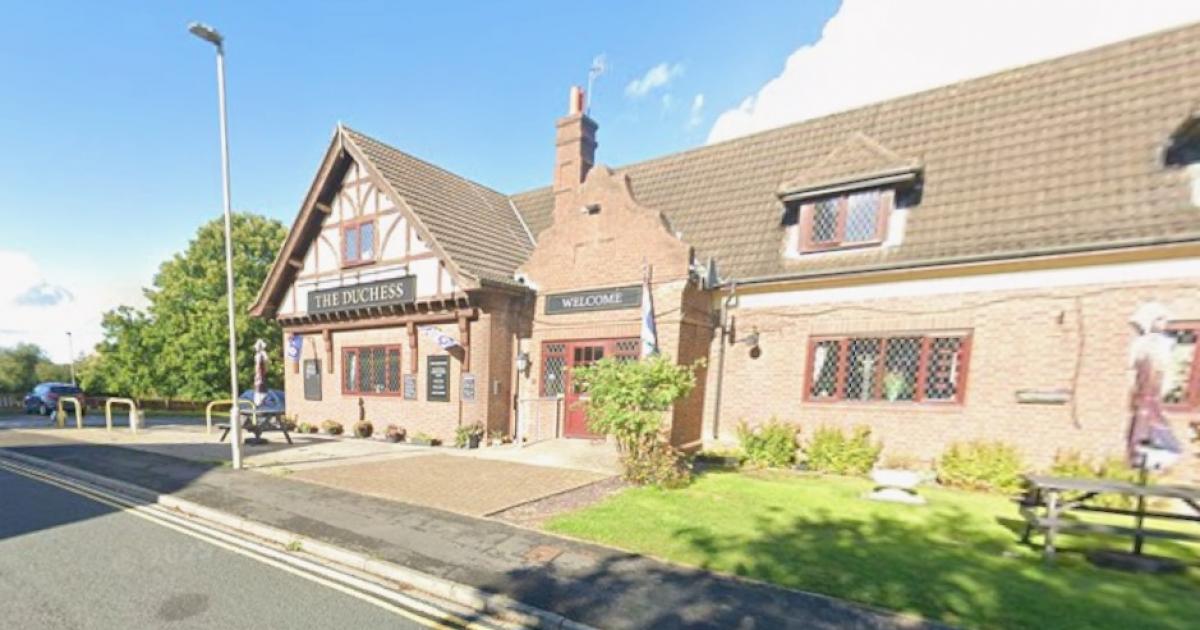
Scarborough Town Councillors have said they do not want to see the Duchess pub at 152 Hovingham Drive, Scarborough, converted into three flats as proposed by RPC Scarborough Ltd.
The outline proposal for the site, which is near Scarborough Hospital, would include the construction of detached bungalows if it is approved by the planning authority.
Town councillors said they were opposed to the proposal over a loss of amenity for local residents and proposed setting up an online page to raise awareness of the proposal among the community.
Advertisement
Cllr Chris Clarke said the company behind the plan had “no track record or experience in the ownership or operation of public houses” and suggested that “the company’s primary focus is not the operation of a public house”.
Speaking at a meeting of Scarborough Town Council’s community and place committee on Wednesday, April 29, he added: “The proposal does not sufficiently demonstrate any sort of commitment by RPC to the continued operation of the premises as a viable public house, and on this basis, I call for refusal.”
Cllr David Knowles said: “It’s the only pub on that large housing development and because it’s a big pub, it used to do food.
“So, I don’t think it’s been given a fair crack at the whip in terms of how it’s been promoted and marketed, and it probably could do better.”
Advertisement
At the meeting, committee members voted against the conversion of the pub, which will be decided by the local planning authority.
However, in a statement submitted as part of the planning application, the pub’s former licensee gave their support to the conversion as the pub “is not commercially viable, and the local community do not view it as a significant community asset”.
The ex-licensee said: “The local community did not support the pub and did not appear to view the public house as a community asset in any significant way, and I have heard no significant negative comments following its closure.
”They also noted that the pub “barely broke even”.
Advertisement
Submitted plans state that the proposed development would retain the existing building’s scale and massing with no increase in building height.
“The existing two-storey form is retained; this ensures the development remains compatible with neighbouring residential properties.”
The applicant said that the conversion of the pub would have positive impacts, including a reduction in noise associated with pub operations, reduced evening and late-night activity, and added that the building would continue to be occupied and maintained.
Submitted plans also state that the proposed bungalow development would be located a “sufficient distance away from the Duchess building and adjacent housing”.
Advertisement
They add: “The proposed bungalow design is in response to the local context and is designed to reflect the scale, form, heights and layout arrangements of the existing buildings.”
North Yorkshire Council has not set a date for deciding on the application which is currently open to representations from members of the public.
It is unclear what the future holds for NIE’s meter readers following the announcement from the Economy Minister
Unite the Union, which represents staff at NIE have called for clarity on the future employment for meter readers following the announcement that smart readers are to be rolled out across Northern Ireland.
There are currently 932,000 electricity connections across Northern Ireland. It is estimated that the cost of rolling the meters out across Northern Ireland will be in the region of £500 million.
Unite general secretary Sharon Graham said: “Instead of financial support or price caps on surging electricity bills, the economy minister is bringing forward the installation of smart meters as a way to reduce household electricity bills.
“Northern Ireland already has the highest levels of fuel poverty – rather than encourage energy rationing we need to see real action to lower or cap costs.”
Advertisement
Unite regional officer, Joanne McWilliams said: “Unite is demanding that NI Electricity management provides protections for the future employment of meter readers.
“We have also sought assurances that all installations will be completed by professional, directly employed NIE staff, not outsourced to contractors. We will continue to work with the company’s management to secure the best interests of our members – the frontline NIE workforce.”
An NIE spokesperson said: “NIE Networks welcome the publication of the Smart Electricity Meters Design Plan. There remains a lot to be decided, and we look forward to working with partners to develop the detailed programme plan, which will provide more confirmation on how the programme will operate and the skills required.”
From May 23, the venue is brimming with activities such as Mini Beast Safaris, bug hotel building, lawn games, and numerous play spaces.
Inside the house, the Collections Care team has curated an array of engaging pursuits, including an indoor insect discovery programme, conservation insight sessions, and a bug trail.
In addition to these, crafty youngsters can engage in creating their wildlife-themed crafts.
The festive atmosphere continues with classic lawn games in the gardens and grounds from 10am to 6pm daily, promising fun for both the young and the young-at-heart.
Advertisement
May half term adventures at Harewood (Image: Tom Arber and Harewood House Trust)
An in-house “Bugs and Beasties House Hunt” featuring tiny yet troublesome creatures is scheduled from 10.30am to 3.30pm, alongside interactive wildlife crafts in the Servants Hall.
Dedicated time slots from Monday through Friday have been set for the “Minibeast Safari” from 11am to 12pm and 1pm to 2pm, where families can explore meadows, learning about the vital role of the smallest residents in maintaining the ecosystem.
Those intrigued by conservation can join the Collections Care Team daily for an hour-long “Conservation in Action” session in the Garden Room, starting at 1.30pm.
Here, methods to protect treasures from bugs will be showcased.
Advertisement
Nature Safari Bags packed with binoculars, compass, torch, magnifying glass, and a map of Harewood will be issued daily from the Membership and Information Hut, facilitating personal adventures from 10am to 4pm.
The Great British Food Festival (Image: Tom Arber and Harewood House Trust)
Come the weekend on May 30 and May 31 from 10.30am to 12pm, families can indulge in building a bug hotel for pollinators on the North Lawn.
The Great British Food Festival returns to Harewood for the bank holiday weekend (May 23-May 25), offering a melange of local and speciality food and drink.
The festival promises live entertainment, children’s activities, chef demonstrations, various competitions, and an abundance of hot food vendors.
Advertisement
The aromatic celebration goes beyond food by incorporating Great Britain’s rich culinary diversity and a few exotic surprises, offering something for everyone.
To keep the younger audience engaged, the food festival has introduced roaming entertainers, mini-challenges, a kids’ stage, and family bingo, ensuring an all-day enchanted affair for families.
The artist Charlotte Verity will grace the venue with her meticulously observed studies of plants and flowers.
Bugs and Beasties House Hunt (Image: Tom Arber and Harewood House Trust)
Her work will be exhibited across five state rooms, subtly guiding the audience through seasonal transformations.
Capturing nature’s cyclic essence, the exhibition invites visitors to delve into the intricate beauty of nature throughout the year.
Children can navigate through the exhibition space with a free Charlotte Verity-inspired activity booklet, trying their hand at an assortment of artistic skills inspired by the paintings.
Whether you choose to explore the vast gardens and parks or wish to become an honorary member of the Collections Care Team, the activities are said to promise a “day full of creativity and discovery for families in the enchanting realm of Harewood House”.
When a man stabbed Jewish people in Golders Green, London, in what police declared a terrorist incident, the story spread fast – through news alerts, social media and the whispered conversations of anxious adults. When this happens, children notice.
Whether they catch a fragment of a TV bulletin, overhear a parent on the phone, or simply sense that something has shifted in the atmosphere at home, the news has a way of reaching them before they are ready. The question isn’t really whether to talk to children about violence and fear; it’s how.
First, it’s important to know that children have the resilience and capacity to process difficult topics, but bear in mind that this needs to happen in a supportive environment.
Start with safety. Ensure your child feels relaxed and secure. Safety comes from routines, keeping daily rhythms and practising rituals that remind everyone you are together and safe – for example, a nighttime story or song, a special time on the couch after dinner.
Advertisement
Your capacity to deal with issues like violence and fear is the most important factor in contributing to your child feeling safe during these conversations. If you feel overwhelmed or anxious, wait until you feel calmer and more grounded, or have someone to support you with the conversation.
Some families – particularly those who face racism or other forms of discrimination – will already be familiar with these conversations. But if this is new to you, the main thing to do is to be honest and clear. Be direct and specific. Avoid metaphors and euphemisms and vague ideas like “bad people”.
Adjust your language to the child’s age, but don’t overthink it. Simply pause often, ask questions, and watch their face for confusion.
Children don’t stay afraid for long. They move in and out of difficult feelings quickly, which is why short, repeated conversations work better than one big, serious talk.
Advertisement
Come back to them to check understanding and listen for misunderstandings. Ask them if they have any questions. And don’t be surprised if the child looks particularly bored or disinterested. Children prefer delight and joy and play rather than serious adult conversations. It doesn’t mean they are not listening or appreciating the explanation, it just means their priorities are elsewhere – and that’s a good thing.
It’s important to make them feel safe. LightField Studios/Shutterstock.com
Keeping children grounded amid fear
Limit media exposure and try to avoid talking about scary events around them – they are always listening and there’s huge room for misunderstanding when they hear rather than take part in conversations.
Research shows that if children are exposed to media and talk about fearful events, that it’s important what they hear is mediated through a supportive adult who can explain the content appropriately. They can pick up on the signs of fear and anxiety from adults, particularly in times of uncertainty, even if they can’t fully understand the words in the conversation.
It’s OK to say “I don’t know” to questions you can’t answer. And it’s OK to say: “I know the answer, but it’s too much information for you at your age, I’ll tell you a little bit now and explain more when I think you are old enough.”
Most important of all, for you and your child, look at your circle of safety. Remind your child they are safe here and now with you, that there is a community that you live in and link with who are there to support you and keep you safe. Focus on hope and efficacy and on what can we do right now for the future we want.
A former DWP employee with over 40 years’ experience has shared insider tips to help people making a new claim for Personal Independence Payment, Adult Disability Payment, and other disability benefits — and those already receiving them
Linda Howard Money and Consumer Writer and Ashlea Hickin Content editor
20:35, 30 Apr 2026
The Department for Work and Pensions (DWP) has confirmed that no alterations will be made to Personal Independence Payment (PIP) until a review of the existing eligibility criteria has been finalised. Minister for Social Security and Disability Sir Stephen Timms is working alongside disabled groups and charities to co-produce the review, which is anticipated to conclude this autumn.
The SNP Government has stated that individuals receiving devolved disability benefits in Scotland will remain unaffected by modifications to PIP – though this position could shift should Labour secure victory in next month’s election. Adult Disability Payment (ADP) has replaced the DWP benefit for all new and current claimants with a Scottish postcode.
Meanwhile, a former DWP employee with more than 40 years of experience handling State Pensions, working age and disability benefits has offered some insider guidance which may assist people submitting a new claim for PIP, ADP and other disability benefits.
Advertisement
This advice could also prove extremely valuable for current claimants, as the number of individuals receiving disability benefits continues to hit record levels throughout Great Britain.
The most recent statistics from the DWP and Social Security Scotland reveal there are now more than 3.9 million people claiming PIP, 484,055 on ADP, over 1.7 million pensioners receiving Attendance Allowance and more than 175,700 claiming Pension Age Disability Payment. As the number of people claiming disability benefits continues to rise sharply, Sandra Wrench, a former DWP employee with 42 years’ experience in the welfare system, is encouraging new applicants to “keep a copy of the claim form they submit”, as it could prove invaluable when the award comes up for review, reports the Daily Record.
Submitting claims for PIP, ADP and Attendance Allowance online (limited number per week) makes it straightforward to save a copy to your home computer or laptop for future reference, while those completing a paper form should photocopy the original document before sending it off.
If you do not already have a copy of the PIP 2 evidence form – the health questionnaire you completed prior to your assessment – contact the PIP enquiry line on 0800 121 4433 and request that one be sent to you.
Advertisement
Retaining a copy will assist you with any future reviews for PIP, or ADP if you have transferred to the Social Security Scotland system.
The form can serve as a useful reminder of the original responses you provided to the daily living and mobility questions, but crucially, it can help you articulate how your condition affects you at present – particularly if your circumstances have changed, your health has deteriorated, or you have developed additional conditions.
The former DWP adviser told the Daily Record: “With PIP, and in some cases Attendance Allowance, the claim is allowed for a certain period of time before it is reviewed, so it is handy to know what you put down on the original claim form.
“One lady I helped with her PIP claim, I got her to keep a copy of her original claim, which made it easier for her to complete her PIP review form when the time came. Your medical condition can sometimes change from the date you submitted your original claim.”
Advertisement
Regarding Attendance Allowance claims, she added: “It is advisable to get all your medical evidence sorted out before you start completing the form.”
This is owing to the length of the application form, and she explained how collating medical notes, information, and relevant dates for appointments or operations in advance can significantly reduce the time needed to complete the claim. She said: “Once you have catalogued your medical history required for the claim you are halfway there.”
Nevertheless, Sandra cautioned: “Do not try and complete the form in one sitting, as it can be mentally draining.”
The former welfare adviser noted that the most crucial reason for retaining a copy of your original claim form is to ensure you “do not give any conflicting evidence when it comes to a review, which may give DWP reason to scrutinise your case further”.
Advertisement
She continued: “Also if your claim is disallowed by DWP and you seek help over this, the person looking at your case can see what you have put on the original form as to why it might have been disallowed.”
Other ways to protect future disability benefit payments
Maintaining a diary is amongst the most valuable tools for all disability benefit claimants, and it need not be a paper-based record. Using your mobile phone, computer, laptop or tablet can provide a straightforward means of documenting ‘bad days’ and recording significant moments connected to your condition.
Establishing a dedicated note, complete with time and date, allows you to capture details you may wish to reference during a future PIP review, or simply adding entries to the calendar function.
This doesn’t require daily input, merely noting matters relevant to how your condition impacts you. This might encompass everyday tasks you struggled to complete independently, instances of forgetting medication, or experiencing low mood or frustration stemming from your condition.
Advertisement
Additional considerations worth documenting would be instances when carrying out everyday activities:
Were painful for you
Take you a long time
Puts you or someone else in danger
Make you feel breathless
Make you unsteady
This form of note-taking, or diary maintenance, proves particularly useful for individuals with fluctuating conditions, as it could facilitate explaining to healthcare professionals the contrast between ‘good days and bad days’. It can also help identify the frequency of notable health events, which can sometimes occur so regularly they slip from memory.
It’s equally vital to retain records of any medical appointments connected to your condition, ensuring your documentation remains current. This may also include counselling or physiotherapy sessions. It may also prove beneficial to reach out to a charity with specialist understanding of your condition, even simply to ensure you’re not overlooking additional support available to you.
For those claiming ADP, you can include a charity or organisation from whom you’ve received assistance or guidance regarding your health condition, long-term illness, or disability, as supporting evidence.
These suggestions represent just a handful of the measures people receiving PIP, ADP or Attendance Allowance can adopt to begin safeguarding their future payment award by building a personal evidence trail that can simplify recalling specific instances of how their condition impacts them.
Advertisement
A successful new claim for PIP or ADP is now valued between £30.30 and £194.60, some £121.20 and £778.40 every four weeks throughout the 2026/27 financial year.
A successful new claim for Attendance Allowance or Pension Age Disability Payment is now valued at either £76.70 (lower rate) or £114.60 (higher rate) each week and as the benefit is typically paid every four weeks, this equates to either £306.80 or £458.40 every pay period. Find out more about making a new claim on GOV.UK.
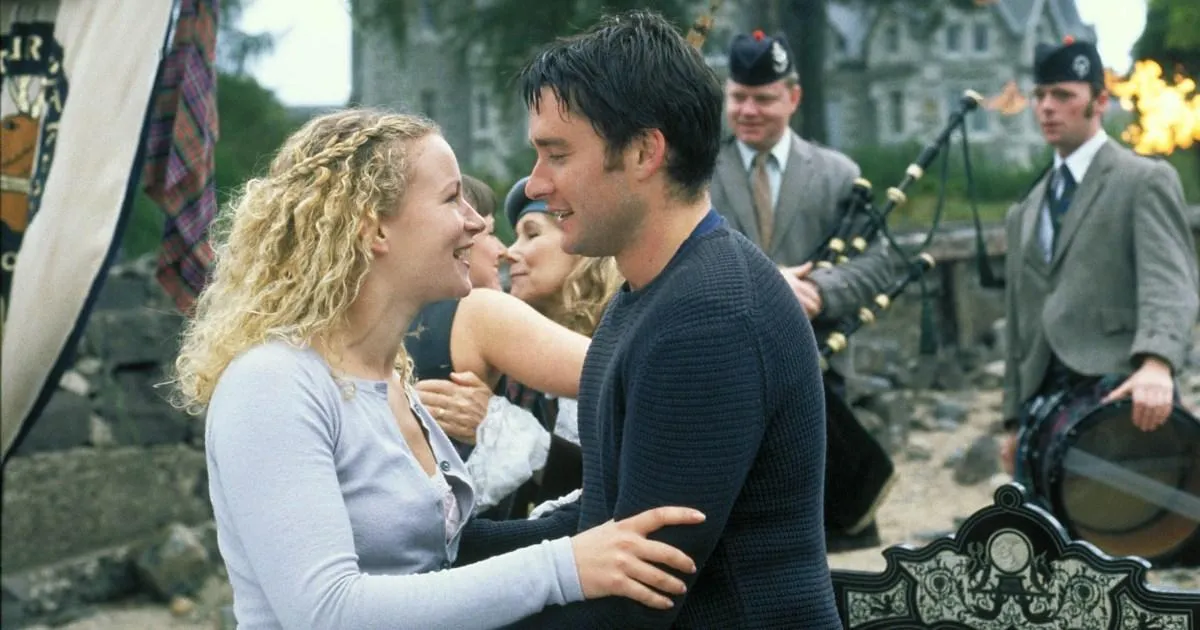
Monarch of the Glen is coming back to screens – but with a twist (Picture: Ken Mellin/BBC)
A hugely popular Scottish drama is returning to TV after over two decades since it ended – but the revival will have one key difference.
Monarch of the Glen first aired in 2000 and ran on BBC One for seven series, concluding in October 2005 after 64 episodes.
Loosely based on Sir Compton Mackenzie’s Highland novels, the plot followed restaurateur Archie MacDonald (played by Alastair Mackenzie), who is called back to his childhood home, becoming the laird of a huge, decaying family estate in the Cairngorms.
In the final two series, the story focused on new Laird Paul Bowman (Lloyd Owen) and his attempts to modernise the estate.
Advertisement
Other original cast members included Anna Wilson-Jones as Archie’s girlfriend Justine, Richard Briers as Hector MacDonald, Susan Hampshire as Molly MacDonald, and Dawn Steele as Lexie MacDonald.
The heartwarming drama was pulling in eight million viewers at its peak and is still beloved by audiences today, with all episodes streaming on BBC iPlayer.
The original drama series ran for seven series on the BBC for five years (Picture: BBC)
At its peak, Monarch of the Glen pulled in eight million viewers (Picture: BBC)
However, upon its return 21 years later, there’ll be a notable change, as this time, the lead character will be a woman.
Rebooted in a Channel 5 reimagining, the new series is thought to be casting entirely new stars, although the actors are yet to be revealed.
What we do know is that the main character will be a high-flying London lawyer named Isla Campbell, who returns to the Highlands for the funeral of her estranged father.
Advertisement
She doesn’t plan to stay for longer than a few days, but soon discovers she’s now inherited £1million of debt and the stress that comes with it, such as the bank’s threats to seize their ancestral home. Her brother, however, refuses to sacrifice it.
Living with her sibling for the first time in years, Isla must find a way to save the estate before they lose it forever.
The new Monarch of the Glen is expected to be a six-part series, produced by Ecosse Films, which was behind the original programme.
The cast for the revival will be entirely new, with stars yet to be announced (Picture: BBC)
Writer Jeremy Brock (known for Amazon Prime’s A Very Royal Scandal, based on Andrew Mountbatten-Windsor’s car-crash Newsnight interview) said he ‘leapt’ at the chance to breathe new life into the nostalgic drama.
‘I’m hugely excited by the opportunity to tell a story of family life and finding your place in our hectic world – one that celebrates the warmth, humour and eccentricities of a special community, with both optimism and authenticity,’ he added following news of the revival.
Advertisement
‘Hope and joy are a currency in short supply right now, and the Highlands – one of the most magical places on Earth – felt like exactly the right home for them.’
How do you feel about a Monarch of the Glen reimagining?
The original was good enough
Want to get bespoke updates on the TV shows you love? Sign up to Metro’s TV newsletters and tell us which ones you can’t get enough of
Advertisement
Excitement is already building following the announcement, with @EastieOaks on X saying they ‘looking forward’ to seeing Channel 5 ‘working their magic’ after the broadcaster revived All Creatures Great and Small in 2020.
Some are sceptical, though, with @vickysticky25 it ‘will not be the same’ with a new cast.
All episodes of the original Monarch of the Glen are available to stream on BBC iPlayer.
Advertisement
Got a story?
If you’ve got a celebrity story, video or pictures get in touch with the Metro.co.uk entertainment team by emailing us celebtips@metro.co.uk, calling 020 3615 2145 or by visiting our Submit Stuff page – we’d love to hear from you.
Staff at Osborne House in Selby are holding an exhibition to raise funds for Ward 52 at Leeds General Infirmary, which has cared for Skyla Gentles.
It came after the little girl, who is the granddaughter of Osborne head housekeeper Janet, was found unresponsive by her mum Gema last month.
Recommended reading:
Speaking about this, Janet said: “Skyla was unwell on that night and was taken to hospital, where a blood clot was found, which had been caused by bacterial meningitis.
Advertisement
“She also had a venous stroke and was placed in an induced coma before her brain operation.
“She couldn’t hold her own body weight and struggled to walk and talk.
“But the staff at Leeds Children’s Hospital have been incredible, and she is now slowly getting better.”
Skyla had a venous stroke, which was caused by meningitis (Image: Supplied)
Skyla was allowed to go home recently but is continuing to be monitored by doctors and physiotherapists.
Advertisement
To celebrate her recovery and the priceless work of those at the hospital, Janet and the care home have organised Sunrise Sunset – an art competition and exhibition at Selby Town Hall for the children and families supported on the ward.
Care home activities and events coordinator, Dawn Guibert, said: “The residents Osborne House wanted to do something to help Skyla and other families and their children being treated in Leeds Hospital.
“Many of our residents have suffered a stroke, have dementia, cancer, and other illnesses due to age and have lost fine motor skills or have limited movement.
“So, we have developed techniques to create wonderful art whatever their ability, using household objects that are easier to handle than paint brushes and felt pens.
Advertisement
“The residents had been working hard to create artwork in view of holding a fundraising event for Skyla’s ward.
“And that’s when we created the Sunrise Sunset event.”
Staff and residents at Osborne House have joined to raise vital funds for Leeds Hospitals Charity (Image: Supplied)
The fundraiser is scheduled to take place from 12pm till 4pm on Friday (September 4).
A raffle, refreshments and art will be sold on the day.
Advertisement
It adds to donations already raised through a GoFundMe page, organised by staff.
The publication Jewish News sums up the anger of many, and not just Jews, about the latest antisemitic attack, this time in Golders Green.
To quote the headline in full: “Bull$#@# bingo. Jews bleed. Cue the clichés…”: “We stand with the Jewish community”; “An attack on one of us is an attack on all of us”; “Hate has no place in British society”; “Thoughts and prayers” and so on.
The frustration is tangible, and it is true that politicians and the press sometimes react with a wearily familiar lexicon. And yet that doesn’t mean that such expressions of sympathy and solidarity are worthless or insincere. People should stand with the Jewish community and call out antisemitism, and that is worth underscoring.
When the prime minister and the home secretary express their sympathy and solidarity, they should not be belittled or heckled, as the PM was when he visited the scene of the terror attack on Thursday, even if that is understandable. Sir Keir Starmer does “get it”, and is setting about practical measures that should already be in place. He said in a statement: “If you stand alongside people who [call for] ‘globalising the intifada’, you are calling for terrorism against Jews, and people who use that phrase should be prosecuted. It is racism, extreme racism, and it has left a minority community in this country, scared, intimidated, wondering if they belong.” Words and sentiments do matter – but actions matter even more.
Advertisement
Where the Jewish News does have a powerful point is regarding the sense of complacency about antisemitism in Britain, which persists even in the face of blatant and obvious episodes of extreme violence-driven hatred of Jewish people. Such complacency can mutate into a feeling of helplessness, a sense that little can be done and that such attacks are somehow inevitable because of the times we live in. As in Northern Ireland at the beginning of the Troubles, if the authorities give the impression that there is a sort of “acceptable level of violence”, then that drains the will to do something about it.
What should that something be? The answer is that it should be everything, driven from the top through all arms of government and civic society. It is what Sir Keir has called, in the context of the cost of living crisis, an “all levers approach” – all ministries, agencies and arms of the state. It will certainly need more than the extra £25m on “security for Jewish institutions” just announced. That is simply not enough. Building ever-higher fences and installing more security cameras will not help neutralise the origins of contemporary expressions of hate.
There are signs that ministers are growing more conscious of the scale and nature of the threat. Ms Mahmood has called it an emergency, and the prime minister has convened meetings to deal with the criminal justice response – expediting arrests and court proceedings.
It is past time for this to have been done. In the latest terrorist attack, two Jewish men have been admitted to hospital, which is grievous enough, but it could easily have been far worse if the knifeman hadn’t been apprehended so swiftly. Much the same goes for the arson attacks on the Hatzola ambulances, and, of course, the assault on the Heaton Park Hebrew Congregation synagogue near Manchester during Yom Kippur, in which three people lost their lives. Unless more is done, the chances are that some future attack will be far more deadly.
Advertisement
It is indeed about pulling all the levers. If Iranians, Islamist or even Russian-inspired groups are fomenting discontent and recruiting agents of terror to perpetuate their own agendas and destabilise the country, then the secret intelligence services need to get at them.
Radicalisation is the precursor to murder, and whatever the particular circumstances of the present suspect, it is an opportune time to examine the performance of the Prevent programme, and with an open mind. It has faced criticism from a number of sources – not least since, in this case, yet another suspect in an antisemitic attack has been revealed to have been referred to it.
More broadly, we know that radicalisation can take place in communities and online, and antisemitism arises from Islamist extremists as well as neo-Nazis. In a nation which has had robust laws against incitement to racial and religious hatred, it is strange that such crimes are not more commonly brought to justice.
In particular, British society has to ask itself whether it wishes to tolerate popular social media platforms that host the most vile antisemitic tropes and conspiracy theories, some dating back centuries. Have we done enough to restrain hate preachers?
Advertisement
Nor can we ignore the way that legitimate protest against the Israeli government’s actions in Israel has shaded into holding British Jews personally responsible for what is still happening in Gaza, Lebanon and the West Bank. Many loathe Benjamin Netanyahu’s politics.
Yet shamefully, this phenomenon became far too common in the Labour Party a few years ago, an evil that Sir Keir did much to extirpate; but it shows how even people who think themselves exemplary anti-racists can fall, or jump into, antisemitism. There is no good reason why pro-Palestine demonstrations should gravitate towards synagogues, for example, or why the term “Zionist” should be used as loosely as it is or as a synonym for “Jew”.
The organisers of these events need to take much more care about the slogans and posters that are thrown around, demonising the Star of David, for example, or advocating the destruction of the Israeli state, and apparently its Jewish inhabitants, even where that is not intended. The result is needless mayhem in the streets of London.
If antisemitism is to be properly understood for what it is, then that involves rejecting it as racism, ensuring that associated subjects, such as the Holocaust, are taught in schools, whether they are state, private or faith-based. The unique features of antisemitism have to be appreciated, as set out in the International Holocaust Remembrance Alliance definition. So there is much – too much – that still needs to be done to protect Britain’s Jewish citizens, who have as much of a right to get on with their lives as anyone else. That must be the aim, and it is not too much for them to expect.
The business is ‘financially not viable in this location’, the applicant said
A Cardiff motorcycle shop is set to cease operating and be turned into flats. Cardiff Motorcycle Centre, at 63-65 Broadway in Adamsdown, is set to become four self-contained flats after a successful application by Mark Skinner.
Advertisement
According to the application, the ground floor retail use will “cease to operate” because it is “financially not viable in this location”. The upper floor of the property has previously been used for residential purposes.
The application reads: “Access to upper floor flats will be off a common passage which also leads to the rear common amenity area.”
It continues: “The amenity area will have cycle parking and refuse storage facility. This is a very sustainable location with regard to transport.
Advertisement
“Hence cycle parking facility is provided to encourage sustainable transport policy of the council.”
The planning officer’s report reads: “Having regard to the site context it is considered that the proposed development would have no unacceptable impacts upon the amenity of the area or neighbouring properties as assessed against current guidance with regards to overbearing impact, loss of light or overshadowing.”
It continues: “It is considered that the proposal would have no undue effect upon the privacy of neighbouring occupiers when assessed against adopted standards in this regard.”
The area around the property is characterised by a mixture of businesses and residential homes.
Advertisement
Planning documents read: “There are residential uses on the ground floor in this location. Neighbouring 61 Broadway has been vacant for some time.”
It continues: “In the rear adjoining properties have two storey rear extensions. There is a two-storey rear building owned by 67 Broadway.”
As part of the development, bird and bat boxes will be installed on a rear wall and an apple tree will be planted in the rear garden as part of green infrastructure enhancement.
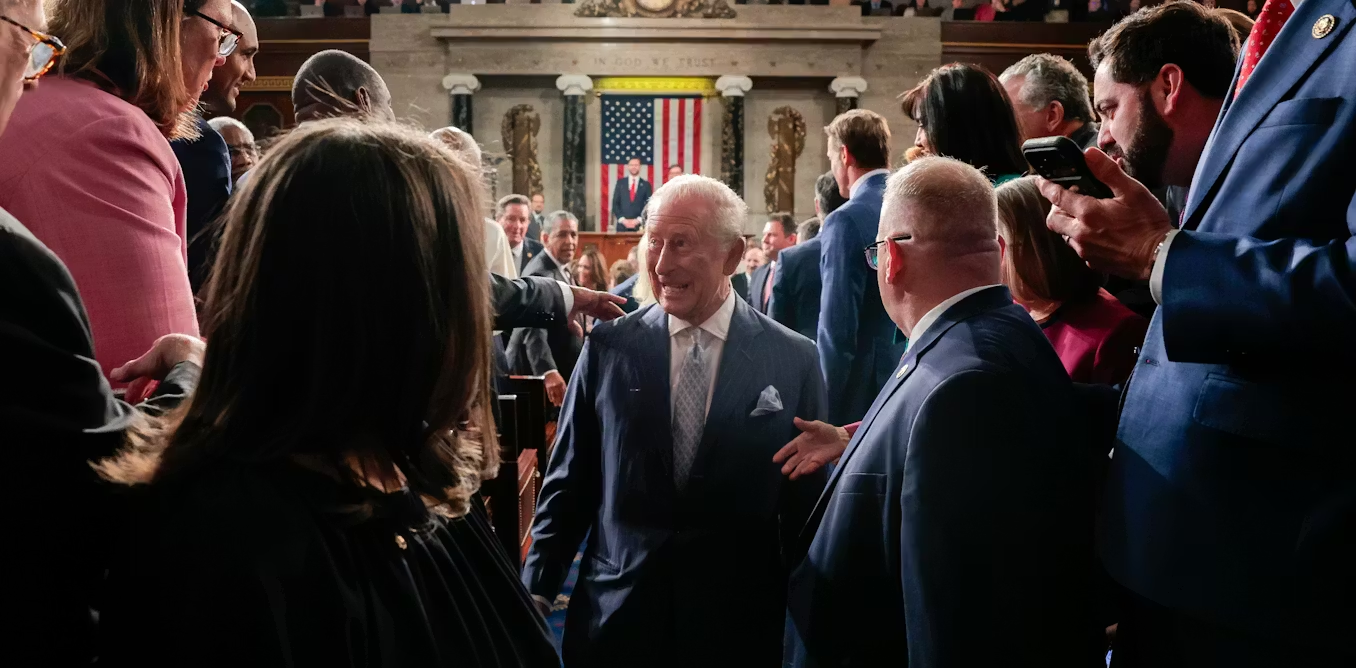
In his speech to Congress during a trip to the US to mark the country’s 250th anniversary, King Charles made repeated references to Magna Carta, the medieval English charter that laid the foundations for the modern rule of law. Dating back to 1215, Magna Carta also established for the first time that the monarch was not above the law. Charles used his speech to reference the common Anglo-American tradition of law, and of how the charter has been cited in more than 160 US judgments of the US Supreme Court.
It was notable that the king chose to cite this ancient charter, which stands as a symbol of protecting freedom and guarding against tyranny, at such a tricky moment for US-UK relations. Perhaps not surprisingly in the context of an erratic and controversial US president, the remarks from the king were well received by parts of the audience.
In fact, Charles enjoyed a standing ovation when he stated that Magna Carta was the very “foundation of the principal that executive power is subject to checks and balances”. In other words, it serves as the basis for the rule of law.
Advertisement
Checks, balances and applause for the king.
Charles is only the third ruling British monarch to visit the US. But during all three visits, Magna Carta has been trumpeted in support of a supposedly very special alliance. King George VI, Charles’ grandfather, began this in 1939. Back then, he visited the New York World Fair where Lincoln Cathedral’s original Magna Carta of 1215 was on display as the centrepiece of the British pavilion.
War broke out that same year, and so Lincoln’s Magna Carta became stranded in the US. It was guarded in the gold depository at Fort Knox, Kentucky, until it could be returned to England in 1946.
At a low point in British fortunes following both the fall of France and the Blitz, in the summer of 1941, prime minister Winston Churchill even considered gifting it to the American people. Had he done so, this would have served as a reminder of America’s responsibilities to war-torn Europe.
Advertisement
In 1976, when Charles’ mother, Queen Elizabeth II, visited Washington for the bicentenary of American independence, there was again talk – not least from the British prime minister Harold Wilson – of gifting a Magna Carta to the US.
In the end, this was resolved by the presentation of a replica crafted in gold and enamel (which is now somewhat sheepishly displayed in the crypt of the US Capitol).
Legacy in US statute
In all of this, Magna Carta for many Americans remains an icon of the rule of law, or what in the US is called “due process”. Where only four of the charter’s original 60 clauses are still operative under English law, the entire text was incorporated in the statute books of no less than 17 US states, beginning with South Carolina in 1836 and ending with North Dakota in 1943.
Images of England’s King John presenting Magna Carta to his barons are carved or painted in many state capitols or court houses, including on the vast bronze doors of the Supreme Court building in Washington.
Advertisement
The US National Archives (thanks to a long-term loan), and Harvard Law School both possess originals of the English charter. That of the National Archives is via a reissue of 1297, sold to the presidential candidate Ross Perot in 1984, while Harvard’s is from a 1300 reissue, purchased in 1946 as a mere “copy” for US$27.50 (around £7 at the time). This was reauthenticated in 2025 as a lost (and therefore extremely valuable) original.
The US issued a commemorative postage stamp in 1965 to mark the 750th anniversary of the sealing of Magna Carta. SUDARSHAN BHATLA/Shutterstock
And in the UK, an acre of Runnymede in England, where Magna Carta was sealed, was granted to the American people in perpetuity in 1965. This was done both in honour of a shared respect for the principle of liberty, and as a memorial to President John F. Kennedy, assassinated in 1963.
Of course, there are aspects of this story that belong more to the realm of myth than reality. For instance, of Magna Carta’s many appearances in US supreme court judgments, a surprising number cite it not as a touchstone of liberty or the rights of man, but in defence of commercial or corporate privilege.
Advertisement
Even so, the standing ovation for King Charles and his remarks about checks and balances suggest that Magna Carta remains a potent symbol. In what was widely received as a pitch-perfect speech, the king reminded the land of the free that the price of US (or indeed UK) freedom is not only eternal vigilance, but a healthy respect for the shared Anglo-American past.





















































You must be logged in to post a comment Login