Connect with us

NewsBeat

Scottish airport ‘supporting US bombing of Iran’, military expert claims

Published

on

Scottish airport 'supporting US bombing of Iran', military expert claims

Philip Ingram, a former Army Colonel and Intelligence Officer, says Scotland’s government-owned airport will be supporting American military operations in the Middle East

A Scottish airport is allegedly being utilised by the US military as a base for its bombing operations in Iran, claims a top military intelligence specialist.

Philip Ingram, an ex-Army Colonel and Intelligence Officer, has suggested that the Scottish Government-owned Prestwick Airport will “almost certainly” be aiding the war effort.

This follows comments from First Minister John Swinney indicating he would contemplate prohibiting US air force flights from landing at the airport.

Advertisement

Ensure our latest headlines always appear at the top of your Google Search by making us a Preferred Source. Click here to activate or add us as your Preferred Source in your Google search settings.

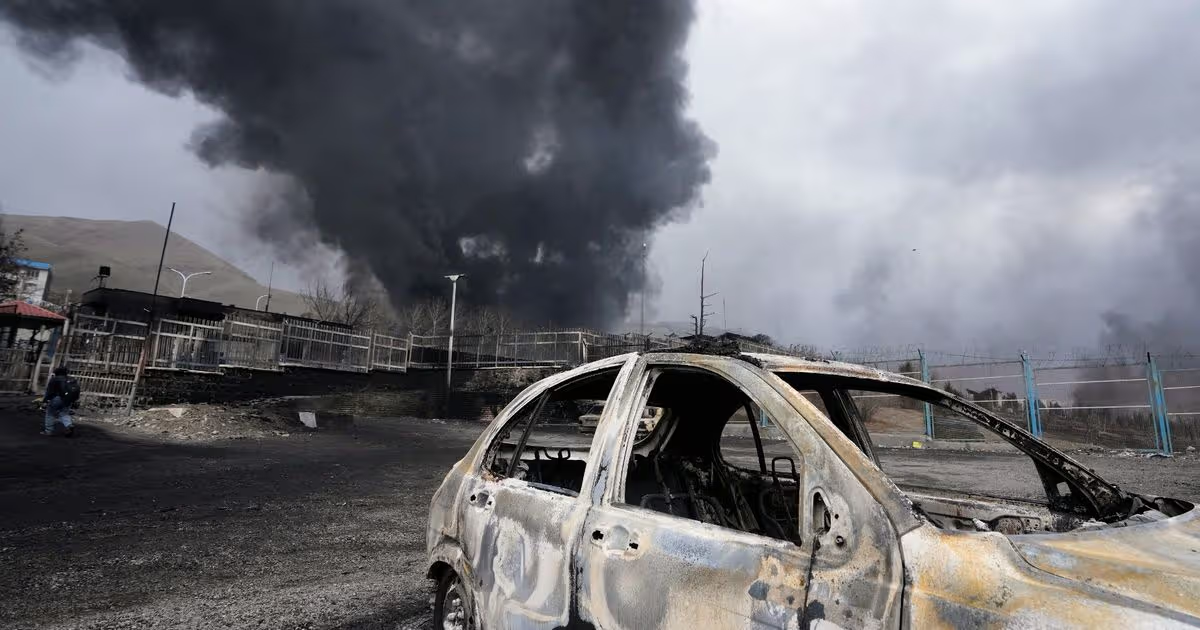
The US and Israel have issued threats to escalate their strikes in the Middle East, actions which are believed to have already resulted in over 1,500 fatalities and could potentially trigger a worldwide economic downturn.

In an exclusive interview with the Sunday Mail, First Minister John Swinney called for an immediate cessation of the conflict, cautioning that it could cause energy and food prices to skyrocket, reports the Daily Record.

He expressed his concerns: “These are deeply concerning times, and I know people in Scotland will be worried sick for friends and family in the Gulf, and worried sick about the threat of rising food and energy costs if this war continues.

Advertisement

“Whilst war is always a tragedy, sometimes it is a necessity. But that is not the case here. There is nothing I have seen over this past week that makes me think this action by the United States and Israel was in any way a response to an imminent threat.

“This war, including Iran’s indiscriminate attacks on its neighbours, must stop now if we are to protect people in the region from danger. And it must stop now if we are to protect families here in Scotland from unacceptable rises in their bills.

“UK government actions must be about de-escalating the situation, and I am also actively looking at what the Scottish Government can do to de-escalate the situation, including seeking urgent clarification from the UK government about the military use of Prestwick Airport.”

Advertisement

The Sunday Mail disclosed in February that US military flights have touched down at Prestwick Airport a staggering 550 times within a mere 10-month span.

Flight records indicate that 24 flights landed in the week preceding Trump’s bombing of Iran, with at least one originating from Israel.

Ingram, a former high-ranking security officer in the British Army, commented: “The Americans use Prestwick fairly often and it will almost certainly be supporting efforts in Iran.

“The airport will be getting used in line with American’s military priorities and the priority right now is what’s going on in the Middle East.

Advertisement

“I am surprised at the way America has gone in, even though it was clear for a whilst something was coming.

“I have never seen a country being forced into complete surrender through an air war alone and troops will not be going in on the ground.

“I think what we will see is the complete destruction of Iran’s military and security apparatus and political structures. We will see increasing numbers of civilian casualties because security infrastructure is so intermingled with civilian life.

“They will start going after every police station, they have spent years building up targets.”

Advertisement

Last week saw the US and Israel initiate extensive strikes, focusing on Iran’s missile facilities, military locations and leadership. The Supreme Leader of Iran, Ayatollah Ali Khamenei, was killed during the initial onslaught.

It is believed that around 150 children tragically lost their lives when a girls’ school in Minab, southern Iran, was hit. In retaliation, Iran has been launching attacks on Israel and US-allied states in the Gulf.

The conflict has rapidly intensified, extending to Cyprus and Lebanon in recent days, with the death toll rising. The Iranian ambassador to the UN has reported that at least 1,332 civilians have been killed, whilst the health ministry in Lebanon states that Israeli strikes have resulted in at least 217 fatalities.

Advertisement

Both Qatar and the UAE have been targeted by missiles and drones, and Saudi Arabia has reported a missile being launched towards one of its military bases. This followed an apology from Iran’s president to neighbouring countries, assuring them that Tehran would not instigate an attack “unless attacked first”.

Israel has issued a warning for residents in the southern suburbs of Beirut to evacuate their homes. The UK aircraft carrier HMS Prince of Wales has been put on advanced readiness.

Trump has claimed that his military forces have “knocked out 42 Iranian navy ships” within three days, adding that the US was performing “very well”. The UK government announced last night that it will arrange a flight from Dubai early next week for British nationals wishing to leave the region.

Meanwhile, a B-1 Lancer US bomber – capable of carrying 24 cruise missiles – touched down at RAF Fairford in Gloucestershire following Keir Starmer’s approval for “defensive” US operations from British bases. The Prime Minister had originally declined to authorise America’s use of UK facilities for its coordinated offensive with Israel against Iran, sparking friction with Donald Trump.

Advertisement

Ingram continued: “The UK has been involved since the outset of this conflict and Keir Starmer has not been honest with the country over this. The hanger that was hit with a drone strike in Cyprus contains America’s U-2 spy planes which gather the intelligence over Iran which is being used to build targeting packs – they are flying out of RAF Akrotiri which is a British base on British sovereign territory.

“Keir Starmer is bluffing because he doesn’t want a back bench rebellion on this issue after the recent by-election defeat, and because he is thinking about local elections coming in May.”

Scottish Greens external affairs spokesperson Patrick Harvie has welcomed Swinney’s remarks that he would contemplate prohibiting the US military from operating out of Prestwick.

Advertisement

He stated: “There is frankly no need to wait till he has details on the precise missions of specific flights – information he may never get. If he accepts that the war is illegal, which he seems to, then he should be doing the responsible thing and blocking US forces now.

“There is no excuse for letting Donald Trump’s military use Prestwick as a base for his aggression. When US forces are using government-owned airports at the rate they are, then it is clearly providing assistance to operations that the First Minister knows to be illegal and profoundly dangerous.

“The Spanish government has already blocked the US military, and we should be doing the same.”

Source link

Advertisement
Continue Reading
Click to comment

Leave a Reply

Your email address will not be published. Required fields are marked *

NewsBeat

The Middle East conflict has swiftly exposed economic vulnerability in the region

Published

on

The Middle East conflict has swiftly exposed economic vulnerability in the region

At the end of 2025, the Gulf states received high praise for their economic resilience. According to reports by the World Bank and the World Economic Forum, the region was stable, modern and reliable.

Now the six countries of the Gulf Cooperation Council (GCC) – Bahrain, Kuwait, Oman, Qatar, Saudi Arabia and the United Arab Emirates – are watching on nervously. The economic damage done by what has become a regional conflict, bringing an abrupt loss of stability, could be huge.

Aside from Saddam Hussein’s foray into Kuwait in 1991, these six countries have successfully steered clear of conflict on their home turf over a long period. They avoided the revolutionary upheavals which affected Egypt (1952), Iraq, Syria and Iran (1979). They steered clear of any spillover from the long-running Israel-Palestine conflict.

The group was mostly unaffected by the war between Iran and Iraq. And aside from a short-lived uprising in Bahrain in 2011, the GCC emerged largely unscathed from the regional turmoil of the Arab Spring in 2010 which spread from Tunisia and and Egypt and led to violent instability which continues to this day in Libya, Yemen and Syria.

Advertisement

The GCC’s comparative stability underpins its attractiveness as a global hub for money and modernity. Success in luxury tourism has filled places such as Dubai and Abu Dhabi with five (and even a seven) star hotels. Only France has more Michelin-starred restaurants than the United Arab Emirates (UAE). There is cutting-edge technology in Qatar’s energy sector, and a vast AI campus in the UAE.

It is these kinds of projects which led the World Bank and the World Economic Forum to publish glowing reports on the region recently. Both organisations agreed in late 2025 that oil wealth was being wisely invested for the future.

The general view was that the GCC was a place of economic stability and diversity. A director of the World Bank, Safaa El Kogali, said that the region’s embrace of a digital future had been nothing short of “remarkable”.

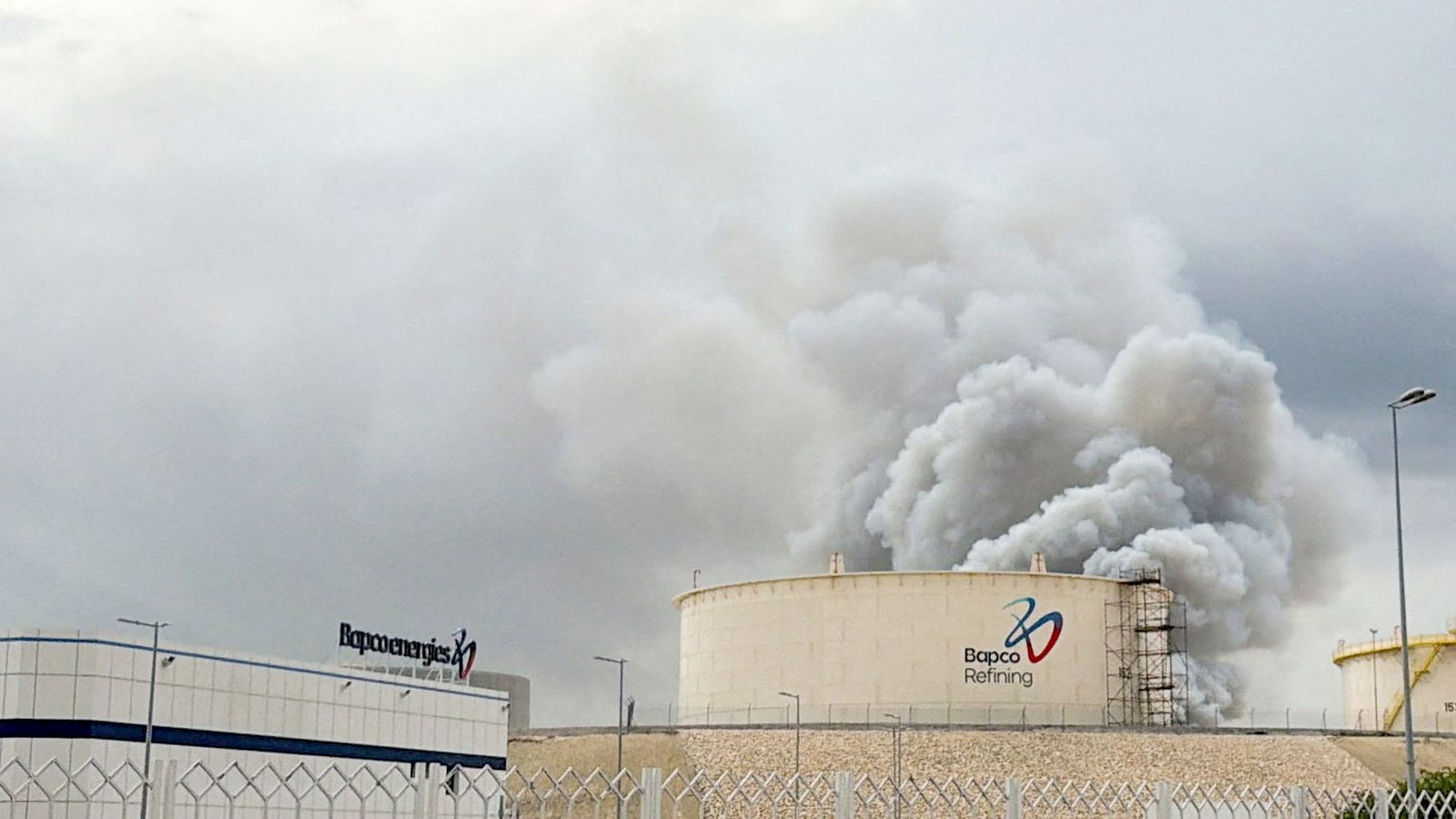
But US military bases in all GCC countries have come under attack. Drones have hit oil tankers. The Strait of Hormuz, vital for the transit of much of the world’s energy is effectively closed.

Advertisement

Missiles from Iran directly hit three Amazon web service facilities, one in Bahrain and two in the UAE, leading the company to recommend that GCC businesses back up their data and migrate it to data centres in the US.

Stock markets across the world have fallen sharply. Energy bills and petrol prices have soared as oil and gas refineries have been shut in Kuwait, Saudi Arabia, Qatar and the UAE.

Under fire

Despite efforts to diversify economies away from oil, for now the region is still clearly dependent on oil exports and food imports, hence the worries over Hormuz. There are fears for its numerous desalination plants, which provide drinking water (as well as filling infinity pools and keeping golf courses green).

And its status as a safe and sunny sanctuary for conference conveners, influencers, holiday makers and owners of second homes is now being questioned.

Advertisement
Dubai marina.
frank_peters/Shutterstock

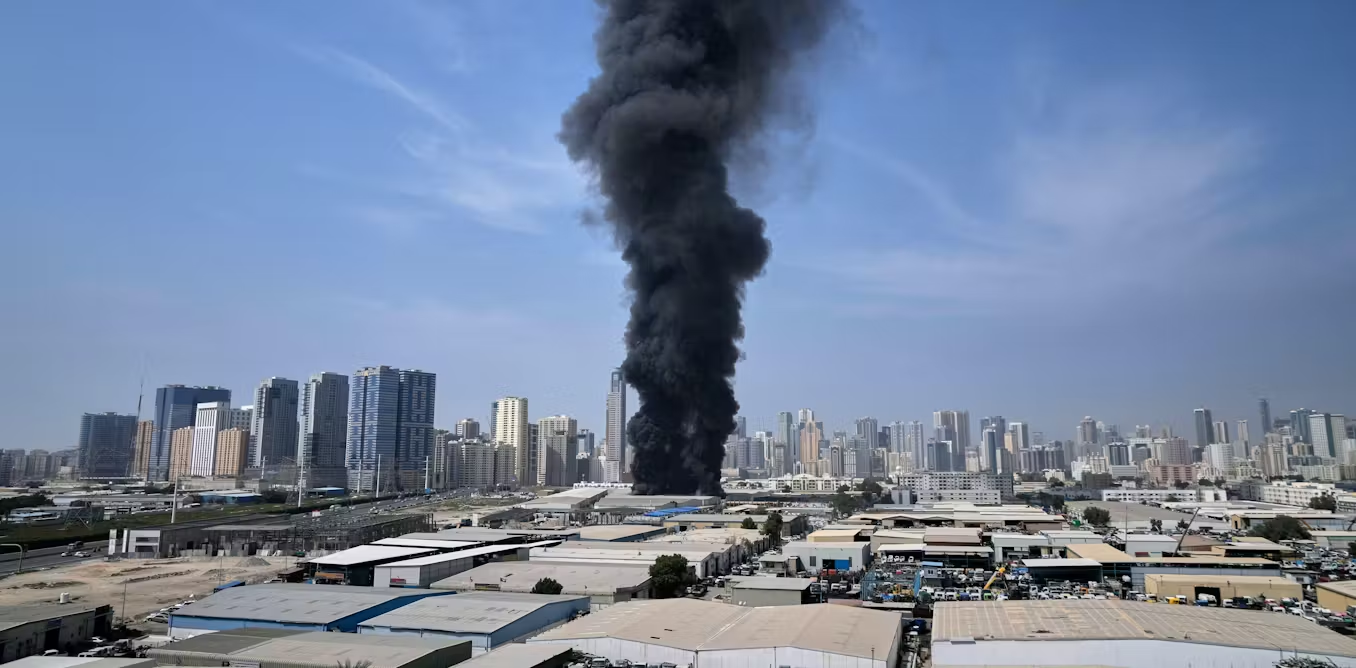
Even if the conflict were to end soon, reputational damage has been done. People are fleeing the area, as images of smoke filled skies fill screens.

This will inevitably dampen foreign direct investment in the immediate future. The course and duration of the conflict will determine the degree to which the region can bounce back and continue to attract holidaymakers and young professionals and those seeking a life with more sun and less tax.

From a geopolitical perspective, the region’s recent success – aside from its vast and easily extracted natural resources – has rested largely on the assumed political stability that was underwritten by hosting US military bases and buying US military hardware. Both of these could now prove to be an economic liability.

Advertisement

Source link

Continue Reading

NewsBeat

Oil prices latest: Warning UK uniquely vulnerable as Iran war ‘risks permanent damage to energy markets’

Published

on

Oil prices latest: Warning UK uniquely vulnerable as Iran war ‘risks permanent damage to energy markets’

Watchdog urged to clamp down on heating oil costs after 1.7m UK homes hit by soaring bills

The government has been urged to take quick action to help the 1.7 million homes that still use heating oil and have seen prices double due to the US attacks on Iran.

These are often people in rural areas, who have seen prices for their fuel jump in some cases from 62p a litre before the war to perhaps £1.73 now.

Tara Cobham10 March 2026 10:15

Advertisement

Economist warns Trump may have done permanent damage to oil market with UK in especially weak position

An economist has warned that Donald Trump may have done permanent damage to the global oil market, with the UK especially vulnerable to any consequent inflation.

Mohamed El-Erian, ex-chief economist of the International Monetary Fund, told The Guardian the risk the war causes permanent harm to oil markets is being underestimated.

He said he forecast a 50 per cent chance the conflict could trigger higher inflation and interest rates this year and next.

Advertisement

And he warned that Britain, having failed to tackle low productivity, a heavily constrained budget and entrenched inequality over the past 10 years, is in a particularly weak position to deal with an economic shock.

He compared the UK’s situation to the US, which has high productivity, and the EU, which has less inequality, suggesting Britain could fare especially badly.

Tara Cobham10 March 2026 09:57

Advertisement

Pictured: Ministers arrive for cabinet meeting

Deputy leader of the Labour Party Lucy Powell (Reuters)
Health secretary Wes Streeting
Health secretary Wes Streeting (Reuters)
Education secretary Bridget Phillipson
Education secretary Bridget Phillipson (Reuters)
Home secretary Shabana Mahmood
Home secretary Shabana Mahmood (Reuters)

Tara Cobham10 March 2026 09:45

Analysis: As oil prices come up, stock markets head the other way

Business and money editor Karl Matchett reports:

As oil prices come up, stock markets are heading the other way.

The FTSE 100 fell more than 5 per cent last week and started this week in similar fashion, but this morning it’s a sea of green with London’s main index up 1.6 per cent and smaller companies in the FTSE 250 up almost 2 per cent.

Advertisement

Europe is following suit with France, Spain, Germany and Netherlands all up and that follows Asian markets surging overnight.

The super-volatile Korean Kospi soared 5.35 per cent but has had drops of nearly double that in a day recently; Hong Kong’s Hang Seng, India’s Nifty 50 and Japan’s Nikkei 225 all enjoyed strong sessions too, the latter rising up to 3 per cent.

Later on, US markets are projected to open slightly higher too.

Back in London, the biggest early riser in the FTSE 100 is housebuilder Persimmon, up 10 per cent – but that is not much to do with oil and Iran, more a strong set of results this morning placing it well for a recovery with the property market. Elsewhere, miners and finance firms such as Fresnillo, Antofagasta and Barclays are all up 5 per cent and more.

Advertisement

Tara Cobham10 March 2026 09:30

Gas prices also plunge this morning

Gas prices have also plunged this morning.

UK wholesale gas prices dropped over 10 per cent to around 123p a therm as soon as trading began, the BBC reports.

Advertisement

This is far below the high of 171p that was hit on Monday.

Tara Cobham10 March 2026 09:10

EU buying Russian oil would be ‘utterly despicable’ – Ireland’s deputy premier

It would be “utterly despicable” to allow Russia to gain financially by selling oil and gas to Europe, Ireland’s deputy premier has said.

Advertisement

The European Union has been phasing out its use of Russian gas and oil following the country’s 2022 invasion of Ukraine.

However, Russian President Vladimir Putin has reportedly said his country is willing to work with European customers amid an energy crisis caused by the conflict in the Middle East.

Speaking at a meeting of EU finance ministers in Brussels on Tuesday, Tanaiste Simon Harris said it was important the bloc “remains steadfast” in its view that economic sanctions on Russia are an important tool in trying to end the war on the continent of Europe.

He said: “The idea that Putin and Putin’s Russia would in any way benefit financially from a moment of conflict and pain and trauma in the Gulf region would be utterly despicable.

Advertisement

“It shows the importance of de-escalating the conflict in the Gulf region, and it also shows the importance of not losing focus on Ukraine and showing solidarity to our friends, to our European friends in Ukraine.”

Mr Harris said a fall in oil prices showed the “volatility” of the situation while the Irish Government keeps its response “under review”

Asked what action he wants the EU to take on energy costs, he said Europe’s energy market has become more diversified than it was in 2022 but added: “I think we still find ourselves far too reliant on other parts of the world when it comes to our energy and certainly this needs to be a sharp reminder and wake-up call about the urgency of moving towards energy independence at a European level.”

It would be ‘utterly despicable’ to allow Russia to gain financially by selling oil and gas to Europe, Ireland’s deputy premier has said
It would be ‘utterly despicable’ to allow Russia to gain financially by selling oil and gas to Europe, Ireland’s deputy premier has said (PA Wire)

Tara Cobham10 March 2026 08:50

Advertisement

Watch: Rachel Reeves warns US-Iran war likely to cause rise in inflation

Rachel Reeves warns US-Iran war likely to cause rise in inflation

Bryony Gooch10 March 2026 08:30

Analysis: Brent crude oil price drop a moment of relief for the market

Money and Business Editor, Karl Matchett, reports:

The price of Brent crude oil has dropped back close to 9 per cent today – a breath of relief at this stage, more than a full-scale avoiding of a worst-case scenario when it comes to energy bills, inflation and beyond. Most economists and experts have been clear: the peak is less important than prolonged periods of high prices.

Advertisement

Staying over $100 for weeks on end would be far more damaging to the economy long term than a quick one-day spike above that point and then back down again – if indeed it is now coming back down for the longer haul.

On that note, we’ll wait and see. The drop today back to $90.50 seems to be largely down to Trump saying the conflict could soon be brought to an end but it won’t take too much to the contrary of that message to send prices back up again.

Right now, we’re still $20/barrel above where we were pre-US strikes on Iran, not far off a third higher (29 per cent) in price.

Bryony Gooch10 March 2026 08:16

Advertisement

Iran’s Revolutionary Guards won’t allow ‘one litre of oil’ shipped from Middle East

Iran’s Revolutionary Guards have said they will not allow “one litre of oil” to be shipped from the Middle East if US and Israeli attacks continue, prompting a warning from president Donald Trump that the US would hit Iran much harder if it blocked exports from the vital energy-producing region.

His comments come after Aramco reported a 12 per cent drop in annual profit mainly due to lower crude prices. It also announced it would repurchase up to $3 billion (£2.22 billion ) worth of shares in its first-ever buyback.

Bryony Gooch10 March 2026 08:12

Advertisement

Potential energy shocks are ‘vindication’ of government’s economic choices, minister says

Political reporter Athena Stavrou reports:

A government minister has said the government’s choices on the economy “look even more correct” amid concerns the conflict in the Middle East could impact the UK’s economy.

Courts minister Sarah Sackman said the government wants a de-escalation of the conflict in an effort to reduced the “shocks” to the British economy.

Advertisement

“What we are seeing is a vindication of the choices that we have made as a government to build our resilience and insulate the British economy against these shocks,” she said.

“The choices the chancellor made around protecting the public finances, lowering borrowing costs, all of that puts us in a better position to withstand this.”

Bryony Gooch10 March 2026 08:05

Source link

Advertisement
Continue Reading

NewsBeat

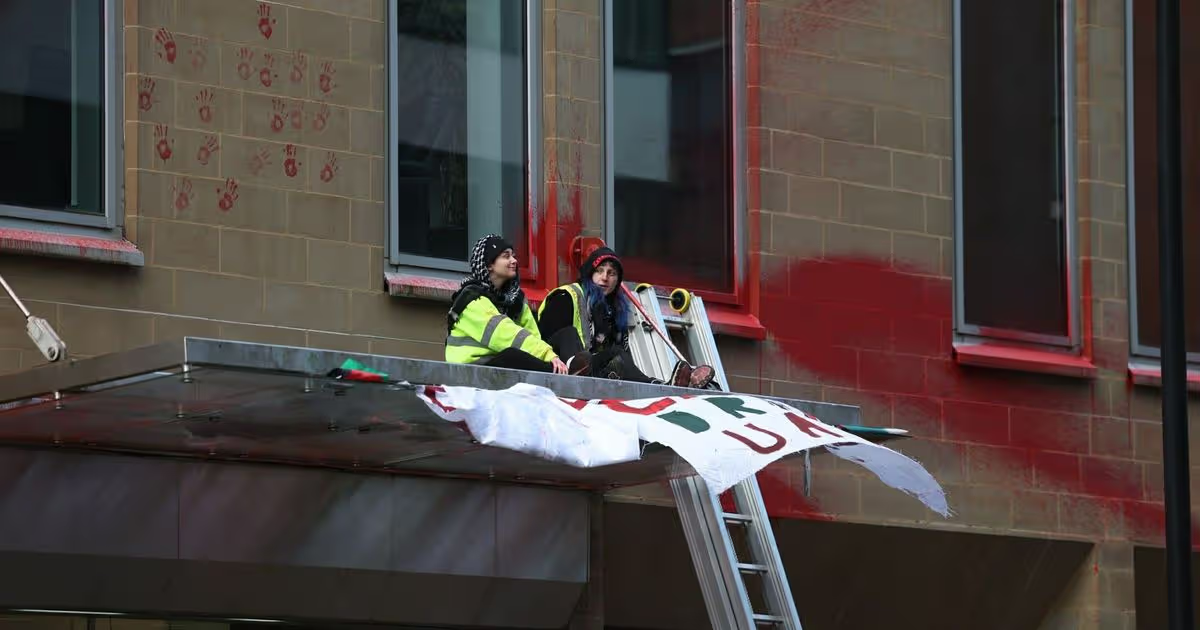
Everything you need to know as protesters cover building with red paint in Manchester city centre

Published

on

Everything you need to know as protesters cover building with red paint in Manchester city centre
Everything you need to know as protesters cover building with red paint in Manchester city centre – Manchester Evening News