COMMANDING proud over Peasholme Green in York is the The Black Swan, a popular meeting place and hostelry; which has a lot to be proud about.
The Civic Trust plaque at the entrance to this grade two (star) listed building gives a brief account of the main characters associated with the building, one of which has a most interesting story to tell.
The Black Swan was originally built in 1417 as a family home for the Bowes family.
![]() Black Swan and Peasholme Green in 1950s. Photo from City of York Council Explore Libraries archive
Black Swan and Peasholme Green in 1950s. Photo from City of York Council Explore Libraries archive
This merchant family would provide two Lord Mayors for the City, William Bowes in 1417 and his son, also William in 1443 both also representing York as Members of Parliament.
In those times, prior to the building of the Mansion House (built from 1725-32), Lord Mayors were expected to conduct civic duties and entertain distinguished visitors at their residential homes.
But it is another member of the Bowes family that has a greater claim to fame. Martin Bowes was born in the family home around 1497 and while a young teenager he ventured down to London to seek fame and fortune.
![]() Sir Martin Bowes – York’s Dick Whittington. Photo supplied
Sir Martin Bowes – York’s Dick Whittington. Photo supplied
He secured a position in the Royal Mint and eventually attained the premier position of Treasurer of the Royal Mint during the reign of Elizabeth I.
He became a prominent member of the Worshipful Company of Goldsmiths, made Lord Mayor of London in 1545/46 and was later was knighted to become Sir Martin Bowes; but he never forgot the city of his birth.
He learnt that the church on Peasholme Green, St Cuthbert’s, was due to be demolished in 1547. The church had been the place of the Bowes family worship for many years so he pleaded to the city that the church be saved; and was successful.
In gratitude of the reprieve, he presented the city with a fine ceremonial ‘Sword of State’, the Bowes Sword (initially encrusted with precious jewels which ‘disappeared’ when the sword was loaned to London in 1603), which has been used on civic occasions ever since.
![]() Peasholme Green in the late 1930s, with a police box in front of the Black Swan. Picture: Explore York Libraries and Archives
Peasholme Green in the late 1930s, with a police box in front of the Black Swan. Picture: Explore York Libraries and Archives
It is always carried in a civic procession by an officer wearing the Cap of Maintenance and if a monarch is present it is carried with the handle upper-most.
It is also this sword, crossed with the city’s 17th century mace, that is displayed at the rear of the York Coat of Arms, a constant reminder of a brave son of York who sought and achieved fame and fortune in our capital city.
Later, in the 17th century, another resident, Edward Thompson, would represent York as an MP and Lord Mayor in 1683.
The building would once again take on a civic role. The Thomson family had a daughter, Henrietta, who married Colonel Edward Wolfe, their son James would become the distinguished military man, General James Wolfe of Quebec.
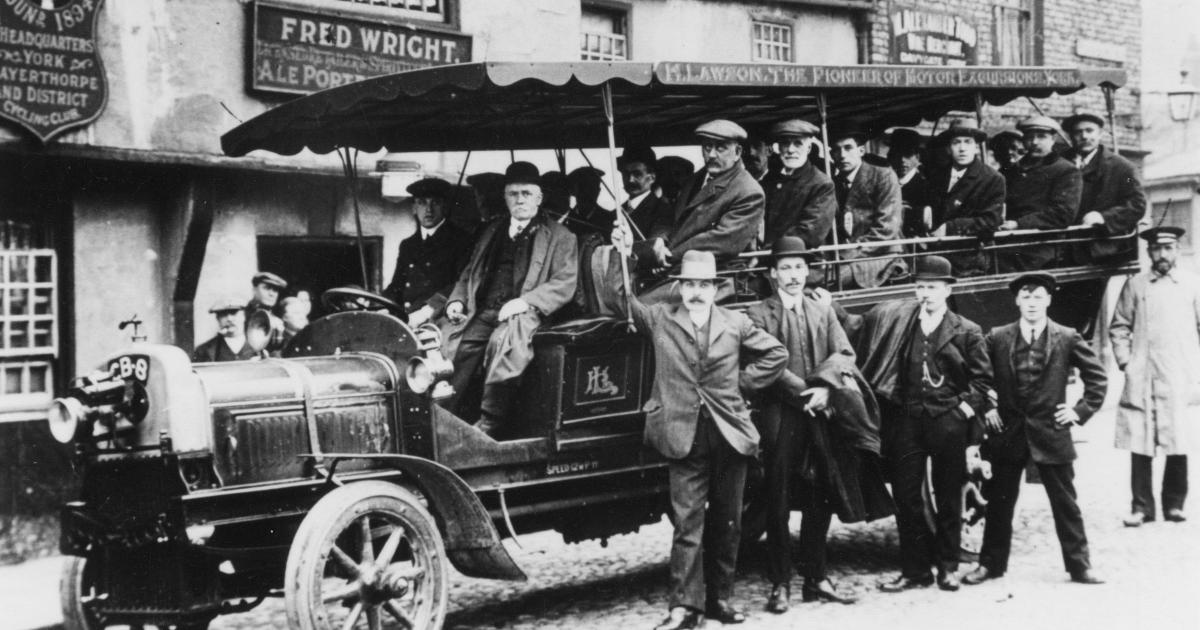
![]() Archive picture from York Library of a charabanc trip leaving from the Black Swan Inn, Peasholme Green in 1910. Landlord Fred Wright in foreground with trilby hat and hand on hip.
Archive picture from York Library of a charabanc trip leaving from the Black Swan Inn, Peasholme Green in 1910. Landlord Fred Wright in foreground with trilby hat and hand on hip.
In the late 18th century the role of the building changed to be a local hostelry, offering the use of a first floor meeting room and dispensing hospitality to the public, a role it still enjoys today.
Its listed status means that the building’s 18th character has escaped modernisation, the retained oak panelling on the walls, grand staircase and uneven floors ensuring its ‘olde worlde’ charm.
Inevitably, the pub has attracted many fanciful stories of ghosts and even a secret underground passage to St Cuthbert’s church, but the main story of the Black Swan is a true one, that of Sir Martin Bowes – York’s own ‘Dick Whittington’.
Ivan Martin is the vice-president of the Yorkshire Architectural and York Archaeological Society (YAYAS) and former city, Minster and Mansion House guide