


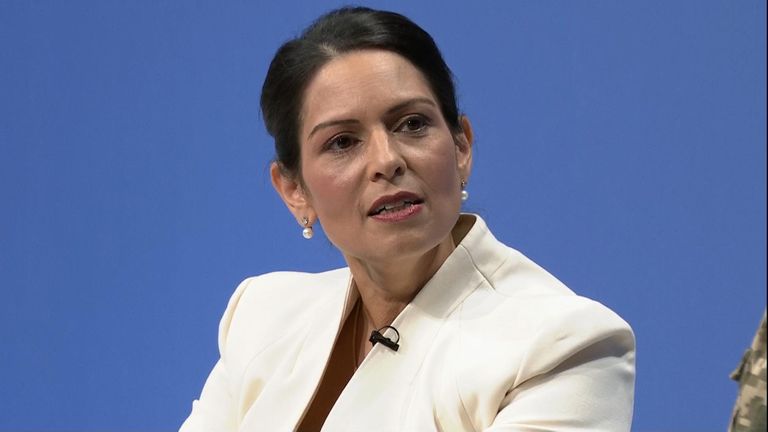

Welsh Rugby Union CEO Abi Tierney says she is determined to see through the radical restructuring of the professional game as she warned legal actions against the union risk “destroying” the game.
The WRU is under fire from all angles due to its plans to cut the number of professional men’s clubs from four to three. As part of their plans the WRU is also in the process of selling Cardiff Rugby to Ospreys owners Y11 Sports & Media.
According to Swansea Council, which has launched legal action against the WRU, such a scenario would see the Ospreys becoming a semi-professional Super Rygbi Cymru outfit.
Despite the vociferous criticism and an upcoming extraordinary general meeting of the WRU, Tierney is adamant the plans are the right ones.
“Yes, I am absolutely committed to that being the right thing to do,” said Tierney.
“I think the consultation, the level of engagement and the depth in which we went through that process.
“The other bit for me is none of the vocal minority have come up with an alternative either.
“Four clubs not funded to the level to be competitive and not being able to do the investment into the pathway.
“So, basically the alternative feels like it is continuing as we are which I didn’t think was the right answer.
“If people agree that we need to do something different then let’s go through this.
“It is going to be really painful going through it but we will come through the other side in a much stronger place as a result and let’s get some stability because that’s the other thing we need in Welsh rugby.”
Tierney revealed the current legal actions the governing body is facing, from Swansea Council and the Scarlets, are draining money, time and energy out of the game.
“I just think we risk destroying ourselves,” she said. “And actually, if we could put all of that energy and all of that money into pulling together and being a stronger union, because we are union, we’re a union of clubs, then to me, all that passion and all of that kind of hurt and anger could go into making rugby better.”
Here is every word from WalesOnline’s wide-ranging interview with Tierney.
What is the latest on Y11 buying Cardiff?
“So we’re still in a period of exclusivity with Y11 and in the process of assessing that. No decisions have been made yet.”
If Y11 do succeed in buying Cardiff would that mean an end to the Ospreys?
“We have made it clear they are two separate processes and we have to make a decision on Cardiff from a Cardiff perspective.
“We will do that. We are dealing with the Cardiff deal separately.
“We did an open, transparent bid process for Cardiff. Y11 was the best bid based on what we received when going through the process of looking at that. Once we know that outcome, there’ll be two outcomes.
“One is either we recommend to the board that we proceed with Y11 buying in Cardiff, or we say we don’t. And then at that point, we’ll make a decision on what happens next, but there’ll be a separate process.
“So just by Y11 buying Cardiff, doesn’t mean that off Ospreys go.”
JOIN OUR WALES RUGBY FACEBOOK PAGE! Latest news, analysis and much more
You are facing an EGM in the near future with your chair Richard Collier-Keywood facing a vote of no confidence. What are your thoughts on that?
“Firstly, the EGM is a process that as a national governing body we respect. We’re currently putting in place the process to allow the EGM to happen, so it will happen.
“We consulted on this plan for Welsh rugby. The current way of doing what we’re doing isn’t sustainable.
“We can see that in terms of performance on the pitch nationally and the performance of our regional teams. And so therefore, if the EGM motion was to be carried, and you get a new chair as a result of that, and that chair doesn’t support this plan, then you know you’d have to come up with an alternative plan.
“Is that keeping four teams where you don’t have the funding to fund them at the level that enables them to be competitive and produce the players we need for a strong national team? That’s the alternative.
“Having been here for two years now, having developed the plan that we developed, and did that through one of the biggest consultations in Wales, I believe it is the best plan.
“It’s hard. It’s really difficult.
“And I know it’s difficult and it has impacts that people are upset about, but it is the best plan for Welsh rugby.
“I think we’d be back doing it in two or three years’ time, if it was delayed now. We’d continue to see a deterioration in performance over that time.”
Get the latest Wales Rugby merch at Kitbag
The Six Nations is running from February 5 to March 14 and Wales Rugby fans can get the latest jerseys, hoodies and more at Kitbag.

Is there a way of keeping four teams and putting the necessary investment (28m over five years) into the pathway?
“You wouldn’t be able to do that, and you wouldn’t be able to put the investment into the teams either.
“The £28million of investment that we’ve talked about in the pathways and in the national academy, we wouldn’t be able to afford to do that.”
The WRU have come under intense scrutiny from politicians over your plans. Has that put any doubts in your mind?
“It’s difficult. This was always going to be difficult.
“So, you can have support, a general support that we need to change. Everybody said that as part of the consultation that we couldn’t keep doing what we were doing.
“There was a view that going to three teams was the best answer as part of that.
“At the point, when actually then people start to realise what that might mean for their team or their location, that’s when it gets really difficult.
“It doesn’t mean it’s not the right answer. But to reiterate, we haven’t made a decision on what the three teams are going to be.
“We just need to take each step at a time to work out. There’ll be an east, a west and a central licence.”
Richard Collier-Keywood recently said there is no plan B. Is that true?
“It’s got headlines. It was over an hour-and-a-half’s discussion.
“We’ve got a plan A which is four to three teams. Do we constantly look at the risks involved in that and think about what contingency plans are? We absolutely do.
“I think what we’re saying is we’re not running parallel plans here. We’re absolutely focused and determined on Plan A. Yeah.
“We’ve got a risk register. We look at all the different things.
“If we end up with four teams, you know what that means in terms of finance and performance etc. There’s 20 or 30 different scenarios you constantly work through.”
Were you expecting an injunction and legal action from Swansea Council?
“I think the hard bit of it is that we haven’t made a decision yet. Therefore, a lot of it has pre-empted a decision.”
Are the politicians just electioneering ahead of the Senedd elections in May?
“I couldn’t possibly comment. I don’t know.
“I haven’t asked them that question, so you’d have to ask them that question.”
How damaging is all of this legal action to Welsh rugby?
“I’m a historian by training. I look at the last 20 years in Welsh rugby and the fighting that’s gone on.
“I just think we risk destroying ourselves. And actually, if we could put all of that energy and all of that money into pulling together and being a stronger union, because we are union, we’re a union of clubs, then to me, all that passion and all of that kind of hurt and anger could go into making rugby better.
“Then, of course, you’re absolutely right. So yes, it is damaging, and it’s money, but it’s also time.
“It’s the energy it takes of teams to do it, when, while we’re doing that, we’re not focusing on rugby. I won’t comment on the costs.
“You’ll see them in the annual report. But they’re very significant. That isn’t going into rugby.”
Yourself, Richard Collier-Keywood and Dave Reddin have been criticised for not understanding Welsh rugby because you were born and reside England. How do you respond to that?
“I’ve been really clear I’ve considered myself Welsh. I’ve always considered myself Welsh.
“So I don’t think it’s actually from my perspective, not necessarily factually correct. But also, I just think actually, you should recruit people based on their ability to do a job.
“But I think what’s really important is, as part of that, that you understand, value and live and breathe the culture that you work within.
“And that is important, and that can be done whether you’re whatever nationality you are.
“So, it’s about appreciating, valuing and being passionate about culture. And I think that’s what’s important, not about personality or about where you were born.”
Did you expect the job to be as hard as this?
“You do this job, and you know that people care passionately about rugby in Wales. You know that if you take on the job at a time when things are difficult, then you’re going to have to make difficult decisions.
“I know that’s part of my job. I accept challenge, but I think when it goes as far as it has with some of the players at the moment in terms of the level of abuse they get, then it’s not acceptable.”
What has stopped you from just walking away from Welsh rugby?
“I ask myself every day am I doing the right thing?
“I have Welsh rugby in my blood and I loved it. The privilege of this job still outweighs all of that.
“Do I believe we are doing the right thing for Welsh rugby now to put it on a sustainable footing? Yes.
“If I was to go and they brought somebody else in, you end up with that delay.
“I look at myself and ask are we doing the right thing for the right reasons even though it’s really difficult and do I have the courage to keep doing it? I do.”
How do you go about rebuilding trust and getting people on board with your plan?
“I agree with what you’ve just said and it is something I think a lot about.
“As a governing body if you don’t have the trust to deliver that’s really really difficult.
“So how do you go about rebuilding it? All you can do is just keep being honest, talking to people, answering the challenges, front up and have those difficult conversations.
“You just have to keep focused on building it.
“We need to remind people why we are doing this.
“I think it is by having the difficult conversations not just with the people who agree with what you are doing but the people who don’t agree.
“We need to do that every day but it takes time to do that.
“There will absolutely be an opportunity at some point where we can win some hearts and minds to try to win back some of that trust.”
How would you sum up how tough the last year has been for you?
“Simon (press officer) asked me a question earlier where he said: if you were going to sell this job to someone else what kind of person would do this job?
“I said ‘well, actually one of the hardest bits is you actually have to be thick skinned and you have to be…
“I’m somebody who is really open and I lead from my heart as well as my head. It has been the hardest part because I care so much about it and that’s actually why I do the job.
“That’s what gets me up in the morning because actually I do care passionately about it. It then makes it so much harder when it is as hard as it is.
“To sum it up I’m going to use an analogy and I’m not trying to be flippant here.
“Have you ever watched that programme on an assault course over water.
“They are climbing up some inflatables but when they get to the top a lot of oil gets poured on and you fall off it.
“You walk across planks and somebody comes and pours oil over you. Every day feels like I am on that gameshow
“They are fighting on quite a lot of different fronts which is quite tiring.
“You need to be incredibly resilient to then want to get up in the morning after a day where you’ve been whacked, metaphorically, and then you get up the next morning and go at it again.”
Did you know how bad this job could get before taking it on?
“This is a conversation I was having last night with the chair of the IRFU. He’s worked in really difficult circumstances.
“He took on Bank of Ireland as chair post the financial crash and he said the stakeholder management in rugby is the hardest he’s ever had to deal with.
“I think it is harder in Wales because there is even more passion around it.
“There are so many complex stakeholders. You’ve got your politicians, you’ve got your players, your participants, your sponsors and your fans.
“It’s a really complex set of stakeholders so trying to move all of them, manage them and engage with them is hard because they’ve all got different agendas.
“I mean agendas in a positive way. They all care about different things and want different things so it is a very complex stakeholder.
“I think I underestimated just how complex the stakeholders are when I took on the job.”
Do you ever wake up and wish you’d never taken this job?
“Yes, there are times.
“I’m going to be really honest there are times when I think that but it doesn’t last very long because something will happen that is so inspiring that has happened in the community game.
“One of the clubs will win and you remember why you do it.
“I’d be a really hard nosed person if I said there hasn’t been times where I ask myself whether it was the right decision.”
If Richard Collier-Keywood loses his vote of no confidence does that automatically mean your restructuring plans stop?
“Well because one of the recommendations is to pause the restructure of the professional game.”
But it isn’t one of the motions put forward?
“No, it isn’t. We are talking about going to four to three over a period of time.
“We are not doing it overnight so if you think that a new chair comes in we still wouldn’t be at a point where we’ve completed the restructuring.
“So, they still would have the ability to stop it at that stage.
“Also, because the board all voted unanimously for it I would imagine some of them would consider their positions as well.”
Where are you with the licences and the control debate?
“We are still talking to the clubs about that at the moment.
“We’ve got meetings in a week or two’s time to keep going on that. There’s no definitive answer yet but we are aiming to get that agreed for the next season.”
Where are you with the URC?
“We’ve got to go through the process but they are being supportive and constructive.
“They are looking at different ways they would support us to put in an alternative team.”
But you are sticking with 4 teams for the 2026/27 season?
“Yeah, we’ve always said that. We are committed to having four sides for next season and it may even be until 2028 because it may take that long.”
You are 100% committed to the plan to go to three sides in the long-run and won’t change your minds?
“Yes, I am absolutely committed to that being the right thing to do.
“I think the consultation, the level of engagement and the depth in which we went through that process.
“The other bit for me is none of the vocal minority have come up with an alternative either.
“Four clubs not funded to the level to be competitive and not being able to do the investment into the pathway.
“So, basically the alternative feels like it is continuing as we are which I didn’t think was the right answer.
“If people agree that we need to do something different then let’s go through this.
“It is going to be really painful going through it but we will come through the other side in a much stronger place as a result and let’s get some stability because that’s the other thing we need in Welsh rugby.”
What is your view on amateur clubs having such a big say over the professional game? Would that happen anywhere else?
“Firstly, I wouldn’t call them amateurs. If you look at the volunteers at the clubs most of them are professionals.
“When I meet them and talk to them they are hugely passionate about Welsh rugby and care about Welsh rugby.
“I respect this process. I think it is really important that our shareholders, our clubs, have the ability to… it includes the regional clubs.
“We’ve got to listen but I’m confident we go through the EGM process, we use it as a chance to reiterate why this plan works and that we get a vote of confidence out of that and we keep going.”