The city has topped a new ranking by Icelandair, with its historic charm, sunset spots, and intimate settings proving more romantic than traditional favourites such as Paris
Amy Jones Senior Travel Journalist and Chloe Dobinson Digital Production Editor
03:00, 18 Mar 2026
Europe’s most romantic city has been revealed, and it might come as a surprise.
Paris has long been celebrated as the ‘city of love’ with countless proposals taking place there, whilst Venice provides sunset gondola rides through its canals. However, according to one recent ranking, they’ve both been eclipsed as the most romantic destinations in Europe.
Advertisement
The sun-drenched Spanish capital, Madrid, has claimed the top spot with its historic appeal and intimate atmosphere. There are intimate eateries, rooftop bars, upmarket hotels, alongside magnificent landmarks, colourful street art, and passionate flamenco performances, all contributing to a truly remarkable break.
Some of the most noteworthy attractions include hiring a rowing boat on the tranquil, scenic lake at El Retiro Park, or enjoying a relaxed walk around the charming El Capricho Park or the stunning Sabatini Gardens at the Royal Palace.
The Spanish city boasts some of the finest locations to watch the sunset, including the restaurant Azotea del Círculo, which provides sweeping views from its rooftop terrace, and the gardens in Cerro del Tío Pío, ideal for an evening wander,” reports the Mirror.
However, one beloved area praised as the ‘best sunset spot in Madrid’ is the ancient Egyptian temple, Templo de Debod.
Witnessing the sunset last year, one traveller posted on TripAdvisor: “The magic hour to visit is sunset! .. The temple’s ancient stones turn a rich orange, and the reflective pools surrounding it create a mirror effect that is a photographer’s dream.”
For a respite from discovering the city, there’s the Arab baths at Hammam Al Ándalus for a soothing soak and a journey back in time amongst its historic buildings, or energetic flamenco shows at Corral de la Morería. Couples can savour a glass of wine and tapas at the Mercado de San Miguel, a fresh food market, or take the cable car, the Teleférico de Madrid, which spans the river.
A wander around the city is sufficient to leave you spellbound, with colourful graffiti adorning its charming streets lined with tapas bars and coffee shops, and stunning architecture. From the iconic Plaza Mayor, Plaza de la Villa, and Puerta del Sol square, to the Royal Palace and the Prado Museum, it’s simple to spend hours discovering this bustling yet delightful city.
Advertisement
Madrid was crowned the most romantic European city following research by Icelandair. The airline examined data from various European cities, comparing their location, nightlife, single population, inclusivity and happiness, along with Tripadvisor romance ratings and sunset visibility, with Madrid leading the list.
The list becomes even more significant, as a study by Icelandair of 3,000 individuals found that 1 in 10 Brits believe travel is the optimal way to meet a partner. Meanwhile, 1 in 5 Brits confessed to falling in love whilst on a flight, and additional research discovered that most holiday romances occur during volunteer work abroad, on business trips, or whilst travelling alone.
The initiative is part of the Future Citizen 2026 programme, running from March 16 to 22, and aims to raise awareness of fast fashion and promote environmentally-friendly alternatives.
More than 25 schools and colleges in England, Wales, Scotland, and Northern Ireland are taking part in the campaign, which focuses on how fashion choices impact the planet.
Amelia Twine, founder of A Single Thread CIC, the organisation delivering the programme, said: “When schools and colleges embed sustainable fashion skills into the curriculum or extra-curricular culture, they equip young people with practical ways to take climate action in their everyday lives.”
Advertisement
The campaign highlights the UK’s high rate of clothing consumption—an average of 28 new items per person each year—and the estimated 300,000 tonnes of clothing thrown away in household bins annually.
In North Yorkshire, Stokesley School and Sixth Form is taking part by organising a fashion show on March 19 to launch a preloved boutique on campus.
The boutique, supported by the local community, will offer students formalwear for events such as proms, parties, and interviews, while also promoting sustainable fashion.
Further north, Bishop Auckland College in County Durham is hosting a mending circle to encourage sustainability and clothes repair.
Advertisement
The session will promote the “make do and mend” philosophy, teaching students practical sewing and garment repair skills.
In Leeds, the Circular Fashion Incubator CIC is organising the International Circular Fashion Week Conference on March 16 and 17 at the Rose Bowl.
The event will feature talks, demonstrations, and student-led workshops on embroidery, garment embellishment, and repair techniques.
Young people in the Wirral will also have the chance to get involved.
Advertisement
Jane Gorden of Crafters and Makers is running a sewing machine workshop for children aged eight and above, alongside an after-school club focused on patching and visible mending.
Future Citizen’s 2026 theme is “Resilience in Style: Redefining Fashion,” which encourages young people to re-imagine fashion through creativity, community, and conscious decision-making rather than fast consumption.
Could ancient humans really have built the pyramids without extraterrestrial help? Or do such questions reveal more about modern anxieties than the past itself?
The idea that aliens assisted the builders of ancient monuments was promoted by the Swiss author Erich von Däniken in his bestselling book Chariot of the Gods – published in 1968. Von Däniken died in January 2026, but his vision of ancient astronauts still captivates millions.
The author had pointed to ancient structures such as the pyramids, along with enigmatic ancient artefacts, as supposed evidence that beings from beyond Earth shaped the civilisations of the past.
Though these ideas have been repeatedly debunked, television shows such as the History Channel’s Ancient Aliens continue to air similar narratives.
Advertisement
Erich von Däniken’s theories emerged at a distinct historical moment. They crystallised during the cold war, amid fears of nuclear annihilation, the space race and rapid technological change.
As humans prepared to leave Earth, while simultaneously confronting their own destructive power, the idea of ancient astronauts offered both cosmic reassurance and existential drama. The past became a stage for modern hopes and anxieties.
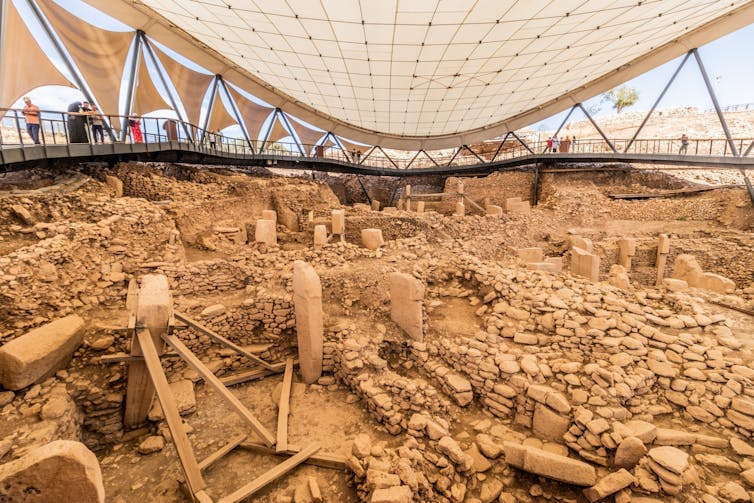
The reason some people feel able to believe in completely unfounded theories relates to the nature of archaeology itself. The discipline works with fragmentary evidence, layered deposits, and interpretations that rarely yield simple conclusions. Sites such as Giza in Egypt, Göbekli Tepe (a Neolithic settlement in modern Turkey known for its monumental pillars decorated with sculptural reliefs), and Troy – also in Turkey – are not unsolved enigmas but the result of decades of systematic excavation and analysis.
At Giza, archaeologists have uncovered planned worker settlements, bakeries and organised food supply systems, demonstrating how thousands of labourers could construct the pyramids over decades.
Advertisement
Göbekli Tepe shows that its monumental stone pillars were erected by hunter-gatherer communities millennia before the invention of writing – not through alien intervention, but through coordinated labour and ritual innovation. At Troy, successive settlement layers reveal centuries of rebuilding, adaptation and regional exchange rather than a sudden technological anomaly.
Archaeological conclusions are cautious, probabilistic and grounded in material evidence. To outsiders, however, caution can resemble hesitation. Pseudoscience fills that perceived gap with spectacle: aliens built the pyramids; mysterious forces raised Göbekli Tepe; forgotten super-technologies shaped Troy’s walls. Stripped of context, evidence becomes entertainment. Complexity is flattened into insinuation.
A typical “ancient aliens” argument illustrates the pattern: the pyramids are extraordinarily precise. Precision, the claim goes, requires advanced technology; therefore, humans without modern machines could not have built them.
The reasoning sounds logical – but it rests on a false dilemma. What disappears from view is precisely what archaeology studies: logistics, labour
organisation, tool assemblages, accumulated craft knowledge – and small imperfections that reveal human hands at work.
Advertisement
Erich von Däniken’s ideas tapped into cold war fears of nuclear annihilation and rapid technological change. CTK Photo/Radek Petrasek
The lure of the extraordinary
Such explanations satisfy a deep psychological impulse. Where once religion explained purpose, science explains process. The “ancient astronauts” hypothesis exploits proportionality bias – the intuition that extraordinary achievements must have extraordinary causes.
Just as medieval legends framed the pyramids as protection against cosmic catastrophe, modern narratives cast humanity as part of a grand design guided by superior beings. Archaeological sites become props in a cosmic drama.
Humans cease to be creators; the past becomes extraordinary because it was “helped”. The appeal is not confined to fringe audiences. Surveys suggest that many people consider extraterrestrial life possible or even likely.
Many scientists agree that, given the vast scale of the universe, such life is statistically plausible. But plausibility is not proof – and it is certainly not evidence for alien intervention in antiquity.
Advertisement
Distrust amplifies the effect. Universities, museums and academic journals are often portrayed as gatekeepers suppressing inconvenient truths. Scientific refutation becomes evidence of conspiracy.
Academic prose – careful, qualified and precise – struggles to compete with dramatic certainty. Questions such as: “How could humans have built this without modern technology?” already contain the insinuation.
Digital media turbocharge the pattern: visually striking claims circulate faster than methodological explanations. Archaeology emphasises gradual change and cumulative knowledge; pseudoscience promises revelation.
Pseudoscientific archaeology is not just a set of beliefs – it is a lucrative industry. Books on ancient astronauts sell millions of copies worldwide. Television franchises generate steady revenue, and leading figures attract audiences in the hundreds of thousands online.
Advertisement
Göbekli Tepe is the work of coordinated human labour, not of extra-terrestrials. Matyas Rehak
By contrast, scholarly work circulates in a radically different economy: monographs are printed in small runs and generate little profit. This is not only a battle of ideas but a battle for attention: spectacle is rewarded more visibly than caution.
Von Däniken’s rhetorical genius lay in ambiguity. He rarely made definitive claims, preferring suggestive questions and selective juxtapositions that turned uncertainty into insinuation.
As he once remarked: “Chariots of the Gods was full of speculation – I had 238 question marks. Nobody read the question marks. They said: Mr von Däniken is saying … I did not say – I asked.” The strategy is disarmingly simple: frame speculation as inquiry and criticism as misunderstanding.
Yet dismissal alone is not enough. Archaeology does more than recover artefacts; it constructs narratives about how humans organised labour, shared beliefs and transformed landscapes. Those narratives are shaped by contemporary questions — and acknowledging this strengthens rather than weakens the discipline.
Advertisement
Debunking alien claims matters. But so does telling richer, more compelling stories about how humans shaped their own past. Archaeology shows that uncertainty is intellectual honesty, that incremental knowledge is cumulative achievement, and that context deepens wonder rather than diminishes it.
Monuments, cities, and human creativity are achievements of our own making, not traces of lost cosmic visitors. Through cooperation, experimentation and resilience, humans created the extraordinary – without any extraterrestrial assistance.
Through rigorous scholarship and compelling storytelling, archaeology shows that the extraordinary was never alien. It was always human.
Marcus Rashford has already reached double figures for goals and assists during his Barcelona loan spell
When Barcelona face Newcastle United on Wednesday evening, the match will represent another chance for Marcus Rashford to compete against one of his former Manchester United colleagues. Rashford, who is currently on loan, won’t be playing against his parent club this season due to United’s failure to qualify for Europe but does have ex-team-mate Anthony Elanga standing between him and a run at Champions League glory.
Advertisement
Elanga, who joined United’s academy as a teenager, came on as a substitute for Rashford when he made his senior debut under Ole Gunnar Solskjaer. He played 55 times for the club before moving to Nottingham Forest in 2023 and then transferring to Newcastle for £55 million last summer.
Both Rashford and Elanga were in the starting line-up when Barcelona defeated Newcastle in the first match week of this season’s Champions League, with the former netting twice in a 2-1 victory. However, they were denied a second reunion in the first leg of the knockout tie between the teams, as Elanga started for Newcastle but was substituted before Rashford came off the Barca bench.
Get MEN Premium now for just £1 HERE – or get involved in our United WhatsApp group by clicking HERE. You can also join our United Facebook page by clicking HERE and don’t miss out on our brilliant selection of newsletters HERE.
The round of 16 clash is finely balanced after Lamine Yamal’s late equaliser denied Newcastle, who thought they had claimed victory through Harvey Barnes. While the Manchester United reunion provides an interesting side story, the second leg will also give Rashford a chance to move closer to realising his dream of a first Champions League title to add to the Europa League he won in 2017.
Advertisement
“I’m learning a lot, it’s a new style of football,” the England international told TNT Sports after his brace in September. “But it’s making me a better player. Honestly, it’s an amazing experience. I’ve always been a huge admirer of Barcelona, every player my age has watched them play, it’s amazing football.”
He also had kind words for Barcelona boss Hansi Flick, saying of the German: “He’s very important. I feel the confidence he’s given me. I knew he was a top manager before I arrived here, but to work with him is a pleasure. I hope the good relationship will continue for the rest of the season.
“For sure, everybody dreams of winning the Champions League. Now I’m at Barcelona, the dream is with Barcelona. I hope we can win the tournament, there’s some very good confidence. Hopefully we can go game by game and keep improving as a team.”
Advertisement
Rashford finished the league phase as Barcelona’s joint-leading scorer in Europe, equalling Fermin Lopez’s tally of five goals. He has reached double figures for goals and assists across all competitions, with a permanent switch to Camp Nou at the season’s conclusion looking likely.
Flick’s side picked up 16 points from their eight league phase fixtures, losing against Paris Saint-Germain and Chelsea but securing a top-eight berth when they fought back to defeat FC Copenhagen on the final matchday. They found the net 22 times throughout their eight matches, with only league leaders Arsenal managing more.
Barcelona clinched the Champions League title four times in a decade from 2005 to 2015, but the subsequent ten years have proved less successful. Their best result in the competition since that 2015 is a run to the semi-finals, something they achieved in 2019 and 2025.
Advertisement
Sky Sports discounted Premier League and EFL package
This article contains affiliate links, we will receive a commission on any sales we generate from it. Learn more
Sky has slashed the price of its Essential TV and Sky Sports bundle for the 2025/26 season, saving £336 and offering more than 1,400 live matches across the Premier League, EFL and more.
Advertisement
Sky shows at least 215 live Premier League games each season, an increase of up to 100, plus Formula 1, darts, golf and more.
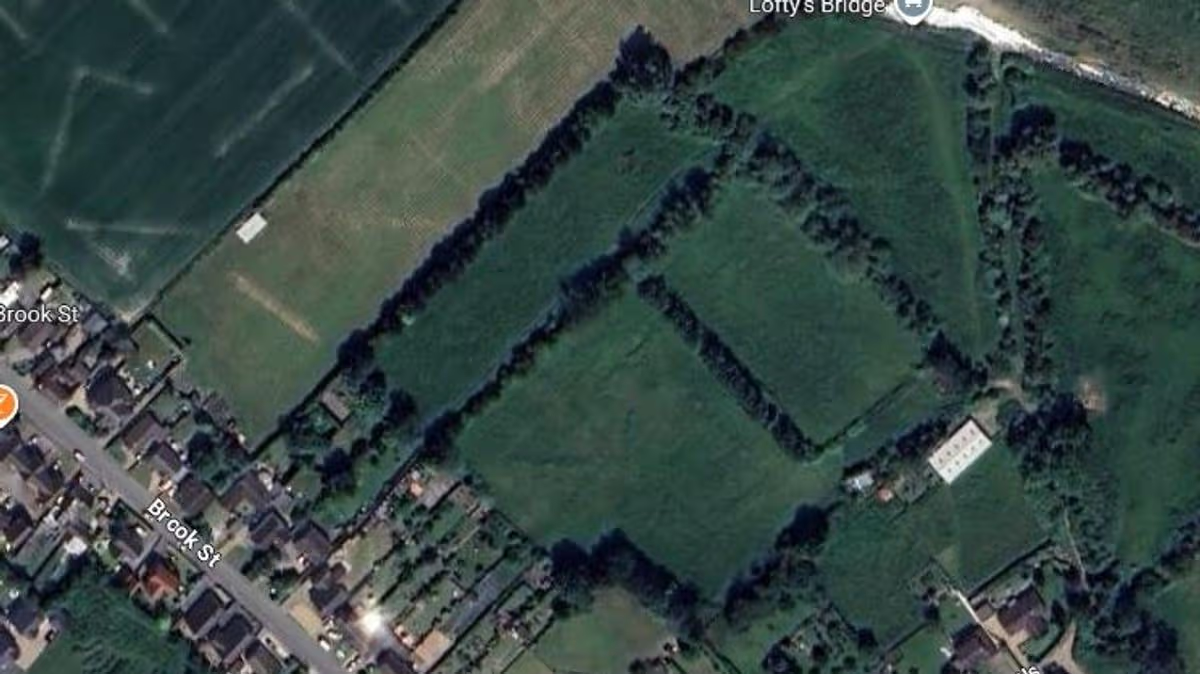
Plans have been submitted for 80 new homes, including affordable housing, in a Cambridgeshire town. Taylor Wimpey proposes to build the homes on land off Brook Street in Soham.
Advertisement
The houses are proposed to have between one and five bedrooms. Of the 80 homes, there could be 16 ‘affordable’ homes and four self-build plots, giving “residents the opportunity to shape their own homes”, the developers said.
The range of homes will include maisonettes, houses and bungalows. Taylor Wimpey said this “ensures broad appeal to different household sizes and supports a sustainable community structure”.
The developers added that sustainability is at the “heart of the scheme”, with homes designed to be energy efficient. They said: “The proposed scheme will deliver a well‑structured and landscape‑led development, incorporating public open spaces, a new play area, and strong pedestrian connections to The Commons and existing walking routes.
“Carefully arranged streets, varied housing types and integrated green ecological corridors create a cohesive layout that enhances accessibility, supports active travel and provides an attractive, high‑quality environment for new residents.”
Advertisement
The site will also include spaces and ecological features including bat boxes, bird boxes, and habitats for wildlife. Taylor Wimpey is seeking local views before it submits a reserved matters application to East Cambridgeshire District Council.
Anyone who would like to express their views can email brookstreet-soham@taylorwimpey-pr.co.uk. People can submit their comments up to midnight on March 30.
The Rivington Brewing Company has been honoured with a Gold Award from CAMRA – the Campaign for Real Ale – in its Champion Beer of Britain Awards, for which Rivington Brewery has won the Northwest heat.
The award was for its Beach House Ale – a hoppy pale ale with notes of citrus, fruit, and lime – at the recent Liverpool Beer Festival.
Chris Sandison CAMRA’s Northwest Regional Tasting Panel Coordinator said: “Congratulations to the team at Rivington Brewery who gained Gold with their Beach House Pale, a fantastic achievement when you consider that they were up against breweries from across the whole of the North West.”
Now that it has won the North West heat, Beach House will be entered into the finals of 2027’s Champion Beer of Britain competition to find the best real ale in the country.
Advertisement
The beer will compete against the winners the other regional competitions at the awards.
Beach house clocks in at only 3.8 per cent, making it uncharacteristically light for a craft ale, marking it out as a session IPA.
The Rivington Brewing Company was founded in 2014 by two friends – Ben Stubbs and Mike Richardson.
The duo started on a small plastic brewing kit that Mike received as a wedding present, with no prior experience other than reading ‘How to Brew’ by John Palmer.
Advertisement
The logo for the (now award-winning) Beach House IPA (Image: Rivington Brewing Company)
The team opened their own taproom and bar on a Rivington farm – Home Farm – in 2019.
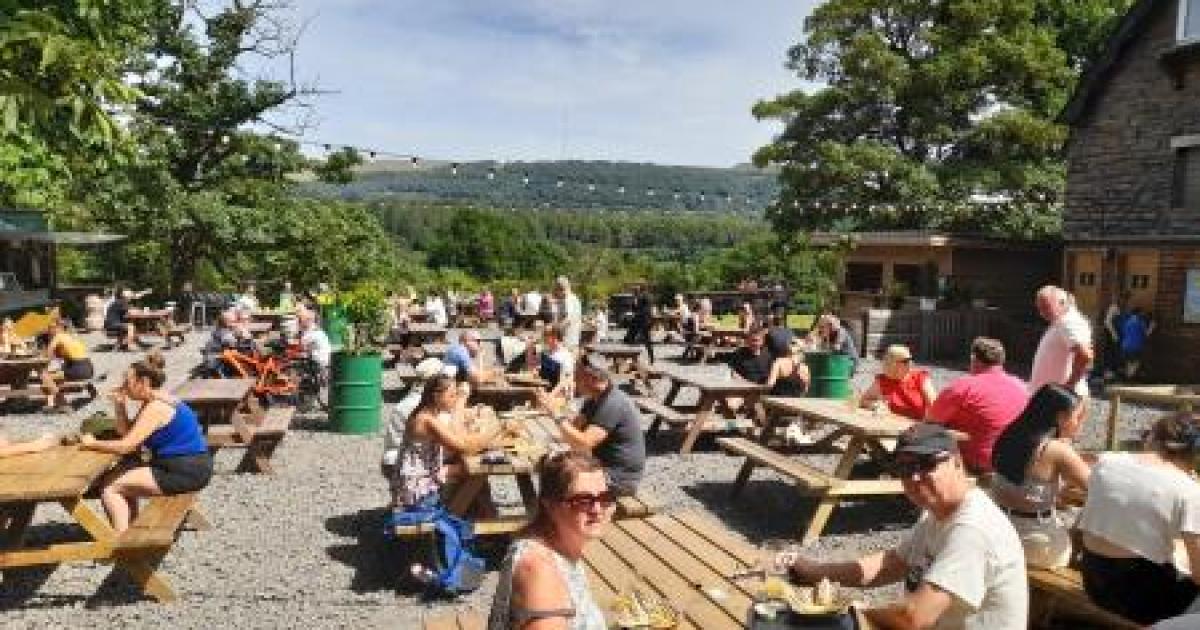
The farm and attendant campsite overlook Rivington reservoir, framed by views of Rivington Pike.
As well as beer and street food, the team have introduced various extracurricular events into their community.
This includes a monthly walking club, cycling club, and a running club that regularly hosts 70 people.
The Wales boss was dismissing the idea that if his side beats Bosnia in their World Cup play-off semi-final that will be playing Italy
Craig Bellamy believes Northern Ireland have a fair chance of beating Italy in Bergamo to stay on course to reach the finals for their first time in 40 years.
Advertisement
The Wales boss was dismissing the idea that if his side beats Bosnia in next Thursday’s World Cup play-off semi-final in Cardiff it is a no-brainer that they will meet Italy in the final 2026 World Cup qualifier.
Should Michael O’Neill’s side beat Italy and Wales beat Bosnia, it will mean a trip to the Cardiff City Stadium on 31 March.
“All I keep hearing from everyone is that if we beat Bosnia we’ll be playing Italy. You wait until you see Northern Ireland,” said Bellamy at the Wales squad announcement.
“This team do not play with the ball, they don’t want the ball, so Italy having the ball is not a problem to them.
Advertisement
“When you haven’t qualified for two major tournaments as a top team like they are, just imagine the pressure Italy are going to be under. I am going to be so intrigued as a football fan to see how they handle that.
“If we take care of Bosnia, and that’s a big if because they are a top team, it wouldn’t surprise me whichever team we faced.”
Wales and Northern Ireland both made their World Cup debuts in 1958 with the Irish squad returning to the finals in 1982 and 1986. Wales didn’t make their second appearance until Qatar four years ago.
“You have to do your homework and I’ve watch both Italy and Northen Ireland. They are two completely different teams, so how we would plan to meet Italy would be different in structure to facing Northern Ireland,” continued Bellamy.
Advertisement
“Bosnia play a little bit similar to Italy in their structure without the ball, even though the Italians can switch. We might be able to use some of our Bosnia groundwork if we played Italy, but if it’s Northern Ireland they press in a completely different way.
“Our structure of work is already planned and already ahead because we don’t have time and we must be ready to hit the ground running as soon as the first game is ticked off.”
Wales’s injury list includes Ben Davies, Keiffer Moore and Chris Mepham, but will have the very much in-form Fulham star Harry Wilson, a hat-trick scorer in the 7-1 final pool win over North Macedonia in their last outing in November, fit to play next week.
When the draw for the qualifiers was made Bellamy warned everyone not to write off O’Neill’s team and claimed they were “the one team I didn’t want to play”.
Advertisement
“Everyone’s writing them off but I’m telling you now, watch out for that result – it’s not going to be straightforward. It will be a tough, tough game for Italy,” Bellamy said.
“Down the years they’ve just had something and they know what they are. They’ve got a brilliant manager who I really, really like.
“I was lucky enough to spend a bit of time with him as well, and I loved him. And no wonder his players do as well. They won’t be playing at their home ground, but I just feel they’ll be comfortable in any situation you throw them into.
“If I was Italy going into that game, with everyone expecting you to win, I’m telling you I’d be edgy. I wouldn’t be comfortable with it.
Advertisement
“Italy is one of the greatest nations in football and that’s a lot of responsibility to shoulder. To have to play a team like Northern Ireland I’d just be thinking ‘let’s get through this and see what happens in the other game’.”
The stars appear to be aligning for both club and country.
The World Cup is a “motivating factor” for Hall, and there remain question marks surrounding just who will line up in his position for England this summer.
Hall, who has won two caps for his country, has yet to earn a call-up under Thomas Tuchel following an injury-disrupted period in his fledgling career.
But that will surely change when the England manager announces his squad for the friendlies against Uruguay and Japan on Thursday.
Advertisement
Tuchel certainly knows him well.
The England boss handed Hall his debut at Chelsea at the age of just 17 in 2022, and has watched the left-back play against his former club and Manchester City this month.
Hall was a highly-rated talent at Chelsea, but he has come a long way since Tuchel first trialled him in a back three against Chesterfield.
Arno Michels, Tuchel’s long-serving assistant at Chelsea, Bayern Munich and Paris St-Germain, knows that better than most.
Advertisement
“It’s incredible to see how Lewis has developed – and he’s still only 21,” he said.
Yet Hall will not be getting carried away.
Hall, by his nature, is a level-headed character, who does not tend to look beyond the next game, and has been kept grounded by a tight-knit family.
He has never lost touch with his roots.
Advertisement
The defender still has a small circle of close friends and has returned to Binfield, where it all started, in each of the past three summers to hand out trophies and medals at the annual junior football tournament he once played in.
Hall has even been back to represent his local cricket club as relatively recently as 2024.
The left-back has not forgotten those who have helped him along the way, either, such as Mark Robinson, his former manager with Chelsea‘s under-23s.
Hall even jumped into the stands to catch up with Robinson after Newcastle‘s 1-0 win at Stamford Bridge at the weekend.
Advertisement
“There’s lots more to come because Lewis is a very humble lad,” Robinson said.
“I can’t see that ever changing. You have got to keep learning, keep improving, and he will do that.”
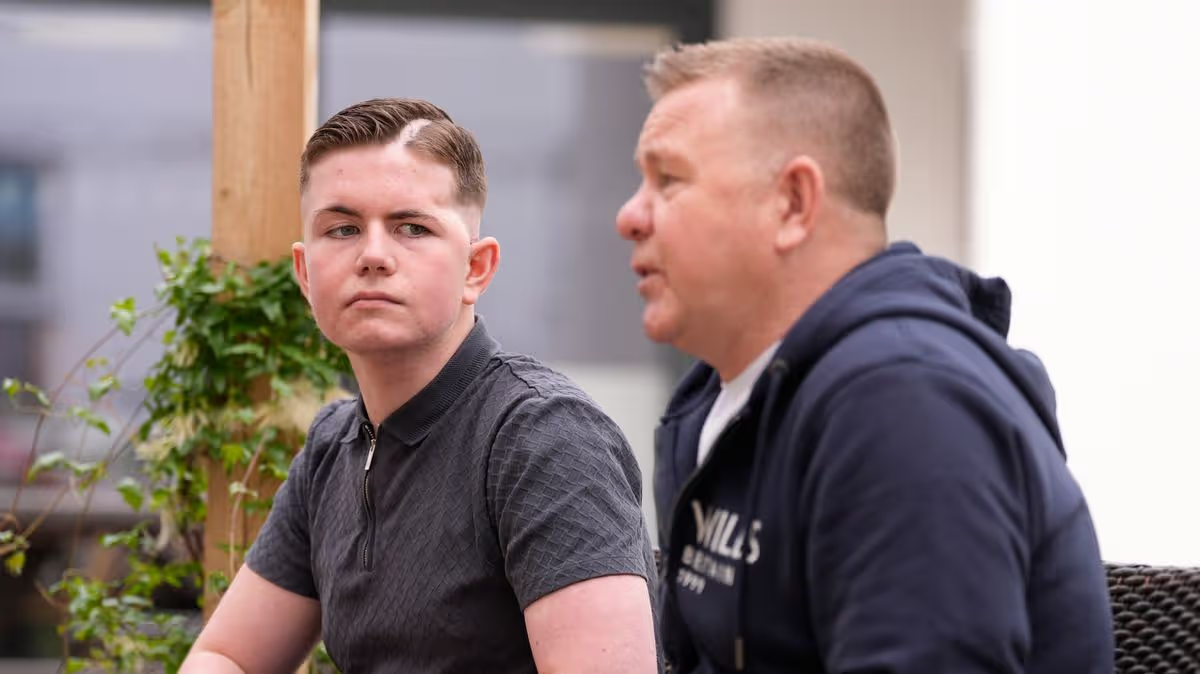
A teenager has described how a serious head injury sustained while on a football holiday in Ibiza left him on a stroke ward for four months. Daniel Hurst went on an annual football trip to the holiday destination in May last year with his teammates from Yateley United Football Club.
But the trip ended in catastrophe after Mr Hurst, who was 19 at the time, suffered such a horrific head injury that medics did not believe he would survive. After going on an evening out with club members, including his father Steve, Mr Hurst decided to head 300 yards back to the hotel.
But he disappeared and teammates set out to look for him. Several hours later, his father was told by police that a British boy had been taken to hospital with severe head injuries and was not expected to make it through the night.
Advertisement
Mr Hurst was airlifted to Majorca and needed surgery which involved medics removing part of his skull to try to stop the swelling. He was put in a medically induced coma.
After four weeks in hospital on the Spanish island he was stable enough to be airlifted to Frimley Park Hospital in Surrey where he spent four months on a stroke unit in a bed for patients who suffer traumatic brain injuries. He was the youngest ever patient to be cared for on Frimley’s stroke ward.
When he arrived at the hospital he was unable to walk or talk but thanks to the care he received he is now planning to run the London Marathon to raise money for the hospital’s charity. Mr Hurst, who works at a local golf club, is also back playing some football with his teammates. He also wants to raise awareness that “recovery is possible” after such a traumatic injury.
Advertisement
“You have to keep moving forward,” he told the Press Association. “I’ve got the same plans now I did before it happened – I’m trying to improve my golf, I’m running a lot, I go to the gym, things like that. It’s obviously been pushed back a little bit, but not a lot.
“I want to help motivate people (with brain injuries) to just keep going forward – your life is never over. I know it is hard. There were moments when I thought ‘is my life done?’… but you have got to keep going.”
Mr Hurst praised the hospital staff at Frimley Park Hospital, saying that they have kept him motivated. On the marathon, he added: “Even if I just walk it, this year is not about beating my time last year, it is about getting over the finish line.”
In a message to holiday-goers, he said: “I would urge people to just be careful and always stick with at least one or two people, just always stay together.”
Advertisement
His father Steve, 53, added: “The message is just, ‘stick with someone, just be wary of surroundings’, like Dan said. This could happen anywhere.” On the incident, he said: “We couldn’t find Dan, I rang his phone and police answered. They said someone who fits Dan’s description had been admitted to hospital.
“We were told there was a very high chance that he wouldn’t make it – they were quite blunt about the severity of his injuries. I had to ring his mum and tell her what happened, it was horrendous.
“Even after his surgery in Majorca we were told that it was an ‘hour-by-hour, day-by-day’ situation.” Dr Tilly Speirs, consultant stroke physician at Frimley Health NHS Foundation Trust, one of Mr Hurst’s medics, told the Press Association: “When he arrived we had to start right from the beginning and work out what his deficits were and what therapy he was going to need.
Advertisement
“He couldn’t walk when he came to us and it was a really scary time for his family because they didn’t know what was going to happen and whether he would recover. He had post-traumatic amnesia when he arrived… he couldn’t recall what happened the day before or the hour before.
“He survived the head injury but the family didn’t know what that survival was going to look like. As a team we didn’t know either but we knew he needed to have rehab and he’s done remarkably well.
“He had age on his side, he had just run a marathon so he was in good physical condition before this happened. Dan is a testament that with rehab that you can have a good outcome following a traumatic brain injury, it’s not going to be the same for everybody, it really depends on the individual, but he has done remarkably well and I think his future is going to be as bright as it was before he went on that trip.”
– The London Marathon is taking place on Sunday April 26 and Mr Hurst has set up a fundraising page at justgiving.com/page/danhurst20.
Hours after his head of counter-terrorism quit saying he couldn’t support the war against Iran, President Donald Trump claimed he didn’t really know him that well but that he had “always thought he was weak on security, very weak on security.”
“I always thought he was a nice guy,” Trump told reporters on Tuesday, not long after Joe Kent had announced he had stepped down from running the National Counter-terrorism Centre. “I didn’t know him well.”
That sentiment is at odds with his past praise of the conspiracy theorist who rose in Trump’s estimation for his embrace of the false claim that the 2020 election had been stolen and that the FBI had fomented the January 6, 2021, violent attack on the Capitol.
In fact, Trump’s endless lying about a stolen election enraged his followers, and he himself asked them to converge on Washington DC, on the day of the congressional election certification. It was his own speech hours before the assault, according to many of those who participated, that drove them to violence.
Advertisement
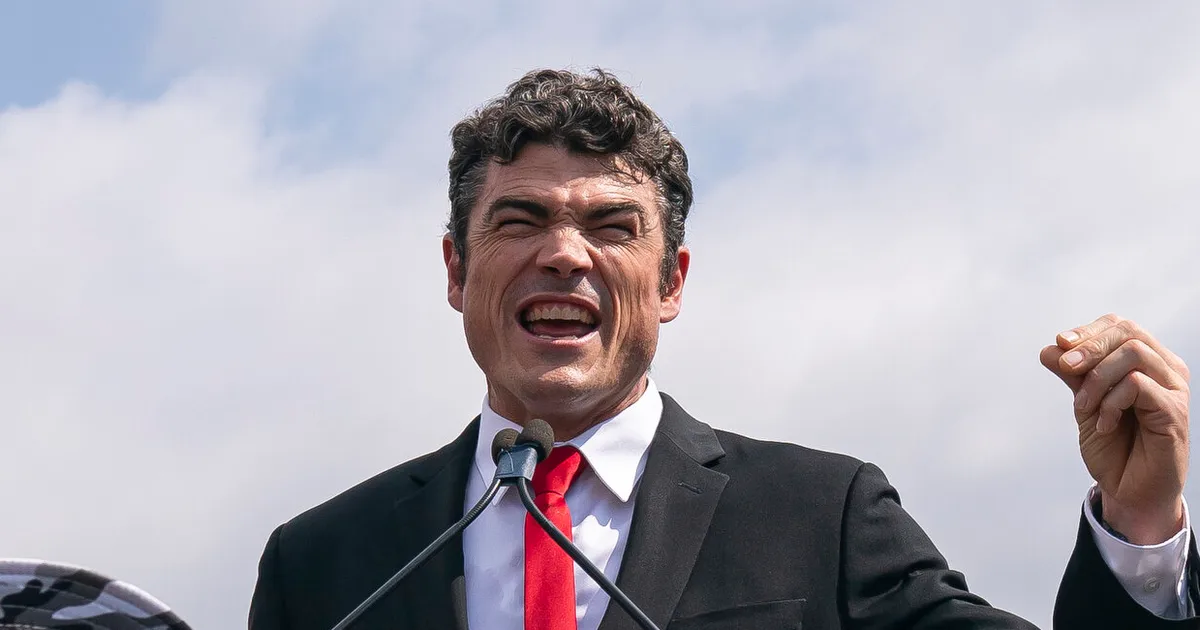
Joe Kent, then-director of the National Counterterrorism Center, testifies in December during the House Homeland Security Committee hearing on “Worldwide Threats to the Homeland.”
Tom Williams via Getty Images
“I think this man has a tremendous future, a very special person,” Trump said of Kent in 2022 as he endorsed his run for Congress in Washington state.
That year, Kent defeated the sitting Republican who had earned Trump’s wrath by voting to impeach him for his coup attempt but then lost the general election to Democrat Marie Gluesenkamp Perez. Kent ran again for that seat in 2024 but lost to Perez a second time.
Trump, after winning back the White House in that election, appointed Kent to a top position in the national security world. “Joe will help us keep America safe by eradicating all terrorism, from the jihadists around the World, to the cartels in our backyard. Congratulations Joe!” Trump wrote in a February 3, 2025, post.
Advertisement
That history apparently was no longer relevant Tuesday for Trump. “I realised that it’s a good thing that he’s out because he said that Iran was not a threat,” he said.
Kent had cited his opposition to Trump’s 17-day-old war. “I cannot in good conscience support the ongoing war in Iran. Iran posed no imminent threat to our nation, and it is clear that we started this war due to pressure from Israel and its powerful American lobby,” he wrote in a social media post that included an image of his resignation letter.
While Kent has embraced anti-immigrant and white nationalist positions over the years, the theory that Israel pushed Trump into the war was actually laid out by Secretary of State Marco Rubio days after the attack began on February 28.
Director of National Intelligence Tulsi Gabbard, a former Democratic congresswoman known for her longtime opposition to a war with Iran and Kent’s supervisor, on Tuesday afternoon released a statement that neither addressed Kent’s departure nor the wisdom of Trump’s decision to attack Iran.
Advertisement
“As our commander in chief, he is responsible for determining what is and is not an imminent threat, and whether or not to take action he deems necessary to protect the safety and security of our troops, the American people and our country,” she wrote. “After carefully reviewing all the information before him, President Trump concluded that the terrorist Islamist regime in Iran posed an imminent threat and he took action based on that conclusion.”
While Trump in his public comments on Tuesday called Kent “a nice guy,” Trump’s aides and supporters were far less charitable.
Press secretary Karoline Leavitt responded to Kent’s letter with a lengthy, 450-word post of her own. “The absurd allegation that President Trump made this decision based on the influence of others, even foreign countries, is both insulting and laughable,” she wrote.
Taylor Budowich, a former top White House aide, claimed that Kent was about to be fired. “Joe Kent is a crazed egomaniac who was often at the centre of national security leaks, while rarely (never?) producing any actual work,” Budowich wrote. “He spent all of his time working to subvert the chain of command and undermine the president of the United States. This isn’t some principled resignation—he just wanted to make a splash before getting canned. What a loser.”
Advertisement
Olivia Troye, once a national security aide to former Vice President Mike Pence, said the White House likely feels the need to damage Kent’s credibility because of his assertion about Iran. “He actually calls out the lack of imminent threat,” she said.
The purpose-built underground structure in the countryside was designed to protect government officials from nuclear warfare, and could have sustained its inhabitants for up to three months
Built during the Cold War era, it appears to be an ordinary cottage from street level, yet conceals a vast subterranean bunker designed to shelter government personnel from potential attacks.
Advertisement
Hidden beneath the Essex countryside near Brentwood lies a disused underground complex. Today operating as the Kelvedon Hatch Secret Nuclear Bunker, it functions as a tourist destination and museum, though its original purpose was far more sinister.
This facility was built to serve as a potential regional government headquarters throughout the Cold War period. As a founding NATO member, Britain occupied a crucial position in the conflict as a fundamental partner to the US.
The purpose-built shelter was designed to accommodate hundreds of military and civilian staff should a nuclear strike occur. In such circumstances, it would function as a command centre where regional government would coordinate population survival efforts and maintain essential governmental functions.
Exploring the bunker
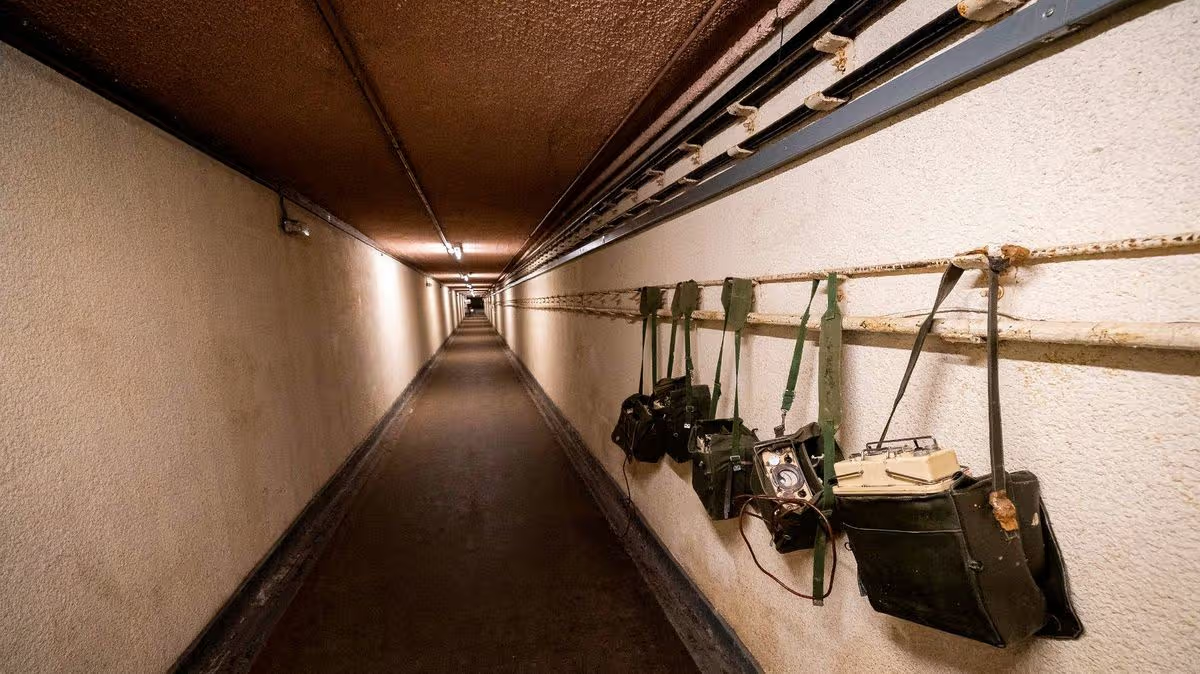
The site now welcomes visitors, offering self-guided tours through the tunnels that reveal what operations would have taken place below ground during a nuclear conflict.
The complex extends 125 feet below the surface, and remarkably, access is gained through what looks like an unremarkable bungalow. The guardhouse sits nestled amongst woodland and opens onto a 100-yard tunnel leading underground.
Considering the logistics and planning involved, the bunker was designed to support several hundred personnel for a maximum of three months – naturally requiring air conditioning and heating systems, an independent water source and power generators.
Additionally, it came fully fitted with radio apparatus, secure telecommunications infrastructure and numerous military systems.
Advertisement
The entire communications and technical equipment was located on the first floor, approximately 80 feet beneath ground level. This floor also housed the critically important ‘plotting room’, where aircraft were monitored and tracked round-the-clock, with any explosion analysis conducted there.
The upper level, meanwhile, accommodated the daily living arrangements for those stationed within. It featured a compact yet well-designed medical facility, multiple washrooms, sleeping quarters and even a substantial canteen – the same dining area visitors use nowadays.
Essential provisions for survival were calculated to last three months, with the assumption this timeframe would allow circumstances to stabilise sufficiently. This would subsequently permit limited ventures outside to obtain additional supplies.
The middle level of the subterranean complex was reserved for governmental use. During the initial construction phase, this level connected to the plotting room through a large opening in the floor, enabling senior RAF commanders to observe developments directly.
The bunker today
The bunker ceased operations in 1992 after becoming obsolete, with its equipment and the surrounding land returned to its initial owners.
The Parish family transformed the facility, converting it into a museum and visitor destination that chronicles Cold War history.
Advertisement
Nowadays, its clandestine status has been somewhat compromised, with the site rather paradoxically advertised throughout the vicinity. Brown tourism signs directing visitors towards the attraction are labelled ‘Secret Nuclear Bunker’ – rather undermining any notion of secrecy.
This intriguing location welcomes spontaneous visits without requiring advance reservations; visitors can arrive and purchase tickets on arrival.
Entry costs £15 for adults, whilst youngsters between five and 16 pay £13. Families can obtain tickets for £38, with additional reductions available for larger parties.
Advertisement
The subterranean attraction opens its doors Thursdays through Sundays, plus during all school holidays and half-term breaks.
To allow sufficient time for a thorough visit, final admission is generally permitted one hour before closure – 4pm on weekdays and 5pm at weekends – though these times are liable to alteration.
















































You must be logged in to post a comment Login