The new strategy will be rolled out next month in a bid to crack down on ‘refund abuse’
The Department for Transport (DfT) has unveiled a major overhaul of the UK’s rail ticketing system, introducing stricter validation for railcard users and tighter refund rules to claw back an estimated £60 million lost annually to fraud and “refund abuse”.
Advertisement
The measures are part of the transition toward Great British Railways (GBR) – the new public body expected to take control of the network by late 2026. In a bid to tackle fare dodging, the DfT is introducing “simple validation” checks for the millions of passengers who use railcard discounts (such as the 16-25, Senior, or Two Together cards).
Starting in the second half of 2026, passengers using ticket machines will be required to scan their railcard or manually enter their railcard number and name before a discounted ticket is issued.
Get MEN Premium now for just £1 HERE – or get involved in our WhatsApp group by clicking HERE. And don’t miss out on our brilliant selection of newsletters HERE.
Those using apps or websites with registered accounts will only need to input their details once for automatic verification in future. The Government expects this move alone to save £20m per year in lost revenue.
Advertisement
In a significant shift for flexible travel, the rules for returning unused tickets are being tightened to prevent passengers from claiming money back for tickets that were used but never scanned or stamped by staff.
From the start of next month, Off-Peak and Anytime tickets will only be refundable until 11:59pm the day before they become valid. Currently, passengers can claim a refund up to 28 days after a ticket expires without providing a reason.
Refunds will still be granted after the deadline if a service is disrupted or in “exceptional circumstances,” such as a medical emergency.
Advertisement
In better news for passengers, the DfT is simplifying the Delay Repay process. Currently, travellers often have to navigate 14 different operator systems to get their money back.
Under GBR, passengers will be able to claim compensation directly from the retailer where they bought the ticket (e.g., Trainline), rather than having to contact the specific train company.
Trainline estimates that passengers currently miss out on £80 million a year because the current system is too confusing or fragmented to navigate.
Transport Secretary Heidi Alexander stated that the changes would ensure the industry can “invest taxpayers’ money in things that really matter,” such as freezing fares and station upgrades.
Advertisement
Jody Ford, CEO of Trainline, welcomed the move toward a more consistent process, noting that “one-click” claims would be “welcomed by millions”.

The Doc Martin star has opened up on how he prepared to play the disgraced BBC newsreader
Doc Martin star Martin Clunes has opened up about the challenges of playing disgraced former BBC newsreader Huw Edwards. Edwards, who was born in Bridgend, was one of the highest-paid newsreaders at the public service broadcaster.

Clunes said he hasn’t “judged” the disgraced newsreader in his performance. “I never get into whether I like or dislike a character I’m playing,” he explained.
Having never met Edwards however, Clunes admits he spoke to people who worked with him and “didn’t hear any compliments”, he told The Times.
Advertisement
The 64-year-old, who recently appeared in the new adaption of Wuthering Heights, said he knew portraying Edwards would be a challenge from the beginning.
Power: The Downfall Of Huw Edwards, focuses on how a young vulnerable man, played by Welsh actor Osian Morgan, came into contact with one of the most powerful figures in television.
“Beyond the salacious curiosity around this story, I really thought there was another story worth telling, that of ‘Ryan’ and his family,” the London-born actor said.
Advertisement
“Obviously the press and the media have focussed on the fallen big man, Huw Edwards, which, of course, is a big story. But behind that, there’s this lad and his family whose lives got turned upside down and rather spoiled. I’m not on any social media and I had no idea that this sort of thing went on, I really didn’t.”
Edwards’ downfall came after a report by the Sun in July 2023 alleged that a “top BBC star” had paid a 17-year-old for sexual pictures. Days later his wife named him as the presenter at the centre of the scandal and the newsreader resigned the following April.
Edwards was charged with making indecent images of children in June 2024 following a Metropolitan Police investigation. A month later the former presenter and father of five admitted three offences of making indecent images of children at Westminster Magistrates’ Court. He was sentenced to a six-month jail sentence, suspended for two years.
Clunes said that while preparing for the role, he looked through archive clips of Edwards in an attempt to understand the man behind the newsreader. “I was familiar with Huw Edwards, the newsreader, and how he presented himself when he was reading the news,” he explained.
Advertisement
“But I’ve seen other actors make the mistake of just inhabiting that projected face of a famous person or politician, I knew that we needed the other side of him too.
“Finding archive clips of Edwards away from the news was less easy, but I wanted to make sure I did. I noticed from looking at that archive that he was different when he wasn’t reading the news, and I wanted to make that distinction. If you listen to his rhythms, he’s far more Welsh when he’s not newsreading.”
But even for Clunes, Edwards remains something of a mystery. “The circularity of it is something I’ve thought about. Because he was on the telly in all those homes, every night, and he would have reported on somebody else’s fall from grace. And I wonder how he would have felt.”
Advertisement
Clunes, who is known more for his comedy roles, said it can be uncomfortable dealing with sensitive subject material, but dealt with it by being a “little facetious”, despite taking his work seriously.
“Sometimes it’s harder when a role is more nebulous and you can’t pin your performance on something, but we had transcripts of text messages between Huw Edwards and ‘Ryan’, and they do appear in the script, so we breathed life into them,” he said.
“It was hard towards the end of the story, hearing Osian’s vulnerable voice when Edwards was bullying him, and the hurt of this boy reaching out in a sensitive way. I didn’t feel very nice at the end of those scenes, so again it was definitely good to have Osian in the room to talk to afterwards.
“I’m not a very heavy person, so my way of dealing with things is generally to be a little facetious and sort of lighthearted, even though I take the work very seriously.”
Advertisement
Speaking about filming the phone scenes, he says they always made sure to be in the same room. “Luckily, I did have Osian there with me, who plays Ryan, and he was terrific,” said Clunes.
“A lot of our scenes are seemingly in isolation on phone calls, so we decided to both be there in the room for the other actor. Usually, if you film a phone call, the director or assistant director will read out the other lines, and you have to act to that. But because of the intimate nature of so many of these phone calls, we felt we couldn’t do that.
“There’s an intimacy on the phone. Having us both in the room for filming really helped to create that feeling. There was only one time it wasn’t possible to be in the same place, and I phoned Osian directly for that scene. He’s a brilliant young actor, I was just bowled over by him and really enjoyed working with him.”
When asked how he feels fans will react to seeing him in this role, Clunes says: “I’ve played a murderer before and I’m vile in Wuthering Heights, so this isn’t my first dark role, but I always just take work from what’s on offer, and I’ve never had a plan.
Advertisement
“I’ve always been lucky enough to balance light-hearted jobs like Doc Martin with dramas in-between. I’m not desperate to reshape myself – I’d play someone like Doc Martin again in a heartbeat.”
Power: The Downfall Of Huw Edwards airs on Channel 5 on Tuesday, March 24 at 9pm.
Get daily breaking news updates on your phone by joining our WhatsApp community here. We occasionally treat members to special offers, promotions and ads from us and our partners. See our Privacy Notice
ROME (AP) — Bodies washing ashore day after day. Phone calls from relatives going unanswered. Migrants’ tents abandoned overnight.
Migrants trying to reach Europe are vanishing in droves in what are known as “invisible shipwrecks” but governments responsible for search and rescue are withholding information about what they know.
The beginning of 2026 ranks as the deadliest start to any year for people trying to cross the Mediterranean — an unprecedented 682 confirmed missing as of March 16 — according to the United Nations’ International Organization for Migration. But the real death toll is almost certainly much higher.
Human rights groups are increasingly struggling to verify tolls as Italy, Tunisia and Malta have quietly restricted information on migrant rescues and shipwrecks along the deadliest migration route in the world. The news barely makes headlines, in part because the lack of transparency prevents journalists from confirming reports.
Advertisement
“It’s a strategy of silence,” said Matteo Villa, a researcher focusing on migration and data at the Italian Institute for International Political Studies think tank.
The organization Refugees in Libya and other human rights groups have been sounding the alarm since late January, reporting more than 1,000 people missing after Cyclone Harry hit the region. But authorities have not confirmed, denied or corrected those reports.
In the weeks that followed the cyclone, more than 20 decomposing bodies washed ashore in Italy and Libya while other human remains were spotted floating in the middle of the sea.
For the families of missing migrants, not knowing their fate is excruciating.
Advertisement
“Europe should know that these people who got drowned in the sea have family members, have dreams, have passions,” Josephus Thomas, a migrant from Sierra Leone and community leader in Tunisia’s coastal town of El Amra, told AP.
FILE– Migrants from Syria and Libya in a wooden boat call for help as they are assisted by Spanish NGO Open Arms during a rescue operation inside Malta’s SAR zone south of the Italian island of Lampedusa in the Mediterranean sea, Thursday, Aug. 11, 2022. (AP Photo/Francisco Seco)
Advertisement
FILE– Migrants from Syria and Libya in a wooden boat call for help as they are assisted by Spanish NGO Open Arms during a rescue operation inside Malta’s SAR zone south of the Italian island of Lampedusa in the Mediterranean sea, Thursday, Aug. 11, 2022. (AP Photo/Francisco Seco)
Advertisement
Advertisement
Advertisement
Sparse information means fewer deaths recorded
Even the U.N.’s migration agency is increasingly unable to verify cases of migrants who die in what is known as “invisible shipwrecks” because of the growing lack of information.
Last year, at least 1,500 people were reported missing whose fates IOM could not confirm, said Julia Black, who leads the organization’s Missing Migrants Project. The issue persists in 2026.
“We started a new secondary data set of what we are calling unverifiable cases because it’s just become so many,” Black said. For this year, they already have more than 400 missing they could not verify.
Advertisement
Many humanitarian organizations that previously filled some of the information gaps are no longer able to do so because of the global wave of funding cuts and government-imposed restrictions across the region.
“We’ve seen the restriction of access for humanitarian actors, which is not right. And now we’re seeing even the restriction of information,” Black said.
The Associated Press repeatedly asked authorities in Tunisia, Italy and Malta why they aren’t sharing information related to migrant rescues at sea and what their policies are. Not one responded.
Advertisement
In this photo taken on Sunday, Sept. 8, 2019, the sun shines over international waters north of Libya in the Mediterranean Sea. (AP Photo/Renata Brito)
Advertisement
In this photo taken on Sunday, Sept. 8, 2019, the sun shines over international waters north of Libya in the Mediterranean Sea. (AP Photo/Renata Brito)
Advertisement
Advertisement
Countries quiet on reports of boats missing after cyclone
Over the years, authorities in the Mediterranean have gradually reduced information related to migrants. But their silence was even more pronounced in late January after Cyclone Harry unleashed heavy rainfall, winds of 100 kph (62 mph), and 9-meter-tall (30 feet) waves.
Hundreds of people had departed from Tunisia’s coastal region of Sfax and disappeared, according to information the group Refugees in Libya gathered from migrants in Tunisia and their relatives abroad.
Advertisement
The group acknowledged it was difficult to be precise “because there is no central system recording departures, losses, or recoveries,” but it warned that the death toll was likely even higher.
“We are looking at boats that never counted how many kids are inside,” Refugees in Libya founder David Yambio told AP.
The AP sent five email requests to the Italian coast guard seeking information on the boats reported missing and search efforts but received no response. An officer who answered the phone said the coast guard did not have “any further verified and confirmed information regarding the circumstances.” AP also filed a Freedom of Information request, which is pending.
The coast guard also declined to comment on an alert it issued on Jan. 24 asking vessels sailing between the Italian island of Lampedusa and Tunisia to be on the lookout for eight small boats in distress carrying some 380 people. The alert was made public by Italian journalist Sergio Scandura.
Advertisement
This picture released by SOS Humanity on Monday, March 16, 2026, shows rescue operations in the Mediterranean Sea one of the deadliest migration route in the world (Barbara Sartore/SOS Humanity via AP)
Advertisement
This picture released by SOS Humanity on Monday, March 16, 2026, shows rescue operations in the Mediterranean Sea one of the deadliest migration route in the world (Barbara Sartore/SOS Humanity via AP)
Advertisement
Advertisement
Advertisement
One survivor rescued from the boats
There is only one known survivor from the boats reported missing during Cyclone Harry. He was floating in the water when a merchant vessel rescued him on Jan. 22. The man told crew members he had been traveling with another 50 people, some of whose bodies could be seen in the water in video of the rescue. Thanks to his testimony, their deaths were included in IOM’s tally.
Advertisement
According to the captain, the survivor was evacuated to Malta. The Maltese Armed Forces did not respond to multiple requests about their involvement or reports that they recovered the man and the bodies.
The Tunisian Foreign Ministry and the Tunisian National Guard also have not responded to multiple requests for information by email and phone.
Frontex, a European Union agency that assists nations with border surveillance, told AP that it spotted eight boats carrying about 160 migrants between Jan. 14 and 24 when the cyclone hit. It said six boats were rescued by Italian authorities, but the fate of the other two remains unknown.
On Feb. 8, migrants prayed and cried during a memorial ceremony in the olive groves near Sfax, presuming their loved ones could not be alive after so many days without news.
Advertisement
“All of us here are in deep trauma, are in deep agony,” Dr. Ibrahim Fofana, a migrant in Tunisia whose relatives have been missing since late January, said in a video shared by Refugees in Libya. He pleaded for authorities to identify the bodies that washed ashore in Italy.
FILE– Migrants from Syria and Libya in a wooden boat call for help as they are assisted by Spanish NGO Open Arms during a rescue operation inside Malta’s SAR zone south of the Italian island of Lampedusa in the Mediterranean Sea, Wednesday, Aug. 10, 2022. (AP Photo/Francisco Seco)
Advertisement
FILE– Migrants from Syria and Libya in a wooden boat call for help as they are assisted by Spanish NGO Open Arms during a rescue operation inside Malta’s SAR zone south of the Italian island of Lampedusa in the Mediterranean Sea, Wednesday, Aug. 10, 2022. (AP Photo/Francisco Seco)
Advertisement
Advertisement
Advertisement
Advertisement
Tighter information follows migration crackdown
Until mid-2024, Tunisian authorities regularly shared the number of migrants they were intercepting at sea, eager to show their European partners compliance with a 2023 deal to curb migration in exchange for financial aid. But the deal was also followed by a brutal crackdown against migrants on land that resulted in thousands being detained or dumped in the desert.
Nongovernmental organizations such as the Tunisian Forum for Economic and Social Rights, known by its French acronym FTDES, which used to compile and share reports on migrant interceptions, were also caught in the crackdown.
In June 2024, Tunisia’s Ministry of Interior stopped releasing any information on migrants, citing security reasons, said Romdhane Ben Amor, FTDES’ spokesperson. But in his opinion, the motives were political. The numbers were incompatible with the narrative that Tunisia was not Europe’s border guard, he said.
Italy’s erosion of information on migrant rescues is even older than Tunisia’s. The Italian coast guard used to provide detailed monthly data on migrants rescued. The monthly reports became quarterly before stopping completely in 2020, Villa said. In 2022, previous reports were also removed from the coast guard’s website.
Advertisement
This year, the Italian coast guard did not share any migration-related press releases despite nearly 5,000 migrants disembarking on Italian shores, according to Italy’s Interior Ministry statistics.
“It is very clearly a political strategy to repress as much information as possible from the public,” Villa said.
___
Brito reported from Barcelona, Spain. Trisha Thomas contributed to this report from Rome.
Fuel prices in some parts of London have surged to as much as 253.9p per litre as the Middle East conflict continues into its third week.
Petrol prices across the UK are up by 7% since November 2023, according to new figures from the RAC, marking a rise from 132.8p per litre to 141.74p per litre.
Global oil supply chains have struggled amidst the closure of the Strait of Hormuz – a waterway in the Persian Gulf where more than a fifth of the world’s oil passes through. And with the strait showing no sign of reopening, more fuel hikes are likely on their way.
In the capital, the Chelsea Cloisters Gulf garage is selling unleaded petrol for 253.9p per litre, while diesel is 264.9p. This is significantly higher than UK fuel prices, which are roughly 141.74p for unleaded petrol and 161.20p for diesel.
Advertisement
The garage does not display its prices outside the garage, only at the pump. It is not known what the price of the petrol at the garage was prior to the war, but The Standard reported the same garage was selling unleaded for 238p per litre just four days ago, representing an increase of almost 16p.
Elsewhere in the capital, prices are well below average. One petrol station in Ruislip, also owned by Gulf, is selling unleaded for 121p per litre, according to comparison site Petrol Prices.
Pumps in the east of London seem to have more favourable prices, in comparison to areas in west and central London.
In figures released by the RAC, Asda was seen to have the cheapest petrol of all the UK supermarkets at 137.8p. Tesco followed at 138.6p, Sainsbury’s at 139p, and Morrisons in last place at 139.1p.
Advertisement
In data analysed by The Standard, American wholesaler Costco has two locations amongst some of the capital’s cheapest petrol retailers.
A service launched by the government in February this year, Fuel Finder, has encouraged retailers to update their prices regularly. Petrol Prices publish the cost of fuel across pumps in London at regular intervals.
Here are some of the cheapest and most expensive petrol stations for unleaded petrol in and around London:
The move, expected to save around £20 million a year, is part of wider reforms under the upcoming Great British Railways (GBR), which will oversee Britain’s rail network and train operations.
Transport Secretary Heidi Alexander said: “These changes will ensure taxpayers’ money goes toward freezing fares and upgrading services, rather than lost to fare dodgers.”
From the second half of 2026, passengers buying discounted tickets from machines will need to:
Advertisement
Scan their railcard or
Enter railcard details, such as the number and their name
Those purchasing via a website or app with a registered account will only need to input this information once, allowing automatic validation for future purchases.
Refund rules tightened for customers
At the same time, refund rules for flexible tickets are being tightened. Starting next month:
Off-Peak and Anytime tickets will only be refundable until 11.59pm the day before travel (unless services are disrupted).
Exceptional circumstances, like medical emergencies, will still be considered.
We’re making changes to ticket refunds. From 1 April 2026, some tickets will only be refundable up until 23:59 the day before they’re valid for travel.
Currently, passengers can return unused tickets within 28 days of expiry without giving a reason, a loophole that has led to refund abuse costing around £40 million annually.
Advertisement
Delay Repay compensation made simpler
The DfT also plans to streamline Delay Repay claims, allowing passengers to claim compensation directly from wherever they buy their ticket, instead of contacting the train operator.
Online ticket retailer Trainline estimates passengers currently miss out on £80 million per year because one-click claims are limited to tickets bought directly from operators.
Under GBR, compensation systems across 14 different operators will be merged to make claiming refunds quicker, simpler, and less confusing.
What passengers need to do ahead of the changes
Passengers can prepare by:
Advertisement
Knowing their start date – if your turnover is above £50,000, ticket validation begins in mid-2026.
Choosing recognised software or apps – including free and paid options, with bridging software for those who still prefer spreadsheets.
Signing up early – don’t wait until the last minute to ensure smooth travel and refund claims.
Jacqueline Starr, CEO of the Rail Delivery Group, said: “The consolidated Delay Repay service will make it easier for all customers to request compensation, regardless of where they bought their ticket, with a more consistent process.”
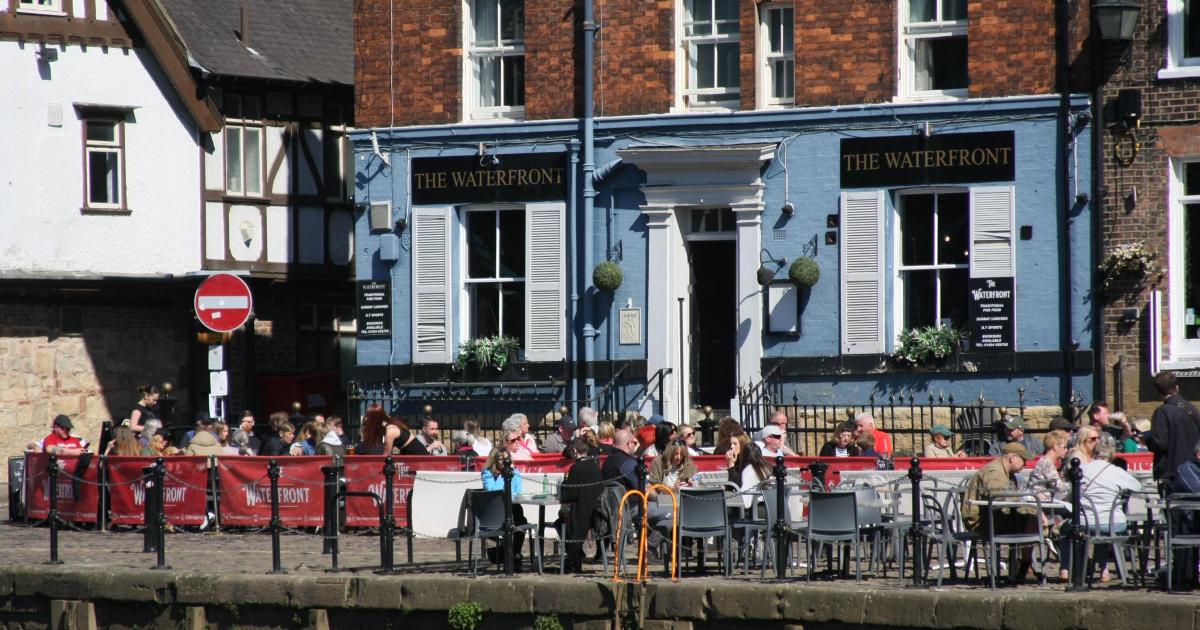
The move is to better reflect the wide range of pubs in both the city and the vast, rural area the 1,100-member branch covers.
The City Winner is the Last Drop Inn in Colliergate and the White Bear in Stillington is the Country Pub of the Year, beating around 450 others in York Camra’s patch
Branch chairman Chris Tregellis told the Press: “For a modestly sized pub in a modestly sized village the White Bear certainly punches well above its weight.
RECOMMENDED READING:
Advertisement
“The regular beers are consistently excellent but it’s the commitment to frequently changing guest beers which takes this up a notch and makes every visit a treat.
“The commitment to the autovac system ensures that every pint emerges fresh and sparkling. The food in the restaurant bar is also something not to miss.”
The White Bear is currently on the market but since 1995 has been run by Phil and Sue Robinson. The pub has won the seasonal award three times but this is their first annual success.
York Camra’s Chris Tregellis outside the White Bear in Stillington (Image: Pic supplied)
Chris added of the couple: “They have never put a foot wrong. A worthy winner.”
Advertisement
The presentation evening will be Friday May 1.
The Last Drop Inn in Colliergate was once owned by the York Brewery, then the Black Sheep brewery, and now Paul Kemp, and is going on from “strength to strength.”
Like the Robinsons, Paul has also placed his pub on the market, but York Camra says “as with the White Bear, the Last Drop stands out because of quality and choice.”
Paul Kemp of the Last Drop Inn (Image: Darren Greenwood)
Chris continued: “There is always something new to try. Sitting in the front bar is a great place to watch the envious glances of tourists and locals as they pass down Colliergate.”
Advertisement
The Last Drop will be celebrating during its presentation night on Friday April 17.
Paul Kemp who took over the pub in 2023 says he is “absolutely made up” to be an annual winner.
He told the Press: “When we started this project, this award was one of the things we wanted to achieve.”
The pub has been a seasonal winner, it got listed in the Good Pub Guide and this latest award sees it competing regionally.
Advertisement
Paul has been praised for bringing the pub back ‘from the dead’, which he credits on traditional pub values of well-maintained beers, rotating guest beers, and recognisable permanent beers in a friendly and pleasant environment.
“Now it’s about staying there and trying to repeat it,” he said.
And to any potential buyer, Paul added this latest award “shows the potential of gaining a real ale flagship in the centre of York.”
Phil Robinson told the Press he is “ectatic, overwhelmed” to win after 30 years at the White Bear and 40 years in the trade.
Advertisement
Sue and Phil Robinson of the White Bear with Chris Tregellis at an earlier York Camra presentation (Image: Pic supplied)
Phil thanks their wonderful staff and customers for their support, adding he is doing his bit to keep traditional pubs going, which he says are disappearing.
Phil continued: “We support the community in return through sponsorships to the local football, cricket, squash and bowls teams. Other local charities get our support through our monthly charity qub quizzes (last Sunday of the month).
“We offer some great beer, with 5 casks, including our own White Bear Bitter (a 4% traditional ale lovingly brewed by Craig at Rudgate Brewery), Leeds Pale Ale from Kirkstall Brewery and three rotating guest beers from different local breweries; always including a stout, porter, or mild.”
Phil added: “To complement our beer we serve home cooked seasonal food prepared by my wonderful wife Sue and chef Dan.
Advertisement
“We hope this award will bring more business not just to The White Bear but to the village as a whole as we all need support to keep going in these testing times.”
York Camra will officially be announcing its other 2026 award winners later.
The passengers suffered burns from electric shock after the tourist balloon crashed into power lines in Mexico
Two holidaymakers from London were injured after their hot air balloon crashed into power cables before landing on a football pitch.
The passengers have been named locally as Claire Wolstenholme, 43, and her partner, Nicholas Wright, 49.
Claire is said to be in a critical condition after suffering burns from an electric shock.
The crash was reported before 9am yesterday in the Teotihuacan Valley around 25 miles north-east of Mexico City after the pilot allegedly lost control of the balloon.
Advertisement
The couple were treated at the scene before being taken to the hospital.
The balloon ended up on a nearby football field after landing on the power cables inTeotihuacan Valley
The company that took the two Brits out in the hot air balloon has been named by investigators as Happy Puerto.
The pilot, named locally as Santiago Torres, was taken in for questioning by state prosecutors with one unconfirmed report saying he had been arrested.
An investigation into the accident, which left people living near to the football pitch without electricity, was ongoing this morning.
Advertisement
Mexico’s Federal Civil Aviation Agency said in a statement late yesterday: The Federal Civil Aviation Agency (AFAC) reports that at 8.40am this morning, in the municipality of Teotihuacan, State of Mexico, an incident was reported involving a hot-air balloon coming into contact with power lines.
‘Two people were travelling in the aircraft, registered as XA-OZY and operated by Happy Puerto, who suffered burns from an electric shock.
‘They were transferred to Mexico City for treatment at a private hospital.
‘The AFAC is launching an administrative investigation into the incident.’
Advertisement
Hot air balloons have been involved in fatal accidents.
In June last year a hot air balloon caught fire and crashed in Praia Grande in the southern Brazilian state of Santa Catarina, killing eight of the 21 people on board.
In April 2023 a married couple burnt to death and their 13-year-old daughter was injured in a hot air balloon accident over the pre-hispanic ruin site of Teotihuacan close to where yesterday morning’s drama occurred.
The pair killed were named as Jose Nolasco, 50, and his wife Viridiana Becerril, 39.
Advertisement
Footage of the incident taken by an onlooker showed the hot air balloon deflating as flames engulfed the basket below where the Mexican family were enjoying their ride.
Trish Mannes, UKHSA regional deputy director for the South East, said: “Our investigations have identified that some cases visited Club Chemistry in Canterbury and it is important that anyone who visited the club between March 5 and March 7 now comes forward for preventative antibiotic treatment as a precaution, as well as those offered antibiotics at the university – these students are being contacted directly through the university.”
The Iftar, a fast-breaking ceremony observed by Muslims during Ramadan, was hosted by Bolton Wanderers and Bolton Wanderers in the Community on Wednesday evening.
Special guests and around 250 attendees from across the community from all faiths and none had arrived to take part at the Toughsheet Stadium.
Bolton North West MP Kirith Entwistle said: “It’s great to see our football club doing what they can to ensure all communities from all different faiths and backgrounds feel included.
“At a time when there is so much division in the world, it’s really important to come together, to celebrate our shared values, and to remember what unites us all.
Advertisement
Chief Inspector Helen Critchley, Cllr Rabiya Jiva and Reverend Hannah Lane (Image: Public)
“Wanderers belong to everyone, and we should always make sure our diverse town is represented.”
Ms Entwistle attended the event alongside other distinguished guests like Wanderers chairman Sharon Brittan, Bolton GMP district commander Chief Inspector Helen Critchley.
Bolton South and Walkden MP Yasmin Qureshi attended the event as did Vicar of Bolton the Reverend Hannah Lane and Wanderers CEO David Ray.
The event featured a speech from Imam Imran Muhammad and a performance from pupils from St. Michael’s Church of England Primary School in Bolton
Advertisement
Bolton Council cabinet member for stronger communities Cllr Rabiya Jiva said it was a “real honour” to attend the event.
Cllr Rabiya Jiva speaking at the event (Image: Public)
She said: “To see our football club continuously open its doors for an occasion like this speaks volumes and says something important about our town.
“It says that Bolton is a place where people are welcomed, where communities are valued, and where our shared spaces belong to everyone.
Cllr Jiva said the event was about more than breaking a fast.
Advertisement
She said: “It was about bringing people together, about strengthening communities
and it is about celebrating the values that unite us.
“For Muslims across the world, Ramadan is a sacred month, a time of fasting, reflection, discipline, gratitude and charity.
“It reminds us to slow down, to think of others, and to recognise the responsibilities we all share to care for those around us.
Advertisement
“But the lessons of Ramadan reach far beyond the Muslim community.
“Compassion, service and responsibility to others.
“These are not only religious values, they are the values of a strong society.”
KABUL, Afghanistan (AP) — Rescue crews were still digging bodies out of the rubble of a drug rehabilitation hospital in the Afghan capital Tuesday morning, after officials there said an overnight Pakistani airstrike killed at least 400 people at the facility.
Pakistan has denied Afghanistan’s accusation that it targeted a hospital, saying its strikes, which were also conducted in eastern Afghanistan on Monday, did not hit any civilian sites.
The strikes late Monday night mark a dramatic escalation of a conflict that began between Afghanistan and Pakistan late last month and has seen repeated cross-border clashes as well as airstrikes inside Afghanistan. International calls for a ceasefire have gone unheeded.
In a late-night post on X, Afghanistan’s deputy government spokesperson Hamdullah Fitrat said the airstrike had hit the Omid Addiction Treatment Hospital, a 2,000-bed facility in Kabul, at about 9 p.m. local time. He said large sections of the facility had been destroyed, and that the death toll had “so far” reached 400 people, while about 250 people had been reported injured. There was no updated official death toll early Tuesday morning.
Advertisement
Local television stations posted footage on X showing security forces using flashlights as they carried out casualties while firefighters struggled to extinguish flames among the ruins of a building.
Cross-border fire
The strike came hours after Afghan officials said the two sides exchanged fire along their common border, killing four people in Afghanistan, as the deadliest fighting between the neighbors in years entered a third week.
Afghan government spokesperson Zabihullah Mujahid condemned the strike on X, accusing Pakistan of “targeting hospitals and civilian sites to perpetrate horrors.” He said those killed were “innocent civilians and addicts.”
“We strongly condemn this crime and consider such an act to be against all accepted principles and a crime against humanity,” he said in a separate post on X.
Advertisement
Pakistan dismisses the allegations
Pakistani Prime Minister Shehbaz Sharif’s spokesperson, Mosharraf Zaidi, dismissed the allegations as baseless, saying no hospital was targeted in Kabul.
Pakistan’s Information Minister Attaullah Tarar posted on X in the early hours Tuesday that the Pakistani military had “carried out precision airstrikes” targeting military installations in Kabul and the eastern province of Nangarhar. He said “technical support infrastructure and ammunition storage facilities” at two locations in Kabul were destroyed.
“All targeting has been done with precision only at those infrastructures which are being used by Afghan Taliban regime to support its multiple terror proxies,” he wrote.
Pakistan’s Ministry of Information said earlier that Mujahid’s claim was “false and misleading” and aimed at stirring sentiment and cover what it described as ”illegitimate support for cross-border terrorism.” It said Pakistan’s targeting was “precise and carefully undertaken to ensure no collateral damage is inflicted.”
Advertisement
UN calls on Afghanistan to combat militants
The strike came hours after the U.N. Security Council called on Afghanistan’s Taliban rulers to immediately step up efforts to combat terrorism. Pakistan accuses Kabul of harboring militant groups, particularly the Pakistani Taliban, which it says carry out attacks inside Pakistan.
The Security Council resolution, adopted unanimously, didn’t refer specifically to attacks carried out in Pakistan but condemned “in the strongest terms all terrorist activity including terrorist attacks.”
Pakistan’s government accuses Afghanistan of providing safe haven to the Pakistani Taliban, which is designated as a terrorist organization by the United States, as well as to outlawed Baloch separatist groups and other militants who frequently target Pakistani security forces and civilians across the country. Kabul denies the charge.
The latest conflict
The fighting — the most severe between the two neighbors — began in late February after Afghanistan launched cross-border attacks in response to Pakistani airstrikes inside Afghanistan that Kabul said killed civilians. The clashes disrupted a ceasefire brokered by Qatar in October after earlier fighting killed dozens of soldiers, civilians and suspected militants.
Advertisement
Pakistan has declared it is in “open war” with Afghanistan. The conflict has alarmed the international community, particularly as the area is one where other militant organizations, including al-Qaida and the Islamic State group, still have a presence and have been trying to resurface.
On Saturday, Pakistani President Asif Ali Zardari said Afghanistan’s Taliban administration crossed a “red line” by deploying drones that injured several civilians in Pakistan last week.
___
Ahmed reported from Islamabad, and Becatoros from Athens, Greece. Edith M. Lederer at the United Nations contributed.
UK Health Security Agency doctor confirms Meningitis B behind Kent outbreak
The UK Health Security Agency (UKHSA) is investigating a meningitis outbreak in Kent, with 13 cases reported since 13 March, including two fatalities.
Some cases have been confirmed as meningitis B, and the UKHSA is advising anyone who visited Club Chemistry in Canterbury on 5, 6, or 7 March to seek preventative antibiotic treatment.
The owner of Club Chemistry, Louise Jones-Roberts, stated that over 2,000 people visited the venue on those dates and need tracing for antibiotics, with one staff member confirmed to have meningitis.
Two individuals, a Year 13 pupil in Faversham and a University of Kent student, have died as a result of the outbreak.
The UKHSA has issued advice to 16,000 staff and students at the University of Kent, where antibiotics are also being offered, and Club Chemistry has closed until further notice.
You must be logged in to post a comment Login