Connect with us

NewsBeat

Teenager from Pocklington receives ‘life-changing’ Hero Arm

Published

on

Teenager from Pocklington receives 'life-changing' Hero Arm

Lexi Medforth, 13, from Pocklington, was born missing her left hand after being diagnosed with amniotic band syndrome while in the womb.

The condition occurs when bands of tissue in the uterus wrap around the baby and restrict blood flow – causing limb loss and abnormalities.

Her mum Becki said: “We found out at the 18-week scan that she would be born missing her left hand, and while it was a shock and left us worried about how she would manage, Lexi has grown into a strong and inspiring young girl who approaches life with courage and creativity.”


Recommended reading:

Advertisement

Lexi developed a love for football and art but faced “more noticeable” challenges as she grew.  

The teen began exploring her options, and after trialling a prosthesis supplied by the NHS, decided to push forward with her dream of using a bionic Hero Arm.

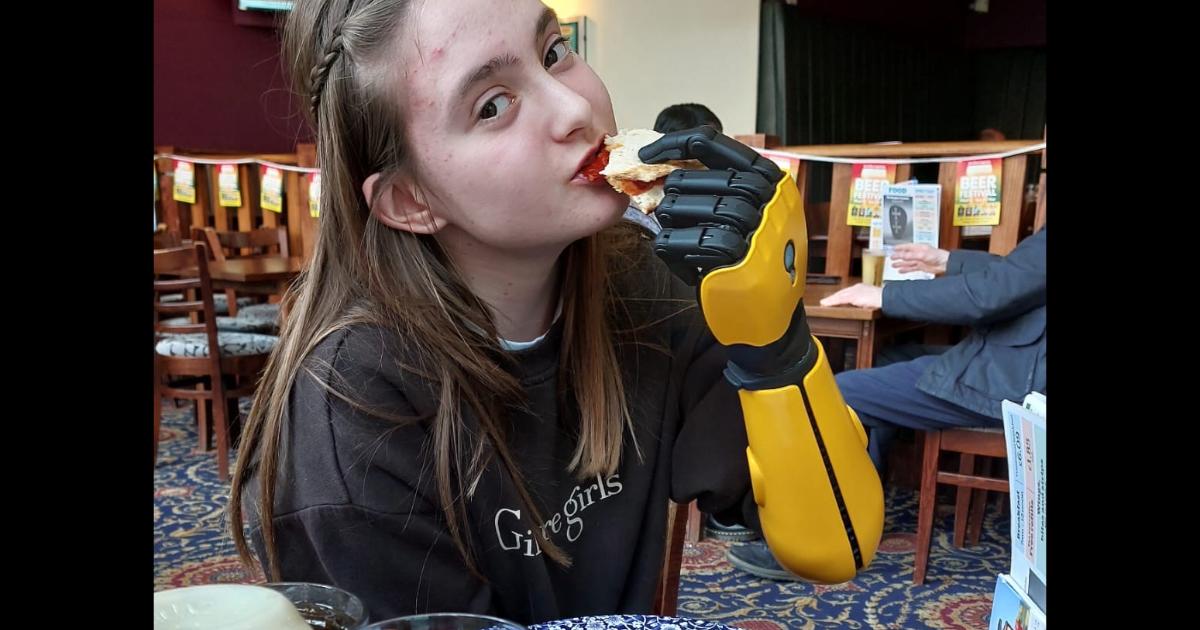
“I have been doing things I could only dream of now I have two hands” (Image: Supplied)

The multi-grip arm is developed by Open Bionics and is equipped with special sensors which detect upper arm muscle movements, allowing patients like Lexi to use it for everyday activities.

The Hero Arm is offered on the NHS and despite meeting the necessary criteria, Lexi faced a years-long waiting list.

Advertisement

Becki said: “Lexi found this news really difficult.

“At the time, each hospital visit had left her feeling deflated and frustrated, questioning whether she would ever feel ‘normal’.”

“So far, I have used it to brush my teeth, have a drink, eat a slice of pizza and even to shake someone’s hand” (Image: Supplied)

Amid the frustration, Lexi’s family came across The Open Bionics Foundation – a charity which works alongside people hoping to receive a bionic arm.

The charity informed Lexi that if £20,000 could be raised, she would be able to have her arm built and moulded privately before Christmas.

Advertisement

Social media fundraisers – Hand It To Lexi – were set up alongside a dedicated GoFundMe page – and the Pocklington community came together to make Lexi’s dream a reality.

She received her Hero Pro – an upgrade to the previous Hero Arm – after visiting the Open Bionics clinic in Bristol on Wednesday (February 25).

Speaking about this, she said: “I have only had the arm for four days, but it has already been life-changing for me.

“I have been doing things I could only dream of now I have two hands.

Advertisement

“I know it will take some time to get used to but so far, I have used it to brush my teeth, have a drink, eat a slice of pizza and even to shake someone’s hand.

“I can’t thank my mum and dad enough for all the organising they did to raise the money, as well as all the support from family and friends.

“The people of Pocklington have been amazing at getting behind the fundraising events – not just with donating money but goods and volunteering as well.

“Even stranger further afield have helped – so thank you to everyone for making my dreams come true.”

Advertisement

Source link

Continue Reading
Click to comment

Leave a Reply

Your email address will not be published. Required fields are marked *

NewsBeat

Algerians struggle to afford Ramadan feasts as prices rise despite government pledges

Published

on

Algerians struggle to afford Ramadan feasts as prices rise despite government pledges

As Algerians fast, pray and gather for the holy month of Ramadan, a worry lurks in many minds: how to afford the holiday feasts this year.

In addition to its religious significance for billions of Muslims, Ramadan also means tables laden with rich and varied meals eaten after the muezzin’s call to break the fast at sunset.

Today, these feasts come at a cost beyond the reach of many Algerians, whose purchasing power has declined in recent years despite Algeria’s gas and oil riches, pushing more and more people below the poverty line.

Food prices have soared, and tensions at marketplaces now occasionally erupt into violence.

Advertisement

After Algeria was convulsed by nationwide protests in 2019, the government became concerned about broader social unrest and promised economic aid.

“In the 1970s, we didn’t earn much, but we could stock up for Ramadan and afford fresh meat, fruit, and vegetables,” Ahmed Messai, a retired railway worker, told The Associated Press at the Clauzel market in central Algiers.

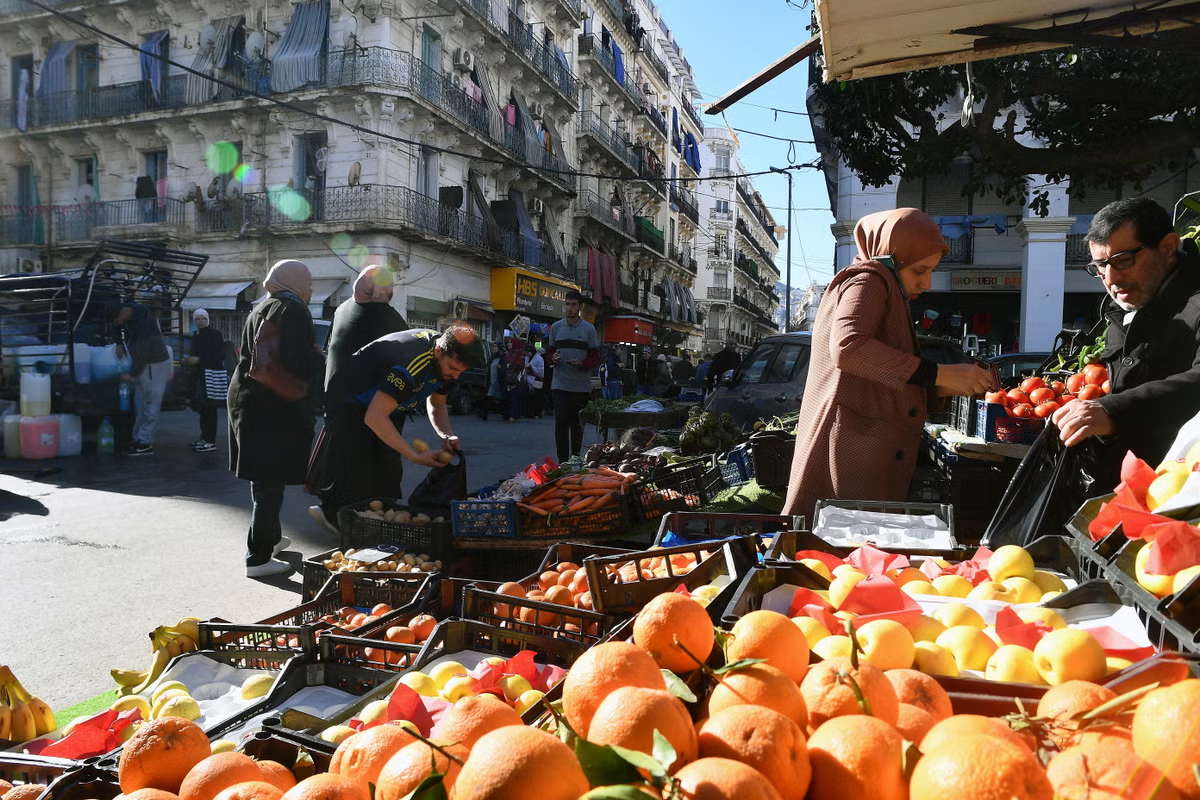
On the ground floor of the market, the beating heart of commercial life in the Algerian capital, merchants’ stalls are well stocked with fruit and vegetables, displayed with enticing artistry.

But as Ramadan approached, prices climbed.

Advertisement

An older woman, clutching her traditional white haik garment, lamented onion prices going from 45 dinars per kilo to 100 dinars (35 cents to 77 cents) in two days. She hurled insults at an impassive vendor as he talked to her about profit margins. Carrots sell for 150 dinars per kilo, peppers 200 dinars and green beans 550 dinars.

The woman’s shopping basket remained empty.

The Algerian government has cracked down on Ramadan speculators, to little effect. At a special recent Cabinet discussion of Ramadan food supplies, President Abdelmadjid Tebboune vowed, “all conditions must be guaranteed to allow citizens to spend the holy month in perfect peace and without worry.”

Among his promises were government imports of 144,000 sheep and 46,000 cattle to make meat more accessible for Ramadan meals. Locally sourced mutton from Algeria’s High Plateaus, known for its flavor and aroma, as well as young cattle from the Kabyle mountains, have become prohibitively expensive even for middle-income professionals.

Advertisement

Civil society plays a key role in helping struggling families during Ramadan. Restaurant owners transform their establishments into soup kitchens or “mercy restaurants” serving free meals.

“It’s a good mechanism for solidarity and civic awareness,” said academic Hocine Zairar, “but the proliferation of this type of restaurant says something serious about our society: how poverty is gaining ground in our country.”

One of the largest mercy restaurant operations in Algiers is run across different neighborhoods by the Algerian Red Crescent. People fill rows of long tables inside a huge tent in a central square to break their fast. “The atmosphere is family-friendly and we serve up to 800 meals a day,” said Nour el-Houda Remdani, one of the organizers, as she walked between the rows of diners benefiting from the provisions.

Mercy restaurants used to be frequented mainly by singles, people without housing or travelers. But in recent years, entire families now fill these makeshift eateries.

Advertisement

Even the president acknowledged profound economic shifts in recent years.

“The middle class, once the pride of Algeria, is now being decimated by the crisis,” Tebboune said in an interview on Algerian television earlier this month.

Tebboune has also promised an increase in the minimum wage from 20,000 to 24,000 dinars, an increase in retirement pensions of 5 to 10%, and an increase in unemployment benefits for university graduates, from 15,000 to 18,000 dinars.

The average salary in Algeria is 42,800 dinars, the equivalent of approximately $330 according to the official exchange rate, and less than $235 on the informal market.

Advertisement

Professor Redouane Boudjema of the Institute of Journalism in Algiers said the government’s Ramadan aid measures represented an effort to ensure “social peace” and “absorb political anger stemming from restrictions on civil and trade union freedoms.”

Source link

Continue Reading

NewsBeat

Who votes for the BRIT Awards? How they are decided

Published

on

Who votes for the BRIT Awards? How they are decided

BRIT Awards range from Song of the Year and Group of the Year to Album of the Year, with international artists also recognised.

But how are the award winners decided? Here is all to know.

Who votes for the BRIT Awards?

The BRIT Awards Voting Academy are responsible for determining the nominees and the overall winners of categories, the BRITs website explains.

It says: “The Academy is comprised of approximately 1,200 members who are responsible for shaping the creative and commercial success of the British music industry, including artists, producers, labels, retailers, publishers, managers, media, live, social and DSPs.

Advertisement

“The Academy and the voting process, including all public voting, is overseen by Civica Election Services – an independent voting scrutineer.”

The Voting Academy determines the nominees and winners for the majority of the categories, but not all of them.

The categories for Song of the Year with Mastercard and International Song of the Year EW decided by public vote exclusively on WhatsApp.

Both the Producer of the Year and Songwriter of the Year are also not voted for by the Voting Academy, and are instead decided by a separate expert panel.

Advertisement

The BRITs Critics’ Choice award is decided on by an invited panel of music editors and critics from the national press, online music editors, heads of music at radio and music TV stations, songwriters, producers and live bookers.

Who has won the most BRITs?

Robbie Williams holds the record for the most BRIT Award wins, with 13 as a solo artist and another five as part of Take That.

Coldplay holds the record for most BRIT Award nominations, with 32 in total.

In 2024, Raye broke the record for the most nominations received by a single artist in a year, with seven.

Advertisement

Who is your favourite artist or band? Let us know in the comments.

Source link

Advertisement
Continue Reading

NewsBeat

Fires in Kilburn Road believed to have been started deliberately

Published

on

Fires in Kilburn Road believed to have been started deliberately

As a subscriber, you are shown 80% less display advertising when reading our
articles.

Those ads you do see are predominantly from local businesses promoting local
services
.

These adverts enable local businesses to get in front of their target audience – the local
community
.

It is important that we continue to promote these adverts as our local businesses need
as much support as possible during these challenging times.

Advertisement

Source link

Advertisement
Continue Reading

NewsBeat

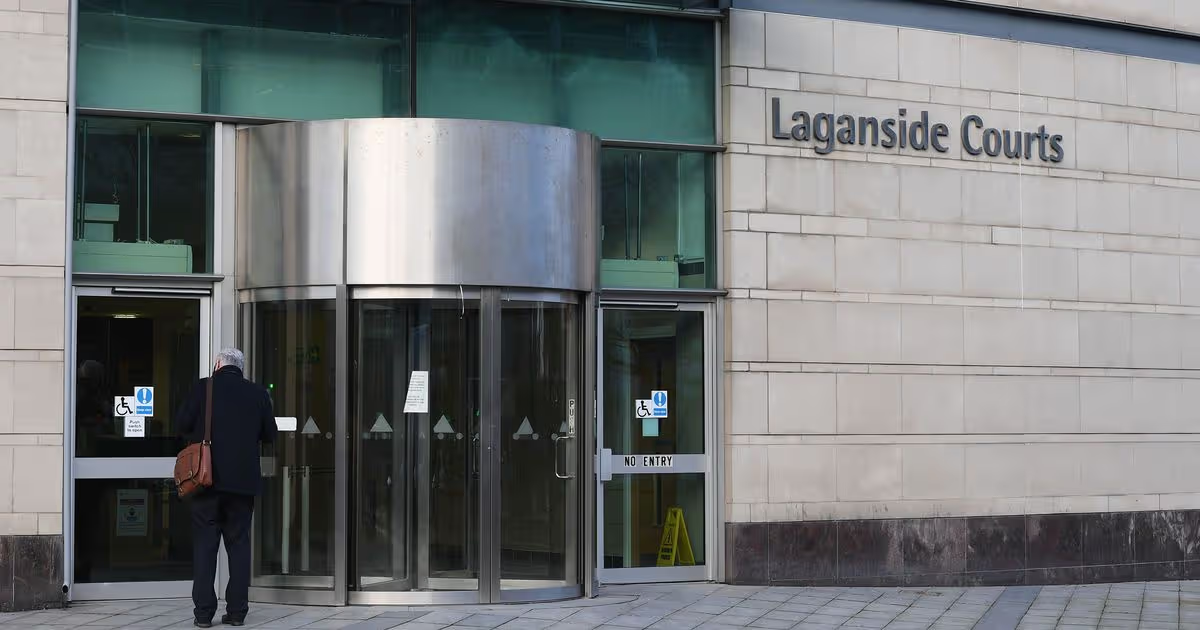
10 cases heard before Northern Ireland courts this week

Published

on

Belfast Live
10 cases heard before Northern Ireland courts this week | Belfast Live

reach logo

At Reach and across our entities we and our partners use information collected through cookies and other identifiers from your device to improve experience on our site, analyse how it is used and to show personalised advertising. You can opt out of the sale or sharing of your data, at any time clicking the “Do Not Sell or Share my Data” button at the bottom of the webpage. Please note that your preferences are browser specific. Use of our website and any of our services represents your acceptance of the use of cookies and consent to the practices described in our Privacy Notice and Terms and Conditions.

Source link

Continue Reading

NewsBeat

Welsh Open 2026: Barry Hawkins to face Jack Lisowski in Welsh Open final

Published

on

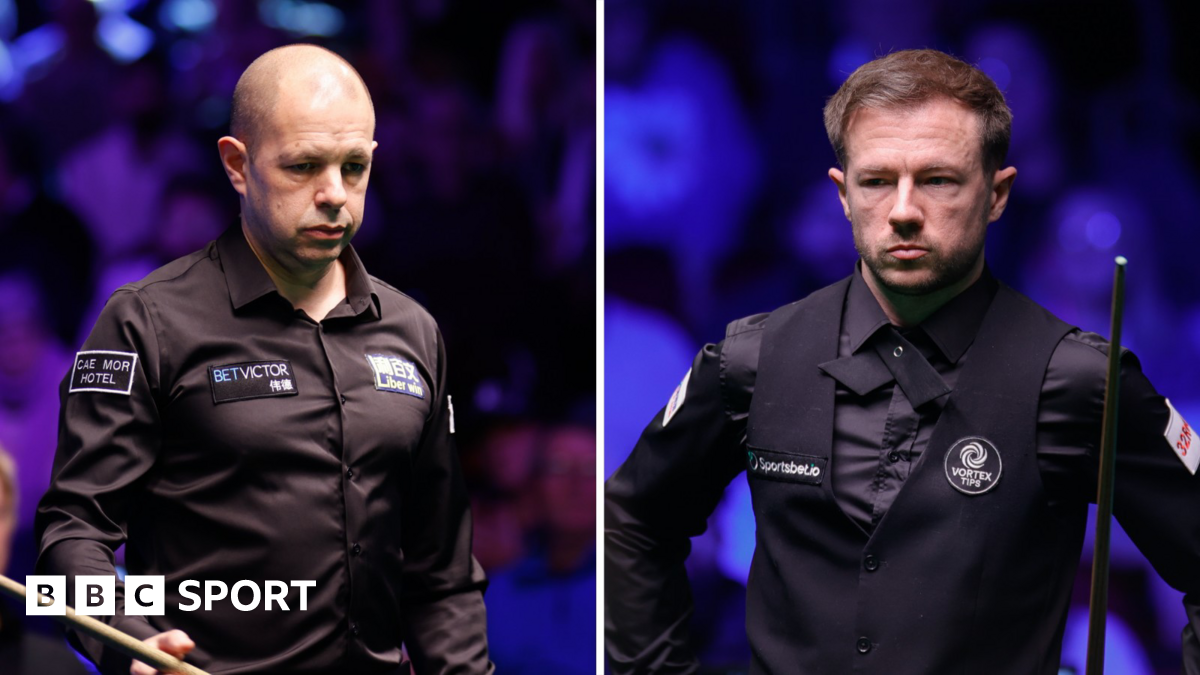
Barry Hawkins (left) and Jack Lisowski (right) in black snooker attire

Jack Lisowski pulled off a stunning comeback to beat five-time champion John Higgins and reach the Welsh Open final for the first time.

The 34-year-old Lisowski came from 3-1 behind to beat the Scot 6-5 in Llandudno to set up a meeting with fellow English left-hander Barry Hawkins in Sunday’s final (13:00 GMT).

He made breaks of 95, 79, 138, 58 and a closing 78 to deny 50-year-old Higgins a shot at the Ray Reardon Trophy.

“I knew I was playing well. I turned the game around after the interval and I was just thinking ‘keep it going’,” Lisowski told BBC Sport.

Advertisement

“Sometimes when the pressure’s like that, it gets a little bit easier because you go into auto-pilot.

“The crowd was amazing. I felt at 4-3 up, ‘I’m playing really good’, but you’re playing John Higgins. It’s like you’re playing a god.

“Anyway, I won, happy days.”

Source link

Advertisement
Continue Reading

NewsBeat

Dad with MND to protest at Westminster demanding funding to find cure

Published

on

Daily Record

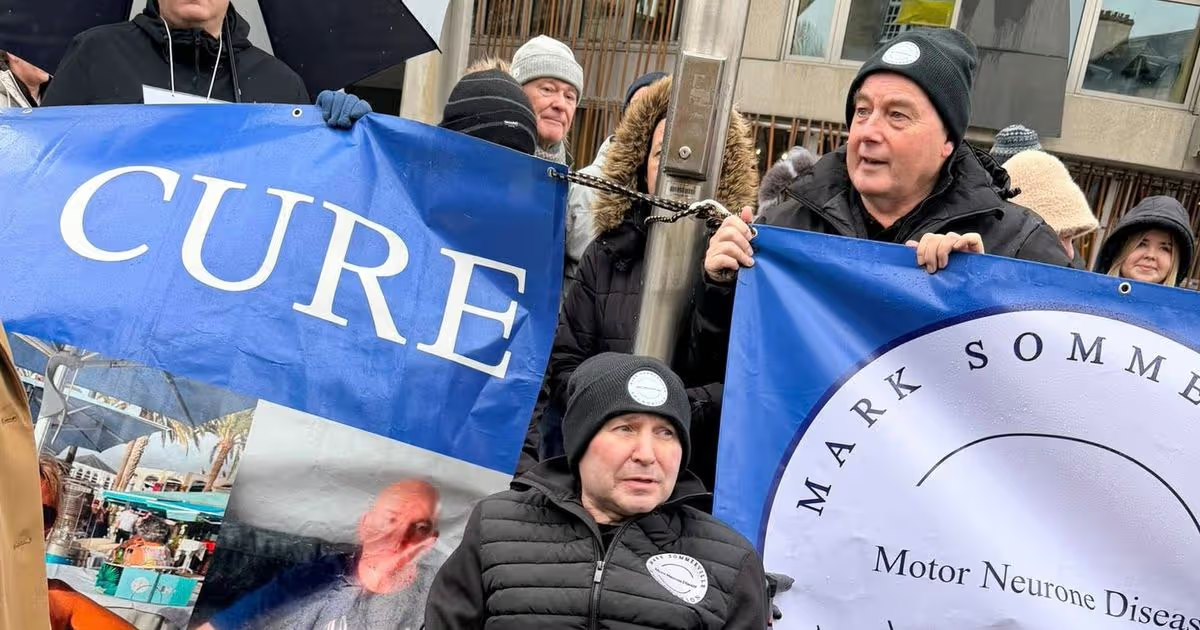
Mark Sommerville will join other sufferers and campaigners to demand more help, funding and awareness of the rapidly progressive life-limiting disease.

A Dad with motor neurone disease will protest outside Westminster this week to demand more funding to help find a cure.

Advertisement

Mark Sommerville will join other sufferers and campaigners to demand more help, funding and awareness of the rapidly progressive life-limiting disease.

The dad of four, from Uddingston, Lanarkshire, received his MND diagnosis in October 2023 and was told he had 18 months to live.

The 45-year-old has since set up the Mark Sommerville Foundation to fund research but believes the UK and Scottish governments are not doing enough to help fund new treatments.

Mark is now set to take part in the protest in Westminster at Parliament Square on March 4.

Advertisement

Mark said: “Those diagnosed with MND cannot wait

“Motor Neuron Disease devastates lives.

“Not enough is being done. Not enough funding, urgency. Not enough action.”

It comes after Mark and 60 supporters demonstrated outside the Scottish Parliament last month highlighting a lack of awareness of the rapidly progressive life-limiting disease.

Mark was praised by PM Keir Starmer in Westminster in 2024 for his fundraising and told: “We stand with you in this fight.”

However more than a year on, he believes the UK Government is also not doing enough to fund research into treatments.

Advertisement

Starmer recognised Mark’s work and that of rugby league star Kevin Sinfield, who has raised a million for sufferers of MND, which took his best friend Rob Burrow’s life in June, aged 41.

It also took Scotland rugby legend Doddie Weir in 2022, aged 52.

Source link

Advertisement
Continue Reading

NewsBeat

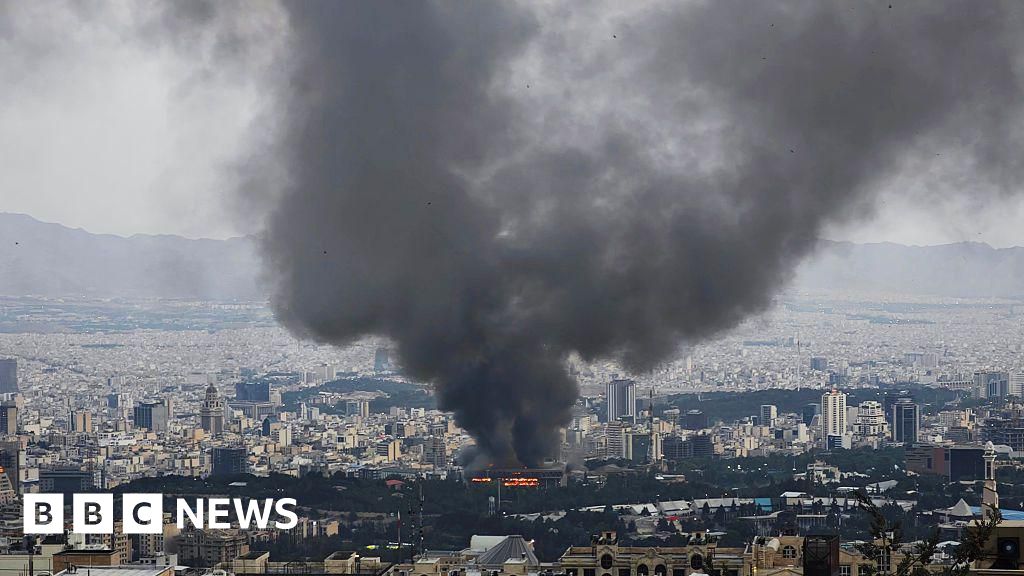
How the world has reacted to US and Israeli strikes on Iran

Published

on

How the world has reacted to US and Israeli strikes on Iran

At an emergency UN Security Council meeting in New York on Saturday afternoon, US Ambassador Mike Waltz said the strikes were “directed toward specific and strategic objectives: to dismantle missile capabilities that threaten allies, to degrade naval assets used to destabilise international waters, and to disrupt the machinery that arms proxy militias and to ensure the Iranian regime, never ever can threaten the world with a nuclear weapon”.

Source link

Continue Reading

NewsBeat

Manchester United lineup vs Crystal Palace predicted as star man dropped

Published

on

Manchester Evening News

Man United can make it back-to-back wins this afternoon when they face Crystal Palace in the Premier League.

The disappointment of the draw with West Ham is long gone after Manchester United got back on track with a win over Everton on Monday night.

Advertisement

The game at the Hill Dickinson Stadium was threatening to turn into a carbon copy of the West Ham clash, with United enjoying plenty of possession but failing to break their opponents down. As Everton started to get on top in the second half, sub Benjamin Sesko struck to hand United a huge three points in the race for Champions League football.

Try MEN Premium NOW for just £1

Michael Carrick will stick with the majority of players who started at Everton when he picks his side to face Crystal Palace today, meaning Senne Lammens will definitely start in goal. The Belgian was superb on Monday night and there’s every chance United wouldn’t have recorded the win were it not for his brilliant display.

Diogo Dalot and Luke Shaw continue in the full back spots with Harry Maguire in the centre. Leny Yoro looks to have overcome his rocky spell after a solid outing on Monday and can start at centre-back with Maguire.

Advertisement

Casemiro will be fine to start again after six days’ rest and Kobbie Mainoo will continue alongside him. Bruno Fernandes is the first name on the team sheet and he will start in the No.10 role.

FOLLOW OUR MAN UNITED FACEBOOK PAGE! Latest news and analysis via the MEN’s Manchester United Facebook page

Many expected Sesko to be given his chance from the start against Everton after his late heroics at West Ham, but Carrick resisted the urge to start the young forward. After his goal on Monday night, he simply has to start today. With Sesko leading the line, Matheus Cunha and Bryan Mbeumo can play in the wide areas.

Amad can be excellent on his day and has been a match-winner for United in the past, but with Sesko in top form and Amad clearly struggling at the moment, it’s time to take him out of the team.

Advertisement

Ensure our latest sport headlines always appear at the top of your Google Search by making us a Preferred Source. Click here to activate or add us as a Preferred Source in your Google search settings

Source link

Advertisement
Continue Reading

NewsBeat

How Trump decided to abandon talks and go to war with Iran

Published

on

How Trump decided to abandon talks and go to war with Iran

WEST PALM BEACH, Fla. (AP) — With Saturday’s military operation against Iran, President Donald Trump demonstrated a dramatic evolution in risk tolerance, adjusting in just a matter of months how far he was willing to go in using American military might to confront Tehran’s clerical rule.

Guardrails were tossed aside, as Trump and Israeli Prime Minister Benjamin Netanyahu ordered up a battle plan that included targeted strikes on Iran’s leadership, including the 86-year-old Supreme Leader Ayatollah Ali Khamenei whose death Trump triumphantly announced in a social media post hours after launching the military operation.

For Trump, it was a far cry from where he stood just eight months ago. At Israel’s urging during its 12-day war with Iran last June, he agreed to deployB-2 bombers to pummel three key Iranian nuclear sites — but drew a bright red line when Israelis presented his administration with a plan for killing Khamenei.

The president peppered the supreme leader with thinly veiled threats back in June that he could have killed him if he wanted to. But he rejected the Israeli plan out of concern that it would destabilize the region.

Advertisement

That caution was set aside on Saturday with Trump announcing Khamenei had been killed, while the Israeli military announced it had taken out Iran’s defense minister and the commander of its Revolutionary Guard. Iranian state media early Sunday reported the 86-year-old Supreme Leader’s death, without elaborating on a cause.

Khamenei “was unable to avoid our Intelligence and Highly Sophisticated Tracking Systems and, working closely with Israel, there was not a thing he, or the other leaders that have been killed along with him, could do,” Trump said. “This is the single greatest chance for the Iranian people to take back their Country.”

Trump loses patience

Trump had pursued talks with Iran for months. Administration officials told reporters that they offered Iran many ways to have a peaceful nuclear program that could be used for civilian purposes, including an offer of free nuclear fuel in perpetuity.

But the officials, who were not authorized to comment publicly and spoke on condition of anonymity, said it was clear to them that Iran wanted enriched uranium for a nuclear weapon. One of them said that Iran has met their offers with “games, tricks, stall tactics.”

Advertisement

The order to launch strikes came just two days after Trump dispatched his special envoys, Steve Witkoff and Jared Kushner, for another round of talks with Iranian officials. Middle East and European allies were urging the U.S. administration to give negotiations more time as Trump signaled he was running out of patience.

“The consequences are likely to be as far-reaching as they are uncertain: Within the system that has held power for nearly five decades, between the government and a dissatisfied populace, and between Iran and its adversaries,” said Ali Vaez, Iran project director at the International Crisis Group. “And although the regime is weakened, a sense that this showdown is an all-or-nothing struggle for its very survival could lead it to respond with every tool still at its disposal.”

Revised risk calculation

Saturday’s strikes came after a series of past provocative actions against Iran that resulted in limited blowback, which seemed to inform Trump’s risk calculation, said Aaron David Miller, who served as an adviser on Middle East issues to Democratic and Republican administrations over two decades.

Trump in 2018 pulled out of the Iran nuclear deal negotiated by Democratic President Barack Obama’s administration. In 2020, Trump ordered a drone strike killing top Iranian Gen. Qassem Soleimani.

Advertisement

At the time, the killing of Soleimani, the head of Iran’s elite Quds Force, was arguably the most provocative U.S. military action in the Middle East since President George W. Bush launched the 2003 Iraq War to topple Saddam Hussein.

And then Trump this past June ordered the strikes on Iran’s nuclear facilities, which he claimed had “obliterated” their program.

“He did all of these things without cost or consequence to him,” said Miller, who is now a senior fellow at the Carnegie Endowment for International Peace. “He’s been risk-ready. That’s the nature of his personality.”

Trump administration officials had publicly urged Tehran to give up its nuclear weapons and ballistic missile programs and end its backing of regional armed proxies. But administration officials said that Tehran would not engage on the missile and proxy concerns.

Advertisement

Iran’s rigidity, at a moment when its economy is in shambles weighed by decades of sanctions and its military battered by last year’s war, astounded Trump.

Even before the latest round of talks ended on Thursday, there were signs Trump was leaning toward military action.

On Tuesday, Trump in his State of the Union speech claimed that Iran has been building ballistic missiles that could reach the U.S. homeland — a justification that he repeated again on Saturday as he announced the bombardment of Iran was underway.

Iran hasn’t acknowledged it is building or seeking to build intercontinental ballistic missiles. The U.S. Defense Intelligence Agency, however, said in an unclassified report last year that Iran could develop a militarily viable intercontinental ballistic missile by 2035 “should Tehran decide to pursue the capability.”

Advertisement

Secretary of State Marco Rubio told reporters on Wednesday that Iran’s refusal to speak to its ballistic missile program was a “big problem.” Rubio declined to address the DIA finding that Iran was still years away from developing a missile that could reach the United States.

And Vice President JD Vance, a former U.S. Marine who served in Iraq and has been skeptical of U.S. interventions, on Thursday told The Washington Post that Trump hadn’t decided whether to strike Iran. But he offered assurances that military action would not result in the United States becoming involved in a drawn-out conflict.

“The idea that we’re going to be in a Middle Eastern war for years with no end in sight — there is no chance that will happen,” Vance said.

By Friday, Trump was venting anew about Iran’s approach.

Advertisement

I’m not happy with the fact that they’re not willing to give us what we have to have,” Trump said. “I’m not thrilled with that. We’ll see what happens.”

Senior U.S. lawmakers were told early Saturday that the strikes were coming. Trump monitored the operation from his Mar-a-Lago resort in Palm Beach, Florida, with members of his national security team.

Trump may have been emboldened by his Venezuela experience

Trump’s success with the U.S. military operation earlier his year to capture Venezuelan leader Nicolás Maduro and whisk him and his wife to New York City to face federal drug conspiracy charges also may have emboldened the president, said Jonathan Schanzer, a former Treasury Department official who is now executive director of the Foundation for Defense of Democracies, a hawkish Washington think tank.

Trump had threatened military action last month, but held off, as Iran carried out a deadly crackdown on protests. The demonstrations were spurred by economic grievances but morphed into a nationwide, anti-government push against the ruling clerics.

Advertisement

As human rights groups reported that thousands were killed in the Iranian crackdown, Trump told protesters that help was on its way, but it did not immediately come and the protests petered out.

Schanzer said that Trump’s decision not to follow through last month gave his team more time to assemble the now massive presence of fighter jets and warships in the region — as he had done in the Caribbean ahead of the Venezuela operation.

It was leverage, Trump hoped, that would get Khamenei to blink. But the Supreme Leader would not capitulate.

“The way this unfolded was inevitable, because there was no way that the Ayatollah was going to show flexibility,” Schanzer said.

Advertisement

___

Madhani reported from Washington.

Advertisement

Source link

Continue Reading

NewsBeat

‘The fear of dying pushes you to live’ – stories from Ukraine’s children living through war | World News

Published

on

'The fear of dying pushes you to live' - stories from Ukraine's children living through war | World News

“The fear of dying pushes you to live.”

As Ukraine marks the fourth anniversary of the full-scale Russian invasion, Sky News has partnered with Voices of Children, a Ukrainian charity, to tell the stories of teenagers living through war.

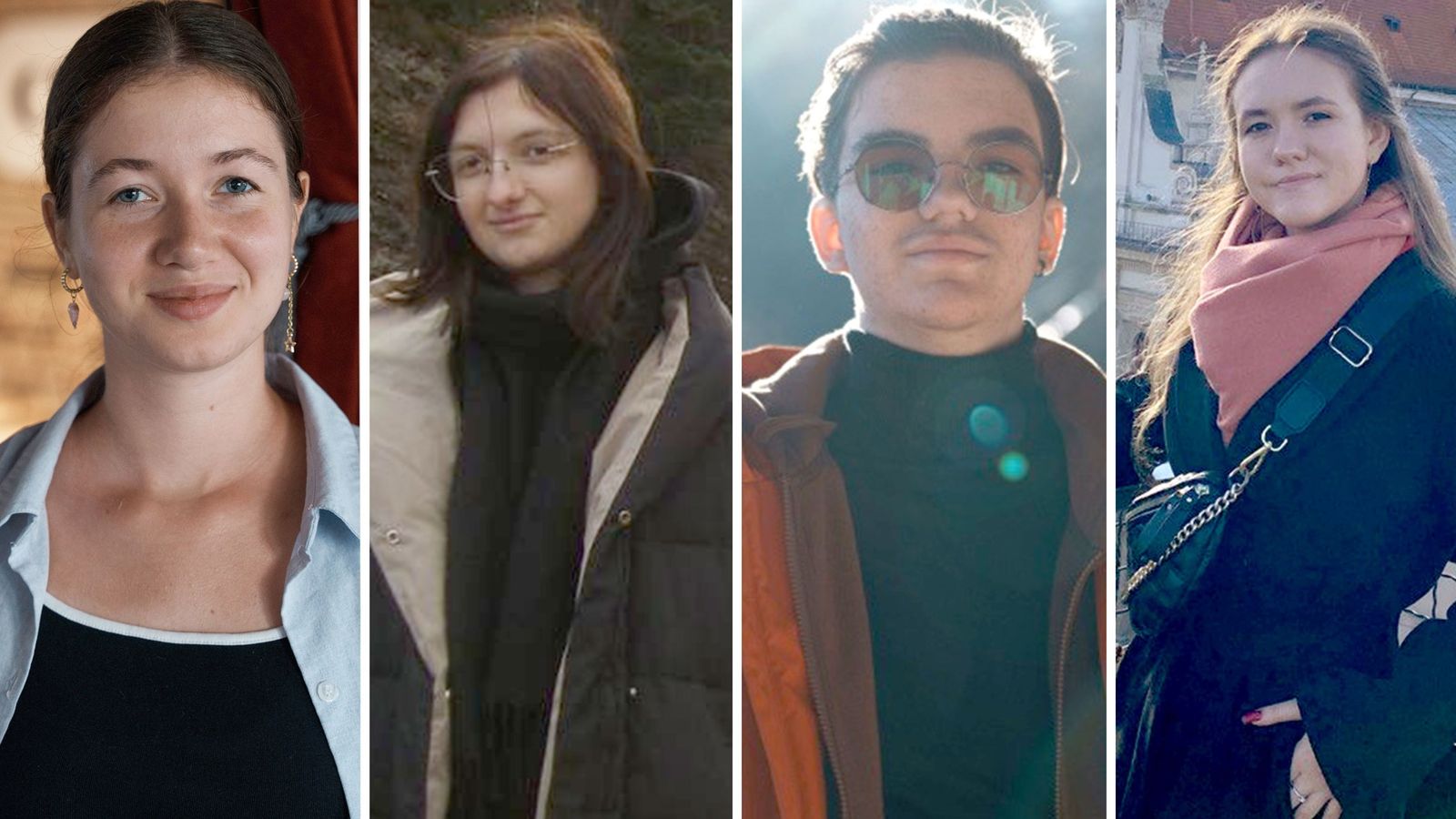
Oleksandra

Image:
Oleksandra. Pic: Voices of Children

I am 17. I was born and lived in the city of Bakhmut in the Donetsk region until the start of Russia’s full-scale invasion. Over the past four years, I have moved four times, losing my home and the opportunity to see my peers and friends in person. I have been studying online for four-and-a-half years.


Advertisement

During the full-scale invasion, I first lost my grandfather and then my home. On 24 February 2022, the day of the invasion, my family packed our belongings and left for the Rivne region, nearly 700 miles away. My grandfather refused to leave. He wanted to stay in Bakhmut. Some of our extended family members were still there. On 27 March, doctors discovered a blood clot in his leg. My grandfather died in his hometown and is buried there. I was unable to say goodbye to him or go to the funeral.

My house has been destroyed, nothing remains but bricks. But in truth, I lost my home the moment my grandfather died. Home is about memories, and memories are about family. Over these four years, I have never truly felt at home anywhere, and sometimes it feels as though that sense of home may never return.

The first thing I do when I wake up is check the power outage schedule. Online classes start at 8.45am and end at 3.55pm. Every day begins with the news and ends the same way. Before bed, I check which regions are under air raid alerts.

Over time, I’ve got used to the fact that my peers communicate exclusively via the internet and messaging apps. I realised that if I did not maintain contact with friends and peers, the four walls could become my only “friends”. It sounds frightening, but unfortunately, this is what life looks like today.

Advertisement

I try to talk to others as often as possible. I spend most of my day in my room and rarely leave the house before four in the afternoon. I live in a village, and in the nearest town there is almost nothing besides shops and cafes: no clubs, no activities, no real opportunities to grow.

The strength to keep going now comes from my younger brother – he cheers me up. It also comes from the support of my family and friends. I dream and hope to enter university, to find someone I love and to live the kind of life I want.

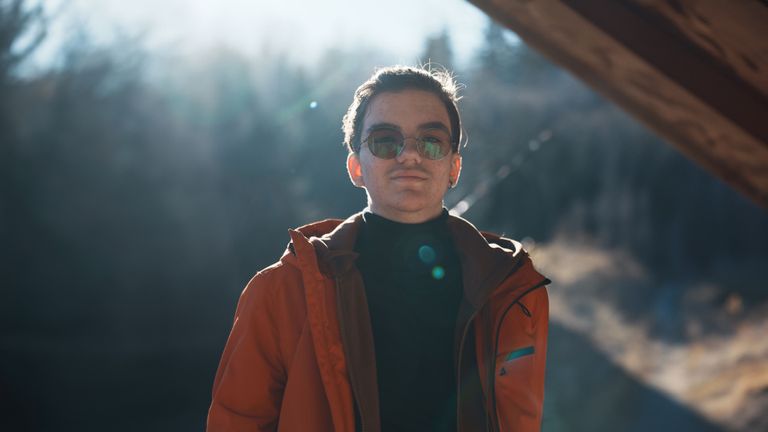
Marko

Marko. Pic: Voices of Children
Image:
Marko. Pic: Voices of Children

I’m 14 and I live in the city of Kryvyi Rih [a city in central Ukraine and Volodymyr Zelenskyy’s hometown]. For me, a day during the war feels like Groundhog Day. It means waking up in the morning without any sense of control, during an air-raid alert before classes, knowing your only choice is to sit in a cold school shelter or stay at home. For me, it’s a constant fear of dying without having done anything meaningful for others.

What’s frightening and strange is that the fear of dying pushes you to live, to grow, to develop in every possible way. Over these four years, I’ve been trying to do what I would have done over an entire lifetime. I don’t know what life will be like after the war, or who I will be, or whether I will even be at all. So for now, the war feels like my only chance to live.

Advertisement

The first day of real change for me was 25 February 2022. I was cleaning and washing out the basement at home, the improvised bomb shelter we still use. I remember the emotions when I first heard explosions, planes and sirens. Since then, the war has become a terrible backdrop even to good moments.

My birthday was on 16 July 2025. I spent it in the basement under shelling. I’m used to people congratulating me in the morning as a new day begins. But that day, the greetings started at midnight. We weren’t sleeping because of a Russian attack. That night is etched in my memory, filled with a mix of emotions.

The hardest thing for me is coming to terms with what has happened. Understanding that life will never be the same. It’s hard to navigate the search for justice in a world where objectivity may not even exist. It’s emotionally exhausting to know that people keep dying, and they cannot influence it. What keeps me going today is the chance to live not only for myself. The chance to grow, to do something for others, to exchange knowledge and experiences. The chance to dream, to plan a future that feels fragile and uncertain, yet still desired. Both acquaintances and those closest to me help me hold on. I won’t get another life.


From Wall Street to Ukraine’s frontlines

Advertisement

Sofia

Sofia. Pic: Voices of Children
Image:
Sofia. Pic: Voices of Children

I’m from Odesa. The full-scale war began when I was 15. This year, I will turn 20. My father was killed on the frontline defending us. I think of him every morning at 9am, when the country pauses for the minute of silence.

I never imagined I would learn what silence truly is. It had always been layered with birdsong, laughter, the voices of passersby, the hum of cars.

But now, at exactly 9am, silence falls across the entire country. Your heart begins to pound. Slowly, you clasp your hands in front of you. You hear the breathing of your classmates. Their heads are bowed in respect, like yours. This silence is different, filled with despair, pain and anxiety that make it hard to breathe. In your mind, you quietly say “thank you” to your father, who remains forever imprisoned in this single minute. In that moment, which feels like an eternity, the ticking of the clock stops. Students return to their seats. The lecturer resumes the lesson. And your barely healed wound aches again. You simply don’t show it.

Sofia. Pic: Voices of Children
Image:
Sofia. Pic: Voices of Children

At some point, you catch yourself thinking that this year you will turn 20. Why does it feel so hard to leave adolescence behind? Nothing costs as much as a childhood stolen by force.

In times of grief and overwhelming pain, I go home. I take off my shoes and sink my feet into the cool sand along the Odesa shore. Still, in the end, despair gives way to hope. Because the sea always listens, takes your anxiety and buries it in its depths.

Advertisement

Read more:
‘Fearing Russians would target you because you’re a girl’ – stories from Ukraine’s children
How have four years of war in Ukraine changed its two central figures?
The civilians who grabbed hunting rifles when Russians invaded

Mariia

Maria. Pic: Voices of Children
Image:
Maria. Pic: Voices of Children

I’m 19 and I don’t know where I’m from anymore.

Sometimes, I’m troubled by how I no longer know where my home is. Over 19 years, it’s changed three times. My preschool childhood was in Kamianske in Dnipropetrovsk, my primary school years in Feodosia in Crimea, my middle and high school years in Lviv, and now my university years are in Kyiv.

When I left and said goodbye to everyone in Feodosia, I told them I would come back. It feels as though I made that promise to Feodosia itself, and now, not by my own will, I am breaking it. I didn’t really process that grief for a long time, and now I find myself crying about it often.

Advertisement

About two years after we moved, I began to forget Feodosia: the 40-minute walk to school, our summer house near Ordzhonikidze, the smell of the forest and sea, the park by the music school. A month ago, for the first time in eight years, I wandered through Feodosia on Google Maps. I cannot describe how good, painful and tender it felt at the same time. My mother and I have talked about how, even if we one day return to Crimea, to the places I now miss so deeply, they will hardly be the same places where little Marichka once ran. With those thoughts comes despair first, but then, gradually, acceptance.

Source link

Advertisement
Continue Reading

Trending

Copyright © 2025