








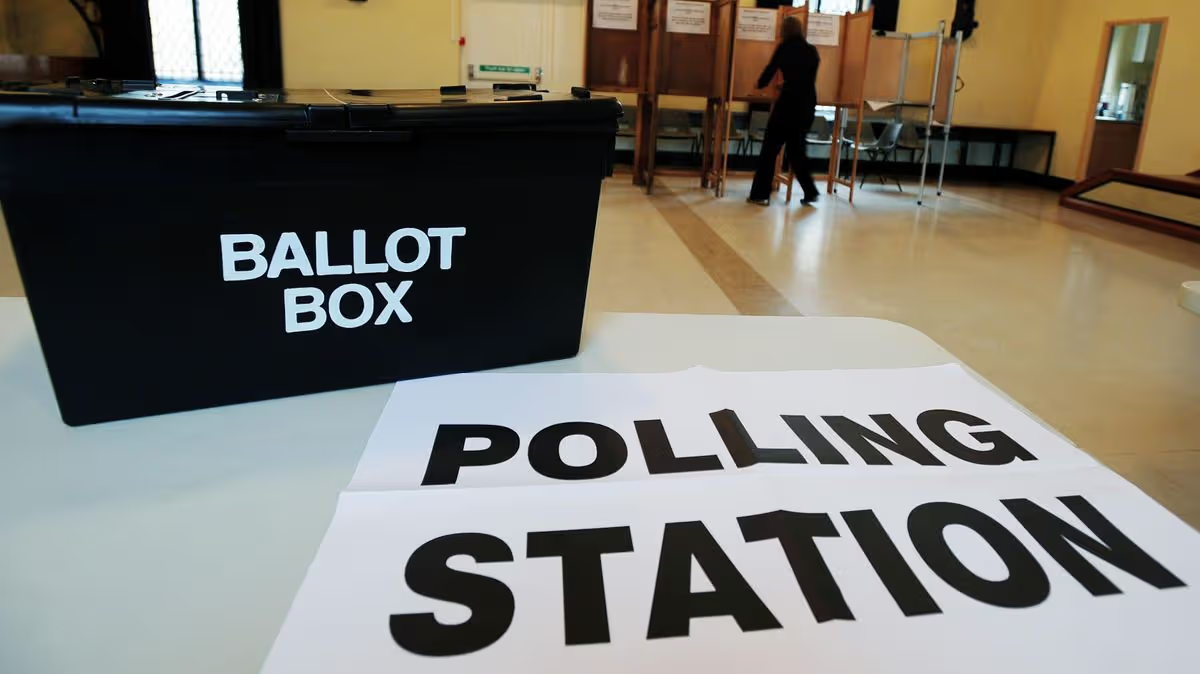
Voters will once again vote in local elections when the polls open on Thursday, May 7. Several Cambridgeshire councils have now announced lists of candidates standing in the May 2026 elections.
This year, elections are taking place in Huntingdonshire, South Cambridgeshire, Cambridge City, and Peterborough. However, they will not be taking place in East Cambridgeshire and Fenland, as these will take place in 2027.
This year’s elections will take place on Thursday, May 7. People have until midnight on Monday, April 20, to register to vote. For postal vote, the deadline is by 5pm on April 21. The deadline for a proxy vote is by 5pm on April 28.
Here is all you need to know about this year’s elections and who is elected in different wards.
South Cambridgeshire District Council
Elections will be held for all seats across South Cambridgeshire, including the district council, as well as town and parish councils. For the district council, the following candidates are nominated:
Balsham
- John Richard Biggs – Conservative
- David Burrell – Reform UK
- Bob Ensch – Green
- Geoff Harvey – Liberal Democrats
- Martin Parker Dixon – Labour
Bar Hill
- Graeme Hodgson – Labour
- Paul Pallan – Reform UK
- William George Scantlebury – Liberal Democrats
- Rebecca Seabrook-Tedd – Green
- Bunty Elizabeth Waters – Conservative
Barrington
- Colin Graham French – Conservative
- Jim Huntington – Reform UK
- Clare Rogers – Green
- Clare Sinclair – Labour
- Aidan Thomas Van De Weyer – Liberal Democrats
Bassingbourn
- Adam Bostanci – Liberal Democrats
- Karen Fiona Livingstone – Labour
- Christopher Rolf Meakin – Conservative
- Joseph Price – Green
- Stephanie Wright – Reform UK
Caldecote
- Terence John Cross – Reform UK
- John Robert Jefferies – Liberal Democrats
- Guy Lachlan – Independent
- Tom Postlethwaite – Green
- Chiranjeevi Sandi – Conservative
- Judith Louise Tustian – Labour
Cambourne
- Donavan Michael Bangs – Reform UK
- Shrobona Bhattacharya – Conservative
- Michael Allan Booth – Liberal Democrats
- Gavin Clayton – Green
- Rob Denison – Green
- Timothy Frances Lagé Hayes – Labour
- Dalia Heggo – Independent
- Trevor Jarman – Reform UK
- Paul Alexander Jobling – Reform UK
- Helene Elizabeth Leeming – Liberal Democrats
- Nick Rana-Beadle – Conservative
- Amber Thomas – Liberal Democrats
- Daniel John White – Conservative
- David Allan Williams – Labour
Caxton and Papworth
- Charles Barclay – Reform UK
- Leslie Charles Edwards – Conservative
- Andy Perkins – Labour
- James Earl Pickford – Reform UK
- Chris Poulton – Liberal Democrats
- Peter David Sandford – Liberal Democrats
- Mandy Smith – Conservative
- Tagl – Green
- Jane Turner – Green
Cottenham
- Nigel Charles Francis Bolitho – Conservative
- Laura Cain – Green
- James Ronald Cochrane – Reform UK
- Colin Coe – Green
- Yasmin Dexter – Liberal Democrats
- Frederick Thomas Hargreaves – Reform UK
- Thomas Mark Hingston – Labour
- Linda Mary Morris – Conservative
- Gethin James Sanger – Labour
- Eileen Wilson – Liberal Democrats
Duxford
- Samuel Alexander Betz – Conservative
- David Horace Dobson – Labour
- Peter John McDonald – Liberal Democrats
- Tim Pavelin – Green
- Peter Young – Reform UK
Fen Ditton and Fulbourn
- Tim Andrews – Labour
- Chris Bailey – Labour
- Colin Barker – Reform UK
- Steve Bradshaw – Green
- Ian Paul Crowson – Conservative
- Vince Farrar – Liberal Democrats
- Karen Elizabeth French – Conservative
- Jacob Gray – Green
- Carla Hofman – Liberal Democrats
- Lukaz Lakomy – Reform UK
- Lee Andrew Martin – Conservative
- Angela Belinda Platt – Labour
- Ciprian Sandu – Reform UK
- Elisabeth Whitbread – Green
- Chloe Wills-Eve – Liberal Democrats
Foxton
- Donald Fisher Douglas – Conservative
- Luca Raffaello Ercole – Green
- James Hobro – Liberal Democrats
- Liz Miller – Reform UK
- Lavinia Anne Marie Pugh – Labour
Gamlingay
- Derek Graham Hill – Reform UK
- Rosanna Mahmood Bishop – Green
- Diane Audrey Myers – Conservative
- Giordy Salvi – Labour
- Dorrington Bridget Zoe Smith – Liberal Democrats
Girton
- Paula Brown – Reform UK
- Corinne Garvie – Liberal Democrats
- Stephen William George – Conservative
- Matthew Henden Gilbey – Green
- Clare Rachel Gray – Green
- Sarah Antonia Johnson – Labour
- Timothy Scott – Reform UK
- Richard Keith Stobart – Liberal Democrats
- Jennifer Margaret Stuart – Conservative
Hardwick
- Joe Beastall – Labour
- Hugh Clough – Green
- Catherine Stella Ffolliot Hubbard – Liberal Democrats
- Helen Manson – Reform UK
- Lina Maria Nieto – Conservative
Harston and Comberton
- Duncan Bullivant – Reform UK
- Henry Bullivant – Reform UK
- Ariel Martin Cahn – Liberal Democrats
- Laurence Peter Damary-Homan – Liberal Democrats
- Helen Haugh – Labour
- Aled Wynne Jones – Green
- Pauline Barbara Joslin – Conservative
- Lorraine Wendy Mooney – Conservative
- Emily Morris-Lower – Reform UK
- Lisa Sarah Redrup – Liberal Democrats
- Joseph Shortmoor – Labour
- Peter Andrew Slavny – Labour
- Michelle Taylor – Green
- Joshua Charles Vanneck – Conservative
- Lucy Young – Green
Histon and Impington
- John Brian Abbott – Reform UK
- Jayasimha Reddy Berumgudem – Conservative
- Chris Boulton – Reform UK
- Martin Gabriel Chahn – Liberal Democrats
- Mandy Kawalko – Reform UK
- Adam Morgan – Green
- Simon Charles Patenall – Labour
- Isaac Harry Rawlings – Labour
- James Rixton – Liberal Democrats
- Geo Sebastian – Liberal Democrats
- Edd Stonham – Green
- Mark Spencer Stuart – Conservative
- Paul Tarita – Green
- Joshua Michael Willis – Conservative
Linton
- Nathan Banks – Green
- Henry Batchelor – Liberal Democrats
- John Batchelor – Liberal Democrats
- Katy Ensch – Green
- Sarah Jane Hucum – Reform UK
- Merrie Mannassi – Reform UK
- Mike Murray – Labour
- Yorsh Naidoo – Conservative
- Ernie Turkington – Labour
- Sean Williams – Conservative
Longstanton
- Dominic George Brigstocke – Labour
- Tom Bygott – Conservative
- Alison Paula Elcox – Reform UK
- Sunita Hansraj – Liberal Democrats
- Lucy Ann Mance – Green
- Tristan Luke Pithers – Conservative
- Silke Scott-Mance – Green
- Liam Donovan Varnam – Reform UK
- Natalie Warren-Green – Liberal Democrats
- Clare Rosemary Wilson – Labour
Melbourn
- Mark Edward Arnold – Conservative
- Lee John Bovington – Reform UK
- James Phillip Bull – Labour
- Simon James Copley – Green
- Bobby Ford – Labour
- Jose Hales – Liberal Democrats
- Sally Ann Hart – Liberal Democrats
- Thomas Julian Charles Leigh – Conservative
- Max Henry Schwiening – Green
- Phyllis Smith – Reform UK
Milton and Waterbeach
- Gail Denise Arnold – Conservative
- Paul Joseph Bearpark – Liberal Democrats
- Anna Elizabeth Bradnam – Liberal Democrats
- Ellie Crane – Green
- Oli Fisher – Green
- Natania Goldrich – Reform UK
- Ann Hodson – Reform UK
- Ge Huang – Conservative
- Laura Macleod – Liberal Democrats
- Elizabeth Anne McWilliams – Labour
- Frank Morris – Conservative
- Mary Judith Perkins – Labour
- Ron Sharp – Reform UK
- Joe Welford – Green
- Gareth Mark Wright – Labour
Over and Willingham
- Jason Denison – Green
- Robert Fairbrother – Reform UK
- Ian Hunter – Labour
- James Hutchcraft – Liberal Democrats
- Mark Macdonald – Conservative
- Aisha Rashid – Liberal Democrats
- Colin Reynolds – Green
- Michael Paul Smith – Reform UK
- Graham William Waters – Conservative
Sawston
- Chloe Balhatchet – Green
- Mark Chater – Reform UK
- Daniel Clark – Green
- Gifford Frances Pamela Douglas – Conservative
- Graham Harrison – Reform UK
- Brian Milnes – Liberal Democrats
- Anand Pillai – Labour
- Ed Sanders – Liberal Democrats
- Ben Shelton – Conservative
Shelford
- Lee Denison – Green
- Miranda Fyfe – Green
- Nick Gay – Labour
- Farhan Hussain – Liberal Democrats
- John William Lamble – Reform UK
- Mark Andrew Lunn – Liberal Democrats
- Brigitta Naunton – Reform UK
- Angela Dorothy Niblett – Conservative
- Yvonne Nobis – Labour
- Rebecca Louis Shiret – Conservative
Swavesey
- Vivien Caroline Biggs – Liberal Democrats
- Phil Cohen – Green
- Sue Mary Ellington – Conservative
- Karl Lattion – Reform UK
- Barbara Joanna Mills – Labour
The Mordens
- Frankie Brook – Green
- Daniel James Greef – Labour
- Josh Johnson – Reform UK
- James Leopold Stuart – Liberal Democrats
- Heather Rose Williams – Conservative
Whittlesford
- Sophi Berridge – Green
- Clare Elizabeth Downie – Labour
- Claire Hill – Reform UK
- Sarah Louise Vowler – Liberal Democrats
- Richard Lynn Williams – Conservative
Cambridge City Council
In Cambridge, there will be one councillor elected to 13 wards. There will then be two councillors elected in Trumpington following the resignation of Nadya Lokhmotova.
Abbey
- Anne Roe Rosemary Ansell – Liberal Democrats
- Tommy Brace – ReforM UK
- Simon Brignell – Communist Party of Britain
- Margaret Maria Cleminson – Green
- Ruaidhri O’Donnell – Labour
- David Philip Smith – Conservative
Arbury
- Robert Boorman – Conservative
- Will Burrows – Reform UK
- Carmen Sefira Davison – Green
- Jocelynne Scutt – Labour and Co-operative Party
- Fionna Tod – Liberal Democrats
Castle
- Khalid Abu-Tayyem – Independent
- Carol Bedson – Reform UK
- Luke Patterson – Liberal Democrats
- Dace Ruklisa – Conservative
- Alex Sage – Green
- Simon Smith – Labour
Cherry Hinton
- Eric William Barrett-Payton – Conservative
- Anusha Iyer – Green
- Russ McPherson – Labour
- Mike Nicolson – Reform UK
- Ahmad Rushdhi – Liberal Democrats
Coleridge
- Tim Brunton – Liberal Democrats
- Steve Burdett – Reform UK
- Louise Sarah Nicmanis – Green
- Anna Smith – Labour and Co-operative Party
- Mitchell Sam Worthington – Conservative
East Chesterton
- Jean-Ann Bartlett – Conservative
- Ania Bobrowska – Liberal Democrats
- William James Dry – Communist Party of Britain
- Isaac Groves – Green
- Sarah Haithcock – Labour
- Godfrey Orr – Reform UK
- Mark Wells – Reform UK
King’s Hedges
- Mahfuj Ahmed – Conservative
- Zarina Anwar – Independent
- Eleanor Cooke – Independent
- David Michael Creek – Liberal Democrats
- John McKay – Reform UK
- Daniel Quinn – Green
- Martin Andrew Smart – Labour
Market
- Edwin Kwaku Addo – Labour
- Katie Porrer – Liberal Democrats
- Alex Sefton-Tromans – Green
- Mark Wells – Reform UK
- Panda Xiong – Conservative
Newnham
- Katie Barron – Liberal Democrats
- David Carmona – Independent
- Sabina Harris-Hercules – Labour
- Lui Murton – Reform UK
- Poppy Simister-Thomas – Conservative
- Frances Eleanor Toye Scott – Green
Petersfield
- Luke Burrows – Reform UK
- Kathryn Fisher – Green
- Myfyr Cameron Holloway – Labour
- Sam Oliver – Liberal Democrats
- Paul Roper – Conservative
Queen Edith’s
- Maruf Ahmed – Labour
- Colin Bedson – Reform UK
- Alexander Magnus Burt – Conservative
- Mary Shayne Mitchell – Green
- Amanda Joan Taylor – Liberal Democrats
Romsey
- Rosy Greenless – Labour
- Rob Nelson – Conservative
- Charles John Walmsley – Liberal Democrats
- Andrew Watson – Reform UK
- Jacqui Whitmore – Green
Trumpington
- Michael Steven George – Conservative
- Edward Ekin Gokmen – Green
- Guy Greenway – Reform UK
- William John Grimwood – Liberal Democrats
- Olaf Hauk – Liberal Democrats
- John Michael Ionides – Conservative
- Samuel Lloyd – Reform UK
- Chloe Eva Mosonyi – Green
- Henry Shailer – Labour
- Carlos Toranzos – Labour and Co-operative Party
West Chesterton
- Charlotte Hannah Copley – Green
- Mike Harford – Conservative
- Geoff Leach – Reform UK
- Guy Mills – Liberal Democrats
- Nick Picton – Independent
- Richard Swift – Labour
Huntingdonshire District Council
Elections will take place in all wards across Huntingdonshire.
Alconbury
- Sarah Caine – Liberal Democrats
- Chip Colquhoun – Green
- Ian Derek Gardener – Conservative
- Joy Isaacs – Labour
- Roger Lane – Reform UK
Brampton
- Damilola Ademiniyi – Labour
- Hannah Charlotte Copley – Green
- Liam Paul Dewey-Beckett – Liberal Democrats
- Philip Makwana – Conservative
- Leslie Alex John Parren – Reform UK
- Malcolm Philip Ryman – Reform UK
- Fardous Siddique – Labour
- Bill Sinclair – Conservative
- Warren Smith – Liberal Democrats
Buckden
- Christopher John Bulow – Green
- Sean Calvin – Liberal Democrats
- Catherine Frances Grigg – Conservative
- Martin Andrew Hassall – Independent
- James McGregor Kerr – Labour
- Ian Richard Simmonds – Reform UK
Fenstanton
- Martin Paul Hewitt – Conservative
- Hayley Elizabeth Howatt – Reform UK
- Nick Sarkies – Liberal Democrats
- Danny Raymond Scott – Green
Godmanchester and Hemingford Abbots
- Rosemary Ann Armstrong – Conservative
- Kevin Anthony Barr – Conservative
- Sarah Joanne Conboy – Liberal Democrats
- Kieron Marriner – Reform UK
- Daniel Mayhew – Labour
- Brett Alistair Mickelburgh – Liberal Democrats
- Debbie Mickelburgh – Liberal Democrats
- Ambrose Ntuk – Labour
- Francis William Reid – Green
- Paula Jane Sparling – Conservative
- Stephen Ronald Spencer – Reform UK
- Mark Joseph Turley – Reform UK
Great Paxton
- Stephen Claffey – Liberal Democrats
- Malcolm John Gaylor – Reform UK
- Amanda Laurene Lower – Conservative
- Hollie-Ann Topliffe – Green
Great Staughton
- Stephen Cawley – Conservative
- Ann Christine Fryer – Reform UK
- Tony Hulme – Liberal Democrats
- Yavin Michael Owens – Labour
- Paul James Westerman – Green
Hemingford Grey and Houghton
- Kevin Ronald Bryant – Labour
- Graham Paul Bundy – Reform UK
- Jacqui Cook – Animal Welfare Party – People, Animals, Environment
- Adrian Hyde – Reform UK
- David Norman Keane – Conservative
- Anne Mary Meredith – Liberal Democrats
- Tamara Jasmine Page – green
- David John Priestman – Liberal Democrats
- Raymond Paul Andrew Simpson – Conservative
Holywell-cum-Needingworth
- John Colin Bleazard – Reform UK
- Laura Blows – Liberal Democrats
- Robin Carter – Liberal Democrats
- Paul James Hodgson-Jones – Conservative
- Bob Marsh – Reform UK
- Jon Neish – Conservative
- Phoebe Elizabeth Watts – Green
- Matthew Wetherfield – Labour
Huntingdon east
- Sergiu Ardelean – Reform UK
- Zara Louise Bobby Dolan-Ansary – Labour
- Tomin Geo – Conservative
- Seona Gunn-Kelly – Green
- Jo Harvey – Liberal Democrats
- David George Howard – Reform UK
- Nathan Hunt – Liberal Democrats
- George Frederick Michael Joyce – Conservative
- Rashid Mahmood – Labour
Huntingdon north
- Sophie Rose Feary – Conservative
- Leedo George – Conservative
- Ryan Grange – Green
- Michael Stuart Grice – Liberal Democrats
- David Henly – Reform UK
- Mike Humphrey – Liberal Democrats
- Georgie Hunt – Green
- Phillip Jones – Liberal Democrats
- Marion Kadewere – Labour and Co-operative Party
- Patrick Kadewere – Labour and Co-operative Party
- Steven Lancaster – Reform UK
- Keith Ivan Prentice – Conservative
- Lianne SImpson – Independent
- Mike Simpson – Reform UK
- Sam Wakeford – Labour
Kimbolton
- David Jonathan Blake – Reform UK
- James Roger Catmur – Liberal Democrats
- Jonathan Alexander Gray – Conservative
- Kelly Sophia Ramsbottom – Labour
- Julie Stark – Green
Ramsey
- Ash Austin – Independent
- Janet Boston – Labour
- Jeff Clarke – Conservative
- Ryan Coogan – Reform UK
- Steve Corney – Independent
- Adela Eva Costello – Conservative
- Gerard Augustin Crean – Liberal Democrats
- Clare Delderfield – Liberal Democrats
- Val Fendley – Independent
- Karan Maheshwari – Reform UK
- Zak Alex Martin – Conservative
- Anna Lisa Clenachan Pritchard – Green
- Howard Julian Tobias – Reform UK
- Graham Martin Wilson – Liberal Democrats
Sawtry
- Simon Bywater – Conservative
- Ross Ben Martin – Conservative
- Rick Rambridge – Reform UK
- Ian David Scales – Green
- Robin Neil Simpson – Labour
- Haydn Stevens – Reform UK
- Sarah Rose Wilson – Liberal Democrats
- Kerry York – Liberal Democrats
Somersham
- Edwards Charles Binns – Reform UK
- Keith James Brown – Liberal Democrats
- Kevin Hawkins – Labour
- Sarah Louise Hodgson-Jones – Conservative
- Jamie Troup – Green
St Neots east
- Lara Charlene Davenport-Ray – Green
- Stephen William Ferguson – Green
- Sally Patricia Guinee – Liberal Democrats
- Keith Harrison – Liberal Democrats
- Alan Ronald Hilton – Reform UK
- Gary Hyams – Conservative
- Rob Moores – Reform UK
- Angela Joyce Robertson – Conservative
St Neots Eatons
- Barry Sidney Banks – Independent
- Val Dajchin – Green
- Nigel Philip Eaton – Conservative
- Michael Peter Gilks – Labour
- Alan James Hunt – Liberal Democrats
- Jacquieline Priscilla Hunt – Liberal Democrats
- Andrew Rayner Jennings – Conservative
- Colin John Maslen – Reform UK
- Geoff Seeff – Liberal Democrats
- Nicholas Sharp – Green
- David John Smith – Reform UK
- Stewart Thornton – Reform UK
- Harry Phillip Vallance – Conservative
- Ellisa Westerman – Green
- Bev White – Party of Women
St Neots Priory park and Little Paxton
- Robert Edward Bralee – Green
- Barry Stephen Chapman – Independent
- Harriet Dolby – Conservative
- Pascal Christopher Darren Ferguson – Green
- John Keith Holmes – Green
- Carole Ann Innes – Liberal Democrats
- Randall Neil McDonald – Reform UK
- Steve O’Hara – Reform UK
- Tony Osborne – Reform UK
- Ganesh Sittampalam – Liberal Democrats
- Richard Lewis Tomlonson – Conservative
- Alfie Yorke – Conservative
- Mark David Young – Liberal Democrats
St Ives east
- Paul Bullen – Conservative
- Michael John Burke – Liberal Democrats
- Martin James Gill – Conservative
- Mandy Harrington – Reform UK
- Simon John Jordan – Liberal Democrats
- Shariqa Mokbul – Independent
- Louise Maria Newberry – Green
- Noah Sanderson – Reform UK
- Luke Viner – Labour and Co-operative Party
St Ives south
- Peter Andrew Brasher – Green
- Alex Bulat – Labour and Co-operative Party
- William Deacon – Labour and Co-operative Party
- Paul Kenneth Dickinson – Reform UK
- Natasha Fatio – Reform UK
- Cath Gleadow – Liberal Democrats
- Andrew William Riddell – Conservative
- Craig Thomas Smith – Conservative
- Nic Wells – Liberal Democrats
St Ives west
- Cheryl May Cannon – Conservative
- Patricia Ann Jordan – Liberal Democrats
- Julie Elizabeth Kerr – Independent
- Max Mulcrone – Reform UK
- Rose Sarah Williams – Green
St Neots Eynesbury
- Kenneth Billington – Conservative
- Camille Violet Etchart – Liberal Democrats
- Catherine James Goodman – Green
- Ricky James Ioannides – Reform UK
- Pavlos Kasdovasilis – Reform UK
- Julie Martin – Conservative
- Antonie McGowan – Liberal Democrats
- Tony Nelson – Reform UK
- Alexander Pushkarev – Conservative
- Deanna Seeff – Liberal Democrats
- Sam Smith – Independent
- Been Streeter-Strong – Independent
- Ian Pele Taylor – Independent
- Doug Terry – Independent
Stilton, Folksworth and Washingley
- Tim Alban – Conservative
- Marge Beuttell – Conservative
- Robert Bowden – Labour
- Sharon Elizabeth Brennan – Reform UK
- Eric Mark Darling – Reform UK
- Padrica Valerie Kennington – Liberal Democrats
- Amanda Charmaine Norton – Liberal Democrats
- Stasi Revel – Green
The Stukeleys
- Louise Ascroft – Liberal Democrats
- Ann Blackwell – Liberal Democrats
- Alan John Brugnoli – Conservative
- Val Cody – Reform UK
- Freya Cushman – Labour
- Judy Samantha Moore – Green
- Sikho Ndebele – Labour
- Phil Pearce – Conservative
- Tom Sanderson – Liberal Democrats
- Many Simmonds – Reform UK
- Sally Smith – Conservative
- Suzanna Williams – Reform UK
Warboys
- Anthony Thomas Bailly – Green
- Sharon Anne Docherty – Liberal Democrats
- Alan Garford – Reform UK
- Helen Mary Victoria Kewley – Liberal Democrats
- Charlotte Ann Lowe – Conservative
- Douglas Haig McIlwain – Conservative
- Iain Ramsbottom – Labour
- Sarah Smith – Reform UK
- John Nigel Wills – Green
Yaxley
- Justin Andrews – Conservative
- Michelle Britton – Labour
- Eric Richard Butler – Conservative
- Kieran James Edwards – Liberal Democrats
- James Thomas Francis – Reform UK
- Peter John Gammons – Reform UK
- Kev Gulson – Conservative
- Sally Howell – Liberal Democrats
- Max Jephtha – Green
- Christopher George Reeve – Reform UK
- Andrew Wood – Liberal Democrats
Peterborough City Council
Elections will take place for 18 wards in the Peterborough area. Here are the candidates running in each ward:
Bretton
- John Robert Bolton – Reform UK
- Susan Jane Glasgow – Labour
- David Kerry Narrainen – Green
- Scott Warren – Conservative
- Rohan Wilson – Liberal Democrats
Central
- Steve Cawley – Trade Unionist and Socialist Coalition
- Shaz Choudhary – Green
- Khurram Iqbal – Labour
- Jason Kerridge – Liberal Democrats
- Shahzadi Khan – Conservative
- Jeff Pitt – Reform UK
Dogsthorpe
- Pip Gardner – Green
- Mohammad Haseeb – Labour
- Ishfaq Hussain – Conservative
- Sandra Ringler – Liberal Democrats
- Petr Torak – Independent
- Bryan Andrew Tyler – Reform UK
East
- Ian Hardman – Liberal Democrats
- Sam Hemraj – Labour and Co-operative Party
- Aleem Miran – Conservative
- Nassim Rhaiem – Green
- Dave West – Reform UK
Eye, Thorney and Newborough
- Anthony Church – Liberal Democrats
- Sue Farr – Labour and Co-operative Party
- Layton Mark Mills – Reform UK
- John Peach – Conservative
- Adam Warr – Green
Fletton and Stanground
- Christian Hogg – Liberal Democrats
- Andrew Johnson – Labour
- Jon Lloyd – Trade Unionist and Socialist Coalition
- Maria Pinotes – Reform UK
- Neil Seekings – Conservative
Fletton and Woodston
- Andy Coles – Conservative
- Steve Harknett – Independent
- Ed Murphy – Green
- Yvonne Claire Scarrott – Reform UK
- Harvey Woodhouse – Labour
Gunthorpe
- Muhammad Ahmed – Labour
- Andrew Bond – Liberal Democrats
- Andrew Macfarlaine – Conservative
- Tom Rogers – Reform UK
Hampton Vale
- Marco Cereste – Conservative
- Steve Newson – Reform UK
- Toqeer Ahmed Sethi – Green
- Simon Turp – Labour
- Paul Wiggin – Liberal Democrats
Hargate and Hempsted
- Hamza Jarral – Labour
- Simon Christopher Jones – Reform UK
- Katherine Sharp – Green
- Vishal Vichare – Conservative
- Neil Walton – Liberal Democrats
North
- Javed Akhtar – Conservative
- Noreen Bi – Labour and Co-operative Party
- Mohammed Munir – Green
- Keith Sharp – Reform UK
Orton Longueville
- Olu Akinyele – Labour
- Ruwan Madugalla – Conservative
- Jonathan Orchard – Green
- Nick Penniall – Independent
- Philip Anthony Whitworth – Reform UK
Orton Waterville
- Stephen James Arnott – Reform UK
- Steve Bailey – Labour
- Alex Bowerbanks – Green
- Sanjaya Dodamgoda – Conservative
- Ray Knight – Independent
Park
- Murtaza Ahmed-Munir – Conservative
- Reza Behravan – Reform UK
- Tassadaq Hussain – Green
- Fiona Radic – Independent
- Beki Sellick – Liberal Democrats
- Saif Ali Yasin – Labour
Paston and Walton
- Iva Banyalieva – Conservative
- Ryan Gallagher – Reform UK
- Rob Fetch – Your Party
- Adif Shaheed – Liberal Democrats
- Mohammed Yasin – Labour
Ravensthorpe
- Shokat Ali – Green
- Matthew Clements – Labour
- Gul Nawaz – Conservative
- Ashli Philip – Reform UK
- Nick Sandford – Liberal Democrats
Stanground South
- Julian Bray – Independent
- Janet Elizabeth Brown – Conservative
- June Mary Bull – Peterborough First Independent
- Charles Rhys Coster – Green
- Andrew Deacon – Labour
- Peter David Reeve – Reform UK
- Miriam Sellick – Liberal Democrats
Werrington
- Ruta Dalton – Conservative
- Bradley Dilloway – Labour
- Sarah Areatha – Peterborough First Werrington Independent
- Chris Watson – Reform UK
Wittering parish
- John William Bradshaw
- Susie Ellen Briers
- Brian Day
- Jo Gault
- Dave Hughes
- Kate Jackson
- Liz Putterhill
- Russell John Archer Pye
- Iain Wilkinson
- Emma Lindsey Wilson-Jones








































You must be logged in to post a comment Login