NewsBeat
The marginalised groups finding community through football

Priced out of stadiums and shut out of the sport for generations, women, disabled players and minority groups are flooding into grassroots football
It’s a chilly Wednesday night in Peckham Rye, south London, and a 22-year-old woman wearing a black hijab, lemon sherbet-coloured Nike astros and a bright red bib is in a tight spot on Athenlay FC’s floodlit pitch. Two others are bearing down on her with alarming speed. Instinctively, coolly, she backheels the ball to her teammate, who shepherds it away from trouble and scores.
For those who know her backstory, it’s hard to overstate how meaningful this self-confident little move is. Because until 18 months ago, Farishta Karimi had never even run in public, let alone kicked a football. Growing up in ultra-conservative Afghanistan, all she and her friends could do was watch with envy as their male counterparts played. When she fled the country with her mother amid the US withdrawal, she ended up in the UK, and somehow found the courage to do what she’d been forbidden from doing her entire life.
After the session inside the small, pitch-side clubhouse, five of us drag plastic chairs into a circle. “At the beginning, I thought the club might not accept me,” Farishta says softly. “I thought because I’d never kicked a ball they’d laugh at me. But after two or three sessions I found it really encouraging; so supportive and welcoming. Now, Wednesday is my favourite day of the week – football makes me feel really free.”
At Athenlay FC, 4,000 miles from where she grew up, she has finally found her tribe; one made up of people twice her age, yes, but who have something significant in common with her: until recently, they were all excluded in some way from the world’s most popular sport.
“I grew up in Venezuela where there was a lot of machismo, a lot of expectation of what girls and women could do, and certainly what they could not do,” Farishta’s teammate Veronica Lenz, 46, says. “When I played my first competitive match here about five years ago I was absolutely terrified. But it was the comfort of knowing that all the women there were with me. We crossed a boundary that day that was so positive and uplifting,” she says. Since then, she’s never looked back.
“I grew up very differently from Farishta,” adds Sian Elliot, 40. “My brother played football, my dad took me to football but I’d never had the opportunity to play myself. My son plays though, and one day there was an end-of-season parents vs kids game and I smashed in three goals. One of the mums was friends with someone at Athenlay and said: ‘You have to come along.’”
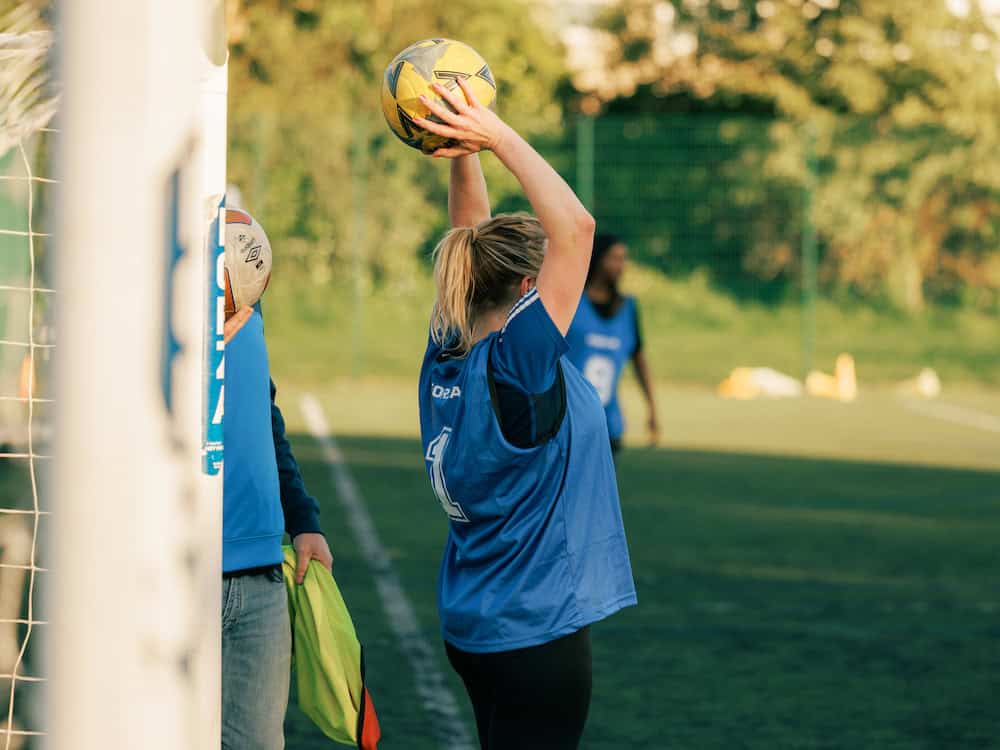
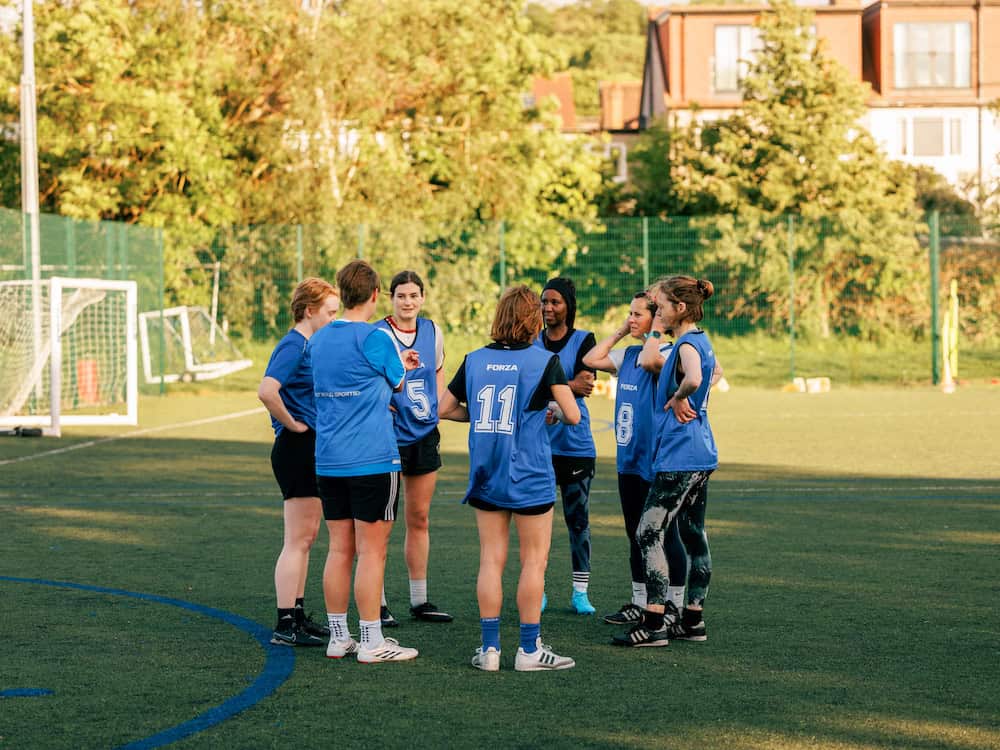
Up and down the country, stories like those of the Athenlay women repeat again and again. Previously marginalised groups – whether women and girls, LGBTQ+ players, those with disabilities, or young people from minority or disadvantaged backgrounds – are driving a growth in grassroots football that’s nothing short of remarkable. It’s also powering a movement that can sometimes feel like a total rejection of what’s playing out at the top of the game.
It’s no secret that fans of Premier League clubs aren’t happy right now. With top-flight ticket prices, according to the Football Supporters’ Association, up by around 800% since the early-90s and a feeling that the game caters to broadcasters and investors more than its fans, some are turning away from it entirely.
“I think the word connection is really important here,” says Darren Bernstein from the Football Supporters Association, “because at a time when there’s a cost of living crisis, people don’t want to give their football up, but they’re being priced out. Sometimes the most important thing is not always the football, it’s about being part of that community.”
She somehow found the courage to do what she had been forbidden from doing her entire life
Being in the stands at a Premier League game can also be a less than welcoming experience for many. According to Kick It Out, discrimination reports reached record levels during the 2024-25 season, with racist mass chanting up almost six-fold and in-stadia sexism reports up by 27%.
Shadia Edwards-Dashti, who plays for west London team Actonians, knows that just by playing football, she and her teammates are defying the haters and driving the change they want to see in the world. One of the most prominent photos on the club’s website shows her in her blue kit, rainbow-striped socks and signature headband, holding the pride flag aloft on a sunny spring day, and an unmistakable look of conviction on her face.
“Every single time I step onto a pitch, this is not just about me kicking a ball,” she says. “This is about a woman kicking a ball. This is about an LGBT, Arab, Muslim-background woman kicking a ball. What does that mean? That this is a really liberating and expressive place for me, and I think it’s a very expressive place for a lot of people.”
According to the Football Association, nationwide, the total number of women playing regular grassroots football has increased by 19% in the last year; for girls aged five-15, the leap is even more pronounced, rising 23% between January 2025 and January 2026. In London, participation has more than doubled since 2020, and when the Lionesses won the Euros in 2022, 129,000 more girls got into the game, with visible spikes in Sheffield and Rotherham.
But other underrepresented groups are showing similar growth patterns. When it comes to players with registered disabilities playing in FA-affiliated clubs, the number has jumped by 19% since last year.
Julian Workman, the founder of Redditch Borough FC, encouraged a colleague to set up teams for those with a range of mental and physical disabilities back in 2024, and says he wasn’t at all surprised by the explosion in interest from local families. “It just went crazy,” he says. “I could fill another three teams, to be honest. It’s still the case now.”
Previously marginalised groups are driving a growth in grassroots football that is nothing short of remarkable
Workman thinks the reason the disability section of his club is thriving isn’t so different from the reason he now has 11 women’s teams playing in the Worcestershire FA.
“It’s about creating the right environment where people think, you know what, it’s safe here. I’m not going to be intimidated, I’m not going to be discriminated against. The demand is coming from them, and we’re just meeting it.”
For the coaches running successful Midlands club Leicester Nirvana, the desire to create a safe space for new players is coming from a much more personal place.
Born out of the Red Star youth group – which was founded in the 1970s by young men of Asian and Afro-Caribbean descent in response to the rise of the National Front – Nirvana is now one of the most celebrated grassroots clubs in the country and the current FA Club of the Year.
“Having suffered racism as a child in football – being told to go back to the jungle and all those stupid comments – we realised that we weren’t being accepted,” says 51-year-old Ivan Liburd, who joined the club in his teens and who is now Nirvana’s community lead. “So when we got older and created this club, we weren’t going to let that happen to the young people coming through under our watch, because we’d had that done to us. We want our kids to know that ’once you’re in here, we’ll protect you.’”
It’s safe here. I am not going to be intimidated, I’m not going to be discriminated against
Liburd believes it’s Nirvana’s unwavering commitment to inclusivity that’s unlocking the potential for children from ethnic minority communities.“It’s about a readiness to accept people for who they are,” he says. “We created this family where even the young people playing for us realise that this is something different to what other teams and other clubs are offering. The parents quickly realised this was something special too.”
Edwards-Dashti agrees that the increasing momentum and visibility of such teams in grassroots football is clearly being driven by those involved deliberately pulling others up behind them. “These communities – LGBT players, ethnic minority players – they all overlap because they’ve all been marginalised, and because of that, helping each other out just feels like the obvious thing to do. It goes hand in hand.”
Photography by Sam Bush
Be part of the solution
At Positive News, we’re not chasing clicks or profits for media moguls – we’re here to serve you and have a positive social impact. We can’t do this unless enough people like you choose to support our journalism.
Give once from just £1, or join 1,800+ others who contribute an average of £3 or more per month. Together, we can build a healthier form of media – one that focuses on solutions, progress and possibilities, and empowers people to create positive change.
You must be logged in to post a comment Login