NewsBeat
The Odyssey: 9 Other Adaptations Besides Christopher Nolan’s Film

Whatever you thought of it, there’s no getting away from the fact that Christopher Nolan’s The Odyssey is the film everyone’s talking about right now.
For his follow-up to the Oscar-winning Oppenheimer, Nolan decided to turn his attention to bringing Homer’s Ancient Greek epic poem to life on the big screen, the result being an almost-three-hour mammoth journey featuring a star-studded cast and some jaw-dropping practical effects.
But while Nolan’s efforts will no doubt go down as one of the biggest cinematic takes on The Odyssey to date, he’s far from the first filmmaker to try their hand at turning the celebrated literary work into a movie or TV series.
From faithful adaptations to complete reimaginings, here are nine unique screen versions of The Odyssey from years gone by…
The Return (2024)
One of the most recent adaptations of The Odyssey came just two years before Christopher Nolan’s take on the epic tale.
Starring Ralph Fiennes and Juliette Binoche (reuniting the former Wuthering Heights and The English Patient co-stars) as Odysseus and Penelope, The Return focussed on the final section of Homer’s text, focussing on what happens to our hero once his mammoth trek is over, and he’s returned home to Ithaca.
Critics were pretty won over by Italian director Uberto Pasolini’s efforts, highlighting the way he focussed more on the intricacies of the relationships between The Odyssey’s central characters than its more fantastical elements.
The Odyssey (1997)

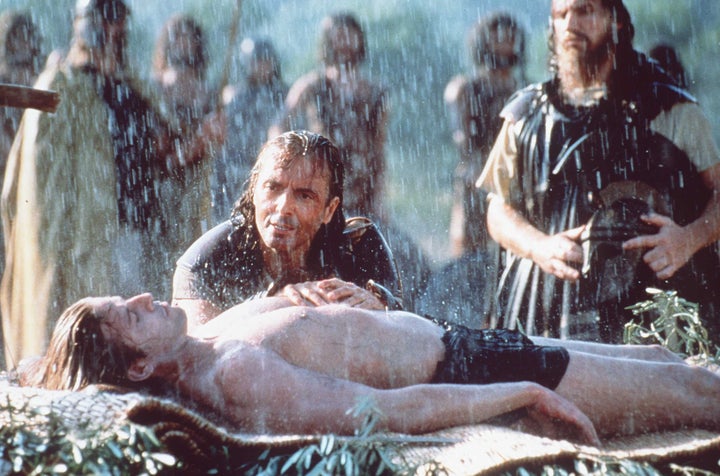
The episodic nature of Homer’s Odyssey means it’s probably better suited to a TV adaptation than the big screen.
One such example of it being brought to television came in the late 1990s, when Andrei Konchalovsky helmed a two-part miniseries inspired by The Odyssey, with Gotti star Armand Assante in the lead role.
Now, while Nolan’s version is probably going to be the one that goes down in history as the most star-studded, this is the one that perhaps has the most camp casting of them all, including Vanessa Williams as the Calypso, Isabella Rossellini as Athena and Bernadette Peters as Circe.
Ulysses (1954)

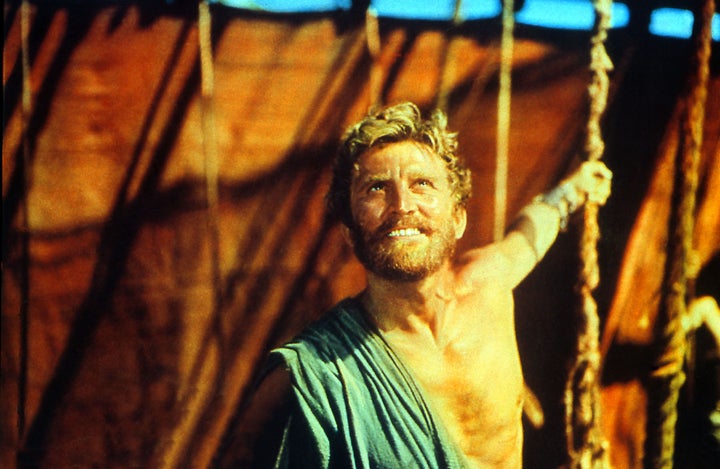
One of the most popular attempts to adapt the story of The Odyssey came during Hollywood’s golden age, casting Kirk Douglas as Ulysses (the roman name for the hero Odysseus).
Unlike Nolan’s version, this adaptation condenses the whole story down into under two hours, meaning it’s considerably faster-paced with some story arcs being condensed or removed completely.
In keeping with the 1950s release, it’s also a slightly sanitised version of the original story, but one interesting aspect is the fact that co-lead Silvana Mangano took on double duty as both Penelope and Circe.
The Return Of Ringo (1965)

Alright, this is when we start getting into the projects that play fast and loose with the source material.
The Return Of Ringo, for example, is a spaghetti Western from the mid-60s which took inspiration from the story of The Odyssey, but shifts the story to being about a soldier’s return home at the end of the American Civil War.
Helmed by the genre’s maestro, Duccio Tessari (who also makes a cameo), Giuliano Gemma/Montgomery Wood takes the lead as Ringo, a soldier who comes back to his hometown at the end of the war to discover that things are very different.
Cold Mountain (2003)

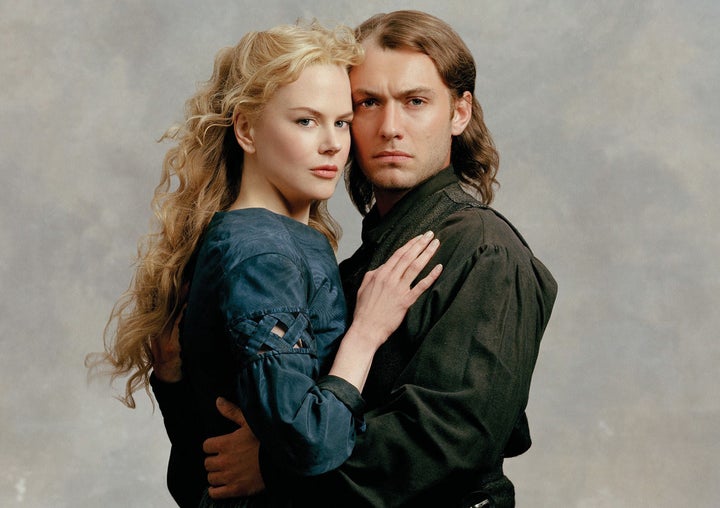
Miramax/Kobal/Shutterstock
Cold Mountain is the epic war drama starring Nicole Kidman and Jude Law that most of us associate with being the film that won Renée Zellweger the first of her Oscar wins, a year after she lost out for Chicago.
What you might not realise, though, is that Cold Mountain is based on a novel by Charles Frazier which shares several parallels with Homer’s Odyssey.
Like The Return Of Ringo, Cold Mountain moves the story to the 19th century, focussing on a solider in the American Civil War, and his mammoth journey home after deserting the conflict, and the many characters he meets along the way.
Keyhole (2011)

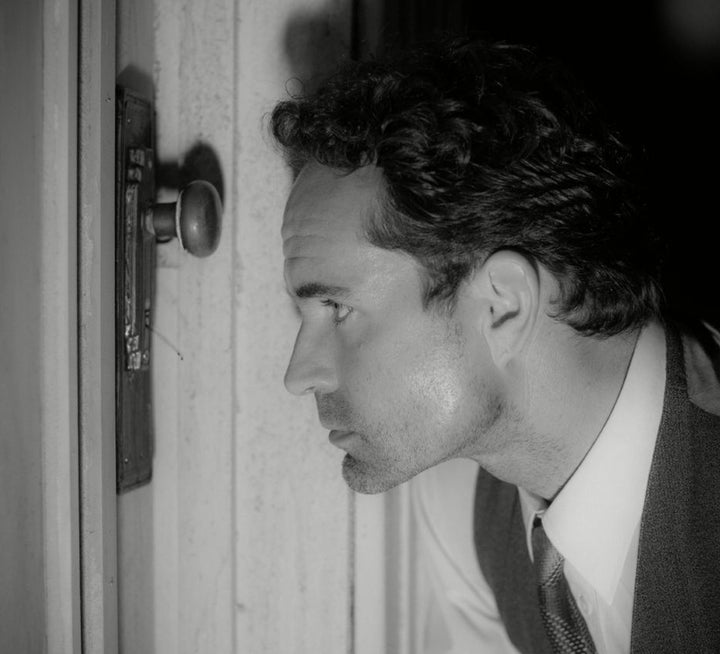
Perhaps the most surreal offering on our list, Keyhole mixes elements of the traditional gangster movie and supernatural horror, while also retracing the beats first laid out by Homer around 2000 years earlier.
The quest of the Canadian film’s central figure, Ulysses Pick (played by Jason Patric), is a little closer to home than that of Odysseus, as he makes his way from room to room in his former family home, which is surrounded by police.
Interestingly, Keyhole also features Isabella Rossellini in a pivotal role, marking her second appearance in this round-up.
O Brother, Where Art Thou? (2000)

Touchstone/Universal/Kobal/Shutterstock
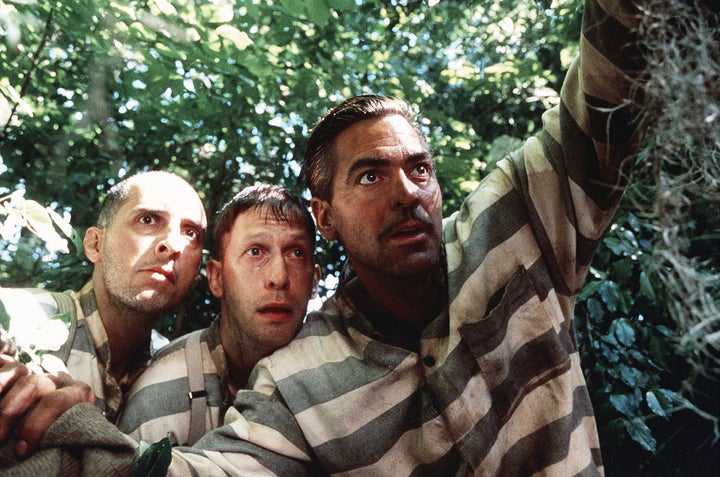
Although on the surface the Coen Brothers’ musical satire about three escaped convicts on the hunt for hidden treasure while being chased by the town sheriff has little in common with Homer’s Odyssey, the Ancient Greek tome was actually the movie’s source material.
Present and correct are aspects like the sirens, the cyclops and even Poseidon himself, even if the Coens later claimed that they’d not actually read The Odyssey when they started putting their movie together.
Despite this, they received a Best Adapted Screenplay nomination at the Oscars for O Brother, Where Art Thou?, which featured George Clooney, Tim Blake Nelson and Severance’s John Turturro serving as the film’s leads.
2001: A Space Odyssey (1968)


MGM/Stanley Kubrick Productions/Kobal/Shutterstock
The story goes that Stanley Kubrick was struggling to name his sci-fi epic, before eventually settling on 2001: A Space Odyssey as a nod to another work inspired by a mammoth journey.
“It occurred to us that for the Greeks the vast stretches of the sea must have had the same sort of mystery and remoteness that space has for our generation, and that the far-flung islands Homer’s wonderful characters visited were no less remote to them that the planets our spacemen will soon be landing on are to us,” the esteemed director told The New Yorker back in 1965.
Over the years, numerous parallels have been drawn between the two Odysseys, with some suggesting that HAL’s ominous circular design alludes to Homer’s cyclops, while the mysterious “monoliths” fill in a role occupied by the gods in the Ancient Greek poem.
It’s even been noted that the hero’s name, David Bowman, could refer to Penelope’s final archery challenge for her suitors towards the end of Homer’s story.
The Simpsons: Tales From The Public Domain (2002)


“Homer’s Odyssey… is this about that minivan I rented once?”
The Simpsons put its own inevitable spin on The Odyssey almost a quarter-century ago, in a Treehouse Of Horror-esque special episode which saw the show putting three historical stories through its own inimitable lens.
When we revisited Tales From The Public Domain after watching Christopher Nolan’s The Odyssey, we were impressed at just how many key beats the show was able to cram into a 10-minute segment, with Homer, Marge and Bart cast as Odysseus, Penelope and Telemachus.
The scene-stealers, of course, are Patty and Selma as the sirens, as well as Moe’s delivery of the line: “Boy… who decided to give every weirdo an island?”
Troy (2004)

Alex Bailey/Warner Bros/Kobal/Shutterstock
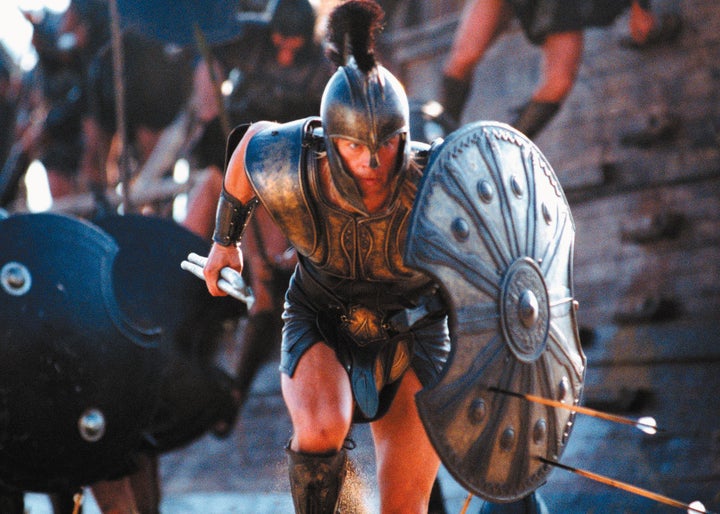
Alright, don’t come at us, we’re well aware that Troy is not based on The Odyssey at all. Rather, it’s loosely inspired by Homer’s other famous epic poem, Iliad, so could potentially be considered a prequel to The Odyssey.
However, it deals with many of the same characters as The Odyssey, and is one of the 21st century’s most memorable Ancient Greek epics, so we’re giving it a special mention alongside other adaptations and projects more directly influenced by it.
Interestingly, following the success of his films Memento and Insomnia, Nolan was briefly attached to direct Troy, and some of the ideas he had from around this time were carried over 20 years later when he came to helming The Odyssey.
“When I was briefly attached to direct Troy, I did a lot of thinking about the Trojan Horse and how I would portray that and make it credible,” the filmmaker told The Independent earlier this month. “I’ve had an image of that horse sinking into the sand in my head for 20 years.”
You must be logged in to post a comment Login