A study has been launched to investigate possible transport options for Cambridge
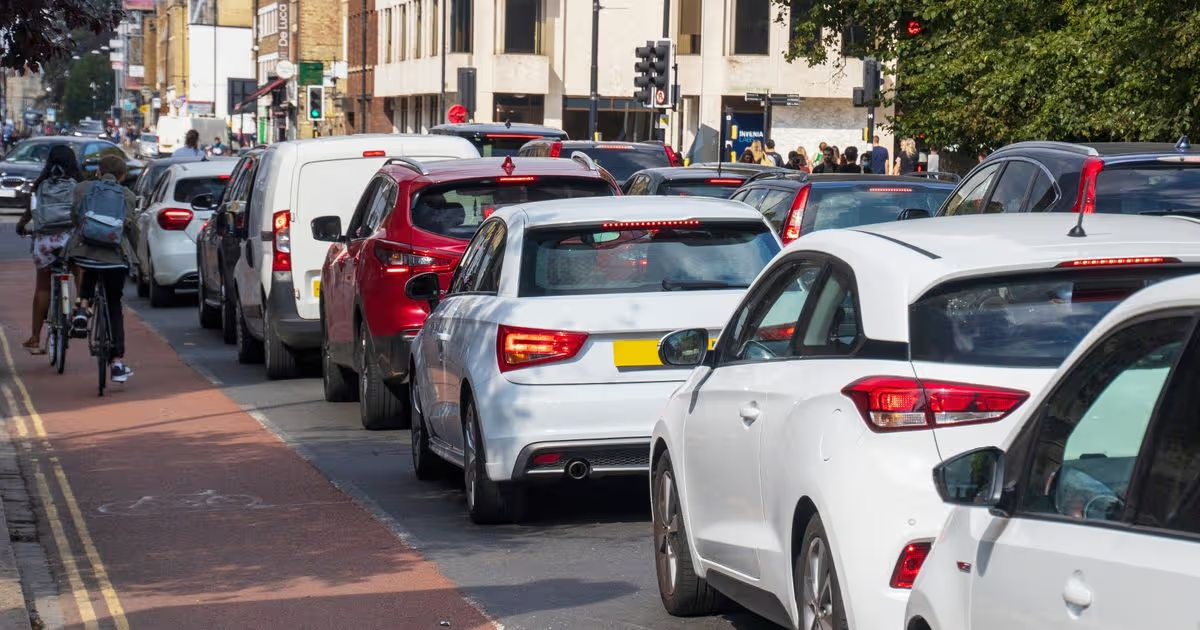
Tram and light rail are among the transport options to be considered for Cambridge. A study has been launched to examine potential mass rapid transit options to support future growth in the city.
Advertisement
Cambridge Growth Company (CGC) and Cambridgeshire and Peterborough Combined Authority (CPCA), have launched the preparation of a Project level Strategic Outline Business Case for a potential Mass Rapid Transit (MRT) system in the city.
The study is to investigate creating fast, and reliable public transport like trams to reduce traffic congestion and connect key areas.
This has been commissioned by the Department for Transport, the Ministry of Housing, Communities and Local Government, and the HM Treasure.
The new commission will include identifying and appraising a longlist of transport options, from lower scale interventions to full MRT model possibilities, including tram, light rail, bus rapid transit, and automated systems.
Advertisement
It also includes developing a transparent shortlist of viable options, assessed for their ability to support the long term growth of the city, feasibility, deliverability, value for money, and environmental impact.
Philip Harker, Technical Director at Cambridge Growth Company, said: “Congestion in Cambridge is already holding back our communities and our economy.
“This Strategic Outline Business Case is a crucial first step in making the case for the investment needed to help people move efficiently and sustainably into and across the city.”
Judith Barker, Executive Director, at the Cambridgeshire and Peterborough Combined Authority said: “Greater Cambridge is one of the UK’s economic engines, and it needs transport that matches that ambition.
Advertisement
“This study helps us understand what it will take to deliver the Mayor’s vision for a Mass Rapid Transit system that supports long‑term growth and improves how people move around the area.”
This early phase MRT study will be factored into preparations for the Greater Cambridge Transport Strategy which is due for approval in November 2026.
Permits that have been bought will be refunded by the council
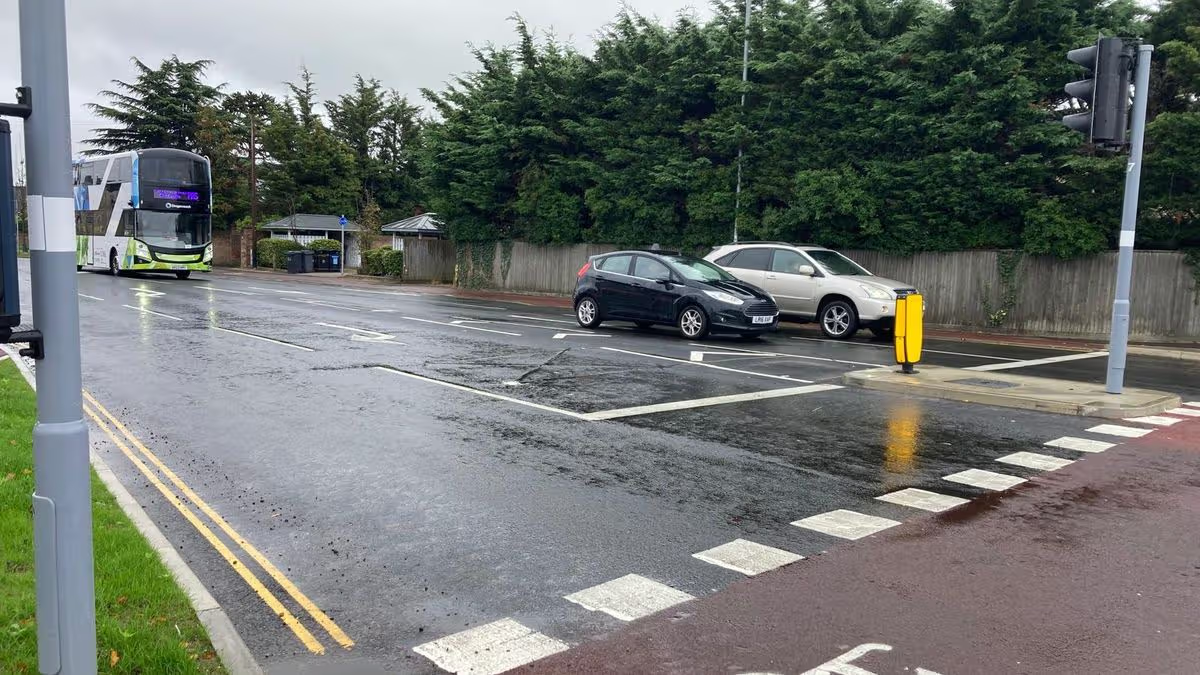
Parking enforcement in part of Cambridge has been partially scaled back due to unclear signs. Cambridgeshire County Council said on-street checks have identified issues with “the clarity and placement” of some signs relating to the Milton Road Resident Parking Scheme.
Advertisement
It means that drivers have been left confused over which parking restrictions apply and where. The scheme’s original design had aimed to reduce the number of signs, particularly along longer stretches of road with multiple marked bays. But the authority said that a marked bay without any required upright signage could be interpreted by drivers as unrestricted parking. On‑street checks have confirmed that this approach has led to a lack of clarity in some areas, they added.
The parking scheme applies to around 27 roads in the Milton area of Cambridge. It involves people purchasing permits that cost between £35 and £105 per year in order to park in that part of the city.
A notice on Cambridgeshire County Council’s website said: “The County Council is carrying out a detailed ground survey to identify where additional signage is required and where changes to existing signage are needed to improve clarity and legal compliance. This may include installing new signs, as well as moving, replacing, removing or updating existing signs to ensure correct spacing and that the correct restrictions are clearly displayed. This work will ensure the scheme is clear, consistent and fully enforceable. At this stage, the Council is not able to provide a definitive timeline for completion.
“While this work is being completed, the scheme cannot be fully enforced in all areas. During this period, enforcement will be limited to double yellow lines and single yellow lines during their signed hours of operation.”
Advertisement
The review and signage improvement works are expected to take ‘several months’, the council added. All Milton Road parking permits already purchased, including resident, temporary resident, tradesperson and visitor permits, will be refunded. Any new permit applications received before the work is completed will not be processed.
Milton Road Permits (visitor, resident or tradesperson) bought on or after February 2, 2026 will be refunded fully by the end of April. Resident permits bought before this date (for the previous Ascham scheme) will be refunded pro-rata from when the scheme merged on February 2.
Once the scheme meets all legal requirements, residents will be invited to apply for permits again. The six‑month post‑implementation review of the scheme will begin once it is fully operational.
A powerful 5.8 magnitude earthquake in northern Afghanistan has claimed the lives of at least eight members of a refugee family on the outskirts of Kabul. The victims, who had recently returned from neighbouring Iran, were killed when the tremor struck on Friday night.
A three-year-old boy, the sole survivor, sustained injuries and is currently receiving hospital treatment in the capital. Mohibullah Niazi, a neighbour who assisted in the rescue efforts, confirmed the family’s tragic fate.
Afghanistan’s deputy government spokesman, Hamdullah Fitrat, confirmed on Saturday that the overall death toll from the quake had risen to 12, with an additional four people injured. However, the Afghanistan Disaster Management Authority reported a lower figure, stating nine fatalities. The reason for the differing casualty figures was not immediately apparent.
Mr Fitrat also detailed the destruction, noting that five homes were completely destroyed and 33 others significantly damaged, impacting 40 families across the provinces of Kabul, Panjshir, Logar, Nangarhar, Laghman, and Nuristan.
Advertisement
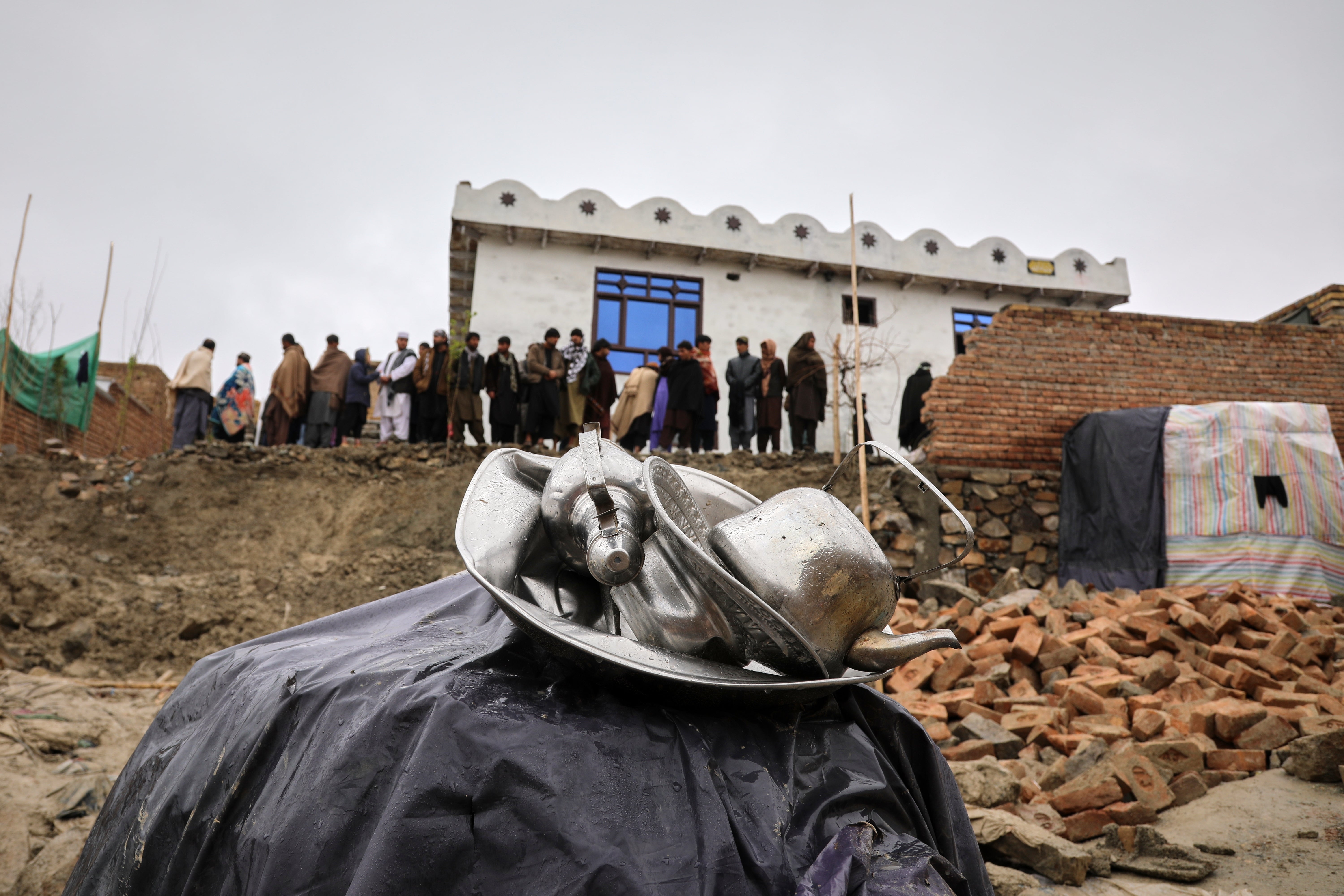
Items are seen piled up at a house damaged by an earthquake in the village of Ittefaq, on the outskirts of Kabul, Afghanistan, Saturday, April 4, 2026. (AP Photo/Siddiqullah Alizai) (Copyright 2026 The Associated Press. All rights reserved.)
The family near Kabul were among the millions of Afghan refugees who have recently returned from Iran and Pakistan, after both countries launched crackdowns in 2023 on foreigners – particularly Afghans – living in their countries.
They had arrived 15 days ago and were living in a tent on land next to Mr Niazi’s home.
The family head, Najibullah, who was about 50 years old, “had no other shelter”, Mr Niazi said.
“He was a very poor person.”
The family had set their tent up next to a wall separating the plot of land from Mr Niazi’s home, which stood on higher ground, in the village of Ittefaq on the eastern outskirts of the Afghan capital.
Advertisement
Heavy rains over the past several days, which have led to deadly floods in many parts of Afghanistan, had left the ground sodden and soft.
When the earthquake struck, the wall collapsed on the family.
“My daughter shouted to me that a wall had fallen on them. The whole family ran, but there were so many big rocks,” Mr Niazi recounted as he stood at the scene.
“We tried our best.”
Advertisement
On Saturday morning, piles of bricks and mud were all that were left, along with blankets, cooking utensils and other personal belongings salvaged from the rubble and set into a pile.
“For about three minutes, I could hear the voices of these people,” Mr Niazi said.
“But we couldn’t do anything. There were two or three of us, but this was not the work of three people.”
Neighbours soon rushed to help, digging through the mud and rubble with spades and their hands.
Advertisement
They alerted the local Taliban police checkpoint, which sent rescuers and ambulances.
The young boy, Aarash, was pulled out alive but injured, and rushed to hospital.
Health Ministry spokesperson Sharafat Zaman, who visited the boy on Saturday, said he was being treated for a severe head injury.
For the rest of the family – the father and mother, four daughters aged between 12 and 23, and two sons – it was too late.
Advertisement
The rescuers could only recover their bodies.
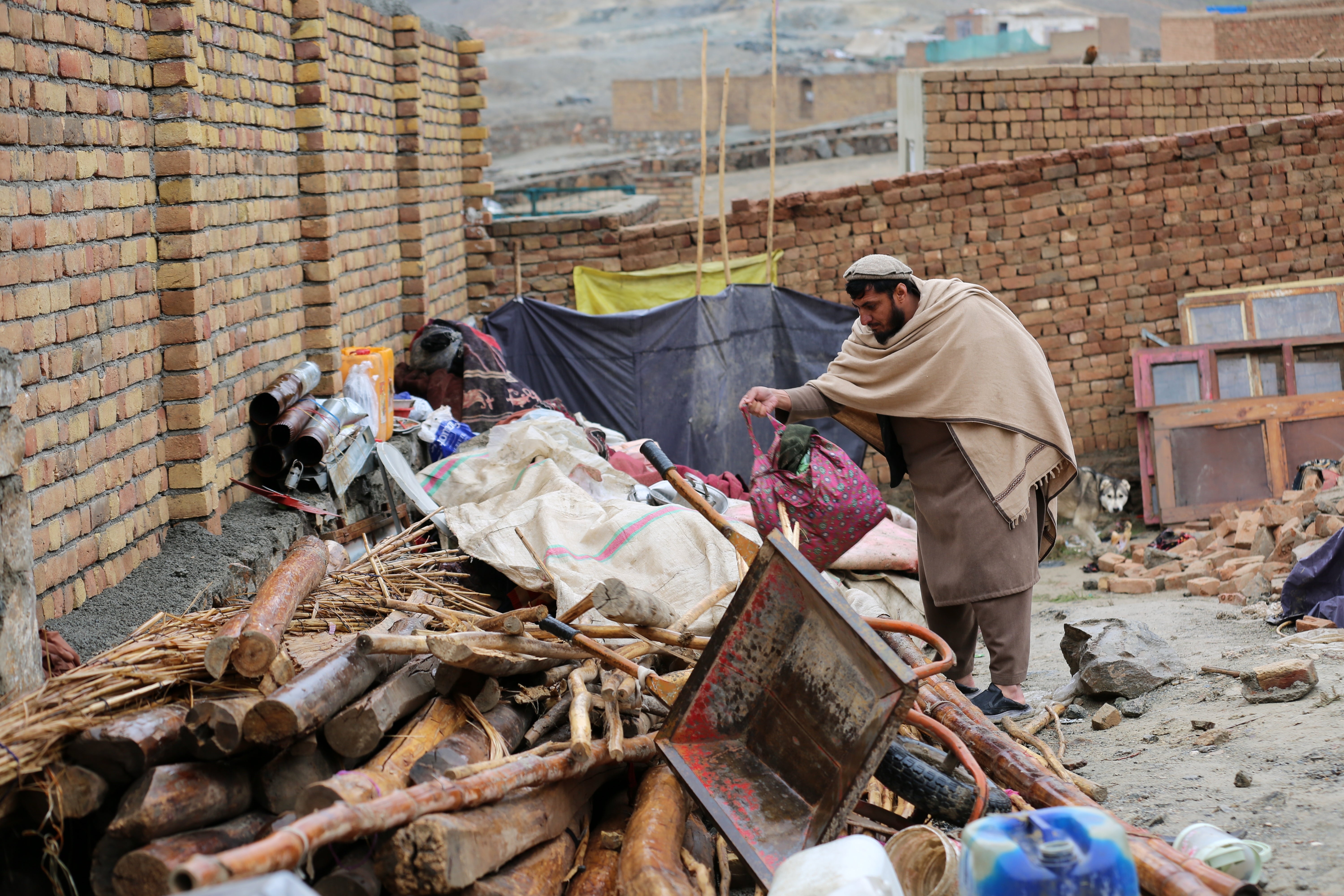
Neighbor Mohibullah Niazi searches through items piled up at a house damaged by an earthquake in the village of Ittefaq, on the outskirts of Kabul, Afghanistan, Saturday, April 4, 2026. (AP Photo/Siddiqullah Alizai) (Copyright 2026 The Associated Press. All rights reserved.)
Mr Niazi said he had hosted the family in his own home one night.
On Friday, just half an hour before the earthquake struck, he had renewed the offer, telling the family they could spend the night in his own guest room to shelter from the cold and rain.
“But they did not come with me,” he said.
Friday night’s quake had an epicentre in the Hindu Kush mountain range, about 150 kilometres (90 miles) east of the northern city of Kunduz, according to the Euro-Mediterranean Seismological Centre and the US Geological Survey.
Advertisement
The area is roughly 290 kilometres (180 miles) north east of Kabul.
Afghanistan lies in a highly seismically active part of the world, and quakes have caused thousands of deaths in recent years.
Last August, a 6.0 earthquake that struck a remote, mountainous part of eastern Afghanistan killed more than 2,200 people.
Most casualties were in Kunar province, where people typically live in wood and mud-brick houses along steep valleys.
Advertisement
In November, a 6.3 earthquake struck Samangan province in northern Afghanistan, killing at least 27 people and injuring more than 950.
It also damaged historical sites, including Afghanistan’s famed Blue Mosque in the city of Mazar-e-Sharif, and the Bagh-e-Jahan Nama Palace in Khulm.
On October 7 2023, a 6.3 quake followed by strong aftershocks in western Afghanistan killed thousands of people.
The forecaster has warned of “disruptive and potentially damaging winds” from 7pm on Saturday (April 4) evening to 3am in the early hours of Sunday.
Initially, the region was placed under a yellow alert but the Met Office now says flying debris could cause a danger to life, power cuts may occur and buildings may be damaged.
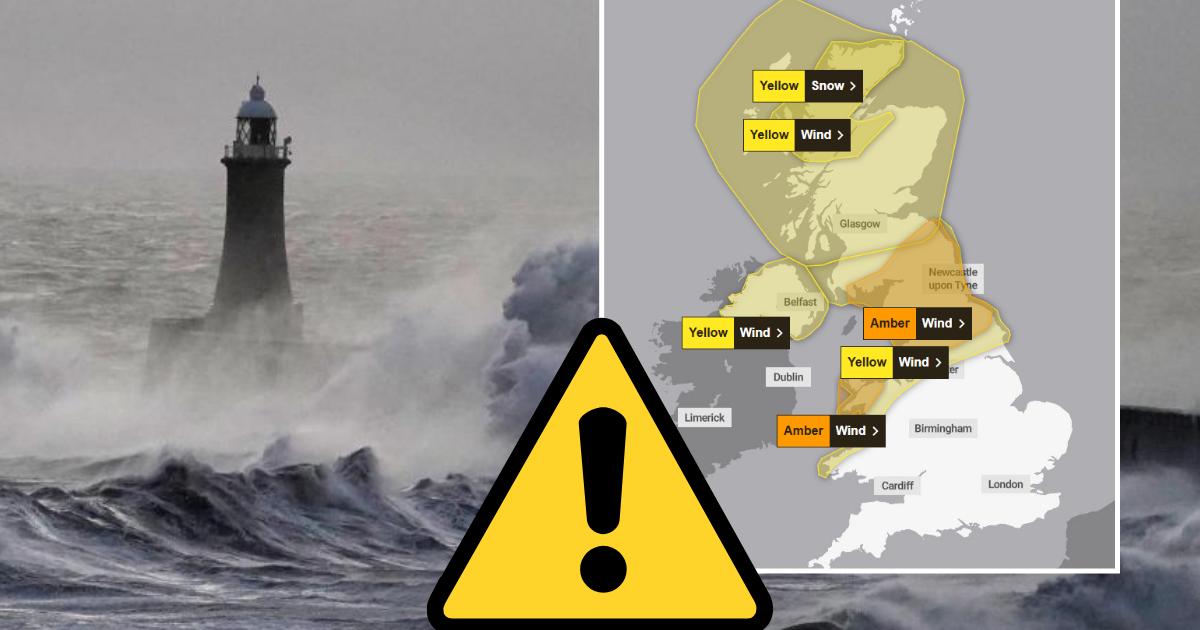
The amber weather warning covering the North East. (Image: MET OFFICE)
Gusts of 60-70mph are expected widely, while gusts of 90mph are possible in Scotland.
The forecaster added: “A spell of very strong southwesterly, then westerly winds is expected across north Wales, northern England and southern Scotland on Saturday evening and overnight before easing early on Sunday.
Advertisement
“Gusts of 60-70 mph are possible widely with some coastal or exposed locations seeing gusts of around 80 mph.”
Motorists are advised to drive slower in the blustery conditions, people have been urged to stay indoors and those living along the coast are warned to stay away from large waves.
Included in the amber warning is:
Darlington
Durham
Gateshead
Hartlepool
Middlesbrough
Newcastle upon Tyne
North Tyneside
Northumberland
Redcar and Cleveland
South Tyneside
Stockton-on-Tees
Sunderland
⚠️⚠️ Amber weather warning issued ⚠️⚠️#StormDave brings strong winds across northern England, southern Scotland and northwest Wales
According to WX Maps, strong winds are expected to hit the region at about 6pm on Saturday.
Advertisement
Met Office deputy chief forecaster, Tom Crabtree, said: “Storm Dave will form and rapidly deepen on Saturday as it approaches the UK from the west.
“By Saturday afternoon winds will strengthen significantly, with gusts of 60-70mph expected at times across parts of Scotland with the potential for gusts of 80-90mph in exposed coastal locations in Scotland.
“Gusts of 50-60mph are likely more widely in northern Britain.
“As well as strong winds, Storm Dave will also bring heavy snowfall over the hills in northern Scotland where up to 10-20cm of snow could accumulate.
Advertisement
“Along with the strong winds this will lead to blizzard conditions.
“Elsewhere there will be heavy spells of rain as the system moves through eastwards across the UK.
“With Storm Dave a few days away, people should prepare their property for the strong winds and keep updated with the latest weather forecast as the weather warnings are likely to be updated.”
Cambridge, with it’s perfect blend of historic charm and picturesque scenery, is a popular destination for day trippers and people looking for a staycation
Abigail Nicholson Content Editor
11:45, 04 Apr 2026
A Cambridge local has described how they would spend their perfect 24 hours in the city, but not everyone agrees. The city of Cambridge welcomes a huge 8.1 million people each year, with is being a destination popular with day trippers and people looking for a staycation.
Cambridge is the perfect blend of historic charm, academic excellence, and picturesque scenery. Many visitors head to the city to explore the medieval architecture, world-class museums and the vibrant culture of a compact, bike-friendly city.
Advertisement
When it comes to figuring out where to go when you’re visiting a new city, the best thing to do is ask people who have lived in the area for a long time.
This is where social media sites such as Reddit can be very useful, as within a matter of minutes you can be connected with millions of people across the world.
One Reddit user asked explained in the R/Cambridge that their parents were coming to visit her in the UK, and they would be going on a day trip to Cambridge.
She said: “Hi all, My parents coming to visit me from abroad and we will be going to Cambridge for a day. We will go see and explore the main bits, but wondering if there is hidden gem, or some quirky pub? Thank you all”
Advertisement
One local described their idea of a perfect 24 hours in Cambridge to the Reddit user.
The local said: “Walk along Orchard Street (which looks like a row of country cottages in the heart of the city) from Christ’s Pieces, then have a meal and a drink in The Free Press pub.
“If you’re coming by train, walk past the taxis, through the car park and find either the Devonshire Arms, Kingston Arms, The Petersfield, or Scott’s All Day.
“And do try to spot as many Dinky Doors as you can, if only the one in Cambridge’s Downing Street and the one at the base of Reality Checkpoint.
Advertisement
“Try to see the very Cambridge rus-in-urb Cambridge Cows on the commons close to the city centre. Being young neutered males, they’re docile.”
Many people replied to say they thought the list was great, but added in a few extra places that they thought would complete the day.
One person said: “I’d also add King Street for a pub crawl aka King Street Run. Go visit The Handsome Prince, which, while not a pub, is the only taproom of local craft brewers Baron Brewery.
“And there’s a lovely little Korean spot next door. And a lovely (sweet) pie shop The Cherry Pit a few doors down. Personally, Scott’s All Day is kinda average to me, I’d go to other restaurants and bars if I were making my way to Mill Road.”
Advertisement
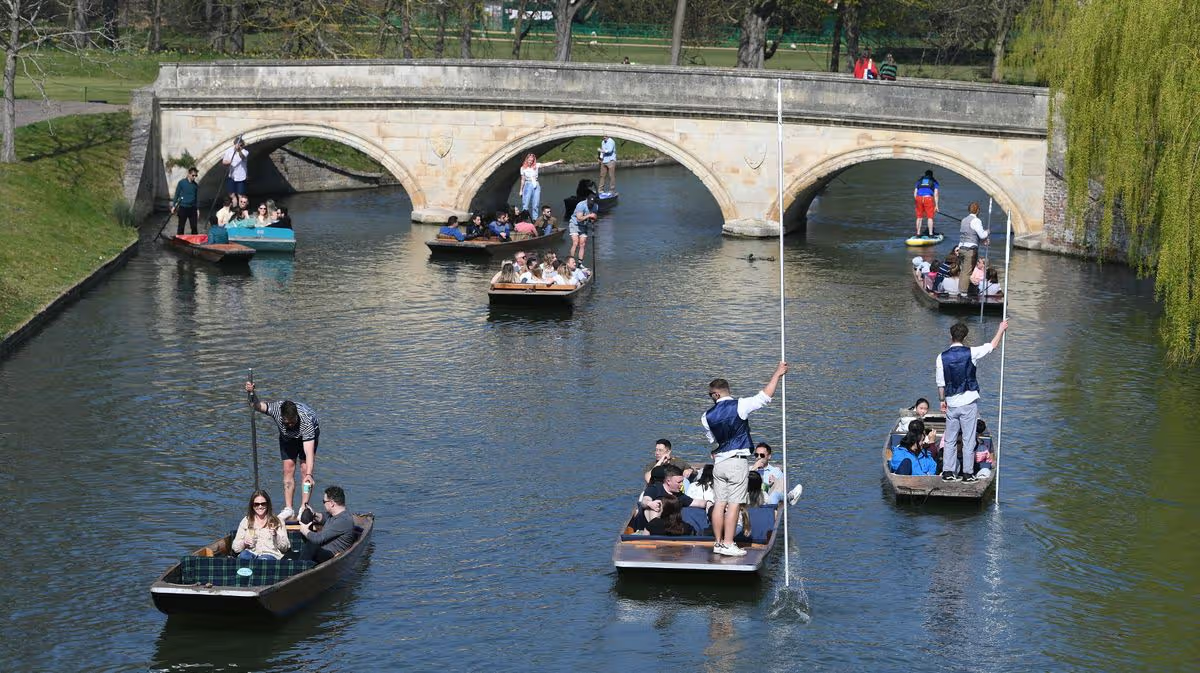
A second said: “I’d do punting as the view esp around Kings is very nice. Pickerel is a nice pub with a bit of a quirky feel.”
A third advised: “If you happen to be walking past Lloyd’s Bank in Sidney Street while it’s open, it’s worth a look inside as there are some beautiful tiles and a very grand Victorian interior.”
Storm Dave is bringing fierce winds, rain and snow to the UK over the Easter weekend, and the Met Office has now been forced to issue an amber weather warning
13:47, 04 Apr 2026Updated 13:49, 04 Apr 2026
The Met Office has issued a rarely-seen amber weather warning for Storm Dave, due to come into force within hours.
The amber wind warning lasts from 7pm until 3am on Sunday and covers North Wales, northern England and parts of southern Scotland. It comes alongside yellow wind warnings and one yellow snow warning, impacting northern Scotland.
The new amber warning says there is a “good chance of power cuts” in the impacted areas as wind speeds could reach 80mph. There is also a “danger to life” from flying debris and large waves.
Advertisement
The Met Office has urged people to prepare for power cuts. “Consider gathering torches and batteries, a mobile phone power pack and other essential items,” it states.
People are told to “stay indoors as much as possible” and secure loose items around their home. The warning says: “In advance of high winds, check for loose items outside your home and secure them. Items include; bins, garden furniture, trampolines, tents, sheds, and fences.”
Met Office Chief Meteorologist Chris Bulmer said: “Storm Dave will bring a period of very strong winds, with the strongest gusts most likely in the amber warning area. People should be prepared for impacts with disruption to travel likely and possible power cuts.”
Advertisement
“Wind speeds will peak at different times as the deep area of low pressure moves across the north of the UK, with peak gusts in Northern Ireland expected earlier on Saturday afternoon before spreading more widely across the north of the UK.”
Met Office advice for power cuts
If electricity is crucial for any medical equipment you have, please contact your DNO at any time as they may be able to put you on their Priority Register (see below) for assistance during any power outage
Make sure you have multiple torches along with extra batteries
Make sure you keep your mobile phone charged so you can make calls in case of an emergency
Keep fridges and freezers closed, with a blanket over as they will stay cold for many hours
Keep important documents safe and handy
Look out for elderly neighbours and ensure they are prepared for a possible power cut
Switch off appliances – turn off items such as irons, ovens, electric fires and fryers as they could pose a hazard if the power comes back on when you are not there
For people using a digital landline who don’t have a mobile phone, or who live in an area with poor/no mobile signal, speak to your communications provider about additional support they can offer you in advance
The Met Office has upgraded a severe yellow weather warning for wind to amber.
An amber weather warning for wind has been issued for parts of Scotland on Saturday as Storm Dave is set to batter the country.
Advertisement
The Storm is set to hit the UK on Saturday evening.
The Met Office has upgraded a severe yellow weather warning for wind to amber, meaning flying debris could lead to “injuries or danger to life”.
Storm Dave is described by the Met Office as a “rapidly deepening area of low pressure” moving northeast across Scotland. In addition to the wind warnings, a yellow snow and rain alert has been issued for Moray and Highland in Scotland, running from 2pm on Saturday.
Up to 15 centimetres of snow is expected, with blizzard conditions likely in hillier regions. The amber alert covers 25 areas across the UK and will be in force from 7pm on Saturday until 3am on Sunday.
Advertisement
Residents in Lancashire, North Yorkshire, Northumberland, north Wales, and southern Scotland have been warned of disruptive and potentially dangerous winds, which could delay or cancel travel by air, rail, or ferry. “A spell of very strong southwesterly, then westerly winds is expected across north Wales, northern England, and southern Scotland on Saturday evening and overnight before easing early on Sunday,” the Met Office said.
“Gusts of 60 to 70 miles per hour are possible widely, with some coastal or exposed locations seeing gusts around 80 miles per hour.” The forecaster added that flying debris is likely and could lead to injuries or danger to life.
Coastal residents are particularly at risk, with large waves and beach material potentially being thrown onto roads, seafronts, and properties. Power cuts are also expected, which may disrupt mobile phone coverage and other services. People in affected areas have been urged to stay indoors where possible.
Tom Crabtree, deputy chief forecaster at the Met Office, said: “Storm Dave will form and rapidly deepen on Saturday as it approaches the UK from the west.
Advertisement
“By Saturday afternoon winds will strengthen significantly, with gusts of 60 to 70 miles per hour expected at times across parts of Scotland and the potential for gusts of 80 to 90 miles per hour in exposed coastal locations.
“Gusts of 50 to 60 miles per hour are likely more widely in northern Britain.”
According to the Met Office’s weather map, the storm will first reach the south-west coast at around 10am on Saturday, bringing heavy rain and snow. Central and northern Scotland will see snow flurries by mid-afternoon, while by 6pm, most of the northern half of the country will be affected. Southern regions are expected to experience heavy downpours at the same time.
The worst of the rain is expected around 8pm, with up to eight millimetres per hour falling widely and some areas seeing up to 16 millimetres. With wind warnings coming into effect around 5pm and 6pm, the strongest gusts will coincide with the heaviest precipitation, increasing the risk of damage and disruption.
Advertisement
Residents are being advised to plan journeys carefully, expect delays, and take extra precautions in exposed or coastal areas. Storm Dave’s combination of high winds, heavy rain, and snow could make travel hazardous and pose a threat to life, the Met Office said.
Regions and local authorities in Scotland affected
She now faces WBA mandatory challenger Pineiro, the undefeated Puerto Rican southpaw with a perfect 10-fight pro record who has been the WBA’s interim champion since stopping Marie Pier Houle last year and then defeating Anahi Ester Sanchez.
Price is confident of continuing that winning streak and retaining her titles on home soil as she looks to secure a blockbuster showdown at middleweight with American superstar Claressa Shields, having grown tired of chasing an undisputed fight with WBO welterweight champion Mikaela Mayer.
Price vs Pineiro fight date and venue
Price vs Pineiro takes place on Saturday April 4, 2026 at Utilita Arena Cardiff in Cardiff, Wales.
Advertisement
Price vs Pineiro fight time and ring walks
Price and Pineiro are expected to be in the ring for Saturday’s main event at approximately 9pm BST, which is 4pm ET and 1pm PT in the United States.
The undercard is expected to get underway around 5pm BST (12pm ET and 10am PT).
Rhys Edwards and Gully Powar compete for the vacant British featherweight title in Cardiff
Advertisement
Getty Images
How to watch Price vs Pineiro
TV channel: In the UK, Price vs Pineiro is being shown live and free to air on BBC Two as part of promotional company Boxxer’s landmark broadcasting deal with the BBC, with coverage beginning at 8pm BST.
Live stream: The event is also available to watch online via the BBC Sport website and BBC iPlayer, where coverage gets underway at 5pm BST.
Advertisement
Price vs Pineiro undercard
Chief support on Saturday comes from Wales’ Rhys Edwards and Gully Powar of Wolverhampton, who battle for the vacant British featherweight title.
Lauren Price vs Stephanie Pineiro – for the WBA, WBC, IBF, IBO and The Ring women’s welterweight titles
Rhys Edwards vs Gully Powar – for the vacant British featherweight title
Advertisement
Kane Shepherd vs Teo Alin
Lewys Parfitt vs Morgan McIntosh
Kyran Jones vs Connor Goulding
Jacob Robinson vs Caine Singh
Advertisement
Mikey O’Sullivan vs Jose Manuel Perez
Yuvraj Karia vs Jake Pollard
Price is expected to face American superstar Claressa Shields later in 2026
Getty Images
Price vs Pineiro prediction
Advertisement
Price is a big favourite here for a reason. She has hardly skipped a beat in her impressive pro career so far and was far too good for the legendary Jonas last summer.
It’s important that she doesn’t overlook a tough opponent in Pineiro, but we see this as another straightforward stepping stone en route to the very biggest fights for Price – including that enormous clash with undisputed heavyweight champion Shields.
Price to win, by unanimous decision.
Price vs Pineiro weigh-in results
Advertisement
Price weighed in at 146.3 pounds on Friday, with Pineiro slightly heavier at 146.4 pounds. The welterweight limit is 147 pounds.
Price vs Pineiro latest odds
Price to win on points or by decision: 3/10
Price to win by knockout, technical knockout or disqualification: 7/2
Advertisement
Pineiro to win on points or by decision: 12/1
Pineiro to win by knockout, technical knockout or disqualification: 25/1
“It’s frustrating, and at times, disheartening, when we are so proud and determined to bring a little colour and vibrancy to what can sometimes feel like a very grey city.”
The owners of a Belfast coffee shop say they have been left frustrated and disheartened after their business was targeted for the fourth time in weeks.
Advertisement
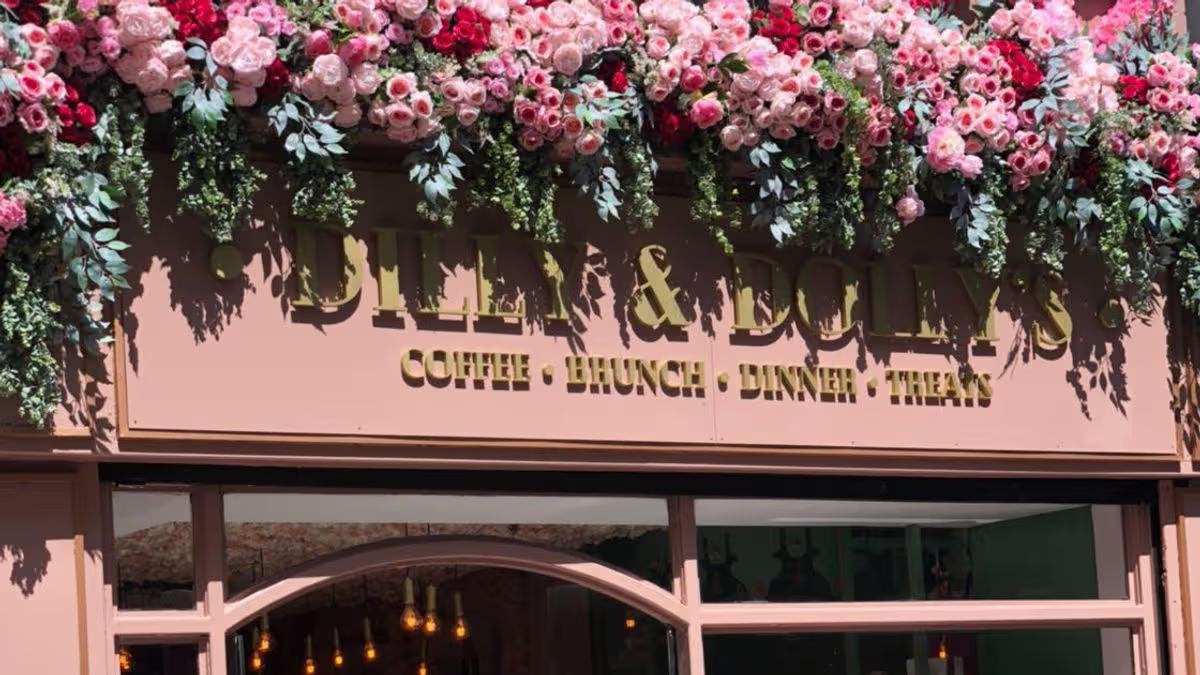
Dilly and Dolly’s on Ann Street in the city centre was broken into on Friday night with cash taken and damage caused to the premises.
The business took to social media to share news of the incident, which they say is one of a series over recent weeks.
They said: “Tonight, Dilly & Dolly’s was broken into. Money was taken and there was some damage done and to be honest, it’s been a tough one to process.
Advertisement
“It’s already been a difficult year, watching so many businesses around us close their doors, leaving us surrounded by empty buildings. It’s hard not to feel like that makes things like this easier to happen.“This is the fourth incident in just a few weeks, and the police have been called out 3 times in the last two weeks alone. It’s frustrating, and at times, disheartening, when we are so proud and determined to bring a little colour and vibrancy to what can sometimes feel like a very grey city.”
Natalie Lennon opened Dilly and Dolly’s on the Upper Lisburn Road in June 2021 after losing her job during the pandemic.
The Hannahstown woman previously told Belfast Live she wanted to bring something different to Belfast and since their opening, the Dolly and Dolly’s name has grown – with a second location on Ann Street following a year later.
Despite this latest setback, Dilly and Dolly’s said it would be business as usual on Saturday: “But we’re still here. And we are not going anywhere. I want to say thank you to my team, who continue to show up, work hard, and care so much about this place every single day. So tomorrow, we will dust ourselves off and open our doors as usual.
Advertisement
“Thank you to all our lovely customers who continue to support and encourage us, we will see you tomorrow! Team Dilly & Dolly’s & Natalie x.”
When contacted, police said they are appealing for information and witnesses in relation to a report of a burglary at commercial premises in the Ann Street area of Belfast yesterday evening, Friday, April 3.
A PSNI spokesperson added: “At around 8.45pm, it was reported that entry had been forced to the premises, and a sum of money taken from the till.
“Enquiries are ongoing, and we are appealing to anyone who might have been in the area at the time and saw any suspicious activity, or who has any information which could assist, to get in touch. The number to call is 101, quoting reference number 1560 of 03/04/26.”
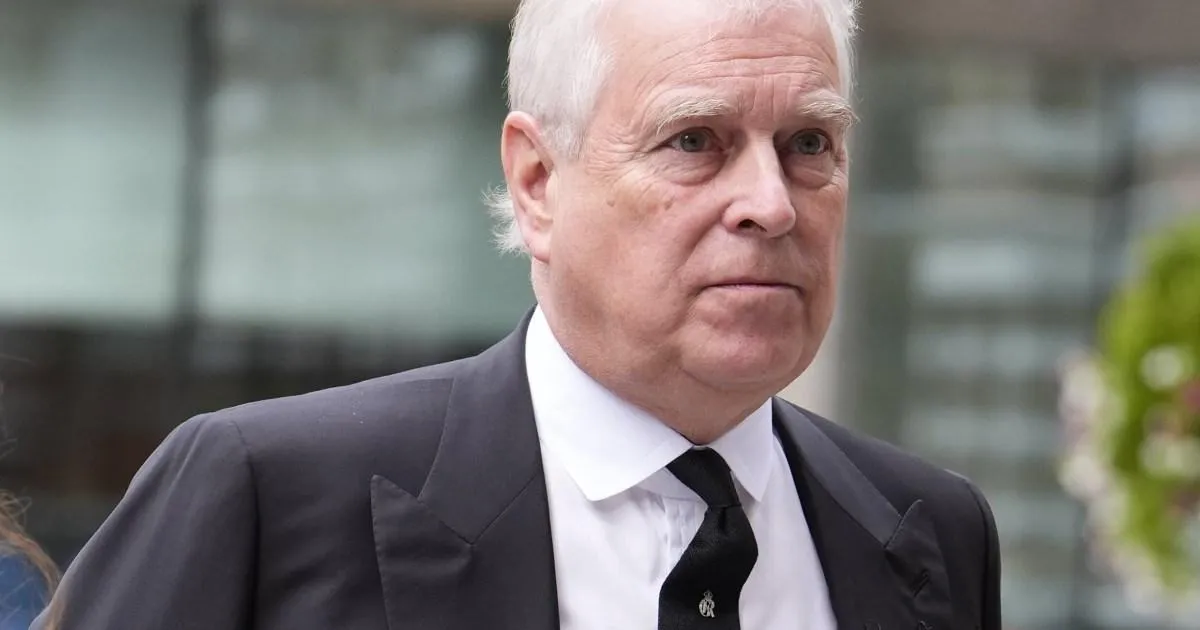
Prince Edward’s visit comes after Andrew was arrested in February (Picture: REUTERS)
Prince Edward has become the first royal to visit his disgraced brother, Andrew Mountbatten-Windsor.
Edward is said to have wanted a ‘quiet word’ with the former prince, who is currently staying at a temporary home at Wood Farm in Sandringham until his permanent home is renovated.
The Duke of Edinburgh is the first family member to see Andrew in two months during his visit to Norfolk this week.
The rest of the royal family have avoided the former duke since he was evicted from Royal Lodge in Windsor in February following his connections with late paedophile financier Jeffrey Epstein.
Sign up for all of the latest stories
Start your day informed with Metro’s News Updates newsletter or get Breaking Newsalerts the moment it happens.
Advertisement
Sources close to the royal family have said Prince Edward is looking to have a ‘quiet word’ with his brother, Andrew (Picture: Getty Images Europe)
Edward had planned to stay near Wood Farm, but instead resided in the main house because his brother was reluctant to leave, according to sources as reported by The Sun.
Sources say the former duke has been ‘dragging his heels’ for not taking up his new residence at Marsh Farm on the royal estate sooner.
But palace aides have long indicated that Andrew must be in his permanent new home by Easter weekend.
Signs of Andrew, 66, moving out and preparing for his arrival to his new home were spotted when the former prince met with Sandringham estate manager, Edward Parsons, on Friday.
Prince Edward is the first member of the royal family to visit Andrew Mountbatten-Windsor in two months (Picture: John Stillwell/PA Wire)
Flat-packs and removal boxes were seen being driven away, marking signs that his final move is nearing completion.
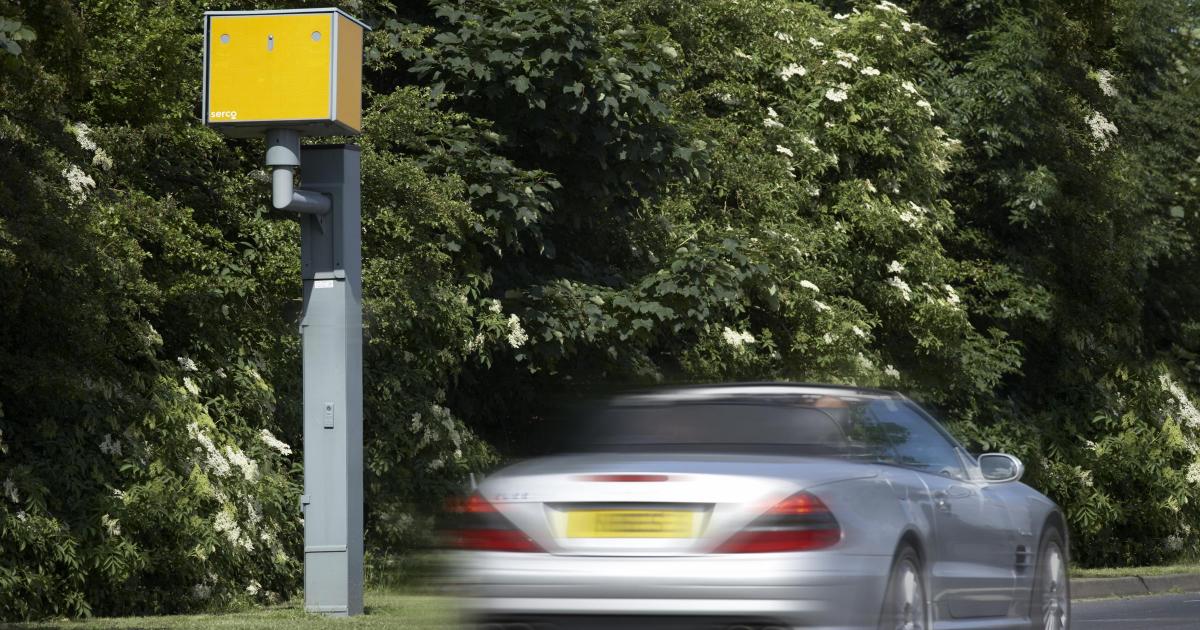
The Department for Transport revealed that all speed cameras were to be painted yellow by October 2016.
This should make most of them easier to see, but what if a speed camera was practically invisible because of how far away it is?
Well, they exist.
Advertisement
7 common speed camera myths
How far can a speed camera catch you?
Long Ranger mobile speed cameras
These new cameras are an advancement upon current speed camera technology and have an impressive range of over 1km, which has seen them dubbed the ‘Lone Ranger’.
It is the longest-distance speed enforcer on UK roads.
The camera can also be used for recording drivers not wearing seatbelts and people using the phone while driving.
Advertisement
UK speed limits explained
RAC road safety spokesperson, Pete Williams, said: “Although this new long-range camera could be used to enforce illegal mobile phone use or tailgating, its primary use will no doubt be to catch speeding drivers, if indeed it becomes more widely used by forces.
“Some drivers will inevitably end up being very surprised when a notice of intended prosecution letter arrives on their doormat when they felt they had managed to slow down enough after spotting a police car in the distance.”
Recommended reading:
Advertisement
What is the penalty for speeding?
The minimum penalty for speeding is generally a £100 fine and three points on your licence.
If it’s a first offence and you don’t have points on your licence, you could be offered a speed awareness course instead of penalty points.
There is a wide range of speed cameras currently operating on British roads.















































You must be logged in to post a comment Login