
Connect with us

NewsBeat

Trump has other tariff options after Supreme Court strikes down his worldwide import taxes

Published

on

Supreme Court strikes down Trump's sweeping tariffs

WASHINGTON (AP) — President Donald Trump still has options to keep taxing imports aggressively even after the Supreme Court struck down the tariffs he imposed last year on nearly every country on earth.

The Justices didn’t buy the president’s sweeping claims of authority to impose tariffs as he sees fit. But Trump can re-use tariff powers he deployed in his first term and can reach for others, including one that dates back to the Great Depression.

“Their decision is incorrect,” Trump said Friday, calling the Supreme Court justices who ruled against his tariffs “fools and lapdogs” during a press conference. “But it doesn’t matter because we have very powerful alternatives.”

Indeed, the president has already said he will impose a 10% global tariff under a trade law that allows such duties for 150 days. After that, they can only be extended by Congress.

Advertisement

Trump also said he would use a range of other laws and regulations to impose new tariffs, though most of those statutes would require a legal process before duties could be imposed. And he pointed to his ability to use licenses to restrain imports, but offered few details.

Trump had claimed nearly boundless authority to impose tariffs under 1977 International Emergency Economic Powers Act (IEEPA). But opponents argued before the Supreme Court that that power wasn’t necessary because Congress delegated tariff power to the White House in several other statutes — though it carefully limited the ways the president could use the authority.

Tariffs have been a cornerstone of Trump’s foreign and economic policy in his second term, with double-digit “reciprocal” tariffs imposed on most countries, which he has justified by declaring America’s longstanding trade deficits a national emergency.

The average U.S. tariff has gone from 2.5% when Trump returned to the White House in January to nearly 17% a year later, the highest since 1934, according to calculations by Yale University’s Budget Lab.

Advertisement

The president acted alone even though the U.S. Constitution specifically gives the power to tax – and impose tariffs – to Congress.

“The Good News is that there are methods, practices, Statutes, and other Authorities, as recognized by the entire Court and Congress, that are even stronger than the IEEPA TARIFFS, available to me as President of the United States of America,” Trump posted on his social media site.

Countering unfair trade practices

The United States has long had a handy cudgel to wallop countries it accuses of engaging in “unjustifiable,” “unreasonable” or “discriminatory” trade practices. That is Section 301 of the Trade Act of 1974.

And Trump has made aggressive use of it himself — especially against China. In his first term, he cited Section 301 to impose sweeping tariffs on Chinese imports in a dispute over the sharp-elbowed tactics that Beijing was using to challenge America’s technological dominance. The U.S. is also using 301 powers to counter what it calls unfair Chinese practices in the shipbuilding industry.

Advertisement

There are no limits on the size of Section 301 tariffs. They expire after four years but can be extended.

But the administration’s trade representative must conduct an investigation and typically hold a public hearing before imposing 301 tariffs. On Friday, Trump also said the administration would initiate several more Section 301 investigations.

Experts have said Section 301 is useful in taking on China. But it has drawbacks when it comes to dealing with the smaller countries that Trump has hammered with reciprocal tariffs.

“Undertaking dozens and dozens of 301 investigations of all of those countries is a laborious process,” Veroneau said.

Advertisement

Targeting trade deficits

In striking down Trump’s reciprocal tariffs in May, the U.S. Court of International Trade ruled that the president couldn’t use emergency powers to combat trade deficits.

That is partly because Congress had specifically given the White House limited authority to address the problem in another statute: Section 122, also of the Trade Act of 1974. That allows the president to impose tariffs of up to 15% for up to 150 days in response to unbalanced trade. The administration doesn’t even have to conduct an investigation beforehand.

But Section 122 authority has never been used to apply tariffs, and there is some uncertainty about how it would work.

Protecting national security

In both of his terms, Trump has made aggressive use of his power — under Section 232 of Trade Expansion Act of 1962 — to impose tariffs on imports that he deems a threat to national security.

Advertisement

In 2018, he slapped tariffs on foreign steel and aluminum, levies he’s expanded since returning to the White House. He also plastered Section 232 tariffs on autos, auto parts, copper, lumber.

In September, the president even levied Section 232 tariffs on kitchen cabinets, bathroom vanities and upholstered furniture.

Section 232 tariffs are not limited by law but do require an investigation by the U.S. Commerce Department. It’s the administration itself that does the investigating – also true for Section 301 cases — “so they have a lot of control over the outcome,” Veroneau said.

Reviving Depression-era tariffs

Nearly a century ago, with the U.S. and world economies in collapse, Congress passed the Tariff Act of 1930, imposing hefty taxes on imports. Known as the Smoot-Hawley tariffs (for their congressional sponsors), these levies have been widely condemned by economists and historians for limiting world commerce and making the Great Depression worse. They also got a memorable pop culture shoutout in the 1986 movie “Ferris Bueller’s Day Off.”

Advertisement

Section 338 of the law authorizes the president to impose tariffs of up to 50% on imports from countries that have discriminated against U.S. businesses. No investigation is required, and there’s no limit on how long the tariffs can stay in place.

Those tariffs have never been imposed — U.S. trade negotiators traditionally have favored Section 301 sanctions instead — though the United States used the threat of them as a bargaining chip in trade talks in the 1930s.

In September, Treasury Secretary Scott Bessent told Reuters that the administration was considering Section 338 as a Plan B if the Supreme Court ruled against Trump’s use of emergency powers tariffs.

____

Advertisement

Associated Press Staff Writer Lindsay Whitehurst contributed to this story.

Source link

Advertisement
Continue Reading
Click to comment

Leave a Reply

Your email address will not be published. Required fields are marked *

NewsBeat

Cambs woman’s husband and brother died from ALS like Eric Dane and there were ‘secret signs’

Published

on

Cambridgeshire Live

Actor Eric Dane, known for his roles in Grey’s Anatomy and Euphoria, died this week after suffering from ALS

ALS explained after Eric Dane’s death

A woman whose brother and husband died of Motor Neurone Disease like Eric Dane has revealed the unusual first “secret signs” they had the “cruel and devastating” incurable condition. Carol Deytrikh-White, 65, lost her husband Alex and brother Brian to MND in March 2009 and 2022, respectively.

Advertisement

American actor Eric Dane, known for his roles in Grey’s Anatomy and Euphoria, passed away on Thursday after suffering from amyotrophic lateral sclerosis (ALS), the most common form of MND. Alex’s first symptom was that he noticed running was getting harder, despite going three times a week.

For Brian, his first sign was that he was losing his voice towards the end of each day. MND is a life-shortening and incurable condition that causes weakening of the muscles until a person becomes unable to move, breathe or speak.

Carol, a retired nurse practitioner from Huntingdon, Cambridgeshire, became a carer to her late husband Alex in the months before he passed. She now devotes her time to raising awareness and fundraising for the condition, which she described as “cruel and devastating”.

Carol said: “We’re all aware that MND is one condition you don’t want to get – it’s so cruel. I think I knew that Alex had MND before he did – but the diagnosis was a completely devastating, heart-dropping kick in the stomach.

Advertisement

“It affects the whole family and, for the majority of people who develop MND, it doesn’t offer any hope. But awareness has a two-fold benefit – fundraising for treatments, but also so that the people around you can have more empathy for those affected. There’s a human tendency not to deal with or talk about things that feel uncomfortable.”

Alex was physically active, and he and Carol would regularly play squash and run together. But before he was diagnosed, Carol says Alex, who was an officer in the RAF, noticed his running was getting harder despite running three times a week.

Advertisement

He got a weakness in his left arm and, after failing his RAF medical, consultants started to run tests. It was first thought he might have a trapped nerve, but he was diagnosed shortly after, which Carol described as “devastating”.

After his diagnosis, as Alex’s condition deteriorated, he was less able to walk, talk, breathe and sleep. She eventually reduced her hours at work to just a handful a week, in order to care for Alex.

She said: “With Alex’s journey, the rate of progression was quick. He died within two years of the diagnosis.

“In the last two weeks I had to attend to Alex every half an hour because he was unable to swallow even saliva. I was attending to him all day, but I was also getting up throughout the night for his feeds and ventilation.

Advertisement

“I couldn’t go out, not even to the shops. But all I wanted was to be with him, I didn’t see it as a sacrifice. It was a privilege.”

After Alex passed away, Carol felt like she was “thumped in the stomach” when her brother, Brian, was diagnosed with MND a few years later. Brian – who was living in Thailand at the time of his diagnosis – emailed his sister to say he was losing his voice at the end of each day.

He had sent letters and tests back to Carol and the diagnosis was confirmed on a trip back to the UK. Brian returned to Thailand, with Carol flying over to help with equipment and support before his death in 2022 at the age of 57.

Advertisement

Carol said: “Hearing Brian’s diagnosis years after losing Alex, because MND is still relatively rare, and they didn’t have a genetic relation, it was unbelievable as well as devastating. Brian spent the last three of four years ‘locked in’ in his bed. He couldn’t move or eat.”

Carol has since remarried and spends a lot of her time fundraising for the Motor Neurone Disease Association with her husband, John White, 69. Alex had already raised a lot of money for the association and Carol wanted to continue his work and keep his memory “very much alive and celebrate his life”.

They are walking along the entire coast of the UK, which is around 11,000 miles in total, and around 8,000 miles to walk because of the layout of the paths, she said. They have been completing it bit by bit for the past ten years, alongside juggling seeing their seven children combined, plus 11 grandchildren and one great-grandchild.

Advertisement

At their current rate, they anticipate finishing in four years’ time. The challenge has raised £5,500 for the MND Association so far.

She said: “For other conditions, there is an element of hope, but at the moment, for MND, it’s not there. And hope is the last human instinct to go – I almost didn’t believe Alex was dying on the night that he died.

“But when you do watch someone you love die, you realise how lucky you are to have that day and the next. In my lifetime I want to keep fundraising and I want to see hope given for others diagnosed. I realise we’re privileged to have life and it’s our duty to make the most of it.”

Source link

Advertisement
Continue Reading

NewsBeat

Carlisle transport company wants to expand in Gateshead

Published

on

Carlisle transport company wants to expand in Gateshead

ECM Vehicle Delivery Service Ltd, based at The Airport in Carlisle, has applied to add an operating centre at Team Valley Trading Estate in Gateshead.

The site is located at North East Wholesale Fruit & Vegetable Market Ltd, NE11 0QY, and would be used to station 10 vehicles and 10 trailers.

Under the rules governing Goods Vehicle Operator’s Licences, anyone who owns or occupies nearby land and believes their enjoyment of it would be affected can make written representations.

Advertisement

These must be sent to the Traffic Commissioner at Quarry House, Quarry Hill, Leeds, LS2 7UE within 21 days of the public notice being issued.

Those making representations are also required to send a copy to ECM Vehicle Delivery Service Ltd at its Carlisle address.

The company currently holds an existing operator’s licence and says the application is solely to add an official operating centre in Gateshead.

More details about the application process are available on the GOV.UK website.

Advertisement

Source link

Continue Reading

NewsBeat

Three men killed in US strike on alleged drug boat | US News

Published

on

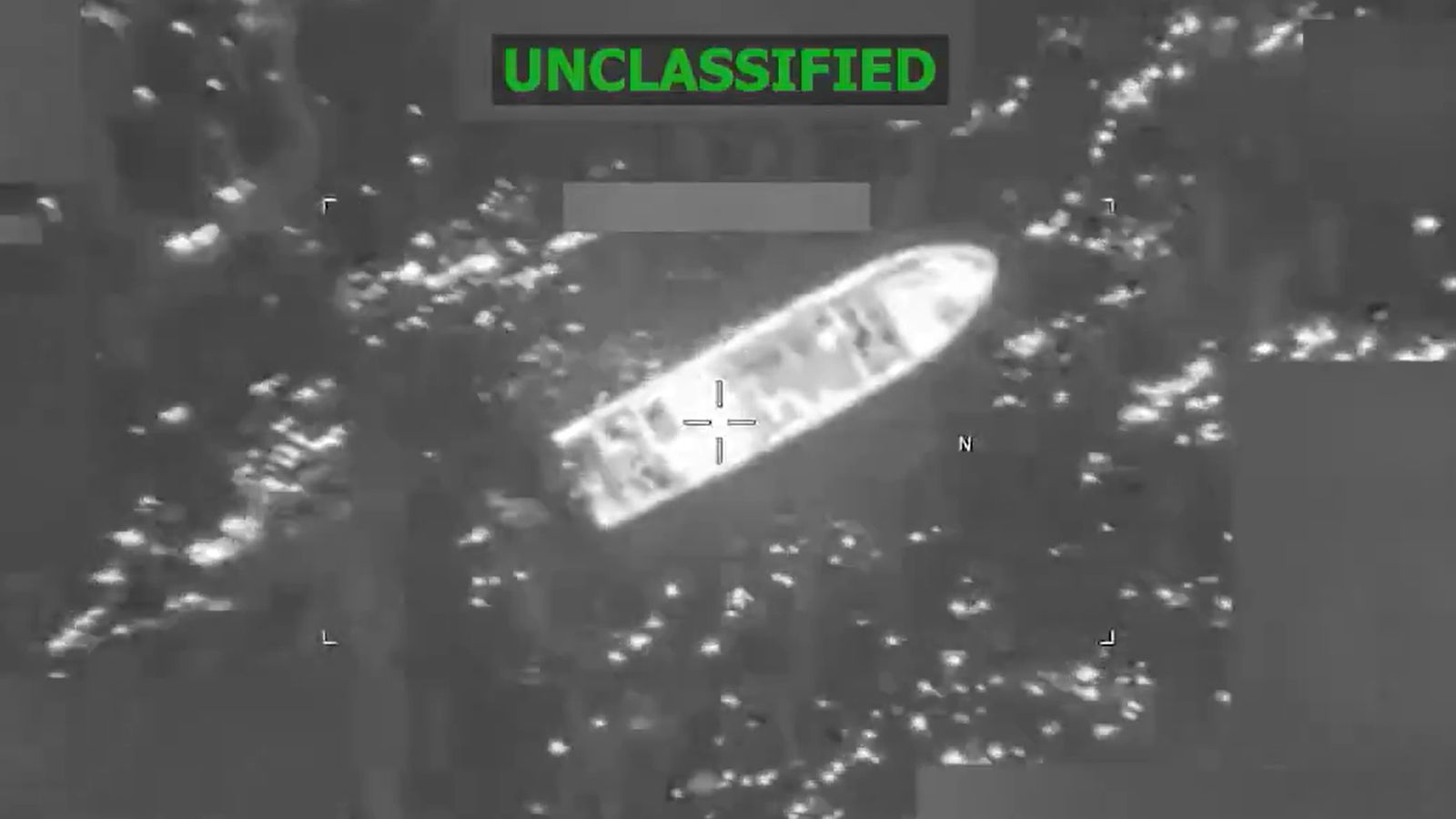
The strike hit a vessel in the eastern Pacific Ocean. Pic: US Southern Command

The US military says it has struck a boat “engaged in narco-trafficking operations”, killing three men.

The vessel “was transiting along known narco-trafficking routes in the Eastern Pacific and was engaged in narco-trafficking operations”, the US Southern Command said on X.

The military has not provided evidence that the boat or the men on board were involved in drug trafficking.

Footage of the strike on Friday shows the small boat floating in the Pacific before an explosion, causing it to burst into flames.

Image:
Flames are seen billowing into the sky after the strike. Pic: US Southern Command

President Donald Trump previously said the US is in “armed conflict” with cartels in Latin America.

US strikes on alleged drug boats have killed at least 148 people in at least 43 attacks in the Caribbean Sea and eastern Pacific Ocean since September, including 11 people earlier this week.

Advertisement

Read more from Sky News:
Trump announces global tariff
Trump’s trade war is not over

Mr Trump has justified the attacks as a necessary escalation to stem the flow of drugs.

But critics have questioned the legality and effectiveness of the strikes, as the fentanyl behind many fatal overdoses is smuggled into the US via land from Mexico, where it is produced with chemicals imported from China and India.

In January, the US launched a direct military attack on Venezuela, extraditing Nicolas Maduro and his wife Cilia Flores, transporting them both to New York to face narcoterrorism and other charges, which both deny.

Advertisement

Source link

Continue Reading

NewsBeat

Northumberland Park station set to open this weekend

Published

on

Northumberland Park station set to open this weekend

Located on the Northumberland Line, Northumberland Park station will welcome passengers for the first time on Sunday, February 22, with the opening service scheduled to arrive at 8.10am.

It is the fifth new station on the line, which reopened in December 2024, for the first time in 60 years.

Alex Hornby, commercial and customer director at Northern, said: “We’ve been working hard to prepare for the opening of Northumberland Park and are looking forward to welcoming customers on board this weekend.

Advertisement

“The Northumberland Line is having a really positive impact on the region, and this new station will allow even more people to benefit from quick, convenient and affordable train travel that opens up a range of new opportunities.”

The Northumberland Line has already recorded more than one million journeys since reopening.

Glen Sanderson, leader of Northumberland County Council, said: “We’re so looking forward to this next station re-opening, marking the latest milestone in this hugely ambitious project which is exceeding all expectations.

“We’re looking forward to meeting passengers at the new station from Sunday.”

Advertisement

Martin Gannon, deputy mayor of the North East Combined Authority and cabinet member for transport, said the station’s completion follows a £10.9 million investment by the mayor.

He said: “This follows the mayor’s £10.9m investment to get Northumberland Park station completed so that passengers can now enjoy a simple, affordable journeys on the Northumberland Line and Metro alongside easy access to local bus and ferry services.

“We know how transformative good transport links are for local people, and we’ll continue to invest in regional schemes that deliver positive outcomes and opportunities for residents.”

The final stop on the line, Bedlington, is expected to open on March 29.

Advertisement

Source link

Continue Reading

NewsBeat

NIFRS statement as 50 firefighters tackle blaze in Co Armagh

Published

on

Belfast Live

Residents are asked to keep windows and doors closed

Emergency services are in attendance at a fire in Co Armagh on Saturday morning.

Advertisement

The Northern Ireland Fire and Rescue Service has been tackling the blaze at a commerical building in Milford since before 4am on February 21.

50 firefighters have been tasked to the scene and local residents are asked to keep their windows and doors closed until the fire has been dealt with.

READ MORE: PSNI issue appeal for missing teen possibly dressed in a dressing gownREAD MORE: Return to 50:50 police recruitment would be a mistake says DUP leader Gavin Robinson

A Northern Ireland Fire & Rescue Service (NIFRS) spokesperson said: “Crews are currently attending a fire at commercial premises at Ballyards Road, Milford, Armagh.

Advertisement

“The initial call was received at 0345hrs, Saturday 21st February 2026.

“Currently over 50 Firefighters from stations in Armagh, Keady, Portadown, Banbridge, Dungannon, Newtownhamilton, Lisburn, and a water tanker from Pomeroy are currently working to bring the incident under control.

“Local residents are advised to keep windows and doors closed, and members of the public are asked to avoid the area to support firefighting operations.

“We would like to thank the public for their patience whilst we dealt with the incident.”

Advertisement

Want to see more of the stories you love from Belfast Live? Making us your preferred source on Google means you’ll get more of our exclusives, top stories and must-read content straight away. To add Belfast Live as a preferred source, simply click here

Source link

Continue Reading

NewsBeat

Unfixed Bolton pothole has been re-damaged by assessment

Published

on

Unfixed Bolton pothole has been re-damaged by assessment

The sinkhole is between number 11 and number 13 Chassen Road, Bolton, has been in place since February 2025, and despite barriers being erected around the damage, it is still not fixed.

Now, a pipe has been re-damaged by United Utilities during an investigation into the source of a nearby leak, according to Bolton Council.

Chassen Road sinkhole (Image: Anonymous)

A spokesperson for Bolton Council said: “Whilst recent investigations regarding leaks in the vicinity were carried out by United Utilities found no issues, their recent works resulted in damage to a council drainage pipe.

“Discussions are ongoing with United Utilities to rectify the issue.”

Advertisement

Residents have complained that the pothole and barriers have been making it difficult to get in and out of their drives, and are have been blowing into their gardens.

United Utilities workers visited the site last week to assess the problem and assess what they labelled a ‘complex issue’.

A nearby manhole was checked and found to be flowing as usual and the sewer water was clear with no signs of blockage.

At this point, the work was passed back over to the Bolton Council highways team.

Advertisement

An email was erroneously sent to one resident that stated the work would not be completed until November 12, 2026, though this should have read February 12, 2026.

Chassen Road sinkhole (Image: Anonymous)

Cllr Andy Morgan said: “The site is currently safe and secure but still awaits full repair.

“However, speaking to residents the excavation has made it difficult for some to enter and exit their driveways.

“I appreciate how disruptive this is and understand the frustration it is causing.

Advertisement

“I will be contacting the highways department to press for the site to be repaired and made fully safe as soon as possible.”

United Utilities have been contacted for comment.

Source link

Advertisement
Continue Reading

NewsBeat

How artists are tracking environmental change through poetry, film and sound

Published

on

How artists are tracking environmental change through poetry, film and sound

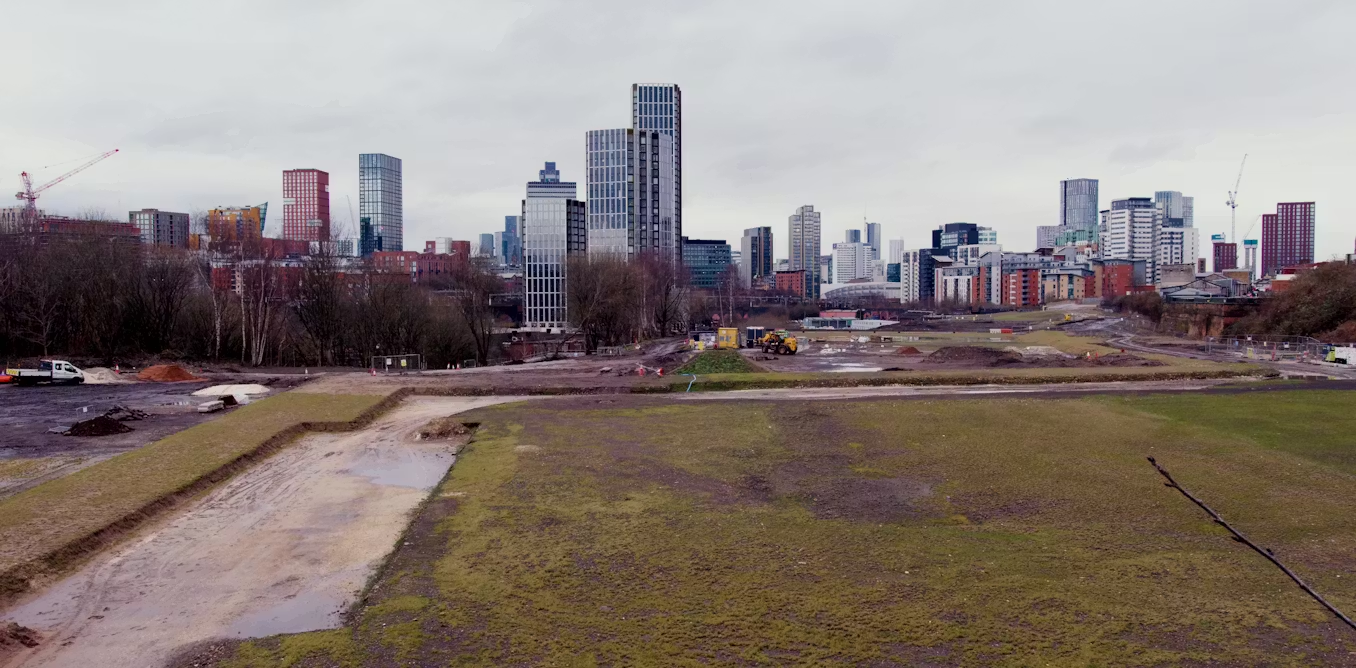
As Elaine, an artist in her 80s, stood at her window in north Manchester, she noticed new apartment blocks dominating the nighttime skyline: “The moon is no longer in view; I have to crane my neck out of the window in order to see it. Or to see the reflection of the moon.”

I have been meeting with the Many Hands Craft Collective – a group of older artists, knitters and poets – most Tuesdays for almost a year. The group has been gathering at the community room in Victoria Square, Manchester, for over a decade.

They have been reflecting on Manchester’s massive building boom as Victoria North – Britain’s largest regeneration project – transforms their neighbourhood with 15,000 new homes. City centre construction is also reshaping skylines they’ve known for decades.

Together, we have created a film tracking how urban regeneration transforms their world. The film explores their relationship with the elements through shifting light, redirected wind and changing rain.

Advertisement

People who have lived here for decades – reading wind patterns, tracking seasonal light, noticing atmospheric shifts – hold memories that city planners cannot see. Residents’ observations also reveal how wildlife experience urban change – birds, insects and nocturnal animals are all affected by altered light and wind.

Construction alters wind, blocks views of the moon and stars, and changes the subtle conditions residents have learned to read over lifetimes. Observations from these artists show that heritage is not just about preserved buildings or recorded rivers, but about the knowledge people carry.

As a film-maker and sound artist, I study the connections between people and the natural world. In 2008, when Manchester City Council rehoused my 82-year-old grandmother after she had lived in the same house for 60 years, she wrote poetry to process her loss.

“Bodies, not walls, carry memories,” she wrote. Her words inspired The Flowering (2020), my first poetic documentary exploring urban regeneration through the memories the body holds. This influenced my research into how cities transform.

Advertisement

Artists from the Many Hands Craft Collective meet weekly at Victoria Square in Manchester.
Fiona Brehony, Author provided (no reuse)

In Manchester, the River Irk flows through Victoria North. New riverside properties rise while the river itself needs care. For two centuries it powered mills, was contaminated by dye works, then was eventually culverted (channelled into underground pipes, hidden from view). Yet the river flows on, and so does the memory it carries.

The artists at Many Hands carry intergenerational knowledge about how this urban environment has changed. Our conversations about riverside properties blocking sunlight led the group to reflect on how construction changes light in their own streets. Views of the moon disappeared, high-rise buildings shifted wind and rain, and the sound of water tapping against windows stopped.

My PhD project analysed atmospheric transformations alongside the river itself: how these numerous new buildings and developments change homes as well as waterways.

Advertisement

As climate change forces cities to adapt, observations accumulated over decades – how rain moves through streets, how wind patterns shift, how rivers sound differently with the seasons – could inform climate-responsive urban design. Yet regeneration often displaces the very people who carry this knowledge before it is even recognised.

Materials and memory

To retrace the Irk’s history, we worked with clay and natural materials from the river – silt, stones, industrial brick fragments. An artist called Dot recalled seeing blue pigeons from old dye works, with feathers stained from chemical colours.

As the clay stiffened as it dried, conversations turned to how cities are built. Victorian brick from the 1890s still stands solid, while new apartment exteriors are designed for 20-year lifespans.

Poetry emerged from the conversations: “Sand, soil, silt, leaves, clay, decaying plants, coal and dust, ash chemical waste” and “human hearts holding on to heritage, ours. Made of natural materials, hands, rain, wind, sunlight”. Different perspectives recognise people and rivers as bodies carrying memory through change.

Advertisement
woman holds page of paper with poetry text over tables

Artists created poetry and artwork that represented their interactions with their urban surroundings.
Fiona Brehony, Author provided (no reuse)

Sound and poetry

As a group, we reconstructed waterwheels to explore how the Irk powered mills. One artist, Jean, suggested recording with hydrophones (special microphones that work underwater) in kitchen sinks. Water through household pipes connected us directly to the river, flowing through our fingertips. Playing hydrophone recordings for the first time, Jean said it sounded like being deaf – without her hearing aids, it was like being underwater.

This revealed a crucial insight: listening is shaped by our bodies. Jean’s deafness meant she heard the river differently, noticing frequencies and vibrations others might miss. Kitchen sink hydrophones create access where it did not exist, bringing culverted, fenced or distant rivers into homes through soundwaves in domestic pipes.

These conversations evolved into Two Worlds, a sound installation created with composer and sound artist Simon Knighton. This piece of sound design informs the film score and explores how people coexist with the environment. The Irk pulsates different rhythms depending on where you listen. Harsh urban concrete or gentler upstream flows are heard differently by each set of ears.

As we wrote poetry together after discussing how some long-forgotten waterways have been buried beneath streets, Rose asked: “What happens to a river when it becomes a road?”

Advertisement
woman holds white fabric with printed words, people sit on chairs in background

Editing poetry and screen-printing words on fabric was part of the collaborative process.
Fiona Brehony, CC BY-NC-ND

Rose’s question lies at the heart of my research: when cities develop, what environmental knowledge disappears?

Manchester has lost multiple rivers to culverting, development and roads. Older residents carry knowledge younger generations never knew existed. As climate change requires us to expose or “daylight” culverted rivers for flood management, these memories could guide restoration.

Many Hands’ Material River, a collection of films and poetry printed onto fabric, is on display within the River Stories exhibition until March 23 2026 in Manchester Histories Hub at Manchester Central Library.


Imagine weekly climate newsletter

Don’t have time to read about climate change as much as you’d like?

Get a weekly roundup in your inbox instead. Every Wednesday, The Conversation’s environment editor writes Imagine, a short email that goes a little deeper into just one climate issue. Join the 47,000+ readers who’ve subscribed so far.

Advertisement

Source link

Continue Reading

NewsBeat

Palestinian Authority in dire straits as Israel’s hold on West Bank deepens

Published

on

Palestinian Authority in dire straits as Israel's hold on West Bank deepens

Sitting among green rolling hills, studded with olive groves, most homes in al-Mughayir are in an area where Israel’s military controls security, but the internationally backed Palestinian Authority (PA) should provide basic services. Increasingly though, it cannot – it is mired in a deep economic crisis.

Source link

Continue Reading

NewsBeat

Latest on plans for major ’employment park’ next to major Cambridgeshire road

Published

on

Cambridgeshire Live

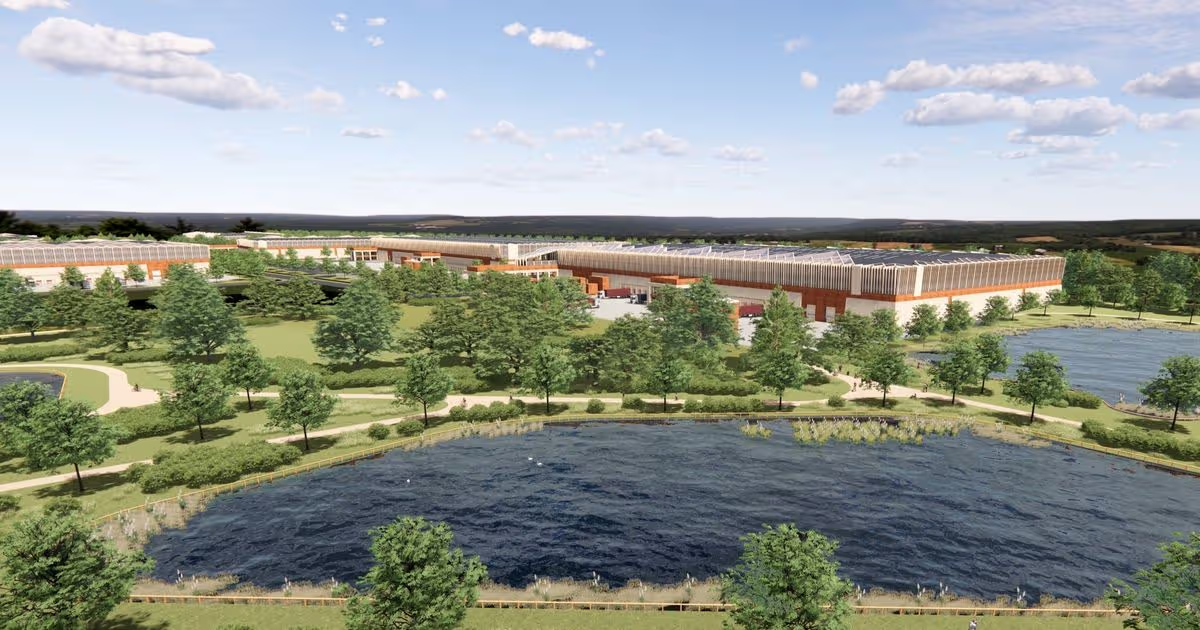
Developers behind an ’employment park’ next to the A14 in Cambridgeshire have released updated proposals. A public consultation has since opened on revised plans for Cambridge 25, which is proposed on land next to Junction 25 of the A14 between Bar Hill and Northstowe.

Advertisement

Lolworth Developments Limited (LDL) invited views from the community and stakeholders to inform an initial proposal in autumn last year for around 123,000 square metres of new employment space. The wider Cambridge 25 site received a draft allocation in the emerging Greater Cambridge Local Plan (GCLP) as a major new employment site for around 240,000 square metres of floor space.

Graeme Cosgrove, Development Director at Lolworth Developments, said: “Cambridge 25 represents an exciting opportunity to deliver a modern, high-quality landscape led employment park in the best location possible in Greater Cambridge.

“It was an important and significant decision to allocate the whole of our site in the emerging new Greater Cambridge Local Plan, and we are naturally delighted to see the councils’ evidence-led approach recognising the suitability of the site. As a consequence of this draft allocation, we are now bringing forward a revised and more extensive masterplan which includes development on both sides of the bridleway.“

LDL is now inviting local residents to ‘have their say’ on its updated wider site masterplan that aligns more closely to the aspirations and objectives in the draft Local Plan. The latest masterplan also reflects feedback received from the autumn 2025 consultation, with additional features of the 2026 plans including:

Advertisement
  • More structural landscaping and tree planting;
  • Community ‘hub’ facilities in the amenity block;
  • Providing public WC facilities in the nature park;
  • Better walking and cycling connections;
  • Providing large HGV yards with significant HGV parking bays;
  • Large interconnecting ponds with enhanced capacity.

Mr Cosgrove added: “This new masterplan is informed by the valuable insights gained from talking to people last year and listening to their comments and priorities. We are incredibly grateful for this feedback which has helped us to shape our wider site proposals – from even more landscaping to more extensive walking and cycling routes through the site and connections with the nature park.

“We would now welcome feedback on these revised proposals and are encouraging the local community to share their views before we submit a planning application this spring.”

The public consultation on the revised masterplan runs from February 17 to March 10, including two online webinars with a consultation website. You can find more information on the Cambridge 25 website.

Source link

Advertisement
Continue Reading

NewsBeat

Tottenham v Arsenal: North London derby now a test of Gunners’ ‘bottle’

Published

on

Arsenal keeper David Raya and defender Gabriel in a heated exchange after their misunderstanding led to Wolves securing a late equaliser.

Is the fear of losing, or drawing, turning up the pressure valve on players who will know this season represents their best chance of winning the title to such an extent they are now struggling to close out victories?

It is a highly pressurised environment. This season there are no excuses. It may just be now or never.

Arteta invariably cuts an agitated figure on the sidelines. He recently urged Arsenal‘s fans to “jump on the fun boat”, but does not look as if he is having fun at the moment, even though he is leading a team top of the table and insists “the present is beautiful”.

He says he will be “keeping calm, keeping my eyes open, my ears open, and understanding what the players need to give their best”.

Advertisement

Arteta added: “We have to live the present. What we did in the past is great, but we have to live the present, and the present is beautiful.

“We are exactly where we want to be in every competition. We need to earn it, like we’ve done in the last seven or eight months.”

Getting to this position, and it is a healthy one, is another factor in the equation. Are the physical demands starting to take their toll on players?

Martin Zubimendi, outstanding since his summer move from Real Sociedad, is one such example.

Advertisement

He has seen more Premier League action than any other Arsenal outfield player, figuring in all 27 games with 26 starts, playing 2,270 minutes in his first season in the English top flight.

Eberechi Eze has almost been a bystander in comparison, despite the fanfare that greeted his £60m arrival from Crystal Palace in August, stolen away from Spurs at the 11th hour.

Since scoring a hat-trick in the 4-1 win against Spurs in November, Eze has featured in all 15 of Arsenal‘s league games but has made only four starts and played 360 minutes.

The wider questions, however, surround Arsenal‘s temperament to withstand the pressure that is suddenly closing in on them, an ominous reminder of previous failings.

Advertisement

Arsenal are still in a superb position in every competition – positions they would have instantly signed up for in August. And their cause could be helped the return of key duo Martin Odegaard and Kai Havertz.

If the Gunners win at Spurs, doubts will be eased, but one thing is beyond question.

This north London derby is now a completely different proposition from a fortnight ago.

Source link

Advertisement
Continue Reading

Trending

Copyright © 2025