NewsBeat
Trump team removed plaque critical of Confederate monument in Arlington cemetery

The Trump administration removed materials from Arlington National Cemetery that criticized a former monument to Confederate soldiers for its romanticized depiction of slavery, the latest in its campaign to drastically change the representation of the Civil War in high-profile public spaces.
In recent weeks, crews reportedly removed text at the former site of the Confederate Monument, which had described the statue that once stood at the site as presenting a “nostalgic, mythologized vision of the Confederacy, including highly sanitized depictions of slavery.”
The monument, installed in 1914 and removed in 2023 after a vote by Congress, had explicitly referred to the pro-slavery Confederacy’s mission to violently separate from the United States as the “lost cause.”
A Defense Department web page noting that the statue featured racist tropes, such as an enslaved man following his enslaver into war and a Black “Mammy” caring for white children, was also recently amended to remove this context.
A new sign at the former statue site notes that in 2025, the Army entered into an agreement with Virginia to once again display the statue in Arlington with “interpretive content to ensure visitors receive clear and accurate contextual information.”

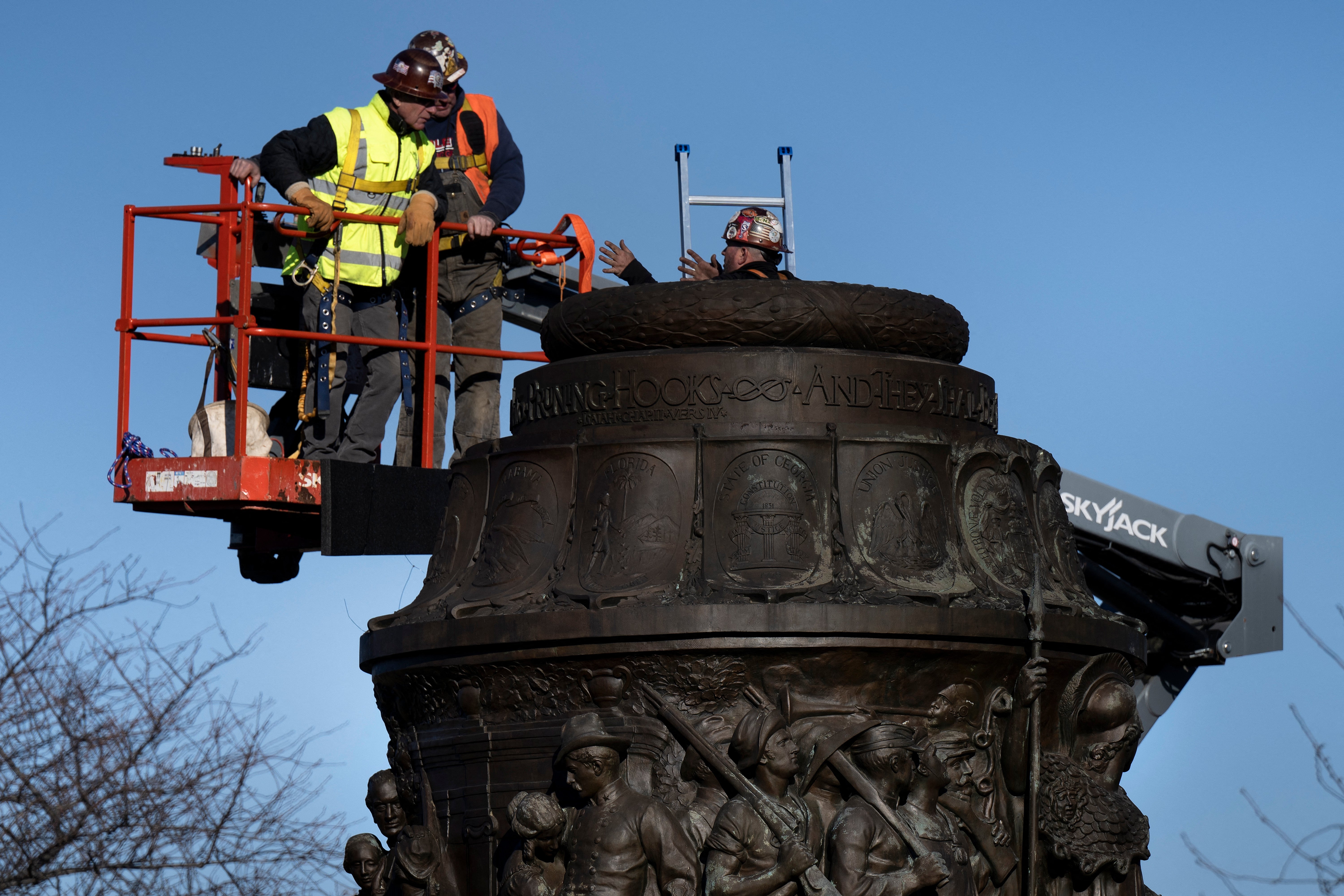
The statue is expected back at the cemetery in 2027.
Last year, Defense Secretary Pete Hegseth argued the statue, designed by artist and Confederate veteran Moses Ezekiel, was originally meant to be a “Reconciliation Monument” and was taken down after pressure from “woke lemmings.”
At the time the monument was originally installed, mythologized retellings of the Civil War were growing in popularity, and the Ku Klux Klan racist terror organization was experiencing a resurgence. Many of the nation’s Confederate monuments were not installed around the time of the Civil War, but rather during this period.
The Defense Department website continues to note that Arlington spent decades blocking Black soldiers from being buried in the main cemetery, which was not integrated until 1948.
Ty Seidule, a retired U.S. Army brigadier general who served on a congressionally established commission that reviewed military assets named for the Confederacy for possible removal, called the soon-to-be-restored statue “the cruelest monument that I have ever seen” in an interview with The Washington Post, which reported on the change.
“It is a pro-slavery, anti-United States monument,” he said.
“Arlington National Cemetery’s decision to update website language and signage at Section 16 was made to ensure it was succinct, factual, current and objective,” an Arlington National Cemetery spokesperson said in a statement to The Independent. “This included incorporating updates regarding the pending return of the Moses Ezekiel sculpture, which the Army expects to display in 2027 after it has undergone comprehensive conservation and refurbishment.”

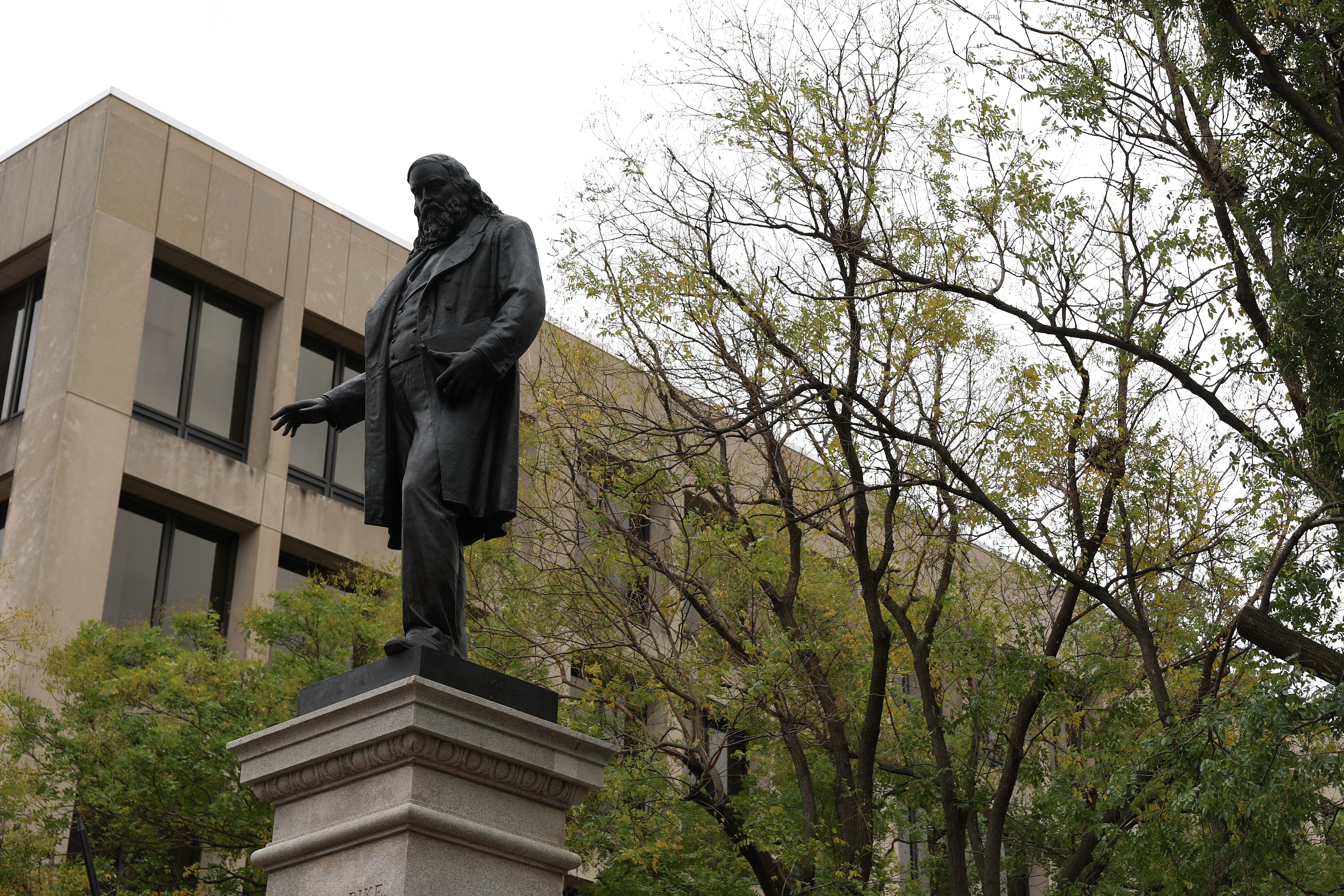
The Trump administration has worked to restore multiple public-facing assets honoring the Confederacy, including reinstating the names of military bases that had been renamed to strike their Confederate-inspired titles, as well as reinstalling a statue of a Confederate general in Washington, D.C., that had been toppled by Black Lives Matter demonstrators in 2020.
Restoring the statue of Albert Pike, the only outdoor statue of a Confederate leader in the capital, was “morally objectionable,” Eleanor Holmes Norton, the capital’s non-voting delegate to Congress, told The Associated Press at the time.
The Trump administration has also restored a portrait of Confederate general Robert E. Lee to its place in the library at the West Point military academy.
Beyond the military, the Trump administration has pursued a wide-ranging review of Smithsonian-linked museums to purge them of what it calls “improper ideology,” amid complaints from the president that the Smithsonian was too focused on “how bad slavery was.”
Materials touching on the history of slavery and other controversial parts of U.S. history have been removed from national parks and historical sites.
You must be logged in to post a comment Login