Connect with us

NewsBeat

Turkey’s Erdogan has tough, no-nonsense reputation – and his message on Iran war is clear | World News

Published

on

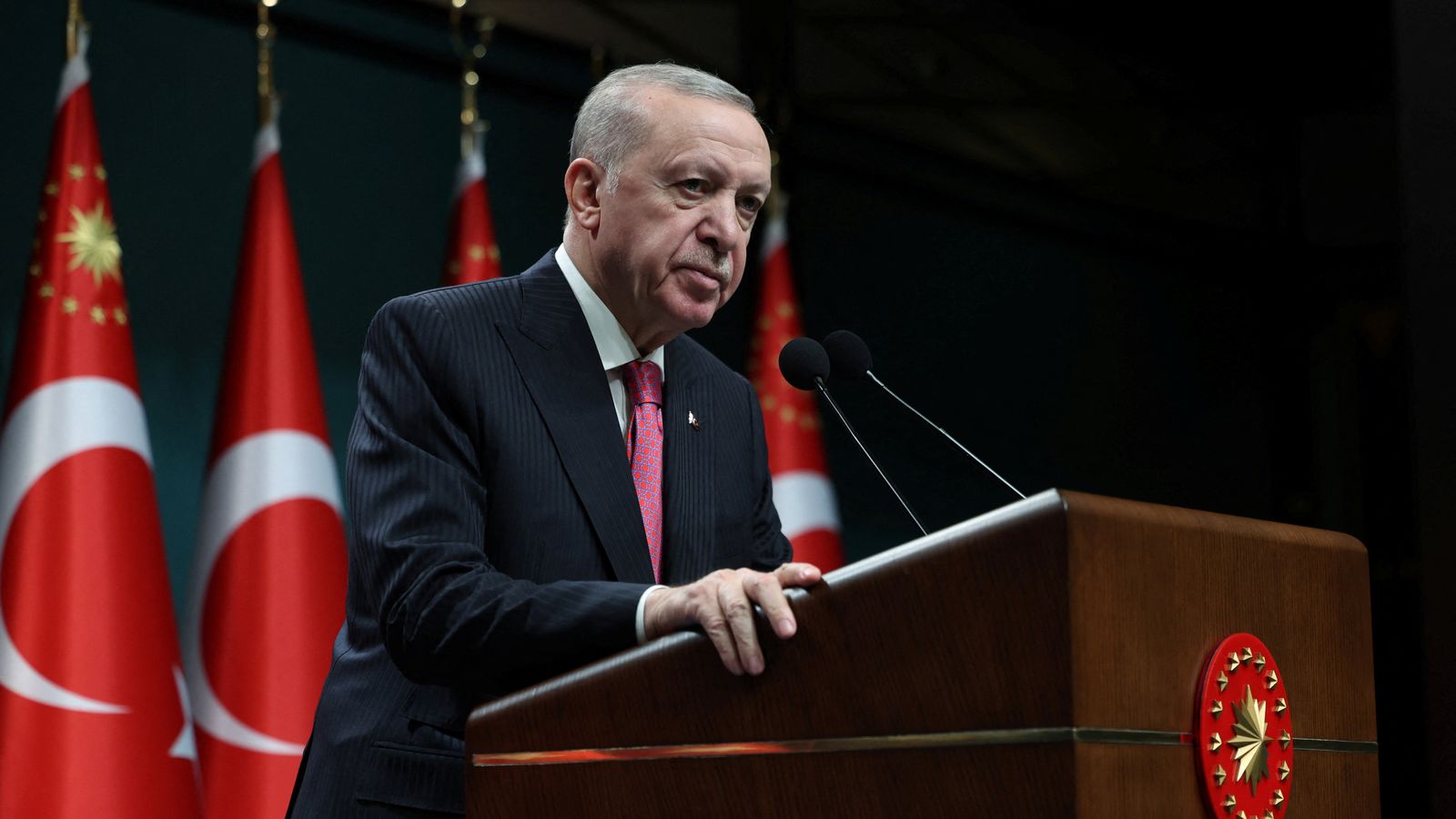
Turkey’s President Tayyip Erdogan speaks after a cabinet meeting in Ankara on Monday. Pic: Reuters

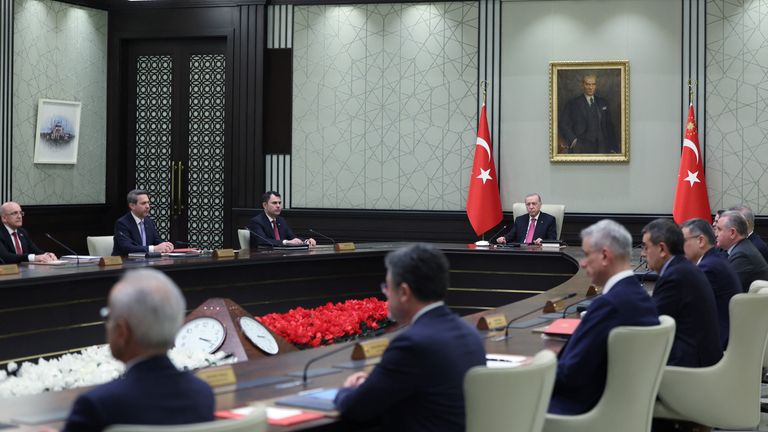
The Turkish president with a reputation for being bullish, no-nonsense and tough was clear as he addressed his cabinet on Monday.

He does not want Turkey to be dragged into this war on Iran.

“Our primary goal is to keep our country clear of this fire. Ensuring Turkey’s security and the peace of its 86 million citizens is our greatest priority,” President Recep Tayyip Erdogan told his ministers.

He was speaking the same day a second ballistic missile fired from Iran to Turkey was intercepted by NATO defences.

Advertisement

Debris from the interception landed in a field in the southern Turkish city of Gaziantep. A first missile fired days earlier on was also intercepted, this time, as it was headed towards Turkish airspace.

Image:
Debris of a NATO air defence system in Turkey’s Hatay province. Pic: Reuters

That incident drew words of caution from the Turkish foreign minister Hakan Fidan who urged their Iranian neighbours not to test Turkey’s patience.

“We are not a country that gets provoked easily,” Mr Fidan said. “We spoke with our Iranian friends and said if this missile lost its way, that’s one thing, but if it continues, be careful…”

Mr Erdogan called for calm amid fears the conflict could spill across European borders. Pic: Reuters
Image:
Mr Erdogan called for calm amid fears the conflict could spill across European borders. Pic: Reuters

The president went further at a Monday Iftar dinner in Ankara for ambassadors. “We do not accept the Middle East geography to be put on the operating table just like a century ago.”

“Last week, and today,” the president said. “The ballistic missiles headed to our country were neutralised on time and the necessary warnings were made very clearly to be Iranian side.

Advertisement

“I emphasise again, that the war should be ended without spreading further in our region.”

The Turkish leader insisted he was actively working to lower tensions and had conducted multiple talks with more than a dozen leaders to try to broke a way through the crisis.

Advertisement

On Monday evening it also emerged that Mr Erdogan had had a phone call with Iran’s President Masoud Pezeshkian. Turkey said on social media that this had come at the request of the Iranians. The post said Mr Erdogan had told his counterpart that Turkey “doesn’t approve of unlawful interventions against Iran and Iran’s targeting of the brotherly countries in the region”.

“President Erdogan stated that targeting the brotherly countries benefits no one and that these must all stop,” the statement from his office added.


Day 10 Iran war: Videos from on the ground

The US embassy has raised its advice for travelling to the country to Level Four, urging travellers against travel to southeast Turkey and has ordered non-emergency US government employees and family members to leave the Consulate General in Adana “due to security risks”.

Advertisement

Americans in southeast Turkey have been “strongly encouraged to depart now”.

Read more from Sky News:
Iran’s women footballers granted Australian visas
Ayatollah’s son takes supreme power

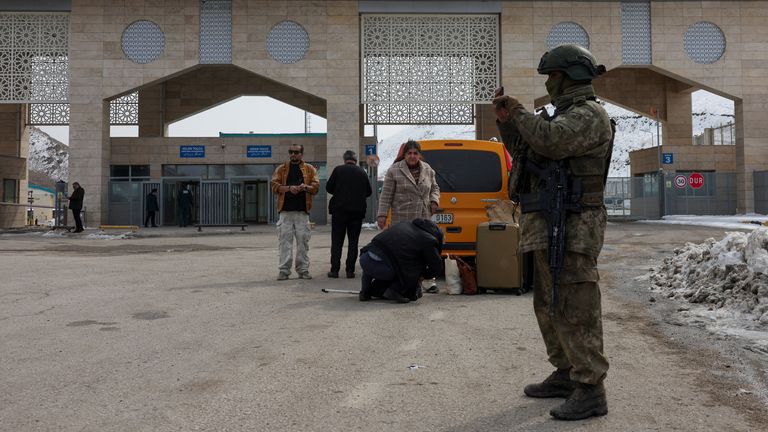
Security along Turkey’s long border with Iran has been tightened and Sky’s journalists along the border have detected very little movement out of Iran and into Turkey.

There is usually visa-free movement for Iranians wanting to visit Turkey and vice-versa along the three border gates the two countries share. But right now, Iran is only allowing in Iranians.

Advertisement

Our team at a border crossing detected limited movement with higher numbers of Iranians wanting to travel back to their homeland to check on relatives there, than the numbers departing.

A Turkish soldier stands guard in front of the Kapikoy Border Gate in the eastern Van province. Pic: Reuters
Image:
A Turkish soldier stands guard in front of the Kapikoy Border Gate in the eastern Van province. Pic: Reuters

Turkey’s disquiet over Iranian missiles near or through its airspace led to Iran’s Ankara ambassador being summoned to the Turkish foreign ministry.

And in a sign of the country’s increasing concerns over tensions, the country has sent six F-16 fighter jets to the Turkish Republic of Northern Cyprus as part of a “phased approach to enhancing security”.

The aircraft are expected to operate from Ercan International Airport west of the capital Nicosia and will be equipped to conduct air patrol and air defence missions over the eastern Mediterranean.

Turkey hosts American forces in Incirlik airbase in the southern Adana Province but has not allowed its bases or airspace to be used in the war against Iran.

Advertisement

Additional reporting by Turkey producer Zeynep Bilginsoy

Source link

Advertisement
Continue Reading
Click to comment

Leave a Reply

Your email address will not be published. Required fields are marked *

NewsBeat

Indian Wells: Jack Draper to face Novak Djokovic in fourth round while Cameron Norrie also through

Published

on

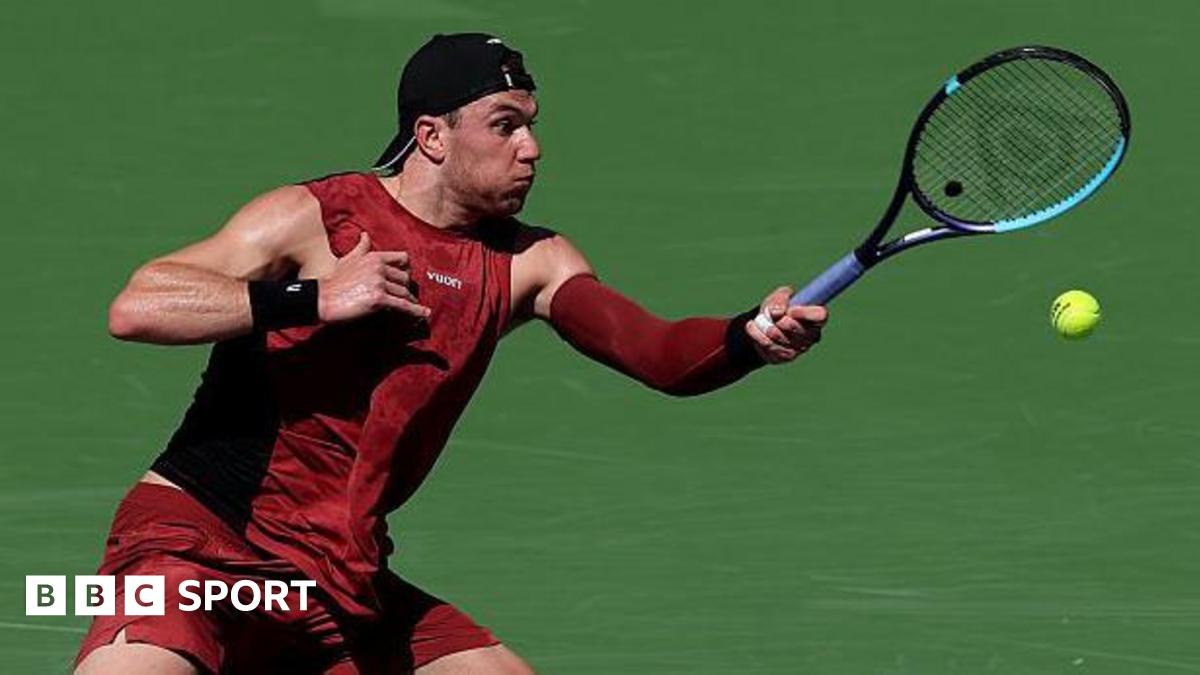
Jack Draper plays a shot during his win over Francisco Cerundolo at Indian Wells in 2026

Draper claimed the first set inside 32 minutes before Cerundolo provided a sterner test in the second, breaking Draper’s serve in the opening game.

A further break meant Cerundolo had the chance to serve for the set at 5-4 up, but Draper resisted and took the next three games to clinch victory on his first match point.

Draper’s win means he will face 38-year-old Djokovic for the first time since he took the first set off the defending champion on his Wimbledon debut in 2021.

“I’ve been watching him since I was a young boy and in my opinion he’s the greatest player of all time,” said Draper.

Advertisement

“When you come up against him you know he’s going to be there mentally, you know he’s going to make it an incredibly tough match and play some crazy tennis. I’m going to have to be ready for that.”

The victories for Norrie and Draper came a day on from fellow Briton Emma Raducanu being well beaten by American Amanda Anisimova, winning only two games and being ousted in 52 minutes.

Norrie is the 27th seed in the men’s draw but played above that status as he earned three breaks en route to victory over De Minaur.

His next opponent will be Australian qualifier Rinky Hijikata, who beat Kazakhstan’s 10th seed Alexander Bublik in three sets.

Advertisement

Source link

Continue Reading

NewsBeat

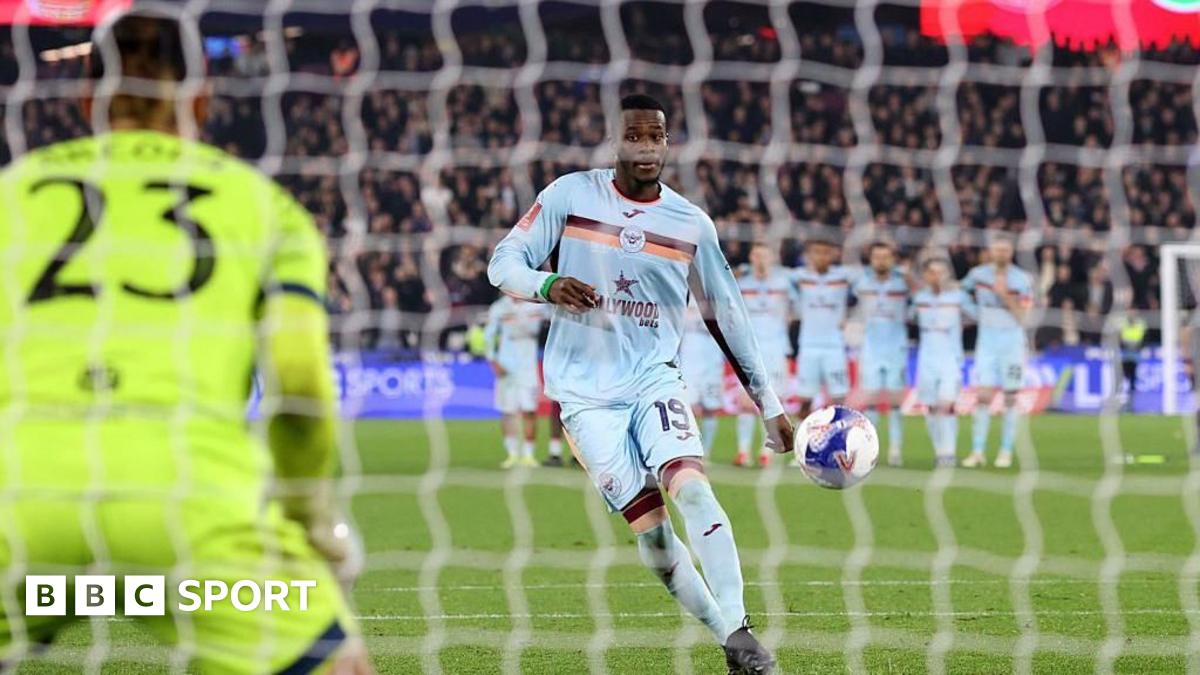
Is there a right time for a Panenka – as Brentford pay the price?

Published

on

Italy's Andrea Pirlo dinks a penalty down the middle past England goalkeeper Joe Hart at Euro 2012

In the 50 years since Panenka brought the dinked penalty to prominence, it has gradually become more common.

A number of top players, including Lionel Messi, Thierry Henry and Francesco Totti, have successfully used the technique from the spot.

France legend Zinedine Zidane has a claim for taking the most high-pressure Panenka, in the 2006 World Cup final with his penalty hitting the underside of the crossbar and just crossing the line.

It’s probably not what he is most remembered for that night, though.

Advertisement

England have suffered at the hands of the Panenka a couple of times in shootouts, most famously when Italy midfielder Andrea Pirlo nonchalantly beat Joe Hart to change the momentum of the shootout in the Euro 2012 quarter-final.

“For me, Hart seemed to be very confident in himself,” Pirlo said. “I needed to do something to beat him.

“Penalties are a very personal thing but, when I saw him move, I decided to do that. It seemed to be a psychological blow for us.”

Similarly in the 2022 EFL Cup final, with Chelsea keeper Kepa Arrizabalaga making a show of trying to distract the Liverpool players, Fabinho responded by calmly dinking his kick down the middle, much to the delight of the Reds fans behind the goal.

Advertisement

A psychological blow? Well, every Liverpool player proceeded to score as they won 11-10 on penalties.

But for all the notable successes, Ouattara is not the first high-profile miss.

In 1992, Gary Lineker had the chance to match Sir Bobby Charlton’s 49 goals for England in a friendly against Brazil but fluffed his attempted Panenka and ended up one shy of the then-record.

Manchester City striker Sergio Aguero was usually pretty reliable from the spot but was made to look foolish when he attempted a Panenka in May 2021 as Chelsea went on to win 2-1 after the penalty save from Edouard Mendy.

Advertisement

In January, Brahim Diaz attempted a Panenka to win the Africa Cup of Nations in stoppage time for Morocco. His effort was saved and Senegal emerged champions.

Source link

Continue Reading

NewsBeat

Tesco F&F releases flattering co-ord in time for spring

Published

on

Cambridgeshire Live

The co-ord can be mixed with the matching shirt or bralette

Advertisement

You are most likely starting to pack away your winter wardrobe as the season comes to an end. If you are looking to refresh your wardrobe for the springtime, you might be heading out on a shopping trip soon.

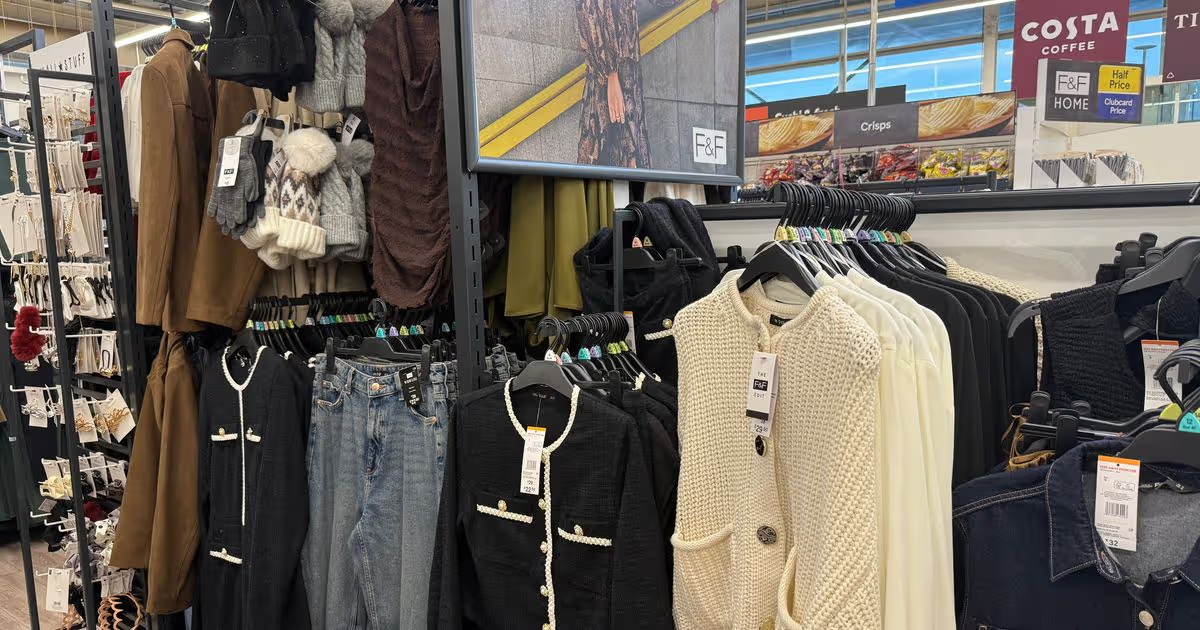
You could head to Tesco, as its fashion brand F&F has just released the F&F Edit Pure Cotton Poplin Stripe Co-ord Midi Skirt in Blue, which can be worn with the matching F&F Edit Pure Cotton Poplin Stripe Shirt in Blue. The co-ord has been “designed with a timeless stripe print” and will create a “flattering fit”.

If you are looking for something you could wear more in the summer, the skirt could also be paired with the F&F Edit Pure Cotton Poplin Stripe Co-ord Bralette in Multi Blue, which costs £12.50. The skirt is currently being sold for £22.50 and the shirt costs £18 and can easily be mixed and matched with items you already have in your wardrobe.

The co-ord was posted in a video to the Tesco F&F Instagram page, which currently has 886K followers. The post was captioned: “Own the moment on a day that celebrates women.”

Advertisement
Content cannot be displayed without consent

If you want to get your hands on any of the pieces from the co-ord, you can go to the Tesco website to browse all of its clothes. You can also go in-person to a Tesco store with a clothing department.

If this set is not quite what you are looking for, Boden has some choices for the springtime. There is this Verity Maxi Skirt that can be worn with the matching Occasion Shell Top or this Elodie Jersey Maxi Dress, which reviews say is “absolutely beautiful”.

New Look also has some options that might be more inline with your style. There is this Light Khaki Soft Touch V Neck Waistcoat, which you can pair with the Soft Touch Khaki Textured Trousers, or this Bright Green V-Neck Button Up Mini Tea Dress that comes in a few different colours.

Source link

Advertisement
Continue Reading

NewsBeat

‘Near miss’ at level crossing after signaller ‘forgot’ freight train was coming

Published

on

'Near miss' at level crossing after signaller 'forgot' freight train was coming

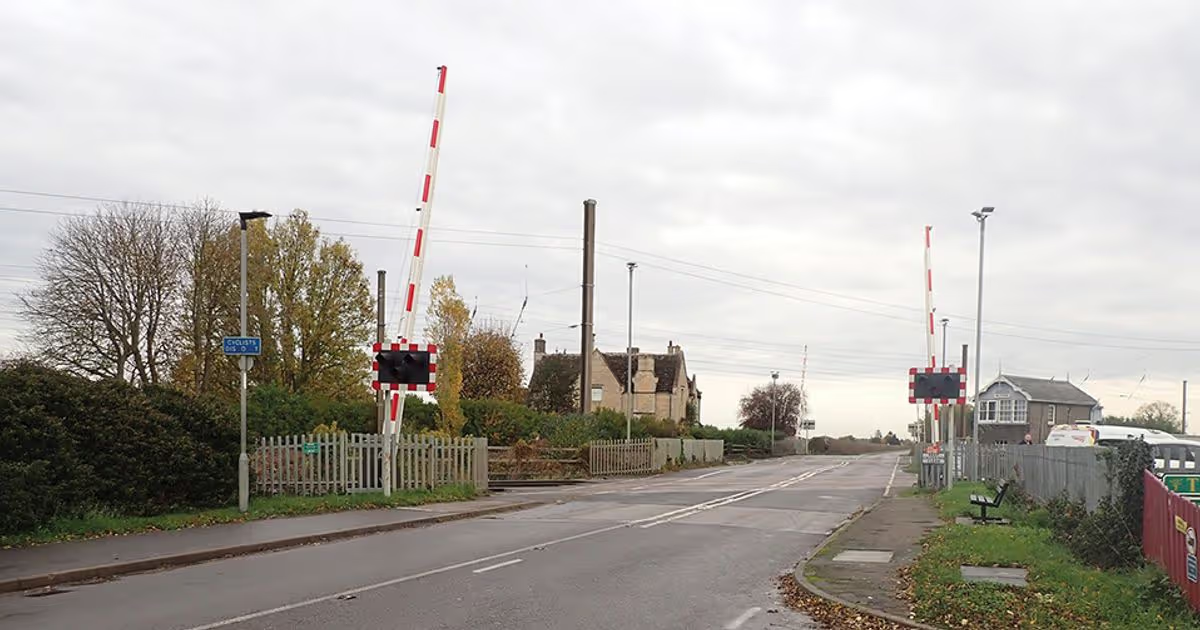
The freight train was approaching the crossing at 75mph when the signaller raised the traffic barriers

A train signaller at a level crossing who ‘forgot’ a 75mph freight train was approaching and raised the barriers caused a ‘near miss’, a report has found. The incident occurred at 8.16am on October 21, 2025, at the manually controlled barrier in Helpston, near Peterborough.

Advertisement

A report by the Rail Accident Investigation Branch (RAIB) found the on-duty train signaller had ‘forgotten’ a freight train was approaching the crossing. They used the ‘raise barriers’ control, which fully raised the barriers and extinguished the road lights while the freight train was still on the crossing.

A waiting motorist started to drive their car towards the crossing after the barriers started to rise, according to the RAIB. The report said: “There is conflicting witness evidence about how far the car moved. The train driver did not report seeing any road vehicles enter the crossing as the train approached and no road vehicles were struck by the passing train.”

The incident happened after two passenger trains passed on the fast line. The signaller looked out of the crossing windows to check both directions of the fast line but failed to check the Stamford line for approaching trains.

As a result, the crossing barriers were not lowered in time for the approaching freight service. Signalling data later showed that the signaller attempted to raise the barriers after the two passenger trains had passed.

Advertisement

The system prevented this after detecting the approaching freight train. The signaller assumed the system had detected a fault, partly due to recent barrier failures, and responded using the sealed release plunger to manually raise the barriers.

Signalling data shows the sealed release was used as the freight train approached the crossing. After looking to their left and noticing the approaching train, the signaller immediately activated the control to lower the barriers.

A local operations manager, who was present, reported the incident and took over the signal box’s operations. The RAIB report said: “Helpston signal box is normally staffed by a single signaller. Witness evidence indicated that, at the time of the incident, it was possible that the signaller was distracted by the presence of the LOM in the signal box.”

Source link

Advertisement
Continue Reading

NewsBeat

Call made for feasibility study of bridge linking Portaferry and Strangford

Published

on

Call made for feasibility study of bridge linking Portaferry and Strangford

‘This isn’t a new idea, or a new motion, in fact it has been campaigned for in the Ards Peninsula since the 1950s’

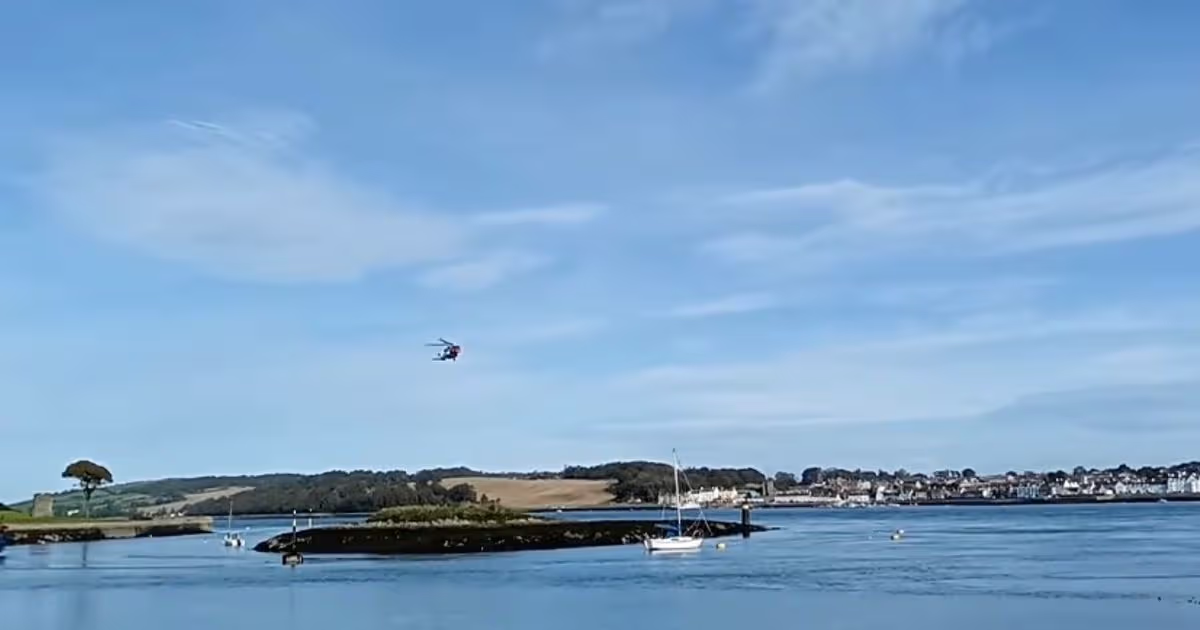
A call has been made by Ards and North Down councillors for a “feasibility study” into the construction of a bridge from Portaferry to Strangford.

During a meeting of a committee at Ards and North Down Borough Council, a DUP motion calling for a feasibility study into finally realising the dream of a bridge across the pinch point of Strangfor Lough, was passed by the chamber.

The motion states: “The council recognises the huge benefits, to the Ards Peninsula and wider borough, of greater connectivity in terms of tackling isolation, boosting local business and enhancing tourism.

Advertisement

READ MORE: Football coming home to Newtownards as Ards FC stadium approved after 25 year wait

READ MORE: Stand-off over Fleadh event in Bangor ends as unionists yield to recommendations

“Furthermore, the council is concerned about the increased traffic travelling along Ards Peninsula roads, which would be better served by a fixed crossing between Portaferry and Strangford village. (This) may help in addressing congestion in other parts of the borough and assist in improving road safety in roads within the peninsula.”

The committee agreed to write to the Stormont Minister Department for Infrastructure, Sinn Féin MLA Liz Kimmins, to request that she “prioritises funding for a feasibility study” into a bridge across Strangford Lough from Portaferry to Strangford village.

Advertisement

Minister Kimmins has previously said there could be a feasibility study into the project “if there was political will.” The committee decision will go to the full council meeting later this month for ratification, where it is expected to pass.

Alderman Robert Adair, who proposed the motion, said at the meeting there was “overwhelming support” for the bridge in the local areas.

He said: “This isn’t a new idea, or a new motion, in fact it has been campaigned for in the Ards Peninsula since the 1950’s.”

He said: “The Ards Peninsula is one of the most socially cut-off areas in Northern Ireland. A lot of services that people take for granted, we are cut-off from, and we have a long journey.

Advertisement

“We want to boost business, we want to boost tourism, and we want to enhance connectivity. What facilities people in Newtownards and Bangor have access to, we want access to also.

“Hospital waiting times, ambulance waiting times, could all be enhanced through a fixed crossing between Portaferry and Strangford. It would also open business opportunities and business growth.

“Our main link to Belfast is the Portaferry Road, which is not a safe road, and there are a lot of congestion issues with it. You only have to travel along it any morning to see it is not working.”

He referred to the new Narrow Water Bridge, which will increase connectivity between Northern Ireland and the Republic, saying “If they can do it why can’t we?”

Advertisement

Alliance Councillor Patricia Morgan said at the meeting: “I have no particular problem with the council writing to the Minister, but I don’t think it will take her very long to reply, and I think we already know the answer.

“A significant cost has been suggested. I think the figure is in and around £300 million, but I don’t know what date that was (made) and presumably it will move with inflation, and potentially more.

“When we look at the likes of the Narrow Water we see that not all such things remain a pipe dream if there is good support and a strong economic case for it, then why not?”

For all the latest news, visit the Belfast Live homepage here and sign up to our daily newsletter here.

Advertisement

Source link

Continue Reading

NewsBeat

How the ‘red v blue school wars’ exposed the social media gap between children and parents

Published

on

How the 'red v blue school wars' exposed the social media gap between children and parents

“All the gang stuff, the points systems, the AI posters, all of it is totally native and completely legible to the generation it emerged from, and easy to completely misread if you’re outside. That’s how internet culture works. These things develop their own internal logic, their own mythology, and they’re not designed to be understood by parents or police or journalists, they’re a community talking to itself in its own language.”

Source link

Continue Reading

NewsBeat

Strictly Come Dancing: Nadiya Bychkova reportedly ‘axed’ from 2026 series

Published

on

Strictly Come Dancing: Nadiya Bychkova reportedly ‘axed’ from 2026 series

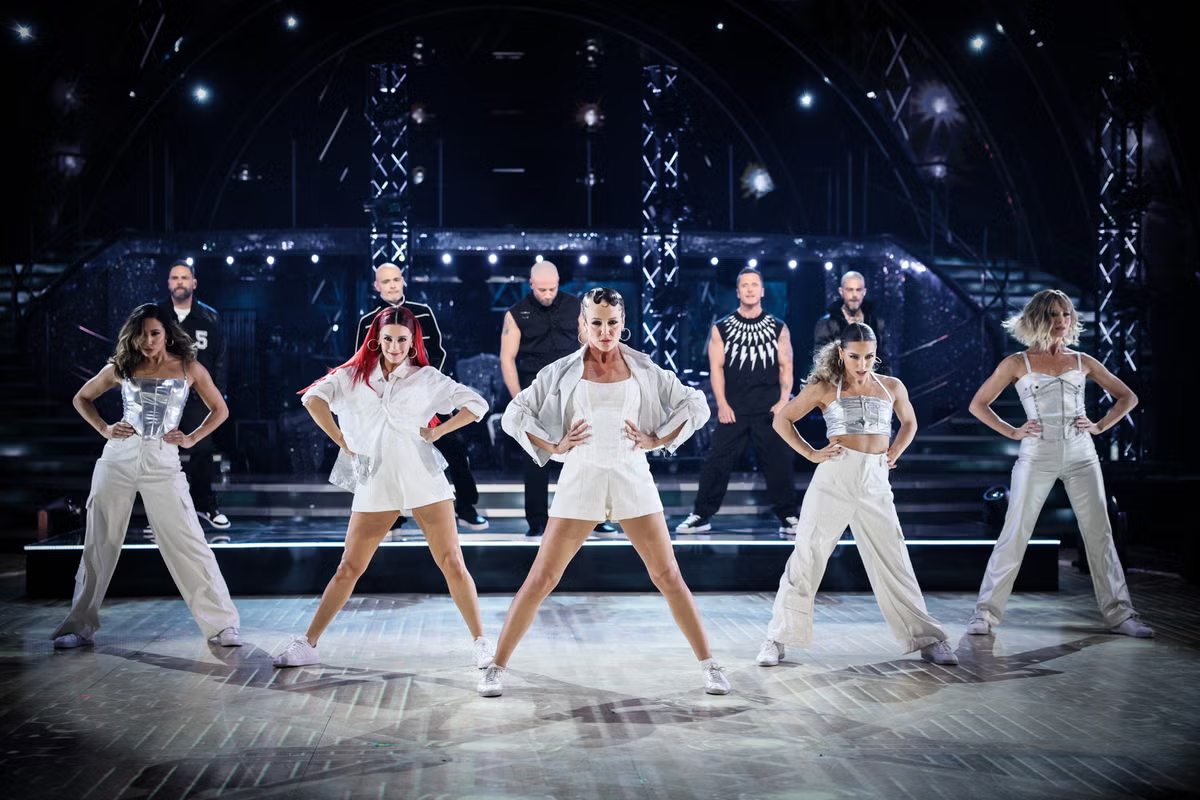
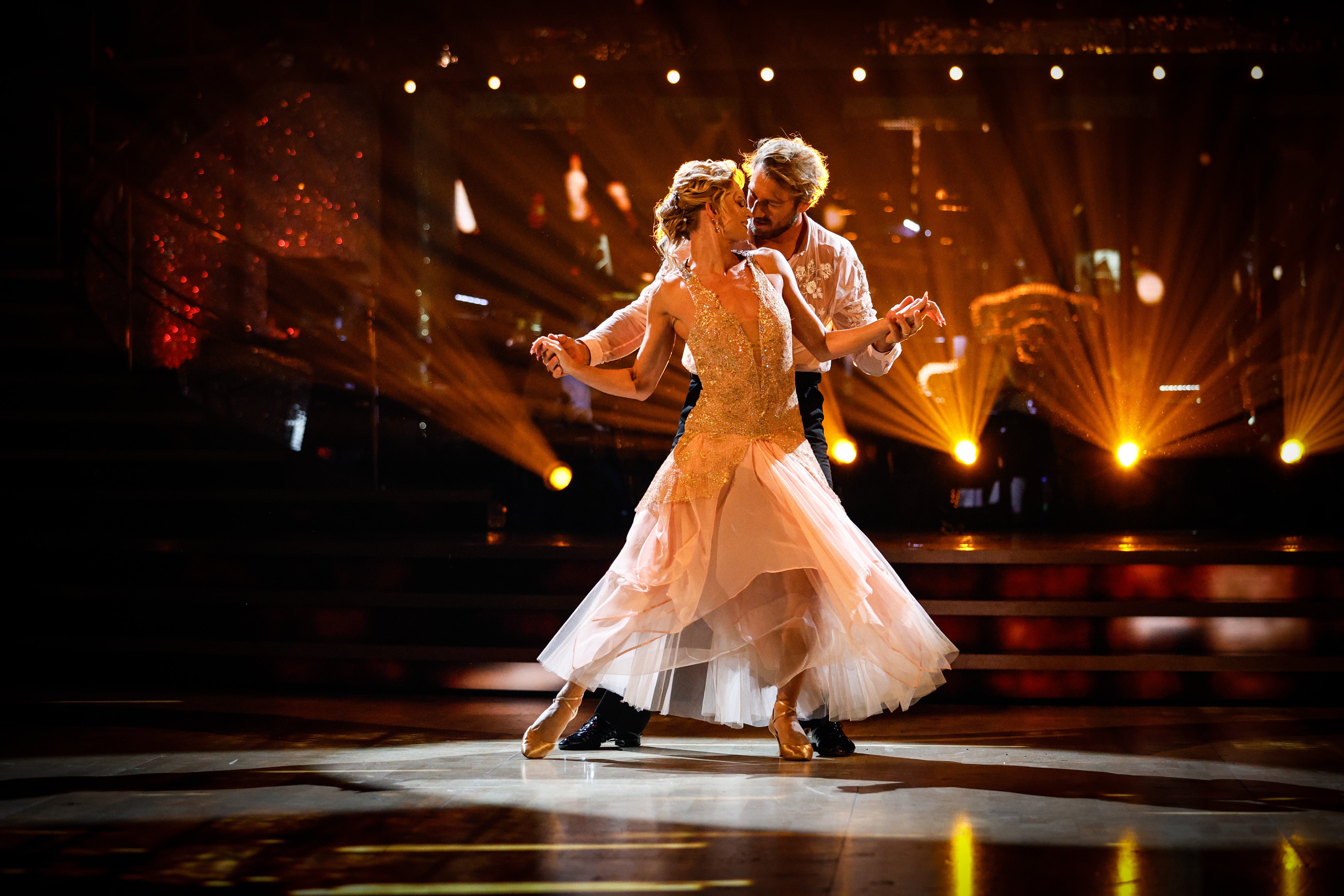
Strictly Come Dancing appears to be undergoing a major overhaul in 2026, with another fan-favourite pro having reportedly being axed by BBC bosses.

The last series also saw Tess Daly and Claudia Winkleman step down from their long-term presenting roles. While speculation rages on about who will replace the hosting duo, Strictly fans received a shock over the weekend with reports that four professional dancers have been given the cut ahead of the 2026 series.

Following initial reports claiming that Gorka Márquez, Luba Mushtuk and Michelle Tsiakkas have all departed the show, a separate story from The Sun alleged that Nadiya Bychkova was the latest to receive news that she would not be making a return.

Advertisement
(BBC)

The Ukrainian dancer, 36, is said to have received the news in a meeting with BBC bosses on Friday (6 March) that allegedly left her “distraught”.

An insider told the publication: “The news came as such a huge shock as Nadiya’s life was Strictly and to find out she’s not been invited back as full time pro has really broken her heart. No one was expecting producers to chop so many professionals.

“Especially someone like Nadiya, who’s shown so much dedication to the show over the years. There’s a super weird feeling among the rest of the pros now, they’re all wondering if they’re safe and everyone’s nervous.”

Bychkova competed with Chris Robshaw on the 2025 series

Advertisement
Bychkova competed with Chris Robshaw on the 2025 series (BBC/Guy Levy)

The Independent has contacted Bychkova’s representatives, while a BBC representative said that plans for Strictly Come Dancing 2026 would be confirmed in due course.

Bychkova joined the cast of Strictly Come Dancing in 2017, where she competed with the likes of Davood Khadami and Dan Walker. Her height – Bychkova is 5ft 8 – has meant that she has normally been paired with the tallest male contestants, and has never reached the final.

Despite the reported bad news, Bychkova put on a brave face on social media over the weekend, as she posted a video of herself dancing by a swimming pool to celebrate International Women’s Day.

Apple TV+ logo

Watch Apple TV+ free for 7 day

Advertisement

New subscribers only. £9.99/mo. after free trial. Plan auto-renews until cancelled.

Try for free

ADVERTISEMENT. If you sign up to this service we will earn commission. This revenue helps to fund journalism across The Independent.

Apple TV+ logo

Watch Apple TV+ free for 7 day

New subscribers only. £9.99/mo. after free trial. Plan auto-renews until cancelled.

Advertisement

Try for free

ADVERTISEMENT. If you sign up to this service we will earn commission. This revenue helps to fund journalism across The Independent.

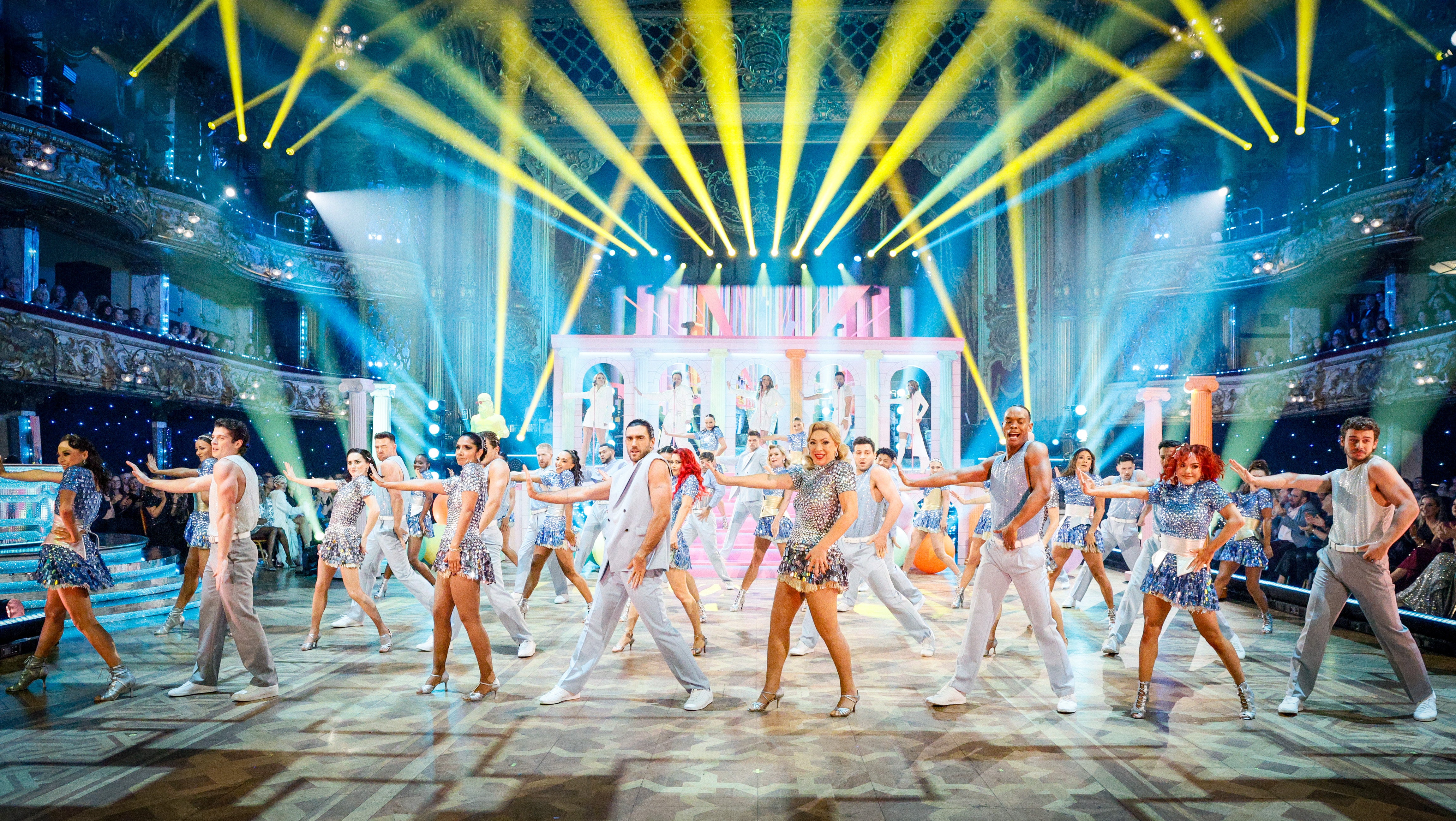
Strictly's pro dancers are beloved by fans

Strictly’s pro dancers are beloved by fans (BBC/Guy Levy)

“Celebrating women today and every day,” she wrote. “The strength, the joy, the resilience and the beautiful way we lift each other up. And sometimes… a little dance along the way. Happy International Women’s Day.”

The other dancers reportedly getting the cut from Strictly 2026 have also been by fans. Spanish dancer Márquez joined the show in 2016, and reached the final twice with Alexandra Burke and Helen Skelton. He met his fiancée, influencer and presenter Gemma Atkinson, on the show in 2017.

Advertisement

Russian pro Mushtuk became a Strictly dancer in 2018 and has competed on four series, while Cypriot dancer Tsiakkas joined in 2022 and has competed on just one series.

While none of the three dancers had a celebrity partner in 2025, they are all due to appear in the Strictly: The Professionals tour that kicks off in late April.

Bychkova, meanwhile, competed last year with Chris Robshaw, when the pair were the third to be eliminated.

Source link

Advertisement
Continue Reading

NewsBeat

‘Matrescence’ Isn’t In The Dictionary. But It Should Be

Published

on

'Matrescence' Isn't In The Dictionary. But It Should Be

I hadn’t really come across the term ‘matrescence’ before becoming a mother.

Then one day, in the throes of trying to look after a small child – desperately sleep-deprived to the point of hallucinating, trying to fight the intrusive thoughts and anxiety every time they got a sniffle, and hearing the sound of her crying from the shower (when she was, in fact, fast asleep) – my Instagram algorithm pointed me to a post where a parenting influencer described what it was.

And suddenly, I felt seen.

For the uninitiated, matrescence describes the process of becoming a mother – it’s all the physical, psychological and emotional changes you go through after the birth of a child (of which, spoiler, there are a lot.)

Advertisement

I’m four years in and while there are still glimmers of who I was before having kids, I am fundamentally changed. My body is different. My brain certainly is. My personality is even different (I certainly feel more serious than I used to be).

It is the different that comes from the responsibility of a) keeping someone alive but b) trying not to mess them up. It’s the years of disrupted sleep, navigating relationship and friendship changes, hormone shifts, mental health challenges, physical health changes (hello mastitis and pelvic floor issues), your new work-life-parenting balance.

It is also the different that comes from holding their tiny hands while they sleep and feeling like you could explode with love. Or the pride that makes your eyes water and takes your breath away when they do something even seemingly insignificant (like sing you a song, or draw a picture that actually resembles a person and not a genital).

While the term has been knocking around for almost half a century – it was coined by the anthropologist Dana Raphael in the 1970s – it still hasn’t made it to (some) major dictionaries. And if that doesn’t sum up the quiet and often invisible struggle of motherhood, I don’t know what does.

Advertisement

It’s something Peanut, a community app for mums, and parent-care brand Tommee Tippee are seeking to change by calling for recognition of the word matrescence. There have been books written about it, for crying out loud, so it certainly feels overdue.

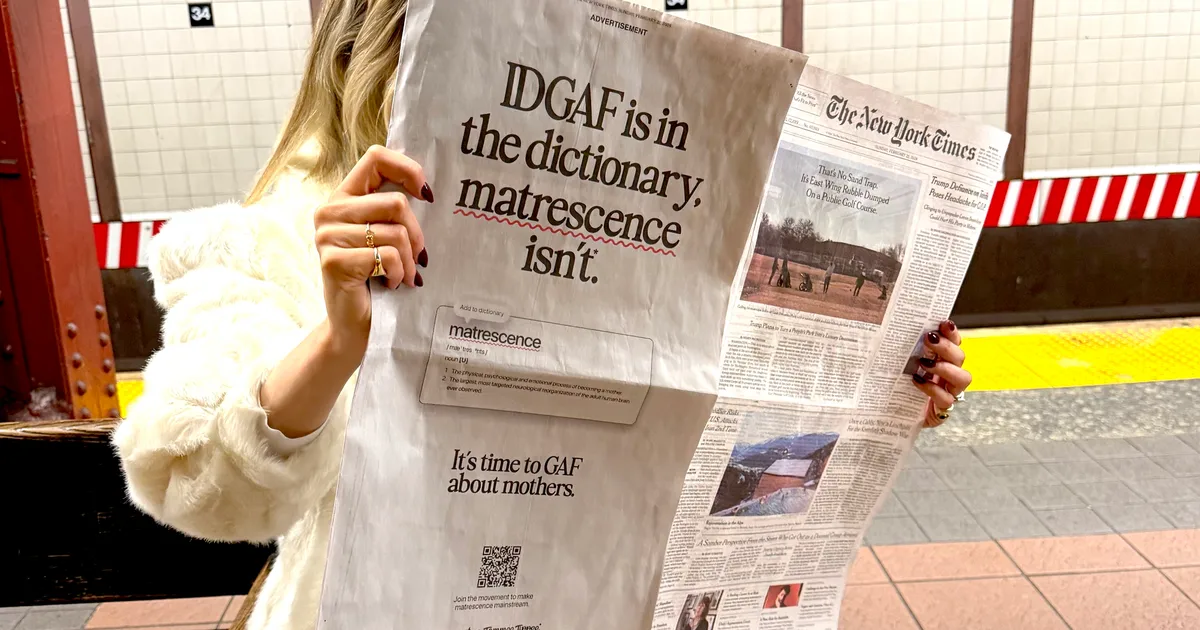
In February, the brands shared a full-page ad in the New York Times, urging lexicographers, including those at Oxford English and Merriam-Webster, to add the term to their dictionaries. (Big shout out to Cambridge Dictionary which is leading the way.)

Not only that, but they want digital platforms to stop flagging matrescence as a misspelling – yes, that infuriating red wiggly line is repeatedly showing up even as I write this.

Matrescence isn’t in the dictionary.

Matrescence is backed by science

Advertisement

Research has confirmed that motherhood fundamentally reshapes the brain, body, and identity. I have felt this, deeply – as I’m sure many other mothers will have.

But 67% of British mothers have never even heard the term matrescence, leaving them to navigate one of the most significant transitions of their lives without the language to describe it.

“Your phone treats matrescence like it’s a typo,” said Michelle Kennedy, founder and CEO of Peanut.

“The dictionary knows ‘ghosting’. It knows ‘selfie’. It knows ‘delulu’. But the word for what happens when a woman’s brain physically rewires, when her identity shatters and rebuilds, when she goes through one of the most seismic shifts in human biology? Not there. That’s erasure.”

Advertisement

For many mothers, however, this word can help explain a lot. It can also help them feel seen. Dr Sarah McKay, neuroscientist and author, explained: “This one word would have changed my world when my boys were babies. The grace I’d have given myself if I’d known that becoming a mother was a process.

“For what it’s worth, I still consider myself deep in matrescence 18 years later – learning to mother my firstborn while he’s away at uni.”

Experts are concerned that when an experience has no name, it gets minimised. Mothers have their struggles dismissed as baby blues, hormones, or simply just ‘part of the job’.

“Most women go through the biggest transformation of their lives thinking something is wrong with them,” said Michelle Battersby, president of Peanut.

Advertisement

“Getting this word into the dictionary is the first step toward the research, funding, and support that mothers have been denied for generations.”

I’ve contacted Merriam-Webster and Oxford English to see if they’ll consider adding matrescence to their dictionaries and will update the article when I hear back.

If teens get ‘adolescence’ to describe the period when they’re developing into adults, surely we can make room for an equivalent that describes the seismic shift for mothers? I don’t think a word is too much to ask.

Advertisement

Source link

Continue Reading

NewsBeat

The North West village named UK’s top ‘fairytale’ destination

Published

on

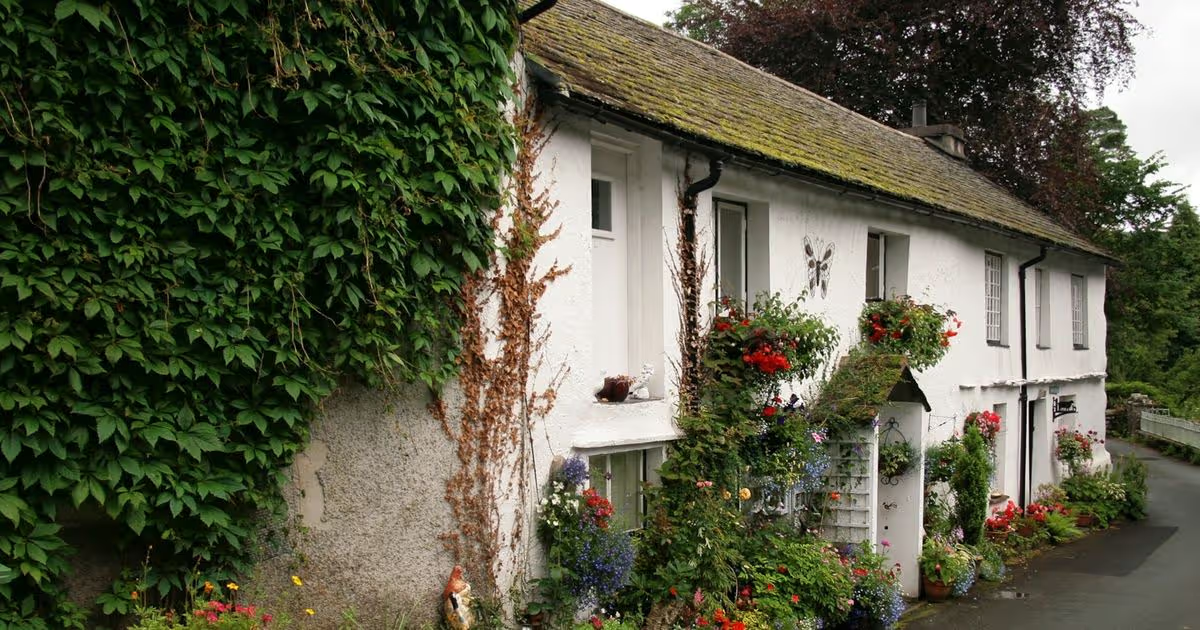
The North West village named UK’s top ‘fairytale’ destination

Cars are banned from this picturesque village which is surrounded by miles of stunning countryside

A village in Cumbria has been crowned the UK’s ‘most fairytale-like destination’, according to a new study. Hawkshead in the Lake District beat locations from across the country, including the South Coast and the Inner Hebrides to bag the top spot.

Advertisement

The list was published by Betway Casino which analysed towns and villages across the UK based on a range of key ‘fairytale’ indicators. Each metric was chosen to reflect the elements that make a destination feel enchanting, from historic character to picturesque scenery.

It’s easy to see why Hawkshead ranked in first place. Located a stone’s throw away from Windermere, this quaint village features whitewashed cottages and narrow cobbled lanes. The fact it has 69 listed buildings ensures that its historic character is preserved.

Get MEN Premium now for just £1 HERE – or get involved in our WhatsApp group by clicking HERE. And don’t miss out on our brilliant selection of newsletters HERE.

To add to the magic the village is traffic-free so you won’t see queues of cars snaking through its streets – afterall you don’t get traffic jams in fairytales. There’s miles upon miles of gorgeous scenery on its doorstep too and the impressive Wray Castle is just a short drive away (although it is temporarily closed at the moment).

Advertisement

The village isn’t the only Cumbrian location to make the list. The town of Keswick came in third place. Surrounded by mountains, including England’s fourth-highest Skiddaw, Keswick has breathtaking scenery which could give any fairytale setting a run for its money.

Meanwhile another location within easy reach of Greater Manchester ranked in second place: Beddgelert in Gwynedd. Nestled in the heart of Snowdonia National Park, the village is just over a mile away sits Dinas Emrys, a fortress ruin woven into legend as the site where the red dragon triumphed, giving Beddgelert an extra sense of mysticism.

The UK’s most fairytale-like destinations

  1. Hawkshead, Cumbia
  2. Beddgelert, Gwynedd
  3. Keswick, Cumbria
  4. Oban, Argyll and Bute
  5. Tobermory, Isle of Mull
  6. Plockton, Highland
  7. Clovelly, Devon
  8. Hay-on-Wye, Powys
  9. Rye, East Sussex
  10. Helmsley, North Yorkshire

For more of the latest What’s On news, click here.

Source link

Advertisement
Continue Reading

NewsBeat

Damning report sums up sad reality for Wales’ hospitals and schools

Published

on

Damning report sums up sad reality for Wales' hospitals and schools

Welsh health and education services are underperforming and worse than services across the border, a damning report from the influential Institute for Fiscal Studies warns. Both are “substantially poorer than before the Covid-19 pandemiic and poorer than in England”, the independent IFS says in a stark analysis published on Tuesday, March 10.

“Five years on from the height of the Covid pandemic, waiting lists for pre-planned NHS treatment are finally falling in Wales but remain far higher than pre-pandemic and have taken longer to start falling than in England,” the IFS report reads. “Meanwhile, A&E waiting times are, if anything, still rising.

School absences remain 50% higher than in 2019, Welsh school pupils have seen their performance fall in internationally comparable tests, and the share of young people staying in education post-16 is lower now than 10 years ago.

Advertisement

“Overall, performance in both the health and education systems is substantially poorer than before the Covid-19 pandemic – and poorer than in England.” This “poor performance” is despite significant increases in spending, the IFS says in its 55-page report on Wales.

The IFS, a highly regarded and influential independent research institute, which is non-profit and non-political, calculates that health spending in Wales has risen by 17% per person in real terms since 2019–20, while spending per school pupil has increased by 14% in real terms.

“These increases are similar to or higher than those seen in England over the same period. And combined spending per person on health and schools, together, is higher than all English regions bar Greater London. A lack of funding therefore does not appear to be the key driver of current under-performance relative to England,” the IFS said.

The think tank predicted the next Welsh Government will struggle to maintain, let alone improve, services. This is due to what the IFS called a slowdown in funding growth and the impact of recent budgeting decisions “including unrealistic health spending plans for 2026–27”.

Advertisement

If it were not for top-ups to funding from the UK government in the 2026 Spring Statement, the next Welsh Government would highly likely have had to make in-year cuts to some services in an emergency post-election budget in order to boost health and social care spending, the report warns.

These are among the key findings of the second Welsh election briefing from the IFS, funded by the Nuffield Foundation. The briefing considers how spending on public services in Wales has evolved over time and compares with England. It looks at what it says are key performance metrics for health and education and at the outlook for public service spending – which will affect public service performance in the years to come.

Max Warner, a senior research economist at the IFS and a co-author of the report, said: “The last year has seen some welcome improvement in waiting times for planned hospital treatments, with the median waiting time falling from 23.5 weeks at the start of 2025 to 19 weeks by December. But this is still almost twice as long as pre-pandemic and 40% longer than comparable waiting times in England.

“A big surge in outpatient appointments – up 25% since 2019 – doesn’t seem to have delivered the improvements in waiting times one would hope. Working out why, and more generally boosting hospital productivity, will be key to delivering a more significant recovery in NHS performance.”

Advertisement

Darcey Snape, a research economist at the IFS and another co-author of the report, said: “On a range of metrics – school absence, results in international PISA tests and post-16 participation rates – the Welsh education system is under-performing.

“The fall in the share of young Welsh people remaining in full-time education post-16 is stark. If this reflects young people moving into training and employment with high long-term returns, this trend may not necessarily be a bad thing. However, at face value this trend is a cause for concern and needs to be better understood.”

David Phillips, head of devolved and local government finance at the IFS and another co-author of the report, said the causes of the poor performance of Welsh public services are not fully clear. “Funding levels seem unlikely to be a major factor given spending in Wales is higher than comparable areas of England and has, if anything, grown slightly faster since before the pandemic,” he said.

“High levels of deprivation can likely only explain part of it too – educational performance, for instance, is lower across the income distribution. Instead, policies and the way services are delivered are likely to play a role.

Advertisement

“Average hospital stays are 40% longer in Wales than England, reducing the number of patients that can be admitted and treated. For schools, accountability for poor performance may be weaker – with less data available to both teachers and parents.”

He said that more work is needed to “diagnose the various reasons for and potential solutions to Wales’ poor public service performance” and that doing this could be one of the defining successes – or failures – of the next Welsh Government.

Responding to the report a Welsh Government spokesperson said: “We continue to work closely with health boards and local authorities to improve frontline public services at a time when costs are rising. The NHS waiting list has fallen and the longest waits are coming down. We have set clear expectations for all health boards to reduce emergency department long stays and complete ambulance handovers within 45 minutes.

“Our education system is moving in the right direction thanks to the additional support we are providing to schools and the hard work of school staff. Our latest GCSE and A level results show improvements in attainment since 2024. For younger learners we are seeing progress within reading and numeracy in personalised assessments.”

Advertisement

Laura Doel, national secretary at the National Association of Headteachers Cymru, said: “School leaders in Wales are working hard to deliver for their pupils amid all manner of challenges – from funding shortfalls and supporting children with additional learning needs (ALN), to issues outside school which can affect attendance and attainment.”

She also questioned the use of PISA data of attainment by 15-year-olds to judge the whole system. “While the PISA analysis can be useful, we should not over-interpret these results and rely on simplistic comparisons which may not capture the richness of children’s learning or the different stages of education policy development in different countries.

“School leaders will be particularly interested to understand where the increased spending on education identified by the IFS has gone – because it has not reached the frontline. More investment is desperately needed to support severely stretched school budgets, as well as in vital health and social care services which can be so important in supporting families and helping ensure children attend school and thrive.”

The Welsh Conservatives said the IFS analysis confirmed what the party had been saying for years. “Despite Wales receiving higher levels of funding per person than England, health and education outcomes in Wales continue to lag behind the rest of the UK. The report suggests that the issue is not simply funding levels, but policy decisions and the way services are delivered by the Welsh Government.

Advertisement

“During the cooperation agreement between Labour and Plaid Cymru, spending was prioritised on a range of non-essential initiatives instead of focusing on improving core public services.”

What the IFS says on Welsh health and NHS performance

  • Median waiting time for elective treatment – non-urgent medical procedures – in Wales was 19 weeks in December 2025, almost double its pre-pandemic level of 10.7 weeks. This is also much higher than the current level in England of 13.4 weeks in December 2025.
  • Waiting times in major A&E departments have long been worse in Wales than in England or Scotland. A&E waiting times in Wales have, if anything, worsened over the last two years, with only 53% of patients waiting less than four hours in December 2025 (compared to a target of 95%).
  • The Welsh NHS had 24% more full-time equivalent staff in April to September 2025 compared with the same period in 2019. It delivered 24% more outpatient appointments over the same period, but these are not obviously improving elective waiting times relative to England and Scotland.
  • The Welsh NHS has only just returned inpatient admissions to pre-pandemic levels, which given large staffing increases suggests there has been a fall in hospital labour productivity since the start of the pandemic, similar to that observed in England and Scotland.
  • Life expectancy in Wales has long been higher than in Scotland but lower than in England. Differences in life expectancy between Wales and England are largely explained by differences in average incomes. In areas with similar average incomes life expectancies are similar in Wales and England. As in the rest of the UK, increases in life expectancy have stalled since 2010 and healthy life expectancy has slightly fallen.

What the IFS says about education performance in Wales

  • Overall and persistent absences from school remain far higher than pre-pandemic. In the 2024–25 academic year around 9% of pupils in Wales were absent on any given day, up from less than 6% in 2019 – a larger rise than in England. The share of pupils persistently absent (that is absent more than 10% of the time) more than doubled from 15% of pupils to 34% between 2019 and 2025.
  • Performance in the internationally comparable PISA tests for 15-year-olds fell by more in Wales than England post-pandemic, further widening performance gaps. On average pupils in the middle of the income distribution in Wales do no better than the poorest fifth of pupils in England.
  • The share of Welsh school pupils staying on post-16 and progressing to higher education has fallen. The share of 16- and 17-year-olds in full-time education in Wales has fallen from 78% in 2014 to 64% in 2024. And the share of 18-year-olds progressing to higher education fell to 29% in 2025, compared to 37% in England.

What the IFS says about Welsh public service spending

  • Health spending per person was 9% higher and education spending 7% higher per person in Wales than England in 2024–25. Overall spending was 15% higher, with the biggest differences being for smaller service areas such as recreation, culture and leisure (+67%), housing and community amenities (+63%) and adult social care services (+36%).
  • Looking ahead, the Welsh Government has only set spending plans for the coming year, 2026–27, rather than three years as in England and Scotland, the IFS said.
  • After big in-year top ups in the current financial year, health and social care resource spending is set to fall by more than 2% in real terms in 2026–27. The next Welsh Government will almost certainly feel the need to top up the health and social care budget. Following an increase to its overall funding by the UK government in the 2026 Spring Statement, it may be able to do this without making in-year cuts to other services in 2026–27. Without this increase, it would highly likely have had to do so.

The think tank calculated that if the next Welsh Government wanted to match increases in planned health spending in England in the following two years (2027–28 and 2028–29) and protect funding for councils in real terms, other services would face cuts averaging 5% a year given current funding forecasts.

The report added: “Changes in UK government funding or devolved tax rates could materially affect the funding outlook. An additional £500 million increase in funding in 2028–29 – equivalent to 1.25 percentage points on all rates of devolved income tax – would instead enable increases in funding for councils and other services of 1% a year on average.

“In contrast, a £500 million reduction in funding – equivalent to 1.25 percentage points off all rates of devolved income tax – would see 11% a year cuts to other services, if funding for health were increased and council funding protected.”

Source link

Advertisement
Continue Reading

Trending

Copyright © 2025