Connect with us
DAPA Banner
DAPA Coin
DAPA
COIN PAYMENT ASSET
PRIVACY · BLOCKDAG · HOMOMORPHIC ENCRYPTION · RUST
ElGamal Encrypted MINE DAPA
🚫 GENESIS SOLD OUT
DAPAPAY COMING

NewsBeat

Two rushed to hospital after car flips on its roof and fuel spills across major motorway

Published

on

Two rushed to hospital after car flips on its roof and fuel spills across major motorway

TWO people have been rushed to hospital after a horror crash saw a car flip on its roof and fuel spill across a major motorway.

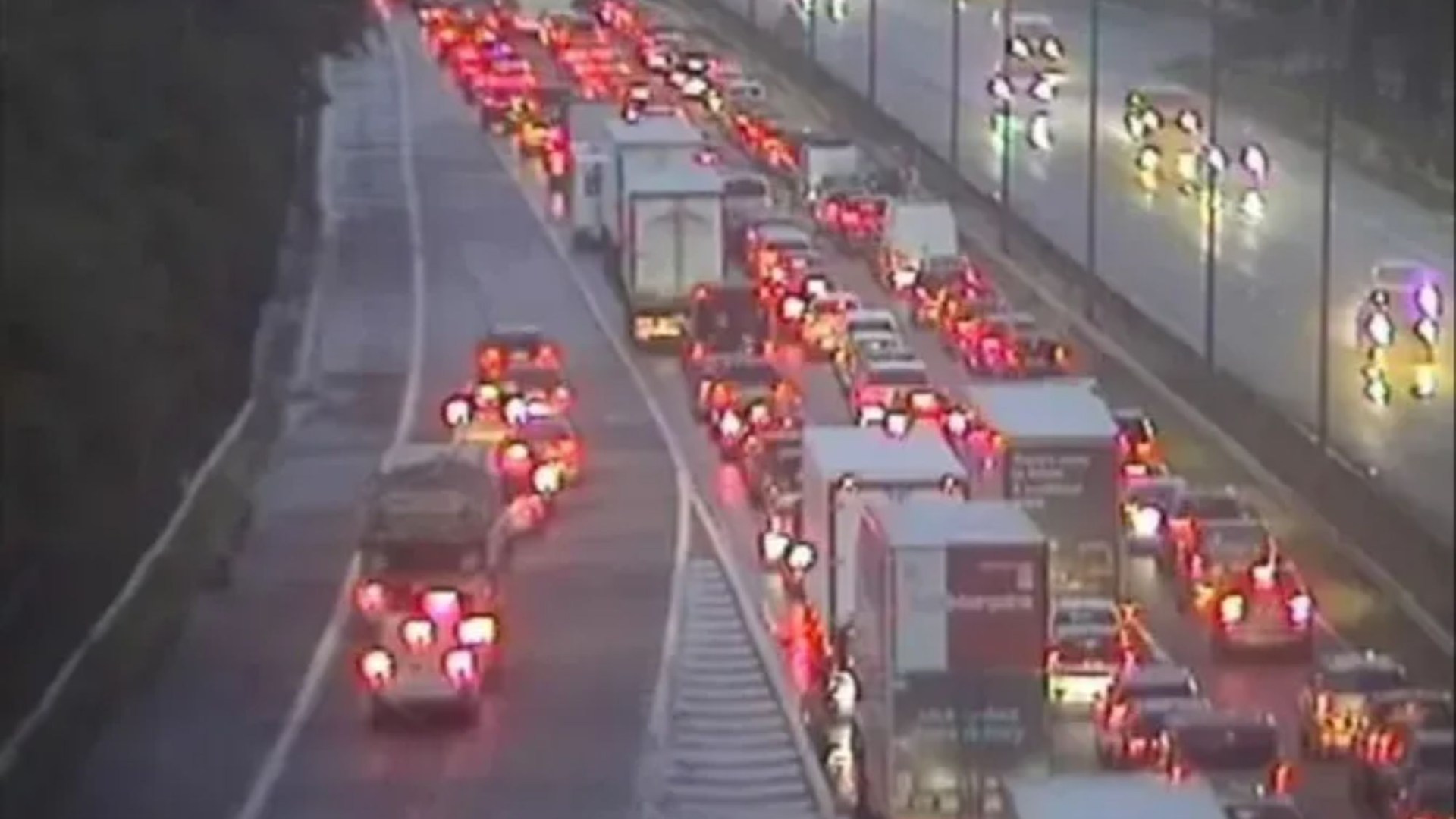
The emergency services were called just before 9pm to the eastbound carriageway of the M62 on Sunday evening.

NINTCHDBPICT001081728597
The eastbound side of the M62 motorway completely closed due to the accident Credit: National Highways
NINTCHDBPICT001081728595
A car flipped on its roof in the horror crash, with two people being taken to hospital Credit: National Highways

The motorway was closed between J21 for Milnrow and J22 for Denshaw following the incident.

Two people were taken to hospital by paramedics.

Their condition is not yet known.

A spokesperson for Greater Manchester Fire and Rescue Service (GMFRS) said: “Just before 9pm on Sunday 17 May, fire crews were called to reports of a road traffic collision on the M62 eastbound between junctions 21 and 22.

Advertisement

FIND HER

Cops launch urgent hunt for missing schoolgirl, 13, last seen at swimming pool

Advertisement


JAILHOUSE SHOCK

Five female prison officers at SAME jail sentenced for affairs with lags

Advertisement

“Two fire engines from Rochdale and Hollins stations were quickly mobilised to the incident.

Advertisement

“Firefighters helped right one of the vehicles, which had overturned onto its roof, and made the area safe.

“Two people were taken to hospital by North West Ambulance Service.

“Fire crews were at the scene for about an hour.”

Diversions were put in place following the accident, with the eastbound side of the motorway completely closed.

Advertisement

Highways officers managed the traffic with a number of police vehicles in attendance.

A statement from National Highways said: “The M62 in Greater Manchester is closed eastbound between J21 (Milnrow) and J22 (Denshaw) due to a single vehicle collision which occurred shortly before 21:00 on 17th May.

“As a result of the collision, a large amount of fuel has spilled across the carriageway.

“Emergency services are in attendance, along with National Highways Traffic Officers who are assisting with traffic management.

Advertisement

“Traffic caught within the closure is in the process of being released past the scene of the incident on the hard shoulder.

“Service providers are in attendance to assist with the clean-up of the carriageway and recovery services are also in attendance to recover the vehicle involved.”

In an update from National Highways, it said the J21 eastbound entry slip road had now re-opened.

Advertisement

Source link

Continue Reading
Click to comment

You must be logged in to post a comment Login

Leave a Reply

NewsBeat

TV etiquette expert urges Brits to employ ‘soft crunch technique’ for crispy snacks – as poll suggests noisy eating is the UK’s biggest annoyance

Published

on

Etiquette expert Laura Akano (pictured) has drawn up a guide for Brits who want to snack more considerately

Advertisement

A TV etiquette expert is urging Brits to use her ‘soft crunch technique’ to reduce irritating eating noises when snacking in public.

Laura Akano, who teaches the art of English etiquette and manners, has devised a 10-point plan to help high-volume snackers keep the volume down amongst co-workers and commuters.

Polling by crispbread maker Ryvita suggests 69 per cent of UK adults believe inconsiderate noisy eating is their biggest bugbear – beating out even people playing music out loud on trains, snoring and crying babies.

Half of those asked said they would support an outright ban on loud food in certain places – and would even back an ‘eat considerately’ warning on crunchy snacks.

Advertisement

Ms Akano has detailed exactly how best to tuck into a noisy snack without annoying your fellow passengers, work colleagues and friends.

She said: ‘The soft crunch etiquette is the polished art of eating a crunchy snack quietly by chewing slowly and keeping your mouth closed.

‘Keeping your mouth closed reduces the crunching sound. Using the soft-crunch technique ensures that you chew quietly and slowly in a refined way, so your crunching does not become distracting and uncomfortable for people around you.’

She even advises adopting the ‘three finger rule’ – of using your thumb, index and middle finger only – to retrieve snacks in order to keep your digits clean.

Advertisement

Ms Akano added: ‘It not only looks elegant, you also avoid getting all of your fingers dirty.’

Etiquette expert Laura Akano (pictured) has drawn up a guide for Brits who want to snack more considerately

Crisps are amongst the noisiest snacks to hear someone eat, according to a poll of 2000 UK adults

Crisps are amongst the noisiest snacks to hear someone eat, according to a poll of 2000 UK adults

Advertisement

Ms Akano previously came to the media’s attention after being hired by the Cumberland School in Plaistow, east London, to teach its pupils better etiquette – with the ultimate aim of winning scholarships.

As well as teaching them posture and greetings that would impress even the sternest royal, the coach’s lessons were designed to boost the confidence of the school’s pupils, many of whom came from working class backgrounds.

Ryvita’s polling of 2,000 Britons found that crisps are widely considered the noisiest food to eat at 73 per cent of pollsters voting them the loudest – followed by crackers, tortilla chips and raw carrots. 

And those asked put crunchy eating in cinemas at the top of their list of undesirable habits, followed by eating smelly food – though this was the other way around on board trains.

Advertisement

Eight in 10 people even admitted they have argued with a partner over their eating habits at home, while fewer than half admit to munching noisily themselves.

A Ryvita spokesperson said: ‘Brits clearly love crunchy snacks, but we found we are becoming far less forgiving about where people eat them. 

‘Whether it’s an office, a cinema or a quiet train carriage, many people feel everyday etiquette is slipping.’

The snack firm carried out the polling to coincide with the launch of its new range of Ryvita Sticks, pitched as a crisp-alternative available in Salt and Vinegar and Sour Cream and Chive varieties.

Advertisement

Considerate snacking: Etiquette expert Laura Akano’s guide 

1. Packaging on some crunchy snacks can be loud when being opened. To avoid too much rustling, open packets slowly. Avoid repeated rummaging, especially in quiet, formal or professional environments.

2. Manage crumbs gracefully by holding your snack over a plate, napkin or saucer. This helps to avoid messy crumbs on you. Brushing crumbs away can draw more attention than the crumbs themselves.

3. When eating a crunchy snack, do pick and eat one at a time, bring the food to you. This not only looks elegant but also helps to avoid overloading your mouth. It is also easier to chew and swallow with ease.

4. To avoid a loud crunch when you take a bite, wrap your lips around the snack. Smaller bites are more manageable than larger bites that can break the snack and make a mess.

Advertisement

5. Keeping your mouth closed while chewing slowly will soften as well as reduce the crunching sound. It also ensures that others don’t see the crunchy food in your mouth.

6. Practice soft crunch etiquette, this is the polished art of eating and enjoying a crunchy snack quietly by chewing slowly and keeping your mouth closed. Keeping your mouth closed reduces the crunching sound. Using the soft-crunch technique ensures that you chew quietly and slowly in a refined way, so your crunching does not become distracting and uncomfortable for people around you.

7. Depending on your environment, if there is background noise such as music, traffic, applause or conversation, use it to your advantage when taking a bite. Silence can often magnify crunching noise.

8. Use the three-finger rule when picking up your snack, it looks elegant and makes each bite easier to manage.

Advertisement

9. Master the ‘I’m listening’ nod. If your mouth is full and someone speaks to you, nod thoughtfully while you finish chewing before responding. It shows your level of decorum.

10. The sound and smell of crunchy snacks can irritate and make others uncomfortable. In some environments, such as theatres, cinemas, quiet offices, public transport and libraries. Softer snacks will be a better option, showing consideration for others.

Advertisement

Advertisement

Source link

Continue Reading

NewsBeat

London cyclists begin 380-mile ride at HMP Low Newton, Durham

Published

on

London cyclists begin 380-mile ride at HMP Low Newton, Durham

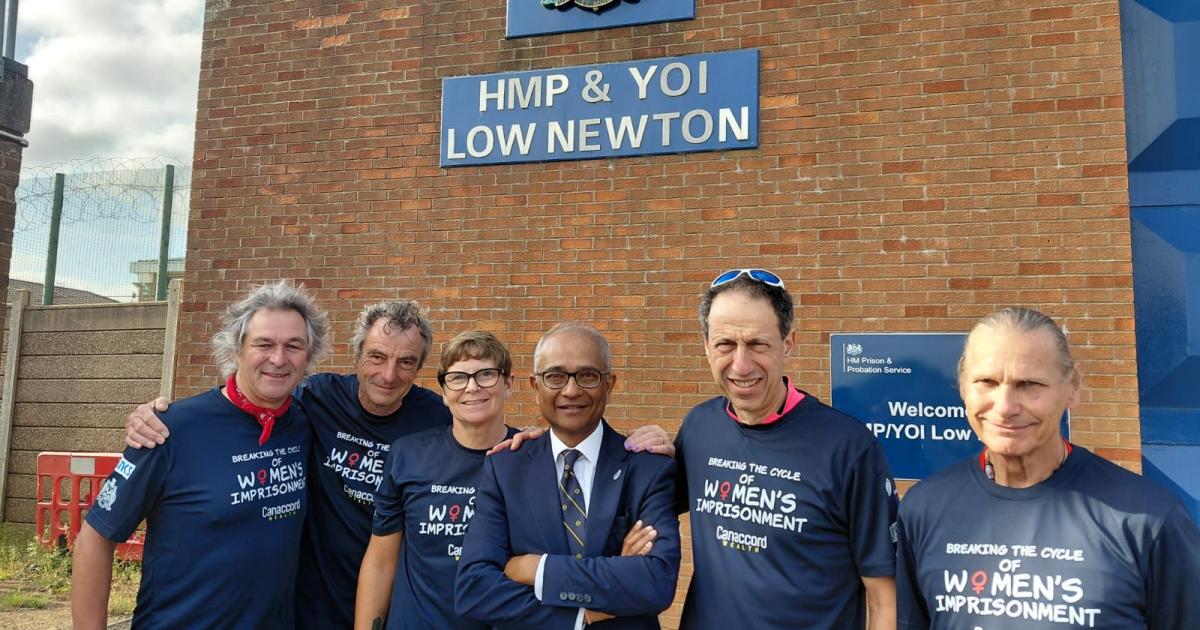
The five cyclists from The Weavers’ Company Riders began their epic adventure at HMP Low Newton in Durham, which accommodates about 300 female inmates.

Before setting off today (Monday, July 13) they met with Dr Arnab Basu, High Sheriff of Durham, outside the prison to highlight their campaign for more effective community-based alternatives.

London cyclists setting off from HMP Low Newon, DurhamThe riders Charles Early, Spadge Hopkins, William Makower, Jacqui Murphy and Robert Townsend before setting off on their journey (Image: SUBMITTED)

The riders are cycling 380 miles over six days, visiting 13 different prisons across the country and finishing at The Weavers Company Offices in The City of London.

The cycle ride aims to address the impact of short custodial sentences of less than 12 months on women, particularly mothers.

Advertisement

The riders say this can disrupt housing, employment, and family relationships and fails to address the underlying causes of offending.

Along the way, the bikers will be meeting with four High Sheriffs, a Vice Lord Lieutenant, and various MPs.

The first leg of the ride ends at HMP Askham Grange in York tonight.

While taking a quick pub stop in Thirsk, North Yorkshire, one of the cyclists, William Makower, spoke to The Northern Echo about his vision behind the journey.

Advertisement

He said: “We’re raising funds for a programme which will support women aged 14-25 who face an array of challenges like trauma, housing, or exploitation.

“We want to help people in the before custodial sentences, where they’ll be mentored by people that have been to prison and since turned their life around.

“It’s important that men get involved and understand this is a human issue, I think it’s great we have four men and one woman participating.”

London cyclists setting off from HMP Low Newon, DurhamWilliam taking a quick break on his ride today (Image: SUBMITTED)

Mr Makower said he got the idea for the cycle challenge after watching the second series of BBC prison drama, Time, starring Jodie Whittaker as a struggling single mother sentenced to prison after stealing electricity due to financial hardship.

Advertisement

He added that he is hoping to raise £500,000 from the event.

Dr Basu, a keen supporter of the cause, told the Echo: “They’re doing a wonderful thing addressing this issue.

“While the prisons officers do a good job, there are infrastructural issues that need to be fixed.

“When women go to prison the whole family falls apart and when women are released, they are vulnerable.

Advertisement

“There is a wider context about how women are rehabilitated into the world after prison.”

All funds raised through the challenge will help provide trusted advocates to support 216 young women and girls who have received convictions or suspended prison sentences, helping them access practical support, build resilience, and avoid further involvement in the criminal justice system.

Source link

Advertisement
Continue Reading

NewsBeat

the long road to reforming UK security

Published

on

the long road to reforming UK security

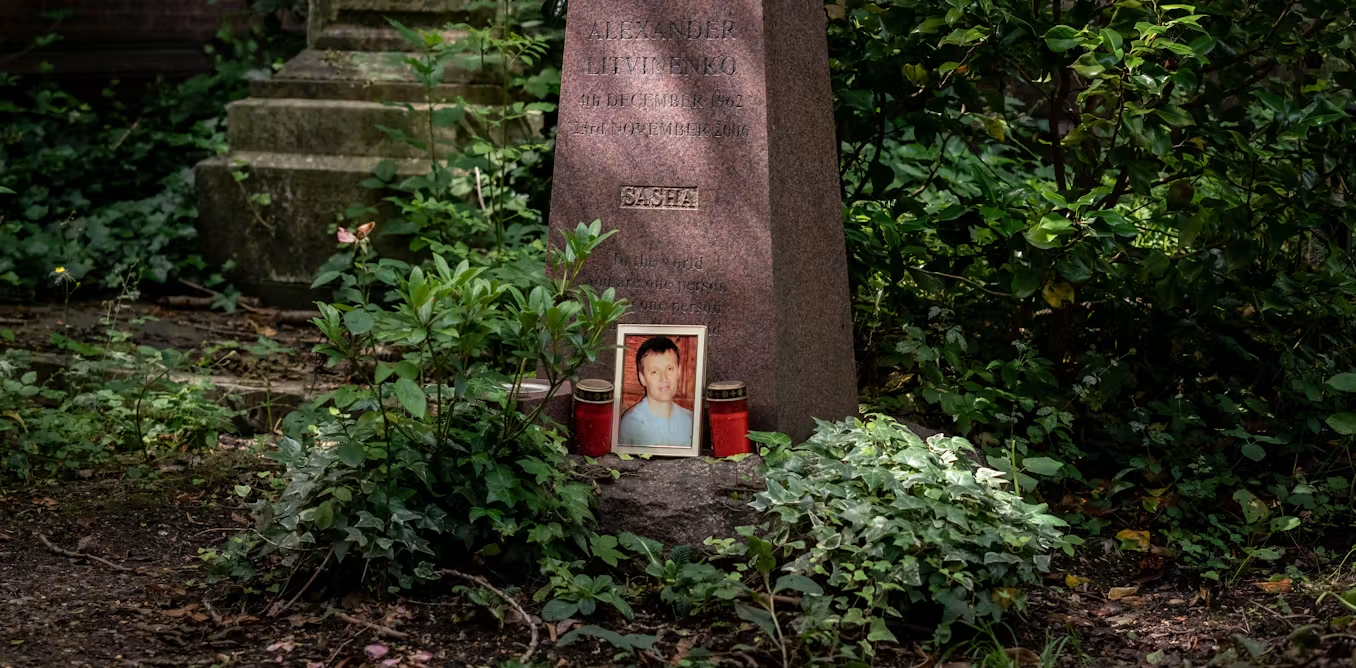
When Alexander Litvinenko was murdered in London in 2006, poisoned with radioactive polonium-210 slipped into a pot of tea, the UK was shocked. Litvinenko, a former Russian intelligence officer who had become a critic of Vladimir Putin’s government, died after a highly publicised illness.

A later public inquiry concluded that his killing was probably approved at the highest levels of the Russian state. Yet the Litvinenko attack did not trigger a fundamental rethink of how the UK protects itself from hostile states.

More than a decade later, the attempted assassination of former Russian double agent Sergei Skripal and his daughter Yulia in Salisbury produced something very different. They were poisoned with novichok, a military-grade nerve agent developed by the Soviet Union. Both survived, but the discarded container later killed a local woman, Dawn Sturgess, and left another person seriously ill.

Both attacks prompted diplomatic retaliation, but on very different scales. Litvinenko’s murder led the UK to expel four Russian diplomats. Salisbury triggered the largest coordinated expulsion of Russian officials in history, followed at home by the most far-reaching overhaul of UK national security law in a century.

Advertisement

Why did the second poisoning produce a transformation that the first did not? Our new research traced the UK’s response to Russian hostile activity over two decades. The answer, we argue, is that the two attacks are best understood not as separate cases but as chapters in a single, cumulative story.

We found that dramatic events rarely reform institutions on their own. Change came only when a shock arrived after years of accumulated pressure, and when expert advocates and a shifting public mood made inaction untenable. Litvinenko’s murder was an early contribution to that pressure. Salisbury was the straw that broke the camel’s back.

Litvinenko’s murder was a brazen act on British territory. UK investigators identified a Russian suspect, Andrei Lugovoi, but Moscow refused to extradite him.

The government’s response was real but limited. Beyond the expulsion of the four diplomats, there was no new legislation, organisational overhaul or strategic reprioritisation.

Advertisement

At the time, the UK’s security machinery was focused overwhelmingly on terrorism. After 9/11 and the 2005 London bombings, hostile state activity had become a secondary concern.

Russia had been quietly written off as a strategic threat after the cold war. Add the attraction of Russian wealth flowing into London’s financial and property markets, and the incentives pointed towards continuity. The shock was real, but the pressure to change remained weak.

Pressure builds

Over the next decade, relations with Russia eventually deteriorated. Russia invaded Georgia in 2008, annexed Crimea in 2014, intervened in Syria and backed separatists in eastern Ukraine.

Around the 2016 Brexit referendum, Russian influence operations sought less to push a particular outcome than to widen existing divisions, “flooding the zone” with a mix of true, misleading and false material through news outlets such as Russia Today and Sputnik.

Advertisement

But none of this crossed the threshold needed for reform. The one notable structural development of these years was the creation of the National Security Council in 2010. It quietly laid foundations that later reforms would build on.

Military personnel decontaminate parts of Salisbury.
Alex MacNaughton/Alamy

Why Salisbury tipped the balance

The Skripal poisoning broke the pattern. But our central argument is that it did so not simply because it was dramatic. Litvinenko’s murder had been dramatic too.

What mattered was timing. Salisbury came after years of mounting pressure that had weakened the case for doing nothing. Each episode of Russian hostility, from the polonium poisoining onwards, added momentum. By 2018, the accumulated weight meant that one more shock could tip the system into change.

First, years of low-level pressure had worn away the case for inaction. Second, expert voices seized the moment. The Intelligence and Security Committee’s 2020 Russia report argued that the UK’s legal framework was no longer fit for purpose. MI5 director general Ken McCallum warned in 2021 that modern interference required modern powers.

Advertisement

Third, public opinion shifted sharply, with a 2018 survey finding that roughly two-thirds of Britons viewed Russia unfavourably. No single factor explains the reforms that followed. It was the convergence of accumulated pressure, expert advocacy and public concern that finally made the status quo untenable.

Once that threshold was crossed, change came quickly. The Counter-Terrorism and Border Security Act 2019 expanded powers to stop and question those suspected of hostile state activity. Russia’s full-scale invasion of Ukraine in 2022 accelerated matters. The Economic Crime Act and Elections Act, both passed in 2022, targeted illicit wealth and tightened rules around foreign campaign funding.

The centrepiece was the National Security Act 2023, the biggest overhaul of UK national security law in a century. It replaced Official Secrets legislation dating back to 1911. It introduced a Foreign Influence Registration Scheme, with Russia placed on its enhanced tier alongside Iran. The Online Safety Act 2023, meanwhile, gave the regulator Ofcom powers to push platforms to tackle state-sponsored disinformation.


À lire aussi :
Inside Porton Down: what I learned during three years at the UK’s most secretive chemical weapons laboratory

Advertisement

Our findings carry a sobering message. Hybrid threats rarely produce a single unmistakable moment demanding action. Disinformation, cyber intrusions and political interference work more like a slow-moving illness: diffuse, ambiguous and easy to ignore until they become a crisis.

Institutional change often arrives in sudden bursts after long periods of delay. The challenge for democratic governments is learning how to respond before the next crisis forces their hand.
The UK’s experience is unlikely to be unique. Similar lags can be seen in Germany’s slow weaning off Russian energy and France’s gradual strengthening of its cyber defences. The real challenge is to learn how to change before the next poisoning rather than after it.

Source link

Advertisement
Continue Reading

NewsBeat

Theme park clamps down on ‘disabled’ queue jumpers after ‘customers took advantage of system’

Published

on

Drayton Manor has clamped down on 'disabled' queue jumpers after customers allegedly took advantage of the system (Stock Photo)

Advertisement

A theme park has clamped down on ‘disabled’ queue jumpers after customers allegedly took advantage of the system.

Drayton Manor – the UK’s fourth biggest theme park – is implementing a 10-ride limit on its Easy Access Pass which lets visitors with disabilities skip the line.

The scheme can be used by customers unable to stand or those who have ‘urgent toilet needs’.

But it has increasingly seen vast queues forming, consisting of visitors who have ‘social interaction’ concerns or claim they have neurodiverse mental health conditions such as autism and ADHD.

Advertisement

Drayton Manor has now attempted to restrict the use of the pass by imposing a ride limit – in a bid for it to ‘remain effective and available to the guests who need it most’, The Telegraph reports.

Over the past few years, a spiralling number of customers have been using the queue jump system applying ‘additional pressure on queue times’ for other theme park lovers.

The attraction claims it has been trying out a range of different processes to combat the issue, including applying different schemes at peak and off-peak hours, as well as wristbands. 

Social media posts from visitors to the park have claimed the number of rides an Easy Access card can apply to is changed from visit to visit – depending on how busy the venue is. 

Advertisement

Drayton Manor has clamped down on ‘disabled’ queue jumpers after customers allegedly took advantage of the system (Stock Photo)

The UK's fourth biggest theme park is implementing a 10-ride limit on its Easy Access Pass which lets visitors with disabilities skip the line

The UK’s fourth biggest theme park is implementing a 10-ride limit on its Easy Access Pass which lets visitors with disabilities skip the line

One customer said they had only been allowed to skip nine queues, adding a picture of the pass with a blue cross marked through the 10th slot on the card. 

Advertisement

The Daily Mail has approached Drayton Manor for comment. 

It comes after Merlin Entertainments announced it would U-turn on its decision to trial changes to its Rapid Access Pass (RAP) system.

The theme park company runs some of the UK’s most popular attractions including Alton Towers, Legoland Windsor and Thorpe Park.

Merlin uses the RAP pass to offer guests who might find it difficult to stand in lines for rides ‘due to a disability or medical condition’ with a ‘queuing adjustment’ – often a virtual queue option for themselves and up to three additional members of their party.

Advertisement

But changes to the system meant people with disabilities including ADHD and autism would possibly no longer be eligible for the RAP pass at any Merlin attractions, leaving them to stand in busy queues with other parkgoers instead.

The company in February revealed it would be pausing the trial, ‘while we explore alternative options’, after considering feedback it had received from guests.

Rob Smith, chief operating officer of Merlin Entertainments said: ‘Whenever we make changes to the Ride Access Pass (RAP), it’s because we genuinely want to improve the experience for guests who rely on it.

‘They’ve told us loud and clear that the current system isn’t working.

Advertisement

‘Demand for RAPs is high and increasing, making RAP bookings harder to get and sometimes resulting in longer waits than the main queue. This isn’t the experience we want for anyone, and we’ve been working hard to a find better way forward.’

The proposed changes caused great upset from theme park goers who would be impacted by the proposed move, as well as families with neurodivergent children.

The theme park boss added: ‘We’ve listened carefully to the extensive feedback and wide range of opinions from our RAP community on the proposed trial and believe it’s important to take the time to fully reflect on this input.

‘We have therefore decided to pause the trial while we explore alternative options.’

Advertisement

Rob also explained how the system still needed to be changed because of the ‘huge pressure’ it was under, but Merlin would ‘fully reflect’ on the backlash to the trial.

Social media posts from visitors to the park have claimed the number of rides an Easy Access card can apply to is changed from visit to visit - depending on how busy the venue is

Social media posts from visitors to the park have claimed the number of rides an Easy Access card can apply to is changed from visit to visit – depending on how busy the venue is

Join the discussion

How should theme parks balance fair access for disabled guests with preventing system abuse?

Advertisement

He went on to apologise on behalf of the company and said: ‘For those who were impacted by our recent announcement, we are sorry.

‘We will keep listening, learning and improving. Our commitment to supporting our guests with accessibility needs remains our absolute focus.’

It comes after Heidi Alexander, the Transport Secretary, said in May that ‘an ADHD diagnosis alone should not get you a Blue Badge’.

She was responding to concerns that councils were increasingly handing out the badges for hidden disabilities including anxiety. 

Advertisement

Advertisement

Source link

Continue Reading

NewsBeat

Schwarber advances in Home Run Derby, along with Contreras, Walker, Caminero

Published

on

Schwarber advances in Home Run Derby, along with Contreras, Walker, Caminero

Kyle Schwarber kept his bid for a Home Run Derby title in his home park alive when the Phillies’ slugger and major league home run leader hit 10 in the first round and advanced with Boston‘s Willson Contreras, St. Louis’ Jordan Walker and Tampa Bay‘s Junior Caminero to the next round Monday night.

Bryce Harper hit only eight home runs and was the final slugger of the round to try and advance. He provided a late jolt with Phillies fans at Citizens Bank Park going wild trying to will Harper into one more round.

Harper won in 2018 in Washington when he played for the Nationals.

Kansas City’s Jac Caglianone and New York Yankees slugger Ben Rice also failed to advance.

Advertisement

Contreras and Walker each hit 13, and Caminero had 12.

Schwarber failed to launch one of his famed Schwarbombs until his sixth swing, then connected on his seventh, eighth and ninth in a four-homer stretch that harkened back to his four-homer game last season again Atlanta.

He could only watch as Harper failed to join him. Schwarber, then with the Chicago Cubs, made the finals in 2018 at Nationals Park before losing to Harper.

“Bittersweet,” Schwarber said after the first round Monday. “I wanted both of us to move on.”

Advertisement

MLB ditched the timed clock this season and returned to a swing format, with each hitter continuing to swing if he went deep on his final one.

Each player had 20 swings in the first round and the top four advanced. Hitters were seeded for the second round, where No. 1 faces 4 and 2 meets 3.

Each player takes 15 swings in the second round, with batters homering on their final swings continuing until not homering.

Schwarber and Harper — the first pair of teammates to participate in the Derby since 2018 — received roaring ovations when famed ring announcer Michael Buffer introduced them ahead of the competition.

Advertisement

As for the other six sluggers in the field, all wearing their home jerseys with red, white and blue uniform numbers?

Yeah, they were about booed out of the ballpark, with the loudest jeers saved for Rice. He gamely laughed as he walked out of his Liberty Bell entrance.

Harper — who said earlier Monday this would be his last Derby — waved his arms and exhorted the crowd to get louder as he walked to the home plate platform placed at second base. Harper about broke the ring ropes as he shook them like a pro wrestler, and the Philly crowd went bonkers for the star known as The Showman.

The ball-shagging kids in the outfield were even booed.

Advertisement

The Derby’s public address announcer implored the fans to cheer during some quiet stretches when homers — non-Phillies edition — were hit.

The fans did get a rise when Caglianone smoked one into Ryan Howard territory into the third deck in right field. Contreras socked ’em into the rarified air of the left field upper deck. One homered cleared the last row of stands in that section and bounced off the concourse in front of a bar. His 490-footer was the longest of the first round.

Caminero — last year’s runner-up to Seattle’s Cal Raleigh — watched stunned as his final swing just hooked foul in left field and stuck his homer total at 12.

The longest Derby homer since Statcast started tracking in 2016 was 520 feet by Juan Soto in the mile-high air of Denver’s Coors Field in 2021.

Advertisement

This was the first Home Run Derby and All-Star Game held at Citizens Bank Park since it opened in 2004 and the first derby in Philadelphia since Barry Bonds outslugged Mark McGwire in 1996 to win an afternoon event in front of thousands of empty seats at Veterans Stadium.

This derby was sold out and aired on Netflix for the first time, with the streamer getting into the game this season with a three-event package. Netflix already aired the opening night game, and the third attraction is the Field of Dreams game between the Minnesota Twins and Philadelphia Phillies on Aug. 13.

___

AP MLB: https://apnews.com/hub/mlb

Advertisement

Source link

Continue Reading

NewsBeat

Revealed: Alarming reasons behind Britain’s alcohol death crisis – according to the scientists that spotted the surge in victims (and it’s not just Covid)

Published

on

Alexandria Hughes (left) launched a petition after her sister Zoe (right) spent up to £1,500 a month on booze delivered directly to her home before her death

Food delivery apps, cheaper-than-ever booze and the myth that wine is ‘healthier’ than spirits are fuelling a deadly liver disease crisis in the UK, experts have warned.

Alcohol-specific deaths – the majority of which involve liver disease – have risen sharply since the pandemic, climbing by more than 35 per cent since 2019. 

oRecent research published in the prestigious Lancet journal found nearly 4,000 extra Britons died from booze-related reasons between 2020 and 2022, compared to the average two-year figure. 

Scientists have noted that the rise has been the most significant among men and those from poorer backgrounds, however data also show a worrying uptick among middle-aged women.

Advertisement

Some experts have put the rise down to the Covid lockdowns, suggesting that the isolation encouraged heavy drinkers to drink more. 

‘People who were already drinking at risky levels increased their consumption,’ Dr Melissa Oldham of the University College London Tobacco and Alcohol Research Group – one of the authors of the Lancet paper – told the Daily Mail.

However, there are other, lesser known yet intriguing factors that researchers say can be overlooked. 

Alcohol is easier to get hold of than ever before 

For decades we’ve been able to buy alcohol in countless shops and supermarkets, but fast-forward to 2026 and off-licenses are dispatching bottles of alcohol to homes on the back of a moped.

‘There’s growing concern in the public health community about rapid alcohol delivery services – where people can get drinks within 20 minutes or a couple of hours,’ says Dr Oldham.

Advertisement

‘They are definitely changing the scope of how and when people access alcohol.’

Campaigners are calling for tighter regulations – or outright bans – on apps that sell and deliver alcohol, with some grieving families claiming they are making alcoholism and addiction harder to manage and control. 

In March, the sister of an alcoholic who was spending up to £1,500 a month on drink through delivery apps called for tighter controls on alcohol sales by food-delivery companies.

Mother-of-two Zoe Hughes, 35, was found dead at the bottom of her stairs in July 2023 after battling alcoholism for several years while struggling with personal problems.

Advertisement

Her family later discovered that her drinking had intensified as alcohol became increasingly easy to order online. In the months before her death, she had regularly used Just Eat, Deliveroo and Uber Eats to buy alcohol, even taking delivery of it when she was visibly intoxicated and at her most vulnerable.

Colin Angus, Professor of Alcohol Policy at the University of Sheffield who was also involved in the Lancet study, says that Britain’s access to alcohol often comes under the spotlight through the eyes of foreign visitors.

‘I’ve met alcohol researchers from overseas who had never visited the UK before, and they were astonished by just how easy it is to buy alcohol here,’ he tells the Daily Mail.

Advertisement

Alexandria Hughes (left) launched a petition after her sister Zoe (right) spent up to £1,500 a month on booze delivered directly to her home before her death

‘They were particularly shocked that it is sold in petrol stations.

‘Our team used market-research data to map every licensed premises in Great Britain. Covent Garden had the highest concentration anywhere in the country.

‘If you stood outside Covent Garden Underground station, there were more than 1,000 places selling alcohol within a one-kilometre radius.

Advertisement

‘Although the number of pubs has fallen since then, the availability of alcohol in shops has increased hugely.’

The sheer variety of alcohol has also surged, with beers, wines and spirits now nestling for attention with much stronger alcopops and premixed cocktails.

Experts – including Professor Angus – believe that the foundations of the crisis have been forming since the 1960s when licensing laws first began to change after wartime restrictions imposed at the turn of the century.

Slowly, alcohol became cheaper, easier to buy and more deeply embedded in everyday life.

Advertisement

In the 1960s pubs were tightly restricted by ‘permitted hours’ – they were typically allowed to serve alcohol for only nine hours from Monday to Saturday. Most opened from around 11am to 3pm, then shut before reopening between 5.30pm and 10.30pm. Sundays were even more limited, with pubs required to observe a five-hour afternoon closure.

Pubs in the 1960s were more male-centric

Pubs in the 1960s were more male-centric 

That began to change with the Licensing Act 1988, which abolished the compulsory afternoon break in England and Wales. For the first time since the First World War, pubs could remain open continuously from 11am to 11pm on weekdays and Saturdays. Sunday restrictions lasted longer, with continuous opening finally permitted following changes introduced in 1995.

Buying alcohol to drink at home was also far less convenient than it is today. In the early 1960s, most people relied on specialist off-licences, wine merchants or pub off-sales counters. But as supermarkets such as Sainsbury’s and Tesco secured alcohol licences, beer, wine and spirits became cheaper, more visible and easier to add to the weekly shop.

Advertisement

It’s cheaper than ever to drink 

NHS figures released in 2024 revealed that alcohol is 91 per cent more affordable than it was in 1987.

This, says Professor Angus, is mostly driven by supermarkets offering cheaper prices than pubs and bars. 

‘When you compare the prices in pubs to the prices in shops, they’re on completely separate trajectories,’ he explains.

Advertisement

‘As alcohol became much more available in shops, it also became much cheaper, and people have shifted their drinking from pubs to home.

‘It was maybe only 30 years ago that about three quarters of the alcohol sold in the UK was drunk in pubs. Now it’s drunk at home.’ 

But the cost disparity has changed not only how much we drink, but where – and for how long.


Most people are familiar with ‘pre-drinks’: having alcohol at home before a night out to avoid expensive bar and pub prices. But the growing availability of cheap, shop-bought alcohol has also encouraged a more significant cultural shift, with many people skipping the pub altogether and drinking at home instead.

Advertisement

‘There has been a huge cultural shift in where we’re drinking, and it is very difficult to say if it is because people prefer to drink at home or they do it because it is simply more affordable,’ says Professor Angus.

‘One major issue is that if people are drinking at home, there’s no hard stop to it. 

‘If you were in a pub and subject to licensing rules, people are getting kicked out at last orders, but at home, people can just keep going.’

Women are drinking more… and are officially allowed in pubs  

Advertisement

Until well into the 20th century, many British pubs treated the public bar as a male preserve, with women often expected to sit in a separate lounge or snug and receive table service. 

Although this was not a universal legal ban, pubs could still operate discriminatory policies. In 1982, the Court of Appeal ruled that London drinkery El Vino’s policy of preventing women from standing at the bar and requiring them to sit in a back room was unlawful under the Sex Discrimination Act. 

Today, millions of women think nothing of describing their personality as being a ‘wine mom’ and proudly fetishise drinking prosecco at every opportunity. 

Do you want to lose a stone in six weeks?
Advertisement


Hi, I’m Emma Bardwell, a nutritionist with more than 15 years’ experience helping people improve their health and lose weight.

I’ve been there. I was overweight, unhappy with my skin and stuck in a rut. Then I changed the way I eat. You can now do the same with my tried-and-tested healthy eating plan. And for DailyMail+ subscribers, it’s completely free. 

Advertisement

Click here to sign up and start your journey

<!- – ad: https://mads.dailymail.co.uk/v8/de/health/none/article/other/mpu_factbox.html?id=mpu_factbox_1 – ->

‘Looking at trends in liver disease, which are very highly correlated with alcohol, they have tripled in women,’ says Professor Angus, who adds that much of this can be traced back to the 1960s. 

Advertisement

‘Back then, drinking for women was much rarer and a bit more taboo before slowly becoming more socially acceptable. 

‘Drinking alcohol also started to move from being very much a thing that happens in pubs, which were very male-dominated, beery environments, to drinking at home, and wine became much more available.’ 

Speaking of wine, Professor Angus adds that he finds it astounding that wine is marketed so aggressively at women.

What is also striking is that alcohol is exempt from the nutritional labelling rules that apply to almost every other food and drink product,’ he explains.

Advertisement

‘Manufacturers do not have to list the ingredients or nutritional information, including calorie content. So, if you pick up a bottle of Heineken and a bottle of Heineken Zero in a supermarket, only the alcohol-free version has to tell you what is in it.

‘It is difficult to understand how we have ended up in that position without considering the influence of alcohol-industry lobbying. 

‘I suspect one reason the industry resists clearer labelling is that it does not want people to realise just how many calories can be contained in a glass of wine.’ says.

Source link

Advertisement
Continue Reading

NewsBeat

Water safety review to be carried after Seaton Carew tragedy

Published

on

Water safety review to be carried after Seaton Carew tragedy

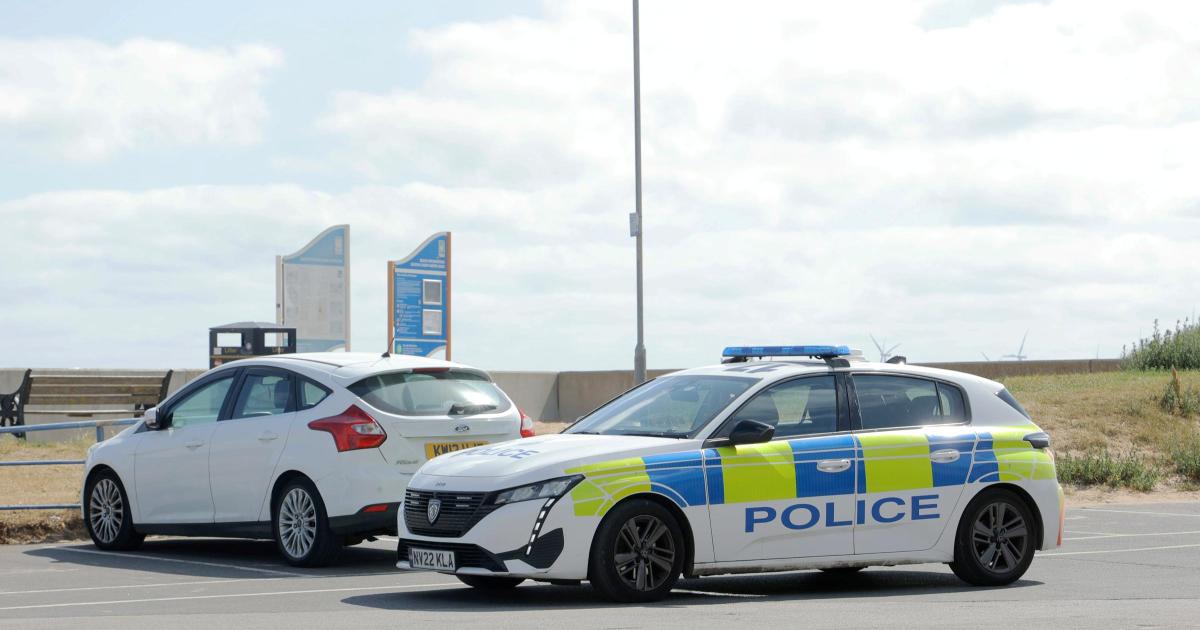
Council bosses have ordered a full review of the current water safety arrangements across the borough’s coastline, Hartlepool Council has today (July 13) confirmed.

It follows a tragic incident on Sunday evening (July 12) where two men lost their life while trying to rescue children in difficulty in the sea.

The incident sparked an online petition by Rebecca Ringwood – a loved one of Jordan Moon, who drowned in August 2003 at the same beach – to restore lifeguard services beyond school holidays. 

Now, Hartlepool Borough Council leader has spoken out about the “absolutely heartbreaking” incident, saying a review has been asked for.

Advertisement

He said: “On behalf of Hartlepool Borough Council and the people of Hartlepool, I want to offer my deepest condolences to the families, friends and loved ones of the two men who so selflessly entered the sea to help others.

Seaton Carew Beach (Image: NORTHERN ECHO)

“Their courage, selflessness and sacrifice will never be forgotten.

“My thoughts are also with the two children involved and everyone affected by this devastating tragedy. 

“I would also like to acknowledge the bravery of the other people who entered the water to help. Their actions, alongside those of the two men who tragically lost their lives, demonstrated extraordinary courage in the face of danger.

Advertisement

“I would like to thank the RNLI, HM Coastguard and all of the emergency services who responded in incredibly difficult circumstances.

“Given the tragic events of recent days, I have asked for a full review of the current water safety arrangements at Seaton Carew and across the borough’s coastline. 

“That work is now under way and will take place alongside any investigations being carried out by partner agencies.

“Right now, however, our focus remains on the families and loved ones of those affected, and we stand with them as they face an unimaginable loss.”

Advertisement

Hartlepool Borough Council withdrew lifeguards at Seaton Carew in 2001 in a bid to make savings of £100,000 – and calls were made to reinstate them following Jordan’s death.  

Jordan, from Hartlepool, died after a freak 8ft wave swept him out to sea while he was paddling with a friend near the shore. 

Jordan Moon (Image: ARCHIVE)

Tragedy struck once again over the weekend when two people were pronounced dead after trying to assist two brothers in the water. The children were safe and taken to hospital.

Hero Davey Short has since spoken out of how he saw one person floating face down in the water next to a child who was struggling in rough seas – and didn’t hesitate to run to their aid.

Advertisement

Read his story here: Hero recalls moment he saved child from North Sea as two others die in rescue effort

Councillor Sue Little, ward councillor for Seaton, also joined calls to reinstate lifeguards beyond the six week holiday following the incident.

She said: “This incident highlights the increasing number of people using Seaton Beach during periods of warm weather and raises the question of whether seasonal beach lifeguards should be reinstated earlier in the year.

“With warmer summers becoming more common and weather forecasts now able to predict prolonged periods of hot weather well in advance, there is an opportunity to take a more proactive approach. 

Advertisement

“Seaton has a first-class beach that attracts thousands of residents and visitors whenever temperatures rise, often well before the traditional six-week summer holiday period.

“While no monetary value can ever be placed on a human life, having trained lifeguards on patrol during these peak periods could help prevent incidents, provide immediate assistance and, in some cases, reduce the scale of emergency service responses required.”

In response, the council said: “We are aware of Councillor Sue Little’s comments on social media regarding a motion to Council. 

“Given the tragic events of recent days, the Leader of the Council has this morning asked for a full review of the current water safety arrangements at Seaton Carew and across the borough’s coastline. 

Advertisement

“That work is now under way and will take place alongside any investigations being carried out by partner agencies. 

“Our thoughts remain with the families and loved ones affected by this tragedy.”

Source link

Advertisement
Continue Reading

NewsBeat

Arsenal star told he has ‘played himself out’ of England World Cup semi-final team | Football

Published

on

Arsenal star told he has 'played himself out' of England World Cup semi-final team | Football

Close Overlay

In The Mixer’s World Cup special

Everything you need to know about the World Cup – England updates, the games to watch and stories you missed – in five minutes, at 1pm, every day.

Source link

Advertisement
Continue Reading

NewsBeat

My father Richard Pryor was a cheater, an addict and impossible to live with… but he never forgave my white mother for calling me the ‘N-word’

Published

on

Elizabeth Stordeur Pryor didn’t meet her famous father until she was six years old

By RUTH WALKER, U.S. BOOKS EDITOR

Richard Pryor’s funeral was ‘a travesty of a mockery of a sham,’ according to his daughter.

‘If Ikea did funerals,’ she said, ‘this would be it. Cold and sterile and monstrously hollow.’

Elizabeth Stordeur Pryor has spent the 20 years since the mercurial, ground-breaking comedian’s death trying to make sense of their complicated relationship.

Advertisement

Now she has opened up about what it was really like living with her famous, often intoxicated parent, the revolving door of wives, girlfriends, and prostitutes and the truth about what happened when her father famously set himself on fire while freebasing cocaine.

In her new memoir, Something We Said, she also reveals her shock at being largely cut out of her father’s will at the 11th hour: ‘I knew in my heart that was not what he wanted,’ she said.

Richard Pryor had a total of seven children with six different women – Stordeur Pryor was his third.

Her mother Maxine – who Pryor lovingly called ‘Macky’ – met the comedian in New York in 1965, when they were both in their early 20s, and he was yet to become famous for films like Blazing Saddles, Stir Crazy, and Harlem Nights.

Advertisement

But as his fame grew, writes his daughter, their relationship became more volatile, sometimes violent. And Pryor was an inveterate cheater.

Elizabeth Stordeur Pryor didn’t meet her famous father until she was six years old

The history professor has spent the 20 years since her father's death trying to make sense of their complicated relationship

The history professor has spent the 20 years since her father’s death trying to make sense of their complicated relationship

Advertisement

‘On the night I was born in 1967,’ she writes, ‘things had gotten so bad between them that he was hundreds of miles away, partying in Tijuana, and ended up in a Mexican jail on a marijuana charge.

‘She went into labor alone in Los Angeles and drove herself to the hospital.’

Not long after, they broke up, and Stordeur Pryor didn’t meet her father until she was six years old.

She was in awe of the man who was, by now, making a name for himself on the comedy circuit, and she was desperate to please – despite his often erratic behavior.

Advertisement

‘The more well-known my father became, the more drugs and alcohol began to take over his life,’ she writes, ‘and his drug-fueled behavior began to make the national news.’

On one occasion, he got into a drunken argument with his then wife Deboragh, and shot at her car as she attempted to drive away.

On another occasion, he set himself on fire by pouring 151-proof rum on his shirt and lighting it ablaze. He ran for a mile down the road before police were able to stop him and take him to hospital, where he was treated for burns on more than 50 percent of his body.

‘He couldn’t stop messing up,’ writes Stordeur Pryor. ‘He always had a glass of Courvoisier in his hand and mounds of cocaine all around the house.

Advertisement

‘Every night, Mercy [his housekeeper] put a wastepaper basket by the side of his bed so he wouldn’t throw up on the floor.

‘He passed out all the time. Waking him was nearly impossible.’

As a professor of history, Stordeur Pryor also uses her book to examine the evolution of the n-word – the racial slur her father reclaimed in his comedy during the 1970s and later disavowed after a transformational trip to Africa. 

The word – allegedly hurled at her during a passionate fight with her White, Jewish mother – was so offensive, it drove a wedge through the family that was never fully repaired.

Advertisement

Maxine ‘told everyone she was Richard Pryor’s ex-wife. She called herself Maxine Pryor. It was the name she had on her checks and her stationery,’ writes the author.

The reality was – like so much of Pryor’s life – much more complicated.

‘I was never married to your mother,’ Pryor told his daughter one night in anger when she was just 12. ‘Ask her about it. She’s always playing games.’

‘The more well-known my father became, the more drugs and alcohol began to take over his life,’ she writes

Advertisement
Richard Pryor became famous for films including Brewster's Millions

Richard Pryor became famous for films including Brewster’s Millions

The comedian in Silver Streak with Gene Wilder - the pair starred in four movies together

The comedian in Silver Streak with Gene Wilder – the pair starred in four movies together

In fact, he had been married to someone else when Stordeur Pryor was born. And when she confronted her mom about the lie, they fought bitterly – ending with her mother allegedly delivering the most appalling racial slur.

‘I was waiting for you to be old enough to understand,’ her mother beseeched her.

Advertisement

But Stordeur Pryor was confused and frustrated, and lashed out at the woman who had been her rock.

‘“I hate you!” I screamed, bending my body forward as if I were pumping the words out of my stomach.

‘She cackled like she’d lost her mind. “You’re exactly like him, Elizabeth.” She walked toward me and stared into my face.

‘“I am!” I shouted.

Advertisement

‘The words hit my mom like a slap. She stumbled backward.

‘She looked beautiful, even though she was angrier than I’d ever seen her in my life. Then her face turned ugly, and she put her hands on her hips.

‘“You’re a n***er!” she said, like she meant it.’

When she told Pryor about the fight, he never spoke to her mom again. And Liz never forgave herself for causing the rift.

Advertisement

But, as she grew more distant from her mother for a time, she became much closer to her father. So much so that one night, in a moment of vulnerability, a now-sober Pryor confessed the truth about the fire that had left him permanently scarred.

Richard Pryor in conversation with Barbara Walters in 1980, after he had set himself on fire

Richard Pryor in conversation with Barbara Walters in 1980, after he had set himself on fire

When Stordeur Pryor told her father that Maxine had called her the n-word, he never spoke to her mom again

When Stordeur Pryor told her father that Maxine had called her the n-word, he never spoke to her mom again

Stordeur Pryor (center) with her famous father and mom, Maxine

Stordeur Pryor (center) with her famous father and mom, Maxine

Advertisement

‘That night, I was so tired,’ he told her. ‘I kept trying to stop doing the drugs and no matter how much I wanted to, I couldn’t. After a while, I just gave up.’

She writes: ‘He looked me right in the eyes. Tears welled up before I even understood what he was saying.

‘“It wasn’t an accident,” he said. “I lit myself on fire on purpose. I tried to kill myself.”’

In 1986, when Pryor was 41, he was diagnosed with multiple sclerosis. The degenerative disease gradually stole his body and his health.

Advertisement

The last time Stordeur Pryor saw him, she writes: ‘He could no longer walk or use his hands, he could barely see, he was in and out of hospitals, and he needed around-the-clock care.

‘He couldn’t even speak anymore, except for a few sputtered words that took excruciating effort to get out.’

He lived alone, with a complicated schedule of carers who, towards the end of his life, she claims, barred his children from visiting for more than 45 minutes once a month, saying it caused him too much stress.

On her final visit, she alleges that a security guard even forbade her from kissing her father.

Advertisement

Two days later – on December 10, 2005 – she received a phone call telling her he had died of a heart attack. He was just 65.

His funeral – held at the Forest Lawn Memorial Parks and Mortuaries in the Hollywood Hills – was, she writes, bizarrely white for the Black father she had known and loved.

‘Plain white pews, plain white walls, plain pine casket, plain glass windows,’ she writes. ‘If Ikea did funerals, this would be it.

‘Where were all the Black people? The wailing women? The cries of “Lord” and “amen”? If it weren’t for some familiar faces – my six siblings, a few of our mothers, a couple of well-known actors and comedians – I would have sworn I was in the wrong place.’

Advertisement

Things got even stranger, she says, when the celebrant – who was white – made such a clumsy attempt at Black humor, she was convinced she heard Pryor’s ghost laughing at the absurdity of it all.

Richard Pryor with (left to right) daughter Rain, ex-wife Jennifer Lee, son-in-law Jerry Stordeur, and Elizabeth Stordeur Pryor when he was honored by the Kennedy Center in 1998

Richard Pryor with (left to right) daughter Rain, ex-wife Jennifer Lee, son-in-law Jerry Stordeur, and Elizabeth Stordeur Pryor when he was honored by the Kennedy Center in 1998

Pryor's health declined in the cruel grip of multiple sclerosis and, latterly, he could no longer walk or use his hands, and he could barely see

Pryor’s health declined in the cruel grip of multiple sclerosis and, latterly, he could no longer walk or use his hands, and he could barely see

Advertisement

‘Richard Pryor,’ she boomed, ‘was a funny motherf***er.’

She may not have said the n-word, but Stordeur Pryor says it felt as jarring as if she had.

‘Just as the impulse to stand up and walk out nearly overtook me, I heard my dad’s throaty chuckle: “This sh*t is funny.”

‘I looked around to make sure the voice was in my head, and almost laughed out loud. It felt like he was letting me know this whole event was a joke, the one about a dead Black comedian who accidentally ends up in white heaven (or maybe Black hell) and finds himself headlining a New Age, non-denominational funeral. Ba-dum-bum.’

Advertisement

Her mother agreed.

‘That funeral had no soul,’ she said afterwards, adding: ‘Imagine: A White woman calling Richard Pryor a motherf****r at his own funeral!’

Stordeur Pryor writes: ‘Even my white, Jewish mother knew that was totally out of line.’

A few days later, she received a copy of her father’s will. The details shocked her to the core.

Advertisement

‘None of his creative legacy went to his kids. I knew in my heart that was not what he wanted.

‘I hired a lawyer and fought in court and lost. I appealed and lost again.

‘Soon after, I was removed completely as a beneficiary. Disinherited. Cut out of the family photo album.’

The one thing she did have of her father’s was a battered briefcase, given to her by her mother on the day of his funeral.

Advertisement

‘Elizabeth,’ she’d said, ‘this will explain everything.’

She’d stashed it out of sight for 15 years. But when she finally examined the notebooks inside; the letters, unfinished jokes and journals, they told her who her father really was.

‘Every time I opened the notebook, I got to know him better,’ she writes.

‘It was the last breadcrumb leading me back to my father. It took me 15 years to understand it held the key to the connection we’d had all along. The briefcase was a priceless heirloom. It was my inheritance.’

Advertisement

Something We Said: Richard Pryor, a Notorious Word, and Me by Elizabeth Stordeur Pryor is published by 37 Ink, an imprint of Simon & Schuster

Source link

Continue Reading

NewsBeat

Laura Dern pays tribute to ‘dream leading man’ Sam Neill

Published

on

Laura Dern pays tribute to ‘dream leading man’ Sam Neill

Neill’s Event Horizon co-star Sean Pertwee said: “Devastated to learn my friend Sam Neill has passed away. A supreme talent, elegant, intelligent, hilarious, a truly splendid human. Also a major proponent why I married my wife for which I am eternally grateful. Love you Sam.”

Source link

Continue Reading

Trending

Copyright © 2025