

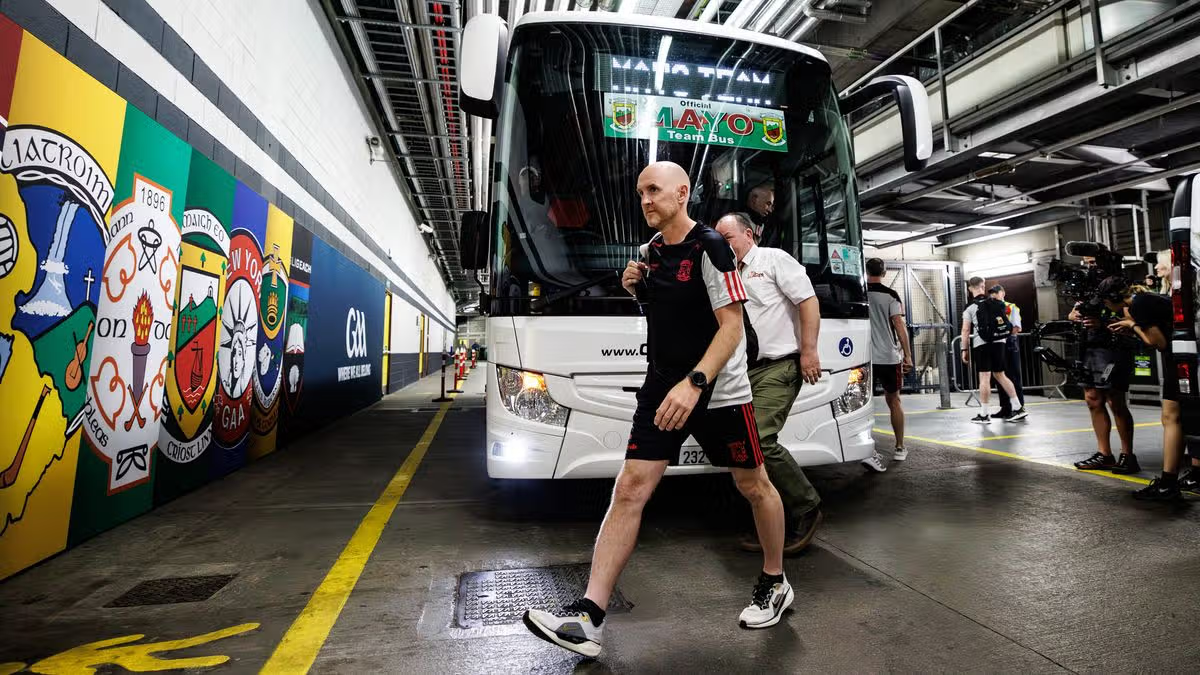
An All-Ireland victory transforms everything. External pressures shift, internal standards evolve and, perhaps most perilously, the memory of success itself becomes an obstacle to overcome. Nobody knows that better
Following an All-Ireland triumph, there’s a natural inclination to believe the hardest part is behind you.
It’s not. More often than not, the real test is only just beginning.
An All-Ireland victory transforms everything. External pressures shift, internal standards evolve and, perhaps most perilously, the memory of success itself becomes an obstacle to overcome.
Mayo understand this reality better than anyone.
For decades they were characterised by the one achievement that eluded them. Then Andy Moran rewrote that narrative.
Mayo secured All-Ireland glory and immediately the question shifted from whether they were capable of winning to whether they could defend their crown.
This is precisely why Paddy Tally’s decision to continue with Moran’s backroom staff for another campaign holds such significance.
Mayo haven’t simply kept a coach on board. They’ve preserved expertise in something remarkably few people truly comprehend.
Tally has guided three separate All-Ireland-winning sides: Tyrone in 2003, Kerry in 2022 and most recently Mayo. He also contributed to the Down coaching structure that contested the 2010 All-Ireland final.
The credentials speak for themselves. However, the figure itself matters less than the insight it represents.
Tally understands what victory does to a squad, how individuals transform when the goal they’ve pursued for years suddenly becomes the benchmark they’re required to uphold. He recognises that the most challenging aspect of being an All-Ireland champion can be arriving the following January with identical drive when everyone around you is reminding you of last July’s achievements.
And he understands coaching. That distinction is significant.
Tally has been at the helm of Derry and Down, but he’s also dedicated a substantial portion of his career to coaching alongside other managers. His explanation of the contrast between management and coaching is particularly insightful.
Management, he explains, has evolved into a vast role encompassing everything outside the actual match itself.
Coaching enables him to focus on the players, the tactical analysis and the football.
There’s something almost old-fashioned about that approach in contemporary sport. Everyone seeks the position, the power and the visibility that comes with being a manager.
Tally appears more content getting on with the actual work.
This could prove especially valuable to Moran, who is relatively young by senior inter-county management standards. Tally is older, more seasoned and more willing to take a step back.
That isn’t a flaw in their working relationship. It may well be its greatest asset.
“I think it’s the first time it’s happened to me,” Tally remarked earlier this year about collaborating with a manager younger than himself.
Previously, he had been the younger coach absorbing knowledge from figures such as Brian McIver and Jack O’Connor.
Now the dynamic has flipped. Moran provides the drive.
Tally provides the wisdom – and that represents a beneficial distribution of responsibilities.
The risk with experience is that it can transform into authority simply for authority’s sake. The experienced figure arrives and dictates how matters should be handled because he’s witnessed it all before.
Tally seems to recognise that this is exactly what should be avoided. Every county possesses its own distinct culture, he explains.
Each has its unique history and traditions. You cannot simply arrive in Mayo from Tyrone and expect Mayo to adopt Tyrone’s style of football.
First, you must learn.
It’s a deceptively crucial observation.
The most effective outside coach isn’t necessarily the one with the firmest convictions. It’s the one who understands when to listen.
Tally invested time getting to know Mayo, attempting to grasp why they approached things in their particular manner. Only after that could he introduce his own knowledge into the mix.
That’s how coaching ought to function.
And the brand of football he discovered in Mayo resonated with him regardless.
High octane. High intensity.
Pressure. Pace.
It’s not a revolution. It’s an acceleration of something that already exists.
Tally favours robust defending. He favours swift ball movement.
He favours football played at tempo.
He also acknowledges something more significant than tactics: Mayo’s greatest strength is the emotional bond between the team and those supporting it.
Tally spotted it straight away.
He drew comparisons between Mayo and Tyrone, his native county, describing people who are passionate, down-to-earth and desperate to witness their county triumph.
That’s the Mayo formula.
Football isn’t merely a sport there. It’s woven into the county’s emotional fabric.
Tally has witnessed it from within and from the road.
There are no decent roads from Galbally to Castlebar, he quipped. It requires three hours, a lengthy trip for a training session.
But Tally understands what long journeys entail.
His trips to Kerry meant six hours travelling each way, twice weekly.
He can laugh about it these days.
There’s a distinction between someone who’s merely read about success and someone who’s endured the inconvenience, pressure and sacrifice necessary to achieve it.
Tally has experienced it time and again.
He’s also stayed inquisitive.
He analyses rugby. He admires Andy Farrell’s work with Ireland.
He follows American football due to its focus on marginal gains, research and sports science.
That reveals something significant.
He’s not relying on past methods.
He’s still learning.
That’s precisely what Mayo require.
The danger for an All-Ireland-winning side is safeguarding what succeeded.
The wiser strategy is comprehending why it succeeded and then discovering methods to improve it further.
Moran will be pivotal to that process. However, he doesn’t require another version of himself alongside him.
He requires someone capable of challenging, observing, analysing and occasionally stating: this is what happens next.
Tally possesses that ability.
He’s witnessed Tyrone become champions. He’s witnessed Kerry become champions.
He’s seen Down come heartbreakingly close. He’s now helped Mayo reach the peak.
Four counties. Four cultures.
Four distinct journeys.
And next year another journey awaits. Mayo are no longer pursuing history.
They’re protecting it. Every team will be eager to defeat them.
Every rival will have analysed them thoroughly. Every display will be measured against the benchmark they set when they finally claimed All-Ireland glory.
This is where Paddy Tally becomes indispensable, because while Moran understands Mayo’s destination, Tally is familiar with some of the challenges they’re likely to face along the journey.
Maintaining both men in their roles provides Mayo with something every champion requires: the thrill of a fresh start combined with the wisdom of understanding precisely how challenging it is to stay at the summit.
That is a partnership worth preserving.























































You must be logged in to post a comment Login