Flight LS1266 was heading from Tenerife to Birmingham, when passengers began noticing some worrying signs. Flight attendants were spotted rushing down the aisle in tears, with 220 passengers onboard, while asking whether anyone had medical training.
“We were awoken by chaos,” one witness told The Sun, explaining that both they and their partner had been asleep when the incident unfolded.
“Lights began flashing and hostesses who were visibly upset, seeking a doctor.
“Our two-year-old began crying like many other children onboard because the aircraft was dropping so quickly for an emergency landing.”
Video footage revealed how the aircraft, following a safe landing in Porto at 2.11am on Friday, was swiftly met by emergency personnel who treated the pilot.
“We were stranded in Portugal for over 13 hours without accommodation,” a passenger revealed. “They wouldn’t let us off the plane itself for over an hour. Then we were just left to wander around.
“There was nowhere to stay. They said accommodation was too expensive.”
Advertisement
The passenger noted they had “full sympathy” for the pilot. A pilot was transported by Jet2 from Manchester to Porto to assist in getting them home. Travellers were informed they could receive a complimentary change onto a Jet2 service heading to any of 14 UK destinations within the following week.
Jet2 reportedly said: “Flight LS1266 from Tenerife to Birmingham diverted to Porto on Thursday (21st May), due to one of the pilots feeling unwell.
“At no point was safety compromised, and customers subsequently continued their journey. We would like to apologise to customers for this unforeseen delay.”
The Mirror has approached Jet2 for further comment.
Advertisement
Want to see more of the stories you love from Belfast Live? Making us your preferred source on Google means you’ll get more of our exclusives… To add Belfast Live as a preferred source, simply click here.
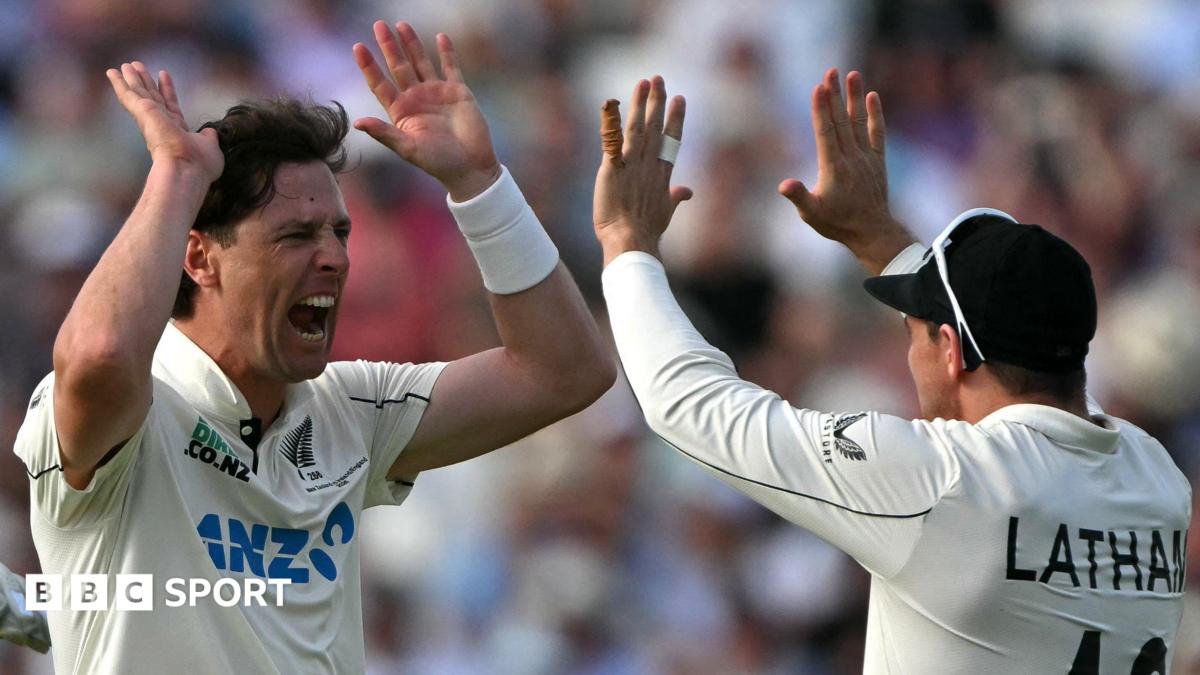
England are in a dire position against New Zealand after spiralling from a chaotic morning on day two of the second Test at The Oval.
Following an encouraging first-day performance from a team without captain Ben Stokes, England surrendered the initiative through strange tactics, a crucial dropped catch and a wonderful maiden Test century from Glenn Phillips.
It meant New Zealand were able to move from their overnight 291-7 to 391 all out.
Advertisement
Though Emilio Gay made a half-century and stand-in captain Joe Root 46, England lost three wickets for 35 runs to slip to 177-5.
And when James Rew gloved the hostile Will O’Rourke late in the day, England were left 222-6, 169 behind with the tail exposed. Jordan Cox is unbeaten on 22, alongside Jofra Archer on nought.
England set the tone for their own troubles with the very first ball of the day – laying a short-ball trap for Sonny Baker bowling to Kyle Jamieson. Baker’s bouncer went for four byes and the day got worse from there.
Jamieson made a vital 41 after a horrible drop by Ben Duckett when he was on 15. Archer did not bowl for the first 90 minutes of the day, including with the second new ball, but then struck with his fourth delivery.
Advertisement
The home side caused another of their own problems when Duckett was run out for 36, called for a short single by Gay that was never there.
Gay and Root added 74, only for Root and Harry Brook to both be lbw to Matt Henry in a huge double blow to England.
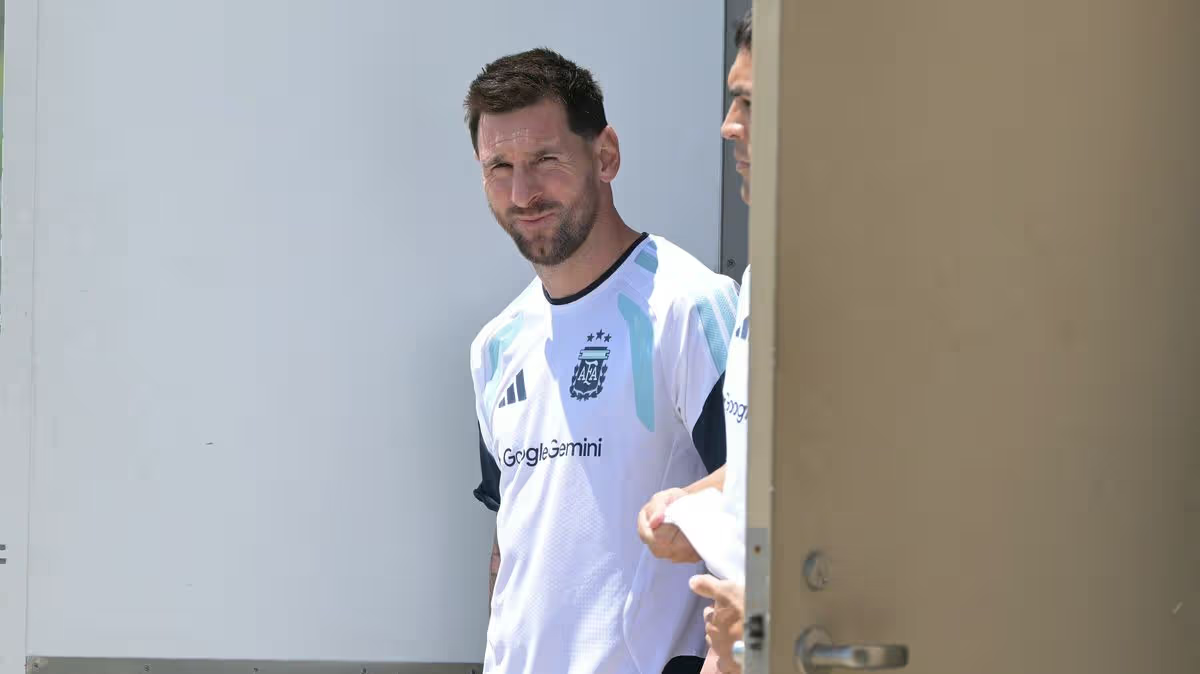
A statement reads: “The Messi family informs that Jorge is going through a health situation. At this time, he is under medical monitoring, recovering and evolving favorably within the condition he is presenting.
“In response to the versions, rumors, and speculations that have circulated in recent hours, the family wishes to express its deep distress over the lack of sensitivity, respect, and scruples with which some people have treated a strictly private and family situation.
“The family also wishes to clarify that only its closest family members have real and accurate information about Jorge’s condition. Therefore, any version, statement, or information that does not come from the family itself and its corresponding channels should not be considered valid or truthful. In moments like this, we ask for responsibility, prudence, and humanity.
“A person’s health and the peace of mind of their surroundings should not be the object of speculation or irresponsible media interest. We sincerely thank you for the displays of affection, respect, and concern received, and we request that the privacy, confidentiality, and intimacy of Jorge and his entire family be preserved during this process.
Advertisement
“Any relevant updates will be communicated in a timely manner by the family and the corresponding channels. Thank you for your understanding.”
Greg McCullough appeared in court following the incident at a property on Shore Road
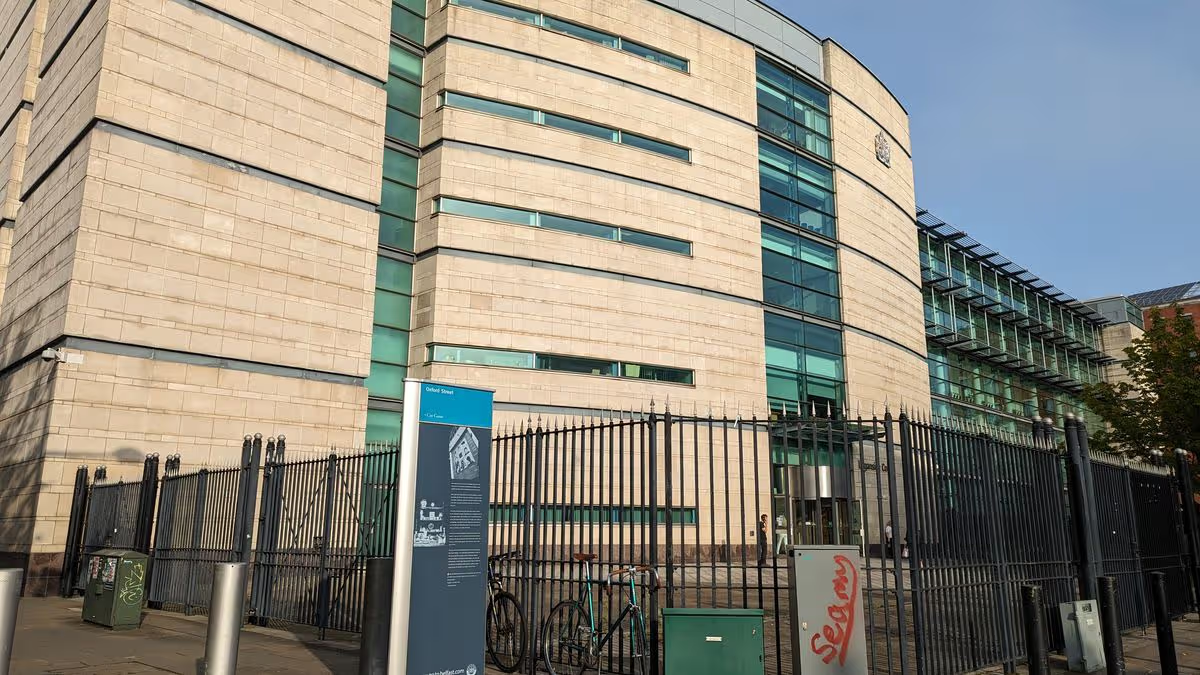
A man has been remanded in custody after he allegedly attacked a woman with a hammer causing her serious injuries following an incident at a property in North Belfast.
Advertisement
Greg McCullough, 32, of Wynthorpe Grove, Newtownabbey, appeared at Belfast Magistrates’ Court on Thursday, June 18, after being arrested following an incident at a property on Shore Road on Tuesday, June 16.
He is accused of causing grievous bodily harm to a woman by attacking her with a hammer inside of her home during an “aggravated burglary”.
McCullough is also charged with assaulting two police officers and possession of Class C drugs.
Following the court appearance the 32-year-old was remanded in custody and is due to appear again on July 16.
Cardiff are set to take on the Serie A side this summer
Cardiff City are set to take on Italian giants Roma in a pre-season friendly this summer.
Advertisement
The Bluebirds are gearing up for a return to the Championship next season, after sealing promotion from League One at the first time of asking under Brian Barry-Murphy, who will be eager to make his mark in the second tier. Join the Cardiff City breaking news and top stories WhatsApp community.
Roma are also facing a big season, having qualified for the Champions League after seven years away.
It’s not clear when the two teams will meet, but Roma are due to arrive for a training camp in south Wales at the end of July.
The club will reportedly be based at the WRU National Centre of Excellence during their stay, with several friendlies planned during their time in the UK.
Advertisement
It’s now understood Cardiff will be one of them.
The Bluebirds already have several other games lined up this summer.
The Danish side are four-time Superliga champions and finished runners-up in their domestic campaign this season, having lifted the title as recently as 2023/24.
Advertisement
They will then jet out to Barry-Murphy’s hometown of Cork for a week-long training camp, during which time they’ll take on Cork City on Tuesday, July 14.
They then travel to Forest Green for another pre-season friendly 11 days later.
Cardiff begin their Championship campaign on the weekend of August 14.
City will find out who they take on when the fixtures are released on June 25.
Avatar star Sam Worthington plays a father (David Burroughs) accused of killing his own son.
But when the dad, who insists on his innocence, sees what looks like a literal get-out-of-jail-free card from his sister (Rachel Severance’s Britt Lower), he realises he’ll need to escape to show he didn’t commit the crime.
Netflix has described the series as a “thriller… filled with the kinds of twists and turns that will make hearts pound and heads spin”.
Advertisement
Which begs the question – what are the critics saying? And if (as early reviews suggest will happen) you find its tense episodes unmissable, what should you watch next?
What are reviewers saying about I Will Find You?
Early reviews stress how ridiculously addictive the TV show is, despite some plot holes. Even those that didn’t seem to love the series on its objective merits had to hand it to I Will Find You: it’s still super-watchable.
Advertisement
“The script is made of Play-Doh and our protagonists are but flaps of luncheon meat pegged to a washing line. And yet still we must – must! – find out what happens. And so we stagger, dazed, into the next episode. And the episode after that… maddeningly watchable.”
“Though the series boasts a massive web of characters and circumstances, each one is there for a purpose. After all, when the wild and riveting puzzle pieces finally snap together in the final two episodes, the most perceptive viewer won’t be able to say they knew what was coming next.”
“Faulty accents aside, the ensemble is really solid and, along with capable polish courtesy of directors including Brad Anderson and Maja Vrvilo, goes a long way toward making I Will Find You feel like less of a rush job than some of the string of Coben adaptations that have flooded Netflix and Amazon in recent years.”
“Harlan Coben’s I Will Find You is like a midweek school dinner: its substance and style aren’t going to blow you away, but it’s incredibly dependable. More importantly, it’ll fill your appetite for whodunnits, even if you guess a few things along the way.”
Advertisement
“As a time filler, there’s nothing especially wrong with I Will Find You. It’s just the kind of show that signals the gulf between ‘streaming’ and ‘TV’ is shrinking, and has perhaps closed almost entirely. The sort of show that, if you could leave it behind in the place you were staying once you were done with it, for the next weary traveller to find, like a dog-eared paperback, you almost certainly would.”
“I Will Find You ends, in the best traditions of the throwaway thriller, with a last twist that doesn’t make sense when you stop and think about it – if you want to stop and think, Harlan Coben is not your guy. On home turf, however, he knows what he’s doing.”
″…Objectively horrid. But I admittedly kept going, soaking myself in every ludicrous plot turn, and not only because my editor was more or less holding a gun to my head the entire time… [Halrlan Coben will] get us all in the end, won’t he? Resistance is futile.”
“If you’re already a fan of Harlan Coben thrillers, you’ll know how gripping they can be and I Will Find You is no exception… [it has a] real emotional depth that we often don’t see in the author’s TV adaptations. In our opinion, it’s up there with his best work to date.”
Wendy Robertson played key part in ensuring court continued to operate following the discovery of reinforced autoclaved aerated concrete (RAAC) in the building.
A Scottish Courts and Tribunals Service employee who played a key role in ensuring Airdrie Sheriff Court continued to operate following the discovery of reinforced autoclaved aerated concrete (RAAC) in the building has been recognised at the organisation’s Service Excellence Awards.
Advertisement
Wendy Robertson, who works in Sheriff and Justice of the Peace Court Operations, was named as a finalist in the Outstanding Service Delivery category after helping co-ordinate the response to the discovery of RAAC at the Airdrie building in 2023.
She was instrumental in managing the move to alternative accommodation for staff and assisting with the preparation of refixing and transfer orders to allow court business to continue at Lanark and Hamilton, ensuring disruption to justice services was kept to a minimum.
And she was among five staff members from Glasgow and Lanarkshire recognised for their outstanding contributions to the Scottish Courts and Tribunals Service (SCTS).
Other finalists from the area included Alexander Shaw and Hazel Hay from Bothwell House in Hamilton.
Advertisement
The SCTS Service Excellence Awards was established to celebrate the successes of those who go the extra mile, have made a meaningful difference to the organisation and consistently demonstrate the SCTS values of Respect, Service and Excellence when carrying out their roles.
The finalists represent all areas of SCTS, including courts, tribunals, and the Office of the Public Guardian.
Malcolm Graham, chief executive officer of the SCTS, ccongratulated all the finalists, saying: “People are at the heart of SCTS and every day colleagues go above and beyond to deliver an excellent service for the users of our courts, tribunals and the Office of the Public Guardian.
“Our SCTS Values and Behaviours are at the core of our organisation’s culture and the SCTS Service Excellence Awards recognise those individuals and teams who are exemplary in demonstrating our Values and Behaviours and show appreciation for their efforts.
Advertisement
“We had over 100 nominations from across the organisation and the response awards reflects the number of fantastic people working across SCTS in support of delivering justice in Scotland.
“I congratulate all nominees and finalists.”
The 18 finalists, three finalists across six categories, each received their award at an event in Parliament House.
*Don’t miss the latest headlines from around Lanarkshire. Sign up to our newsletters here.
Advertisement
And did you know Lanarkshire Live had its own app? Download yours for free here.
North Yorkshire Police says the force is still appealing for witnesses, information and video footage after an incident which took place in Micklegate on Tuesday evening (June 16).
They added that a man who was initially arrested in connection with the incident has now been released without charge.
RECOMMENDED READING:
Advertisement
As reported by The Press, officers were stationed between the junction of Micklegate and Bar Lane and the boundary of George Stephenson House, a Network Rail building, on Wednesday (June 17) whilst an investigation took place.
A new image has been released today (June 18) which shows a man who police would like to speak to in connection with the investigation.
It is believed he was at the Harry Hotspur pub in Micklegate on Tuesday evening.
He is described as white, mid-30s, slim build, and had a brown stubble beard. He ws wearing a white t-shirt with a Guinness lobster logo, black adidas shorts, black and white Vans trainers, and black socks.
Advertisement
“If you have not yet come forward, please do so as soon as possible. Even the smallest piece of information could be crucial to help piece together the full circumstances of this incident,” said a spokesperson for the force.
Officers added that the victim is continuing to receive specialist support and care.
If you recognise him from the description and CCTV image or know where police can find him, please call North Yorkshire Police on 101 or if you prefer to remain anonymous, contact Crimestoppers on 0800 555 111 or make an online report.
Please quote reference number 12260111552 when providing details.
Farmfoods will move into the former B&M store at Byron Place on July 2.
The move is expected to create seven new jobs, while a new entrance is also being created.
A spokesperson for Farmfoods said: “Our new shop in Seaham at the Byron Place Shopping Centre will open Thursday, July 2 at 8am.
Advertisement
“Our current shop will close on Sunday, June 28 following a 50 per cent off all stock sale that day.
“The new shop – a relocation and upsize from our existing unit opposite – will offer our full range of branded and own-brand products including frozen food, groceries, chilled foods, bread, milk, fresh fruit and vegetables along with a range of household and other items.
The new store will be open at 8am Monday to Saturday, closing at 9pm on weekdays and 8pm on Saturday. It will be open from 11am til 5pm on Sunday.
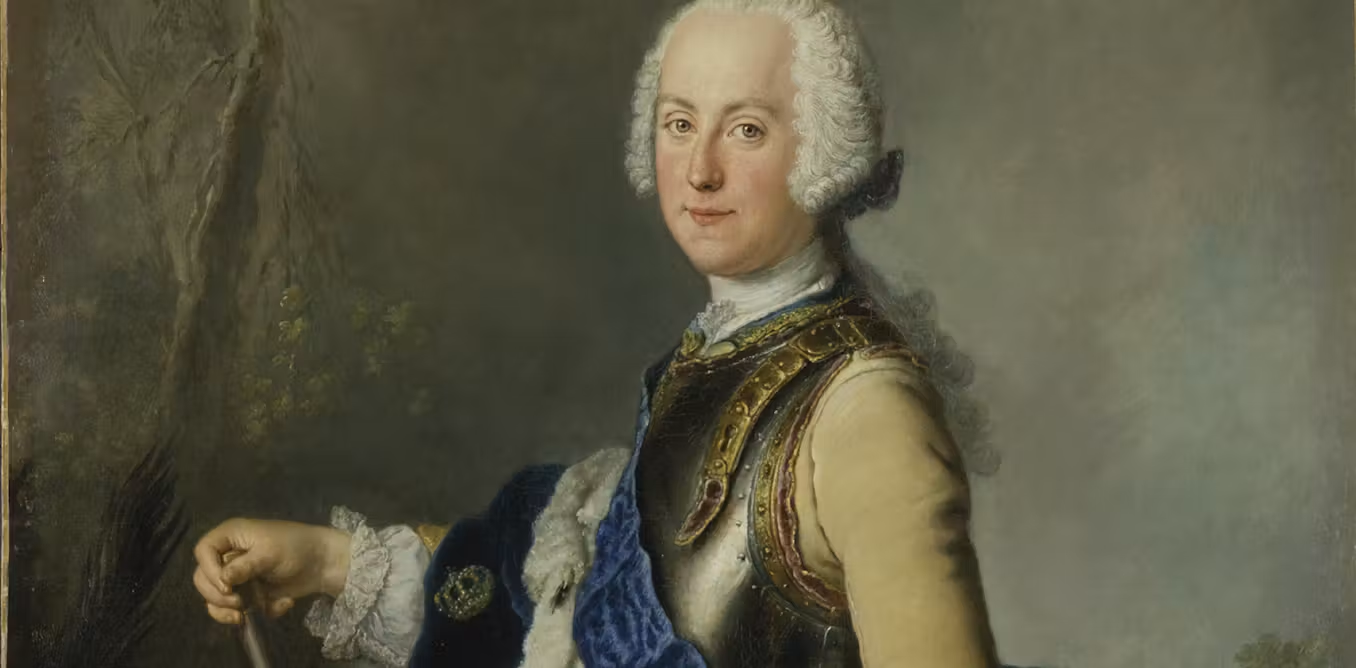
In 1768, towards the end of the period of Swedish history known as Frihetstiden, the Age of Liberty, King Adolf Frederick threatened to abdicate unless an extraordinary session of the Riksdag, the Swedish parliament, was immediately convened. The immediate issue concerned a new financial plan, but the king hoped that the parliamentary session would also lead to constitutional changes to strengthen his power.
The 16-member strong Council of the Realm, over which the king presided, was given three days to summon the Riksdag. Meanwhile, the king would not partake in any decision-making. In other words, he went on strike.
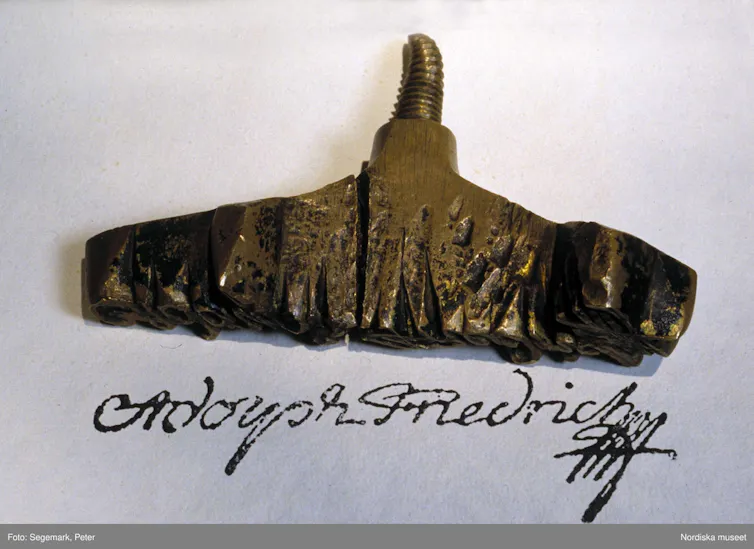
As I show in my new book, Monarchy in the Age of Liberty: Royal power and public life in eighteenth-century Sweden, this moment in Swedish political history poses an interesting question: does a monarchy need a monarch? The country at the time was a kingdom, yet it effectively had a republican form of government. In the events that followed the king’s ultimatum, his councillors even attempted to replace him with a signature stamp. It is one of the many paradoxes of this era that such a measure be taken not in opposition to the monarchy but in order to preserve its very essence.
A political revolution
Sweden’s Age of Liberty was ushered in by the death of King Charles XII during the siege of Fredrikshald, in Norway, in 1718. From 1680, Sweden had been ruled as an absolute monarchy. Now, fatigued by 18 years of continuous warfare, the four estates of the Swedish Riksdag decided to curtail the king’s executive powers. As formulated in the Instruments of Government, the Accession Charters and the Royal Elections Acts of 1719 and 1720, the Council of the Realm was now to oversee the monarch’s decision-making, and, in turn, answer to the Riksdag.
Advertisement
In Protestant Sweden, social theory was grounded in equal measure in ancient political thinking and Lutheran ideas. Central to this was Martin Luther’s so-called doctrine of the three estates, which held that society was composed of the teaching estate (the clergy), the defending estate (the nobility) and the nourishing estate (the commoners) and that all three were needed for societal balance and harmony to be achieved.
A 17th-century illustration of the balance between the estates and the crown by Schering Rosenhane. Kungliga biblioteket/The National Library of Sweden.
The monarch stood above all laws — it was the essence of his majesty. As such, he was the only figure considered to be free from self-interest and therefore able to maintain this social balance. Thus, despite his practical duties having been made redundant, his symbolic importance was incontrovertible.
Upon the death of Charles XII in 1718, his sister, Ulrika Eleonora, briefly succeeded to the throne before abdicating after just over a year in favour of her husband, Frederick I, who ruled until 1751.
As king, Frederick I soon lost interest in his rather insignificant duties and, drawing inspiration from absolutist France, had a name stamp made. This was ostensibly to save himself the trouble of signing a large number of circulars. But the stamp also came to serve as a political instrument.
Advertisement
In certain circumstances, the council could even issue government decrees without the king’s signature. But the councillors considered this inappropriate as it revealed to the outside world when they were in disagreement with the king. On such occasions, the signature stamp became a practical alternative.
The signature stamp also meant the councillors could no longer delay decisions by citing the king’s refusal to sign a document. Unlike the king, the council had to answer to the Riksdag for its actions and be held to parliamentary accountability.
In the Swedish public’s imagination, this replacement of the king’s personal signature with a stamp is the ultimate symbol of the monarch’s powerlessness. But how it was actually used demonstrates that the king’s signature was considered indispensable for lending dignity and authority to government decisions.
The crown’s symbolic importance was most clearly demonstrated by Frederick I’s successor, Adolf Frederick, when he went on strike in 1768. This constitutional crisis was partly a conflict between the two opposing parties, the Caps and the Hats, concerning issues in which the king played only a peripheral role. The parties’ views differed on foreign alliances, economic policy and, increasingly, civil and political rights, but they agreed on the king’s constitutionally restricted position. However, none of them hesitated to use the king as a tool when it suited their own purposes.
The council was controlled by the Caps. In response to the king’s threat, the councillors attempted to govern by means of the signature stamp.
Advertisement
In return, the central government agencies, which were dominated by Hat sympathisers, refused to comply with any decisions bearing only the king’s duplicated signature. They insisted that the form of government rested on the majesty of the king, the authority of the council and the liberty of the people, that is, their civil and political rights. If any of these elements were missing, the balance was disrupted and the impartiality of government decisions could be called into question.
The civil servants’ refusal to comply with decisions bearing a stamped signature brought the state apparatus to a standstill. The Riksdag was convened, just as the king had demanded.
The outcome was decided by the strong position of the Hats in the government agencies. However, once the extraordinary session of the Riksdag was convened, the king gained no support whatsoever for his constitutional proposals. Even though the signature stamp was taken out of use and the king’s symbolic authority reaffirmed, his actual political influence diminished even further.
In my research I show that this episode highlights a typical pattern of the Age of Liberty. The court was supported by the opposition party for only as long as it remained in opposition. As an ally against the government, the monarch was important in shaping opinion and providing influence. For the government, conversely, he was an unpredictable asset.
Advertisement
This observation can also be generalised. In early modern times, power was based on authority from above. By tradition, the monarchy represented a divine order that demanded unconditional submission.
As countries such as Sweden and the United Kingdom began to shift away from absolutism and towards a more representative form of government, the monarch continued to symbolise governmental impartiality in spite of sharp partisan divisions. The notion that the people, with their passions and their self-interest, were too unpredictable to rule a state, endured. During this transitional phase, a monarch was needed who symbolically stood above all special interests and treated all his subjects with the same paternal care.
A man has been arrested on suspicion of attempted murder
18:34, 18 Jun 2026Updated 18:39, 18 Jun 2026
Johnsons of Old Hurst has shared a statement after a 3 year old boy was ‘seriously injured’ on the afternoon of June 18.
Officers were called to the zoo at 1.24pm on June 18 to reports of an incident involving a three-year-old boy, during which he ended up in the crocodile enclosure.
The boy has been taken to Addenbrooke’s Hospital with serious injuries and is critical but stable. Specially trained officers are at the hospital supporting the boy’s family.
Advertisement
A 30-year-old man from Norfolk has been arrested on suspicion of attempted murder. Johnsons has now confirmed that the Tropical House part of the site will be closed until further notice.
It has added that the team’s “thoughts and prayers” are with the boy and his family. Johnsons shared: “Our thoughts and prayers are with the boy and his family following the incident that occurred today.
“Out of respect to the family, our Tropical House will remain closed until further notice. If you have any questions about the incident, please direct enquiries to Cambridgeshire Police Constabulary. The rest of the site will remain open as normal.”







































You must be logged in to post a comment Login