NewsBeat
UK warship HMS Dragon departs for Cyprus amid Middle East crisis

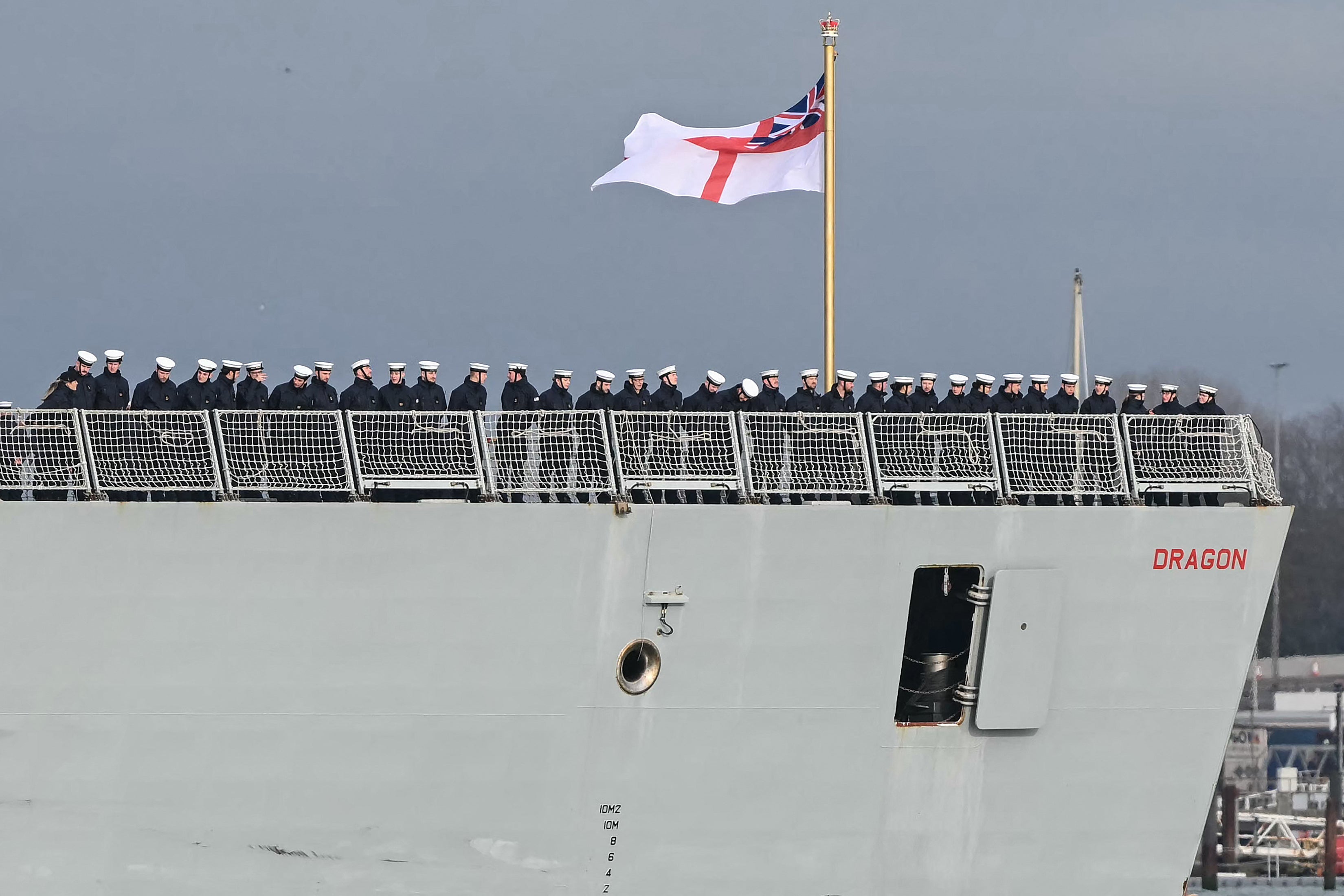
UK warship HMS Dragon has left its naval base in Portsmouth for the eastern Mediterranean to protect Cyprus, the government has announced.
The vessel left Portsmouth Harbour after 4pm on Thursday, a week after its deployment was announced.
The Type 45 destroyer is capable of shooting down drones and ballistic missiles fired by Iran and its proxies as the Middle East crisis continues.
Crew were seen lining the deck as the ship moved out of Portsmouth Harbour.
Officials insisted the ship had been prepared as quickly as possible for deployment, with six weeks’ worth of work squeezed into six days.

The announcement of the deployment of the ship came in response to a drone attack which hit the RAF Akrotiri base in Cyprus on the night of 1st March.
The drone strike forced the UK to reconsider its hands-off approach to America’s war with Iran.
In a recorded TV address earlier that evening, Sir Keir Starmer said he had agreed to a US request to use British military bases for “defensive” strikes on Iranian missile sites, adding “British lives” had been put at risk. By Tuesday, the government decided it would scramble a warship, HMS Dragon, to the eastern Mediterranean.
Under the 1960 Treaty of Guarantee, which handed independence to Cyprus, the UK has a legal obligation to ensure the island’s security. But the Cypriot government has said it was “disappointed” in Britain’s response to the strike and has been forced to draft in help from France.
The HMS Dragon is one of the Royal Navy’s six Type 45 Destroyers, which make up the fleet’s first line of defence against aerial threats such as aircraft, missiles and drones.
Normally based in Portsmouth, with a crew of around 200 sailors, it’s capable of protecting an area up to five times the size of Cyprus. It can also track hundreds of targets simultaneously, the MoD says.
Its Sea Viper missile system can launch eight missiles in under 10 seconds, and can direct up to 16 missiles onto their targets simultaneously, firing at four times the speed of sound.Last year, HMS Dragon became the first British warship to destroy a missile travelling at supersonic speed during an international exercise off Scotland.
Now a second British ship could be sent to the eastern Mediterranean if the Middle East crisis continues.
Landing ship RFA Lyme Bay is being prepared for a potential deployment to the region, according to the Ministry of Defence.
The vessel has aviation and medical facilities allowing it to assist in any evacuation effort.
A Ministry of Defence spokesman said: “As part of prudent planning, we have taken the decision to bring RFA Lyme Bay to heightened readiness as a precaution, should she be needed to assist in maritime tasks in the eastern Mediterranean.”
Markets calmed after US President Donald Trump suggested the military action would be a “short-term excursion” rather than a more prolonged war and threatened “death, fire and fury” against Iran unless vessels were allowed through the Strait of Hormuz, a vital maritime oil and gas route.
However, there was still a concern that energy prices could increase and the UK’s budget watchdog warned inflation this year could be higher than it had previously estimated.
Professor David Miles, a member of the Office for Budget Responsibility (OBR’s) budget responsibility committee, told MPs: “Right now, if prices don’t change from where they are – both the spot prices and market expectations for futures prices, which is particularly important for the Ofgem price cap – we think the inflation rate would end the year not near 2 per cent, but nearer 3 per cent.”
More to follow…