I’m A Celebrity… South Africa star Adam Thomas has returned to the ITV show leaving soap fans feeling nostalgic
Angie Quinn Screen Time Reporter
22:52, 07 Apr 2026
I’m A Celebrity star Adam Thomas has returned to the ITV show, sparking a frenzy among soap fans. The 37-year-old originally appeared on the 16th series of the popular reality programme in 2016, but he is also famed for playing Adam Barton in Emmerdale for nearly a decade, from 2009 to 2018.
During his time on the ITV show, fans saw his character tackle a series of storylines, including a feud with Cain Dingle (Jeff Hordley), turning to arson, an on-off marriage with Victoria Sugden (Isabel Hodgins), and a bromance with Aaron Dingle (Danny Miller).
Making a hasty exit in a shipping container to start a new life in France, viewers were left heartbroken when Adam decided to leave Emmerdale.
At the time, addressing the exit, the actor said it wasn’t an easy decision for him. In a statement, Adam explained: “I’ve had an amazing eight years working on Emmerdale, and I’ve loved every minute of it.
Advertisement
“It was a really tough decision to take to leave but I felt that now is the time to move on and challenge myself with some new roles.”
He added: “I’d like to thank everyone at Emmerdale for both giving me the opportunity to work as part of such a great team and for giving my character, Adam Barton, some great storylines too.”
However, seeing Adam back on television has left Emmerdale fans demanding he returns to the soap.
Taking to X, one fan penned: “When I said I wanted Adam Thomas back I meant on @emmerdale #ImACeleb #Emmerdale”, as another replied: “Shout it louder!”
Advertisement
A third explained: “Seeing Adam Thomas on ITV and it not being in Emmerdale is deeply upsetting to me #imaceleb.”
One person confessed: “Emmerdale star Adam Thomas’ (crying faces)”, while another added: “With all that’s going on in his family, Adam should have returned years ago. I’d recast if the OG actor isn’t interested. #Emmerdale.”
Away from Emmerdale, the actor launched his career following an appearance on the BBC’s Doctors in 2002, and is also particularly recognised for his portrayal of Donte Charles in Waterloo Road.
Advertisement
In 2023, Adam also competed in the 21st series of Strictly Come Dancing, paired with professional dancer Luba Mushtuk. He was eliminated in Week 7, finishing in 9th place after a dance-off against Angela Rippon.
I’m A Celebrity… South Africa currently airs at 9pm on ITV and ITVX
Man United U21s lost 4-2 against Real Madrid in the Premier League International Cup quarter-finals on Tuesday night
21:40, 07 Apr 2026
Advertisement
Manchester United youngster Shea Lacey would have travelled to Dublin for the first-team training camp this week, but the decision was made to give him a start against Real Madrid.
Knowing the Under-21s would have a better chance of reaching the Premier League International Cup semi-final with Lacey in the team, Adam Lawrence said he would “sweet-talk” Michael Carrick to get him available.
Lacey nonchalantly converted a penalty like he was playing in a park, evoked a gasp from the crowd with a backheel volleyed pass and drew Madrid’s players in to win fouls. That was just in the first half.
Get MEN Premium now for just £1 HERE – or get involved in our United WhatsApp group by clicking HERE. You can also join our United Facebook page by clicking HERE and don’t miss out on our brilliant selection of newsletters HERE.
Advertisement
There was a decent Easter holiday crowd at Old Trafford to watch the U21s take on Madrid. Lacey looked excellent in two first-team cameos in January, meaning he was the main attraction on show, but Lawrence fielded a strong team with the likes of Chido Obi and Jack Moorhouse given starts.
“Can you perform at the elite level and make the difference? Because we feel that he can,” said Lawrence of Moorhouse during an interview with the Manchester Evening News at Carrington last week.
Moorhouse responded by opening the scoring against Madrid, gliding beyond the defender and rifling his shot into the top right corner. Madrid first-team goalkeeper Thibaut Courtois wouldn’t have saved it.
Ruben Amorim named Moorhouse in a handful of first-team squads last season and Michael Carrick named him on the bench in recent Premier League games against Everton and Crystal Palace.
Advertisement
You will struggle to find a better ball-carrying than Moorhouse. His ability to glide with the ball at speed to breeze beyond opponents makes him a unique option, and he can finish when given the opportunity.
Moorhouse is not training day-to-day with the first-team like Lacey. He is currently between the U21s and the senior side, meaning his next challenge is taking that next step to performing consistently.
Lacey has been promoted to the senior squad on a permanent basis due to a blend of his talent and consistency. He has looked more mature this season, having physically developed in the gym, and he scored the penalty against Madrid like a player at home at Old Trafford.
Advertisement
Darren Fletcher handed around 30 minutes to Lacey against Brighton in the FA Cup fifth round. He was a breath of fresh air down the wing, but was shown a second yellow card for throwing the ball in frustration.
The ordeal was a crushing blow for Lacey, who apologised for being sent off on social media, but it’s that kind of exposure that has helped him look more mature than his academy peers in youth games.
Why would Lacey be fazed by taking a penalty in an academy game at Old Trafford when he has played in the venue at full capacity?
Obi has been leapfrogged by Lacey in terms of first-team involvement, but it was the young striker’s pressing that won the penalty. United academy coaches have worked meticulously with Obi to improve his out-of-possession work, and the pieces have started to gradually fall together.
Advertisement
“When a coach is tough on players, or they spend more time with them, it means that they really, really believe in the player,” said Lawrence when asked about constant shouts at Obi during academy games.
Madrid were two goals behind within 15 minutes, but the word from those who observe Spanish football was that they had fielded a strong side themselves. They were not going to roll over, and the momentum shifted in their favour when Gabriel Castrelo made it 2-1 on the stroke of half-time.
The Reds failed to come out of the traps quickly when play resumed for the second half. Lacey was getting on the ball less often. And then Madrid inevitably equalised, this time through Bruno Iglesias.
Advertisement
The solo Madrid analyst fist-pumped in the press box as Iglesias celebrated. The school-age home crowd booed, and tried to encourage the red shirts to respond by chanting ‘UNITED, UNITED, UNITED’.
Nothing split the two teams across 90 minutes and extra-time was required. Lacey pleaded with Lawrence to stay on, but the U21 boss’ body language suggested the decision had already been made before the game.
It said a lot about Lacey’s character that he was desperate to stay on, not long after returning from a small knock, but there are guaranteed to be more games at Old Trafford for the Liverpool-born lad.
Madrid forward Jaime Barrosco scored a late winner when the ball kindly fell to him in extra time, and United’s players looked skyward as they trudged back for the restart. They had simply run out of steam, and their heads dropped again when Madrid made it 4-2 with two minutes remaining.
Advertisement
United had the most difficult quarter-final draw of the three English teams that qualified for the knockout rounds of the competition, and they came the closest to making it to the semi-final stage.
That’s not bad for an academy that Sir Jim Ratcliffe criticised in October. United’s new academy chief, Stephen Torpey, suggested Ratcliffe was referring to the academy facilities when he said standards had “slipped”, but it was an ill-informed, clear dig at the entire operation.
Not many youth teams in England can go toe-to-toe for 120 minutes with Real Madrid Castilla. United’s youngsters should be proud of their effort.
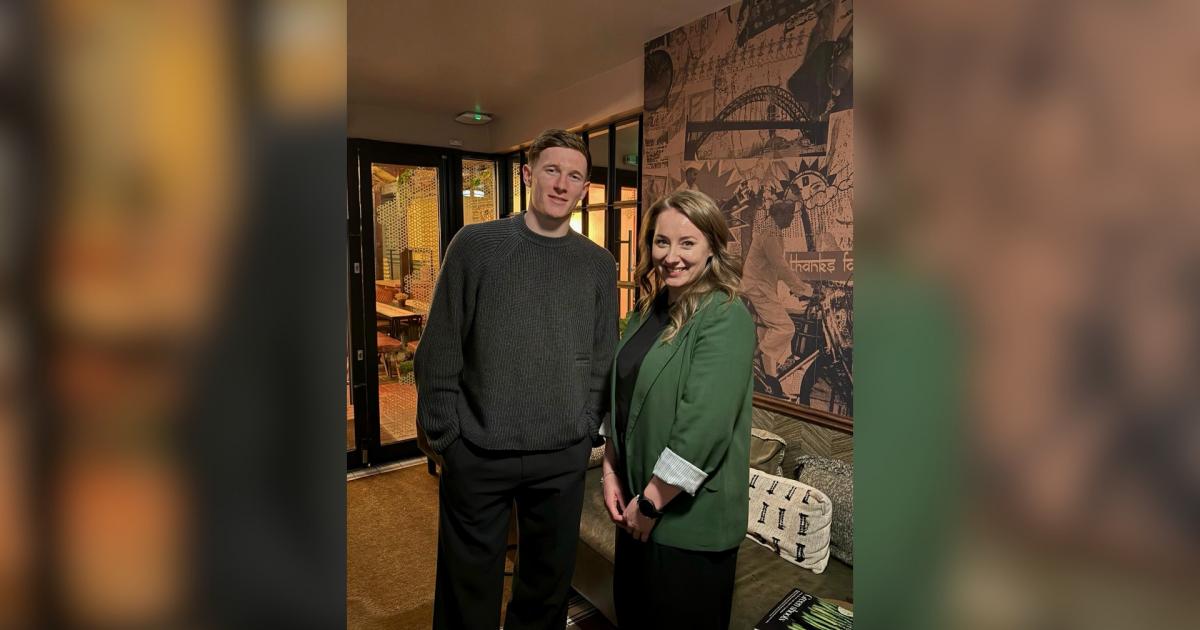
The popular Indian street food restaurant in Jesmond shared a photo on Facebook on April 4 with the caption: “Amazing to have the ‘Geordie Maradona’ himself, Elliot Anderson, in Dabbawal Jesmond last night.
“We’re dreaming of a permanent return home… make it happen.”
Dabbawal has built a reputation as a celebrity and footballer hotspot in Jesmond, with staff saying it offers “a lot of nooks and crannies” where players can enjoy some privacy.
The post quickly caught the attention of supporters, with several sharing their hopes that the Whitley Bay-born player could one day return to St James’ Park.
Anderson, affectionately dubbed the “Geordie Maradona” by fans for his creative flair and attacking instincts, came through Newcastle’s academy before making his Premier League debut in 2022, but he was sold in 2024 amid a scramble to comply with financial regulations.
Nottingham Forest’s ex-Newcastle midfielder Elliot Anderson (Image: Mike Egerton)
Paul Wilson wrote, “It would be fantastic to see you back home in black and white again,” while Jay Scott added: “If Tonali leaves we need to spend whatever it takes to bring him home.”
Another fan, David Wright, summed up the affection many on Tyneside still hold for the 21-year-old, saying simply: “He’s one of our own.”
Advertisement
Whether Anderson is set for a return remains to be seen, but his appearance in Jesmond has reignited fond memories
On June 30, 2024, Newcastle sold Anderson ahead of the financial deadline for Profit and Sustainability rules. Academy prospects count as ‘pure profit’ on the balance sheet.
Anderson did not want to leave his boyhood club, having graduated through Newcastle’s academy, but agreed to move to Nottingham Forest, where he has since earned a place in the England squad.
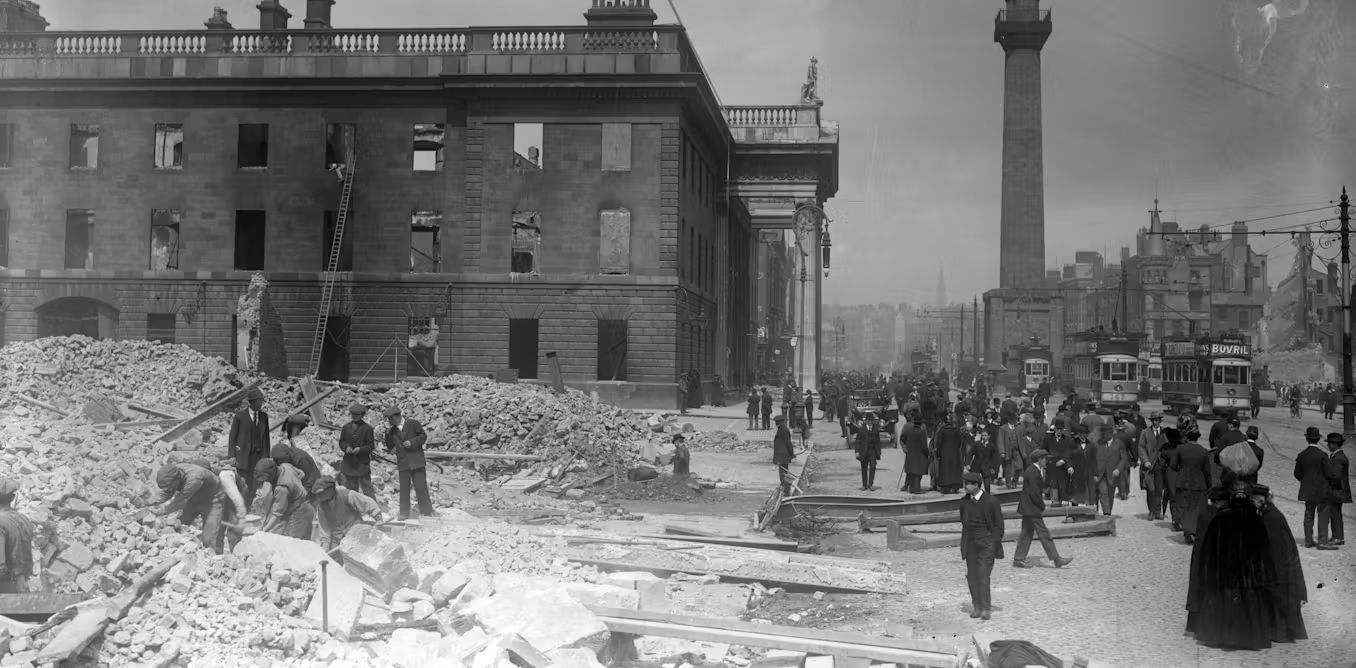
On November 26, 1923, a woman named Anne McCormack applied for a military dependent’s pension on the grounds of her husband, James McCormack’s death. He had been a soldier in the Irish citizen army, under the socialist and revolutionary leader, James Connolly. This group was committed to the establishment of a workers’ republic. Its members participated in the week-long armed insurrection of 1916 known as the Easter Rising.
James McCormack was shot in the head on the second day of the rising, April 26, 1916. Records held in the Military Service Pensions Archive show he died where he fell on Moore Lane, close to the General Post Office, the epicentre of the rising.
For many years following the establishment of the Irish state (today’s Republic of Ireland) in 1922, the focus of Irish historians, not to mention the general public, was on those, like James McCormack, who died for Ireland. Annual commemorations of the 1916 rising were focused on those executed by the British or killed in the fighting. But little attention was paid to those, like Annie, who survived.
Hundreds of thousands of people had their lives thrown off course as a result of personal injury, bereavement and trauma, while others had their material fortunes irreversibly altered. Since 2007, my research and that of many historians has revealed the high price of “living for Ireland”. Through publicly funded digitisation projects, for example the 1901 and 1911 censes, researchers have had access to details of births, deaths, marriage registrations and, more recently, military service pension files. This has enabled us to flesh out the lives of those who lived through and beyond the tumultuous Irish revolutionary period of 1916 to 1923.
The pensions archive shows the impact of the revolution on the everyday life of people who survived it and went on to build a new state. It contains over 250,000 files relating the lives of over 80,000 individuals who applied for pensions as combatants or surviving dependants.
According to the McCormacks’ digitised marriage certificate, found in the Irish Genealogy online archive Annie, as she was known, married James only eight years before she was widowed with three young children. Records show that Patrick Drinan, a member of the newly established police force in Ireland, An Garda Síochána
informed the Irish Army that since 1916 Mrs McCormack was “in poor circumstances financially. She had three children to support out of her earnings which average roughly about 12/- per week.”
Drinan noted that Annie’s father, who like many elders, lived with his daughter, was in receipt of old age pension – the great financial boon introduced in 1908. The policeman also explained that Annie had been awarded £500 in compensation, in 1917, for the loss of her husband, by “the National Aid Fund”. This is probably a reference to the Irish National Aid Association and Volunteer’s Dependants’ Fund.
The association distributed funds entrusted to it by the leaders of the rising to support the families of those killed or executed. Annie’s husband had been earning £1 week at the time of his death, which was at the higher end of a worker’s salary. The sum she received from the fund points to the depth of the McCormacks’ Republican credentials. The widows of executed leaders of the rising received an investment of £1,500 and one-off grants of between £250 and £350.
Advertisement
Entrenched inequality
My research has looked at the inherent inequality of the male-breadwinner model of Irish society at the time, and how losses incurred during the revolution left female-headed households, often widows, in extremely vulnerable positions.
Annie was one of the relatively lucky ones. She was awarded a pension of £90 for the duration of her widowhood, along with £24 per child, until they reached the age of 18.
Despite this, her pension file documents how she struggled to keep her sons supplied with the schoolbooks required to complete their education. It is significant that she sought to give them the kind of education that would spare them a life of labouring like their father and grandfather had. A relatively small proportion of the Irish population managed secondary education prior to the late 1960s, when it became free, yet Annie kept her sons (for a while at least) in the prestigious Jesuit Belvedere College in Dublin.
Balancing the books was an exhausting process for Annie. Throughout 1927 her health deteriorated. This likely explains why she failed to notice that the army continued to pay her eldest son’s allowance three months after he turned 18.
On February 29, 1928, the Army Finance Office wrote to inform Annie that it had overpaid £5 1s 6d (£5.075) in relation to her eldest son. The sum had been deducted from her allowance.
Advertisement
Annie’s last action was to write to the army to explain how much distress and difficulty this deduction had caused her. On December 1, 1928 she died at the age of 45 from tuberculosis, then endemic in Ireland
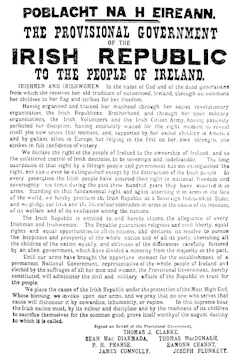
Her death certificate reduced her to the widow of a labourer. This is testimony to a life of difficult living conditions, poor nutrition and stress. The Ireland her husband James died for did not turn out to be the workers’ republic that the Irish Citizen Army had fought for, nor did the land of equal opportunities promised in the 1916 Proclamation of Independence transpire.
There are two subsequent letters in Annie’s file that reveal the enduring legacy of loss. In 1936, her youngest son wrote to ask for help finding a job. And nearly two decades later, in 1953, her eldest son wrote to remind the state of how losing his parents had reshaped his life: “My father James McCormack … was killed in action 1916 CA for which my mother receaved (sic) a pension until she died in 1927. I was 18 years of age then, and had to support two younger brothers 16 years and 14 years respectfully as her pension died with her. I was the only support or home, and got no help of any kind.”
For most of us, deep-fried food is off the menu, save for occasional treats. High-calorie, high-fat and potentially laced with carcinogens, we try to ignore the siren call of the chip shop.
But the air fryer claims we can have our chip butty and eat it, promising to “fry” food without the fat. “Air-fried foods have the traditional crunch and classic texture of perfectly fried foods, but you can enjoy them without the guilt,” gushes one recipe book. It’s a seductive thought.
But is it true? Not all foods turn out tempting after a spell in the air fryer, and some ingredients are transformed, quite simply, into mush. I’ve learned this the hard way after trying it all in my own Wonder Oven, which I most frequently use to produce “roasting tin” meals: a tray of vegetables, perhaps a bit of meat or fish, baked until the edges are caramelised and the flavours jostle together.
Advertisement
Here’s what you need to know to avoid a dinner disaster.
Roast potatoes
Cut floury potatoes into chunks, parboil, then shake them. Allow to dry and drizzle with a little oil. Air-fry for about 25 minutes on the highest setting, turning twice, until golden and crisp.
Leftovers
As long as they don’t contain too much sauce, leftovers are often better reheated in an air fryer than in the microwave. They regain their crisp edges rather than turning soggy.
Risotto
If you have an air fryer with a paddle, such as the Tefal ActiFry or the De’Longhi MultiFry, it will have a solid base rather than a rack, meaning you can cook more liquid dishes, including a proper stirred risotto.
Advertisement
Fish
The small space means it won’t dry out, and smells are contained. Rub lightly with oil or pané with breadcrumbs (dust first with flour, then coat in beaten egg and breadcrumbs), and air-fry until crisp and golden.
Chicken
It turns crisp while staying juicy, though it’s worth checking with a digital thermometer that it has reached 74C before eating. Rub with your choice of seasoning and cook for 9 to 10 minutes per side.
Roasted root vegetables
Cut into chunks, toss with oil, salt and smoked paprika, and cook for 20 to 25 minutes. Add chunks of onion or leek after 10 minutes, as these darken quickly.
Kale chips
Spray trimmed leaves with olive oil and sprinkle with salt. Lay in a single layer and cook for 4 to 5 minutes at 190C, shaking the pan after 2 minutes. Leave to cool and crisp on a rack while you cook another batch.
Advertisement
Deep-fried foods
You can make good oven-baked versions, but don’t expect the thick crust or unctuous quality of food cooked in hot oil.
Battered foods
Wet batters will drip off before they have a chance to set.
Cheese
Fresh cheese will slide around, so even in a toastie you need to weigh it down, secure it with a toothpick or use frozen slices.
Doughnuts and churros
You can bake a bready dough in some air fryers, but runny doughs and churros are a non-starter.
North Yorkshire Police is appealing for information after a person was assaulted in a York city centre street in the early hours of yesterday morning (Monday, April 6).
It happened in Church Lane, near Low Ousegate, at approximately 12.46am, with one victim receiving head injuries in the attack.
RECOMMENDED READING:
Advertisement
They received medical treatment for their injuries and were discharged from hospital later that day.
A suspect was arrested at the time of the incident, but has since been released pending further enquiries.
A spokesperson for the force said: “We are particularly interested in speaking to two witnesses who were in the area at the time.
“During the time of the incident, they were stood on Low Ousegate. One witness was said to be wearing a silver glitter dress and the other witness was wearing a long blue coat.”
Advertisement
If you can help the investigation, please email Peter.Maw@northyorkshire.police.uk, call North Yorkshire Police on 101 and ask for Peter Maw, or contact Crimestoppers anonymously on 0800 555 111 or via their website.
Please quote reference 12260060786 when passing on information.
The continuation of the programme unlocks a fresh phase of support for SME manufacturers, combining expert advice, leadership training and digital skills with match-funded grants of up to £20,000.
Together, these interventions are designed to boost productivity, drive innovation, create high-value jobs and support progress towards net zero.
Made Smarter Yorkshire is a government-backed, industry-led programme delivered by South Yorkshire Mayoral Combined Authority in partnership with York and North Yorkshire, Hull and East Yorkshire, and West Yorkshire combined authorities.
RECOMMENDED READING:
Advertisement
Since launching in 2021, the programme has engaged with more than 1,250 manufacturers, helping them take practical steps towards digital adoption.
To turn those plans into action, more than 200 businesses have received intensive technical support alongside over 100 capital grants, worth £1.4 million, to invest in technologies such as automation, robotics, AI, additive manufacturing and data-driven systems.
Alongside technology adoption, leadership and workforce development have played a central role. Digital Leaders and Digital Champions programmes have built capability at both strategic and operational levels across almost 115 businesses. Meanwhile, 37 university students have supported real-world transformation projects through digital internships, helping companies embed new skills and accelerate change.
Jessica Armitage, Made Smarter Programme Manager (Image: SYMCA)
Jessica Armitage, Programme Manager for Made Smarter Yorkshire, said: “This new wave of funding is a significant boost for Yorkshire’s manufacturing community. Over the past four years, we have demonstrated what is possible when SMEs are given the right combination of advice, skills and technology support.
Advertisement
“The continuation of the programme gives businesses the confidence to plan ahead, invest in their future and scale with purpose. We are excited to support the next wave of manufacturers to unlock productivity, build resilience and drive long-term growth across the region.”
Mike Pennington, Business Relationship Manager for York & North Yorkshire at Made Smarter, said: “Across York and North Yorkshire, from our coastal towns to our rural communities and city centres, manufacturing plays a vital role in supporting jobs and local prosperity. This new phase of Made Smarter funding means more businesses can get the digital support they need to grow, innovate and strengthen their future.”
Made Smarter gives manufacturers a clear, supported route into digital transformation, starting with an expert assessment and a tailored roadmap to guide investment and implementation.
Sheffield, UK (Image: Monty Rakusen)
From there, businesses can access specialist technical support from RTC North, alongside leadership development, workforce training and digital internships delivered by Sheffield Hallam University. Eligible companies can also unlock match funding of up to 50 percent, with grants of up to £20,000 available to accelerate technology adoption.
Advertisement
To learn more visit Made Smarter Yorkshire or contact your local Business Relationship Manager directly.
U.S. crude oil futures fell more than 15 percent, while futures for the S&P 500 jumped 2.2 percent by 8:05 p.m. ET, and Dow futures rose 930 points or 2 percent.
President Trump’s decision, made late Tuesday, was contingent on Tehran agreeing to a two-week ceasefire and the reopening of the Strait of Hormuz.
He had previously threatened strikes on Iranian bridges, power plants, and other civilian targets. Iran’s Supreme National Security Council accepted the two-week ceasefire, with its foreign minister confirming passage through the strait would be allowed for the next two weeks under Iranian military management.
Advertisement
U.S. crude oil futures fell more than 15 percent, while futures for the S&P 500 jumped 2.2 percent (AP Photo/Seth Wenig)
Futures for U.S. crude oil sank 14.7 percent to $96.27 a barrel, while Brent crude oil, the international standard, dropped 14.4 percent to $93.48. The price remains well above where it was at the start of the war.
Meanwhile, as trading in Asia got underway, Japan’s Nikkei rose more than 4 percent and South Korea’s Kospi gained 6 percent.
Earlier, U.S. stocks swung sharply during regular trading as uncertainty about the war with Iran increased after Trump had threatened that a “whole civilization will die tonight, never to be brought back again” if Iran does not meet his deadline at 8 p.m. Eastern time to open the Strait of Hormuz.
The S&P 500 fell as much as 1.2 percent but stocks rallied at the end of trading after Pakistan’s prime minister urged Trump to extend his deadline for another two weeks and asked Iran to open up the strait for the same amount of time.
The S&P 500 erased all its losses and ended with a modest gain of 0.1 percent. The Dow Jones Industrial Average dipped 85 points, or 0.2 percent, and the Nasdaq composite added 0.1 percent.
Advertisement
They’re the latest swings to hit financial markets since late February because of deep uncertainty about when the fighting may end.
Oil prices were likewise shaky. The price for a barrel of benchmark U.S. crude to be delivered in May briefly climbed above $117 before settling at $112.95.
Oil prices have spiked because the war has snarled the production and transportation of crude in the Persian Gulf. Much of that oil exits the gulf through the Strait of Hormuz to reach customers around the world, but Iran has blocked it to enemies.
The worry in markets has been that a long-term disruption will keep oil prices high for a long time and send a painful wave of inflation crashing through the global economy. Trump kept traders on edge by making a series of threats to blow up Iranian power plants only to delay several times.
Advertisement
The average price for a gallon of regular gasoline across the United States has leaped to $4.14, according to AAA. It was below $3 a couple days before the United States and Israel launched attacks to begin the war in late February.
In the bond market, Treasury yields eased on word of a potential cease-fire. The yield on the 10-year Treasury fell to 4.24 percent from 4.30 percent earlier Tuesday.
That’s still well above its 3.97 percent level from before the war, and the rise has pushed up rates for mortgages and other loans going to U.S. households and businesses, which slows the economy.
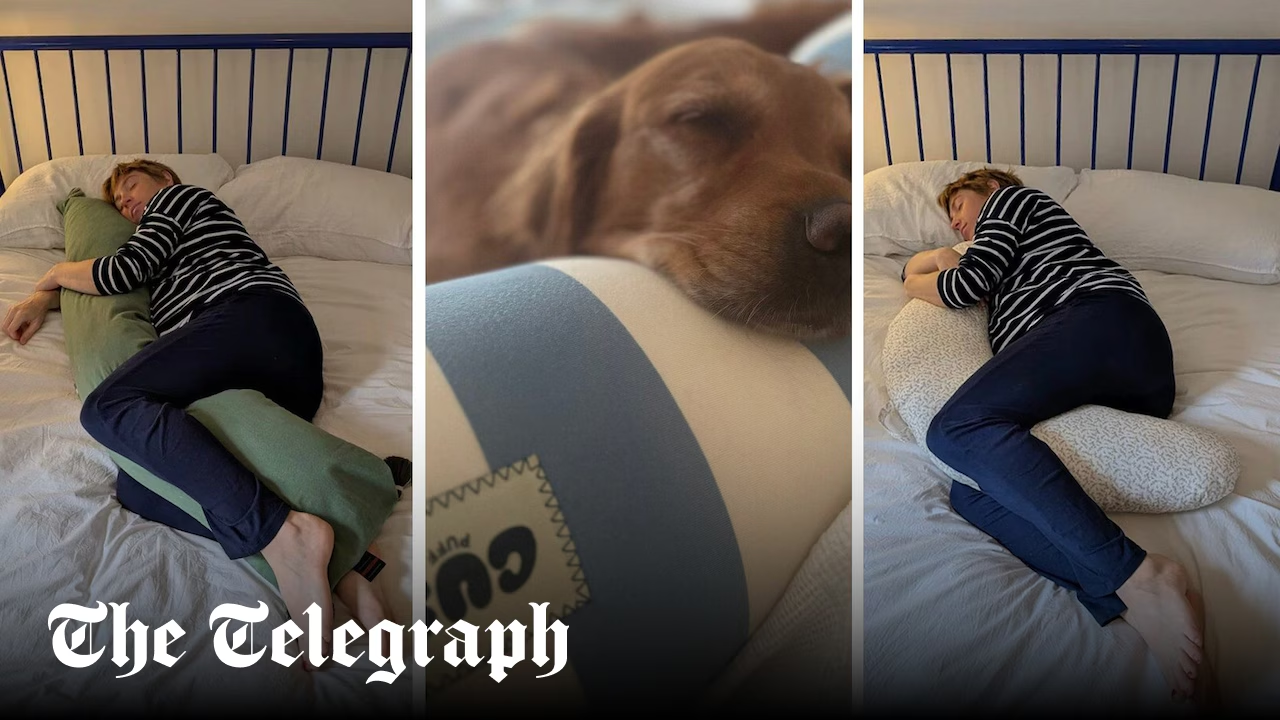
Sleeping can be an uncomfortable experience as your bump grows bigger in the second and third trimesters, but the best pregnancy pillows can help you get a little more shut eye in the months leading up your baby’s arrival.
Longer in length than a normal pillow, pregnancy pillows are designed to support the changing shape of a pregnant woman’s body. There are hundreds available online, but together with the help of Rachel Fitz-Desorgher, a baby and parenting expert, we’ve selected our top 11.
They range in price from £27 to £159 and we’ve covered brands from Cushy Puff and Bbhug me to Silentnight and Simba. Our full reviews of each are below, followed by an FAQ section on how to use them, but if you’re in a hurry, here’s a quick look at our five of our favourites:
Advertisement
The best pregnancy pillows: At a glance
How to choose the best pregnancy pillow
When you start searching for the best pregnancy pillow you might feel overwhelmed at the amount of choice available. Fitz-Desorgher says the key types are U-shaped and C-shaped. It’s also worth looking for a pillow with cooling properties, to help with night sweats.
“A U-shaped pillow can be great for pelvic girdle pain,” Fitz-Desorgher says. “It gives that essential full-leg support as well as comfortably hugging the back. And, of course, there is no need to shift it when you turn over.”
C-shaped pillows can be more flexible. “Bend and shape it around you to support whichever bits of your body are crying out for a little help,” Fitz-Desorgher says. “Some pillows concentrate more on the bump and back whilst others cater more for hips and legs. Few do it all, so be prepared to supplement a little with a regular bed pillow where needed.”
Any pregnancy pillow is supposed to bring your limbs back into alignment and take the strain off the ligaments supporting the heavy tummy and breasts. Fitz-Desorgher explains: “How you place and wrap the pillow depends on where the aches are. An aching back needs a bit of oomph right in the lumbar region of the spine, while a woman struggling with pelvic girdle pain needs support between the full length of her legs, from thigh to ankle to keep them parallel and hip width apart all the way down.”
The war in Iran is affecting the cost of living around the world. In the UK, it is leading to higher energy prices, weaker economic growth and a more expensive future.
It may seem odd that fighting in the Middle East could have such a profound affect on household finances in the East Midlands (and everywhere else in the UK). But since the conflict began on February 28 2026, banks and building societies have withdrawn over 1,500 mortgage products from the UK market.
For many borrowers, especially first-time buyers and those coming off fixed-rate deals, the prospect of cheaper borrowing has quickly faded.
Mortgage rates have started to rise again, with two-year fixed rates increasing from around 4.8% to about 5.5%. For a borrower with a £200,000 mortgage over 25 years, this would mean an increase of £90 in monthly payments, adding close to £1,000 a year to household costs.
Advertisement
So how exactly does a war in the Middle East feed through to the cost of borrowing in the UK?
The biggest effect comes from energy. The conflict is directly affecting oil production in a region that accounts for roughly one-third of the world’s supply (and 20% of its liquid natural gas).
Energy costs affect almost everything, from transport and food to manufacturing and building materials – not to mention household heating and electricity bills.
But the impact is not limited to energy prices. The Iran war has also disrupted global fertiliser supplies, with prices rising sharply due to supply bottlenecks in the Middle East – a major global hub of fertiliser production and exports. Higher fertiliser prices increase the cost of producing food.
Advertisement
As a result of these kinds of rising costs, UK inflation is now expected to reach around 4% this year, up from a previous estimate of 2.5%.
This is a big problem for the Bank of England, which wants to keep the rate of inflation under control at around 2%. When energy prices rise and push inflation higher, the Bank is less able to cut interest rates. It may even have to increase them.
Another problem for borrowers in the UK is the effect on government bond markets.
UK government bonds (commonly known as “gilts”) are a form of government debt. Investors effectively lend money to the government, which pays it back with interest (the yield). Because these yields act as a benchmark for borrowing costs across the financial system, an increase in gilt yields raises commercial banks’ funding costs, which are then passed on through higher mortgage rates.
Advertisement
In recent weeks, UK gilt yields have climbed sharply as investors have revised up their expectations for inflation and interest rates.
For the Bank of England, rising gilt yields signal that financial conditions are tightening and inflation risks may be building, making it less likely that interest rates will be cut any time soon.
Before the conflict, financial markets were expecting a gradual decline in interest rates during 2026. Now, they are pricing in an increase in the Bank’s base rate by the end of 2026.
For mortgage borrowers, this shift is critical. When banks and other lenders set their mortgage rates, they take into account where they expect interest rates to be in the future.
Advertisement
UK vulnerability
While these global economic forces are affecting many countries, the UK is particularly exposed – in part because its economy was already growing very slowly.
The UK is also heavily exposed to global energy markets. It imports around 44% of its energy, particularly natural gas, making it more vulnerable to global price shocks. So, when international energy prices rise, the impact feeds through more quickly into domestic inflation.
This effect is less pronounced in more energy self-sufficient economies such as the US and Norway, which are major energy producers. In contrast, expectations of UK economic growth have been downgraded sharply, reflecting both its reliance on energy imports and underlying economic fragility.
For many households, the combined effect is significant. If financial markets expect the Bank of England to raise interest rates further, mortgage rates are also likely to increase, as lenders price in these expectations when setting new deals.
Advertisement
On top of that, a weaker economy will also affect incomes. Even before the Iran war, slower economic growth was feeding through into slower wage rises, with signs of declining employment and reduced business activity. The Iran war is likely to intensify these pressures further.
Looking ahead, UK households are likely to face an unsettling combination of higher mortgage costs, weaker income growth and reduced job opportunities. At the same time, they continue to face persistent cost-of-living pressures from increasing energy and food prices.
Together, these pressures are likely to result in a sustained squeeze on disposable income. There is growing expectation that the energy crisis will last for some time. But even if the conflict ends tomorrow, its economic impact will persist.
American journalist Shelly Kittleson has been released after she was kidnapped from a Baghdad street corner last week, according to the Trump administration and an Iraqi official.
“I am pleased to announce the release of American journalist Shelly Kittleson, who was recently kidnapped by members of the foreign terrorist organization Kata’ib Hizballah near Baghdad, Iraq,” U.S. Secretary of State Marco Rubio said Tuesday night on X.
“We are relieved that this American is now free and are working to support her safe departure from Iraq,” he added.
Kittleson was freed in the afternoon but the Iraqi official did not share her current whereabouts.
Advertisement
Kataib Hezbollah, a powerful Iran-backed Iraqi militia, said Tuesday that it would release Kittleson “in appreciation of the patriotic stances of the outgoing prime minister,” Mohammed Shia al-Sudani, without giving more details. It added that “this initiative will not be repeated in the future.”
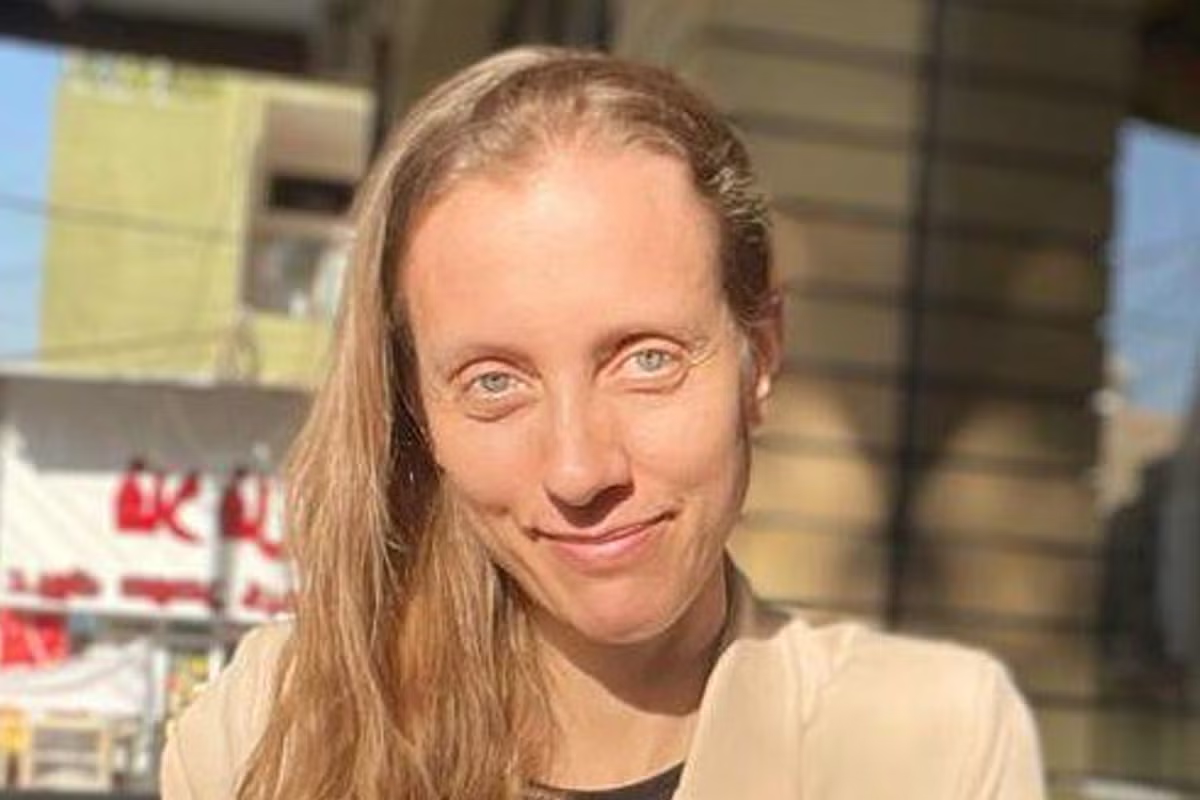
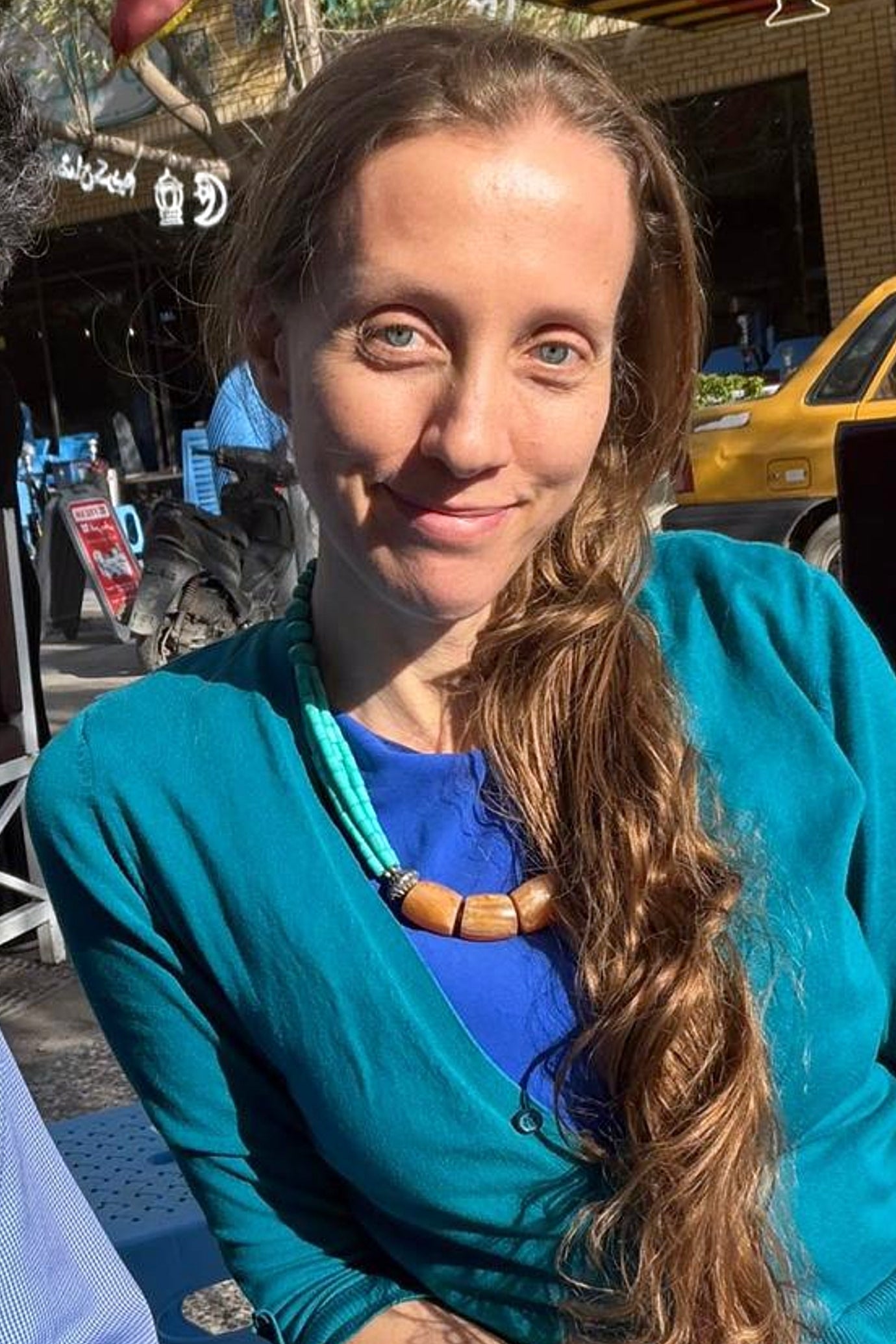
Kittleson, 49, a freelance journalist, lived abroad for years before the kidnapping and used Rome as her base for a time. She built a respected journalism career across the Middle East, particularly in Iraq and Syria.
Surveillance footage appeared to show the moment Kittleson was kidnapped in Baghdad (AP)
Like many freelancers, she often worked on a shoestring budget and without the protections afforded by large news organizations to staff.
She had entered Iraq again shortly before her abduction. U.S. officials have said that they warned her multiple times of threats against her, but that she did not want to leave.
Advertisement
Iraqi officials have said that two cars were involved in the kidnapping, one of which crashed while being pursued near the town of al-Haswa in Babil province, southwest of Baghdad. The journalist was then transferred to a second car that fled the scene.
Three Iraqi officials said earlier Tuesday that attempts to negotiate her release had run into obstacles.
The two Iraqi security officials and one official from the pro-Iran Coordination Framework political bloc spoke to The Associated Press on condition of anonymity because they were not authorized to speak about the sensitive case publicly.
One of the security officials said that an official with the Popular Mobilization Forces, a coalition of Iran-backed militias that is nominally under the control of the Iraqi military, had been tasked with communicating with the abductors to secure Kittleson’s release but had run into difficulties in communicating with the Kataib Hezbollah leadership.
Advertisement
“The primary challenge is that the leaders of the Kataib militia — specifically, the commanders of the battalions — are nowhere to be found. No one knows their whereabouts, and the process of establishing contact with them is extremely complex,” they said. “These leaders have gone underground, maintaining no active lines of communication, out of fear of being targeted.”
Like many freelancers, Kittleson often worked on a shoestring budget without protections afforded by large news organizations to staff (AP)
The political official said a message had been sent to the Kataib leadership to determine their demands in exchange for releasing the kidnapped journalist. Iraqi authorities are willing to release six Kataib Hezbollah members who are currently detained, most of them in connection with attacks on a U.S. base in Syria, they said, but the militia has not yet communicated its demands clearly.
The second security official said that to further complicate matters, the Iraqi official in charge of the case has not yet received the go-ahead from U.S. officials to proceed with negotiations.
U.S. officials did not immediately respond to requests for comment. The State Department previously said that it is working with the FBI to secure Kittleson’s release.
Journalist advocacy groups have urged the U.S. government to formally designate Kittleson a hostage, or “wrongful detainee,” a designation that triggers an elevated level of response.

















































You must be logged in to post a comment Login