The judge wanted everyone in the courtroom to know that when he’d signed a war orphan over to an American Marine he thought it was an emergency — that the child injured on the battlefield in Afghanistan was on death’s door, with neither a family nor a country to claim her.
A lawyer for the federal government stood up.
“That is not what happened,” she told the judge: almost everything he’d believed about the baby was untrue.
Advertisement
Kathryn Wyer, a Justice Department lawyer representing the federal government, corrected Fluvanna County Circuit Court Judge Richard Moore at a hearing on Nov. 11, 2022. The judge, who allowed an American Marine to adopt an Afghan orphan, had believed Afghanistan gave up finding her family, but the country was still searching, and eventually united the girl with relatives.
This group had gathered 15 times by then, in secret proceedings in this small-town Virginia courtroom to try to fix what had become an international incident. Fluvanna County Circuit Judge Richard Moore had granted an adoption of the orphan to U.S. Marine Joshua Mast and his wife, Stephanie, while the baby was in Afghanistan, 7,000 miles away.
Advertisement
Now the U.S. government insisted the baby’s fate had never been the judge’s to decide; officials in President Donald Trump’s first administration had chosen to unite her with relatives months before Moore gave her away, according to once-secret transcripts of the November 2022 hearing.
Thousands of pages of those transcripts and court documents were recently released as a result of The Associated Press’ three-year fight for access after a 2022 AP report about the adoption raised alarms at the highest levels of government, from the Taliban to the White House. The newly released records reveal how America’s fractured bureaucracy allowed the Masts to adopt the child who was halfway around the globe, being raised by a couple the Afghan government at that time decided were her family, in a country that does not allow non-Muslims to take custody of its children. The documents show the judge skipped critical safeguards and legal requirements.
Mast, who cited a judge’s orders not to speak publicly about the case in declining requests to comment, has said he believed — and still does — the story he told Moore about the girl, and insists he acted nobly and in the best interest of a child stuck in a war zone with an uncertain future.
Along the way, high-ranking military and government officials took extraordinary steps to help him, seemingly unaware that others in their own agencies were trying to stop him.
Advertisement
“The left hand of the United States is doing one thing,” another judge later said, describing the dysfunction, “and the right hand of the United States is doing something else.”
“I’ll probably think about this the rest of my life whether I should have said, sorry, that child is in Afghanistan. We’re just going to stand down,” Moore said at the hearing three years ago. “I don’t know whether that’s what I should have done.”
Advertisement
AP Illustration/Nat Castaneda
A remarkably quick adoption
The baby was orphaned in September 2019 when U.S. Army Rangers, along with Afghan forces, raided a rural compound. The baby’s parents were killed. She was found in the rubble, about two months old, burned and with a fractured skull and broken leg. U.S. troops scooped her up and took her to the hospital at Bagram Air Base in Kabul.
Advertisement
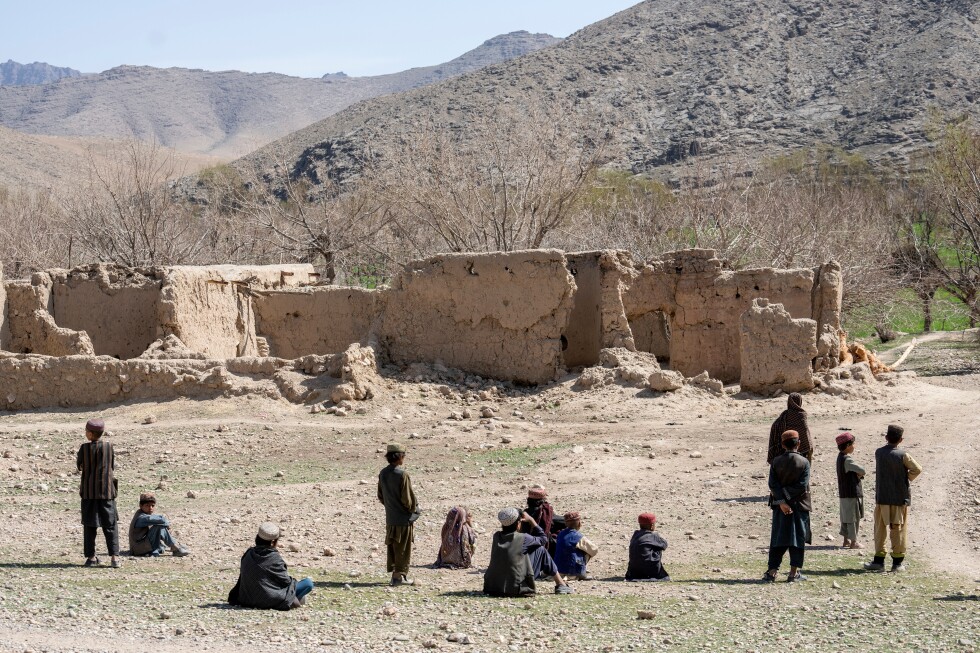
Children stand in front of a home destroyed during a Sept. 5, 2019, night raid by U.S. forces in a village in a remote region of Afghanistan, on Friday, Feb. 24, 2023. (AP Photo/Ebrahim Noroozi, File)
Advertisement
Children stand in front of a home destroyed during a Sept. 5, 2019, night raid by U.S. forces in a village in a remote region of Afghanistan, on Friday, Feb. 24, 2023. (AP Photo/Ebrahim Noroozi, File)
Advertisement
Advertisement
American servicemembers fell in love with her there, as she recovered. She was a symbol of hope in a long, grinding war.
The raid that killed the baby’s parents targeted transient terrorists who came into Afghanistan from a neighboring country, the records show. Some soldiers believed she might not be Afghan and tried to make a case for bringing her to the U.S.
Advertisement
The State Department attempted to make its position clear: The embassy convened a meeting that October with members of the military and the Afghan government to explain that under international law the U.S. was obligated to reunite her with her family, according to documents. State Department officials wrote that Mast, a military lawyer on a short assignment in Afghanistan, attended that meeting.
He’d met the baby for the first time days before and remained determined the child should go to the U.S., according to emails filed as exhibits.
Mast called home, where his wife was with their three sons.
“With us having children of our own, we see how vulnerable and precious children are,” Stephanie Mast testified. “And we wanted to help in whatever way we could.”
Advertisement
Marine Maj. Joshua Mast and his wife, Stephanie, arrive at Circuit Court, Thursday, March 30, 2023 in Charlottesville, Va. (AP Photo/Cliff Owen, File)
Advertisement
Marine Maj. Joshua Mast and his wife, Stephanie, arrive at Circuit Court, Thursday, March 30, 2023 in Charlottesville, Va. (AP Photo/Cliff Owen, File)
Advertisement
Advertisement
Advertisement
The Masts, Evangelical Christians, decided to try to bring her to their home in Palmyra, Virginia.
Advertisement
Mast’s brother, Richard Mast, a lawyer with the conservative Christian law firm Liberty Counsel, filed a petition for custody in early November, and a Fluvanna County Juvenile and Domestic Relations Court judge quickly approved it. The judge declared that the child was “stateless,” echoing Mast’s assertion that her parents were nomadic terrorists, and the Afghan government would issue a waiver of jurisdiction over her within days.
Afghanistan never waived jurisdiction.
Still the Masts decided custody wasn’t enough. Several days later, Moore, the Fluvanna County Circuit Court judge, got an unusual weekend call from his clerk’s office about a request for an emergency adoption, according to comments the judge made on the bench and records obtained from the Virginia Attorney General’s Office. Custody orders like the one the Masts were granted are temporary, but adoption grants a child an entirely new birth certificate, assigning them new legal parents. Moore said he was told that the girl desperately needed medical care and adoption would help get her on a plane to America.
Though the baby was being cared for by the Defense Department, the federal government insisted it received no notice of Mast’s bid for adoption, the recently released records show. Had it been notified, government lawyers said, they would have told the judge that the child was not stateless, the government was at that time searching for her family and would soon decide she was Afghan and not the child of foreigners. She was also not in a medical crisis: A month before, exhibits show, her doctor described her as “a healthy healing infant who needs normal infant care.”
Advertisement
The Masts have said in court records that they did not mislead the court; they believed that the girl was the stateless daughter of transient terrorists and Afghanistan was neither interested nor capable of caring for her.
Moore did not respond to requests for comment.
On Sunday, Nov. 10, 2019, Moore granted the Masts a temporary adoption. Moore ordered the Virginia Department of Vital Statistics to issue a new birth certificate, making her the Masts’ daughter.
Adoption cases usually creep through the court system. Moore granted the Masts the temporary adoption in a weekend.
Advertisement
“Attempting to interfere inappropriately”
Two days later, an email arrived overnight at the U.S. Embassy in Kabul from State Department headquarters. The office had heard that Mast had been granted custody of the orphan, and wanted to know if that was true, the documents show.
Officials who had been working on uniting the girl with her family seemed stunned by the email. An Army colonel later wrote in a declaration that he believed Mast was “attempting to interfere inappropriately.”
Army Col. Joseph Fairfield wrote in a legal declaration submitted in court by the federal government that by late 2019, some military officers were worried that Mast’s efforts “had diverged” from the official U.S. position about what should become of the baby, and he was “attempting to interfere inappropriately.”
Advertisement
Around that time, U.S. officials learned that a man came forward to claim the baby, records show. He told authorities he was the child’s uncle. He said the girl’s father was a local farmer, not a terrorist. His wife and five of their children were also killed. He said it was his family’s duty to take her in.
The Afghan government vetted his story. U.S. officials signed off.
Advertisement
Meanwhile, Mast’s tour ended. He returned home to Virginia, and set up a crib for the baby he was certain would soon be theirs, according to court testimony. The couple quickly found an ally in an aide for Republican Sen. Ted Cruz of Texas. The aide pressed Assistant Secretary of Defense Derek Maurer to ask immigration officials to rush documents the child needed to get to the U.S. An attached memo written by another military official pointed to proof of Mast’s claim to the baby: Mast had enrolled her in the military’s health care system as his dependent.
On the application for those benefits, Mast claimed the girl had lived with him in Virginia since Sept. 4, 2019, but she had never been on American soil, a government official wrote in a declaration. Mast also wrote that her injures were a result of child abuse.
The situation worked its way to Secretary of State Mike Pompeo. He signed a cable, dated Feb. 25, 2020, records show, dismissing the Fluvanna custody orders as “flawed.”
The cable said that any further delay in transferring the child could be perceived as the “U.S. government holding an Afghan child against the will of her extended family and the Afghan government.”
Advertisement
The next day, Mast filed a federal lawsuit to stop the reunification. The judge rejected his claims.
The U.S. put her on a plane to meet her relatives. They wept when they saw her, bundled in pink. The child’s uncle decided his son should raise the baby with his new wife and they quickly came to love this girl like their own daughter, they testified.
The Masts have insisted that this family is not biologically related to the baby and have questioned the process through which the Afghan government vetted them. The Afghan couple had celebrated the first step in a traditional Afghan marriage, a religious bond, but had not yet had a wedding reception, and the Masts argue they were unmarried at the time the child was given to them.
The AP agreed not to name the Afghan couple because they fear their families in Afghanistan might face retaliation from the Taliban. The court issued a protective order shielding their identities.
Advertisement
The Taliban, which now controls Afghanistan, was not in power when that country was making decisions about the child. Since taking over, the Taliban has been critical of what happened to the girl, calling it “worrying, far from human dignity and an inhumane act,” and urged the U.S. to return her to her relatives.
The Afghan couple testified they had no idea that on the other side of the globe an American judge still believed the girl was available for adoption.
Mast told Moore the child was given to an unmarried girl whose relationship to her was unclear. He testified that he maintained the child was the daughter of foreign fighters and suspected the family had ties to terrorism.
Moore said he did not learn that a federal judge had already rejected Mast’s claims to the baby. He would later say he vaguely remembered hearing that something happened in federal court but it didn’t register as important.
Advertisement
“I guess I assumed it was an administrative thing,” Moore said.
Mast continued to ask Moore to grant a final, permanent adoption.
Lawyers representing the government, the Afghan family and the child would note many defects in these proceedings; the attorney representing the child described the flaws as “glaring.” There is no Virginia law that allows a judge to adopt out a foreign child without her home country’s consent. A child must be put up for adoption by a parent or agency, and this child had never been. The court waived the requirement that the child be present when social services visited the adoptive parents’ home, that someone investigate her history, that whoever had custody be told this was happening.
In December of 2020, Moore granted a final adoption, deeming the Masts the baby’s permanent parents.
Advertisement
“She is an undocumented, orphan, stateless minor,” he wrote, “subject to this court’s jurisdiction.”
‘Is it even lawful for us to take her?’
In Afghanistan, the couple raising the girl received calls from strangers. Mast was working with Kimberley Motley, an American lawyer based in Afghanistan. Motley told the couple that a family wanted to help the girl get medical care in the U.S. But the couple refused to send the girl alone. Motley kept in touch with them for months, according to messages entered as court exhibits. Motley, through her attorney, declined to comment.
In the summer of 2021, the American military withdrew from Afghanistan and the Taliban took over. Mast contacted the couple directly, enlisting the help of a translator named Ahmad Osmani, an Afghan Christian who’d moved to the U.S. Osmani considered it his Christian duty to help the Masts, testifying that he believed it would be “a great picture to see a terrorist’s daughter become a believer and glorify God’s name.”
Mast and Osmani told the couple that they could get all three out of Afghanistan.
Advertisement
At the time, servicemembers were frantically evacuating Afghans, mostly those who helped the U.S. and would likely be targeted by the Taliban.
Amid the confusion, Mast asked colleagues in the Marines to add a baby and her caretakers to an evacuation list, the records show, claiming the State Department had sent her to an orphanage. She was living with the Afghan couple, and had never been to an orphanage.
A lieutenant colonel emailed other military officials to start the process of getting the family on a flight out. He didn’t learn that the military had worked to keep Mast away from this baby.
“Is it even lawful for us to take her?” asked a major in the Marines, according to a copy of the email.
Advertisement
Mast, who was copied on the chain, replied: “To clarify, she is completely clear on the Afghan side,” he wrote. “I am very familiar with the requirements after the last 18 months working the legal issues.”
Marine Joshua Mast emailed military colleagues requesting the girl and her caregivers be added to the list of evacuees from Afghanistan during the chaotic U.S. withdrawal in summer 2021. One questioned whether it was legal to take the girl out of the country, and Mast assured them it was.
Advertisement
Military officials asked no further questions, and soon the family was on a plane to Germany, where the Masts met them for the first time. The Afghans testified they had no idea the Masts planned to take her. The Masts have said they had tried to explain that they would.
Stephanie Mast testified that when she and her husband arrived in Germany, they “knew we had to speak to them and just tell them the truth.” She tried to explain “sacrificial love.” If the baby came with them, she told the Afghan woman, “she can have the best life possible.”
The Afghan man ripped off the wristband refugees wore and threatened to return to Afghanistan if the Americans tried to take the child.
Advertisement
The Afghan woman later said they convinced her that she’d misunderstood and persuaded them to continue to the U.S., and keep the baby with them.
The Afghans boarded a plane bound for Dulles International Airport, then a bus to Fort Pickett, a military base in Virginia turned makeshift refugee center. Meanwhile, the records show, Mast asked a State Department official he’d met in Germany to help connect him with other government contacts so he could track the family’s arrival.
Emails show employees with multiple government agencies sprung into action, including the State Department. The federal government would later say that these employees, like the military officials who evacuated the family, didn’t know that the very agency they worked for had tried to prevent Mast from taking the girl.
‘It’s like you are kidnapping her’
Rhonda Slusher, a State Department official, answered the phone at Fort Pickett. On the line was Joshua Mast.
Advertisement
He said he was going to come pick up his adoptive daughter, according to a declaration Slusher submitted in court. Slusher said she was told “there was no U.S. jurisdiction to hold the child,” and she should be given to Mast “at the earliest point possible.” Her supervisor instructed her to assist with “the transfer of the child,” she wrote in the declaration.
Mast told Slusher he was concerned the family she was being taken from “were going to be sad,” she wrote.
On Sept. 3, 2021, uniformed officers drove the Afghan family to a nondescript building near the camp’s front gate.
Slusher picked the baby up out of the car seat and insisted she hold her as the family went inside.
Advertisement
There, the Afghan woman later testified, another official, this one from the Department of Health and Human Services, told them: “you are not the parents of this child.”
“It’s like you are kidnapping her,” the Afghan man said.
The Afghan woman came toward Slusher.
“Please give me my daughter,” she said “She is my daughter.”
Advertisement
The Afghan woman testified at a hearing on May 24, 2022, describing how she begged government officials not to take the child away from her. The officials handed the girl to the Mast family, and the Afghans have not seen her since.
Advertisement
The baby cried and squirmed to get back to her, but Slusher wouldn’t let her go. The woman tried to grab the child, but Slusher pulled her hands away. The woman “crumpled to the floor crying.” She lay there for at least five minutes.
Slusher wrote in a declaration that she carried the baby outside, where Stephanie Mast was waiting in the car. Stephanie Mast fed the girl Goldfish crackers before they drove away with her husband.
“It is worth reiterating that this prolonged tragedy was entirely avoidable. The Trump administration blocked an attempt to unlawfully seize the child from her Afghan family in early 2020,” the Afghan couple’s attorneys wrote in a statement, adding that the Masts were able to take the child only because of America’s messy exit from Afghanistan. “The child and her relatives are victims of a crime and a tragedy no family should ever endure — a stark reminder that this withdrawal continues to have far-reaching and devastating consequences.”
‘A possibly errant adoption’
More than a year after the Masts took the baby home, her fate was before Judge Richard Moore again.
Advertisement
The Afghan couple found a team of lawyers willing to represent them for free, and filed a petition in Moore’s court to challenge the adoption he’d granted. Moore could undo the adoption and give the child back to the Afghan family, or uphold it, and leave her with the Masts.
“I’ve never had a case where I was so uncomfortable with either decision,” he said at the November 2022 hearing, which would be his last hearing in the case before retiring.
The judge listened for five hours as the lawyers for the Afghan couple and the government said that the adoption he’d granted was so riddled with errors it shouldn’t be called an adoption at all.
Moore blamed the federal government — it had known as early as 2020 that the Masts were trying to get the girl and a court in Fluvanna County was involved, and they did not try to stop him from issuing a “possibly errant adoption,” he said.
Advertisement
“Clearly, there were procedural irregularities and deficiencies in this case. There’s no question about that,” the judge said from the bench.
Yet for a year, in hearing after hearing, the primary question became whether the Afghan couple had a right to challenge that adoption at all; whether they were truly her family and if the Afghan government’s decision to give her to them was valid once they arrived in the U.S.
The judge and the Masts’ attorneys questioned them about their origin and upbringing, their relationship to each other and to the child.
Moore repeatedly said he did not believe they were related to the girl, nor was he inclined to consider them parents. He said no court in Afghanistan was involved in determining who should get custody of the child there. The Afghan couple’s lawyers had resisted DNA testing, saying it couldn’t conclusively find a relationship between opposite-gender half-cousins. It was also irrelevant, they argued: After the Afghan government gave the child to them, an American court should not relitigate that choice.
Advertisement
At the last hearing he held in November 2022, Moore said there were many things he wished Mast had told him before he signed the adoption. But he still trusted the Marine.
“There’s no question in my mind. Their total involvement was to save this child,” Moore said.
A week later, Moore published his thoughts on the case in a written document, and reiterated his opinion that “anything they did improper grew” out of the Masts’ desire to help the child.
He was less sympathetic to the Afghans. The Afghan woman testified that she had two Afghan government identifications, one that included her real age and a second she obtained intentionally making herself younger to enable her to enroll in school. They “misrepresented certain facts and lied … for their own purposes,” Moore wrote.
Advertisement
The Masts, too, have described the Afghans as untrustworthy, even threatening. They submitted court records alleging the Afghan man was flagged in a database of suspected terrorists upon entry to the U.S., which they reported to law enforcement. Attorneys for the Afghans responded that the government said in a sealed letter to the court that the man was not the subject of the database entry. The man remains in the U.S. and frequently flies from Texas to Virginia for court hearings.
With Moore’s retirement, the Masts and the Afghans found themselves before a new judge, Claude Worrell.
Advertisement
This courtroom sketch depicts Marine Maj. Joshua Mast and his wife, Stephanie, during a Circuit Court hearing before Judge Claude V. Worrell Jr., Thursday, March 30, 2023, in Charlottesville, Va. (Dana Verkouteren via AP)
This courtroom sketch depicts Marine Maj. Joshua Mast and his wife, Stephanie, during a Circuit Court hearing before Judge Claude V. Worrell Jr., Thursday, March 30, 2023, in Charlottesville, Va. (Dana Verkouteren via AP)
Advertisement
Advertisement
Advertisement
Worrell rebuked the federal government for its “inconsistent” approach, noting it was arguing the baby should be immediately returned to the Afghans, while its own employees had repeatedly assisted the Masts along the way.
It did not take Worrell long to come to a wholly different conclusion than Moore. Worrell wasn’t concerned about biological relationships. What mattered, he said, was Afghanistan claimed her as its citizen, so got to decide her fate.
The Afghan couple went outside to a patch of grass in the parking lot and prayed. They thought they would soon bring the baby to their home in Texas, where they’ve kept a bedroom ready for her, decorated with butterfly decals.
The Virginia Court of Appeals has since upheld Worrell’s decision voiding the adoption, and the case went before the Virginia Supreme Court in February 2025. It has yet to issue a ruling. As the years dragged on, the child remained with the Marine and his family.
The Marine Corps held an administrative hearing in October 2024 to determine whether Mast violated military rules. A three-member panel found that he acted in a way that was “unbecoming” of an officer, but that didn’t warrant suspension or other formal punishment.
The federal government has indicated in court in recent months that it is reconsidering its role in the case, and Trump’s second administration could reverse his first administration’s opinion that Mast had no right to the child. The Justice Department did not respond to repeated requests to clarify its current position on the child’s fate.
Advertisement
It has been four years since the Afghan couple has seen her.
In July, she turned 6.
___
AP data journalist Angeliki Kastanis contributed to this report
RIVERTON, Utah (AP) — When a dozen Republican activists gathered on a back deck in the Salt Lake City suburbs to talk about this year’s elections, the conversation cycled through all the staples of conservative chatter in Utah such as dwindling water supplies, illegal immigrant fraud and chemtrail conspiracy theories.
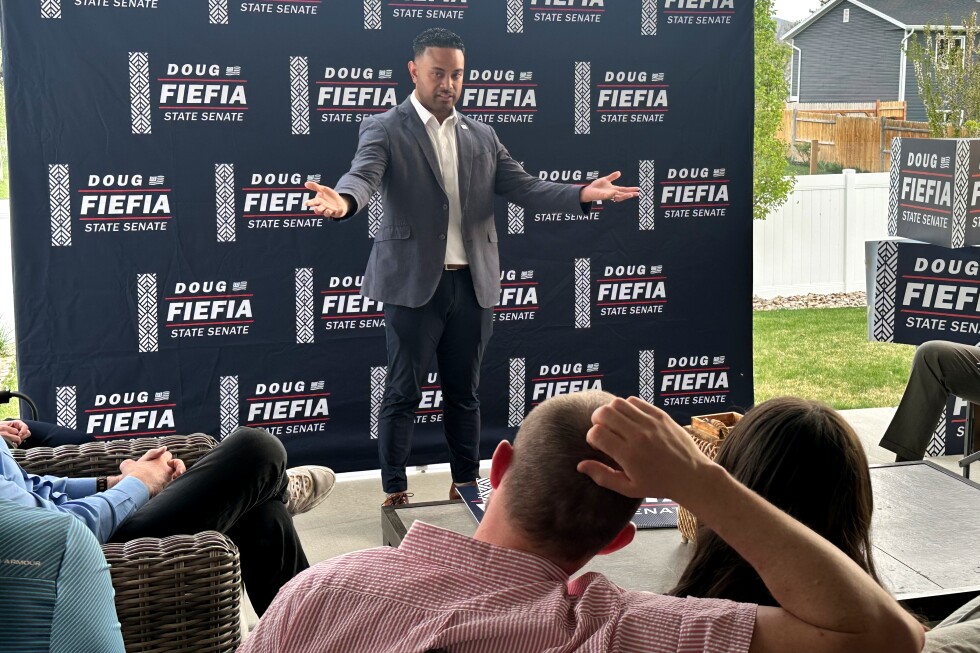
But Doug Fiefia, a state representative running to be a state senator, wanted to start with something else — artificial intelligence. Fiefia used to work at Google and, like several other tech employees who have gone into politics, he has made regulating the industry a centerpiece of his campaign.
“I know it sounds like ‘Doug, this is all you talk about,”’ Fiefia said. “That’s because it’s coming, it’s here and it’s going to be our biggest fight.”
Fiefia’s focus has put him on a collision course with President Donald Trump’s administration, which this year helped block his state proposal requiring companies to include child safety protocols. The White House wants a single national standard for artificial intelligence, arguing that a patchwork of excessive regulation could handicap American innovation in a global competition with China.
Advertisement
But with no progress in Congress, it has been state lawmakers struggling to address concerns about a technology that is poised to reshape the economy. In Florida, Republican Gov. Ron DeSantis added the issue to a special legislative session that he is convening later this month. Democratic-controlled New York last year required major AI developers to report dangerous incidents to the state.
All told, there are more than 1,000 state legislative proposals addressing AI, a reflection of the uneasiness that has seeped through the country.
“None of us are really sure,” said Brett Young, a structural engineer who attended the backyard event with Fiefia. “Is this something we should be scared about, or is it no so big a deal and it’ll enhance our lives?”
Pressure in the states
Trump has routinely tried to stamp out state-level AI policies, and he issued an executive order that included legal threats and funding penalties to deter new regulations.
Advertisement
The White House recently released a framework for potential congressional legislation that calls for preempting state laws considered “too burdensome” but would allow some rules to protect children and copyright material.
None of these steps has eased the number of proposals in state capitals. Popular ideas include forcing chatbots to remind users they are not human and barring the use of AI to make nonconsensual pornography, which includes replacing or removing clothing from photos that are posted online.
“There’s a lot of state lawmakers looking at what the federal government is doing and saying, ‘We want to take action because we’re not satisfied,’” said Craig Albright, senior vice president for government relations for the Business Software Alliance, which represents software companies.
Advertisement
Sign up for Morning Wire:
Our flagship newsletter breaks down the biggest headlines of the day.
Advertisement
About 8 in 10 people in the United States said they were “concerned” or “very concerned” about AI in a Quinnipiac poll last month, with about three-quarters saying government is not doing enough to regulate the technology. Roughly 9 in 10 Democrats and 6 in 10 Republicans wanted more government involvement.
The most significant regulations have passed in California and New York, solidly Democratic states. The provisions focus on disclosure of catastrophic risk, such as the AI-controlled meltdown of nuclear plants or AI models refusing to heed human direction.
But there is pressure in Republican-led states, too.
Advertisement
DeSantis pushed a bill to implement parental controls for minors using AI and to prohibit systems from using anyone’s likeness without permission. It fell short in the state House after overwhelmingly passing the state Senate. AI bills in Republican-controlled Louisiana and Missouri have stalled out because of Trump administration resistance.
‘An army of full-time lobbyists’
Fiefia is part of a loose network of former tech employees turned state lawmakers trying to meet the demand for stronger regulations. He co-chairs the AI task force of the Future Caucus, a network of younger state lawmakers, with Monique Priestley, a Vermont Democrat who also has worked in tech.
Priestley said the group uses video conferences and group chats to share ideas for new proposals and deal with lobbyists who oppose their bills. She said that 166 of her state’s 482 registered lobbyists weighed in on her data privacy bill last year, which was ultimately vetoed by the governor.
“It’s like you’re running around against an army of full-time lobbyists,” said Priestley. Like many state lawmakers, she works a separate, full-time job.
Advertisement
Alex Bores, a former data scientist at the tech firm Palantir who quit after it signed a deal to help the first Trump administration with immigration enforcement, is also a member of the AI task force. A Democrat, Bores wrote the New York bill that was signed into law last year.
Now Bores is competing in the crowded Democratic primary to replace retiring U.S. Rep. Jerrold Nadler representing the east side of Manhattan and parts of Queen and Brooklyn in Congress, and he is facing payback from the industry. A pro-AI campaign committee has spent $2.3 million against his candidacy.
Bores said tech companies are trying to make an example of him to scare off more regulation at the state and federal level.
“It’s one reasons it’s so important for me to win this race is because, if I don’t, that intimidation they’re trying on Congress will be successful,” he said. Bores’ competitors in the June 23 primary include Jack Schlossberg, the grandson of former President John F. Kennedy, and George Conway, a former Republican who has become one of Trump’s chief antagonists on social media.
Advertisement
From Google to politics
Fiefia has not attracted the sort of attention as Bores as he tries to move to the state Senate after a single session in the House. The subdivisions and shopping centers of his district are sandwiched between Utah’s jagged mountain ranges and the cul de sacs are crammed with children on bikes and scooters.
The son of Tongan immigrants, Fiefia grew up in Utah but moved to Silicon Valley, where he worked as a salesperson for Google.
Fiefia rose to manage a team working with companies on the implementation of Google’s early AI model and was disturbed by what he saw.
“What I realized is Big Tech cares about their bottom line, and they were worried about making money, not doing right for the human race,” said Fiefia, who now works at a Utah-based cloud computing and AI company.
Advertisement
Fiefia’s legislation was unanimously passed by a House committee this year, but the Trump administration sent a letter to the Senate saying that the measure was “unfixable.” The measure quickly died.
Daniel McCay, the state senator who Fiefia is challenging in the primary, said he thinks that was a good thing.
“I’ve been around long enough to recognize the invention of fire, the wheel, cars and the internet did not ruin society and I’m very skeptical of anyone trying to scare society into regulations,” McCay said in an interview.
He noted that the bill went beyond child safety, including whistleblower protection for AI workers and public disclosure of risks.
Advertisement
“It would have driven Utah out of the AI innovation business,” McCay said.
At the cottage meeting — the Utah term for a small gathering at someone’s home to discuss important issues — Fiefia faced several tech-related questions from the crowd.
Asked about defying the Trump administration, Fiefia said it was especially important to stand up for states’ rights when a fellow Republican was in power to demonstrate the principles involved.
“The Trump administration is, ‘We want zero regulations on AI,’” Fiefia said. “I think that’s wrong. I agree with a lot of what Trump says on taxes. I disagree with him on this.”
Some residents who live on the street that won Nigel Farage’s controversial energy bills competition have said they have not been given their prize.
Reform said they would cover the energy bills from the winning home – and every address on the street – for a year.
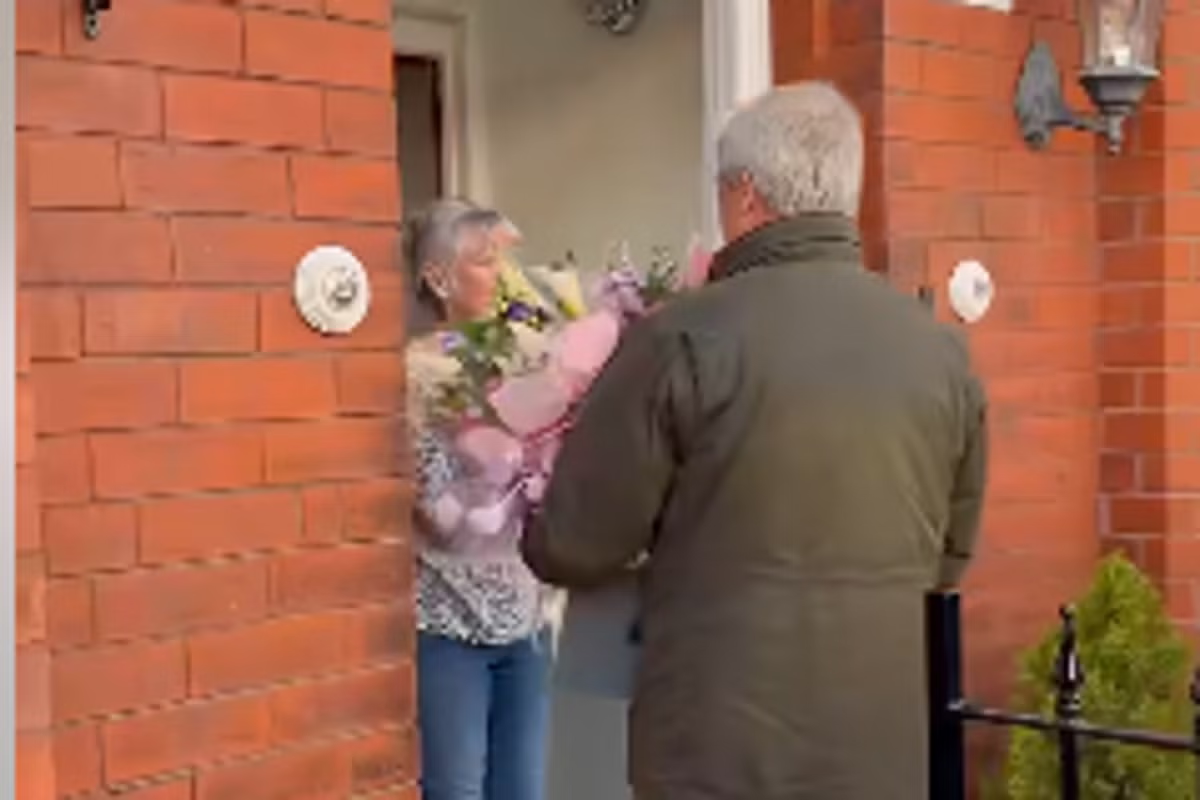
June from Wigan was announced as the winner earlier this month. In a video posted on social media, Mr Farage could be seen handing over flowers to June and her husband in their foyer, as the party’s treasury spokesman Robert Jenrick held a giant cheque.
Wigan’s local Reform UK branch also posted the news on Facebook later, congratulating the pair of “staunch” branch members on their win.
It is understood that the party followed the legal requirements of the competition, with a draw that picked June as the winner at random.
The Reform UK leader announced the winner of the controversial competition earlier this month, telling June from Wigan that the party would be paying for her entire street’s energy bills for a year (Facebook/Nigel Farage)
Now some people who live on St Malo Road in the Greater Manchester town have said they have been excluded from the prize, despite Reform saying it would pay for the energy bills for every home on the street.
The Telegraph has reported that only the homes in the same half of the street, which is divided by St Aubyn’s Road, as the winners that received a letter, which instructed them how to put in a claim to Reform.
Reform says they were not able to deliver all of the letters on the day of their visit, but they are now incoming.
Advertisement
Angie Ecclestone, 48, told The Telegraph that her sister rang her to congratulate her on the winnings but she has not received them.
“I thought to myself I’ll believe it when I see it but I didn’t realise I had been excluded and that my neighbours had all received a letter and instructions,” Ms Ecclestone said.
“Nigel Farage said the whole street [would be included] but we haven’t heard anything. I am in shock. I am the first house on St Malo Road. It’s the whole street or not the street. I am mortified.”
Similarly, IT worker Matt Johnson, 53, learnt about the prize draw win when his sister got in touch with him.
Advertisement
“We thought we would hear something from Reform by email or post but at the moment we haven’t heard anything,” he said.
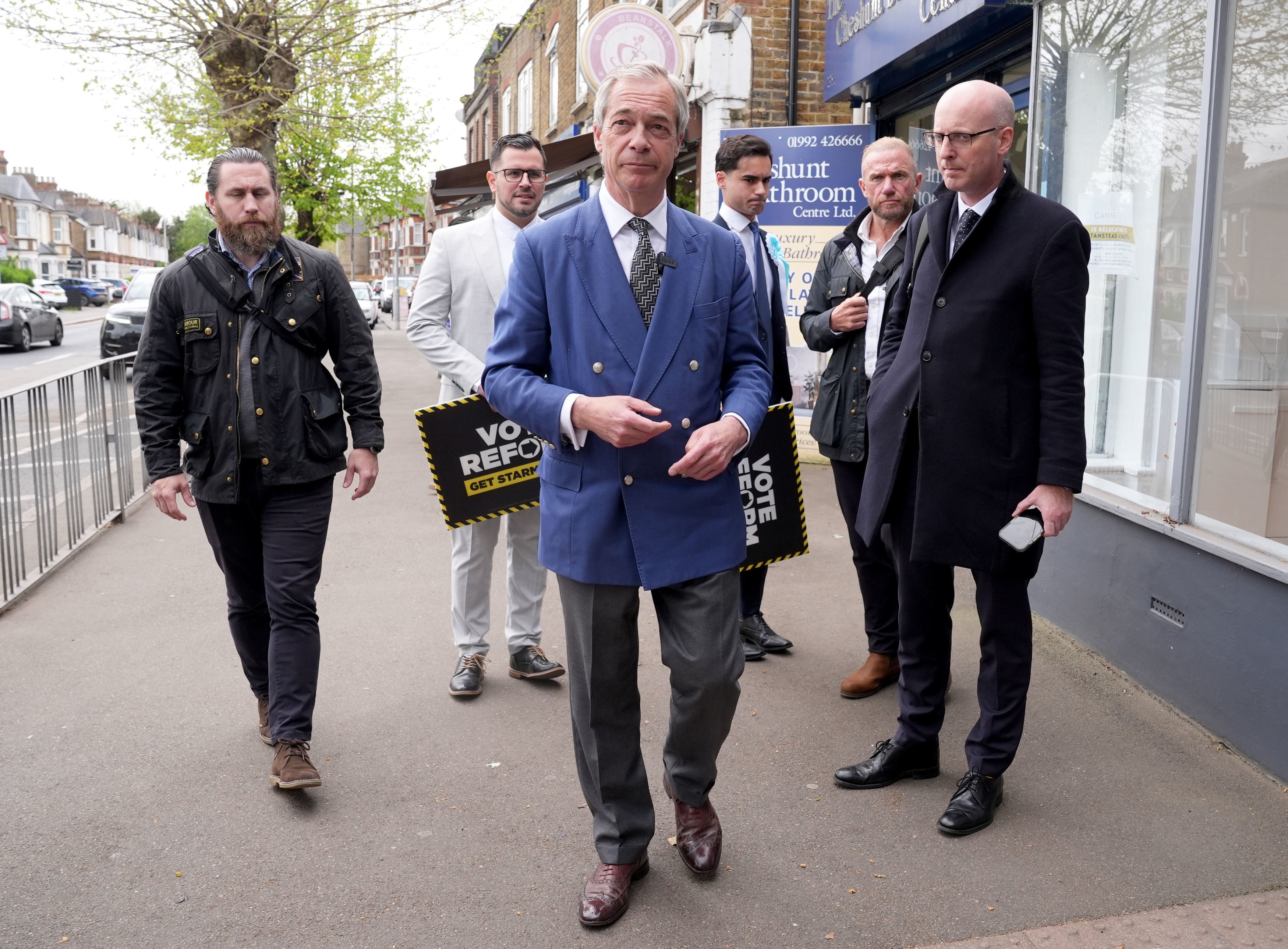
Nigel Farage on the campaign trail with local elections coming up next month (PA)
“I mean if Reform said at the time it would be the whole street, then we feel like we should be included in that.
“Our energy bills keep going up and down but they are around £3,500 a year. Having them paid for would make a huge difference.”
Fraser Hayes, 63, also said he has not received the winnings but would give them away if he does get them, as he is no fan of the insurgent right-wing party.
“I have no qualms about depriving Reform of the money and giving to a local kids’ charity or maybe even the Labour candidate,” he told The Telegraph.
Advertisement
“[The stunt] is appalling. It’s obviously a data grab. They’re trying to get loads of people to write in and they ask, ‘Who did you vote for last time. Who will you vote for this time?’
“I am absolutely not a Reform fan and I am appalled that anyone is.”
Reform UK said it had been cleared by the Information Commissioner’s Office (ICO).
Advertisement
A Reform UK spokesman told The Independent: “We posted letters physically through some of the doors on the day but weren’t able to deliver to all the addresses on the day. Letters are incoming for the remaining households. We always intended to pay for the whole road, as promised, and will do.”
An investigation is underway ‘to establish the full circumstances of the crash’ on the M90 near Kinross
The police watchdog is set to investigate the circumstances of a crash that killed two men after one of them drove in the wrong direction down a motorway.
Police Scotland said a grey Ford Kuga was seen driving northwards on the southbound carriageway of the M90 close to junction seven near Kinross at around 10.30pm on Friday.
Advertisement
It collided with a white Vauxhall Corsa which was on the southbound part of the motorway. The 44-year-old man driving the Kuga and the 20-year-old man driving the Corsa were both fatally injured.
Police Scotland confirmed a referral has since been made to the Police Investigation and Review Commissioner (PIRC) to investigate.
A spokesperson said: “A referral of the circumstances of the incident has been submitted by Police Scotland’s Professional Standards Department to the Police Investigation and Review Commissioner for consideration.”
Chief inspector Lyne Williamson said on Saturday that an investigation was underway by Police Scotland “to establish the full circumstances of the crash”.
Advertisement
“Anyone who was travelling on the M90 at the time and witnessed what happened, or has dashcam footage that could assist our inquiries, is asked to contact officers as soon as possible,” the chief inspector added.
The M90 was closed southbound between junctions six and seven for around 16 hours to allow an investigation to be carried out.
Get more Daily Record exclusives by signing up for free to Google’s preferred sources. Click HERE
Finance Minister said the Executive ‘deserves recognition’ for supporting families as energy costs rise
Stormont is in talks with the Treasury to secure a “proper financial package” for Northern Ireland.
Advertisement
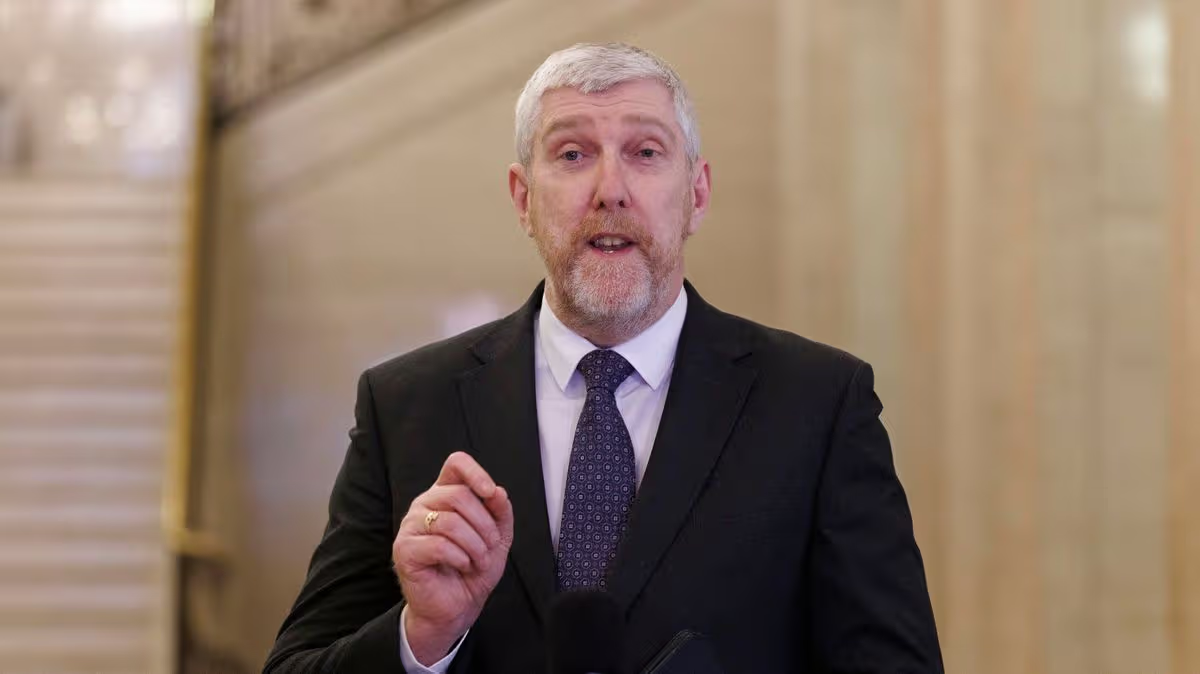
The region’s Finance Minister John O’Dowd said the decision by the Stormont Executive last week to allocate money towards helping families struggling with rising energy costs will “place further pressures on the Executive budget”.
He said he has had two meetings with Northern Ireland Secretary Hilary Benn over the last week, adding there is a united front from the Executive over the budget.
“I have presented two papers to the Executive in relation to the budget for the next three years, all my Executive colleagues are telling me that they can’t deliver the services that are required within the confines of that budget, we won’t be able to support the economy to the level that the economy needs supported either,” he told the BBC.
Advertisement
“So on behalf of the Executive, I have been engaging with the British Government over this week as have my officials…
“I am satisfied that the British Government are now listening to us but we now need to move quickly into the mode of where they giving the financial whereforall to this Executive to do the job that the Executive needs to do.”
Stormont ministers pledged £19.2 million to go with £17 million already set aside for the scheme from the UK Government.
“We are talking directly to the British Government about securing a proper financial package for the Executive to allow us to fund public services, to support our economy and see us through what is going to continue to be a significant cost of living crisis for several months if not longer,” Mr O’Dowd said.
Speaking on the BBC’s Sunday Politics Northern Ireland, Mr O’Dowd said that despite the financial pressure the Stormont Executive is under, they made the decision that it is “vitally important to support those families on low incomes”.
“We have received a £17 million pot from the British Government, and the decision was made collectively at the Executive that given the scale of pressures bearing down on families that we would inject a further, up towards £20 million into that fund,” he said.
“That funding will come directly from our budget allocation, there is no other separate pot where that money can from, it’s about decisions, and politics is about making decisions, and the Executive has made a decision in this instance that given the scale of pressures we will supplement that £17 million.”
Advertisement
Mr O’Dowd went on to say the Executive “deserves recognition” for making the decision to support families in terms of rising energy costs.
“We cannot plug every gap the British Government creates, the Executive cannot afford to bail out the British Government, that is the reality of the situation, and that’s why I’m involved in discussions with the British Government about securing a proper funding package for this place so we can support our community and voluntary sector, so we can support our public services and we can support our economy,” he said.
Sunniside Nights will take place on Friday, May 29, from 6pm, offering a packed evening across venues with comedy, live music, theatre, exhibitions and a showcase of “the worst ever album covers.”
Curated by The Futureheads musician, Ross Millard, the free festival will be a diverse showcase of not just talent but also of the great and versatile spaces that Sunniside has to offer.
Mr Millard said: “The idea is to have the whole of Sunniside buzzing with activity: artists, musicians, theatre-makers and DJs all popping up in familiar and unfamiliar spaces.”
Advertisement
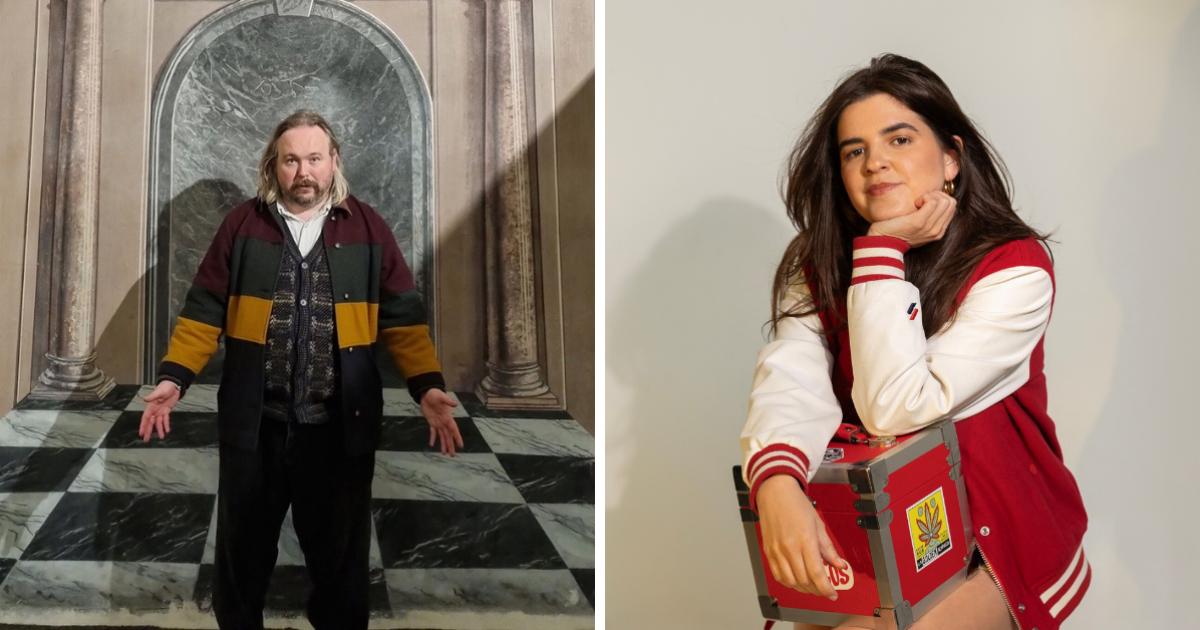
Highlights include a headline performance at Pop Recs by experimental folk musician Richard Dawson, hot on the heels of an American tour and his own mini-festival held at The Barbican in London.
Artist Frank Styles will paint a mural live in the courtyard at Pop Recs throughout the evening.
Wild Fire City will host a set from Worldwide FM’s DJ Santa Leticia, who explores sounds spanning Latin America, the Caribbean, Brazil and Africa.
Elsewhere, comedian Scott Turnbull will present Surreally Good, a comic-book-inspired sketch show at Diego’s.
Advertisement
At Tribeca, photographer Andy Martin will unveil Tins of Town, a new exhibition of handmade tintype images.
Breeze Creatives will host two visual art exhibitions on the night.
The Abject Gallery will present This Time I Have a Reason, a group show by artists on Breeze Creatives’ Best Practice professional course.
Downstairs, the Moving Gallery will feature Worst Record Covers, curated from artist Steve Goldman’s collection of the most questionable record sleeve designs ever produced.
Advertisement
The Bridge Hotel Vaults will welcome musician Sarah Hayes and her band for a set of traditional music, following their 2025 Sunniside Nights appearance.
Theatre Space North East will host Shakespeare Shakedown, a monologue slam that reimagines classic Shakespeare passages.
Read more:
Roberta Redecke, head of business services at Sunderland BID, said: “Ross has brought together some absolutely incredible performers and created a unique programme with so many facets that there is something for everyone.
Advertisement
“It’s fantastic to see this event return even bigger than last time around, with more venues, more performers and even more variety.”
The event is curated by Mr Millard and funded by Sunderland’s BIDs, Art Council England, Sunderland City Council and with support from UKSPF.
A Stockton Council report says 175 children and young people started in the authority’s care in 2025, compared to 67 in 2024 and 54 in 2023.
The number of children in care overall rose at a slower rate of nine per cent, reaching 615 children by the end of March.
Children had “increasingly complex needs that put pressure on families and children”, says the report which sets out the achievements and challenges in the children’s social care for the council over the past year. A leading officer has revealed the council will open three more children’s homes.
Advertisement
Louise Hollick, assistant director for early help, safeguarding and children in care, told councillors they still faced significant challenges, rising costs and financial pressures.
She said: “What we are seeing is more older children entering care with significant safeguarding risks, including child exploitation, neurodiversity needs, speech and language needs and trauma.
“We also see higher numbers of babies coming into care due to complexities around domestic abuse, neglect and parental substance misuse.”
She said their disabled children team also saw rising demand with more assessments and support needed for children with complex needs.
Advertisement
She told the council’s children and young people select committee they, like other councils, faced a “major challenge” finding children’s places.
Not enough in-house foster carers meant more children placed with independent agencies and non-council children’s homes, including “high-cost solo placements”.
“Although we have approximately 85 local placements, and new internal provision is coming online so we do have more plans to open more internal homes, the overall system remains stretched,” she added.
Asked by Councillor Sally Anne Watson how many new children’s homes were in the pipeline and how many were needed, she said they had planning permission and had just bought a three-bedroom “edge-of-care” home, meant for “teenagers who perhaps just need a short break from their parents to stabilise things with a view to them going home very quickly”.
Advertisement
She added: “We’ve also had permission and DfE funding to open two further therapeutic homes for children with complex mental health needs. That will be a one-bed and a two-bed.”
She said some of the children in non-council homes were still local, with a handful farther afield, and they were looking at bringing some back to Stockton, adding: “Some of those children are very settled where they are, and not all of those children are in very high-cost residential homes. So it wouldn’t be right to bring back every single one of those children.”
She told of Ofsted-recognised improvements in leadership and workforce stability, good staff feedback and more agency staff taking up permanent posts.
She said a new “front door”, the Family Help Point, launched this month involving safeguarding specialists, police, domestic abuse and substance misuse services, provided earlier help: “It’s very early days, obviously, but the first two weeks have gone really positively.”
Advertisement
She added they were preparing for national social care reforms, with a child protection pilot for pre-birth and babies starting soon, saying: “We will begin our pilot on May 1 for those reforms, in preparedness to have them up and running by April 2027.”
She said they were investing in their learning academy, with 12 per cent of their workforce newly qualified social workers, and “growing our own” social workers, as 90 per cent of final-year students took up permanent roles in 2025, and 91 per cent of social workers were permanent staff.
She said it was hoped a forthcoming “regional care cooperative” would transform the way fostering, residential and secure care were brought in and tackle cost challenges, and a new “Best Start Family Hub” at Redhill would strengthen early years support and help get children ready for school.
Cllr Clare Besford, cabinet member for children and young people, said: “There is so much happening in children’s services right now. On April 1 we did successfully launch our integrated front door, our Family Help Point. I’m really pleased that it went so well.”
Advertisement
She said the council’s Best Start In Life programme had ambitious government targets for at least 78.5 per cent of children to achieve a good level of development by the end of reception by 2028, adding: “I’m confident that we have the right team in place. We’ve got some fantastic people around the table today.”
Cllr Ann McCoy said: “I think we’ve got a lot to be proud of here and I’m sure there’ll be some real rewards for the children as well.”
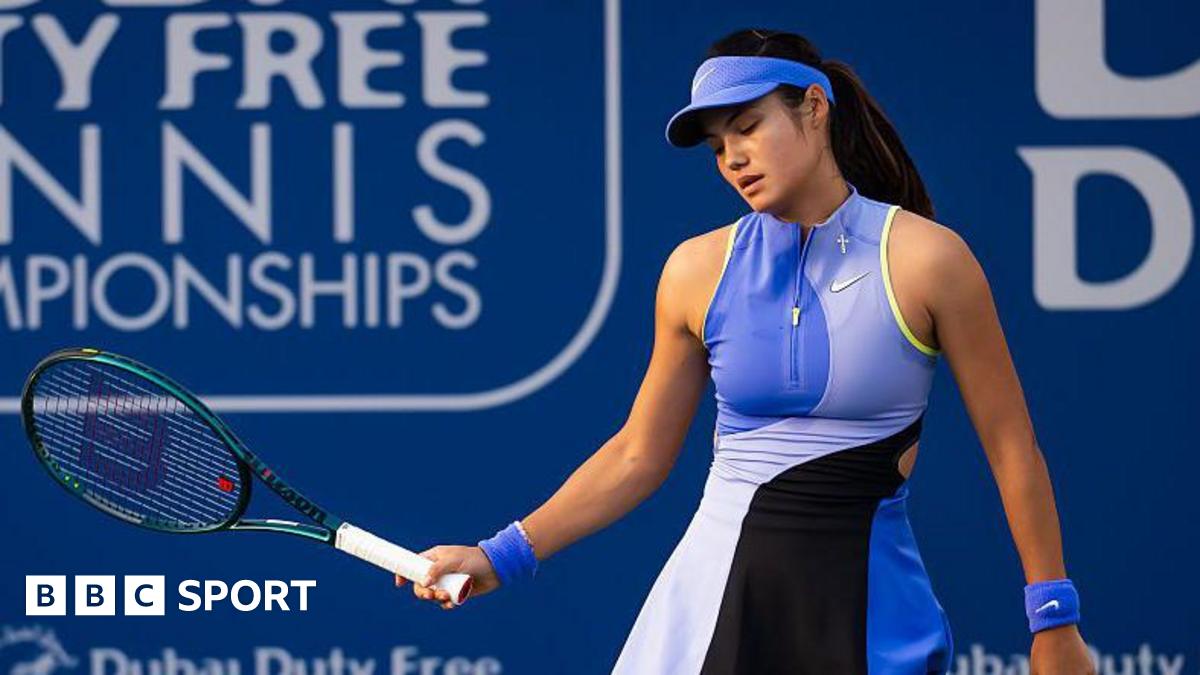
Raducanu had a very promising debut clay court season in 2022 – the year after she won the US Open in New York as a teenager – but hurt her back in Madrid and had to retire from her first match in Rome a week later.
Much of 2023 was lost to the operations she had on her hands and left ankle. In 2024, Raducanu played very promisingly on indoor clay, winning two matches for Great Britain against France in the Billie Jean King Cup before reaching the quarter-finals in Stuttgart.
But that was followed by a heavy first-round defeat by qualifier Maria Lourdes Carle in Madrid.
Raducanu said she was “mentally and emotionally exhausted” and did not play on clay again that year, choosing to skip the French Open to prioritise a training block that she thought would benefit her fitness in the second half of the year.
Advertisement
She played four clay court events last year, with the highlight a run to the fourth round in Rome, but experienced further back issues in Strasbourg and after competing at Roland Garros.
Her next opportunity to play on clay will be at the Italian Open in Rome from 5 May. There are also two tournaments – in Strasbourg and Rabat – the week before the French Open, which rounds off the clay court swing.
“Those wins over Dublin, Kerry and Galwaybacked up what we were doing on the training field,” Morris said. “They gave us that extra bit of confidence that we can hang with those teams. Donegal probably knocked us down a peg or two but we took a lot from it. It was a big learning experience.”
Getting there (Leinster final) and not winning it was disappointing,” Morris admitted. “But now it’s about taking it one game at a time. There are no easy matches. Westmeath are up first and we know how good they are.”
There are many Roman remains across Cambridgeshire
Cambridgeshire is steeped in history, especially from Roman times. Across the county, there are many remains that prove Romans once settled here.
Advertisement
There are roads that still stand today that were created by the Romans, as well as remains of Roman buildings. There are also remains of former Roman towns.
It extends across 75 acres, which is around 30 hectares. When it was discovered, archaeologists said the town’s buried features were well preserved.
A spokesperson for Homes England said it had “extensive streets” and “buildings of a highly organised Roman settlement of urban character”. Other features include ditches, pits and post holes, as well as grave surfaces that were used as roads or yard areas.
Advertisement
A number of artefacts were also discovered, including pottery, animal bone, glass, copper alloy objects, iron objects, coins, and shells. In 2024, the town was named as a scheduled monument.
At the time, Duncan Wilson of Historic England said this was “clearly a significant Roman town”. He added that the town gave a “remarkable insight into Roman life in the east of England”.
Great Staughton itself is a village steeped in other history. In the village, there is a sundial that dates back to 1637. This sundial has E.I carved into it, which is believed to be for Edmund Ibbutt. He was a major landowner in Great Staughton between 1630 and the 1660s.
The White Hart, which still stands today, is a 17th century coaching inn which is an important part of the village’s history. It was visited by Oliver Cromwell during the English Civil War.
Former world number one Mark Allen produced a superb potting display as he fought back from 6-4 down to beat China’s Zhang Anda 10-6 in the first round of the World Snooker Championship.
Northern Ireland’s Allen, a two-time Crucible semi-finalist, had not made a single break of 50 in Saturday’s first session but looked a different player on Sunday.
The 40-year-old produced a magnificent clearance of 140 in frame 11 to start his recovery, following that with a break of 109 in frame 12.
His third century in five frames came in frame 15 with an effort of 129 to move one away from victory, which he sealed with a break of 81 in the 16th frame.
Advertisement
Zhang, who has lost in the first round on all of his six Crucible appearances, scored only 42 points in the last six frames as Allen stormed into the last 16.
Allen will play either 2024 champion Kyren Wilson or 19-year-old Stan Moody in the next round.













































You must be logged in to post a comment Login