The U.S. Supreme Court has approved a settlement package designed to rein in groundwater pumping along one of North America’s longest rivers and ensure enough water reliably makes it from New Mexico to Texas, ending a long-running dispute over management of the Rio Grande.
In a brief order Tuesday, the court accepted the recommendation of a special master to move forward with agreements first proposed last year by New Mexico, Texas and Colorado.
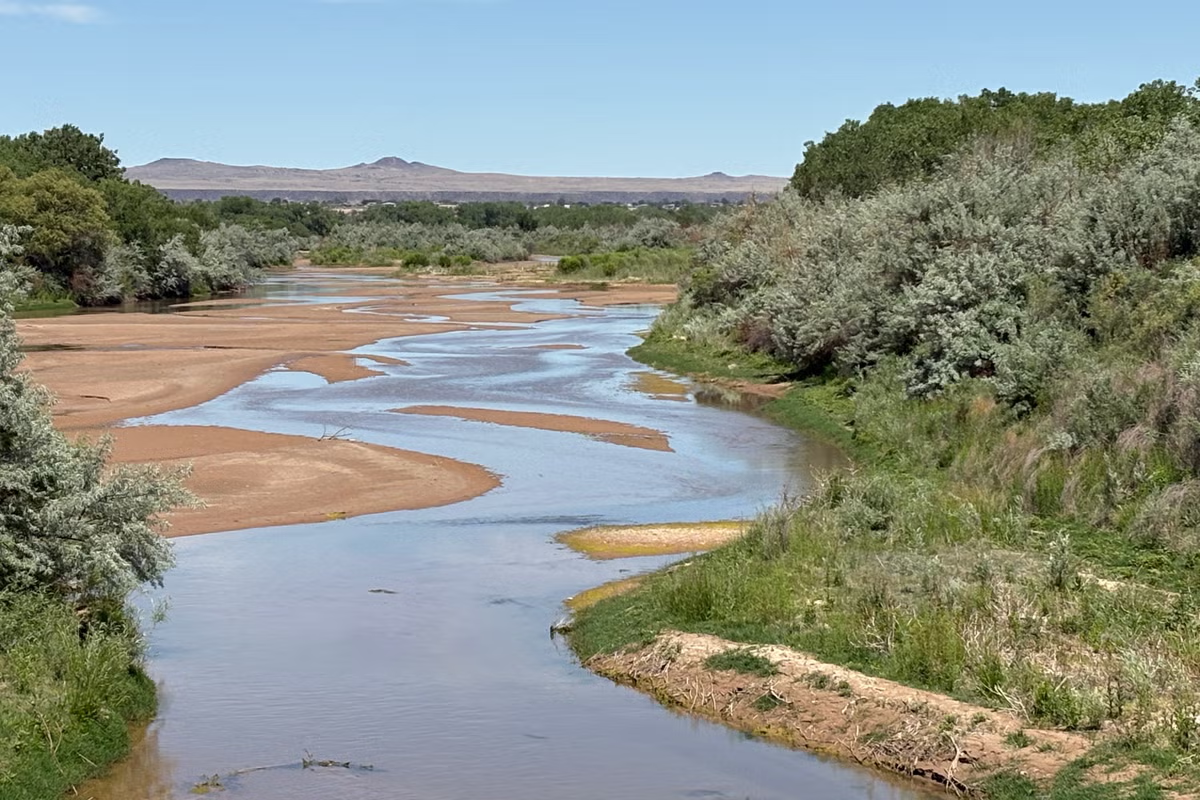
The settlement calls for reducing groundwater pumping along the dwindling river and retiring water rights from irrigated farmland in southern New Mexico. The states held up the proposal as a promise to restore order to an elaborate system of storing and sharing water between two vast irrigation districts in southern New Mexico and western Texas.
Researchers have warned that unsustainable use of the Rio Grande — which originates in Colorado and stretches south into Mexico — threatens water security for millions of people who rely on the binational river basin.
Advertisement
Farmers in southern New Mexico increasingly have turned to groundwater to irrigate pecan orchards and chile crops as hotter, drier conditions have reduced river flows and storage over recent decades. That pumping is what prompted Texas to sue in 2013, claiming the practice was cutting into water deliveries.
While the Colorado River gets all the headlines, experts say the situation along the Rio Grande is just as dire. Stretches of the river as far north as Albuquerque are expected to go dry again this year, marking the third time in five years.
Officials with the New Mexico Department of Justice and the state engineer’s office did not immediately answers emails Wednesday about the court’s order. They have previously said the agreements will allow water conservation decisions to be made locally while avoiding a doomsday scenario of billion-dollar payouts on water shortfalls.
The settlement package provides for a detailed accounting system for sharing water with Texas. New Mexico could rely on credits and debits from year to year to navigate through drought and wet periods, though it could be responsible for additional water-sharing obligations if deliveries are deferred too long.
Advertisement
Under the settlement, New Mexico must reduce annual groundwater depletions by 18,200 acre-feet, or about 5.9 billion gallons (22.3 billion liters).
Officials expect to achieve most of the necessary reductions from buying water rights from willing sellers, meaning more than 14 square miles (36 square kilometers) of farmland would be retired.
Other details — and the price tag — still are being worked out, but top water managers have repeatedly told New Mexico lawmakers that it will take “an all hands on deck approach.”
“The problems that we face with water are problems we can’t face unless we work together,” Hannah Riseley-White, director of the Interstate Stream Commission, told a group of water experts during a meeting in March.
Advertisement
She mentioned a combination of long-term fallowing programs, water conservation and more efficient irrigation infrastructure.
The toddler slipped into the family car while his father thought he was sleeping but was unable to get out due to the child lock, public prosecutor Guirec Le Bras said.
The child’s mother was having a nap with the couple’s 18-month-old other child while the father worked in the garden shed, the prosecutor told French media.
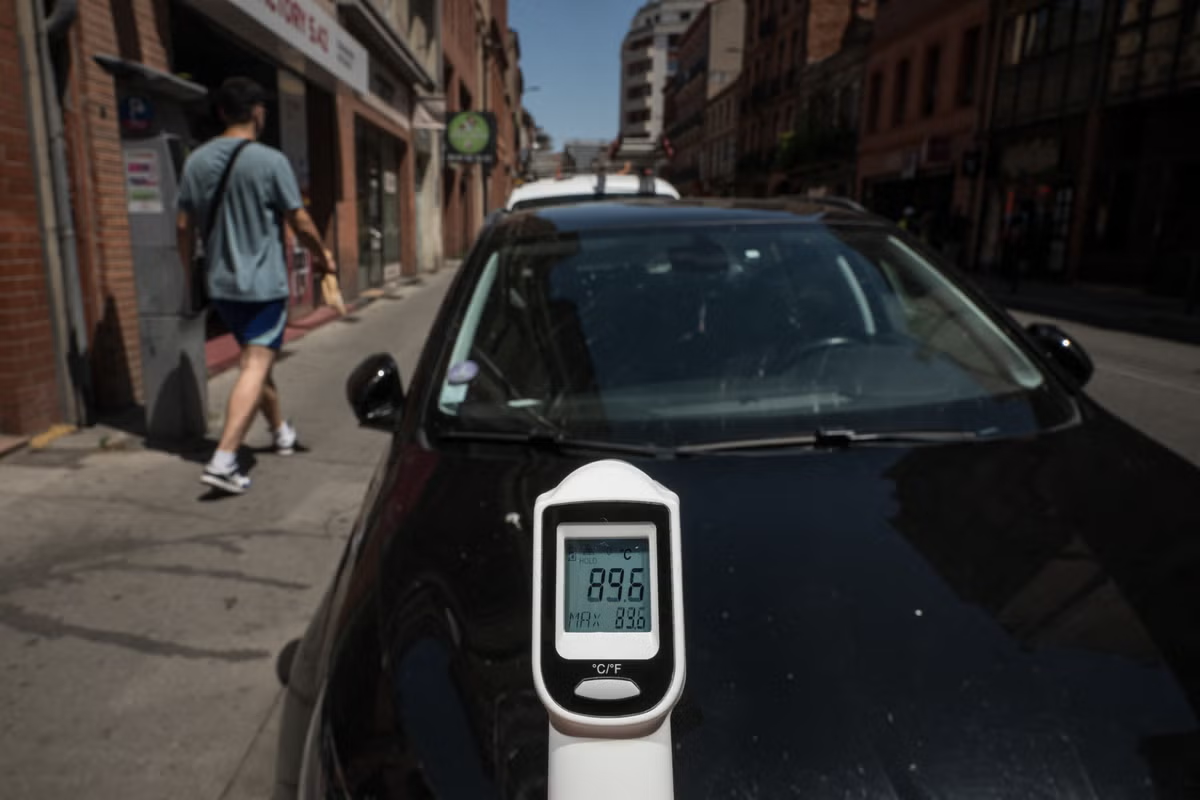
A thermometer shows the temperature of 89.6 degrees Celsius on a car in the French heatwave (AFP/Getty)
“He apparently shut himself in and became trapped in the vehicle before being found unconscious by his parents,” the prosecutor said, adding that the mother is in hospital in a state of shock.
The death is the latest in a series of heat-related tragedies as the European heatwave claims dozens of lives.
Advertisement
On Monday, two young children aged two and four, died after being found in cardiac arrest inside their mother’s car in a residential car park.
Paris faced another sweltering day after temperatures in the French capital hit a June record of 40.9 degrees Celsius on Wednesday – the first time in 150 years temperatures in the capital surpassed 40C.
The city’s mayor told Parisians to slow down on Thursday as the deadly heatwave disrupted power supplies, and shut schools and cultural landmarks in large parts of western Europe.
French prime minister Sebastien Lecornu has activated the highest level of health services mobilisation in the face of a heatwave – which means non-urgent operations could be cancelled to focus on hot weather-related emergencies.
Advertisement
It is unclear exactly how many people died, but earlier this week authorities said 40 had passed away just from drowning.
Athough the heatwave is set to die down by next week, French authorities are now warning that the country could return to extreme heat in early July.
Minister for ecological transition Monique Barbut told FranceInter: “There is a strong probability that, starting the week after [some point after July 6], we will return to extreme heat… until July 14.”
Parts of southern England and Wales were facing another day of record-breaking temperatures, with a peak of around 37 C in some areas, after a new June high of 36.1 C was set in Hampshire on Wednesday.
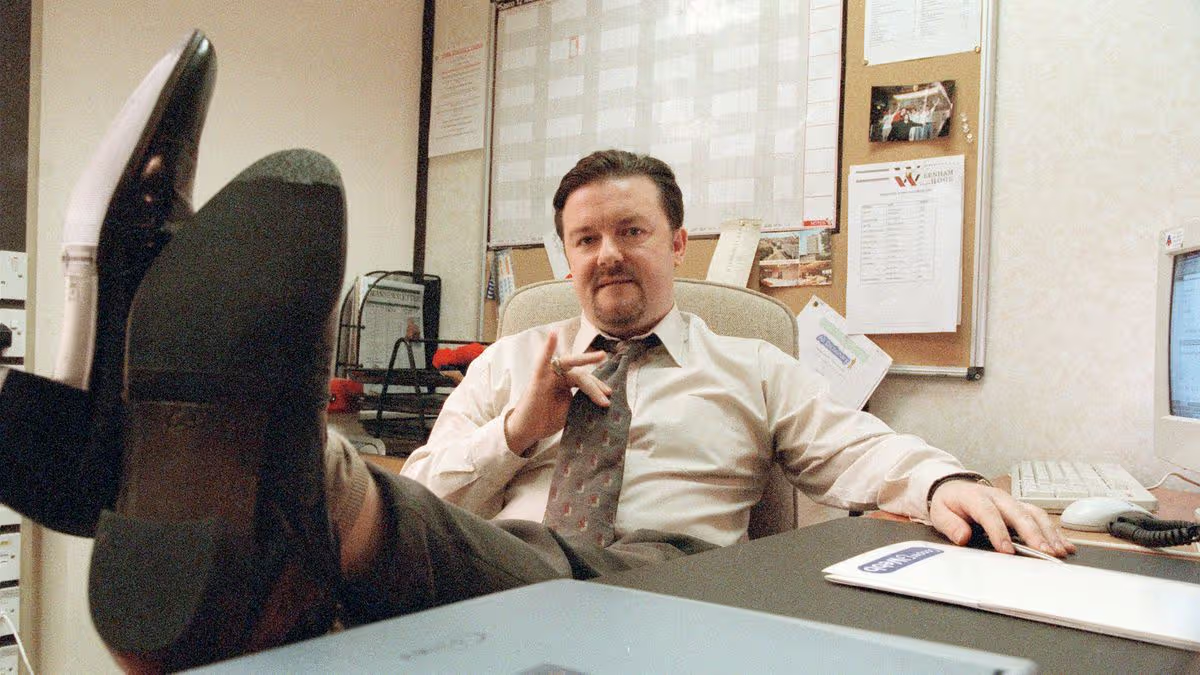
David Brent and his colleagues from Wernham Hogg were last seen on our screens back in December 2003
Fans of the UK version of The Office have something new to look forward to as the BBC has announced a special programme to mark 25 years since the sitcom’s debut.
Advertisement
David Brent and his colleagues from Wernham Hogg were last seen on our screens back in December 2003, two years after it first aired in the summer of 2001, after two six-episode series were made, followed by a two-part Christmas special.
Created, written and directed by Ricky Gervais, who also played the central character, and Stephen Merchant, The Office followed the day-to-day lives of office employees in the Slough branch of the fictional Wernham Hogg paper company.
This July marks 25 years since The Office debuted in the UK and the BBC have announced special episode of Remembers, to celebrate one of the most influential and acclaimed British comedies of all time.
The Office stars Martin Freeman and Mackenzie Crook – aka Gareth and Tim – will be reunited to look back at the groundbreaking series, sharing personal memories, behind the scenes stories and reflecting on its enduring legacy and cultural impact.
Advertisement
The BBC said: “It’s been more than 15 years since the pair last laid eyes on each other, but the ground-breaking comedy’s 25th anniversary has brought them together once again, sharing their memories of working, and laughing, alongside Ricky Gervais, co-writer Stephen Merchant, and their other leading office colleague Lucy Davis, who played the object of Tim’s affections, Dawn.”
The BBC added: “Amongst the anecdotes are the tale of how Martin initially auditioned to play Gareth, how Mackenzie embraced one of TV’s worst-ever haircuts, how Ricky came close to ruining filming on a daily basis, and what it was like to be at the heart of ‘Office-mania’ when the show was at its peak. On top of all that, Mackenzie and Martin share their views on the American version of the show and some of their personal favourite Wernham Hogg moments.”
Mackenzie Crook and Martin Freeman Remember…The Office will be broadcast on Wednesday, July 8, at 10pm on BBC Two and iPlayer
People should be aware of some simple mistakes that can cause their car to use more fuel
With the UK set to swelter in temperatures of up to 38°C this week, drivers are being urged to avoid a common air-con mistake that could see them burning through fuel unnecessarily. A few straightforward changes to your driving habits could help stretch your fuel further on those summer road trips.
Advertisement
Tim Rodie, Motorpoint’s resident driving expert, said: “While you might be planning on setting your air conditioning to full blast when driving in warm weather, it can really be a drain on your fuel. Motorists looking to go longer between filling up might think just opening the windows is an obvious alternative but, at higher speeds, this can make your car less aerodynamic – meaning you’ll be using more fuel.
“As a rule, opening your windows is best when driving around at lower speeds around town and air conditioning is more efficient if you’re on the motorway. So, keep this in mind and be sure to mix it up on long car rides.”
While climbing into a scorching hot car is far from pleasant, Tim warns against leaving the air conditioning running to pre-cool your vehicle before you get in, reports the Express. He said: “Idling is terrible for fuel efficiency, but there’s an even more important reason why you shouldn’t be leaving your car unattended with the engine running when cooling down – the risk of it being stolen.
“Modern air-conditioning will cool your vehicle down quickly, so there isn’t really a need to let your car cool down before starting your journey. Not to mention that most car insurance policies have ‘keys in car’ or ‘vehicle left unattended’ clauses that mean motorists aren’t able to make a claim if their vehicle was stolen while unattended with the keys inside.”
Drivers who notice their air-conditioning feels “less powerful than normal” should have it inspected, as the car continues to consume fuel to run the system – even when it isn’t functioning correctly.
How to make cars more fuel-efficient this summer
Pack light:
Avoid stuffing your boot to the brim, as the lighter your vehicle is, the less fuel it requires. Tim noted this principle extends to accessories such as bike racks and roof boxes as well.
Advertisement
He said: “Unless you need the extra storage space, it’s worth travelling without them. They might be a pain to remove, but the increased drag and extra weight mean your car needs to work harder to get you where you need to go.”
Plan your routes carefully:
Vehicles can guzzle fuel when stuck in congestion, so it’s advisable to plan your journey before heading out. Should you find yourself at a standstill, and it’s safe to do so, consider turning your engine off or activating your car’s stop-start function to avoid wasting fuel while stationary.
Know where to fill up: One of the simplest ways to avoid overpaying for fuel is to seek out petrol stations with competitive prices. Motorway services will always charge a premium, so it’s worth planning your journey in advance to get a rough idea of where you’re likely to need to fill up.
Advertisement
Stick to the speed limit and avoid flooring it:
Speeding doesn’t just put you at risk of a fine and points on your licence — it’s also dreadful for fuel consumption. Speed has a direct impact on how much fuel your car uses, meaning the faster you drive, the fewer miles you’ll get per tank.
No matter how eager you are to reach your destination, putting your foot down as though you’re on a drag strip will do nothing but guzzle fuel. Harsh acceleration burns significantly more fuel than steady, measured driving.
Advertisement
Check your tyres:
Keeping an eye on your tyres isn’t just about safety — it also helps keep your vehicle running as efficiently as possible. Underinflated tyres create greater friction, forcing your engine to work harder and burn more fuel.
At a minimum, check your tyre pressure at least once a month. The simplest way to do this is to use a pressure gauge to ensure your tyre pressure falls within the recommended range specified in your owner’s manual.
Emergency services were called to the scene of a house fire in Barry on Wednesday that closed a key road into the Welsh seaside town on the hottest day of the year. In an update on Thursday police say the fire uncovered a cannabis farm.
The A4055 Cardiff Road was closed in both directions to allow firefighters to tackle the blaze.
South Wales Police confirmed there was a house fire on Riverside Place in Barry and said road closures were impacting Cardiff Road and Palmerston Road. All roads have now reopened but emergency services remain at the scene.
Photos from the scene show the roof of the property has been completely wrecked by the fire.
Advertisement
(Image: Pete Harris)
A spokesperson for South Wales Police said: “We remain at the scene of a house fire in Riverside Place, Barry.
“Parts of Cardiff Road and Palmerston Road were closed yesterday afternoon (Wednesday, June 24) while emergency services dealt with incident.
“Evidence of a large-scale cannabis cultivation, spanning multiple rooms including the attic, has been found in the property.
Advertisement
“There was no-one in the house at the time of the fire, neighbouring properties were evacuated, and there are no reported injuries.
“A joint investigation is on-going with the fire service.”
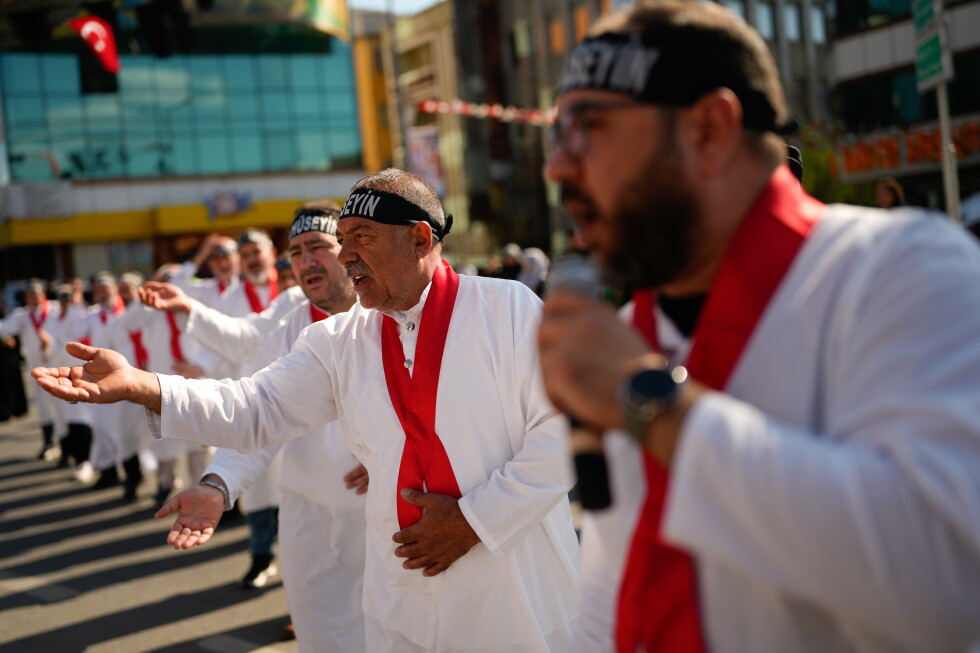
BEIRUT (AP) — Shiite Muslims around the world on Thursday marked Ashoura, a holy day symbolizing sacrifice and martyrdom that holds special significance for many this year after months of war in Iran and Lebanon.
Ashoura commemorates the martyrdom of Imam Hussein, grandson of the Prophet Muhammad, at the Battle of Karbala in A.D. 680 Imam Hussein was killed with his family and companions after refusing to pledge allegiance to the Umayyad caliphate.
The event cemented the schism between Sunni and Shiite Islam and remains a powerful symbol of resistance against oppression and injustice.
The holiest day in the Shiite calendar
This year, Ashoura comes after months of war in Iran and Lebanon, homes to two of the world’s largest Shiite populations. Iran and the U.S. this week launched talks aimed at finalizing a fragile ceasefire agreement.
Advertisement
On the first day of the war, on Feb. 28, Iran’s supreme leader, Ayatollah Ali Khamenei, was killed in an Israeli airstrike. The 86-year-old Khamenei was not just Iran’s top political leader. He also had a final say on all religious matters and was revered by millions of Shiites worldwide. Ashoura comes just days before his funeral procession.
The war also spilled over into Lebanon, where Iran’s key ally, the Hezbollah militant group, has been battling Israeli troops for months.
Hezbollah entered the fighting days into the war by firing rockets into northern Israel in solidarity with Tehran. That sparked widespread Israeli aerial bombardment and a ground invasion that decimated large swaths of predominantly Shiite areas in southern Lebanon and Beirut’s southern suburbs.
Ashoura comes as many of the more than one million displaced Lebanese people are trying to return to their villages in southern Lebanon. Cities and towns had held sermons and events in the buildup to the holy day surrounded by buildings reduced to rubble and ruins.
Advertisement
Ashoura is the holiest day in the Shiite calendar, marked by traditional mourning rituals that include chest-beating, elegies and lamentations. It is held on the 10th day of the month of Muharram.
Visitors arrive at Imam Hussein’s shrine
In Karbala, the southern Iraqi city holy to Shiite Muslims, security was tightened as visitors arrived. Religious banners flew from the walls of Imam Hussein’s golden-domed shrine and actors played out scenes from the 7th century.
“We see all kinds of people here and they don’t lack food, drinks or services, thanks to God, despite the massive gathering,” Redha Nouri, who traveled from Ahwaz in Iran, said. “There will be more crowds coming tomorrow, but the Iraqi people are here and will serve them.”
Advertisement
Sign up for Morning Wire:
Our flagship newsletter breaks down the biggest headlines of the day.
Advertisement
Mourners observe the holy day in Iran
In war-stricken Iran, black-clad mourners filled streets, mosques and neighborhood religious halls across Tehran for a public holiday that brought much of the capital to a halt.
Shops were shuttered in many areas as processions of men beating their chests marched past and loudspeakers played elegies. Volunteers handed out tea and dates.
The previous evening mourners had gathering at the shrine of Imam Ruhollah Khomeini south of Tehran in a ceremony attended by President Masoud Pezeshkian and other officials, Iranian state media reported. Khomeini led the 1979 revolution that ushered in Iran’s Islamic republic.
Advertisement
In a social media post laden with an apparent message of resistance to the U.S. and Israeli attacks on Iran, Pezeshkian noted how Hussein taught people to stand against oppression, the temptation of power and the pursuit of self-interest.
“We should neither oppress, nor accept oppression, nor remain silent before it,” he wrote.
The commander of the Islamic Revolutionary Guard’s Quds Force, Gen. Esmail Ghaani, invoked the “spirit of Ashoura” in warning Israel to withdraw its forces from Lebanon or face defeat.
The annual ceremonies came as Iran’s leadership continues to draw on Ashoura’s language of sacrifice and resistance at a time of deep political and economic pressure.
Advertisement
The faithful in Lebanon attend sermons and visit graves
Families in the Lebanese coastal city of Tyre who lost relatives fighting with Hezbollah or working as paramedics wept during a sermon on the third day of Muharram. A cleric, who sat between portraits of current Iranian Supreme Leader Mojtaba Khamenei and Hezbollah Secretary-General Naim Kassem, compared the struggles the modern-day leaders faced in the war to that of Hussein and his companions in Karbala.
Banners in red and black bearing Hussein’s name were hung on every street.
In Beirut’s southern suburbs, many flocked to the grave of former Hezbollah leader Hassan Nasrallah, who was killed in an Israeli strike in September 2024.
Security is raised in Pakistan to protect the Shiite minority
Elsewhere, Pakistan deployed thousands of police and paramilitary personnel across the country following intelligence reports warning of possible militant attacks on Shiite Muslims, a minority in the predominantly Sunni country.
Advertisement
Although most Sunnis and Shiites live peacefully alongside one another, militant groups have repeatedly targeted Shiite communities, mosques, and religious gatherings in sectarian attacks that have claimed hundreds of lives.
As members of Pakistan’s Shiite minority prepare to take part in mourning processions, mobile phone service in some areas is expected to be suspended temporarily to help prevent attacks.
“Imam Hussein is a symbol of the highest struggle and sacrifice,” said Saadia Shah, 33, as she entered a congregation hall in the eastern city of Lahore with her two children. “His name gives us the courage to stand up to tyranny, to say what is right and oppose what is wrong.”
___
Advertisement
Associated Press journalists Munir Ahmed in Islamabad, Amir Vahdat in Tehran, Iran, and Ali Sadiq in Karbala, Iraq, contributed to this report.
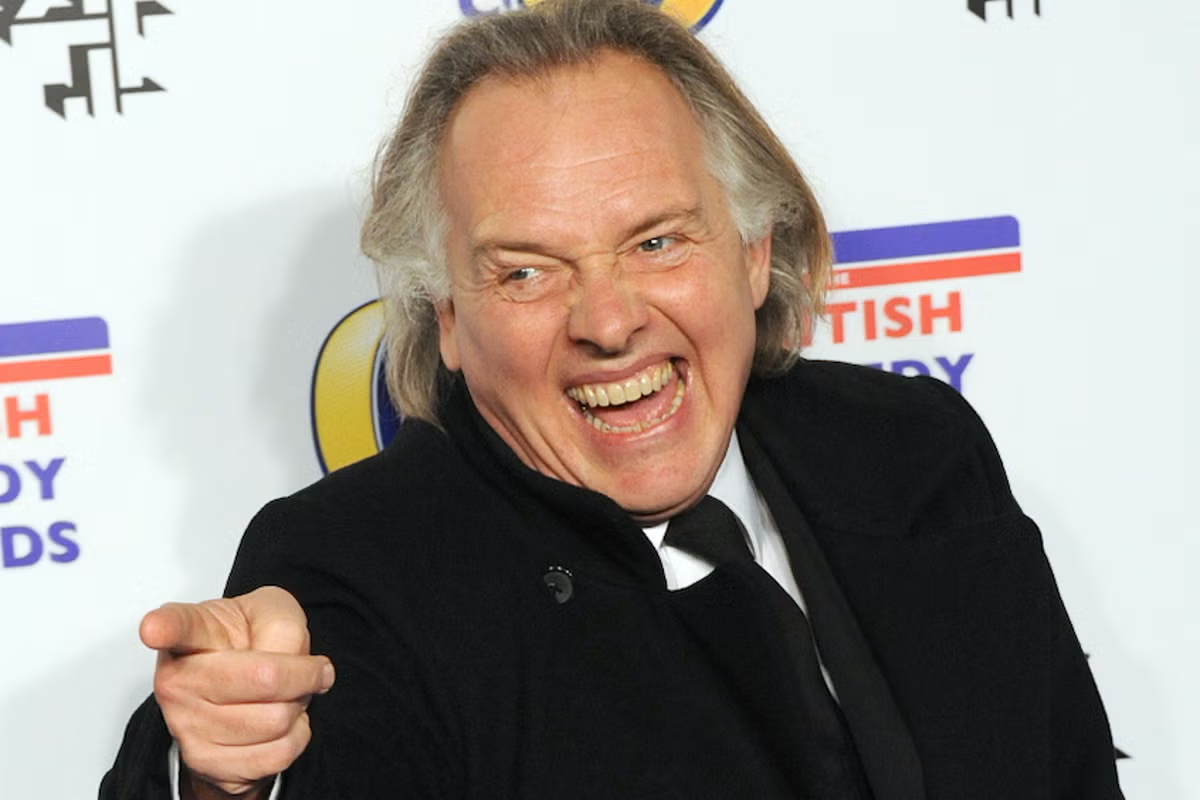
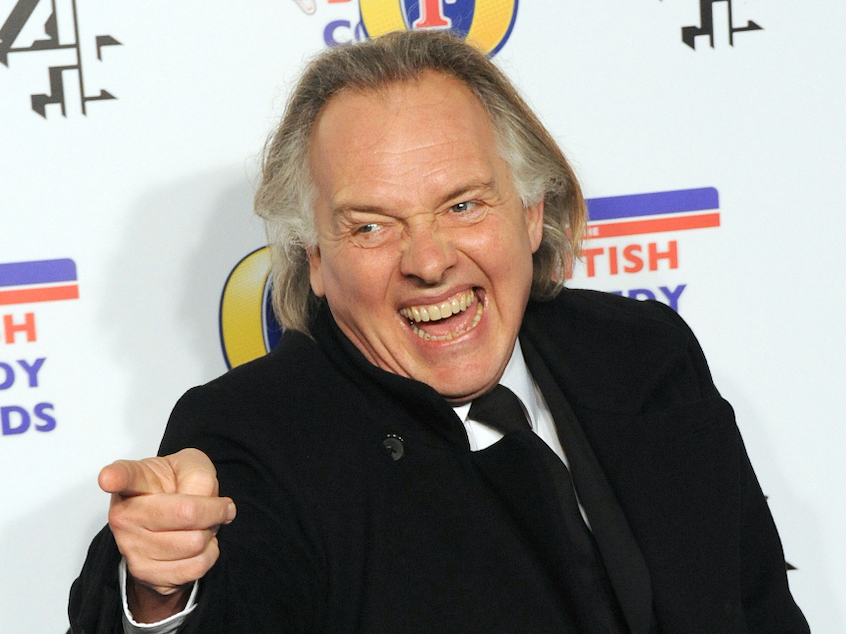
The anarchic Rik Mayall was a perennial joker and the funniest man in whichever room he was in. But a new film shines a heartbreaking new light on his life and his friendship with Adrian “Ade” Edmondson.
On stage, or at public events, he was the effervescent funnyman, taking it upon himself to ensure he put a smile on everybody’s faces throughout the 1980s and into the 1990s, through raucous TV shows The Young Ones and Bottom and rip-roaring live tours with his co-star and close friend Edmondson.
In the Sky documentaryRik Mayall: Magnificent B’stard, we discover new insights into Mayall and Edmondson’s early starts, including a double act called Flash Rick and Deaf Ade, which might have changed the very fabric of British comedy if they’d managed to sell it. We see unseen sketches and hear audio testimonies from the man himself; close your eyes, and it’s like he’s in the room with you.
However, the documentary also reveals that, out of the spotlight, the self-conscious comic would be crippled by worries and concerns that being just himself wasn’t enough.
Advertisement
New Rik Mayall documentary sheds light onto comedian’s anxieties (Getty)
His public-facing image, as an endless well of laughter, was perpetuated by the man himself, who would “immediately stand taller, puff out his chest and really make a show of it” the moment he was around members of the public.
This behaviour was a “dichotomy”, according to his daughter Rosie Richardson, as people would view him as a carefree comedian who had no problems of his own. The opposite was true. “He loved that sort of attention; on the other side, it’s exactly who he wasn’t,” TV director Bob Baldwin said.
In fact, his other daughter, Bonnie, said “people would probably be quite surprised to know about his anxieties”, caused by the belief that, if he didn’t crack a joke, he wasn’t “interesting or debonair enough”.
“He wanted to be always the funniest, best version of himself, which tended to be a character ‘cause that’s what he felt most comfortable with,” his daughter explained.
Things took a dark turn in 1997, when Edmondson noticed Mayall was “secretly drinking” while preparing their third Bottom tour, Hooligan’s Island.
Advertisement
Watch Apple TV+ free for 7 day
New subscribers only. £9.99/mo. after free trial. Plan auto-renews until cancelled.
ADVERTISEMENT. If you sign up to this service we will earn commission. This revenue helps to fund journalism across The Independent.
Rik Mayall and Ade Edmondson in ‘Bottom’ (BBC)
“My little office was overlooking a pub, and then I’d start to see him going in for a quick couple of shorts before he came in to write,” he recalled. “Strange, as we used to enjoy alcohol so much together.” Rosie realised something wasn’t quite right a year later when, during a trip to Devon, she discovered he’d packed his briefcase with miniature bottles of alcohol.
“He just kept getting these little bottles out the bag,” she said. “I said: ‘What are you doing, darling?’ He said: ‘Just don’t tell your mother,’ knocking them back.” When they arrived at the farmhouse, Mayall decided to ride his new quad bike. The last thing he remembered was sending his daughter back inside after noticing drops of rain on his arm, thinking: “This isn’t very safe.”
Moments later, Mayall nearly died after flipping the bike. His son Sid recalled: “There was a huge pool of blood around his head – it fractured his skull – and he was completely unconscious. There was bleeding inside the skull and in the brain, so they had to put him into a coma, so that he could heal.”
Advertisement
When he awoke, he was, according to those closest to him, forever changed. He was left with seizures and was told by doctors he had to stop drinking, which only heightened his anxieties surrounding social engagements.
Edmondson also noticed a change in his co-star’s personality. Deciding against another tour, the pair instead focused on making a film, the slapstick comedy Guest House Paradiso. During this time, Edmondson realised that his friend “was never exactly the same person” and found him “bizarrely more emotional”.
Rik Mayall in ‘Guest House Paradiso’ (Universal Pictures)
They eventually went back on tour together, for a fifth time, but Edmondson called time on their partnership on the final night in 2003. However, a tearful Mayall found it difficult to accept the news.
“Endless touring did us in. I kind of realised we couldn’t really do it anymore, and we never really got to an understanding about that, which makes me very sad,” Edmondson recalled.
They eventually hit the stage once again in 2001, and again in 2003 – but the writing was on the wall for Edmondson who believed “endless touring” had ruined their friendship. On the final night, he ended their 27-year partnership.
Advertisement
“I kind of realised we couldn’t really do it anymore, and we never really got to an understanding about that, which makes me very sad,” Edmondson said.
Rosie remembered her dad saying to her: “I don’t know what I’ve done wrong, I don’t know why this has happened.”
She continued: “I think he just felt like the carpet had been pulled from underneath him, and he was just sort of left going, ‘Well, now what?’ I just think that my dad deserved more, so much more. But then again, Adrian was completely entitled to do what he needed to do as well, for his own mental health.”
Edmondson said he particularly struggled with his grief after Mayall’s sudden death as “we never kind of repaired what our relationship was”. Mayall died aged 56 on 9 June 2014 after suffering a sudden heart attack.
Advertisement
“So I’ve had to explain the later part of our relationship in some ways, because people want to know,” he said. “It is obvious that something went a bit awry, but I think we should mostly remember that he was a f***ing genius.”
Rik Mayall: Magnificent B’stard airs on Sky Documentaries on 25 June.
The jury is charged with reaching findings including how Noah came by his death.
The jury at the inquest into the death of Noah Donohoe have been told to reach their findings based on the evidence they have heard in court.
Advertisement
Coroner Mr Justice Rooney started his charge to the jury of eight men and two women on Thursday, on the 21st week of the inquest, which started in January.
Noah, a pupil at St Malachy’s College, was 14 when his naked body was found in the storm drain tunnel in north Belfast in June 2020, six days after he left home on his bike to meet two friends in the Cavehill area of the city. A post-mortem examination found the cause of death was drowning.
The jury is charged with reaching findings including how Noah came by his death.
Noah’s mother Fiona Donohoe, who has led a high profile campaign for answers around his death, has been present at Belfast Coroner’s Court for every day of the inquest.
Advertisement
Mr Justice Rooney told the jury his charge would be lengthy as it covered almost six months of evidence.
He said the inquest had heard from 76 witnesses, and statements from a further 42 people, and considered maps, video footage, photographs, police logs and expert reports.
He also reminded the jury the process was a fact-finding inquiry into how Noah died, and not a criminal trial where someone is found guilty of an offence or found liable to pay damages, and not about finding fault, attributing blame or apportioning guilt.
Advertisement
“Your findings must be based solely on the evidence that you have heard or have seen in this court, you must ignore everything else other than this evidence. It is irrelevant,” he said.
“We are here because this inquest is required by law. You must not suppose that this automatically means that something went wrong that contributed to Noah’s death, you must not lose focus on the question we are here to consider, that is how Noah came by his death.”
Former President Barack Obama has addressed Donald Trump’s apparent ‘obsession’ with him – saying he exists in a ‘suite in his head’.
Advertisement
Speaking with former NBA player Matt Barnes on ‘All the Smoke’ podcast, Barnes brought up how Trump is ‘very fascinated’ with Obama and his family.
Barnes then asked the former President: ‘Do you ever want to cuss his a** out sometimes?’
‘The thing about it is… the obsession,’ Obama replied. ‘I obviously have a room in his head, a suite in his head.’
Trump often brings up Obama. Days ago, when confronted about the ongoing issues with his reflecting pool, the President also blamed Obama, who was in office almost ten years ago now.
Advertisement
He replied to the reporter: ‘Barack Hussein Obama, have you ever heard of him?’
Trump and Obama are cordial in person but Trump insults him often (Picture: AFP)
During the podcast, Obama also said his last worry during his two terms as President was worrying about his ‘predecessor’, George W Bush.
‘They’re gone. I’ve got work to do. The idea that I’d be worrying about somebody who came before and me trying to measure like, ‘what’s he done today?’ Constantly worrying about that is a strange thing to me,’ Obama added.
Advertisement
‘It shows me somebody who is not focused on the American people and the job they’re supposed to do.’
In recent years, Trump has brought up Obama on a number of occasions. Mainly to disparage him, but also to brag about his own accomplishments while trying to diminish Obama’s.
In 2023, Trump claimed that a former White House doctor said he was healthier than Obama.
Trump has also taken shots at Michelle Obama (Picture: AFP)
Trump brought up Ronny Jackson, who was the physician to the president for him in his first term, Obama, and Bush.
‘He was my doctor. He was Obama’s doctor, too, by the way,’ Trump said. ‘I said, “Who’s healthier?” He said, “Sir, there’s no contest.” I won’t tell you the answer, but you know the answer, OK? It was me.’
Advertisement
Earlier this year, Trump posted a shocking video to Truth Social showing both Barack and Michelle Obama’s faces on ape bodies.
The minute-long video about rigged voting machines, which has since been deleted, showed a two-second shot of the former President and First Lady as apes.
They were dancing in a jungle with The Lion Sleeps Tonight playing in the background.
When a journalist criticised Trump for ‘not knowing what was going on in his name after the President claimed he didn’t post it, he lashed out.
Advertisement
He said: ‘I know a hell of a lot better than you do. You don’t know what’s going on. I know what’s going on.’
This Morning host Ben Shephard was full of praise for his co-star after the radio presenter won an award
12:16, 25 Jun 2026Updated 12:16, 25 Jun 2026
This Morning host Ben Shephard congratulated his colleague on a significant accomplishment.
During Thursday’s (June 25) broadcast of the popular ITV programme, Ben and co-presenter Cat Deeley returned to screens as they covered the day’s major stories from across the UK and beyond.
Shortly into the episode, the pair were accompanied by Nick Ferrari and Sonia Sodha for the regular feature, analysing and debating the day’s breaking news and newspaper front pages.
Advertisement
Following a commercial break, addressing those tuning in from home, Ben began by stating: “Welcome back. Nick joins us today in the studio with Sonia to talk through more of today’s stories.”
Before launching into the discussion, Ben said: “But first congratulations and congratulations to Mr Ferrari.”, reports the Mirror.
Nick interjected: “Thank you very much.” Ben went on: “Storming the TRIC Awards.” The television host then quipped: “You won sexiest male?” Everyone erupted in laughter as Nick responded: “I didn’t want to… No, You know you got that. Come on.”
Advertisement
Ben noted: “You celebrated with your team, as well.” Nick confirmed: “Absolutely. Absolutely brilliant. Yes there were some of your This Morning friends there as well. It was a great day out and I’ve never won one, so now we can put that on.” Cat contributed: “Congratulations.”
The Television and Radio Industries Club, commonly referred to as TRIC, held their annual prestigious awards ceremony yesterday evening to honour excellence in British television and radio broadcasting.
This year represented the inaugural occasion the awards featured a category for best radio talk show, with Nick successfully claiming the top honour in that section.
The ceremony was hosted by fellow Global broadcaster, Classic FM’s Dan Walker. After the significant victory, Nick posted on his Instagram, telling followers: “Delighted to have won best Radio Talk Show @tricawardsuk presented to me by my good friend @janepmoore. Also caught up with my work wife @ashleylouisejames whilst raising much needed funds for @brightyoungdreams and @refugecharity.”
The comments were filled with warm messages from supporters, with one stating: “Best by far! Congratulations Nick!” Another remarked: “Congratulations Nick! So deserved too .”
A third expressed: “Absolutely fabulous! Delighted for you!”. One listener commented: “Well done and many congratulations Nick. I listen and enjoy your show every day.”
Meanwhile, another admirer contributed: “Every time I return to the UK and I put the radio on, I listen to Nick Ferrari. It makes me feel like home and I know everything will be fine. Hugely deserved award Nick. You are a National treasure. Many congratulations.”
Advertisement
This Morning airs weekdays from 10am on ITV1 and ITVX
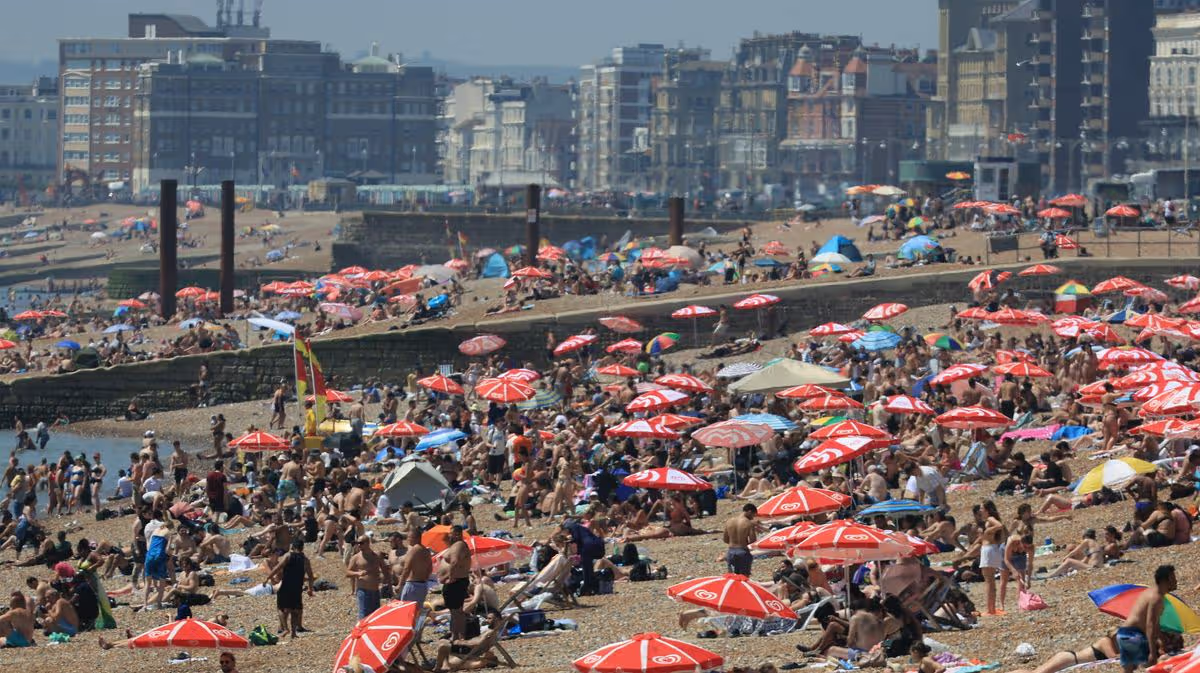
From drivers left sweltering on ‘greenhouse’ buses, to terrified new parents watching their babies sleep in baking bedrooms, the people of Britain are calling upon the Government to introduce a national heatwave resilience strategy
12:12, 25 Jun 2026Updated 12:13, 25 Jun 2026
In Newham, East London, a worried father struggles to get his five-month-old daughter to sleep in baking 30°C heat, knowing that the temperature of a baby’s room shouldn’t exceed 20°C.
In Bristol, currently the hottest area of the country, a multiple sclerosis sufferer battles to see as the heat worsens her condition and robs her of her sight. Down the road, a bus driver is boiling in his ‘greenhouse on wheels’.
This is the Britain of 2026 as yet another heatwave grips the nation. According to the UK Health Security Agency (UKHSA), an estimated 10,781 heat-associated deaths in England were recorded as “a direct consequence of heatwaves” between 2020 and 2024. Greenpeace told us: “This is not a freak event – it’s happening every single year and it’s a public health scandal.”
Advertisement
Without urgent adaptation, it’s projected that this figure will soar to approximately 11,000 fatal cases every single year by the 2050s. In recent days, the stark reality has been impossible to ignore, and many have accused the Government of not doing enough to protect people.
Weather forecasting maps suggest the mercury may soar to highs of 42°C, a foreboding warning of the sweltering summers to come. As Newham dad Jackson, 32, noted, “This is going to be the coldest summer of my daughter’s life.”
According to a startling new analysis by the National Housing Federation (NHF) and the Chartered Institute of Housing (CIH), more than 70,000 babies in England, one in every six, are currently living in overheated homes.
Advertisement
Babies in particular, who can’t regulate their temperature or manage dehydration, are at particular risk, and tragically, overheating can increase the risk of sudden infant death syndrome (SIDS).
Jackson says rising temperatures mean they’re thinking twice about having more children, with 40°C days in London becoming more frequent. “Naively, we didn’t really talk about what it means to bring someone into a world that is changing so much as a result of climate change,” he told The Mirror.
“I can’t imagine what parents are going through who have had kids in a heatwave or kids who are in neonatal intensive care units in boiling hot hospitals where air conditioning systems are failing because it’s getting hotter and hotter and they’re just not built to sustain it.”
Advertisement
For new parents like Jackson and his wife, it’s a frightening time. The couple don’t have permission to add an awning or other exterior shading, nor can they install air conditioning units. Closing the blinds can only do so much, and, with local children’s centres, which do have air conditioning, closing their doors in the heat, the family has been left isolated. The four fans they are running make little impact.
Standing out on his balcony while speaking with us, Jackson can see neighbours attempting to cool their homes with inefficient and minimally effectivetemporary air conditioning units. He believes it would be better for apartments to be built without “south-facing floor-to-ceiling windows that just let in heat throughout the whole day and no way to shade.” He added: “There needs to be a change in the way we design our buildings.”
Those with health conditions are also struggling in the extreme heat. Becky Lee, from Bristol, is dealing with additional heat sensitivity as a person living with multiple sclerosis (MS), a chronic condition which affects a person’s brain and spinal cord.
Advertisement
Becky, 32, was first diagnosed around three years ago and can usually manage her MS well. However, heatwave conditions exacerbate symptoms such asfatigue, vision issues, and balance problems. “I’m a lot more tired. My vision is more blurry. And waking up in the morning, currently for like four hours after I wake up, and my whole body is covered in pins and needles,” she said.
The rollercoaster variations, from “boiling hot heatwave down to freezing cold again”, have made it particularly difficult for Becky to regulate her body temperature. And then there are the additional complications of living as a single person, with nobody else there to take over cooking, the heat from which has done nothing to help the situation.
“I felt ill all week. It will get better again because it will obviously cool down. But in my head, I’m planning for next year now, thinking I need to get aircon installed ASAP, which is such an expense that people don’t just have the money to kind of shell out,” she said.
Advertisement
A survey carried out by Scope’s Lived Experience Research Panel in June 2025 found that a quarter of disabled people are significantly affected by hot weather, while nearly half reported that their medication can make them more sensitive to its effects.
The impact on those with health conditions or disabilities was recently highlighted in a harrowing TikTok post by social media creator @Lozzy112944.
The mum shared footage of her daughter, Lola, receiving therapy on the ninth floor of a London hospital, where she claims there was no air conditioning.
At least, in some ways, project manager Becky counts herself as lucky that she is able to work indoors. For those working outside in scorching conditions, it’s another story entirely.
The Mirror spoke with Darren Ford, a bus driver of 17 years, who described the past week’s conditions as ‘horrendous. Darren, 45, works in Bristol, where overheated passengers have understandably been complaining about the stifling conditions on board.
But, asUnite the Union rep Darren notes, while passengers may be suffering through a 30 or 40-minute journey, drivers facing down a five-hour stretch are contending with far tougher challenges.
Darren told the Mirror: “It’s like a greenhouse on wheels. You’ve got all these different windows, and it’s magnifying the heat. There’s no anti-reflective UV on any of the windows, so trying to cool it down is near impossible.”
Advertisement
Opening the doors at every stop means “there’s just no way to keep the inside of that bus to a comfortable degree”, and for drivers, this can take a serious toll.
According to Darren, “you just feel overwhelmed. You’re sweating, you’re getting restless, tired, becoming fatigued, lightheaded, and dizzy. You can just feel everything just draining from you.”
Even a bottle of water in a cool bag won’t do much under such circumstances. Drivers who leave the house at 4 or 5 am may well find that the “cool bag is now a warm bag” by the time the sun comes up.
Advertisement
This comes as Unite the Union calls upon bus firms to act immediately to protect drivers from extreme temperatures, highlighting workers’ fear of being disciplined or losing pay should they complain, plus the pressure they feel to complete journeys on time.
Darren doesn’t place much stock in the notion of maximum working temperatures, noting that “the whole of the country is going to shut down” given how common extreme temperatures are becoming.
Going forward, Darren is instead urging the Government to put a plan in place – as it has for floods, storms and pandemics – to mandate that all public carrying vehicles be fitted with some form of air conditioning and ventilation system, and to look into solutions such as different glass designs to keep the inside as cool as possible.
Advertisement
He reasoned: “I don’t hear about this in the news every day about Australia, Spain, Greece, when I go on holiday every summer. And we’re little old Britain, why can’t this be?”
This follows a petition urging the Government to “introduce a national heat resilience strategy and legal protection for excessive temperature in workplaces and homes.”
This petition, which requires 10,000 signatures to be raised in Parliament, has called for the Government to create a joined-up strategy to tackle extreme heat and to consult on a number of related topics, including maximum safe indoor working temperatures, minimum cooling and ventilation standards for new-build housing, and funding to retrofit existing buildings, including homes.
Advertisement
Other suggestions include issuing public guidance and a focus on the implications for public transport during heatwaves. For many families across Britain, change simply can’t wait until next summer.
In a statement, Greenpeace told The Mirror: “The Government needs to stop winging it every time the country wilts in a heatwave. Extreme heat is no longer a rare inconvenience but a growing threat to public health, workers, children and critical infrastructure. Politicians need to start operating in the real world and wake up to the realities of a warming climate fuelled by the burning of fossil fuels.”
You can sign the petition to introduce a national heatwave resilience strategy and legal protections here
Advertisement
Do you have a story to share? Email me at julia.banim@reachplc.com












































You must be logged in to post a comment Login