

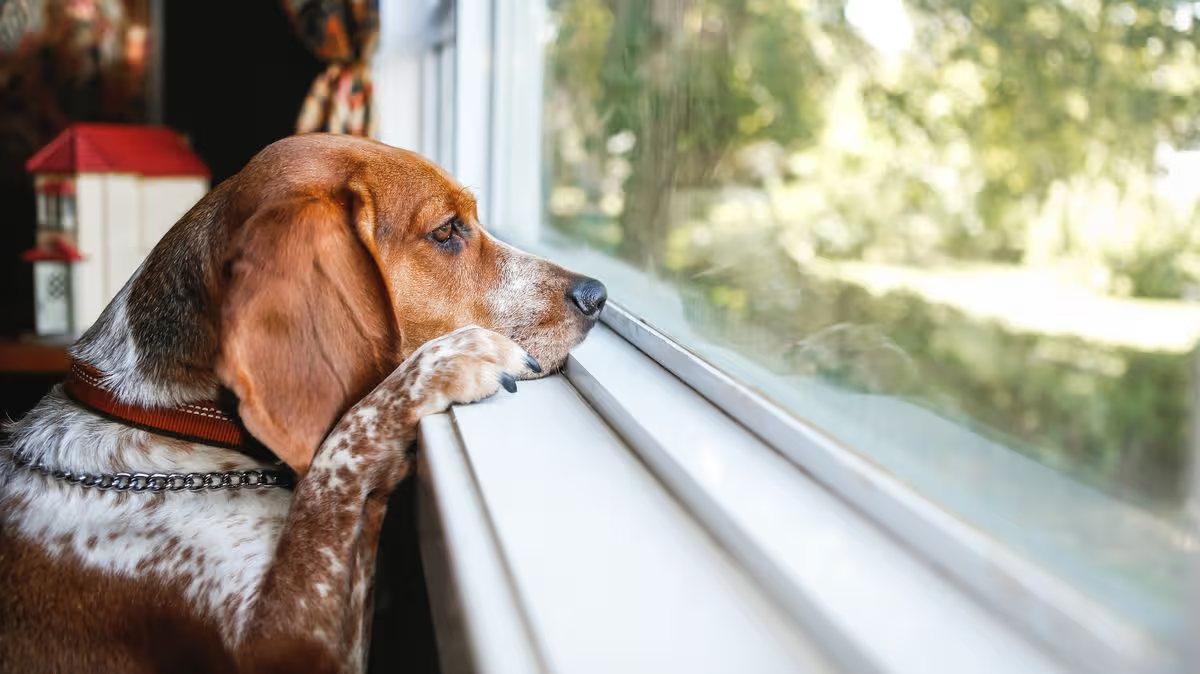
According to the RSPCA eight out of 10 dogs don’t cope well with being left alone. This can manifest in behaviours including destroying furniture, going to the toilet inside, or endless barking
While some dogs cope with being left at home alone quite happily, and may take the opportunity to have a quiet nap, ready to awake full of energy when their owners return home, for others it’s much more difficult. According to the RSPCA, eight out of 10 dogs display some signs of separation-related behaviour, also known as separation anxiety.
This can manifest in a number of ways, including destroying furniture, annoying the neighbours with endless barking, whining, or howling, or going to the toilet indoors, as well as a number of other sings which are less easy to spot.
One vet has said there are three common mistakes many pet owners make when leaving their furry friends at home alone which are actually making their separation anxiety worse. Amir Anwary, who has almost one million followers on TikTok, laid out his advice on the social media platform.
Opening his video, Amir said: “I’m a veterinarian and I had a client bring her dog into the vet clinic today who was struggling with severe separation anxiety. There were a few things that this owner was doing that was actually making her dog’s separation anxiety a lot worse. So these are three mistakes pet owners make when dealing with their dogs that have separation anxiety that you should not be making.”
The first mistake many pet owners make is thinking that separation anxiety is bad behaviour and punishing and disciplining their dogs for it.
Amir said: “If you see your dog displaying any sort of destructive behaviour, whether it is biting shoes, burying in the garden, they’re peeing all over the house when you’re gone, or they’re doing anything like that, in most cases it is not them being naughty, it is that they are struggling with severe anxiety. They don’t need to be punished, they need to be helped.”
The second mistake Amir said pet owners make is treating leaving and returning back home as “very emotional events”. “When you leave your house and you go to your dog and you say ‘I’m so sorry, oh my God, I have to go now, you’re going to be fine’, you already make them sad,” he said.
“So your dog is assuming that something absolutely terrible is going to happen. And then you arrive back home and you’re so happy to see them – ‘hello boy!’ – and you’re super joyful, now they think that they’ve survived this absolutely terrible thing.
“The more you do this, the more you reinforce the behaviour that being left alone at home is something terrible that they need to survive. So take the emotion out of you leaving and you getting back home.”
And the third mistake is avoiding professional help. “So many pet owners think their dog’s anxiety is going to get better over time,” he said.
“Go to someone with anxiety and ask them if their anxiety gets better over time without help. It gets worse, guys, it gets worse.
“There are professionals out there, behaviourists that can help you. Veterinarians can prescribe medical treatments that can help a lot with dogs suffering with anxiety, so make sure you seek some form of treatment.”
How to deal with separation anxiety in dogs
The RSPCA has provided a number of tips of how to help a dog suffering with separation anxiety. These include:
- Make sure they have exciting things to occupy themselves while you’re out. A long-lasting chew, or a ball stuffed with treats the animal has to work to get out are ideal.
- Take them for a walk before you leave so they have a chance to go to the toilet and exercise. Leave a gap of half an hour between when you get back from the walk and when you leave, and make sure they are fed.
- Minimise disturbances by closing the curtains, putting them in a quiet room, or leaving the TV or radio on to muffle noise from outside.
- Get a dog sitter or dog walking service to keep your pet company.











































You must be logged in to post a comment Login