NewsBeat
What we know about the deadly Iran school strike | World News

Evidence is growing that outdated US intelligence was “likely” to blame for the attack on a school in southern Iran which killed more than 170 people, most of them children.
The US and Israel say they are attacking military sites, trying to destroy Iran’s ability to create nuclear weapons and its conventional weapons facilities.
But in the early hours of the near two-week conflict, an elementary school was hit, and outdated US intelligence was “likely” to blame, Sky’s US partner, NBC News has said.
It was part of the attacks that also killed Supreme Leader Ayatollah Ali Khamenei.
This is what we know so far.
Iran war latest – New leader’s first statement
What happened?
On 28 February, the first day of fighting, the Shajareh Tayyebeh Elementary School in the town of Minab, southern Iran, was hit by a missile strike.
More than 170 people were killed, most of them children, according to NBC. Other reports put the number of dead at more than 165.
It was a Saturday morning, the start of the Iranian school week, when the building was full of young children.
The US was “likely” responsible, NBC said, quoting an American official and three sources familiar with the findings of a preliminary US military investigation into the incident.
Why was the school hit?
The munition did not go off target, but rather hit the school because old intelligence showed it to be an Iranian Revolutionary Guards Corps (IRGC) base, the four sources said.
The school is next to an IRGC site.

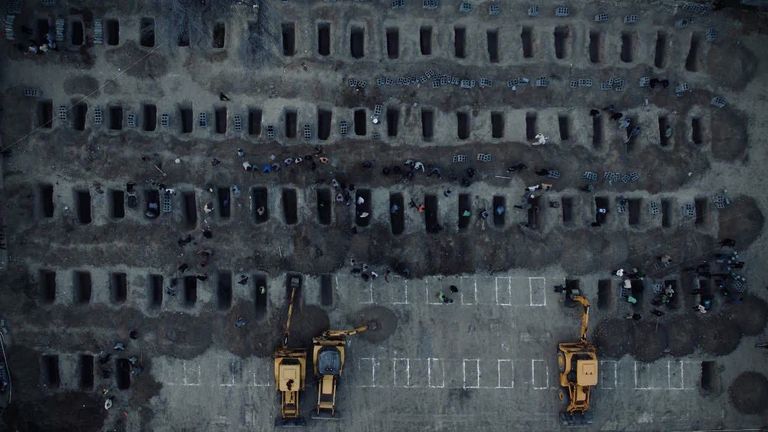
Footage stated to show graves being prepared for those killed in the strike on the school. Source: Mehr News
US Central Command (CENTCOM) based its targeting on data provided by the US Defence Intelligence Agency, with Israel involved in selecting the targets.
It is not clear where a breakdown occurred that may have caused the likely US attack on the school, the American official said.
Was it avoidable?
The school, as well as other targets struck the same day, had characteristics visible from the air that could have identified them as civilian sites before they were struck, according to satellite analysis by the Associated Press.
The suspicion that the US was responsible grew on Monday, as new footage came to light showing what experts identified as a US-made Tomahawk cruise missile hitting the military compound as smoke was already rising from the area where the school was located.
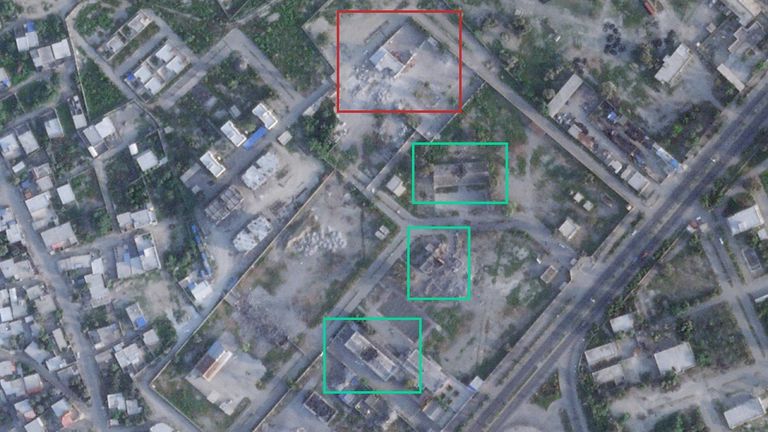
There are three visible strike impact points on buildings within the IRCG base, and the impact on the school. Credit: Planet Labs PBC
Missile fragments which Iranian state media said hit the school bear the markings of such a weapon, NBC said, quoting experts who reviewed the pictures.
The US is the only country currently involved in the conflict that uses Tomahawk missiles.
Publicly available satellite imagery shows the school building was part of the military compound until about 2017, when a new wall was added to separate the two.
A watchtower on the property was also removed. Around the same time, the imagery shows the walls surrounding the building were painted with murals in vibrant colours, primarily blue and pink, so bright they’re visible from space.
The school was clearly labelled as such in online maps and has an easily-accessible website full of information about students, teachers and administrators.
International law governing warfare bans strikes on non-military targets.
What has the US said?
US President Donald Trump initially blamed Iran or “other countries” for the attack, then later said he wasn’t certain who was behind it.
Pressed on what he would do if investigators found the US was responsible, he said: “Whatever the report shows, I’m willing to live with that report”.
Read more:
Iran’s new leader injured but ‘fine’
Iranian footballer changes her mind on asylum
US Defence Secretary Pete Hegseth said Iran is “the only side that targets civilians”.
Members of the US Congress have demanded answers, including Republican Senator Kevin Cramer, who said, if the US was behind it, the military must “do everything you can to eliminate those mistakes going forward”.
Some pointed to the gutting of the Pentagon’s Civilian Protection Centre of Excellence under Mr Hegseth and the failure to update its no-strike list.
What has Iran said?
Iran’s foreign minister Abbas Aragchi called the deadly attack a crime against the Iranian people which would not go “unanswered”.
Iran’s foreign ministry spokesperson, Esmaeil Baghaei, called the incident a “blatant crime”.