In the new league phase format, the top eight teams have progressed straight through to the last 16 and avoided a two-legged knockout play-off tie in the process.
Meanwhile the teams that finished between ninth and 24th will be in action this week.
As Borussia Dortmund, Olympiacos, Club Brugge, Galatasaray, Monaco, Qarabag, Bodo/Glimt and Benfica finished the league phase in 17th to 24th, they were at home for their respective first-legs.
Though, Qarabag are almost certainly facing elimination after losing 6-1 at home to Newcastle, while Monaco and Benfica have it all to do after losing by one goal against PSG and Real Madrid respectively.
Advertisement
Champions League knockout phase playoff first-leg results
Monaco 2-3 Paris Saint-Germain
Borussia Dortmund 2-0 Atalanta
Olympiacos 0-2 Bayer Leverkusen
Advertisement
Bodo/Glimt 3-1 Inter Milan
Club Brugge 3-3 Atletico Madrid
Champions League knockout phase playoff second leg fixtures
Atletico Madrid (3) vs Club Brugge (3)
Advertisement
Bayer Leverkusen (2) vs Olympiacos (0)
Inter Milan (1) vs Bodo/Glimt (3)
Newcastle (6) vs Qarabag (1)
Atalanta (0) vs Borussia Dortmund (2)
Advertisement
Juventus (2) vs Galatasaray (5)
Paris Saint-Germain (3) vs Monaco (2)
Real Madrid (1) vs Benfica (0)
When is the Champions League last-16 draw?
Advertisement
The top eight from the league phase of the competition will face the eight winners of the knockout play-off ties in the last 16. The draw for the last 16 will take place on Friday February 27, 2026.
In addition, each team’s potential route to the Champions League final will become clear as the quarter-final and semi-final paths will be revealed.
Who can Arsenal, Liverpool, Tottenham and Chelsea face?
Because of the newly introduced pairing system, all five Premier League teams already know their four potential opponents in the last-16 draw.
Advertisement
Man City, meanwhile, will face either Real Madrid, Benfica, Bodo/Glimt or Inter Milan after finishing eighth in the league phase.
Who is guaranteed a Champions League last-16 place?
Champions League last-16 dates
The first legs will be played on either March 10 or March 11, with the return fixtures a week later.
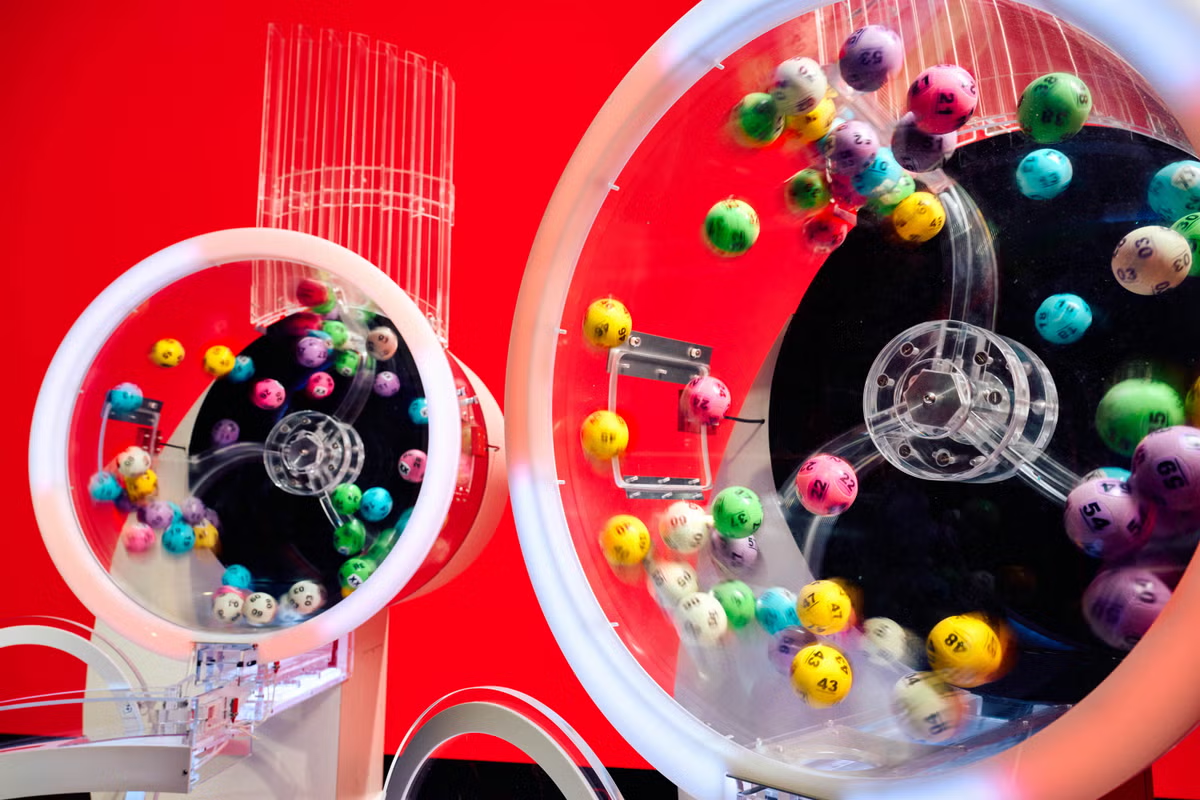
The National Lottery is changing its main draw for the first time in a move which could double the number of British millionaire winners, as well as offering a new mega jackpot game this summer.
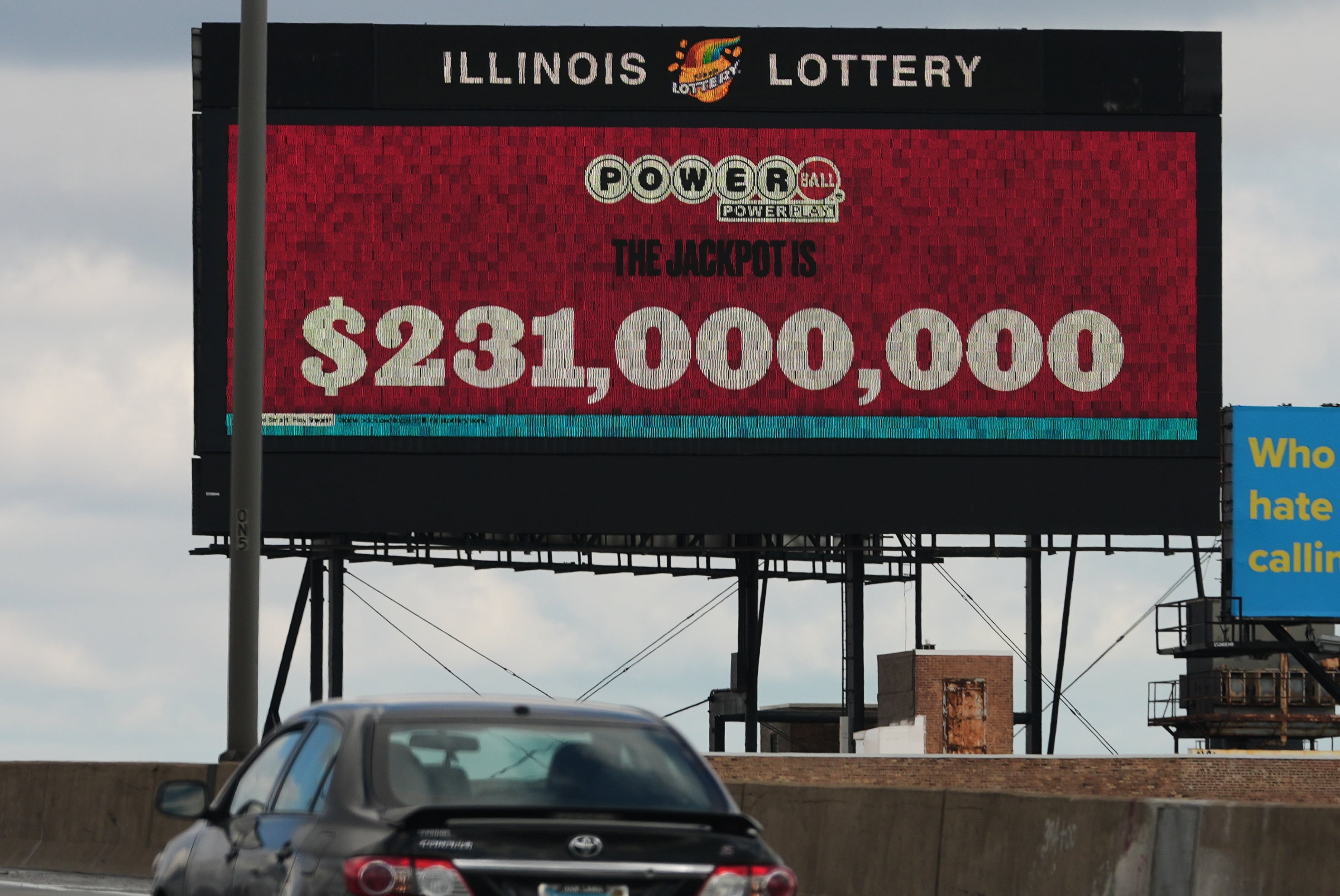
Lottery operator Allwyn introduced the first new game in the National Lottery’s history, a UK-specific version of the US draw Powerball, the world’s biggest rolling jackpot.
UK players will pay £4 per line to compete with their US counterparts to win the shared jackpot of over £1 billion, which will be paid out over 30 years to UK winners.
The operator also announced the biggest overhaul to the nation’s “millionaire maker” Lotto since its launch in 1994, with players being given two chances to win for every £2 ticket.
Advertisement
Powerball is already popular in America (AP)
The change, to be rolled out from 7 June subject to regulatory approval, is expected to more than double the number of Lotto millionaires from around 140 a year to about 345.
The first new Lotto draw will take place on 10 June, with jackpots beginning at £2 million. They can roll over up to five times before a must-be-won event on the sixth consecutive draw.
Powerball, launched in the US in 1992, made the biggest-ever winner of over $2.04 billion in 2022. If regulators approve, the game could be launched in the UK later this summer with an uncapped jackpot of £12 million as well as other prizes.
Allwyn CEO Andria Vidler said the upgrades would raise more money for the lottery’s good causes across the country.
She said: “We are delivering on our promise to bring more games, more entertainment and more innovation to the National Lottery. With extensive upgrades to our digital and retail channels now complete, we have a fantastic summer lined up, as we are now able to bring these exciting new games to our players.
Advertisement
Get a free fractional share worth up to £100. Capital at risk.
The National Lottery is set to launch the new changes this summer, subject to regulatory approval (PA Wire)
“Lotto has always been the best game to play if you want to become a millionaire. Our new Lotto gives players two chances of winning £1m-plus for the same £2 they spend on each Lotto line today, creating hundreds more millionaires every year.
“And with its transformative jackpots, which will be paid to UK winners over time, we’re certain that our UK-specific version of the iconic Powerball game will really capture the UK public’s imagination.”
Powerball is expected to deliver around £1 billion more to UK good causes over the first five years, with more than 30 per cent of the ticket price returned to the National Lottery’s charitable side. Changes to Lotto are also predicted to generate millions more for good causes across the UK.
Advertisement
“By offering a wide range of complementary games, we’re ensuring there is something for everyone – returning the magic, building our player base and making sure the National Lottery remains part of the national conversation,” Ms Vidler added.
“In turn, this will raise more money for good causes, helping us reach our goal of doubling weekly returns to good causes from £30m to £60m by 2034, with £33m a week currently raised.”
Allwyn said recently that total National Lottery sales, including lottery tickets bought in shops, came in at £8.1 billion in 2025, up 3.5 per cent on the previous year.
More than £1.7 billion was generated for good causes – which incorporates funding for health, education, arts, sports heritage and charity – and £967 million was raised in taxes.
The museum is currently closed as it is ‘not safe’ for it to be open to the public – but without additional funding, it may not ever be able to reopen
The future of a museum is at risk as volunteers need more funding for urgent repairs. Major work to repair the roofs of Ramsey Rural Museum’s 10 buildings has been ongoing since January.
Advertisement
The museum has been able to undertake the much-needed repair, thanks to nearly £100,000 in funding from US charity the Leir Foundation. While the work has been going on, it’s been discovered that more work is needed on 3,500 pantiles that were damaged when they were originally fitted nearly 50 years ago.
While there is some grant funding left, the volunteers are “almost certain” this funding will run out. Volunteers are now appealing to the public for funding.
If the funding isn’t raised, the museum could “undoubtedly” close, said trustee and treasurer Jeremy Mumford. He added: “The museum needed to repair these roofs as they were dangerous. Because of this additional work, we anticipate all of the money will run out before it’s completed.
“It’s not safe at the moment to be open to the public, therefore we are not getting any money. That is the biggest issue. We need to keep the museum in front of people and show that we need their support.”
Advertisement
The rural museum will celebrate its 50th anniversary in 2028. Inside there are more than 40,000 artefacts that showcase the working and social history of Ramsey, as well as the surrounding area.
Jeremy said the museum is a “big part” of the town, and it forms part of the town’s “fabric”. “The museum is like an old friend,” said Jeremy. He added: “We put on events to celebrate local work and businesses. We seek to educate and entertain people.”
If the funding is not raised, there is a chance the museum may not be able to reopen. Alternatively, if it is to open again, they may have to start charging entry, when it’s currently free, or hold fewer events.
Advertisement
Jeremy added: “It depends on what we find in the two other roofs that we haven’t touched yet. We also certainly know we are going to go over [budget] if these roofs have the same issues. We are going to be significantly short of money.”
Anyone who wishes to donate to help the rural museum with its repairs can donate here.
Recently, reports claimed that Channel 5′s Dan Walker is set to appear before an employment tribunal following allegations of workplace bullying.
But what is the legal definition of workplace bullying to begin with – and how can you tell if it’s happening to you?
What are your rights if you think you’re being bullied in a professional setting?
Advertisement
We spoke to Jayne Harrison, a head of employment law, about the topic.
What’s the legal definition of workplace bullying?
There isn’t a single legal definition of bullying.
But, Harrison told us, “ACAS defines workplace bullying as offensive, intimidating, or malicious behaviour that abuses, undermines, or humiliates the recipient.
Advertisement
“Bullying is usually characterised by behaviour that is directed at an individual, either with the intent to cause distress or with reckless disregard for the consequences. This behaviour must go beyond the ordinary unpleasantness of a workplace and create a foreseeable risk of harm.”
Additionally, bullying can involve a pattern of repeated and deliberate behaviour, such as spreading malicious rumours, excluding specific people from work activities, and consistently undermining a worker.
“These actions are designed to create an intolerable working environment for the victim. In contrast, a general negative work environment may involve unpleasantness or conflict that does not specifically target an individual or cause harm.”
Sometimes, Harrison continued, seemingly professional demands can count as bullying too.
Advertisement
“Acas cite deliberately giving someone a heavier workload than everyone else as an example of bullying. If the targets or unfair workload are unreasonable, impossible to achieve, or used specifically to humiliate or punish an employee, then this would be classed as bullying.”
Can a one-off event count as workplace bullying?
Yes, said the lawyer, especially if it “is severe, intentional, or creates a lasting intimidating or hostile environment”.
The nature and severity matter here, she added. Something like “shouting, making derogatory remarks, or overbearing supervision could be considered bullying if they cause the recipient to feel vulnerable, humiliated, or undermined.”
Advertisement
Power structures are an important consideration here, as are the intentions behind the behaviour, and whether it exploited “specific vulnerabilities of the individual, such as their age, sex, or disability”.
People in positions of power can be bullied by those on a lower rung of the corporate ladder, she added.
“This is sometimes called ‘upward bullying’ or ‘subordinate bullying’. It can be from one worker or a group of workers,” and may involve refusing to take orders, spreading rumours, repeatedly undermining an individual’s authority, and deliberately setting someone up to look incompetent when they are not.
What should I do if I suspect workplace bullying?
Advertisement
Harrison suggested five steps:
1) Set boundaries
“If someone’s behaviour makes you uncomfortable, try to address it early. Calmly let the person know that their actions or words are inappropriate and that you would like to be treated with more respect. Setting clear boundaries can help prevent these situations from escalating.”
2) Communicate (and document everything)
Advertisement
“Speak up if you witness bullying or feel like you have been affected. You might start by talking to a trusted colleague, manager, or HR representative. Document what is happening, including dates, times, and details. This can be important if the issue needs to be formally addressed later.”
3) Take notice of your environment
“Be aware of how people are being treated in the workplace. If you see disrespectful behaviour, support your colleagues and speak up when it is safe to do so. Promoting kindness and respect helps create a better environment for everyone.”
4) Be mindful at work events
Advertisement
“At networking events or work functions, remember that alcohol can sometimes lead to poor judgment or unprofessional behaviour. Know your limits, look out for others, and step away if a situation feels uncomfortable. You have every right to remove yourself from any environment that feels unsafe.”
5) Use safe reporting channels
“If you experience or witness bullying, report it through the appropriate channels. Most organisations have confidential reporting processes where your concerns will be taken seriously and handled appropriately. You do not have to face it alone. Reach out for support from HR, your manager, or an employee assistance programme if available.”
Now, she’s spoken about what led her to make the decision to call it a day.
Barbie Ferreira said after conversations about how to make her role a ‘fully fleshed out character’ weren’t going anywhere, she asked: ‘Let me just go do my thing.’
On the podcast, Not Skinny But Not Fat, Barbie told host Amanda Hirsch that she ‘didn’t need to be on the biggest TV show on Earth’ if she wasn’t ‘acting’.
Advertisement
She went on: ‘I would rather do an indie movie where I’m acting, I’m flexing my muscles, I’m being creatively asked to do things rather than sitting around to be a background character.’
Barbie has previously said she didn’t want to play the ‘fat best friend’ (Picture: Kayla Oaddams/Getty Images)
The actor said she had to say a ‘very teary-eyed goodbye’ to her character in 2022 (Picture: HBO/Kobal/REX/Shutterstock)
Barbie played Katherine ‘Kat’ Hernandez, a close friend of Maddy’s (Alexa Demie), who gets into cam-girling during the first season of the sex and drug-fuelled series.
Contrary to speculation at the time, Barbie reiterated: ‘It wasn’t dramatic.
‘In fact, it was kind of the opposite of dramatic where it was like a long process of being like: ‘I don’t know if this is it, for me.’
It comes after the 29-year-old recently revealed to Deadline that her role on Euphoria was ‘diminishing’ and ‘wasn’t really letting [her] show [her] range’.
Advertisement
Continuing, she said: ‘What makes me happy is acting and growing my career.’
Around the time of Euphoria season 2 finishing, rumours started circulating around set drama involving Barbie.
Her exit was mourned by many fans (Picture: barbieferreira/Instagram)
Why is Euphoria season 3 so controversial?
The first episode of Euphoria season 3 aired earlier this week, and it’s already proven to be controversial.
In a trailer for upcoming episodes, we see Sydney Sweeney dressed as a baby while being photographed. Her character Cassie, who is now an OnlyFans creator, sits with her legs open and a dummy in her mouth.
Some viewers who found the imagery disturbing, have called for a boycott.
Advertisement
Sweeney is also thought to be feuding with Zendaya over their opposing politics, and Tom Holland’s fiancé is rumoured to be in disagreement with creator Sam Levinson.
The show’s previous composer, Labrinth, recently blasted the showbefore the latest season, announcing ‘f*** Euphoria’ in since-deleted posts on social media.
Advertisement
It was claimed that she stormed off over an alleged falling out with the show’s creator, Sam Levinson.
Since leaving Euphoria, Barbie has pursued other projects including indie comedy Mile End Kicks and horror mockumentary Faces of Death.
The former comes out on April 17 and the latter hit screens on April 10, making this month a busy time for the former Victoria’s Secret angel.
Advertisement
Unlike in the series starring Sydney Sweeney, Jacob Elordi and Zendaya, where she talked about being ‘a background character’, the actor stars in both films.
During the podcast with Hirsch, she said: ‘I do indie movies that are made on a shoestring budget. But it’s cool and real stories. And I’d rather that than be a second thought.’
The next episode of Euphoria season 3 will be available to watch on April 20 at 2am on Sky, NowTV, and HBO Max.
Got a story?
Advertisement
If you’ve got a celebrity story, video or pictures get in touch with the Metro.co.uk entertainment team by emailing us celebtips@metro.co.uk, calling 020 3615 2145 or by visiting our Submit Stuff page – we’d love to hear from you.
Huntley was serving a life sentence for the 2002 murders of Holly Wells and Jessica Chapman
Soham killer Ian Huntley died in hospital from a head injury following an attack days earlier at HMP Frankland, an inquest in Crook, County Durham, has heard.
Advertisement
An inquest has opened today (Tuesday, April 14) into the death of Huntley, who died days after a prison attack.
Huntley died from blunt trauma injuries days after being struck over the head multiple times with a metal bar in a prison attack, the inquest heard today.
The 52-year-old died in the Royal Victoria Infirmary in Newcastle on March 7 after he was allegedly attacked with a metal bar in a workshop at HMP Frankland in Durham on February 26.
The inquest hearing was held in Crook, County Durham, opened by the County Durham and Darlington Coroner.
Advertisement
Listed under the name Ian Kevin Huntley, the inquest opening was heard by senior coroner Jeremy Chipperfield.
Anthony Russell, 43, has been charged with murdering Huntley at the maximum security jail.
He will attend Newcastle Crown Court on April 24 for a pre-trial preparation hearing.
Huntley was serving a life sentence for the 2002 murders of 10-year-olds Holly Wells and Jessica Chapman.
Advertisement
The ex-school caretaker killed the best friends after they left a family barbecue to buy sweets in Soham, Cambridgeshire, on August 4 2002. He dumped their bodies in a ditch 10 miles away.
They were not found for 13 days, despite a search involving hundreds of police.
At the time, Huntley lived with Maxine Carr, who was a teaching assistant at Holly and Jessica’s primary school.
He denied murdering the girls but was convicted after a trial at the Old Bailey in 2003. He was jailed for life with a recommended minimum term of 40 years.
Advertisement
Carr gave Huntley a false alibi and was jailed for 21 months for perverting the course of justice.
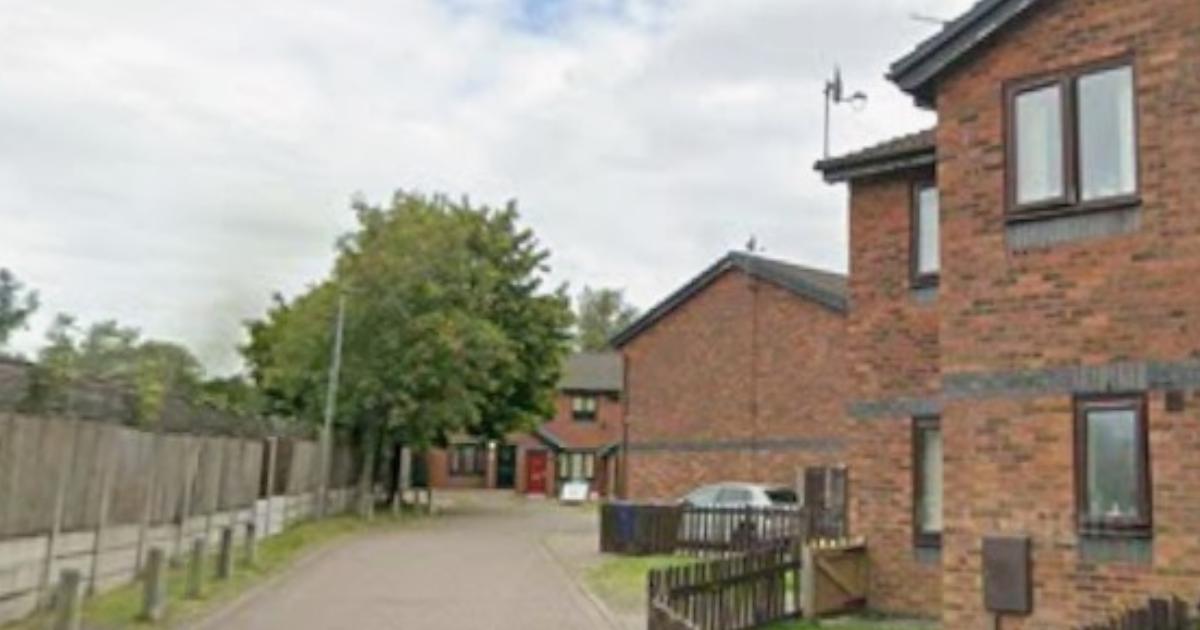
Those who play the Postcode Lottery and live on Olsberg Close in Radcliffe will receive the money after their postcode – M26 2UZ – was drawn.
Everyone who has an eligible ticket will receive the daily prize.
The daily draw win comes just weeks after two Bury neighbours bagged a quarter of a million pounds each on the Postcode Lottery’s bumper monthly prize.
Advertisement
Postcode Lottery is a subscription-based lottery which raises money for charities.
Not only do players win cash prizes, but good causes also receive essential support.
Your postcode works as your ticket, and for £12.50 a month you’re entered into every prize draw and there are guaranteed winners every day.
People play with their chosen postcode and are automatically entered into all draws.
Advertisement
Prizes include the weekly Millionaire Street prize and monthly £250,000 or Postcode Millions prizes. If your postcode gets picked in the £250,000 prize, for example, every ticket in that postcode wins £250,000.
Every day, there are £1,000 prizes to be won for every ticket in 20 postcodes. If you play with two tickets, you receive double the winning prize amount.
The results of the prize draws can be found on the Postcode Lottery website.
The results of the prize draws can be found on the Postcode Lottery website.
Fashion writer Eve Rowlands shares just a few of her top picks from the sale, including a beautiful viral butter-yellow dress
11:41, 14 Apr 2026Updated 11:42, 14 Apr 2026
This article contains affiliate links, we will receive a commission on any sales we generate from it. Learn more
With spring in the air, finally, many of us are taking the opportunity to give our wardrobe a little refresh, and whenever I’m looking for a little boost with my style, I always turn to Nobody’s Child. Fully embracing the new season, the brand has launched a series of discounts and its latest sale is tempting me with some brilliant deals on its ‘Spring Picks’.
Offering up to 30% off, the brand, loved for its eco-friendly designs by the likes of Louise Thompson, who recently collaborated with the fashion label, Vicky Pattison and more besides. It is currently offering its fans a range of discounted pieces, from jumpsuits to jackets, dresses to t-shirts.
Ideal for those wanting to pick up a dress for an upcoming spring wedding, some holiday gear or simply a few pieces that’ll elevate their spring rotation with a new jacket or a fresh blouse, sale prices start at just £8.40 and go up to over £300 for those with deeper pockets.
Advertisement
Having scrolled through the sale myself, I thought I’d share just a few of my top picks from the sale which are great bargains and are ideal for the sunshine, warmer days and nights – including a dress that sold out multiple times last year and was a number one best-seller on the website.
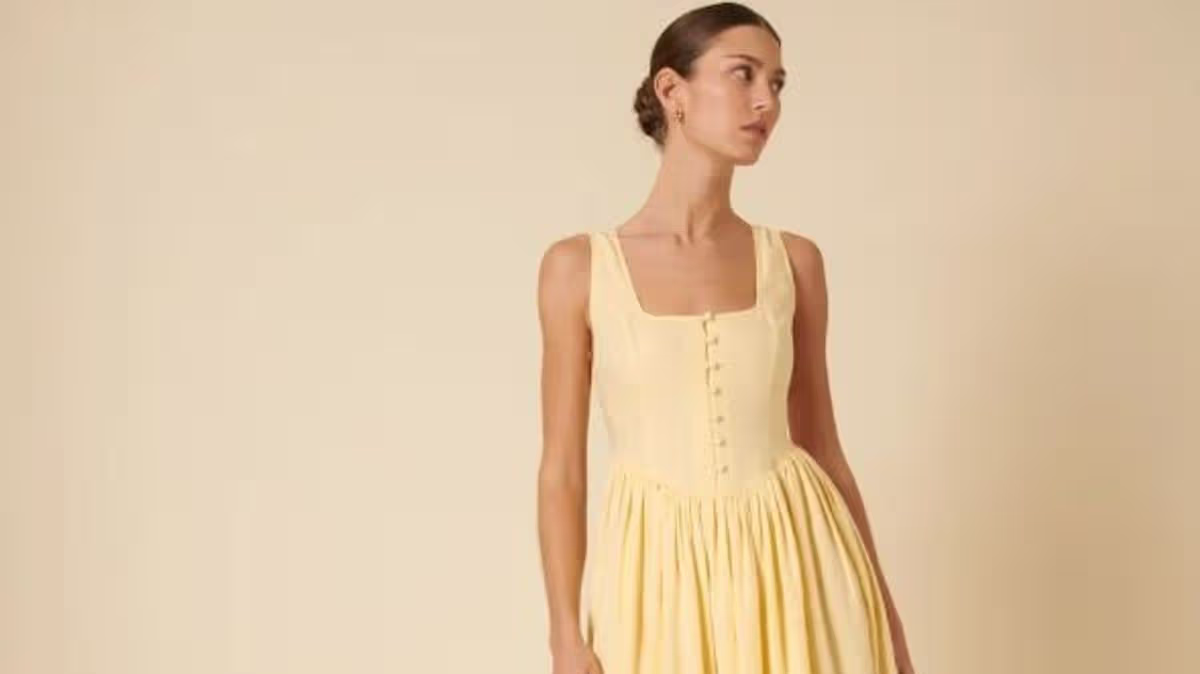
Butter Yellow Drop Waist Cora Midi Dress – was £79, now £55.30
Butter yellow is back, and one of last year’s viral dresses in the shade has been massively reduced in the Nobody’s Child sale. The Cora midi dress continues to cause quite the buzz thanks to its corset-style bodice, square neckline, A-line skirt and flattering, timeless silhouette. While it does also come in a range of colours, from green and burgundy to a ditsy floral print, this yellow hue is bright, joyful and can be worn for a range of events, from a pub outing with some casual sandals and a denim jacket, to even a laid back wedding.
With most reviews citing how it is a ‘beautiful dress’ that ‘fits perfectly’ and ‘travels well’, a number did warn shoppers to ‘go down a size’ for an ideal fit. So keep that in mind.
Advertisement
Blue Denim Cord Collar Jacket – was £99, now £69.30
Spring is denim jacket weather and while you can’t go wrong with a classic, trucker style (similar to this Levi’s design), Nobody’s Child has combined two much-loved trends that marry this classic style with a barn jacket. With a cord collar that can be fastened to its neck with metal buttons, this Blue Denim Cord Collar Jacket nicely contrasts the bright blue hue of the cotton twill denim finish that oozes casual chic.
Its relaxed fit and drop shoulders make it ideal for layering over both tops and jumpers. Its long-line style can be worn cinched in at the waist, thanks to its internal ties, or looser, which is ideal for popping over jeans and dresses. Made from 95% Organic Cotton RWS Wool Cotton Wool and 5% Organic Cotton, it’s likely to be soft on the skin and would go gorgeously with white jeans and beige pumps and a broderie Anglaise blouse when the weather permits.
Beige Linen-Blend Dillon Shirt Dress – was £120, now £96
With summer temperatures in our midst, linen is another popular choice for the upcoming sunshine and this beautiful Dillon shirt dress, with its somewhat vintage style, is such a versatile piece for our spring/summer wardrobe. With £24 off, the dress has a relatively long mid-axi length (it measures at 130cm) and, being a shirt dress, features a classic collar and unique wide half-length sleeves.
Its button front travels about 3/4 of the way down, leaving a lovely front slit, while its subtle seams add a flattering structure through the body that skims over the tummy. With the style taken care of, it’s finished with a shirred back panel for a comfortable fit that one fashion fan has hailed as ‘lovely’.
The only downside is that it doesn’t seem to come in different lengths, which may not be ideal for those with more petite frames, as one shopper cited in their five star review which read: “This is a lovely dress. Fitted true to size in the body but unfortunately was way too long for me at 5’2”. I wanted a midi length but this was almost floor length on me so I had to return it.”
White Pleated Wide Leg Trousers – was £69, now £55.20
Every spring wardrobe needs a pair of white trousers, and this wide leg pleated pair from Nobody’s Child are a lovely option that’ll be a seriously hard-working item in any wardrobe. Versatile for wear to the office as well as to a local coffee shop on a Sunday morning, the trousers feature a wide leg silhouette with cinched, fitted high waist with two mock horn buttons.
Their front pleats deliver sophistication and style and fall through the relaxed wide leg for added volume. Coming in green as well as white, the trousers come in petite, regular and long lengths and are still available in sizes four to 18.
Made from 100% Organic Cotton, many users have praised the trousers’ lack of transparency (something many white trousers have), with one five star review reading: “Great quality – finally white trousers that aren’t see through! Great fit – very flattering.”
Advertisement
Another added: “Most beautiful trousers, they fit like a glove and are such good quality!”
The only downside for one shopper, who left a three-star review, was that they didn’t quite fit right around the crotch area. They said: “Loved the cut on these but the crotch length was too short on the size 14 and the size 16 was too big. Had to return. Fabric was somewhat see through but better than lots of other white trousers.”
If £55 is still a little pricey, Uniqlo has its Jersey Barrel Leg Trousers in ivory for £34.90. With a similarly flattering wide leg, they have a relaxed fit and have been hailed for being ideal for those with smaller waists and bigger thighs, as one user noted: “Great fit, tight on the waist and large on the thighs so perfect for the small waisted girls.”
Black Floral Layla Midi Dress – was £89, now £62.30
Shoppers on the hunt for a chic occasion dress that suit the likes of weddings, christenings, parties and more, this Layla dress is a beautiful design that has been loved by fashion fans for its ‘feminine, flattering shape’ that is ‘light to wear and beautifully made’. Available in sizes four to 14 online (16 and 18 are OOS), the dress has a lovely V-neckline that nicely complements its romantic short ruffle sleeves.
With an underbust seam that shapes the bodice neatly, it skims over the tummy and falls into a relaxed midi skirt. Although it’s important to note that some people weren’t too enamoured by the V-neck, stating it was a smidge too low cut, while others found the body to be too long on shorter frames. So keep that in mind when shopping.
On sale for £62.30 in the pink floral design, it features a black background on which pink flowers and green stems provide colour and drama.
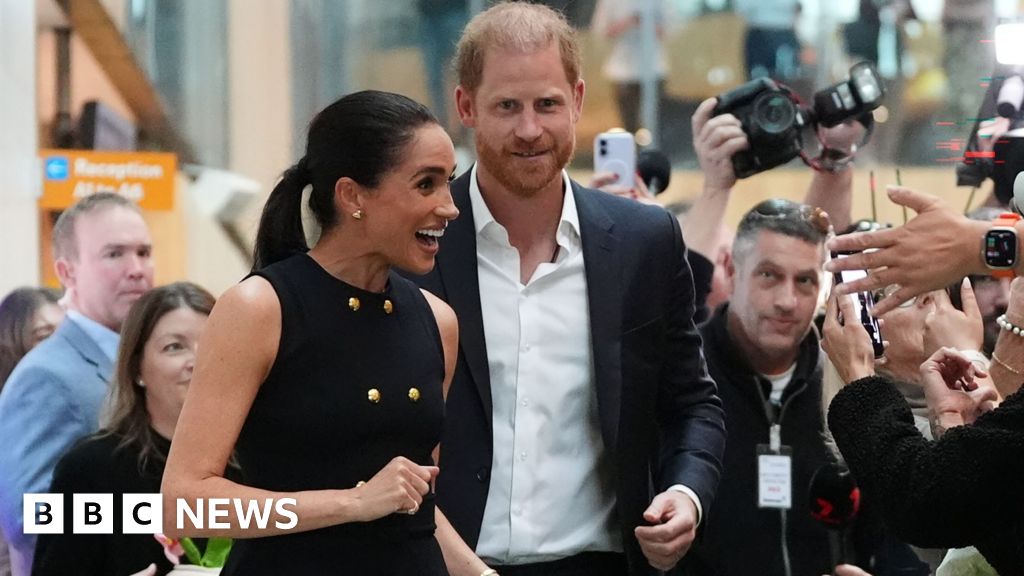
The Duke and Duchess of Sussex have arrived in Australia for a four-day tour that includes visits to charitable causes alongside private, money-making engagements.
After stepping down as working royals in January 2020 and giving up their His and Her Royal Highness (HRH) titles, the couple are visiting as private citizens and say that the trip is privately funded.
The visit includes meeting patients and medics at a children’s hospital, military veterans and their families, and survivors of family violence.
BBC News journalist Simon Atkinson explains how Harry and Meghan’s visit will be different compared to their last time in the country in 2018.
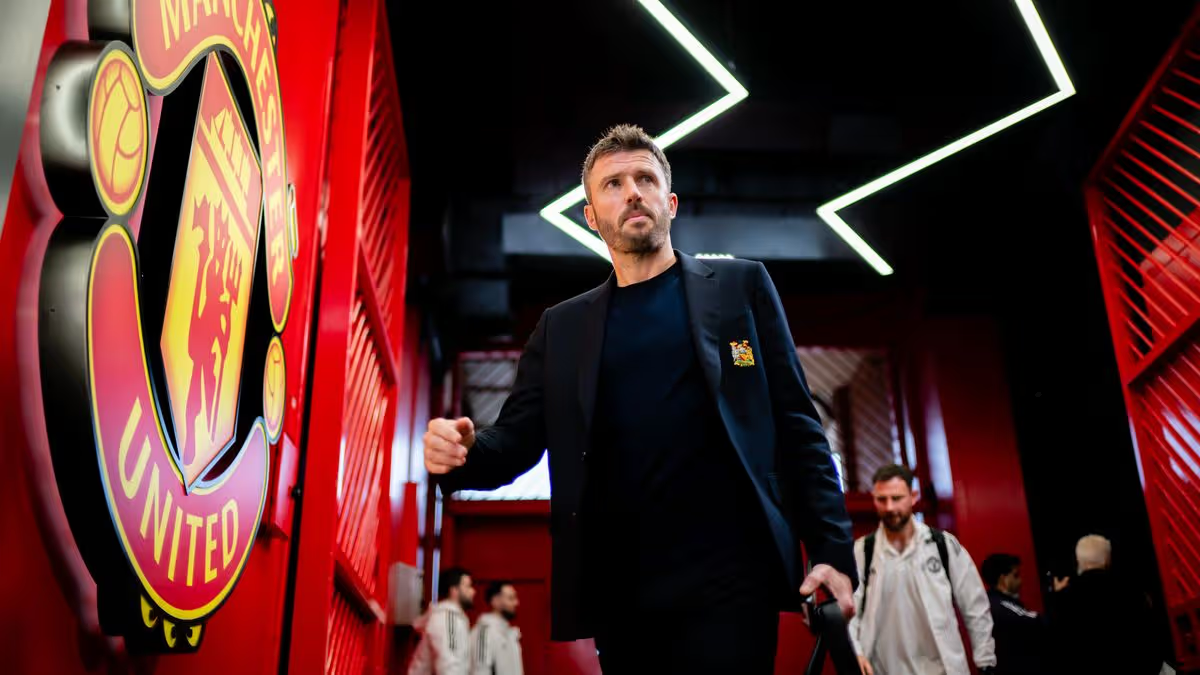
Michael Carrick was keen to stress the magnitude of Man United’s rivalry with Leeds ahead of kick-off yesterday – it’s just a shame his players didn’t seem to grasp it.
“It’s something we spoke about in the changing room with the players because I think it’s important that as players and as a group we all understand what it means and the history behind it. We’re looking for a big night tonight,” Michael Carrick said when asked about the magnitude of Manchester United’s rivalry with Leeds in the Old Trafford tunnel before kick-off last night.
Advertisement
“The supporters will be ready for it, both teams have got a lot to play for and we want to make it a good night.”
Indeed, nobody could accuse the United supporters of not being “ready for it”, in Carrick’s words. United have been riding the crest of a wave since Carrick’s appointment in January, catapulting themselves up the table and into the Champions League qualification spots. Football fans can be fickle individuals, and it would have been easy for the Old Trafford crowd to turn on their team having been brought back down to earth against relegation strugglers and fierce rivals Leeds.
Get MEN Premium now for just £1 HERE – or get involved in our United WhatsApp group by clicking HERE. You can also join our United Facebook page by clicking HERE and don’t miss out on our brilliant selection of newsletters HERE.
Turn on their team they did not. In fact, they produced an atmosphere that United’s turgid display didn’t warrant, and nearly carried their team to a point that you’d struggle to argue would have been deserved. The truth is, such is the cushion United have afforded themselves in the chase for Champions League football, they are still well clear in the race to secure a place in the top five.
Advertisement
Monday night was as much about getting one over their old foes as it was another three points towards Champions League football. United fans knew it, but their players did not. Carrick’s pre-match words seemingly fell on deaf ears.
United may have been without some of their key men, but so were their opponents, as Daniel Farke was keen to stress in his post-match interview.
Leeds were nearing 400 minutes of Premier League football without a goal when Paul Tierney’s whistle signalled the start of the game on Monday night. They had two in under 30 minutes against United and it should have been more.
Following 24 days without a game, match sharpness was always likely to be in short supply for some in the United camp, but that’s no excuse for the performance that was served up prior to Martinez’s sending off, an incident that strangely seemed to act as a shot in the arm to the home side.
Advertisement
Down to 10 men, United played with tempo and at least looked to make something happen, even if quality in the final third was lacking. Prior to that, United’s play was sloppy and they looked like a team that had just expected to turn up and win comfortably.
United have form for starting games slowly. Ten of their last 11 goals have come in the second half, with Casemiro’s strike in the ninth minute of first-half stoppage time at Newcastle the exception. A slow start against a Leeds side fighting to retain their Premier League status was always likely to be punished, and United ultimately got what they deserved.
The pre-match music at Old Trafford was turned off early on Monday night to help build atmosphere ahead of kick-off. The fans did their part, Carrick did his best to do his part by warning the players what to expect, it’s just a shame the players weren’t on the same page.
Sky Sports, HBO Max, Netflix and Disney+ with Ultimate TV package
Advertisement
This article contains affiliate links, we will receive a commission on any sales we generate from it. Learn more
Sky has upgraded its Ultimate TV and Sky Sports bundle to now include HBO Max, Netflix, Disney+, discovery+ and Hayu, as well as 135 channels and full Sky coverage of the Premier League and EFL.
Sky broadcasts more than 1,400 live matches across the Premier League, EFL and more with at least 215 live from the top flight alongside Formula 1, darts and golf.
ANKARA, Turkey (AP) — A former student opened fire at a high school in southeast Turkey on Tuesday, wounding at least 16 people before killing himself, an official said.
The 18-year-old attacker, armed with a shotgun, fired randomly at a vocational high school in Siverek, Sanliurfa province, before hiding inside the building. He later killed himself with the same shotgun, Gov. Hasan Sildak said.
The attack left 10 students, four teachers, a canteen employee and a police officer wounded, Sildak said. While most of them were being treated in Siverek, five of the wounded teachers and students were were transferred to a hospital in the provincial capital because their conditions were more serious, the governor said.
The motive for the attack remains unclear. School shootings are rare in Turkey.
Advertisement
Earlier, media reports said all students were evacuated and police special operations units were deployed after the assailant refused to surrender.
“The individual was cornered inside the building through police intervention and died after shooting himself,” Sildak told reporters, adding that a “comprehensive” investigation into the shooting would be carried out.
Video footage showed dozens of students running out of the school toward the gate and onto the street.




















































You must be logged in to post a comment Login